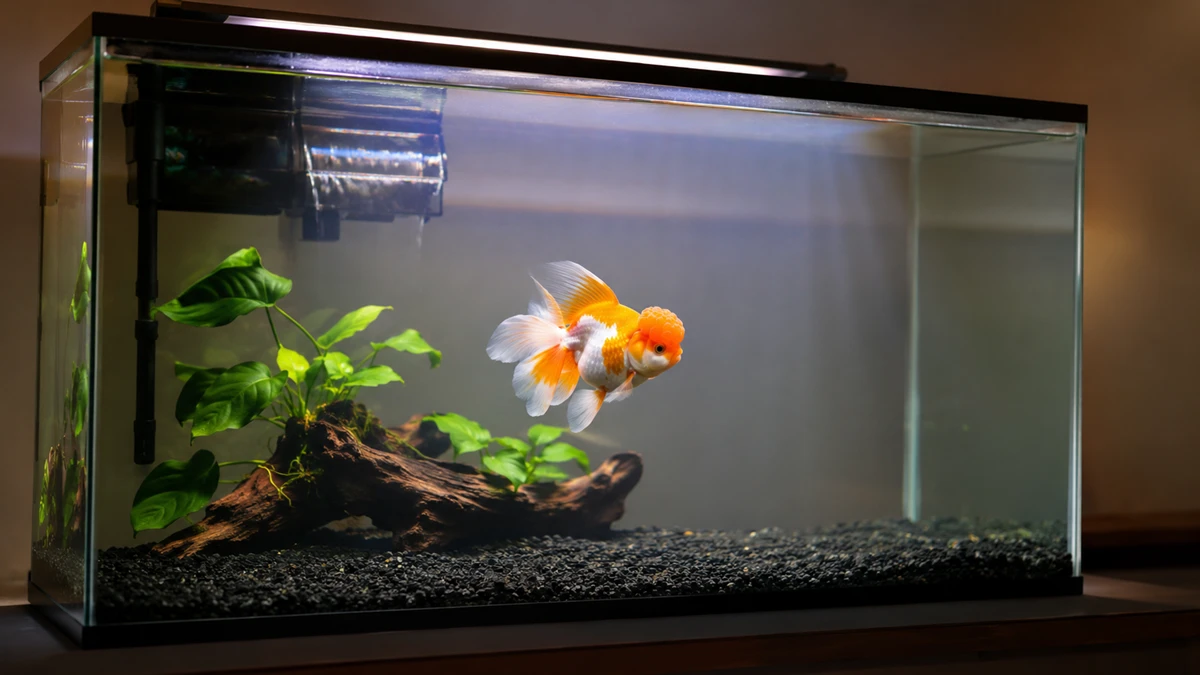
Quick answer: A single goldfish needs a minimum 20-gallon fish tank for goldfish, and that’s really just the starting line — not the finish line. Fancy goldfish (Oranda, Ryukin, Fantail) need at least 20 gallons for the first fish plus 10 gallons per additional fish, while single-tail goldfish like comets need 30+ gallons and grow far too large for most indoor setups long-term. This will sort out all issues while selecting the best fish tank for goldfish? If you’re picturing the little bowl on the pet store shelf next to the goldfish tank, put it down — that’s not a home, it’s a holding cup.
When I was twelve, my friend kept a carnival goldfish in a two-gallon plastic tank. Within months, the water stayed cloudy, and the fish became sluggish. That is when we learned the “grows to the size of its tank” myth is false.
The fish’s body was stunted while its internal organs kept growing, leading to an early death. Realizing that our ignorance caused the suffering was heartbreaking, and it completely changed my view of proper aquarium sizes.
If You Only Remember 3 Things
- 20 gallons minimum for one fancy goldfish, 30+ gallons for one single-tail/comet goldfish — never a bowl, ever.
- Goldfish don’t “grow to fit the tank” — undersized tanks cause stunting, organ damage, and early death, not small fish.
- A goldfish’s bioload (waste output) is closer to a small dog’s than to a similarly-sized tropical fish’s — filtration and gallons matter more here than almost any other beginner fish.
Why “Any Small Fish Tank for Goldfish” Is a Trap
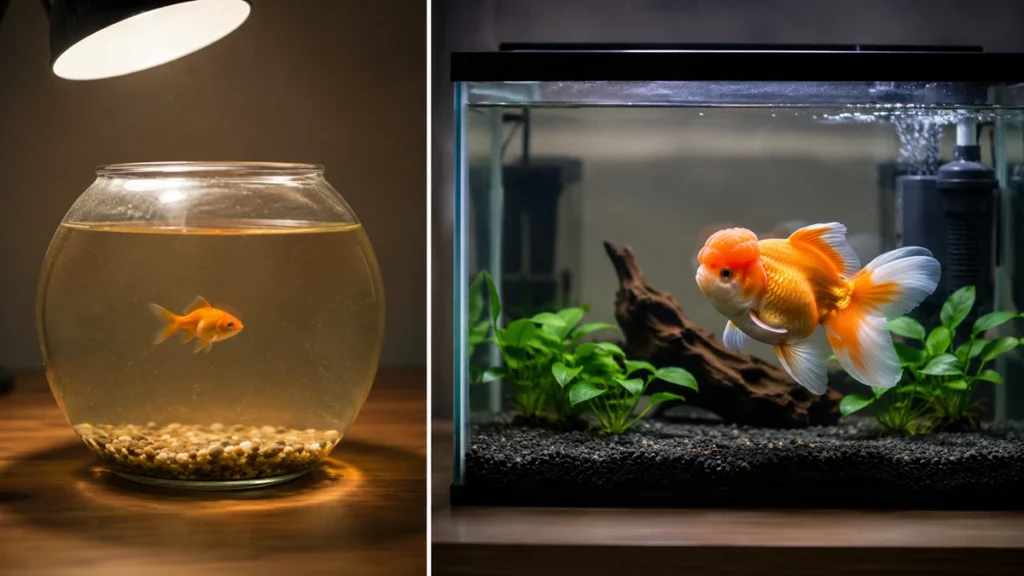
Here’s the uncomfortable part nobody tells you at the checkout counter: goldfish (Carassius auratus) are cold-water carp, not tropical decor fish, and they’re built to keep growing their whole lives. A goldfish sold to you at 1–2 inches long can realistically reach 6–8 inches (fancy varieties) or 12+ inches (comets and other single-tails) as an adult.
According to the Merck Veterinary Manual, goldfish produce disproportionately more ammonia than similarly-sized tropical fish because of their protein metabolism and the fact that they lack a true stomach — meaning food moves through them (and turns into waste) faster. That single fact is why “small fish tank for goldfish” setups fail so predictably: it’s not that the fish outgrows the glass, it’s that the water chemistry collapses long before that.
The Cornell University College of Veterinary Medicine notes that goldfish kept in bowls typically die within months from ammonia accumulation and low oxygen — not old age, not “bad luck,” but a habitat that was wrong from day one. The American Veterinary Medical Association and World Aquatic Veterinary Medical Association have both gone on record against goldfish bowls entirely, for exactly this reason.
Fish Tank for Goldfish Size: The Real Numbers
This is the part most articles either oversimplify or bury in jargon. Here’s the direct breakdown.
10 Gallon Fish Tank for Goldfish — Skip It
A 10-gallon fish tank for goldfish is not a real long-term option for any goldfish variety, including fancy types, past the juvenile stage. It’s occasionally used as a temporary quarantine or hospital tank for a sick or new goldfish, never as a permanent home. If a 10-gallon is all you have right now, treat it as a 2–4 week holding space while you set up the real tank — not a destination.
20 Gallon Fish Tank for Goldfish — The True Starting Line
A 20-gallon fish tank for goldfish is the accepted minimum for one single fancy goldfish (Oranda, Ryukin, Fantail, Black Moor, Bubble Eye). This is not a “nice to have” — it’s the point below which water quality becomes nearly impossible to stabilize given how much waste one goldfish produces.
Large Fish Tank for Goldfish — What “Large” Actually Means
For most US goldfish keepers, “large” starts at 40 gallons and up. A 40-gallon breeder tank comfortably houses two fancy goldfish or one small single-tail. If you’re planning a small goldfish community — three or more fish, or any single-tail/comet variety — you’re realistically looking at 55–75+ gallons, or better yet, an outdoor pond if your climate allows it.
Fish Tank Size Comparison for Goldfish
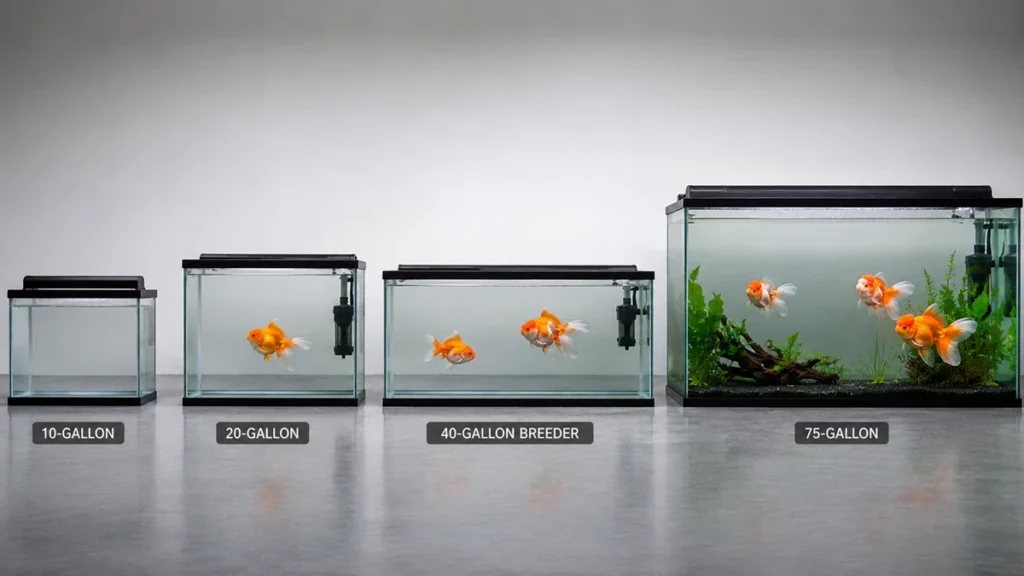
| Tank Size | Best For | Notes |
| 10 gallon | Quarantine/hospital only | Not for permanent housing, any variety |
| 20 gallon | 1 fancy goldfish (Oranda, Ryukin, Fantail) | True minimum, not ideal long-term |
| 29–40 gallon | 1–2 fancy goldfish | Comfortable, room to grow |
| 55 gallon | 2–3 fancy goldfish, or 1 comet/single-tail | Recommended “forever tank” starting point |
| 75+ gallon/pond | 3+ fancy, or multiple single-tails | Best for social goldfish groups long-term |
How to Prepare a Fish Tank for Goldfish (Setup Order That Actually Works)
Setting up a fish tank for goldfish pets at home in the wrong order is one of the fastest ways to lose a fish in week one. Here’s the sequence:
- Choose your gallon size first, using the table above — not the fish’s current size.
- Cycle the tank before adding fish. This means running the filter with an ammonia source (fishless cycling) for several weeks so beneficial bacteria can establish. Skipping this step is the single most common beginner mistake in any new setup, goldfish included.
- Add substrate and decor, keeping the layout open — goldfish are not agile swimmers, especially fancy varieties, and need clear swimming lanes, not an obstacle course.
- Install and test your filter (see below) before the fish ever go in.
- Match water temperature and chemistry to your existing water when you finally introduce the fish, and do it gradually over 30–60 minutes.
Fish Tank for Goldfish With Filter: Non-Negotiable
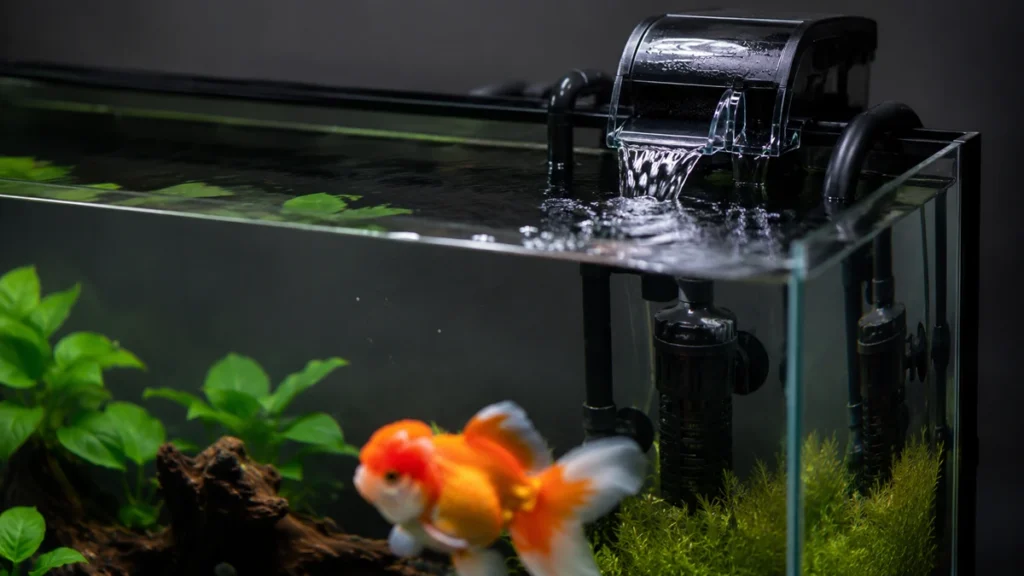
Given how much waste goldfish produce, a fish tank for goldfish with a filter isn’t optional gear — it’s the difference between a living tank and a slow-motion emergency. As a working rule, your filter’s flow rate should turn over the entire tank volume at least 4 times per hour. For a 20-gallon tank, that means a filter rated for roughly 80 gallons per hour (GPH) or more; when choosing between two filter options, size up rather than down.
Hang-on-back (HOB) power filters and canister filters both work well for goldfish because they combine mechanical, biological, and chemical filtration without eating into swimming space the way large internal filters can.
How Often Should You Clean a Fish Tank for Goldfish?
How often to clean a fish tank for goldfish comes down to partial, not total, water changes. Aim for a 10–25% water change every 1–2 weeks, more often in smaller tanks or heavily stocked ones. Never drain and replace 100% of the water — doing so wipes out the beneficial bacteria colony that’s actually keeping ammonia in check, effectively restarting the cycle from zero.
Test your water weekly for the first two months of any new setup (ammonia, nitrite, nitrate, pH), then you can typically drop to monthly testing once parameters are stable.
Best Fish Tank for Goldfish: What to Actually Look For
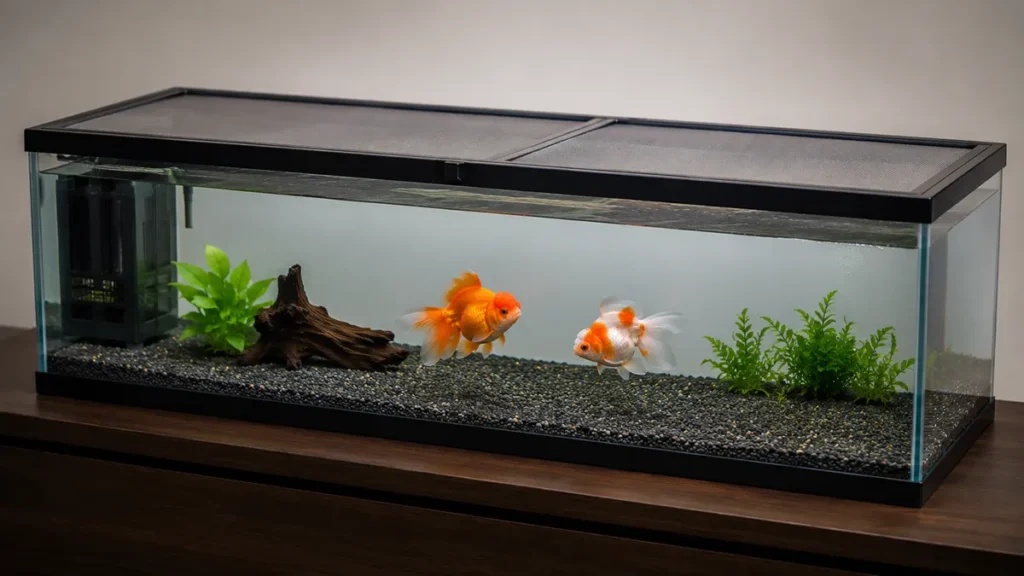
The best fish tank for goldfish isn’t a specific brand — it’s a tank that satisfies three things: adequate gallon volume for the variety you’re keeping (see the table above), a footprint with more length/width than height (goldfish are surface-and-mid swimmers, not divers), and a tightly fitting lid, since goldfish can and do jump.
A Quick Myth-Buster: The 43-Year-Old Goldfish
If you’ve ever heard “goldfish only live a couple of years,” here’s a fact worth sitting with: Guinness World Records recognized a goldfish named Tish as the oldest ever documented, having lived 43 years. That’s not the norm — it’s the exception that proves the rule. Most goldfish that reach anywhere near their potential 10–15+ year lifespan do so because of stable water, real space, and consistent goldfish care, not luck. The fish that die in year one almost always died of their habitat, not their genetics.
Next Steps: Resources You Should Read
FishioHub reading:
- Can Goldfish Live in a Bowl Without a Filter? — the bowl question, answered in full
- Aquarium Bioload: Why Some Fish Need More Space Than Others — the science behind why goldfish need so much room
- The 1-Inch-of-Fish-Per-Gallon Rule: Does It Actually Work? — why this old rule fails goldfish specifically
Scientific references:
- Merck Veterinary Manual — goldfish ammonia output and digestive physiology
- Guinness World Records — verified goldfish longevity record (Tish, 43 years)
USA aquarium resources:
- Goldfish Society of America — variety-specific care standards and community support
- Your local university extension aquaculture program (many US land-grant universities publish free coldwater fish care guides)
- A local fish store (LFS) that specializes in coldwater/pond fish, for water testing and stocking advice specific to your area’s tap water
FAQ
What size tank does one goldfish need?
A single fancy goldfish needs a minimum 20-gallon tank; a single-tail/comet goldfish needs 30+ gallons due to its larger adult size.
Can goldfish live in a 10-gallon tank?
Only temporarily, as a quarantine or hospital tank. A 10-gallon is too small for permanent goldfish housing at any life stage past very early juvenile.
Can goldfish live in a bowl?
No. Bowls lack the surface area for gas exchange and can’t support adequate filtration, leading to rapid ammonia buildup — a setup the AVMA and WAVMA both advise against.
How many goldfish can I put in a 20-gallon tank?
One fancy goldfish, comfortably. Add roughly 10 gallons per additional fancy goldfish, or use a larger tank from the start if you plan to keep more than one.
Do goldfish really grow to the size of their tank?
No — this is a myth. Undersized tanks cause stunted growth and organ damage, not proportionally smaller healthy fish.
How often should I clean a goldfish tank?
A 10–25% water change every 1–2 weeks, with weekly water testing for the first two months of a new setup.
What’s the best filter for a goldfish tank?
A hang-on-back or canister filter rated to turn over your total tank volume at least 4 times per hour.
Do goldfish need a heater?
No — goldfish are cold-water fish and thrive at 65–75°F. A heater is generally unnecessary unless your home gets unusually cold.
Final Word
A goldfish in the right tank isn’t just surviving — it’s the closest thing freshwater fishkeeping has to a decades-long companion.
Years later, I finally saw a fancy goldfish housed correctly in a 50-gallon planted aquarium. Watching that fish swim gracefully with vibrant color, active energy, and a clear personality completely rewrote my childhood mistake. It made me realize that when we give these animals the space they actually require, they transform from temporary, disposable novelty pets into thriving, expressive members of the family.
Get the gallons right before the fish comes home, and you’re not just avoiding a mistake — you’re giving a genuinely long-lived animal the shot at the life it’s actually built for.
Was this guide helpful?
First-Hand Experience
Based on animals I've personally kept and bred - not summarized from other articles.
Zoological Foundation
Claims are checked against my M.Sc. Zoology training and published aquatic biology research, not recycled aquarium myths.
No Paid Influence
No sponsorship shaped this guide. Affiliate links, if any, are disclosed separately and never hidden.
Kept Current
Errors are corrected as soon as they're found, with the update noted at the bottom of the article.
Anil Satak M.Sc. Zoology · Founder, FishioHub
Grew up in a fishing family in India and holds a Master's in Zoology. FishioHub is a one-person operation - every guide is personally researched, kept-tested, and written by Anil. No team, no outsourced writers, no AI-generated content. Read his full bio →