Every aquarist is well aware of Ammonia. It is one of the most dangerous toxins for aquarium fish. Last spring, I checked my 30-gallon community tank and noticed my betta hovering at the surface, barely moving. Red gills. Lethargic. That sinking feeling when something is wrong — I know it well. I tested the water and found ammonia at 1.5 ppm. That’s the kind of spike that can wipe out a tank overnight.
If your fish are acting strangely right now or you’re trying to stay ahead of a problem, you’re in the right place. This guide covers everything about how to remove ammonia from fish tank naturally — from emergency fixes you can do in the next 30 minutes to permanent solutions that keep your water stable for years.
The short answer first: To remove ammonia from a fish tank naturally, perform a 25–50% partial water change immediately, stop feeding for 24–48 hours, vacuum the substrate, and add beneficial bacteria like Seachem Stability or API Quick Start. For long-term control, add fast-growing live plants like hornwort or duckweed and keep your filter media clean without killing good bacteria.
What You’ll Get in This Post
- What causes high ammonia levels in a fish tank — and the one trigger most hobbyists miss
- Signs of ammonia poisoning in fish — spot it before it’s too late
- How to remove ammonia from a fish tank naturally — 7 proven methods, explained step by step
- How to check ammonia levels without a test kit — emergency tips
- Best natural products to lower ammonia — Seachem, API, zeolite, and more
- How to reduce ammonia in fish tank quickly — the 30-minute emergency protocol
- How to keep ammonia levels down long-term — so it never spikes again
- FAQs — real questions from US fish keepers
What Causes High Ammonia Levels in a Fish Tank?
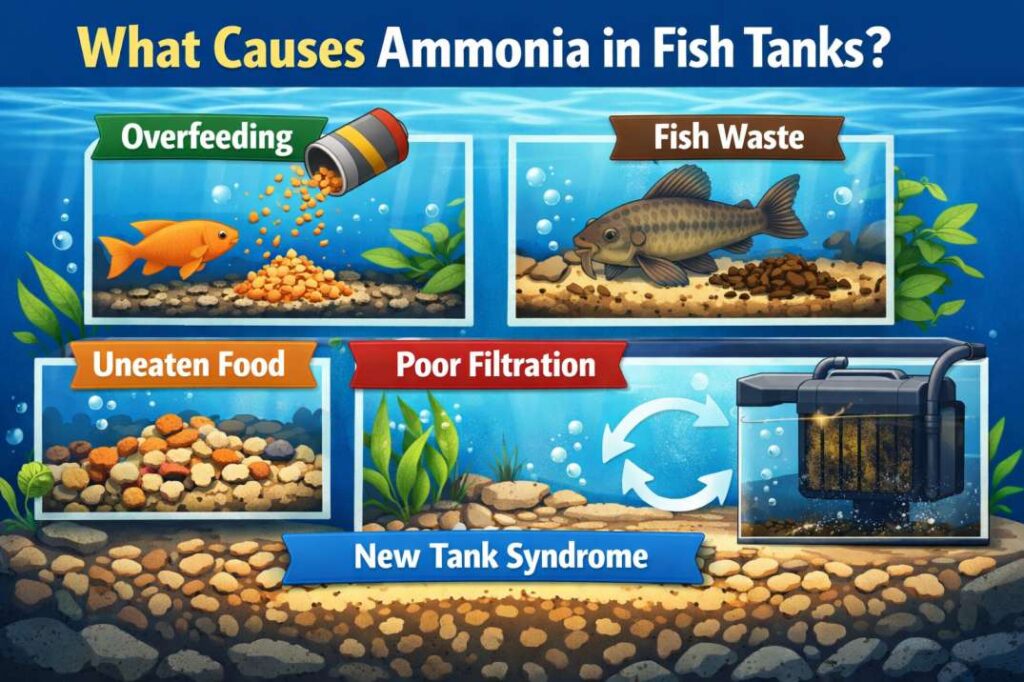
If you’re wondering how to remove ammonia from fish tank naturally, the first step is identifying what is causing the ammonia spike. You need to understand what causes high ammonia levels in a fish tank. Most people blame one thing. Honestly, it’s usually a combination.
The main sources of ammonia in an aquarium:
- Fish waste — every fish excretes ammonia through its gills and urine constantly
- Uneaten food decaying on the substrate — even a small amount left overnight breaks down fast
- Dead fish or rotting plant matter left in the tank — this is the fastest ammonia spike I’ve ever seen
- Overfeeding — the #1 human-caused reason for ammonia spikes in fish tank
- Overcrowding — more fish = more waste = more ammonia, simple math
- New tank syndrome — a brand-new tank has zero beneficial bacteria, so ammonia builds immediately
- Dirty or damaged filter — if your filter isn’t running right, ammonia processing stops
- Aquasoil substrate — some planted tank substrates like ADA Amazonia release ammonia when new
- Tap water in US cities — this one surprises people. Many American city water systems use chloramine instead of chlorine. Chloramine bonds ammonia to chlorine. A regular dechlorinator won’t break this bond. You need Seachem Prime or similar specifically to handle chloramine.
Once ammonia levels rise above 0 ppm, your fish begin to show stress. There are no “safe” levels above zero — every aquarium guide agrees on this.
Signs of Ammonia Poisoning in Fish
Before we get into the fix, let’s make sure you know what you’re dealing with. Ammonia is colorless and odorless — you cannot see or smell it in water. The only way to confirm it is to test. But your fish will tell you something is wrong before you even reach for the test kit.
Signs of ammonia poisoning in fish to watch for:
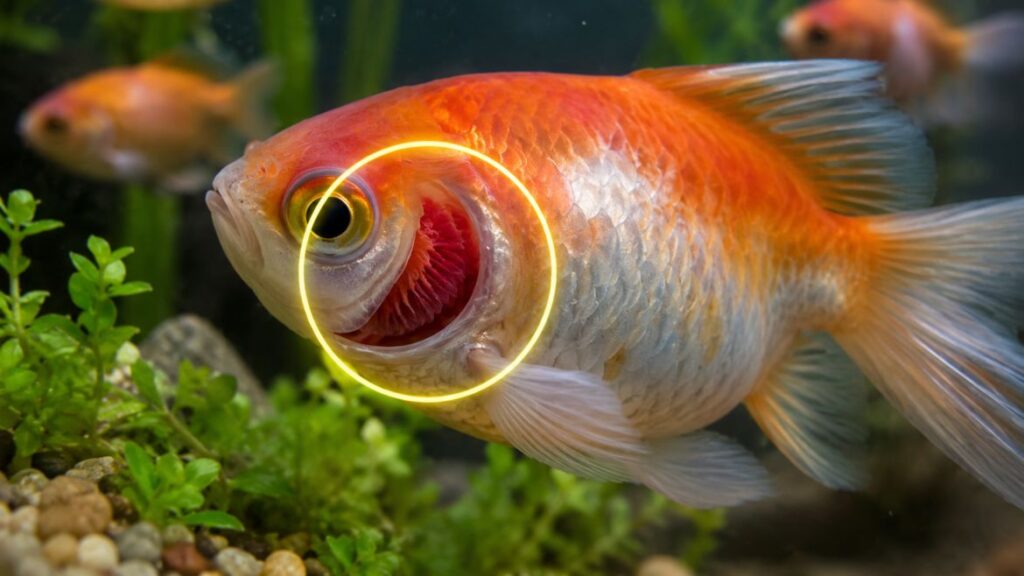
- Gasping at the water surface — fish are trying to find oxygen because ammonia destroys gill tissue
- Red or inflamed gills — look for bright pink or purple coloration; healthy gills are deep red but not irritated-looking
- Lethargy and loss of appetite — fish that normally rush to the glass at feeding time suddenly don’t care
- Erratic swimming or clamped fins — fish may swim sideways, lose balance, or clamp fins tight against the body
- Bloody streaks on fins or body — ammonia literally burns fish tissue from the inside out
- Milky or cloudy water — bacterial bloom often follows an ammonia spike
- Color fading — your usually vibrant tetras or cichlids suddenly look pale
If you see two or more of these signs together, test immediately with the API Freshwater Master Test Kit (liquid, not strips — strips are notoriously inaccurate for ammonia). Available at PetSmart or Petco for around $25–35 in the US.
Important: Ammonia poisoning and ich look different. Ammonia = behavioral changes + gill damage. Ich = white salt-grain spots on body. Don’t confuse the two — the treatments are opposite. Learning how to remove ammonia from fish tank naturally can help protect your fish from stress, illness, and sudden deaths.
How to Remove Ammonia from Fish Tank Naturally: 7 Proven Methods
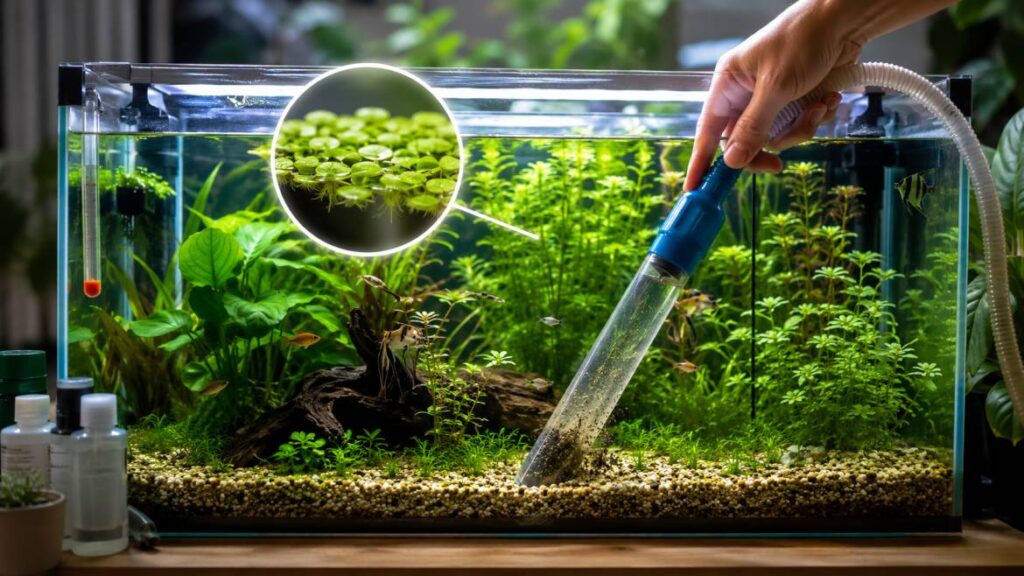
Here’s the core of this guide. These are the methods I’ve used personally to remove ammonia from fish tank naturally — and they’re backed by real aquarium science, not just hobbyist guesswork.
Work through these in order during a crisis. For ongoing maintenance, all 7 should be part of your routine.
Method 1: Do a Partial Water Change (25–50%)
This is the fastest way to reduce ammonia in fish tank quickly. You’re not fixing the problem — you’re diluting it immediately to buy your fish time.
How to do it right:
- Remove 25–50% of the tank water using a gravel vacuum (Python is the US brand most hobbyists swear by — around $30 at PetSmart)
- As you siphon, vacuum the substrate deeply — this removes decomposing waste that is actively producing ammonia
- Treat the fresh tap water with Seachem Prime or API Stress Coat before adding it back
- Match the temperature within 1–2°F of your tank before adding
- Do NOT do a 100% water change — this crashes your nitrogen cycle and causes an even worse ammonia spike 3–5 days later
From my experience: If ammonia is above 1 ppm, do a 30% change, wait 2–3 hours, test again, and do another 20% if needed. Don’t dump all the water at once.
Method 2: Stop Feeding for 24–48 Hours
I cannot stress this enough. Overfeeding is the #1 cause of ammonia spikes in home aquariums — and it’s completely preventable.
When you overfeed, here’s what happens: excess food sinks, settles in the gravel and filter, and decomposes over 24–48 hours into ammonia. It’s a slow-release ammonia bomb you built yourself.
What to do:
- Stop all feeding immediately for 24–48 hours
- Remove any visible uneaten food with a small net or siphon
- Don’t worry — healthy fish can survive 3–7 days without food easily
After the fast, go back to feeding only what fish consume in 30–60 seconds. Once or twice per day is enough. This is how you keep ammonia levels down in fish tank long-term.
Method 3: Vacuum the Substrate and Remove Decaying Matter
The gravel bed is where ammonia hides. Uneaten food, fish waste, and dead plant leaves compact in the substrate and rot. This is a slow, continuous ammonia source that most people ignore.
Do this during every crisis and every weekly maintenance:
- Use a gravel siphon vacuum to pull waste from the substrate
- Check under decorations and behind plants — waste accumulates there
- Remove any dead leaves, dead snails, or deceased fish immediately
- Do NOT rinse the substrate in tap water — the chlorine kills beneficial bacteria living in the gravel
Method 4: Add Beneficial Bacteria (The Natural Nitrogen Cycle Fix)
This is the real long-term answer for how to remove ammonia from fish tank naturally. Beneficial bacteria — specifically Nitrosomonas and Nitrospira species — convert ammonia into nitrite, and then nitrite into the much safer nitrate. This is called the nitrogen cycle, and it’s the biological engine that makes fishkeeping possible.
When ammonia spikes, it usually means your bacterial colony is overwhelmed, absent (new tank), or was accidentally killed (filter cleaned in tap water).
How to rebuild bacteria fast:
- Seachem Stability — $10–15 at PetSmart, adds instant nitrifying bacteria; use for 7 consecutive days during a spike
- API Quick Start — excellent for new tanks or post-antibiotic recovery; also available at Petco
- Fluval Cycle — similar, good for smaller tanks
- Transfer filter media, sponge, or substrate from an established healthy tank if you have access to one
- Be patient — a true nitrogen cycle takes 4–6 weeks to fully establish
According to research on beneficial bacteria in closed aquatic systems, Nitrospira species are far more effective at ammonia conversion than the older assumption that Nitrobacter does the work. Modern bacterial supplements like Seachem Stability contain Nitrospira specifically for this reason.
Method 5: Add Live Plants — The Best Natural Ammonia Remover
Live plants are one of the most underrated tools for naturally controlling ammonia. Aquatic plants absorb ammonia (in its ammonium form, NH4+) directly from the water through their leaves and root systems — using it as fertilizer. They also produce oxygen, which helps fish tolerate lower-quality water during a crisis. Hence, live aquarium plants can play a major role in how to remove ammonia from fish tank naturally by absorbing nitrogen compounds from the water.
The key is choosing fast-growing plants because they absorb more nutrients more quickly.
Best plants for removing ammonia naturally:
| Plant | Growth Rate | Best For |
| Hornwort | Very fast | Any tank, easy care |
| Duckweed | Extremely fast | Floating cover, best nitrogen uptake |
| Water Sprite | Fast | Mid/foreground, beginner-friendly |
| Amazon Frogbit | Fast | Floating, beautiful surface cover |
| Anacharis (Elodea) | Fast | Classic US hobbyist plant |
| Moneywort | Moderate-fast | Nice appearance |
| Water Wisteria | Fast | Tall background plant |
| Marimo Moss Ball | Slow | More aesthetic, minimal nitrogen uptake |
Pro tip: Floating plants like duckweed and Amazon frogbit absorb ammonia fastest because they grow explosively and their roots hang directly in the water column. A few handfuls of duckweed can visibly reduce nitrate (and ammonia) within days.
This directly answers how can I remove ammonia from my fish tank most naturally and sustainably possible.
Method 6: Clean Filter Media (Without Destroying Good Bacteria)
A clogged or improperly cleaned filter is a hidden ammonia factory. When the filter is blocked, water stops flowing through correctly, beneficial bacteria die from lack of oxygen, and ammonia processing stops.
The right way to clean your filter:
- Rinse sponge/filter media in a bucket of old tank water only — never tap water
- Squeeze the sponge gently to remove debris without killing all bacteria
- Replace chemical media (activated carbon) every 4–6 weeks
- Never replace ALL filter media at once — do half at a time so bacteria survive
- Check the filter flow rate monthly — a noticeably slower flow means it needs cleaning
If you recently cleaned your filter in tap water and now have an ammonia spike, this is the cause. Restart the cycle with a bacterial supplement immediately. One of the most effective ways to understand how to remove ammonia from fish tank naturally is by improving biological filtration.
Method 7: Reduce Stocking or Rehome Fish
This is the hardest one to hear, but sometimes the tank is simply overstocked. More fish = more ammonia production, period. No filter or plant setup can overcome a severely overstocked tank.
The standard rule for small species: 1 inch of fish per gallon of water (though this rule is debated for larger fish — use it as a minimum guideline only).
High-ammonia producers to stock carefully:
- Goldfish (produce 10x the waste of most tropical fish)
- Oscars and other large cichlids
- Plecos (especially the common Plecostomus — they’re waste machines)
- Axolotls
- African cichlids
If ammonia is chronically high despite doing everything else right, rehoming some fish may be the only permanent fix. Your local fish store (LFS) will usually accept healthy fish.
How to Check Ammonia Levels in Fish Tank Without a Test Kit
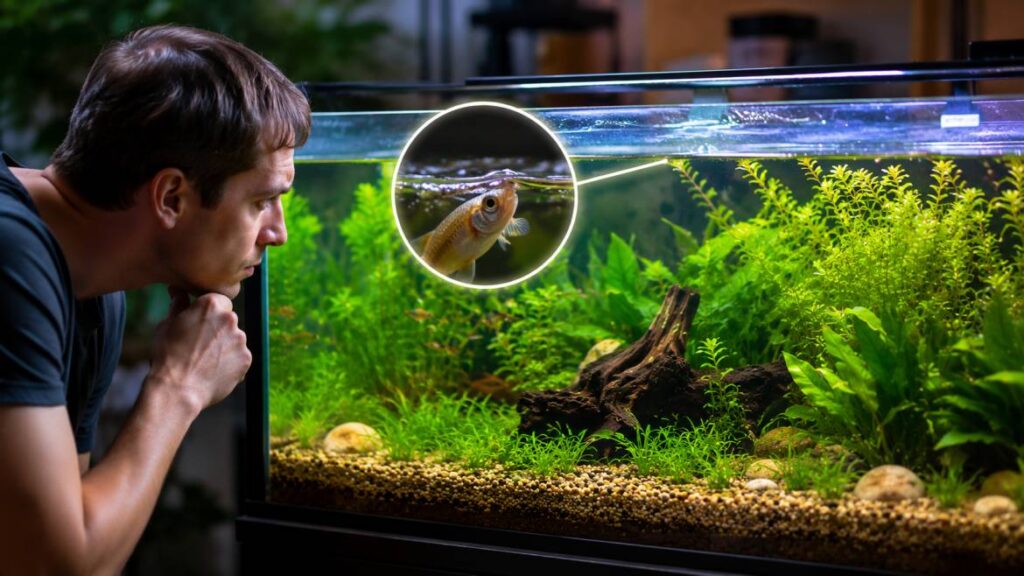
Okay, it’s 11 pm, your fish are gasping, and you don’t have a test kit. What do you do?
Honestly — you can’t accurately measure ammonia without a test kit. Anyone who says otherwise is guessing. But here are some indicators that suggest ammonia may be high:
- Fish are gasping at the surface, especially in a tank that was fine yesterday
- Water looks milky or cloudy with no other explanation
- A strong chemical or sewage smell from the tank (though pure ammonia is odorless; bacterial decomposition produces the smell)
- Multiple fish looking lethargic at the same time — usually points to water quality, not disease
What to do without a kit:
- Do a 30% water change immediately — this won’t hurt even if ammonia turns out to be zero
- Add Seachem Prime — it detoxifies ammonia for 24–48 hours, buying time whether the cause is confirmed or not
- Stop feeding entirely
- Get to PetSmart, Petco, or any fish store in the morning for an API Liquid Test Kit (~$25–30)
For checking ammonia levels in fish tank without kit permanently, I’d suggest keeping the API Freshwater Master Test Kit stocked at all times. Test strips (sold at Walmart and most pet stores) are cheap but inaccurate — they often show false-safe readings even when ammonia is at dangerous levels.
How to Reduce Ammonia in Fish Tank Quickly: The 30-Minute Emergency Protocol
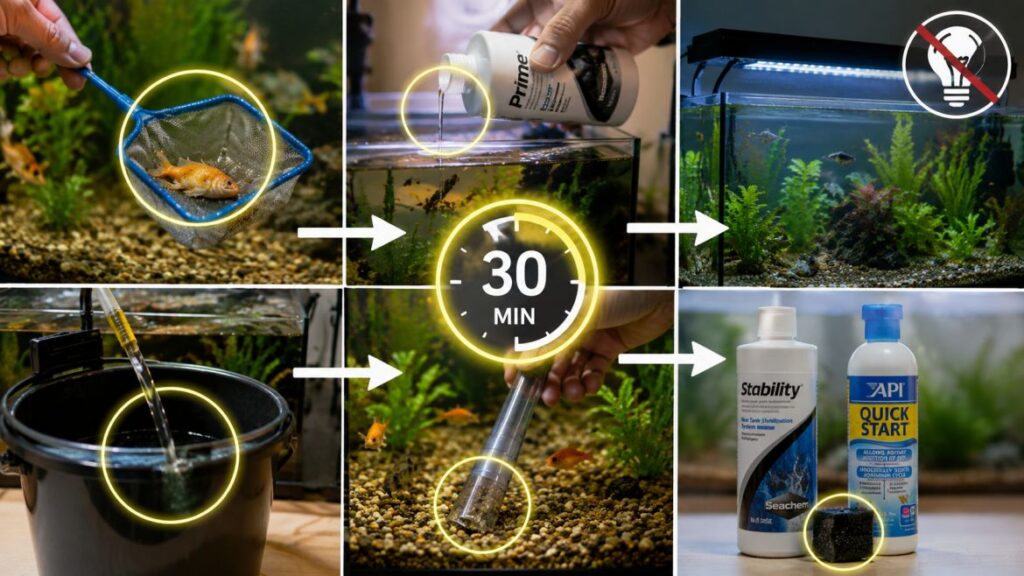
If your fish are showing signs of ammonia poisoning in fish right now, here’s exactly what to do:
0–10 minutes:
- Remove any dead fish or visibly rotting matter immediately
- Add Seachem Prime at double dose (it temporarily binds ammonia into non-toxic ammonium for 24–48 hours)
- Turn off the tank lights — reduces fish stress
10–25 minutes:
- Do a 30–40% water change using pre-treated water (match temperature!)
- Vacuum substrate while draining to remove waste
- Do NOT add food under any circumstances
25–30 minutes:
- Add a dose of Seachem Stability or API Quick Start to boost bacteria
- If you have an established tank nearby, move a piece of filter media into this tank
- Check your filter is running — a stopped filter in an ammonia crisis is catastrophic
Next 24–48 hours:
- Test water every 12 hours
- Do another 20% change if ammonia stays above 0.5 ppm
- Hold feeding until ammonia reads 0 ppm or near zero
- Continue Seachem Prime daily until ammonia is under control
This is how to fix high ammonia levels in fish tank when your fish can’t wait for a 7-day cycle rebuild.
Best Natural Products to Remove Ammonia from Fish Tank
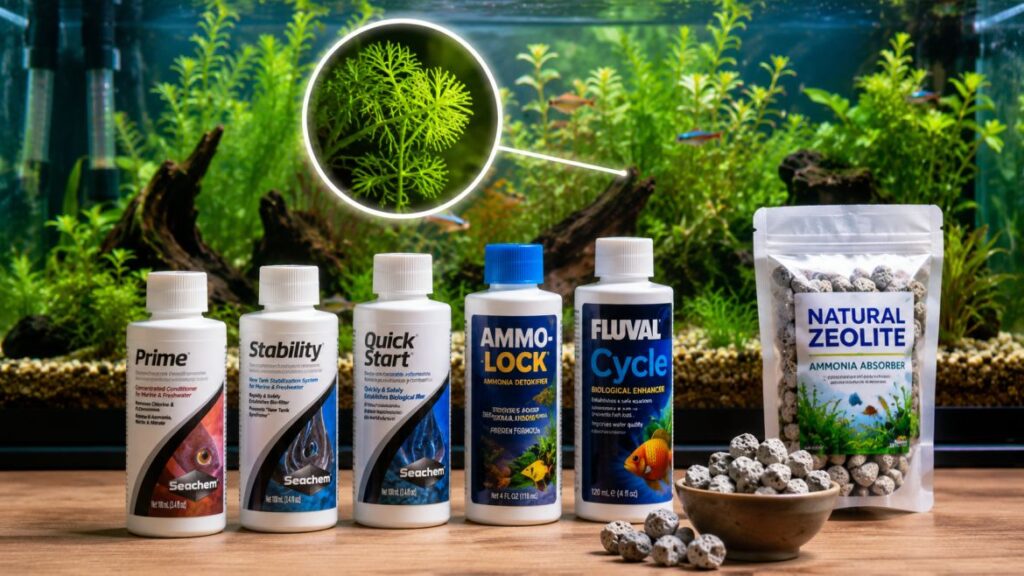
These are the products I actually use and recommend. All are widely available at PetSmart, Petco, or Amazon in the US. Aquarium hobbyists who master how to remove ammonia from fish tank naturally usually experience fewer water-quality problems over time.
| Product | What It Does | Price (US) | Best For |
| Seachem Prime | Detoxifies ammonia + chloramine for 24–48 hrs | $8–12 (100ml) | Emergency use + every water change |
| Seachem Stability | Adds nitrifying bacteria | $10–14 | New tanks + post-spike recovery |
| API Quick Start | Instant nitrogen cycle bacteria | $7–10 | New tanks |
| API Ammo-Lock | Binds ammonia into non-toxic form | $8–11 | Short-term crisis |
| Fluval Cycle Bio Enhancer | Beneficial bacteria supplement | $10–15 | Ongoing support |
| Zeolite (natural mineral chips) | Physically absorbs ammonia from water | $5–8 per bag | Planted tanks or extra protection |
Note on Seachem Prime: It doesn’t remove ammonia — it converts it into ammonium (NH4+), which is far less toxic to fish while still being processed by bacteria. Think of it as buying time, not fixing the problem.
Acceptable Ammonia Levels in Freshwater Aquarium
| Ammonia Level | Status | What to Do |
| 0 ppm | ✅ Safe | Maintain current routine |
| 0.25 ppm | ⚠️ Mild stress | 25% water change + reduce feeding |
| 0.5 ppm | ⚠️ High stress | Fish gasping; 40% change + add Prime |
| 1.0 ppm | 🔴 Dangerous | Emergency protocol immediately |
| 2.0+ ppm | 🆘 Critical | Multiple water changes; consider fish emergency care |
Acceptable ammonia levels in freshwater aquarium: The only truly safe level is 0 ppm. Even 0.25 ppm causes cellular stress in most freshwater species, especially tetras, bettas, and shrimp.
The pH factor: This is something most beginner guides ignore. Ammonia toxicity changes dramatically with pH. At pH 7.0 or below, most ammonia exists as relatively harmless ammonium ions (NH4+). As pH rises above 7.5, more converts to the deadly un-ionized form (NH3). This is why a tank with pH 8.0 and 0.5 ppm ammonia is far more dangerous than a pH 6.8 tank at the same reading. If you keep African cichlids (which prefer pH 7.8–8.5), ammonia becomes toxic at much lower concentrations.
How to Prevent Ammonia in Fish Tank (Long-Term)
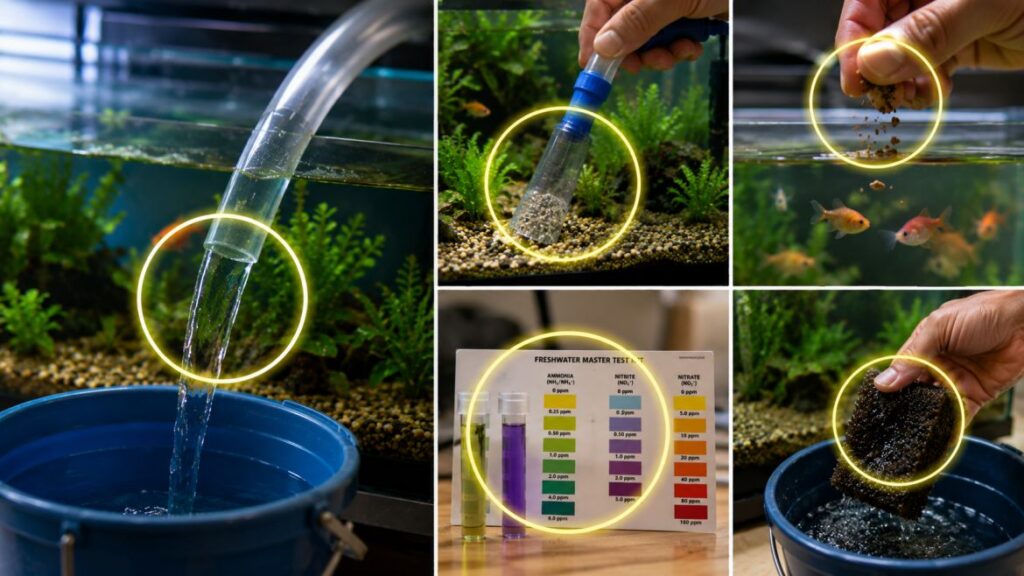
If you are thinking How to remove ammonia from fish tank naturally? I would suggest that preventing ammonia spike should be your priority. Fixing an ammonia spike is stressful for you and potentially deadly for your fish. Here’s how to make sure it doesn’t happen again. This is how you truly keep ammonia levels down in fish tank permanently.
Weekly maintenance that makes ammonia impossible:
- 25–30% water change every week — not monthly, every week. This is the #1 habit that separates thriving tanks from struggling ones
- Vacuum substrate during every water change — use a Python or Lee’s gravel cleaner
- Only feed what fish eat in 30–60 seconds — once or twice per day; remove uneaten food immediately
- Test water weekly — ammonia and nitrite, minimum. The API Master Test Kit is the gold standard
- Rinse filter media monthly in old tank water — never tap water, never completely clean everything at once
Tank setup that prevents ammonia spikes:
- Avoid aquasoil substrates until experienced — some release ammonia for weeks when new; soak before use
- Stock appropriately — research adult size before buying; don’t add all fish at once
- Add live fast-growing plants — especially floating plants like frogbit or duckweed
- Cycle the tank before adding fish — 4–6 weeks fishless cycling builds bacteria that handle ammonia before your fish arrive
What I Got Wrong My First Time (My Story & My Mistakes)
I want to be honest with you about something. When I set up my first proper tank — a 20-gallon with 8 neon tetras, 2 mollies, and a pleco — I was so excited I skipped the nitrogen cycle entirely. I filled it, added a dechlorinator, let it run for 24 hours, and threw the fish in.
Within a week, three neon tetras were dead. I couldn’t understand why. I went to my local fish store and the guy behind the counter asked one question: “Did you cycle the tank?”
I didn’t even know what that meant.
The pleco alone was producing enough waste to spike ammonia in my uncycled tank. Plecos are notorious waste producers — I’d bought one because they eat algae without knowing they’re one of the worst choices for a small new tank.
Here’s what I wish someone had told me: ammonia spikes in fish tank almost always happen in the first 6 weeks, before beneficial bacteria establish. And the most common reason? People add too many fish too fast to an uncycled tank.
If I could go back, I’d: (1) cycle the tank fishless for 4 weeks, (2) start with 3 hardy fish instead of 10, and (3) skip the pleco entirely for a 20-gallon. The saddest part? Losing those tetras was completely preventable.
What the Science Says vs. What Hobbyists Believe (Myth-Busting)
Myth 1: “Test strips are accurate enough.”
False. Independent comparisons have found test strips underreport ammonia levels by up to 40% compared to liquid reagent kits. At 0.5 ppm actual ammonia, a strip may read “safe.” Use the API Freshwater Master Test Kit. Period.
Myth 2: “Once ammonia is zero, you’re done.”
Not quite. Ammonia being zero while nitrite is elevated means your nitrogen cycle is only halfway complete. Nitrite is nearly as toxic as ammonia. Always test both.
Myth 3: “Plants alone will solve ammonia problems.”
Plants help enormously — but unhealthy or dying plants actually release ammonia back into the water as they decompose. Dying plants from insufficient light or CO2 create a feedback loop. Keep plants thriving or they become part of the problem.
Myth 4: “Seachem Prime removes ammonia.”
It detoxifies it — converts un-ionized NH3 into safer ammonium (NH4+). The ammonia is still there, but in a form bacteria can process safely. This is still valuable! But it’s not the same as actually removing it.
Myth 5: “Doing a big water change fixes everything.”
A 100% water change removes all ammonia — but also removes all your beneficial bacteria and crashes the nitrogen cycle. You’ll have zero ammonia for a day, then a massive spike 48–72 hours later as the cycle breaks down. Always do partial changes (25–50%).
FAQs on How to remove ammonia from fish tank naturally
Q1: How to remove ammonia from fish tank naturally without chemicals?
To remove ammonia from a fish tank naturally without chemicals, do a 25–50% partial water change, stop feeding for 24–48 hours, vacuum the substrate, and add fast-growing live plants like hornwort, duckweed, or water sprite. These plants absorb ammonia directly from the water. Combine with beneficial bacteria supplements and regular maintenance for permanent control.
Q2: What are the first signs of ammonia poisoning in fish?
Signs of ammonia poisoning in fish include gasping at the water surface, red or inflamed gills, lethargy, clamped fins, loss of appetite, and erratic swimming. Bloody streaks on fins or body indicate severe toxicity. If you see two or more of these signs together, test your water immediately and perform an emergency partial water change.
Q3: How quickly can ammonia kill fish?
At 2 ppm or above, ammonia can kill sensitive fish like tetras and bettas within 24–48 hours. Even 1 ppm causes gill damage that weakens immunity and increases disease risk over days. Temperature and pH affect toxicity — in warm water above 78°F and high pH above 7.5, ammonia becomes deadly at even lower concentrations.
Q4: Can I check ammonia levels without a test kit?
You can’t get an accurate reading without a test kit, but warning signs include fish gasping at the surface, cloudy water, and sudden lethargy in multiple fish. If you suspect ammonia without a kit, add Seachem Prime, do a 30% water change, and stop feeding immediately. Get an API Liquid Test Kit from PetSmart or Petco as soon as possible.
Q5: Is 0.25 ppm ammonia dangerous to fish?
Yes. Acceptable ammonia levels in a freshwater aquarium are 0 ppm — nothing higher. Even 0.25 ppm causes measurable stress in sensitive species like neon tetras, shrimp, and bettas. At this level, immediately do a 25% water change and identify the source (overfeeding, dead fish, insufficient bacteria).
Q6: Why do I keep getting ammonia spikes even though I do water changes?
Recurring ammonia spikes in fish tank usually point to one of these root causes: overfeeding, overstocking, a filter too small for your bioload, beneficial bacteria killed by tap water during cleaning, or a substrate that’s accumulating years of waste. Check each cause systematically. If you have goldfish, Oscars, or large plecos, they may simply produce more ammonia than your setup can process.
Q7: Does Seachem Prime actually work for ammonia?
Yes, but not the way most people think. Seachem Prime doesn’t remove ammonia — it detoxifies it by converting toxic NH3 into safer NH4+ (ammonium), which bacteria can still process. It buys your fish 24–48 hours of protection per dose. It’s not a long-term fix, but it’s the best emergency ammonia product available in the US and it handles chloramine in municipal tap water that regular dechlorinators miss.
Q8: How long does it take to naturally lower ammonia in a fish tank?
With a water change and bacteria addition, you can get ammonia below 0.25 ppm within 24–48 hours in most tanks. Fully establishing a healthy nitrogen cycle that permanently processes ammonia takes 4–6 weeks in a new tank. In an established tank after a spike, recovery with Seachem Stability typically takes 5–7 days of daily dosing.
📚 Next Steps: Resources You Must Read
Here are three posts that will take your water quality knowledge to the next level:
- 20 Common Aquarium Problems and Their Solutions — ammonia is just one of many water quality problems that can sneak up on you; this guide covers them all in one place
- Why Is My Fish Breathing Fast? — fast breathing is one of the earliest signs of ammonia stress; learn to read what your fish’s behavior is telling you
- Setting Up a Marine Fish Tank for Beginners — if you’re ready to level up, marine tanks have their own unique ammonia challenges during the cycling phase
Final Word
You now know how to remove ammonia from fish tank naturally, what causes it, how to spot it, how to fix it fast, and how to prevent it permanently.
The truth? Ammonia kills fish because most people don’t test until it’s too late. Weekly testing takes 5 minutes. That habit alone will save you from 90% of ammonia emergencies.
Test often. Feed less than you think you should. Never clean your filter in tap water. And add plants — they’re doing silent, constant work in your favor.
Your fish can’t tell you something’s wrong. You have to check.
Post last updated: June 2026 | Author: Anil Satak | FishioHub
Was this guide helpful?
First-Hand Experience
Based on animals I've personally kept and bred - not summarized from other articles.
Zoological Foundation
Claims are checked against my M.Sc. Zoology training and published aquatic biology research, not recycled aquarium myths.
No Paid Influence
No sponsorship shaped this guide. Affiliate links, if any, are disclosed separately and never hidden.
Kept Current
Errors are corrected as soon as they're found, with the update noted at the bottom of the article.
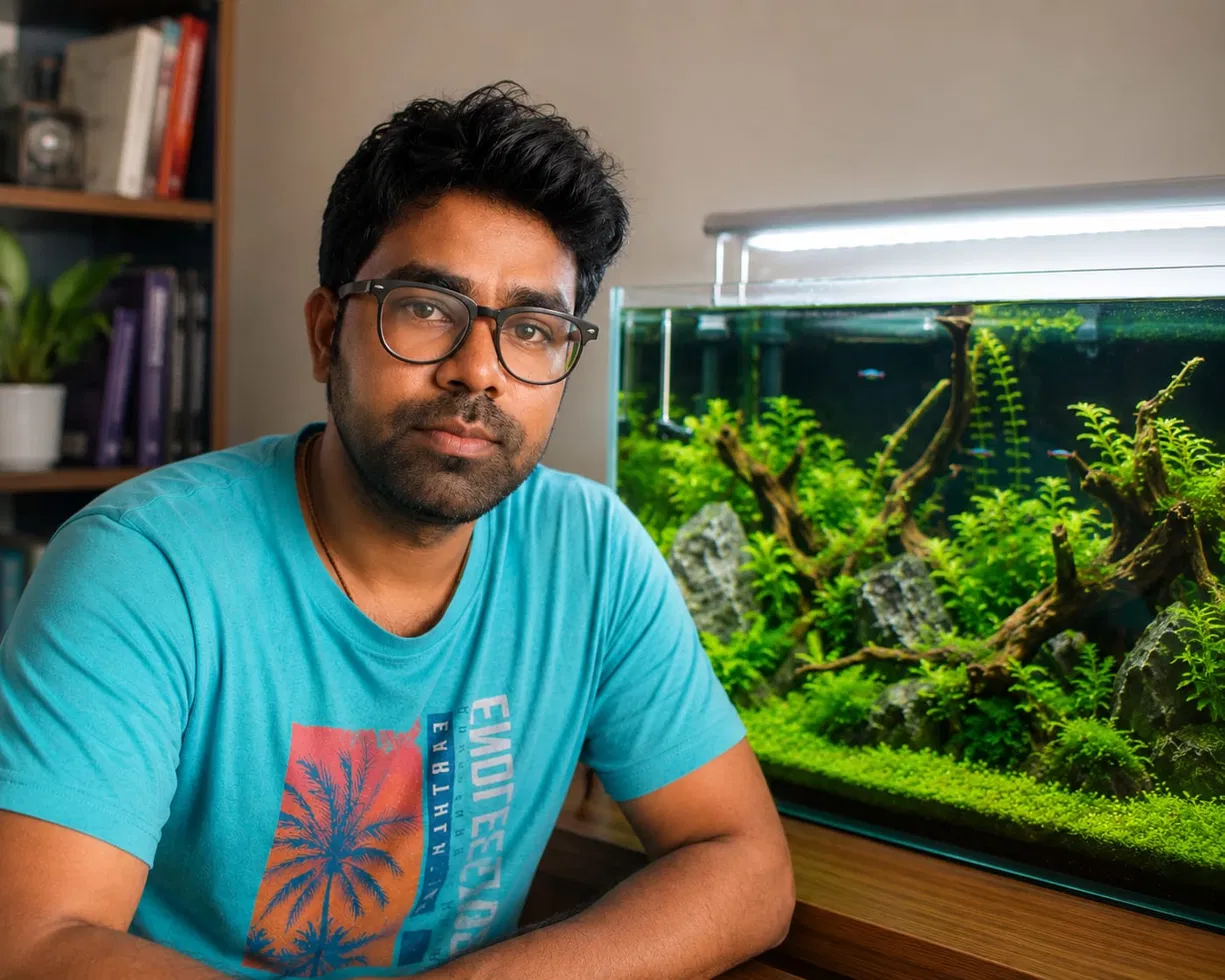
Anil Satak M.Sc. Zoology · Founder, FishioHub
Grew up in a fishing family in India and holds a Master's in Zoology. FishioHub is a one-person operation - every guide is personally researched, kept-tested, and written by Anil. No team, no outsourced writers, no AI-generated content. Read his full bio →