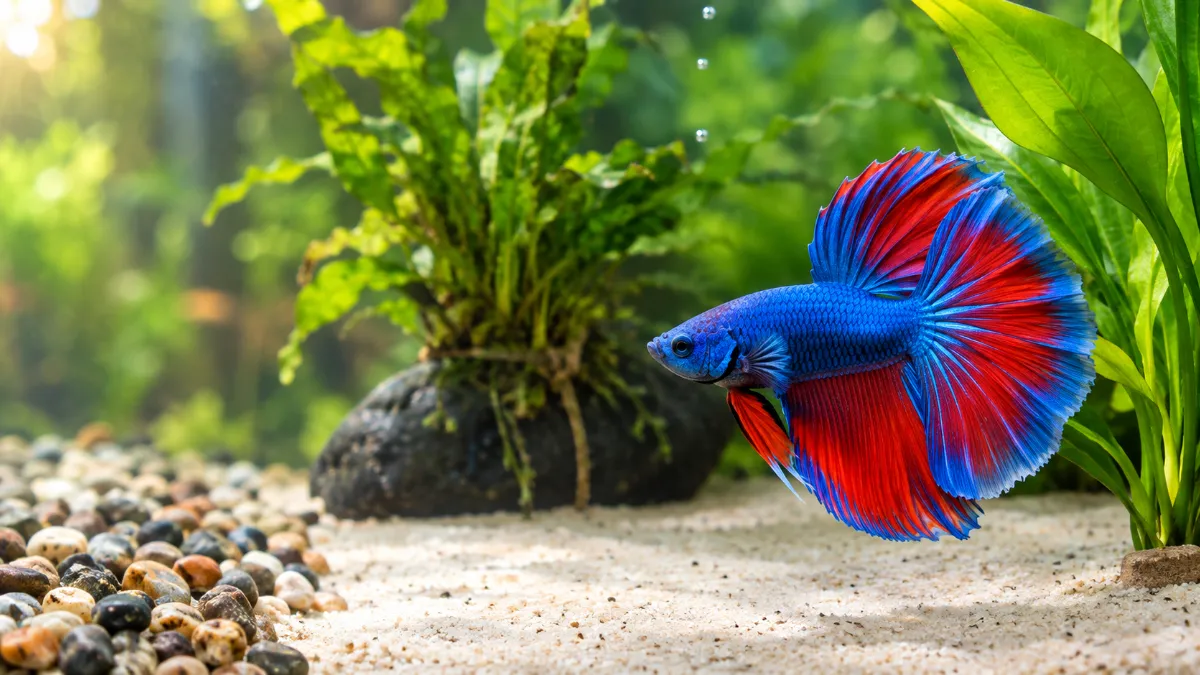
The best substrate for betta fish and plants is smooth sand or small, rounded gravel. Skip anything sharp, because betta fins tear easily.
Short answer: Use 1–2 inches of fine sand or small rounded gravel. Put a root tab under each heavy plant. This keeps fins safe, holds roots, and is easy to clean. It satisfies the needs of betta fish as well as plants.
Just think about what a betta fish needs and a plant’s needs. You will get the answer automatically. I had a very bad experience with it; jagged gravel kept snagging Raja’s fins in my tank. Today, my tank floor is lined with super fine, smooth river sand, and his fins have beautifully healed.
Quick Facts (Read This First)
- Best overall for Betta: fine sand or small rounded gravel
- Best substrate for betta fish and plants: sand or gravel + root tabs for support
- Skip: sharp gravel, rough decor, big rocks stacked tight
- Bare bottom is safe, but plants can’t root in it
- Test everything with a pantyhose test (steps below)
⚠️ Warning: Betta is very fragile fish. Sharp gravel and rough decor can tear your betta’s fins, and you know well this could lead to a very bad situation for betta.
What Is the Best Substrate for Betta Fish?
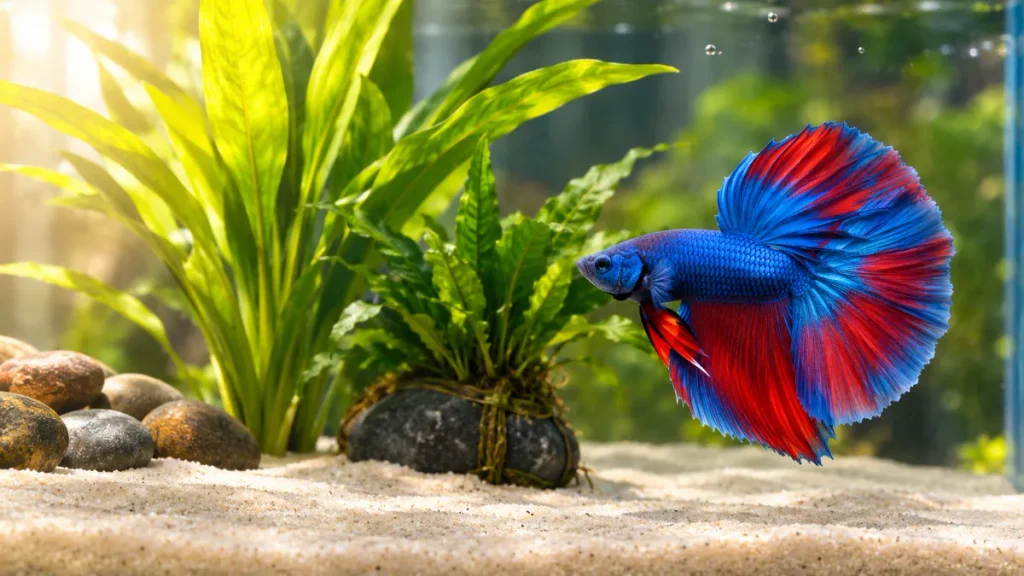
In my opinion, the best substrate for betta fish is one that is soft on fins, easy to clean, and good for plants. For most tanks, that means sand or small smooth gravel.
Think for a moment about where bettas live in the wild, because that shapes the best substrate for betta fish and plants. National Geographic says wild bettas live in shallow freshwater like rice paddies, marshes, and slow streams. It also says they like warm water, around 80°F.
What Substrate Is Best for Betta Fish?
Pick one that passes three checks: smooth, easy to clean, and does not change your water. If a bag says it is coated or colored, read the label first. Plain sand and plain gravel are the safest choices.
Best Substrate for Betta Fish Tank Setups
The best substrate for betta fish tank setups depends on your tank size. A vet-reviewed guide on Hepper says 5 gallons is the minimum for one betta, and about 10 gallons is better.
In a small tank, sand is easy to spot-clean. In a bigger planted tank, gravel holds roots better.
Best Substrate for Betta Fish and Plants: Quick Comparison
Here is my comparison for the best substrate for betta fish and plants, side by side:
| Substrate | Fin safety | Plant growth | Cleaning | Best for |
| Fine sand | Excellent | Good with root tabs | Easy on top | Looks and fin safety |
| Small rounded gravel | Good | Very good | Needs a siphon | Planted tanks |
| Plant soil (aquasoil) | Good | Excellent | Messy if disturbed | Experienced keepers |
| Marbles or glass beads | Good | Poor | Easy | Simple setups |
| Big rocks | Risky | Poor | Traps food | Decor only |
| Bare bottom | Excellent | None | Very easy | Hospital tanks |
Sand for Betta Fish: Which to choose?
Best Sand for Betta Fish
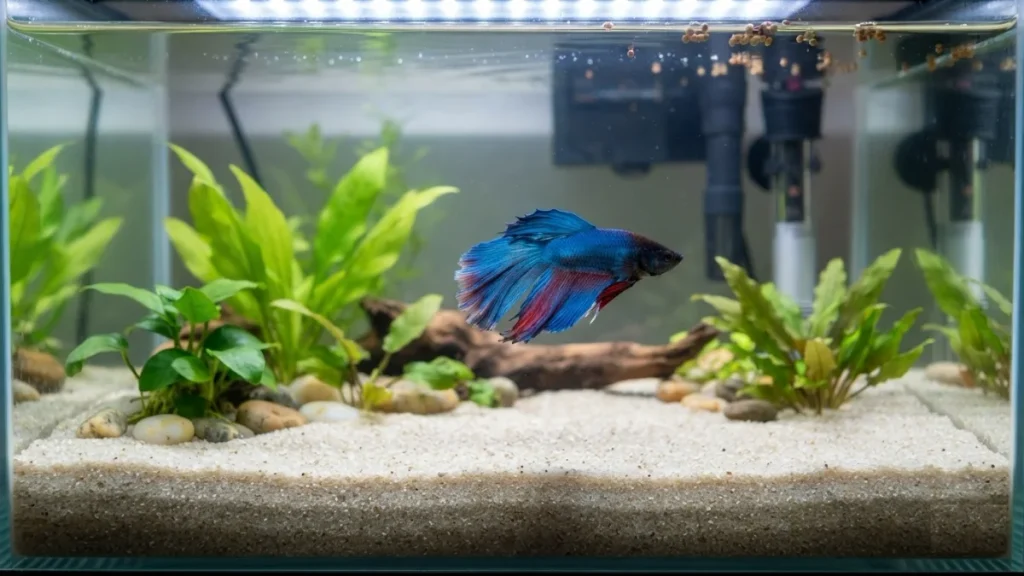
The best sand for betta fish is fine, smooth, and made for freshwater tanks. Rinse it well before use. Sand grains are small, about 1/16 mm to 2 mm, according to Tankarium. That is why sand feels so soft.
Sand Substrate for Betta
A sand substrate for betta works best when it is thin. I keep it around 1–2 inches. That is my own rule of thumb, not a lab number.
If sand packs down, poke it gently with a chopstick during water changes. Hobbyists argue about how risky deep sand really is. A thin layer avoids the whole debate. Hence, I think a thin layer of sand will be good.
Is Sand Good for Betta Fish?
Yes. Sand is good for betta fish because it is soft, so long fins don’t get scratched. Waste also sits on top, so you can see it and siphon it out.
Can Betta Fish Have Sand in Their Tank?
I rarely see it. Still, betta fish can have sand in their tank. Yes, most do fine. Hepper calls swallowing sand or gravel a very small risk. To lower that risk even more, feed floating pellets instead of sinking ones.
Gravel for Betta Fish Tank
Best Betta Gravel
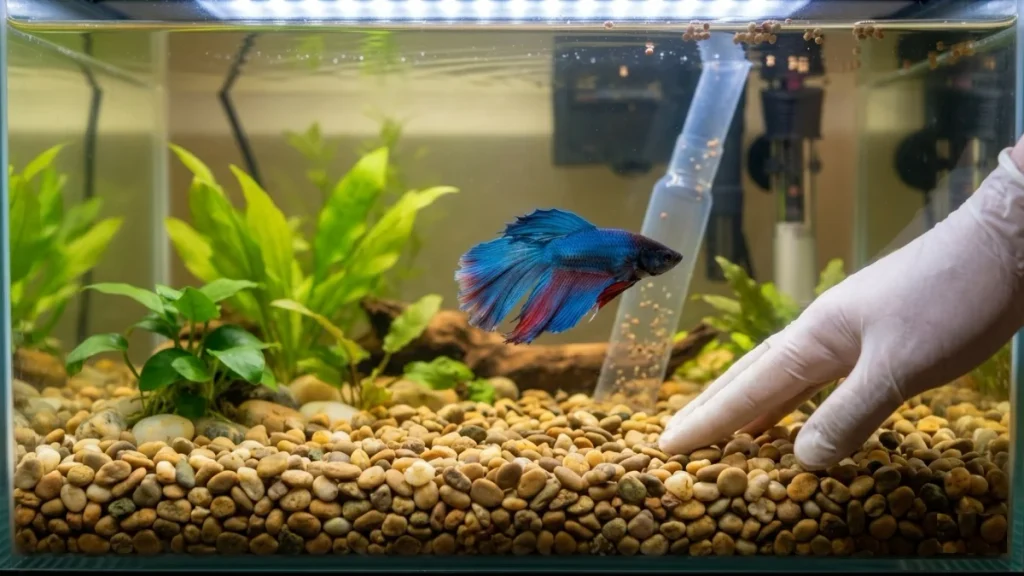
The best betta gravel is small, smooth, and rounded. Think river pebbles, not crushed rock. Run your hand through the bag. If it feels sharp to you, it will feel worse to your betta.
Betta Aquarium Gravel
Betta aquarium gravel gives roots a strong grip and lets water flow through. The downside is that food and poop fall between the stones. Use a small siphon during your weekly water change to clean the gravel.
Sand vs Gravel: Which One?
Sand vs Gravel for Betta
Sand vs gravel for betta comes down to what you care about most. Sand is gentler and looks natural. Gravel holds plant roots better and doesn’t pack down, which is why many people pick it as the best substrate for betta fish and plants.
Here is my simple rule. For a small tank with a few easy plants, pick sand. For a tank full of rooted plants, pick gravel.
Both work if they are smooth.
Substrate for Live Plants Tank
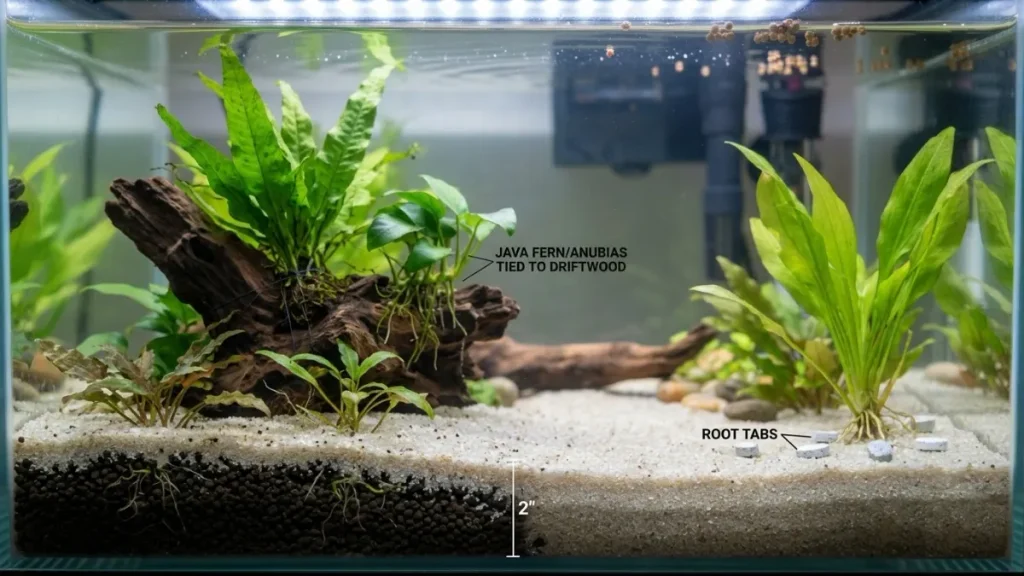
Best Substrate for Betta Fish and Live Plants
The best substrate for betta fish and live plants gives roots something to hold and a little food. Plain sand and gravel have almost no nutrients. That is why root tabs matter for the best substrate for betta fish and plants.
So add root tabs under heavy-root plants like Amazon swords. Easy plants like Java fern and anubias don’t need substrate. Tie them to rock or wood instead.
Betta Tank Substrate for Live Plants
You have two simple paths. Path 1: Sand or gravel plus root tabs. Path 2: A thin layer of plant soil with sand on top.
If you are new, start with path one. It is cheaper and easier to fix.
Substrate for Planted Betta Tank- My Setup
A substrate for planted betta tank setups should stay in place and not be too deep. Around 1–2 inches works for most tanks. That is still the best substrate for betta fish and plants for most beginners.
I keep this post betta-focused. For the full plant-by-plant breakdown, read my guide on the best substrate for a planted aquarium.
Fluval Betta Substrate
Fluval betta substrate usually means Fluval Stratum, a volcanic soil. It suits people who want the best substrate for betta fish and plants in a heavily planted tank.
Fluval’s Plant & Shrimp Stratum is sold to support a neutral to slightly acidic pH, and its granules are about 3–5 mm, per this Bulk Reef Supply listing.
Some stores outside the US also list a smaller “Fluval Betta Stratum.” Check Fluval’s site to see if it is sold near you. Some hobbyists on the Aquarium Co-Op forum say Stratum can leak a little ammonia at first.
⚠️ Warning: New plant soil can release ammonia and shift your pH. Test the water for a few days before you add your betta.
Fluval substrate usually means Fluval Stratum, a volcanic soil ideal for heavily planted betta tanks. While the standard version uses 3–5 mm granules, a smaller “Fluval Betta Stratum” is available outside the US. Some hobbyists note it can leak ammonia initially; when I used it, I tracked a minor ammonia bump for the first four days before my cycle fully stabilized.
Other Options
Rocks for Betta Fish Tank
Rocks for betta fish tank decor are fine, but only when they are smooth. Small rocks under your substrate can also help water flow, says Tankarium.
Don’t stack big rocks tightly. Leave gaps so food doesn’t get trapped.
Can Betta Live Without Substrate?
Yes. A bare-bottom tank is safe and very easy to clean. It just looks empty, and plants can’t root. I’d use it for a hospital tank, I will not apply this idea for my home tank for long term.
Aquarium Substrate for Betta Fish
Before you buy any aquarium substrate for betta fish, do the pantyhose test. Rub a stocking over the gravel or decor. If it snags, your betta’s fins will snag too.
Betta Tank Substrate Care
Betta tank substrate needs light care, not heavy work. Gently siphon the top layer during your weekly water change. Don’t dig deep every time.
Betta Substrate: My Final Pick
For betta substrate, my pick is simple. The best substrate for betta fish and plants is fine sand or small rounded gravel, 1–2 inches deep, with root tabs for hungry plants.
How to Set Up the Best Substrate for Betta Fish and Plants (5 Steps)
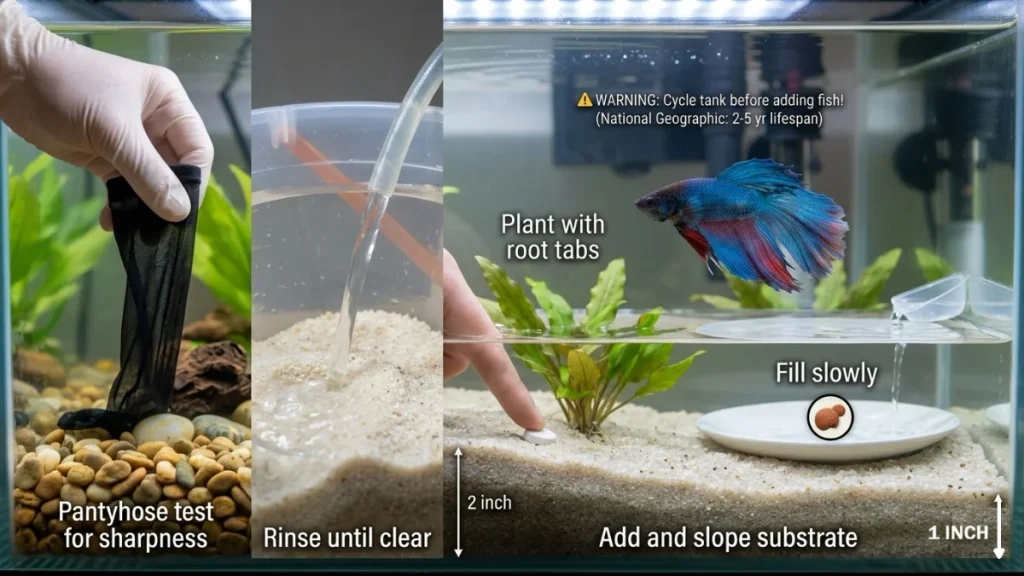
- Test it. Do the pantyhose test on gravel, rocks, and decor.
- Rinse it. Wash the substrate in a bucket until the water runs mostly clear.
- Add it. Pour in 1–2 inches and slope it a little higher at the back.
- Plant it. Push root tabs near heavy root plants.
- Fill slowly. Pour water onto a plate so you don’t dig a hole.
⚠️ Warning: Don’t add your betta until the filter is running and the water is tested. A healthy, safe tank helps your betta reach its full lifespan, which National Geographic puts at 2–5 years in captivity.
My Mistake (And a Myth)
When I started, I used jagged neon gravel because I thought it looked nice. I quickly noticed it fraying Raja’s delicate fins whenever he rested on the bottom, forcing me to switch to smooth sand so he could heal.
One myth I want to clear up: the best substrate for betta fish and plants is not a thick one. A thin, smooth layer is plenty.
FAQ
What is the best substrate for betta fish and plants?
Fine sand or small rounded gravel, with root tabs for heavy plants. It is gentle on fins and holds roots.
Is sand good for betta fish?
Yes. Sand is soft and safe for long fins, as long as it is thin and rinsed well. It is a strong pick for the best substrate for betta fish and plants.
Can betta fish have sand in their tank?
Yes. Swallowing sand is a very small risk, and floating food lowers it further.
Sand or gravel for betta?
Sand is gentler. Gravel holds roots better. Pick smooth ones either way.
Can betta live without substrate?
Yes. Bare-bottom tanks are safe, but live plants can’t root in them.
Are rocks for betta fish tank decor safe?
Smooth rocks are safe. Test any rock with a pantyhose before it goes in.
Is Fluval betta substrate worth it?
It can work for planted tanks. Test for ammonia first, because new plant soil may release some.
How deep should betta tank substrate be?
About 1–2 inches is enough for most betta tanks.
Next Steps: Resources You Should Read
Related FishioHub reading
- What Is Aquarium Substrate?
- Best Substrate for Planted Aquarium: Can You Just Use Gravel?
- Aquarium Substrate Calculator (Sand, Gravel)
- Aquarium Plants That Don’t Need CO2
References used in this post
- National Geographic, Betta fish
- Hepper, Substrate for betta tanks
USA aquarium resources
- International Betta Congress, a betta club founded in the US in 1966
Closing
A betta spends its whole life near the floor. The best substrate for betta fish and plants is the one that feels soft and safe also gives support to the roots.
Start with sand or smooth gravel. Your betta will show you the rest.
Was this guide helpful?
First-Hand Experience
Based on animals I've personally kept and bred - not summarized from other articles.
Zoological Foundation
Claims are checked against my M.Sc. Zoology training and published aquatic biology research, not recycled aquarium myths.
No Paid Influence
No sponsorship shaped this guide. Affiliate links, if any, are disclosed separately and never hidden.
Kept Current
Errors are corrected as soon as they're found, with the update noted at the bottom of the article.

Anil Satak M.Sc. Zoology · Founder, FishioHub
Grew up in a fishing family in India and holds a Master's in Zoology. FishioHub is a one-person operation - every guide is personally researched, kept-tested, and written by Anil. No team, no outsourced writers, no AI-generated content. Read his full bio →