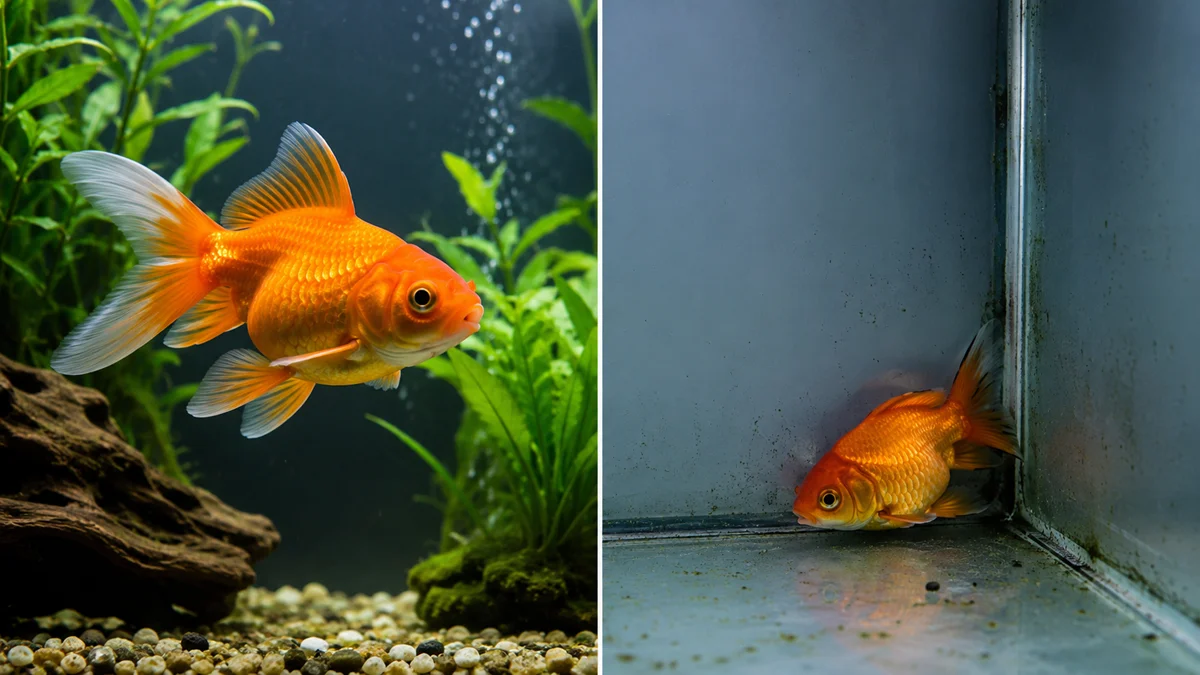
A goldfish staying in corner of tank isn’t sulking. It’s telling you something specific about its water, its tank mates, or its own body — and which one depends on details most owners skip past on the way to Google.
Fish huddled in corner of tank on its own means almost nothing. Fifteen minutes of it, after a water change or a new decoration, is normal caution. Hours of it, especially paired with clamped fins, gasping, or refusal to eat, is a goldfish telling you something is actively wrong. The difference is in what else you’re seeing, not the corner itself.
Here’s how to work through the real causes in the order they’re worth checking.
1. Ammonia or Nitrite Poisoning (Check This First)
This is the single most common reason for a goldfish staying in the corner of the tank, and it’s the fastest to rule out or confirm. Goldfish are heavy waste producers — a single fancy goldfish can push a small, lightly-filtered tank into ammonia trouble within days of setup or after any lapse in maintenance.
Pull out a liquid test kit (strips are notoriously unreliable for ammonia specifically) and check:
| Parameter | Safe | Stressful | Dangerous |
| Ammonia (NH3/NH4+) | 0 ppm | 0.25–0.5 ppm | 1+ ppm |
| Nitrite | 0 ppm | 0.25–0.5 ppm | 1+ ppm |
| Nitrate | Under 20 ppm | 20–40 ppm | 40+ ppm |
| Temperature | 65–72°F | Under 60°F or over 78°F | Sudden 5°F+ swing |
If ammonia or nitrite reads above zero, that’s your answer. Burned, inflamed gills push goldfish to gasp near the surface or retreat somewhere they don’t have to fight current — a corner, usually near the bottom where flow is weakest. Do an immediate 40–50% water change, retest in a few hours, and hold off on feeding until the numbers come down. A dechlorinator that also detoxifies ammonia (Seachem Prime is the standard choice) buys you 24–48 hours of safety margin while the tank recovers.
2. Temperature Stratification — the “Goldfish Kept as Tropical Fish” Mistake
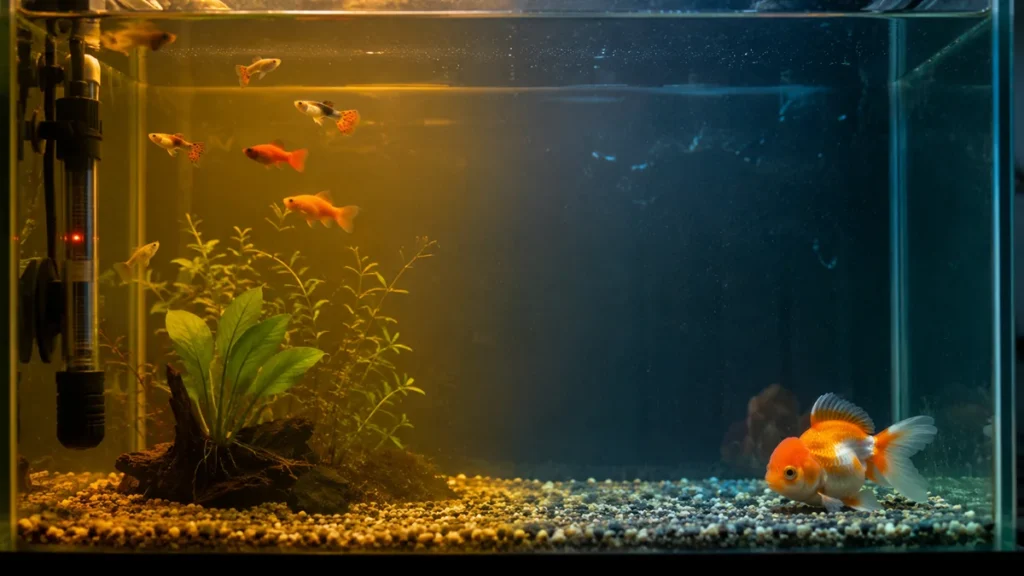
Goldfish are cold-water fish, not tropical fish, and that distinction causes more corner-sitting than most care sheets admit. If a goldfish shares a heated community tank meant for tropical fish, or sits in a large tank with a single heater mounted on one wall, temperature can vary noticeably between zones. Warm water rises; a goldfish that prefers cooler conditions will drift toward whichever corner sits closest to its comfort range, which is usually the bottom.
Move a thermometer to two or three spots in the tank and give each a few minutes to settle before reading. A swing of more than 2–3°F between zones means your circulation isn’t doing its job — add a powerhead or reposition your filter output; don’t just add a second heater. Goldfish do best in the 65–72°F range; anything consistently above 74°F runs for a “tropical” setup stresses them even without an outright temperature shock.
3. Bullying, Overcrowding, and Mismatched Tank Mates
Comets and single-tail goldfish are fast, food-aggressive swimmers. Fancy varieties — orandas, ryukins, fantails — are slower and worse at defending themselves. Housed together, or in a tank that’s simply too crowded for the group, the slower or weaker fish gets outcompeted at every feeding and eventually just stops trying, parking itself in a corner to avoid the chaos.
As a stocking baseline: single-tail goldfish need roughly 55+ gallons per fish long-term, fancy varieties around 20+ gallons per fish. If you’re under that, or mixing body types, that alone can explain one fish going quiet while the others look fine. Watch feeding time specifically — if one goldfish never makes it to the food before it’s gone, you’ve found your cause.
4. Illness: Parasites, Fin Rot, and Swim Bladder Disorder
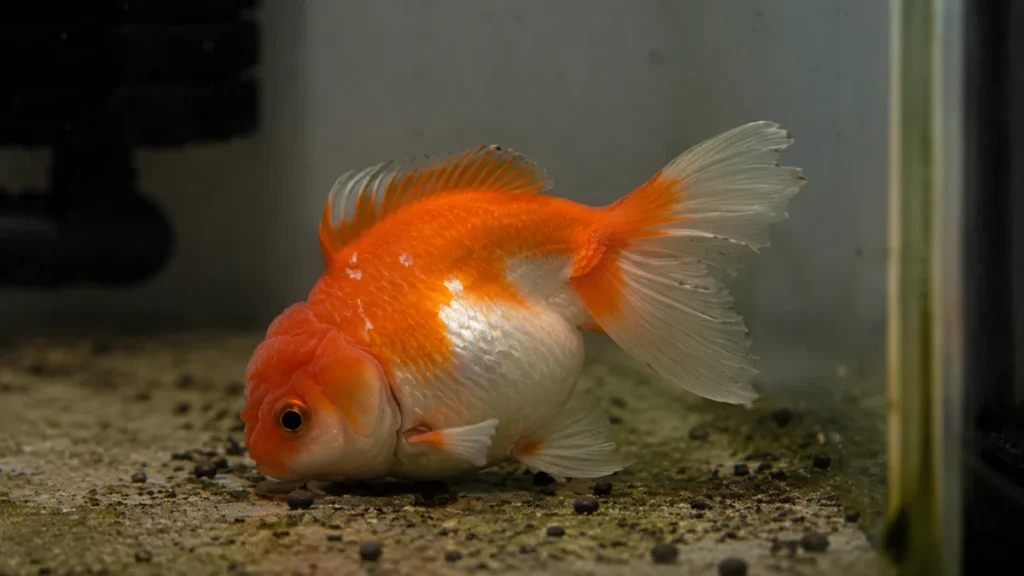
Sick goldfish isolate. It’s an instinctive response across most fish species, goldfish included — a corner is the closest thing to cover in a bare tank. Look for the tells that separate illness from stress: white spots (ich), frayed or discolored fin edges (fin rot), visible bloating, or a fish that struggles to hold a normal upright position rather than just sitting still.
That last symptom — tilting, floating sideways, or sinking without being able to right itself — points to swim bladder disorder rather than a water or social problem. It’s especially common in round-bodied fancy varieties like orandas and fantails, often triggered by overeating, gulped air from surface feeding, or constipation. A short 2–3 day fast, followed by a skinned, de-shelled pea or two, resolves a large share of mild cases. If the fish can’t stay upright at all or the abdomen looks swollen and hard, that’s past home treatment and worth a vet experienced with aquatic animals.
For parasites and early bacterial issues, goldfish tolerate aquarium salt far better than most freshwater tropicals, which is why it shows up constantly in goldfish treatment threads. A working range: 0.1–0.3% salinity, roughly 1 tablespoon of aquarium salt per 5 gallons for a mild preventative dose, working up toward 3 teaspoons per gallon for active parasite treatment — dissolved in a separate container first, never poured in dry. Hold that concentration for about three weeks for a genuine parasite issue, and replace the salt lost with every water change, since salt doesn’t evaporate with the water. If you’re unsure the fish is actually parasitic versus just stressed, treat the water quality first — salt is not a substitute for fixing ammonia.
5. New Fish, New Tank: Quarantine Matters More Than You Think
A goldfish sitting in the corner of the tank within its first days home is often simple transport stress, but it’s also exactly when an undiagnosed parasite load shows up. Any new goldfish should spend 2–4 weeks in a separate quarantine tank before joining an established one — 10 gallons per fish minimum, sponge filter for gentle, mature-enough filtration, and a low-dose salt regimen as a default precaution rather than a reaction to symptoms. Skipping quarantine is how one stressed corner-sitter becomes a tank-wide ich outbreak two weeks later.
6. New Tank Syndrome
If the tank is under six to eight weeks old, corner-sitting can simply mean the nitrogen cycle hasn’t established yet, even with a zero ammonia reading at the moment you test. Cycling isn’t instant or perfectly stable in week one — test daily rather than assuming a clean reading today means a clean reading tomorrow, and keep stocking light until you’ve seen several consecutive zero-ammonia, zero-nitrite readings.
7. When Corner-Sitting Is Actually Normal
Not every instance needs a fix. Goldfish rest, goldfish not moving, and resting goldfish often park near the substrate or against the glass, particularly with the lights recently off or on. A goldfish that’s alert, comes to the front of the tank at feeding time, and swims normally when it does move isn’t in trouble — it’s just choosing a spot. The difference between normal and concerning is duration and company: brief, occasional corner time with normal appetite and coloring is fine; prolonged, isolated, clamped-fin corner time is not.
What To Check Tonight
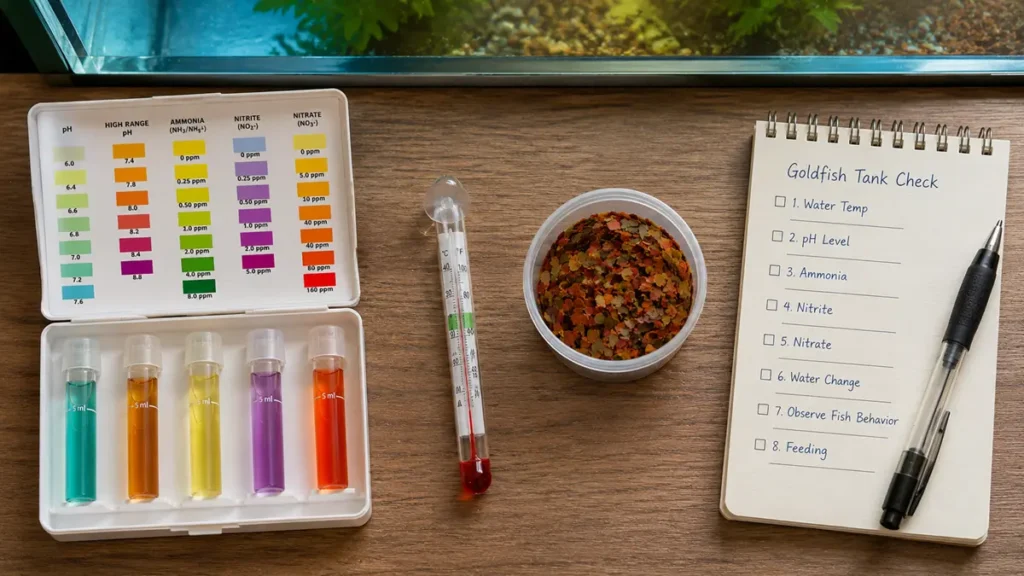
- Test ammonia, nitrite, nitrate, and pH with a liquid kit — not strips.
- Check temperature in two or three spots in the tank, not just at the heater.
- Watch the next feeding closely: is this fish eating, or getting pushed out?
- Look the fish over for spots, fraying, bloating, or an inability to stay upright.
- If the tank is under two months old, assume an incomplete cycle until proven otherwise.
Run through that list in order, and you’ll usually land on an answer within one evening — most causes rule each other out fast once you actually have numbers in front of you instead of a guess.
FAQ on Goldfish Staying in Corner of Tank?
Is it normal for a goldfish to sit in the corner sometimes?
Yes, briefly. Occasional resting near the glass or substrate is normal, especially right after lights-out or a tank disturbance. It becomes a concern when it’s prolonged, paired with clamped fins or lost appetite, or the fish avoids the rest of the tank entirely.
How do I know if it’s stress or illness?
Stress from water quality or bullying usually resolves within hours of fixing the trigger — a water change, more space, separating an aggressor. Illness tends to come with a visible physical sign: spots, frayed fins, bloating, or an inability to hold a normal swimming position. If the fish doesn’t improve after correcting water parameters, treat it as a possible illness.
Can I use aquarium salt as a general goldfish treatment?
In moderation, yes — goldfish handle salt better than most tropical fish, and a low dose (around 0.1%, roughly a tablespoon per 5 gallons) helps with mild stress and slime coat support. It’s not a fix for poor water quality, though, and shouldn’t be used continuously at treatment-strength doses long-term.
Do I need a quarantine tank for a new goldfish?
Yes, ideally. Two to four weeks in a separate tank before introducing a new goldfish to your main setup catches parasites and disease before they spread. Skipping this step is one of the most common reasons a healthy-looking new fish causes problems in an established tank weeks later.
Should I worry if only one goldfish in the tank is doing this?
More, not less — a single affected fish out of several usually points to bullying, a localized swim bladder issue, or early illness in that individual rather than a tank-wide water problem, since the others would likely show symptoms too if it were purely water quality.
Next Steps
Keep reading on FishioHub:
- How to Remove Ammonia from a Fish Tank Naturally — the full water-change and dosing protocol if your test came back positive
- Why Is My Fish Breathing Fast? — for when corner-sitting is paired with rapid gill movement
- How to Treat Ich in Fish Naturally — full salt and heat protocol if you spot white spots
- Can Goldfish Live in a Bowl Without a Filter? — for undersized or unfiltered setups
Scientific references:
- Sanderson, L.A. et al. “Relationship between oxidative stress and brain swelling in goldfish (Carassius auratus) exposed to high environmental ammonia.” Physiological Genomics.
- “Swim Bladder Disease in Fish: Symptoms & Treatment.” PetMD, veterinary-reviewed.
USA aquarium resources:
- American Association of Fish Veterinarians — Find a Fish Vet — locate a vet experienced with aquatic animals for cases beyond home treatment
Was this guide helpful?
First-Hand Experience
Based on animals I've personally kept and bred - not summarized from other articles.
Zoological Foundation
Claims are checked against my M.Sc. Zoology training and published aquatic biology research, not recycled aquarium myths.
No Paid Influence
No sponsorship shaped this guide. Affiliate links, if any, are disclosed separately and never hidden.
Kept Current
Errors are corrected as soon as they're found, with the update noted at the bottom of the article.
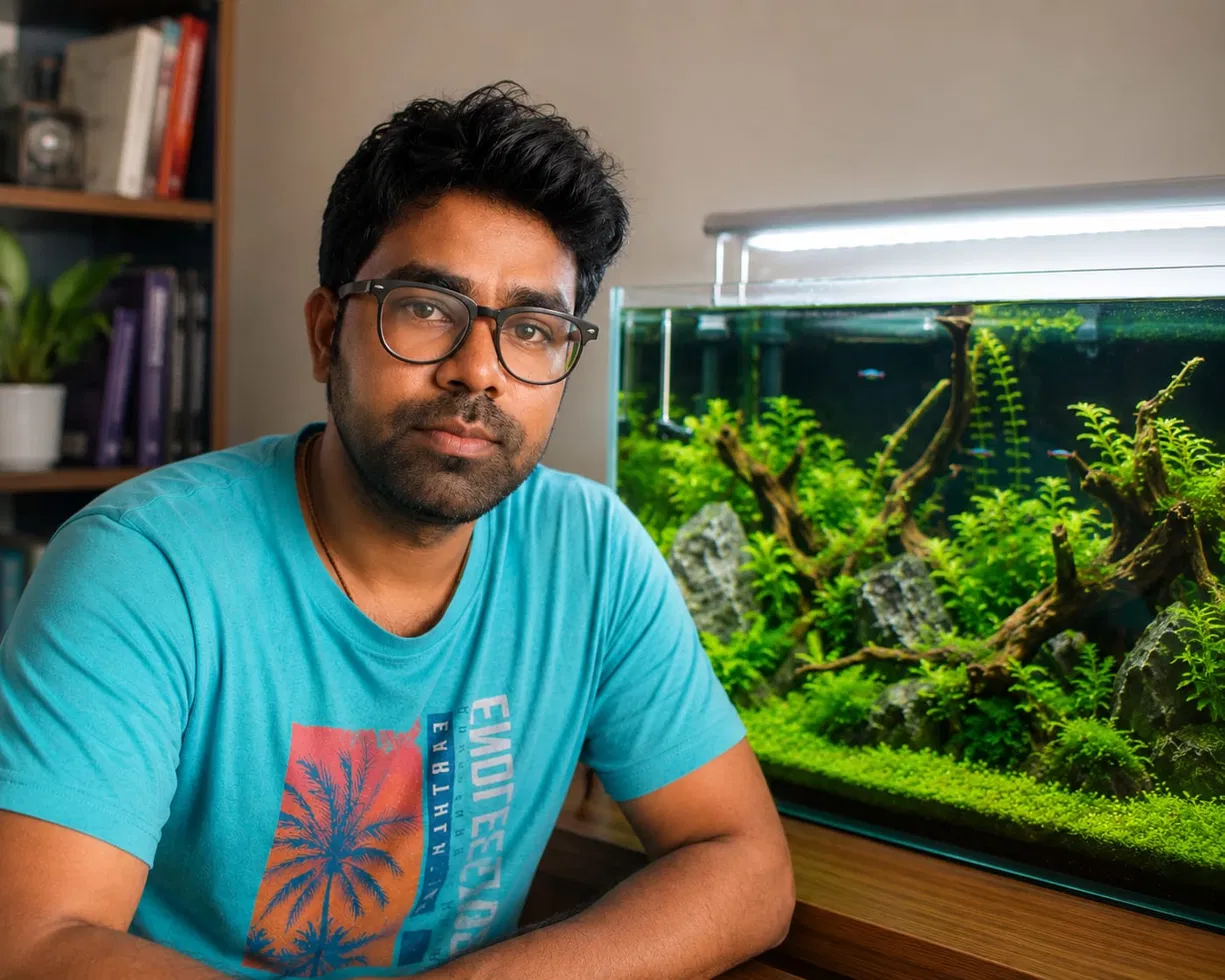
Anil Satak M.Sc. Zoology · Founder, FishioHub
Grew up in a fishing family in India and holds a Master's in Zoology. FishioHub is a one-person operation - every guide is personally researched, kept-tested, and written by Anil. No team, no outsourced writers, no AI-generated content. Read his full bio →