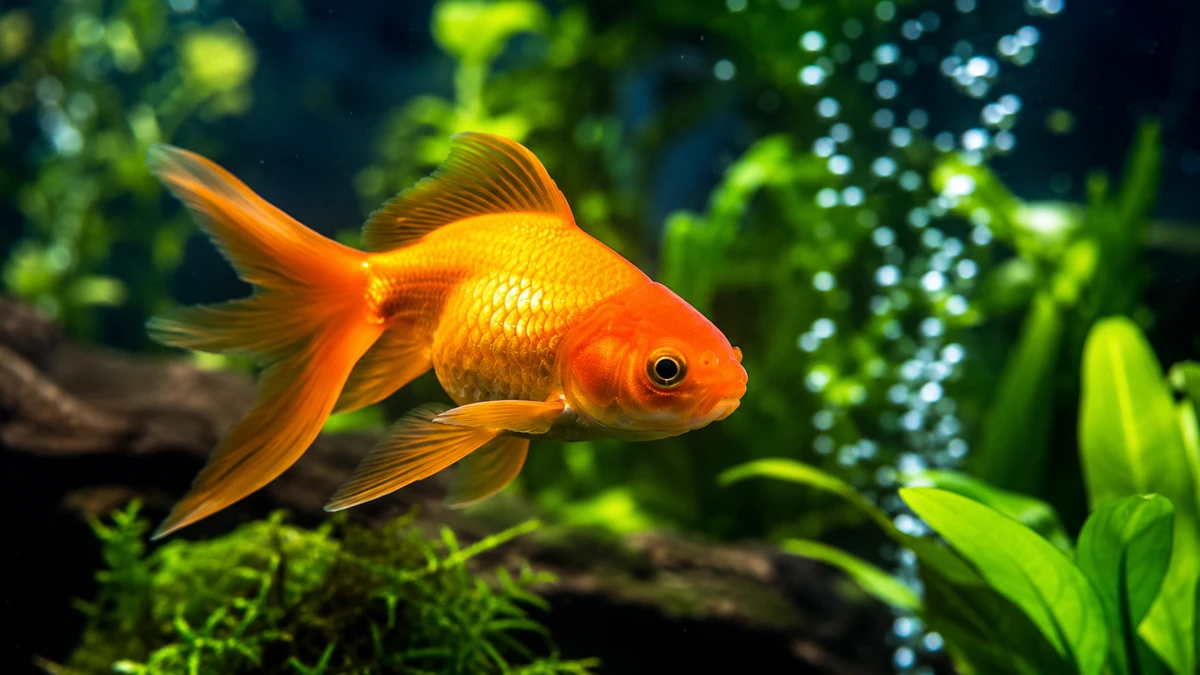
I’ve seen goldfish sold in bowls at Indian fish markets my whole life — it’s tradition, not cruelty. But here’s the uncomfortable truth about Can Goldfish Live in a Bowl Without a Filter? I had to learn during my zoology study: a goldfish in an unfiltered bowl isn’t living; it’s slowly suffocating in its own waste.
Most goldfish in a filterless bowl start showing ammonia stress within 24–48 hours, and without intervention, survival past a few weeks is rare — some last months, almost none reach their natural 10–20-year lifespan.
If you’ve got a goldfish in a bowl right now, don’t panic. Here’s exactly what’s happening in that water, how long you actually have, and what to do tonight.
In this guide, I will give you a clear answer to the question, Can Goldfish Live in a Bowl Without a Filter? How long can a goldfish live? What actually happens in water? Can an air pump save it?
Quick Summary Fact Card
| Question | Quick Answer |
| Can goldfish live in a bowl without a filter? | No — not long-term |
| How long before ammonia becomes dangerous? | 24–48 hours |
| Minimum tank size: 1 goldfish | 20–30 gallons |
| Minimum tank size: 2 goldfish | 40–55 gallons |
| Natural lifespan (properly filtered tank) | 10–20 years |
| Typical lifespan (unfiltered bowl) | Weeks to a few months |
The Real Timeline: How Long Can a Goldfish Actually Survive?
This is what most guides won’t tell you straight, so let’s be precise.
- 0–24 hours: Water looks fine. It isn’t. Ammonia is already rising from waste and uneaten food.
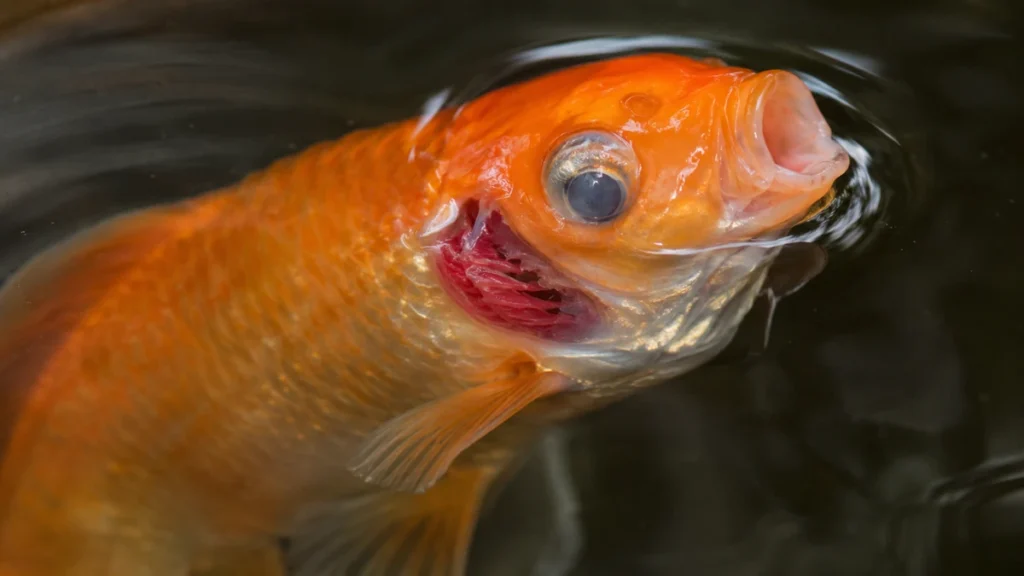
- 24–48 hours: Ammonia stress begins. Your goldfish may gasp at the surface — that’s oxygen starvation, not curiosity.
- 3–7 days: Without water changes, ammonia burns gill tissue. Fish become lethargic, and colors fade.
- 1–4 weeks: Most bowl-kept goldfish without any maintenance start showing fin rot, cloudy eyes, or stop eating.
- Months, rarely years: A handful survive longer with aggressive daily water changes — but this isn’t living well; it’s surviving.
Compare that to a goldfish in a filtered, properly cycled tank: 10 to 20 years. That gap is the entire argument.
So, how long can a goldfish live in a bowl without a filter? Honestly — it depends entirely on how often you change the water, but even the most dedicated daily-change routine can’t fully replace what a filter does.
What’s Actually Happening in the Water (The Nitrogen Cycle, Explained Simply)
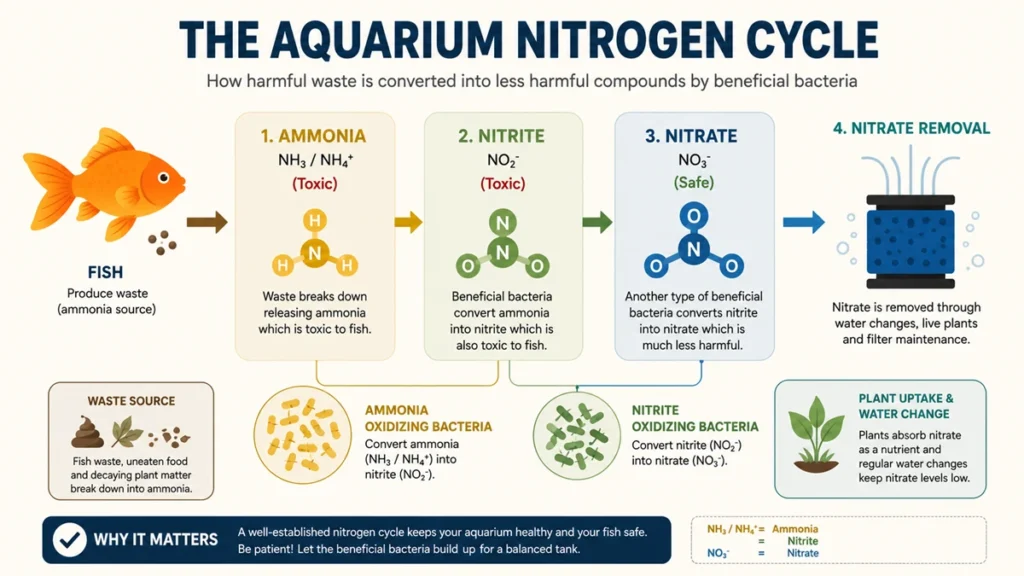
Think of a filter like a goldfish’s second kidney — except this one lives outside the fish.
Goldfish don’t have a stomach. Food passes through them fast, which means they produce waste constantly. Goldfish are extremely messy eaters and messier waste producers — in a tiny bowl, that waste breaks down into ammonia within hours. Even at levels as low as 0.5 ppm, ammonia starts damaging gill tissue.
In a healthy filtered tank, colonies of Nitrosomonas bacteria convert that ammonia into nitrite, and Nitrobacter bacteria convert the nitrite into far less toxic nitrate. This is the nitrogen cycle — and it can only happen on a surface a filter provides (media, sponge, bio-balls). A bowl has nowhere for that bacteria to live in meaningful numbers, so the cycle never really starts.
That’s the mechanical reason “just do more water changes” only slows the problem — it never actually fixes it. You’re bailing water out of a leaking boat instead of patching the hole.
Bowls also can’t hold a stable temperature. Because they hold so little water, temperature swings happen fast, and those swings weaken a goldfish’s immune system on top of the ammonia problem — a second stressor working against the fish at the same time.
Can an Air Pump Alone Save It?
Short answer: no, not by itself.
Goldfish have a labyrinth-adjacent trick — they can gulp air at the surface when oxygen is low, which is why they survive low-oxygen water longer than most fish. That’s survival, not health.
An air pump adds oxygen and surface movement, which genuinely helps against suffocation. Bowls provide low surface area, no water movement, and stagnant, poorly aerated water — so oxygen is a real problem on its own. But an air pump does nothing about ammonia. Oxygen and ammonia are two separate problems, and a bowl fails at both. An air pump without a filter buys you time. It doesn’t buy you safety.
While goldfish are famous for surviving stagnant water, a study published in Fish Physiology and Biochemistry demonstrates that prolonged exposure to low oxygen forces the goldfish heart to undergo severe functional stress and molecular remodeling to prevent cardiovascular failure (Imbrogno et al., 2025).
What Tank Size Do Goldfish Actually Need?
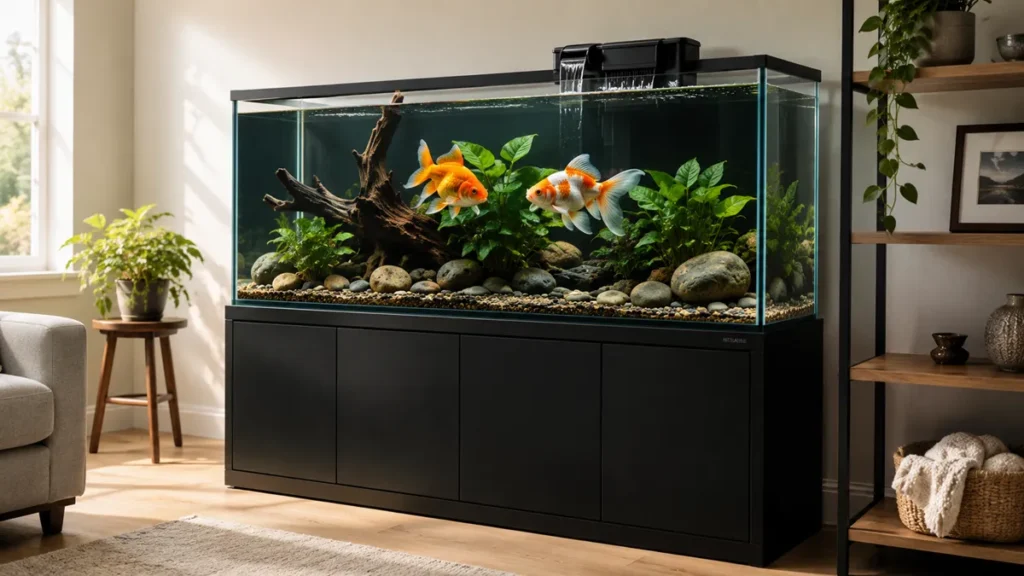
To avoid every problem above, goldfish need proper tanks, not bowls:
- Single goldfish: 20–30 gallons
- Two goldfish: 40–55 gallons
Larger tanks dilute waste, keep water stable, and give a filter room to actually work. It’s also worth knowing this isn’t just about current size — goldfish keep growing well beyond the “cute and small” stage most people picture, and an undersized bowl stunts that growth rather than stopping it safely.
What Happens If You Try to Keep Goldfish in a Bowl?
Most goldfish kept in bowls suffer from:
- Ammonia poisoning
- Stunted growth
- Fin rot
- Cloudy eyes
- Poor color
- Very short life expectancy
A goldfish that could live 10–20 years in a proper tank may survive only months in a bowl.
First 24 Hours: What to Do Right Now If Your Goldfish in a BowlIs in a Bowl
- Do a 50% water change today, using dechlorinated or aged tap water at matching temperature.
- Add an air stone or air pump immediately — this is the cheapest, fastest fix for oxygen while you sort out real filtration.
- Don’t overfeed. Skip a feeding if you’re unsure — uneaten food is a major ammonia source.
- Get a basic sponge filter as soon as you can (widely available at Petco/PetSmart or online, typically $10–20) — it’s the fastest legitimate path to real filtration, even in a small container short-term.
- Plan the upgrade to a proper tank within days, not months — every day in an unfiltered bowl shortens the fish’s life expectancy.
When owners do make this switch from a bowl to a filtered tank, the difference shows fast: colors brighten, behavior gets more active, appetite improves, and growth becomes healthy. That real-world turnaround is the clearest proof that bowls without filtration don’t work for goldfish.
What I Got Wrong My First Time
When I bought a goldfish in a bowl nearly six or seven years ago, so many people in the market were buying them. It looked beautiful, so I got one too. I kept it near our TV panel, and it looked so pretty. However, after two or three days, I noticed a change in the goldfish; it seemed stressed and weak. Finally, in about a week and a half, it died.
USA Buyer’s Note: What to Actually Buy Instead of a Bowl
If you’re in the US, skip the decorative bowl aisle entirely. A basic 20-gallon long tank — Petco and PetSmart both regularly run $1-per-gallon tank sales — plus a $15–25 sponge or hang-on-back filter solves this permanently for less than most decorative bowls cost. If you’re mid-cycle waiting for equipment to ship, a sponge filter is the single best stopgap — it’s cheap, silent, and gives bacteria somewhere to colonize almost immediately.
Next Steps: Resources You Should Read Next
- Can a Fish Tank Run Without a Filter? — the broader version of this question, for any fish
- How to Remove Ammonia From a Fish Tank Naturally — what to do once you’ve set up real filtration
- How to Choose the Right Aquarium Air Pump — the fastest fix while you upgrade
Also from FishioHub:
- Can Ghost Shrimp Live with Betta Fish?
- Do Amano Shrimp Eat Algae? Expert Guide
- Why Is My Fish Tank Cloudy?
FAQs on Can Goldfish Live in a Bowl Without a Filter?
Can goldfish live in a bowl without a filter?
No, not for long. A bowl can’t support the beneficial bacteria that break down ammonia, so waste builds up within a day or two, leading to stress, illness, and a drastically shortened lifespan.
How long can a goldfish live in a bowl without a filter?
Ammonia stress typically begins within 24–48 hours. Some goldfish survive weeks to a few months with daily water changes, but almost none reach their natural 10–20-year lifespan without proper filtration.
Can a goldfish live without a filter or air pump?
It’s possible for a short time, but risky. Without a filter, ammonia builds up fast; without an air pump, oxygen drops too. Both missing at once accelerate stress significantly within the first two days.
Is it safe to keep a goldfish in a bowl overnight if the filter breaks?
One night is usually fine if the tank is already cycled and stable. Add an air stone if possible, avoid feeding, and fix or replace the filter within 24–48 hours to avoid ammonia buildup.
What’s a common beginner mistake with bowl-kept goldfish?
Assuming daily water changes fully replace a filter. They remove some ammonia but never establish the bacterial colony that processes waste continuously — it’s damage control, not a real fix.
Where can I buy an affordable filter in the USA?
Petco and PetSmart both carry sponge and hang-on-back filters starting around $10–20, and both run regular $1-per-gallon tank sales that make upgrading from a bowl inexpensive.
Is it a myth that goldfish only grow to fit their container?
Yes. Goldfish growth slows in small spaces, but they don’t stop growing — they just become stunted and unhealthy, not permanently small. This is a persisting myth worth correcting directly.
What fish can live in a bowl without a filter?
Only a few tiny species tolerate unfiltered bowls reasonably well, such as white cloud minnows, endlers, and cherry shrimp — and even they do best with a small filter. Goldfish should never be kept in a bowl without filtration.
Final Expert Verdict
So, can goldfish live in a bowl without a filter? Absolutely — not if you want a healthy fish that lives anywhere close to its natural lifespan.
Bowls can’t handle the waste, oxygen needs, or temperature stability goldfish require. For a healthy goldfish, always provide:
- A large aquarium
- A reliable filter
- Stable water parameters
- Regular maintenance
That combination is what extends a goldfish’s lifespan to 10–20 years instead of a few months.
Was this guide helpful?
First-Hand Experience
Based on animals I've personally kept and bred - not summarized from other articles.
Zoological Foundation
Claims are checked against my M.Sc. Zoology training and published aquatic biology research, not recycled aquarium myths.
No Paid Influence
No sponsorship shaped this guide. Affiliate links, if any, are disclosed separately and never hidden.
Kept Current
Errors are corrected as soon as they're found, with the update noted at the bottom of the article.
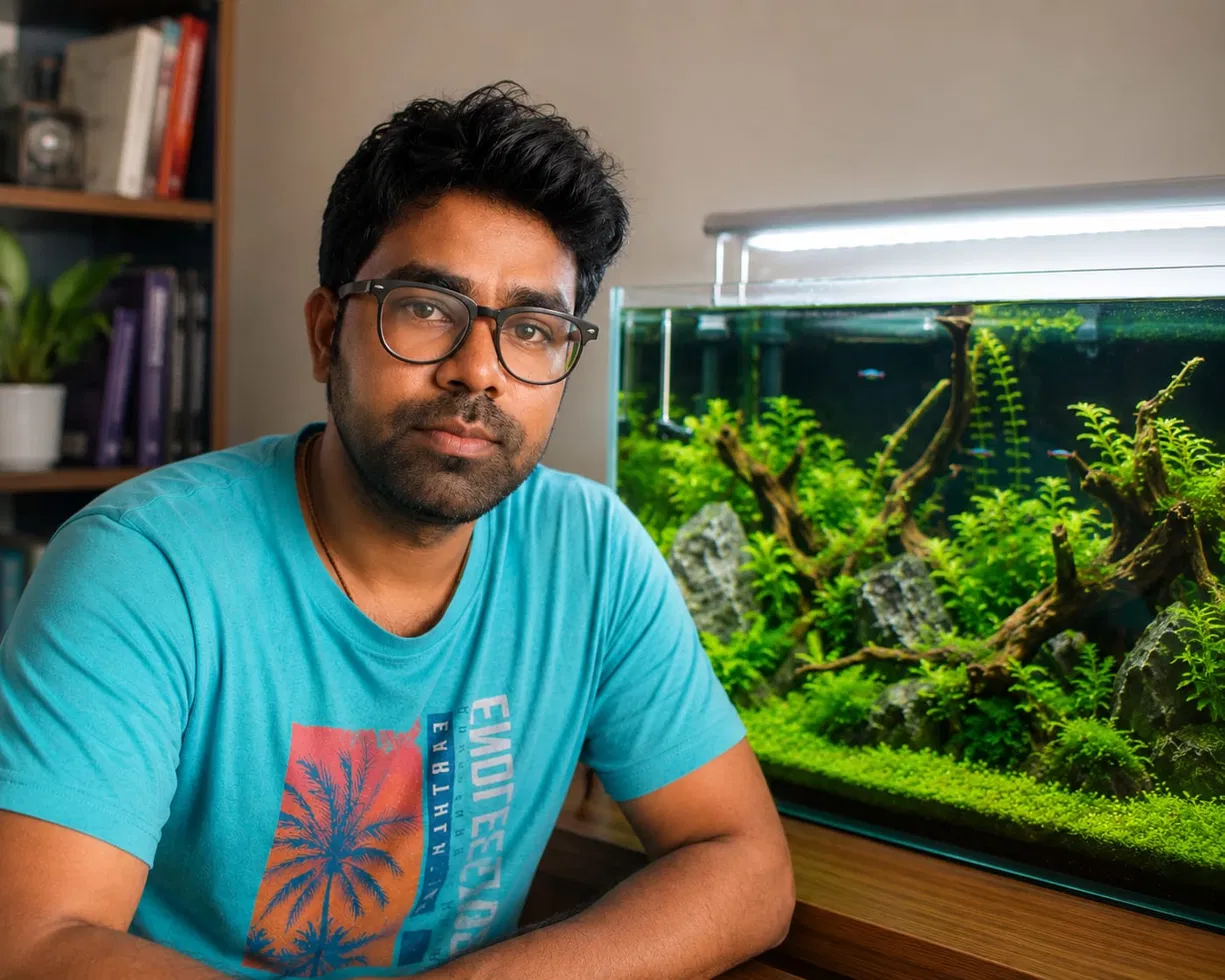
Anil Satak M.Sc. Zoology · Founder, FishioHub
Grew up in a fishing family in India and holds a Master's in Zoology. FishioHub is a one-person operation - every guide is personally researched, kept-tested, and written by Anil. No team, no outsourced writers, no AI-generated content. Read his full bio →