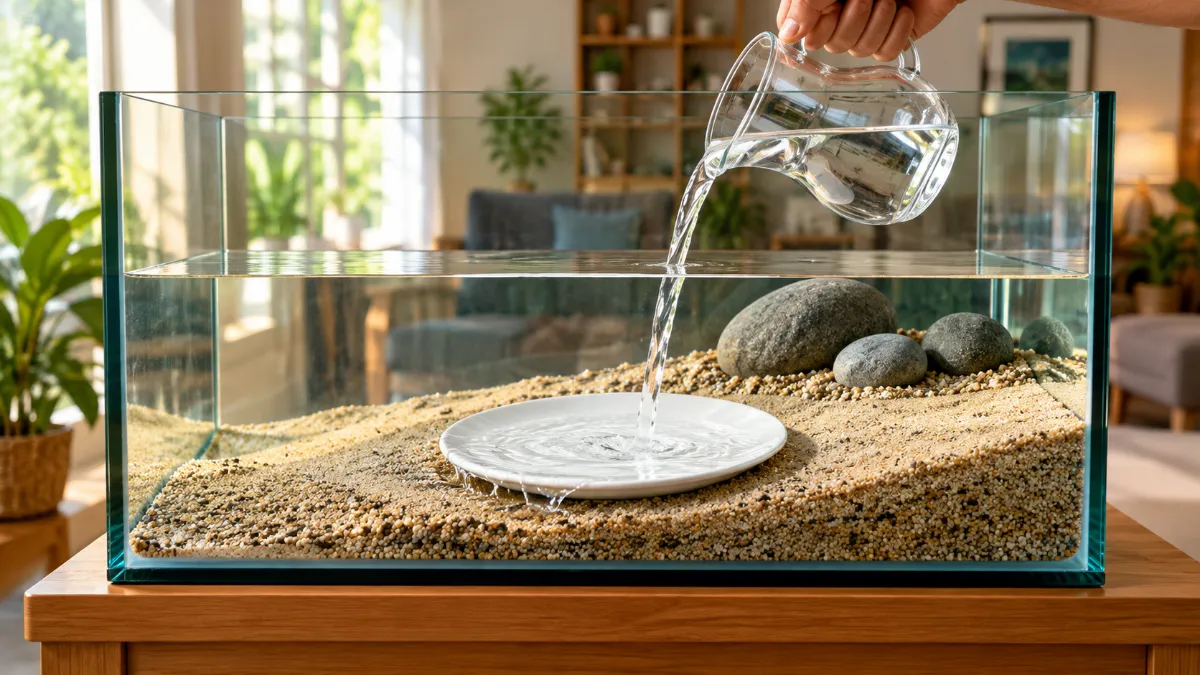
Dumping gravel straight into a tank gives you a cloudy mess. Here’s how to put substrate in aquarium the clean way: rinse it, spread it 1–3 inches deep, and pour water over a plate.
My short answer: Start with an empty, level tank. Rinse gravel or sand until the water runs clear, then spread it 2–3 inches deep (gravel or soil) or 1–2 inches deep (sand). Place a plate on top and slowly pour water onto it. This will allow water to move slowly without messing substrate.
When I set up my first aquarium, I hastily poured an entire bag of black sand directly into the tank without washing it first. Within seconds, the water turned completely murky and sludge-like. It took three days for it to clear up, and in the process, a filter cartridge was ruined. Sometimes, doing things the wrong way can prove to be quite costly.
5 Things to Remember
- Rinse first. Remember: Gravel and sand need a good rinse. Aqua soil usually does not.
- Check the depth. Gravel 2–3 inches, sand 1–2 inches, aqua soil 2–3 inches.
- Rocks go first. Put heavy stones on bare glass, then add substrate around them.
- Use a plate. Never pour water straight onto the substrate.
- Sniff the tank. A rotten-egg smell means something is wrong underneath.
These basics work for how to put substrate in aquarium setups, and for how to put substrate in tank builds of any size.
Warning: Never use soap or detergent on substrate. Even a little can hurt your fish.
How to Put Substrate in Aquarium: 7 Simple Steps
Here is the full process, which I always follow: from empty glass to a filled tank.
- Place the tank. If a tank is full, it will not be easy to balance it, so set it on its stand and check its level.
- Rinse the substrate. Fill a clean bucket, stir with your hand, pour off the cloudy water, and repeat until it runs mostly clear.
- Set rocks and wood. Put them on the bare glass before any substrate goes in.
- Pour in the substrate. Use a cup or scoop and keep it low, close to the glass.
- Shape it. Make the back higher than the front.
- Add water over a plate. Pour slowly so the water spreads out and doesn’t dig a hole. Use a plate.
- Plant, then switch on. Turn on the filter and heater only after the tank is full.
Where to Put Aquarium Substrate
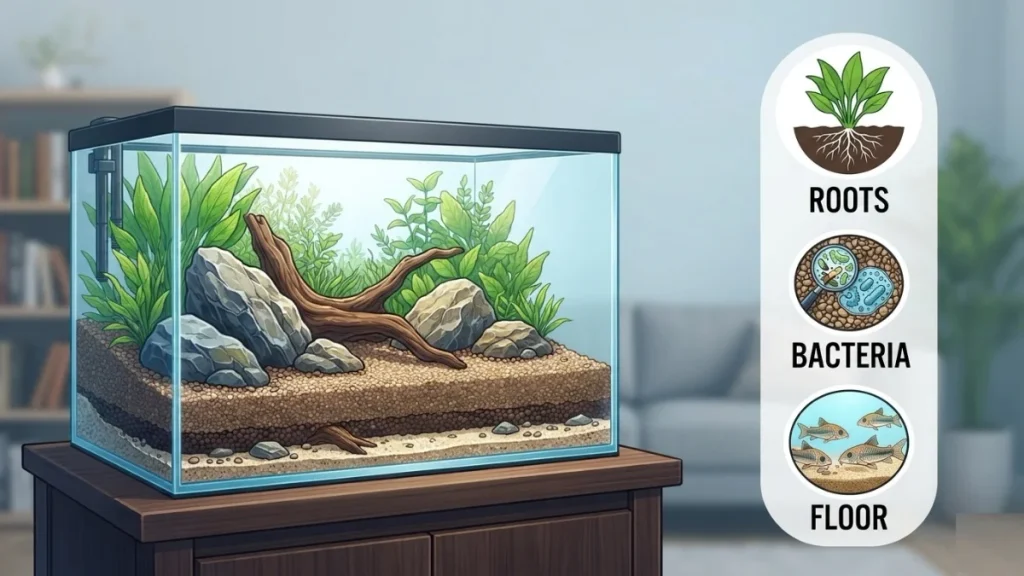
The substrate covers the whole bottom of the tank. Rocks and wood sit on the glass under it, and knowing that makes how to put substrate in aquarium much easier.
If you’re wondering how to use substrate in aquarium setups, think of it as three jobs. It holds plant roots, gives good bacteria a home, and gives your fish a floor that feels natural.
How to Put Stone in Aquarium
To put stone in tank is very easy. After balancing the tank, set heavy stones on bare glass, then pile substrate around their base. A stone resting on top of loose substrate can slide when a fish digs, and it can crack the glass.
Quick test: Drip white vinegar on the stone. If it fizzes, it can raise your pH and water hardness, so leave it out.
How to Put Gravel in Aquarium?
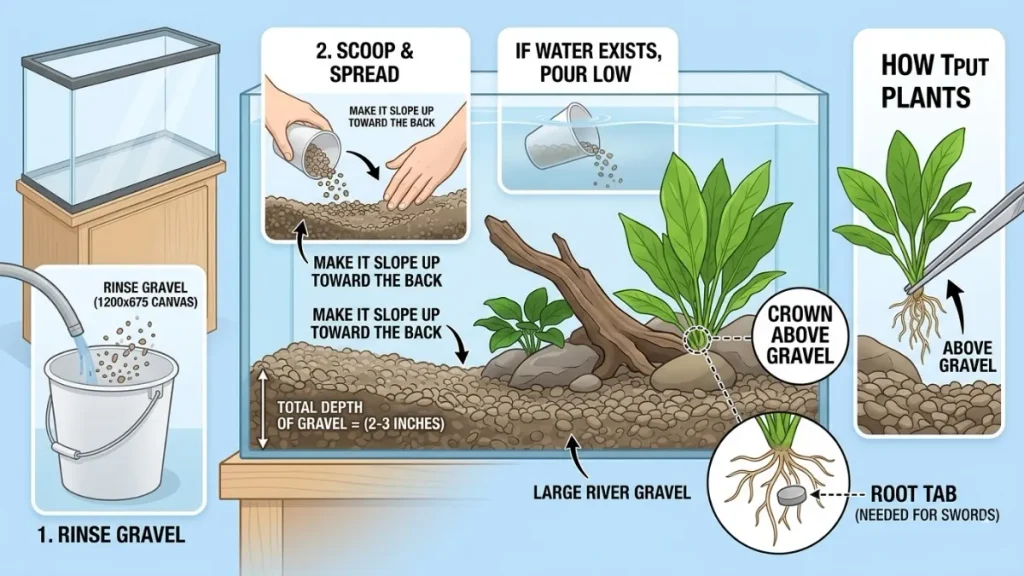
Gravel is the easiest way to learn how to put substrate in aquarium because It’s heavy, so it sinks fast and rinses well in a bucket.
How to Put Gravel in Fish Tank
Scoop it in, spread it flat with your hand, and remember to make it slope it up toward the back. If you’re working out how to put new gravel in a fish tank that already has water, then slowly pour it through a cup held just under the surface.
How to Put Plants in Aquarium Gravel
Push the roots in with tweezers. Keep the crown (the spot where the leaves start) above the gravel, because a buried crown rots. Some part of the plant should be above the gravel. Planting is the last part of how to put substrate in aquarium.
Gravel has almost no food for roots, so heavy root feeders like swords need root tabs. I cover this in my guide to the best substrate for planted aquarium and in how to plant freshwater aquarium plants.
How to Put Sand Substrate in Aquarium?
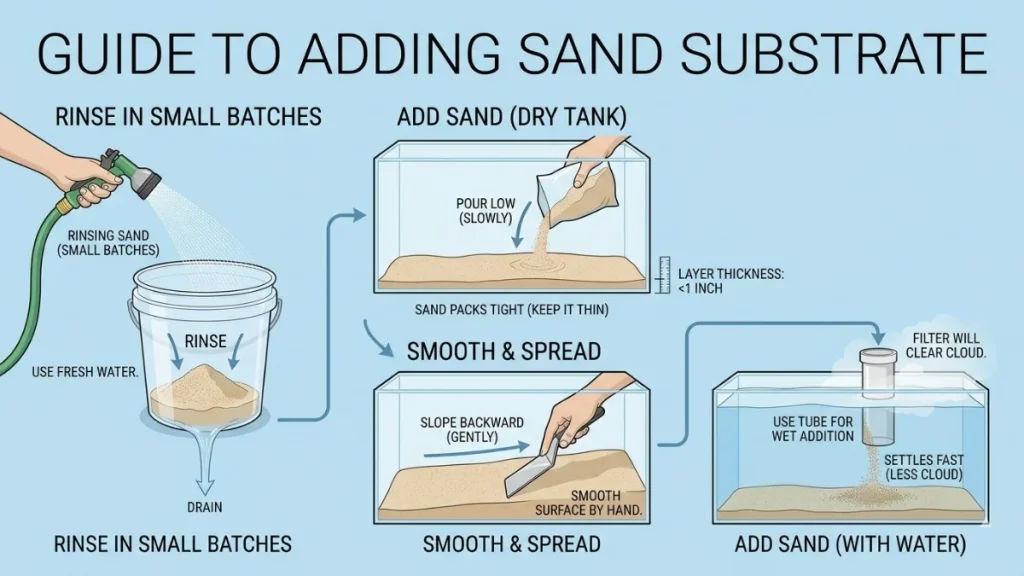
Sand follows the same steps for how to put substrate in an aquarium, with two changes. Rinse it longer because sand is a form of substrate that clouds easily, and keep it thin because sand packs down tight.
How to Add Sand in Aquarium
Rinse it in small batches, then pour it slowly from a low height. The same method works if you’re asking how to add sand in fish tank or how to put sand in aquarium for the first time. Smooth it out with your hand.
How to Put Sand in Aquarium With Water
A short tube or cup makes this easy. Pour the sand right at the bottom so it settles instead of floating up. Your filter will clear the cloud in a few hours.
How to Put Soil in Aquarium
Adding soil to an aquarium is not similar to adding gravel or sand. Soil changes how to put substrate in aquarium a little, because it’s for planted tanks. If you want to know how to add soil to aquarium floors or how to add soil substrate to aquarium setups, the big rule is: don’t wash it hard. The soft granules crumble, and most brands say not to rinse.
Warning: Don’t use plain garden soil from outside. It can hold fertilizer or pesticides that can kill fish.
How to Put Aqua Soil in Aquarium
Pour it in dry, level it, then fill with water over a plate. Aqua soil can release ammonia in the first weeks, and most brands also lower pH, so test your water often.
Many people cover it with a thin layer of sand or fine gravel. This is called capping, and it keeps the soil from floating up. My guide on what is aquarium substrate explains each type.
How to Put Aqua Soil in Aquarium With Water
Some brands float a little, so mist the surface first. Then use the plate method (see below) and pour very slowly.
How to Add Substrate to an Established Aquarium
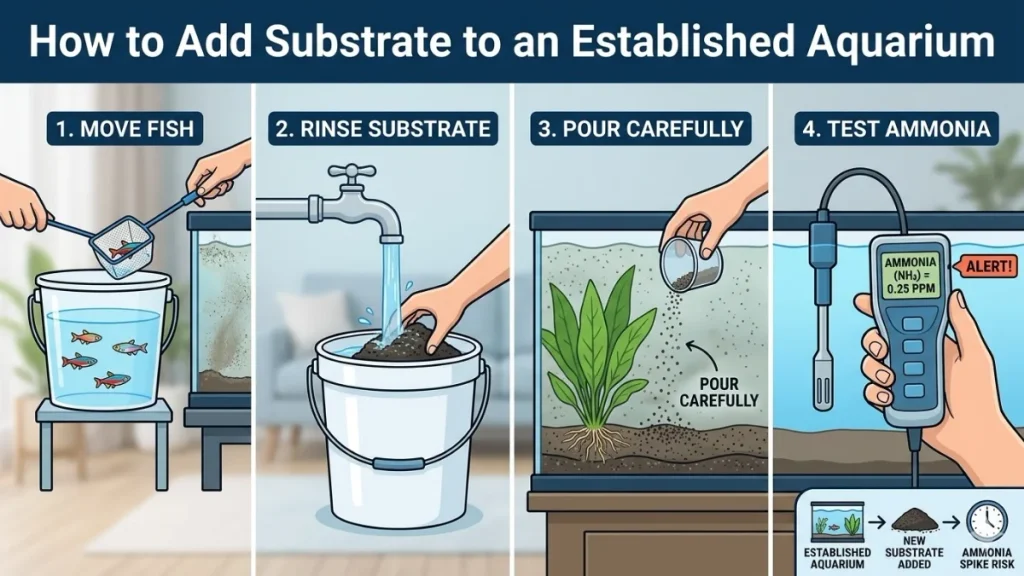
For how to add substrate to new aquarium builds, you can pour everything in at once. But how to add substrate to aquarium that’s already running is different, because you have fish, bacteria, and plants to protect. So how to add substrate to established aquarium tanks is a slower, and more careful job.
How to Add Substrate to Existing Aquarium
I will recommend these 4 steps:
- Move the fish to a bucket of tank water if you’re adding a lot.
- Rinse the new substrate well.
- Pour small amounts through a cup held underwater, away from plant roots.
- Test for ammonia the next day.
Stirred-up waste can spike ammonia, so don’t skip step 4.
How to Add More Substrate to Aquarium
Add a thin layer, spread it flat, and wait a day. Don’t dump it in one spot.
How to Add Soil to Established Aquarium
Fresh soil can leak ammonia and change your pH. The same care applies to how to add soil to an existing aquarium. Add a small amount, cap it, and test your water daily for a week.
Want to know how to add more soil to aquarium plants that are already growing? Use a cup, add tiny amounts between the plants, and cap it.
How to Add Water to Aquarium Without Disturbing Substrate
You only need something to catch the water so it spreads out. Pick one:
- Plate: Lay it flat on the substrate and pour onto the middle.
- Bowl: Press it down and fill it until it overflows gently.
- Plastic bag: Open it on the substrate and pour in. The bag spreads the flow.
This also works for how to put substrate in aquarium with water already in it, when you’re topping up. Stop filling a few inches from the top.
How Much Substrate Do You Need?
Substrate is sold by weight, but tanks are measured in gallons. For gravel or sand, multiply length × width × depth (all in inches), then multiply by 100 and divide by 1,728. This gives pounds, which is the key step in how to put substrate in aquarium without buying too little. Or just use my aquarium substrate calculator does it for you.
How Much Gravel to Put in 10 Gallon Aquarium
A standard 10 gallon tank is 20 × 10 inches on the bottom. For 2 inches of depth, you need about 20–25 pounds.
How Much Gravel to Put in a 55 Gallon Aquarium
A standard 55 gallon tank is 48 × 13 inches. You’ll need about 65–70 pounds for 2 inches, or 100–110 pounds for 3 inches.
| Tank | Bottom size | 2 inches | 3 inches |
| 10 gallon | 20 × 10 in | 20–25 lb | 30–35 lb |
| 20 gallon long | 30 × 12 in | ~40 lb | ~60 lb |
| 55 gallon | 48 × 13 in | 65–70 lb | 100–110 lb |
These are my estimates for normal gravel or sand. Aqua soil is lighter and sold by volume, so follow the bag. Buy about 10% extra.
Warning: Water is heavy too. A US gallon of fresh water weighs about 8.3 pounds, so a 55 gallon tank holds roughly 460 pounds of water before you add substrate. Make sure your stand and floor can handle it.
How Deep Should Aquarium Substrate Be?
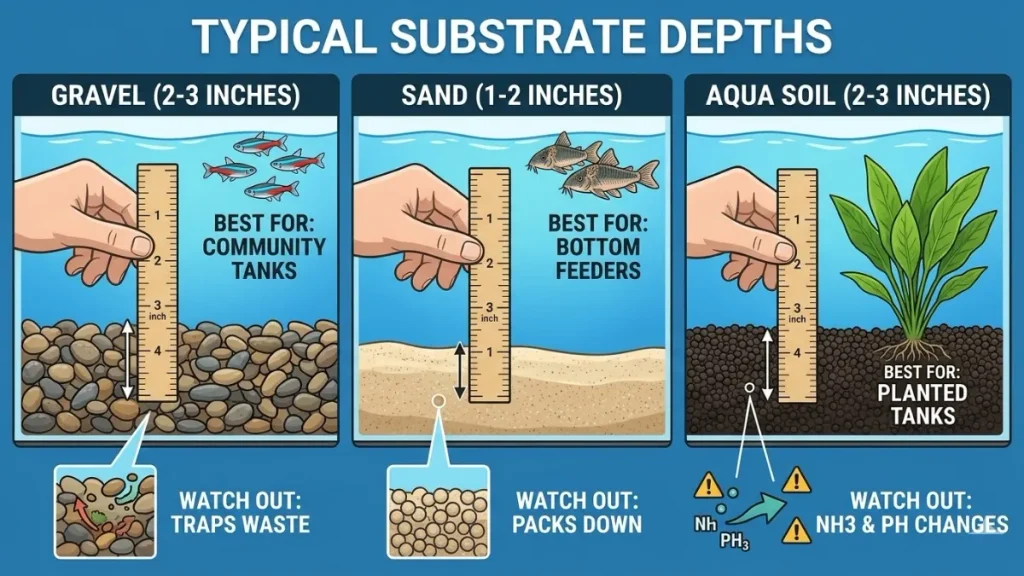
It depends on what you use. These are common hobby ranges, so check your bag too.
| Substrate | Typical depth | Best for | Watch out |
| Gravel | 2–3 inches | Most community tanks | Traps food and waste |
| Sand | 1–2 inches | Bottom feeders like corydoras | Packs down if too thick |
| Aqua soil | 2–3 inches | Planted tanks | Ammonia and pH changes at first |
Can Aquarium Substrate Be Too Deep?
Yes, it can. In very deep, packed substrate, waste can sit where little oxygen reaches it. The worst case is hydrogen sulfide, a toxic gas.
The US EPA’s 1986 water quality criteria set a limit of 2.0 micrograms per liter of hydrogen sulfide for freshwater life. A water-quality summary from ALS Global, citing the EPA, says freshwater fish start to die at roughly 20–50 micrograms per liter (a 96-hour LC50).
To be fair, some experts say this almost never happens in home tanks. The Aquarium Science website tested four 5-inch sand beds for a year and reported no hydrogen sulfide. That’s a hobby site, not a peer-reviewed study.
So when you plan how to put substrate in aquarium, don’t go deeper than you need.
Warning signs of a too-deep bed:
- A rotten-egg smell when you stir the substrate
- Black patches in the lower layer
- Gas bubbles when you poke the bed
- Fish gasping at the surface after you disturb it
If you see these, stir the bed gently in small sections, do a 25% water change, and thin out the substrate. Never stir the whole bottom at once.
How to Slope Substrate in Aquarium
Pile more at the back and less at the front. About 1 inch in front and 3 inches at the back looks natural and makes the tank look deeper.
Debris also rolls to the front, where it’s easy to siphon.
A Common Myth (and a Mistake)
Myth: “Deeper substrate is always better for plants.” Many people learning how to put substrate in aquarium believe this, but it’s not true. Most plants need only 2–3 inches. Extra depth just raises the risk of dead zones.
Sometimes, in an effort to strengthen the roots, we end up adding too much substrate. I once made this very mistake: I filled my aquarium with about five inches of fine sand, thinking it would provide an excellent environment for the plant roots. However, the pressure caused the dense, lower layers to quickly turn into ‘anaerobic dead zones’—areas devoid of oxygen. Toxic gases became trapped within these layers, causing the roots to rot from the bottom up.
This immediately affected the plants; when I removed them, they emitted a strong, sulfur-like odor. As a result, I had to dismantle the entire layout and start everything over from scratch.
FAQ
Do you have to put gravel in a fish tank?
No. Many fish do fine in a bare-bottom tank. But substrate gives good bacteria a home and plants a place to root, and fish like corydoras prefer it.
How to put substrate in aquarium with water already in it?
Rest a plate or bowl on the substrate and pour onto it slowly. This stops the stream from digging up the bed.
How much gravel should I put in a 10 gallon aquarium?
About 20–25 pounds for 2 inches of depth in a standard 20 × 10 inch tank.
Can you add soil to an established aquarium?
Yes, but add only a little at a time and cap it. Test your water every day for the first week.
Can aquarium substrate be too deep?
Yes. Deep, packed substrate can trap waste and make gas. Keep sand under about 2 inches and gravel under about 3.
How do I add more substrate to my aquarium?
Add a thin layer through a cup held underwater, spread it flat, and test your water the next day.
Next Steps: Resources You Should Read
Related FishioHub reading
- What Is Aquarium Substrate?
- Best Substrate for Planted Aquarium: Can You Just Use Gravel?
- How to Plant Freshwater Aquarium Plants
- Aquarium Substrate Calculator
Scientific references
- US EPA, Quality Criteria for Water 1986 (EPA 440/5-86-001)
- Aquarium Science, “The Anaerobic Myth”
USA aquarium resources
- Seachem Laboratories
- Your local fish store, for advice on the substrate they sell
Closing
There’s a quiet moment after the last cloud settles. The glass is clear, the sand is smooth, and the first plant stands up straight in the light. That’s amazing.
That’s when an empty box starts to feel like a home.
Was this guide helpful?
First-Hand Experience
Based on animals I've personally kept and bred - not summarized from other articles.
Zoological Foundation
Claims are checked against my M.Sc. Zoology training and published aquatic biology research, not recycled aquarium myths.
No Paid Influence
No sponsorship shaped this guide. Affiliate links, if any, are disclosed separately and never hidden.
Kept Current
Errors are corrected as soon as they're found, with the update noted at the bottom of the article.

Anil Satak M.Sc. Zoology · Founder, FishioHub
Grew up in a fishing family in India and holds a Master's in Zoology. FishioHub is a one-person operation - every guide is personally researched, kept-tested, and written by Anil. No team, no outsourced writers, no AI-generated content. Read his full bio →