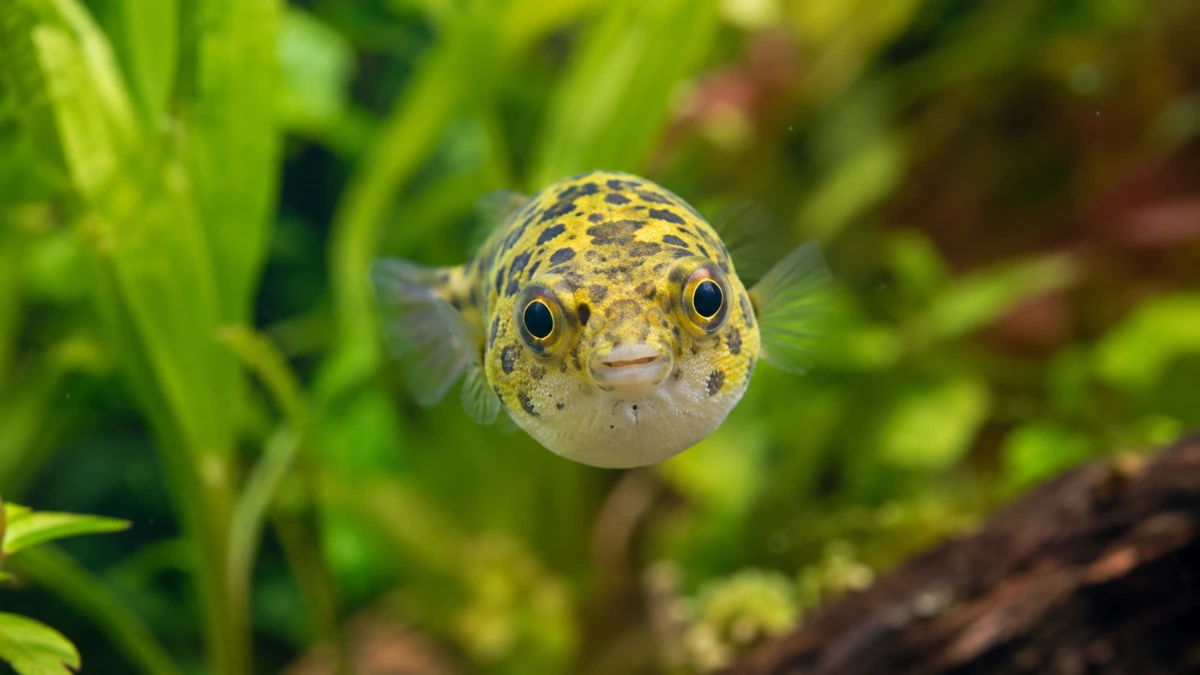
A freshwater aquarium puffer fish is one of the most misunderstood buys in the whole hobby. Here’s the short, snippet-ready answer: only a handful of puffer species can actually spend their entire life in plain fresh water, and most of the “freshwater puffers” sold at pet stores are really brackish-water fish that only tolerate fresh water while young.
Buy the wrong one thinking it’s a true freshwater aquarium puffer fish, and you’re signing up for a slow decline instead of the interactive pet you were promised.
With a PG in Zoology and a family background in fishing, I’ve spent a lot of time untangling exactly which puffers belong in this category and which don’t.
My first Pea Puffer taught me that behavior is the best water test. The moment it turned a dull, stressed grey and stopped begging for food, I knew the ammonia had spiked. It was pure experience that let me guess it.
Quick facts, if you only remember three things:
- A true freshwater aquarium puffer fish never needs salt. Most puffers sold as “freshwater” actually need brackish or marine water once they mature.
- Every puffer has a beak-like tooth plate that never stops growing. Hard-shelled food isn’t a treat, it’s dental maintenance.
- Puffers are territorial loners more often than not. A species-only tank is almost always the safer call.
Types of Freshwater Puffer Fish: Meet the Species
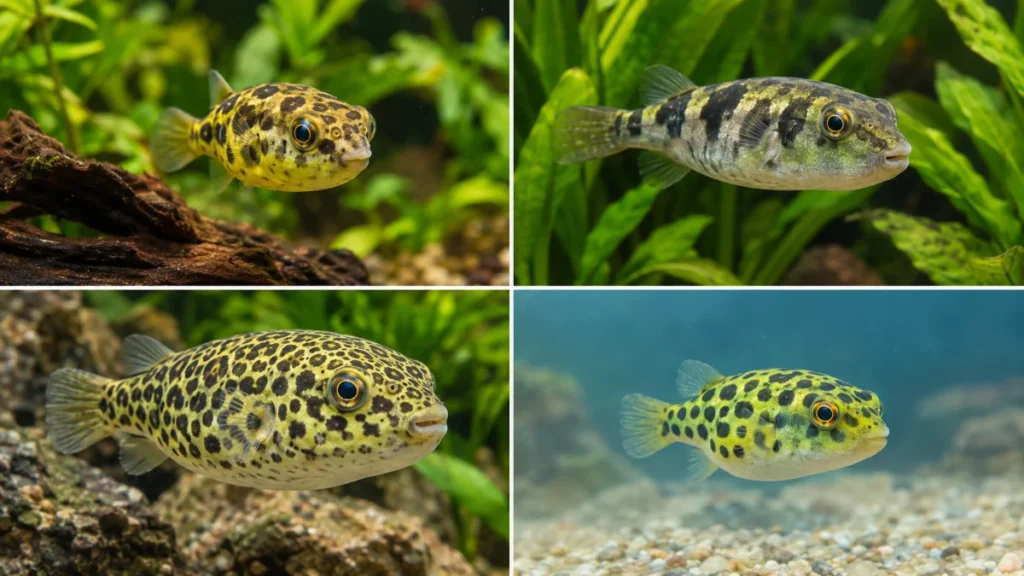
When people search for types of freshwater puffer fish, they usually picture one fish. They end up finding a dozen unrelated species that just happen to share the same round body shape.
Working out the actual puffer fish types freshwater keepers can rely on long-term, versus the ones that quietly need salt later, is most of the battle before you settle on a freshwater aquarium puffer fish.
Dwarf Pea Puffer (Carinotetraodon travancoricus)
This is the classic entry point, and at about one inch long, it’s the smallest pufferfish in the world. It’s native to slow rivers in India’s Western Ghats and is one of the few species that genuinely stays in fresh water for life. It’s also intensely territorial for its size, so give each fish roughly 5 gallons of its own space.
Amazon Puffer (Colomesus asellus)
This is South America’s only true freshwater puffer, found throughout the Amazon and Tocantins-Araguaia river systems. It’s more sociable than most puffers and can sometimes join a small group in a large, well-decorated tank. “Sometimes” is doing a lot of work in that sentence.
African and Congo Puffers (Tetraodon lineatus, Tetraodon mbu)
These are the giants of the freshwater side. The Mbu puffer can approach 20 inches, and both species are true freshwater fish from African river systems that need serious tank space and heavy filtration. Neither one is a beginner’s first fish.
The Brackish Impostors: Green Spotted and Figure Eight
This is where most beginner puffer purchases go wrong. Green spotted puffers (GSPs) and figure-eight puffers get sold in the “freshwater” aisle as juveniles because they’ll tolerate fresh water for a while. Both actually need brackish conditions long-term, and GSPs often need full marine salinity once they’re grown. Group these in with the true types of freshwater puffers and you’re setting a fish up to fail from day one.
Freshwater Puffer Fish Species at a Glance
A genuinely useful freshwater puffer fish species comparison has to separate the true freshwater fish from the brackish species wearing a freshwater costume.
That distinction is the single biggest source of confusion in this hobby, and it’s the first thing to check before you commit to any freshwater aquarium puffer fish or other pufferfish for aquarium use.
| Species | True Freshwater? | Adult Size | Min. Tank Size | Temperament |
| Dwarf pea puffer | Yes | ~1 in | 5 gal/fish | Territorial |
| Amazon puffer | Yes | ~6 in | 30 gal | Semi-social |
| African puffer (T. lineatus) | Yes | ~13 in | 75+ gal | Territorial |
| Mbu puffer | Yes | Up to 20 in | 150+ gal | Territorial |
| Figure eight puffer | No, needs low brackish as adult | ~3 in | 15–20 gal | Semi-aggressive |
| Green spotted puffer | No, needs brackish to marine as adult | ~6 in | 30+ gal | Aggressive |
Are Freshwater Puffer Fish Poisonous?
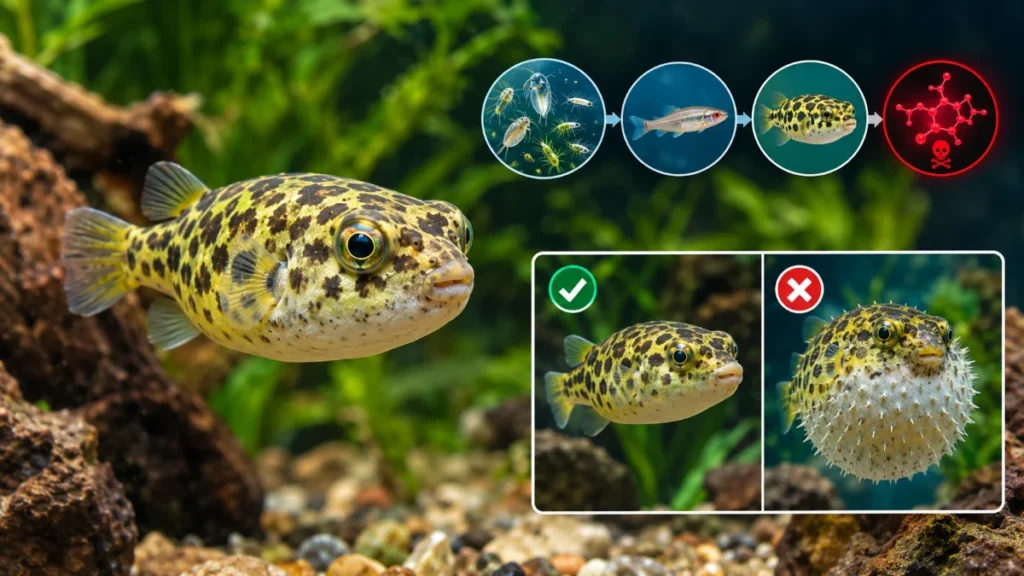
Yes. Nearly every puffer, freshwater species included, carries tetrodotoxin (TTX) in its skin and organs. But the fish doesn’t actually make this toxin itself.
A study out of Nagasaki University found that pufferfish raised on a TTX-free diet from birth stay completely non-toxic, and the same fish turn toxic again once TTX-containing food gets reintroduced (Zhu et al., Toxins, 2021 — study link).
The toxin comes from the food chain, not from the fish’s own biology. That’s good news for aquarium-raised puffers, but it doesn’t mean you should eat one or let kids handle a freshwater aquarium puffer fish right after it’s been flaring.
Are Freshwater Puffer Fish Aggressive?
Absolutely, yes, and this is one of the least negotiable parts of keeping them. Puffers stake out territories and defend them against tank mates, other puffers, and sometimes their own reflection in the glass. Fin-nipping toward slower fish is extremely common, even in the smaller species.
When I first kept a South American Puffer, online profiles promised they were the “peaceful” exception to the rule. That myth shattered within 48 hours when it nipped the fins of every tankmate I had. It was good for me to know truth early.
The mistake most beginners make is trusting a store label that says “community safe.” Almost no puffer actually is. The ones that tolerate tank mates at all usually need heavy caveats about tank size and hiding spots to pull it off, which is exactly why a species-only tank is the safest home for a freshwater aquarium puffer fish.
Can Puffer Fish Live in Freshwater?
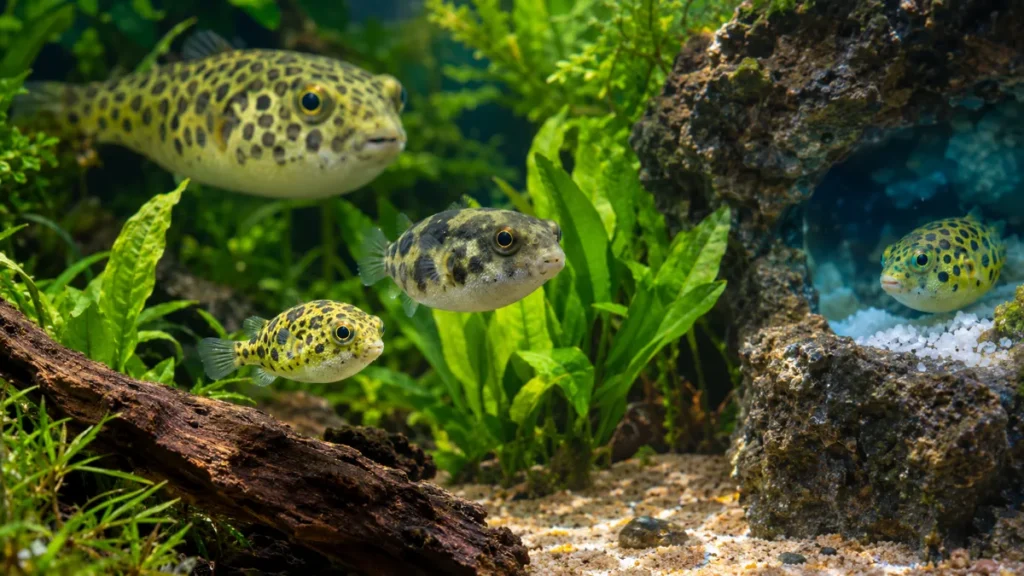
This is the question that trips up more new keepers than any other, and the honest answer depends entirely on the species.
A peer-reviewed mitogenomic study of the pufferfish family found that of the roughly 189 recognized species in Tetraodontidae, only about 30 spend their entire life cycle in true fresh water (Yamanoue et al. — study link).
Those 30 are split across disjunct regions of South America, Central Africa, and Southeast Asia. So yes, real freshwater puffers exist, including the dwarf pea puffer, the Amazon puffer, and the African species.
The GSP and figure-eight puffer simply aren’t among that group. They’re estuarine fish that tolerate fresh water only as juveniles, and their health starts slipping without salt as they mature.
Freshwater Aquarium Puffer Fish Size Guide
There’s no single freshwater puffer fish aquarium size that works across the board. It scales dramatically by species, which is exactly why a generic “puffers need X gallons” answer is useless.
- Dwarf pea puffer: 5 gallons minimum for one fish, plus 3–5 gallons per additional puffer in a heavily planted tank.
- Amazon puffer: at least 30 gallons.
- African puffer (T. lineatus): 75 gallons and up.
- Mbu puffer: 150 gallons or more, depending on how large the individual fish grows.
Gallons aren’t the whole story, either. Every freshwater aquarium puffer fish setup also needs line-of-sight breaks: dense planting, driftwood, and caves. Territorial disputes drop sharply once puffers can’t constantly see each other.
Can Freshwater Puffer Fish Live With Other Fish?
Cautiously, and it depends heavily on the species. Dwarf pea puffers have had some success alongside otocinclus catfish, which they tend to leave alone.
Amazon puffers can occasionally join a large, calm community, but the bigger species almost always do best alone or with their own kind in a tank spacious enough to spread out territories.
If you’re asking whether freshwater puffer fish can live with other fish mainly to avoid setting up a second tank, that’s usually the plan that ends with an aggression problem six months later.
Puffer Fish Diet
What Do Puffer Fishes Eat?
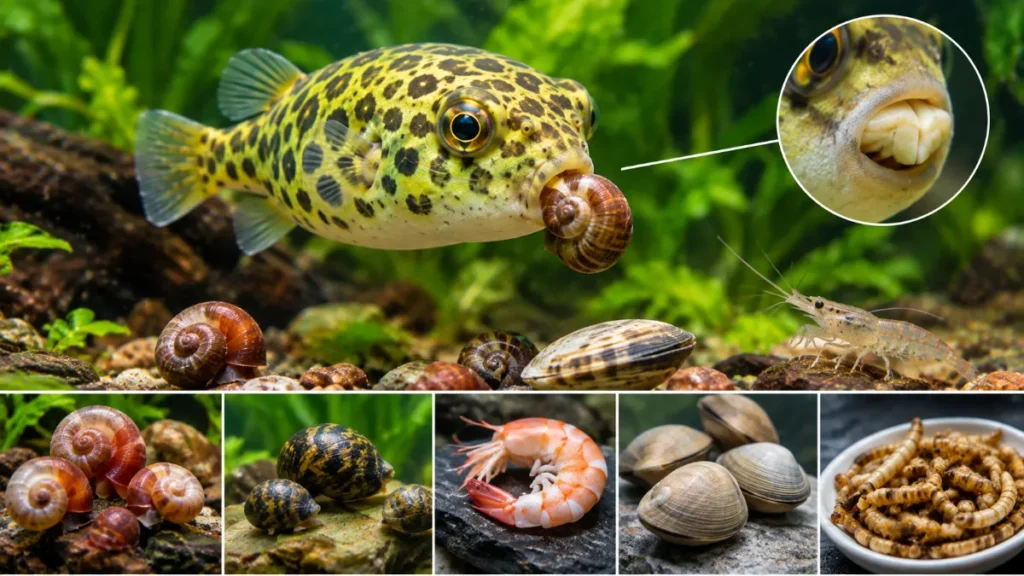
In the wild, what do puffer fishes eat comes down almost entirely to snails, clams, crustaceans, and other hard-shelled invertebrates, topped off with insect larvae and, in some species, algae. That diet isn’t a preference. It’s a biological requirement tied directly to how their teeth work.
Freshwater Puffer Fish Food
Every puffer has four fused tooth plates that form a beak-like structure, and much like a rodent’s incisors, that beak never stops growing.
Research from HHMI BioInteractive on the freshwater African puffer Tetraodon lineatus documents exactly how this happens: juveniles start with a normal set of two rows of fish teeth, which later fuse into the permanent beak adults use to crack hard prey (HHMI BioInteractive).
That means feeding a freshwater aquarium puffer fish the right food is dental maintenance as much as it is nutrition.
Ramshorn and mystery snails, blanched shrimp still in the shell, and the occasional whole clam should be a regular part of the rotation, not an occasional treat. Skip beak-grinding foods for too long and the teeth overgrow to the point where the fish can’t close its mouth properly, and at that stage it usually needs a vet to file them down.
FAQ
How do I pick the right freshwater aquarium puffer fish for a beginner tank?
Start with a dwarf pea puffer in its own species-only tank of at least 5 gallons. It’s the smallest, most affordable, and most forgiving true freshwater species for someone new to puffers.
Do freshwater puffer fish need salt?
True freshwater species like the dwarf pea puffer and Amazon puffer never need salt. Brackish species like the GSP and figure eight puffer need salt added as they mature, despite often being sold as “freshwater.”
How long do freshwater puffer fish live?
Dwarf pea puffers typically live 3–5 years with good care. Larger species like the Mbu puffer can live well over a decade in a properly sized tank.
Can two puffer fish live together?
Sometimes, if the species is naturally more social, like the Amazon puffer, and the tank is large with plenty of visual breaks. Most other species do better housed alone.
Why is my freshwater puffer fish not eating?
The most common culprits are an overgrown beak, being offered only soft foods long-term, or stress from an undersized or under-decorated tank.
Are freshwater puffer fish hard to keep?
Not in terms of water chemistry. They’re unforgiving of the wrong tank size, wrong tank mates, or wrong long-term salinity, so species research matters more here than with most community fish.
Do freshwater puffer fish eat snails?
Yes, enthusiastically. It’s one of the best ways to keep their beak worn down naturally, and it doubles as pest-snail control in an overrun planted tank.
What is the smallest freshwater puffer fish?
The dwarf pea puffer (Carinotetraodon travancoricus) holds that title at about one inch fully grown.
Next Steps: Resources You Should Read
Related FishioHub reading
- Assassin Snail Care Guide — useful if you’re planning to breed feeder snails to keep a puffer’s beak worn down
- Understanding Aquarium Bioload — essential before stocking any territorial, heavy-waste-producing oddball
- The 1-Inch-of-Fish-Per-Gallon Rule — and why it fails completely for territorial species like puffers
Scientific references
- Zhu, H. et al. (2021). “Tetrodotoxin/Saxitoxins Selectivity of the Euryhaline Freshwater Pufferfish Dichotomyctere fluviatilis.” Toxins, Nagasaki University.
- Yamanoue, Y. et al. “Multiple Invasions into Freshwater by Pufferfishes (Teleostei: Tetraodontidae): A Mitogenomic Perspective.”
USA aquarium resources
- Aquarium Co-op — Washington-based retailer with a dedicated pea puffer care guide
- Fishlore Forums — long-running U.S. hobbyist community with species-specific puffer threads
Closing
A freshwater aquarium puffer fish isn’t something you drop into a leftover tank and hope for the best with. It’s a fish that asks you to learn who it actually is first. Get the species right, and you’ve got one of the most personality-forward, genuinely interactive pets the freshwater hobby has to offer.
Was this guide helpful?
First-Hand Experience
Based on animals I've personally kept and bred - not summarized from other articles.
Zoological Foundation
Claims are checked against my M.Sc. Zoology training and published aquatic biology research, not recycled aquarium myths.
No Paid Influence
No sponsorship shaped this guide. Affiliate links, if any, are disclosed separately and never hidden.
Kept Current
Errors are corrected as soon as they're found, with the update noted at the bottom of the article.
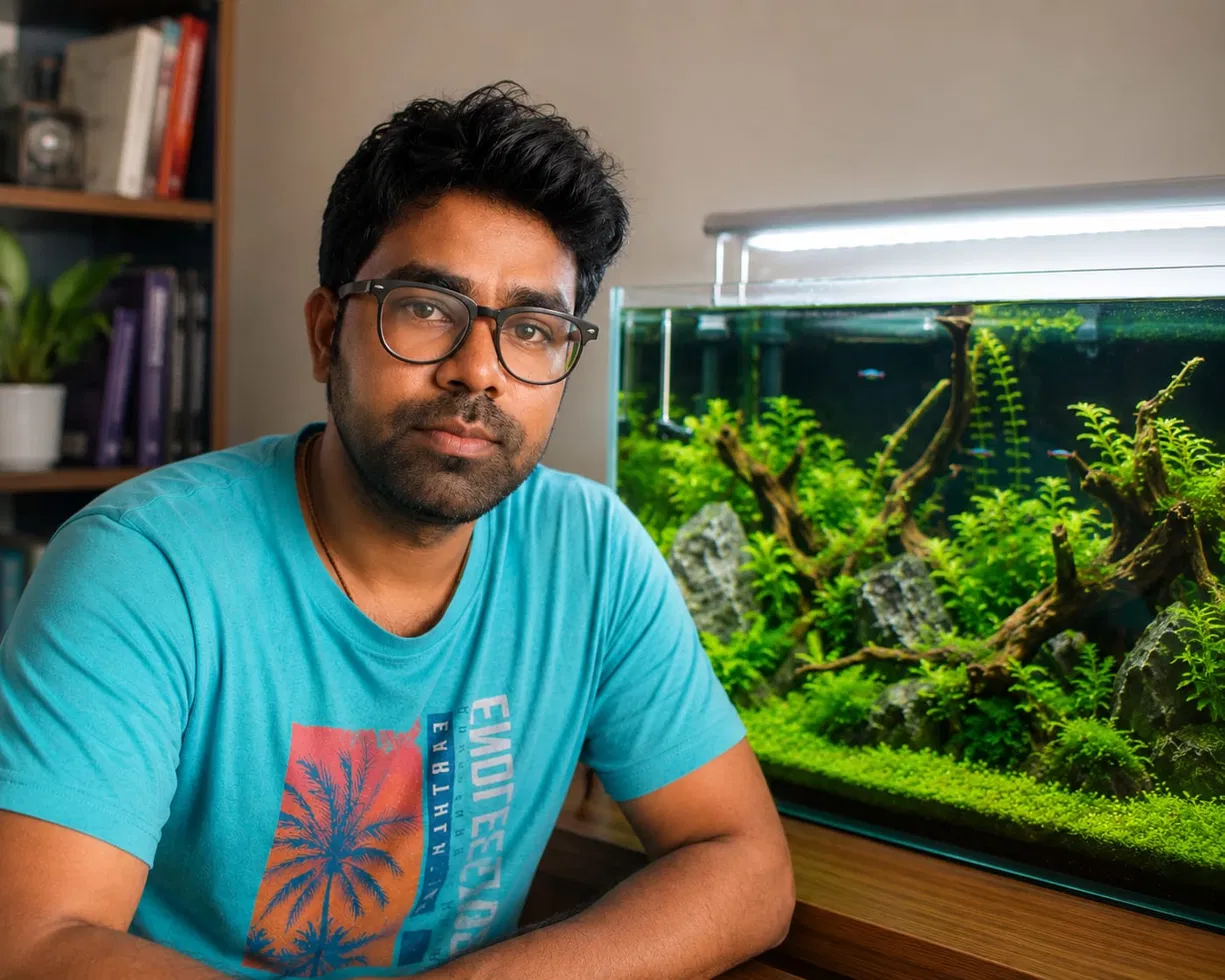
Anil Satak M.Sc. Zoology · Founder, FishioHub
Grew up in a fishing family in India and holds a Master's in Zoology. FishioHub is a one-person operation - every guide is personally researched, kept-tested, and written by Anil. No team, no outsourced writers, no AI-generated content. Read his full bio →