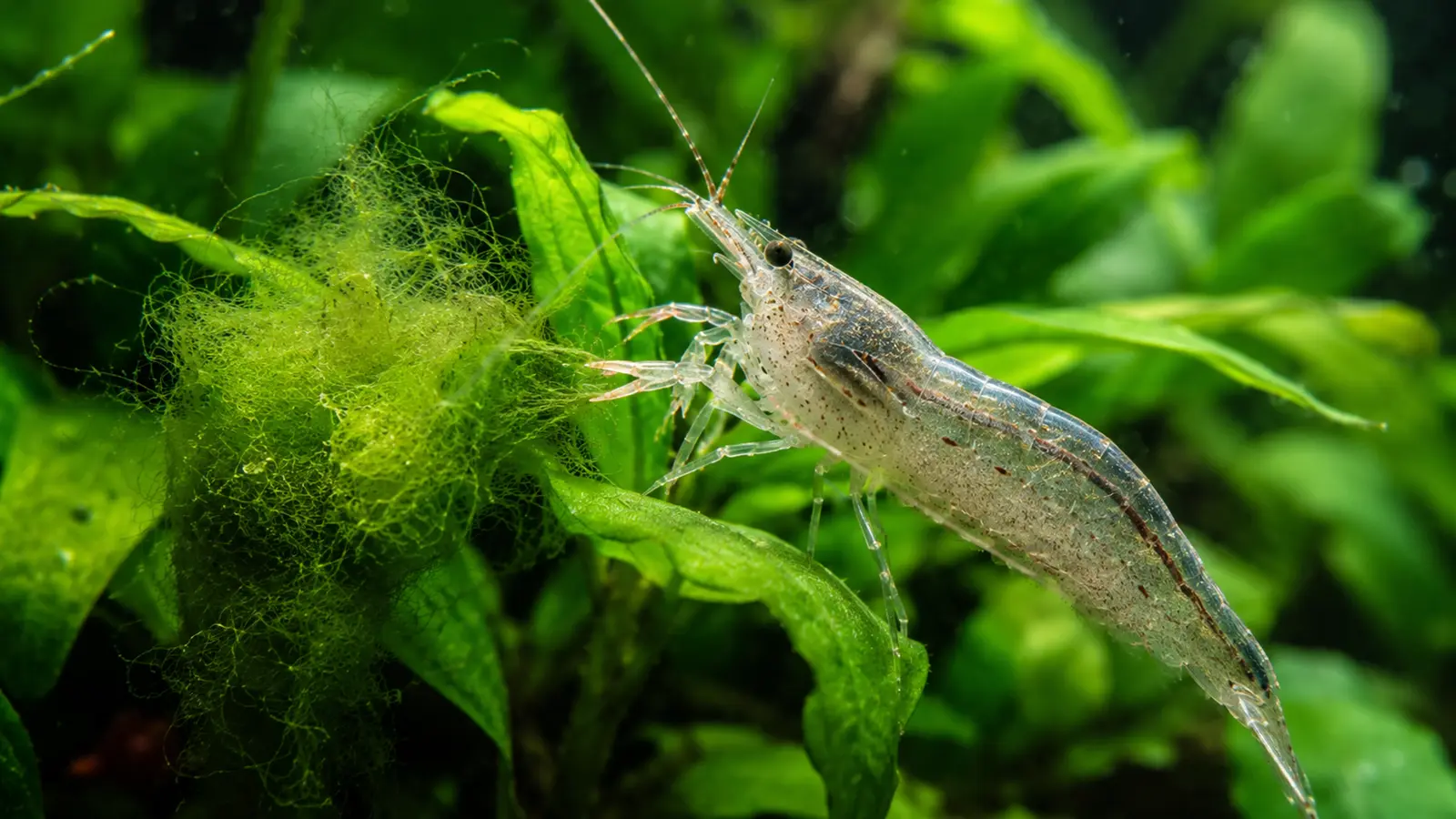
The first time I dropped Amano shrimp into a hair-algae disaster of a tank, I expected a miracle by morning. It took over a week. That gap between “algae eater” marketing and what actually happens in a real tank is where most beginners get burned.
Do Amano shrimp eat algae? Yes — Amano shrimp (Caridina multidentata) are among the most effective algae-eating shrimp in the freshwater hobby. They actively eat hair algae, thread algae, brown algae (diatoms), and soft green algae, but they rarely touch black beard algae unless it’s already weakened, and they can’t handle green spot algae or free-floating green water at all.
As a zoologist who’s kept these guys in my own tanks for years, I can tell you the internet’s “yes they eat everything” answer and “no they barely eat anything” answer are both half-true. It depends entirely on which algae, how hungry the shrimp are, and how many you’ve got. Here’s the real breakdown.
What this guide covers:
- Which algae types Amano shrimp actually eat
- The black beard algae contradiction, finally explained
- What they eat besides algae (so they don’t starve)
- Do they eat plants, fish eggs, or fry?
- How many you need per gallon
- How often they molt and how long they live
- Can they breed in your tank?
- A USA buyer’s note on where to get them and what to pay
Quick Summary Fact Card
| Question | Short Answer |
| Do Amano shrimp eat algae? | Yes — hair, thread, brown, and soft green algae |
| Do they eat black beard algae? | Rarely, unless weakened and shrimp are hungry in numbers |
| Do they eat green spot algae? | No, it’s too hard for them to scrape off |
| Do they eat plants? | Not usually, unless underfed |
| Do they eat fish eggs? | Yes, if given the chance — separate breeding fish |
| How many do I need? | Roughly 1 per 5–10 gallons of tank |
| How long do they live? | 2–3 years, up to 5 with excellent care |
| Do they breed in freshwater? | No — larvae need brackish water to survive |
Meet the Shrimp Named After a Man: Who Was Takashi Amano?
Amano shrimp carry the name of Takashi Amano, the Japanese aquascaper who popularized using them for natural algae control in planted tanks back in the 1980s. Their scientific name is Caridina multidentata (older sources call them Caridina japonica), and in the wild they live in fast-flowing freshwater streams across Japan and Taiwan, grazing nonstop on biofilm coating rocks and driftwood.
That “nonstop grazing” instinct is the whole reason they became the go-to answer to what do Amano shrimp eat in the aquascaping world — they don’t wait for algae to build up, they patrol for it constantly.
Most Amano shrimp sold in the US are still wild-caught rather than bred in captivity, which matters more than it sounds like it should — more on that in the USA buyer’s note below.
The Full Diet: What’s on the Menu (And What Isn’t)
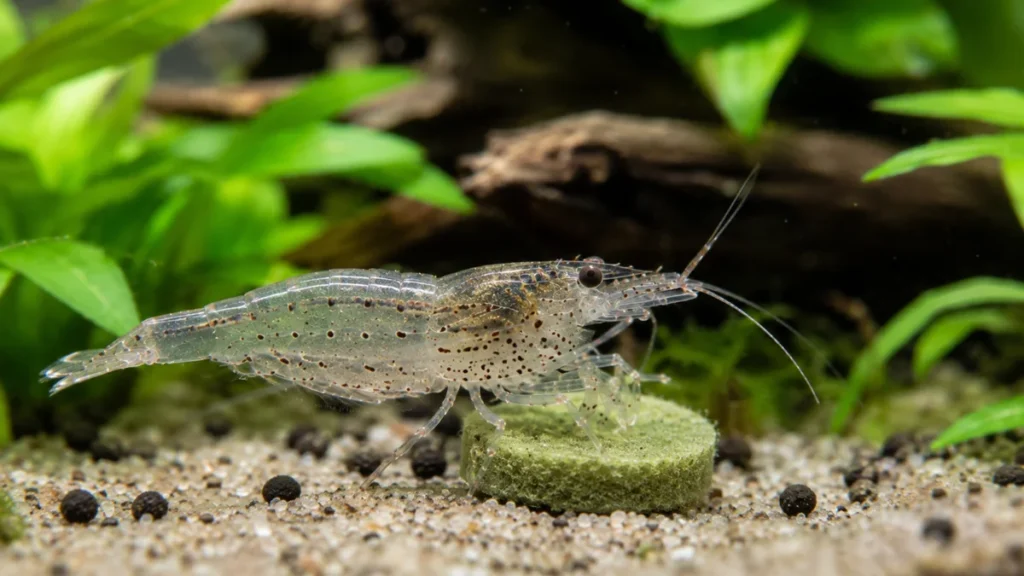
Amano shrimp aren’t algae specialists. They’re opportunistic scavengers. In the wild, they graze on whatever biofilm, decaying plant matter, and microorganisms they can find. That instinct is exactly what makes them useful in a tank.
Here’s what Amano shrimp actually eat, ranked by how eagerly they go for it:
- Soft green algae and diatoms — first choice, usually gone within a day or two of appearing
- Hair algae and thread algae — torn apart strand by strand with their front pincers, slower but persistent
- Biofilm on driftwood and filter intakes — a daily grazing target, not just an emergency food source
- Leftover fish food and detritus — genuinely underrated. A group of Amanos noticeably cuts down on the crumbs that would otherwise spike your ammonia
- Brown algae (diatoms) — a favorite during the first 4–8 weeks of a new tank cycling
- Black beard algae — only when it’s weakened or they’re hungry (full explanation below)
- Supplemental foods when algae runs low — blanched zucchini or spinach, shrimp pellets, algae wafers, spirulina flakes, and their own shed exoskeleton, which they eat right after molting for calcium
The mistake beginners make constantly: keeping the tank too clean and assuming spotless glass means a healthy tank. Amano shrimp need something to graze on around the clock. If your tank is algae-free, you have to feed them directly, or they’ll start looking for food somewhere you don’t want them looking — your plants.
Will Amano Shrimp Eat Hair Algae? The Algae-by-Algae Breakdown
Not all algae is equal to an Amano shrimp. Some types disappear fast. Others they’ll never touch.
Hair and Thread Algae
This is where Amano shrimp earn their reputation. Will Amano shrimp eat hair algae? Yes, and it’s their strongest category. They grip strands with their front claws and pull them apart fiber by fiber. A group of 4–6 shrimp working a moderate hair algae outbreak can visibly thin it out within 7–10 days.
Brown Algae (Diatoms)
Do Amano shrimp eat brown algae? Yes, readily. Brown algae shows up most in newly cycling tanks, and it’s soft enough that Amanos graze it off glass, hardscape, and slow-growing plant leaves with almost no effort.
Soft Green Algae
Also an easy target. If it wipes off with a light touch, an Amano shrimp can handle it.
Green Spot Algae
This one’s a hard no. Green spot algae bonds tightly to glass and hardscape in a way that requires scraping, not grazing. Amano shrimp mouthparts simply aren’t built for it — you’ll need an algae scraper or a nerite snail instead.
Green Water (Free-Floating Algae)
Amano shrimp can’t touch this at all. Green water is suspended in the water column, not attached to a surface, so there’s nothing for the shrimp to grip or scrape. A UV sterilizer or blackout period is the actual fix here.
The Black Beard Algae Contradiction — Here’s What’s Actually True
This is the most argued-about question in the Amano shrimp world, and there’s a reason both sides sound convinced they’re right: both answers are true, depending on conditions.
Healthy, mature black beard algae (BBA) is tough, fibrous, and low in nutrition. Left alone, a normal-sized group of 4–6 Amano shrimp in a well-fed tank will mostly ignore it. That’s where the “they don’t eat BBA” claim comes from, and for that specific setup, it’s accurate.
But increase the shrimp count to 8–12 per 20 gallons and cut back other food sources, and the picture changes completely. A hungry, dense group of Amano shrimp will tear into BBA, especially once it’s already been weakened. That’s where the “they do eat it” claim comes from — also accurate, just for a different setup.
The technique that actually works, step by step:
- Spot-treat the BBA with Seachem Excel or a diluted hydrogen peroxide dip
- Turn off the filter for about 15 minutes during treatment so it doesn’t get pulled through your intake
- Wait 2–5 days for the algae to turn reddish or white — that color shift means it’s dying and softening
- Add a denser-than-usual group of Amano shrimp (8–12 per 20 gallons) directly onto the treated area
- Reduce lighting and excess nutrients so the algae doesn’t regrow before cleanup finishes
So the honest answer to “will Amano shrimp eat black beard algae” isn’t a flat yes or no — it’s rarely, unless you deliberately set the conditions for it.
Do Amano Shrimp Eat Plants, Fish Eggs, or Fry?
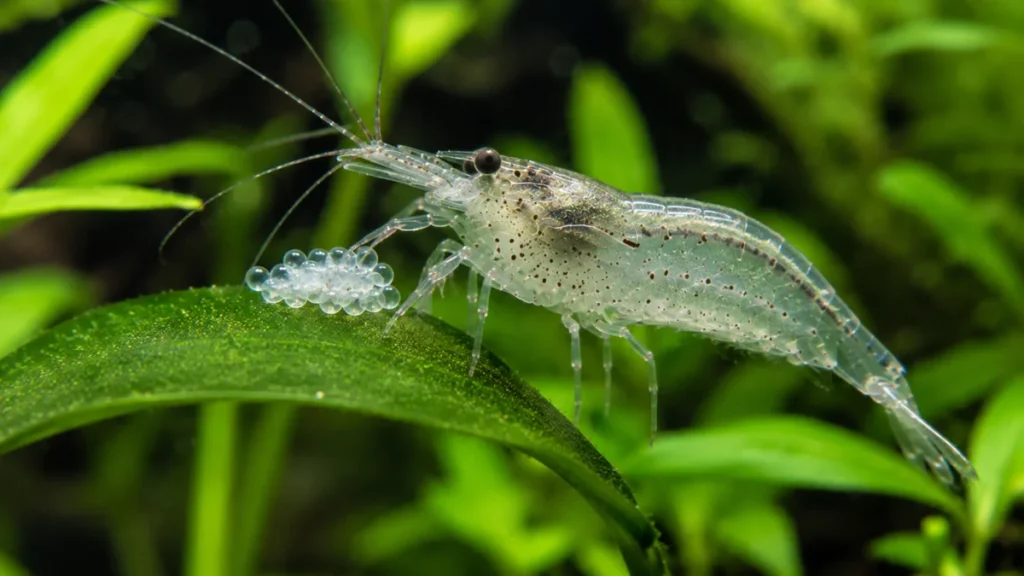
Plants: Usually not, and this matters because it’s the number one worry for planted-tank owners. Amano shrimp prefer soft algae and biofilm over plant tissue. Damage almost always traces back to one cause — they’re underfed. A well-fed Amano shrimp has no reason to bother a healthy plant leaf.
Fish eggs: Yes, given the chance. Amano shrimp are opportunistic, and eggs are an easy, high-protein meal. If you’re intentionally breeding fish, move the breeding pair (or the eggs) to a separate tank without shrimp.
Fry: Also, yes, particularly with very small or slow-moving fry. This isn’t aggression — it’s the same opportunistic scavenging instinct that makes them good algae eaters in the first place.
Amano vs. Cherry vs. Ghost Shrimp: Who Actually Wins at Algae Control?
| Shrimp | Algae-eating strength | Best for | Adult size |
| Amano shrimp | Strongest overall, especially hair/thread algae | Larger tanks with real algae problems | 1.5–2 inches |
| Cherry shrimp | Moderate, better at biofilm than tough algae | Smaller tanks, breeding colonies | 1–1.5 inches |
| Ghost shrimp | Weakest algae eater, more of a scavenger | Cheap cleanup crew, not dedicated algae control | 1.5 inches |
If your main goal is knocking down a real hair algae or brown algae problem, Amano shrimp are the strongest of the three. For a full side-by-side comparison, see my dedicated breakdowns of Amano shrimp vs. cherry shrimp and ghost shrimp vs. Amano shrimp.
How Many Amano Shrimp Do You Actually Need?
A rough starting ratio is 1 Amano shrimp per 5–10 gallons of water, depending on how bad the algae problem is. For an active outbreak, stock toward the denser end (1 per 5 gallons). For general maintenance, once algae is under control, the lighter end (1 per 10 gallons) is plenty.
Realistically, you want a minimum tank size of around 14 gallons (roughly 54 liters) to keep a proper group — anything smaller and you’re limited to just 1–2 shrimp, which isn’t enough to make a visible dent in an algae problem.
A few extra stocking notes:
- Amano shrimp are highly active foragers. In tanks with loose decorative sand rather than rooted planting, their constant digging can flatten a sloped aquascape layout over a few weeks. If you’re running a sloped substrate design, plant it heavily from day one so roots hold the shape.
- Don’t add your whole group at once into a brand-new tank. Stagger additions over 1–2 weeks so the bioload doesn’t spike your ammonia.
How Often Do Amano Shrimp Molt?
Amano shrimp molt roughly every 4–6 weeks as adults, more frequently when young and growing quickly. Molting is how they grow — their exoskeleton doesn’t stretch, so they shed it and grow a new, larger one underneath.
Signs your shrimp has molted:
- A near-transparent, shrimp-shaped shell left behind (don’t remove it — they eat it for calcium)
- The shrimp hides for 12–24 hours afterward while its new shell hardens
- A temporary color change, often slightly paler right after molting
Why shrimp sometimes die during molting: A failed or “stuck” molt is one of the most common causes of sudden Amano shrimp death, and it almost always traces back to water chemistry. Shrimp kept in water below GH 6 struggle to pull enough calcium to rebuild their shell properly. If your tap water runs soft, add a mineral supplement like Seachem Equilibrium or a mineral block rather than assuming diet alone covers it.
For a detailed insight: Optimizing larval development and growth cycles of amphidromous Amano Shrimp (Caridina multidentata). ResearchGate.
Do Amano Shrimp Breed in Freshwater?
No — and this trips up a lot of new keepers who see berried (egg-carrying) females and assume babies are on the way. Amano shrimp mate and lay eggs in freshwater, but the larvae that hatch cannot survive in freshwater. They need brackish water, roughly 15–30 ppt salinity, to develop through their larval stages.
Standard aquarium salt additives don’t come close to that salinity — you’d need actual marine salt mix dosed specifically for the larvae, plus a separate rearing tank. That’s why home breeding essentially never happens by accident, even when you see berried females regularly. In the wild, females release larvae into rivers that carry them downstream to brackish estuaries, where they develop before migrating back upstream as juveniles.
How Long Do Amano Shrimp Live?
How long do Amano shrimp live? Typically 2–3 years in a stable, well-maintained tank, with some individuals reaching up to 5 years under excellent water conditions and consistent mineral supplementation for healthy molting. Stable GH/KH, clean water, and a varied diet beyond just algae are the biggest factors in getting toward that upper end of Amano shrimp lifespan.
Signs of a Healthy vs. Unhealthy Amano Shrimp
| Healthy | Unhealthy |
| Active grazing, moving around the tank | Sitting motionless in one spot for days |
| Clear or slightly translucent body | Cloudy, white, or opaque body |
| Visible molting every 4–6 weeks | No molting for 2+ months |
| Responds to food within seconds | Ignores food entirely |
| Antennae constantly moving, testing surroundings | Antennae drooping or still |
Common Reasons Amano Shrimp Die
- Copper toxicity — copper sulfate, found in many US fish medications and some plant fertilizers, is directly toxic to invertebrates including Amano shrimp. Always check the ingredient label before dosing a tank that holds shrimp.
- Failed molts from soft water — see the molting section above
- Ammonia or nitrite spikes — shrimp are more sensitive to poor water quality than most community fish
- Sudden parameter swings — Amano shrimp handle stable “imperfect” water better than fast changes, even toward “better” numbers
- Old age — sometimes it really is just the 2–3 year lifespan running its course
USA Buyer’s Note
Most Amano shrimp sold in the US are wild-caught and imported rather than tank-bred, even from major retailers. That matters for two reasons.
First, shipping stress is real. Expect some die-off in transit even from reputable sellers, and always drip-acclimate new arrivals for 40–60 minutes minimum before adding them to your tank.
Second, pricing reflects that wild-caught supply chain. Expect to pay roughly $3–6 per shrimp at most US retailers and local fish stores, more if you’re buying in small quantities online with shipping included. If you’re stocking a larger group of 8–12 or more, a local fish store or a bulk online order works out cheaper than ordering a handful at a time from a big-box pet retailer.
Frequently Asked Questions
Do Amano shrimp eat algae?
Yes, Amano shrimp are among the most effective algae-eating shrimp for a freshwater planted tank. They actively eat hair algae, brown algae, diatoms, and soft green algae, though they rarely touch black beard algae unless it’s already weakened.
How often should I feed Amano shrimp if my tank has algae?
If algae is visible, you don’t need to feed daily — let them graze. In a low-algae tank, supplement 2–3 times a week with algae wafers or blanched vegetables so they don’t turn to your plants.
Is it safe to keep Amano shrimp with betta fish?
Generally no. Bettas are aggressive enough to view an Amano shrimp as prey, especially smaller or younger shrimp. Stick to peaceful community fish like tetras, corydoras, or rasboras instead.
What’s the biggest mistake beginners make with Amano shrimp?
Assuming more shrimp always means faster algae control. Overstocking without enough food leads to competition, stress, and shrimp nibbling on plants out of hunger, not aggression.
Where should I buy Amano shrimp in the US, and what should I expect to pay?
Local fish stores and reputable online sellers are common sources. Expect $3–6 per shrimp, with most US stock being wild-caught rather than tank-bred.
Myth: do Amano shrimp eat black beard algae?
Partly true and partly false. A small, well-fed group usually ignores healthy BBA. A larger, hungrier group will eat it once it’s weakened with treatment. Flat yes/no answers online are both incomplete.
Will Amano shrimp eat hair algae?
Yes, hair algae is one of the algae types Amano shrimp handle best. They tear strands apart with their front pincers and graze persistently, especially in groups of 4 or more.
How long do Amano shrimp live?
Amano shrimp typically live 2–3 years in a stable tank, with some reaching up to 5 years under excellent water conditions and consistent mineral supplementation for healthy molting.
Conclusion
Do Amano shrimp eat algae? Yes — hair algae, brown algae, diatoms, and soft green algae are all fair game. Black beard algae is a maybe, and green spot algae and green water are both a no. Keep a proper ratio, don’t starve them into eating your plants, and they’ll do exactly what they’re famous for.
Next Steps: Resources You Must Read
- Choosing between shrimp species? → Cherry Shrimp vs. Amano Shrimp: Which Actually Fits Your Tank
- Algae keeps coming back? → How to Prevent Aquarium Algae Before It Starts
- Shrimp acting off? → Why Did My Shrimp Turn White and Die?
Was this guide helpful?
First-Hand Experience
Based on animals I've personally kept and bred - not summarized from other articles.
Zoological Foundation
Claims are checked against my M.Sc. Zoology training and published aquatic biology research, not recycled aquarium myths.
No Paid Influence
No sponsorship shaped this guide. Affiliate links, if any, are disclosed separately and never hidden.
Kept Current
Errors are corrected as soon as they're found, with the update noted at the bottom of the article.
Anil Satak M.Sc. Zoology · Founder, FishioHub
Grew up in a fishing family in India and holds a Master's in Zoology. FishioHub is a one-person operation - every guide is personally researched, kept-tested, and written by Anil. No team, no outsourced writers, no AI-generated content. Read his full bio →