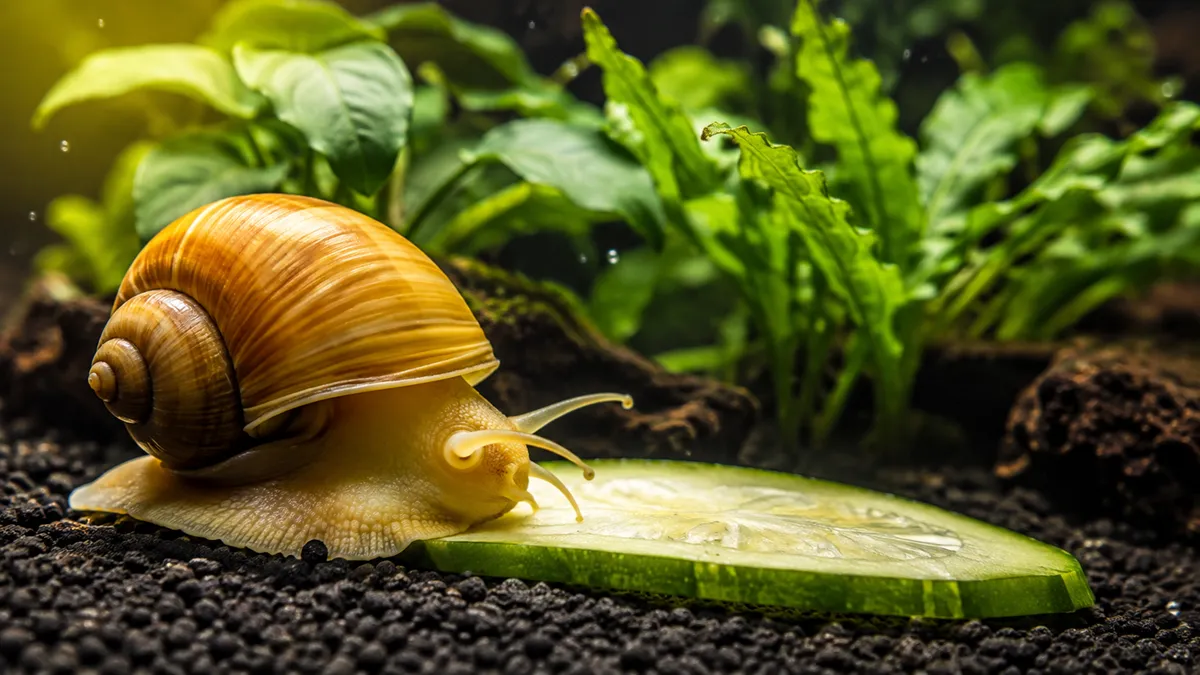
What do freshwater aquarium snails eat? Almost anything organic in your tank — and that single fact is exactly what gets new snail owners into trouble.
Freshwater aquarium snails eat algae, biofilm, leftover fish food, and blanched vegetables like zucchini and spinach. Most species also need a steady calcium source — cuttlebone, crushed coral, or a liquid supplement — or their shells start thinning fast. Get that balance right, and what freshwater aquarium snails eat day to day will keep them grazing, breeding, and shell-strong for their whole life.
You should be very carefull for feeding snails because I once noticed deep, white pits on my mystery snail’s shell despite daily feedings. My soft water was starving him of calcium, slowly dissolving his shell from the outside in. Tossing a piece of cuttlebone into the filter completely halted the damage.
If You Only Remember 3 Things
- Algae’s a starting point, not a full diet — add blanched veggies and calcium
- A snail’s shell is a pure calcium carbonate — skip calcium and it erodes
- Overfeeding protein fouls water faster than it actually feeds the snail
What Do Freshwater Aquarium Snails Eat, Day to Day?
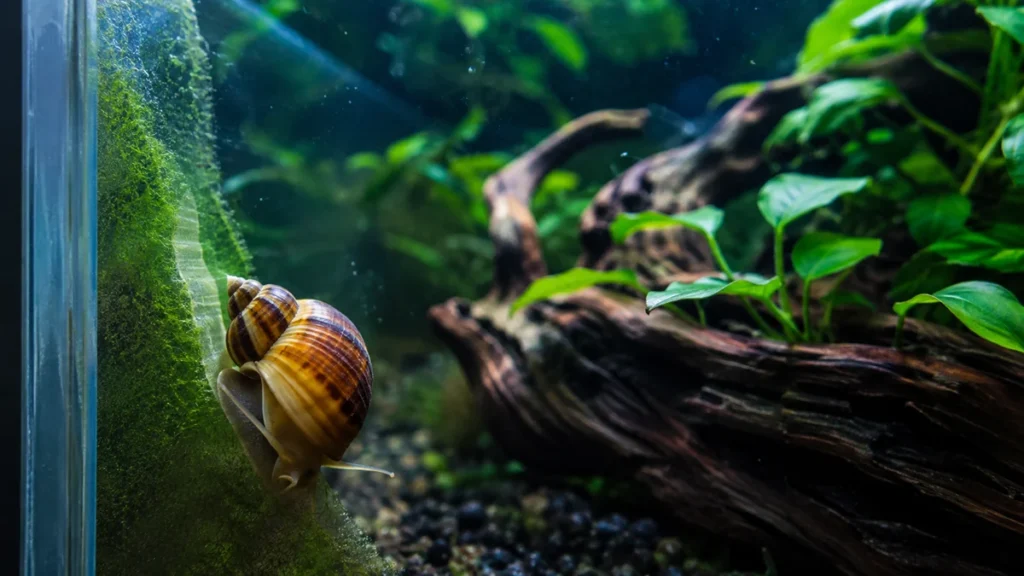
Day to day, what freshwater aquarium snails eat comes down to whatever’s soft, decaying, or algae-covered. I’ve watched mine graze the glass and driftwood for hours without touching a pellet — that’s completely normal.
It’s just not enough on its own. A snail running on algae alone gets by for a while, but you’ll see slower growth, weaker shells, and fewer eggs within a few months.
Freshwater Aquarium Snails Care Basics
Freshwater aquarium snails care really comes down to three things: diet, water hardness, and how much waste you let build up. Nail those and the rest falls into place.
Here’s the part most guides skip. Get the food wrong and it shows on the shell first — pitting, thinning, a dull chalky patch — before the snail itself looks unwell.
I treat the shell like a report card. It tells you how the last few weeks of feeding actually went, not just today.
Food For Snails In A Fish Tank: The Full List
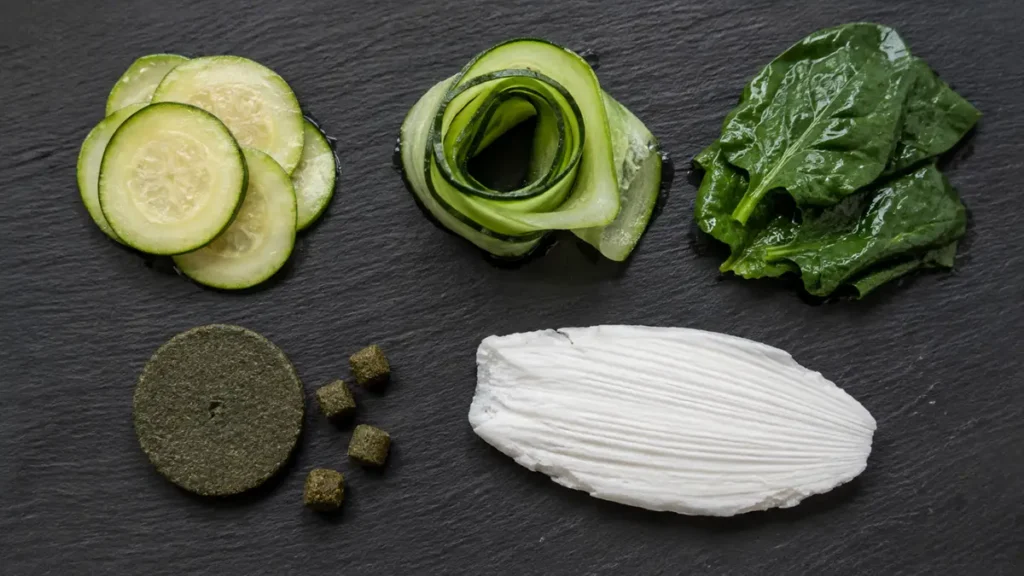
Food for snails in fish tank setups splits into three rough buckets. A healthy diet touches all three, not just one.
Algae and biofilm. The default grazing food, and what most snails eat unsupervised all day in a mature tank. Low in calcium and protein on its own, so it can’t carry the whole diet.
Blanched vegetables. Zucchini, cucumber, spinach, kale, shelled peas — briefly boiled or microwaved soft, then weighted down or clipped to the glass. Pull uneaten pieces within 24 hours so they don’t foul the water.
Protein and calcium. Algae wafers, sinking pellets, cuttlebone, crushed coral, blanched shrimp once or twice a week. This is the bucket most beginner setups skip entirely.
What Do Snails Eat in a Fish Tank, Exactly?
What do snails eat in a fish tank once the algae runs out? They move on to detritus, dead leaves, and whatever fish food hits the substrate.
That’s the whole “cleanup crew” reputation, and it’s only half true. Leave a snail hungry long enough and it’ll start on your healthy plant leaves too.
What Vegetables Do Aquarium Snails Eat?
What vegetables do aquarium snails eat first? Zucchini and cucumber, almost every time — mine go straight for them.
Spinach and kale work well too and pack in more calcium, but blanch them first. Raw leaves are tough on a snail’s radula, the rasping little tongue-like organ it scrapes food with.
What Do Snails Eat and Drink?
What do snails eat and drink is really one question underwater. Freshwater snails pull water and minerals straight through their skin and gills — they don’t drink the way a land animal does.
That’s why hard water matters so much for diet. A snail on a perfect diet can still end up with a thin shell if the water itself is mineral-poor.
How Big Do Freshwater Aquarium Snails Get?
How big do freshwater aquarium snails get depends on species and feeding. A nerite tops out around an inch. A mystery snail (Pomacea diffusa) commonly reaches 1.5–2 inches with steady calcium.
Diet drives more of this than people expect. Freshwater snails pull most of their shell calcium from the water column itself, not their food — so snails kept in soft water tend to stay smaller and weaker-shelled than the same species in harder water.
How Long Do Freshwater Aquarium Snails Live?
How long do freshwater aquarium snails live is one of the first questions every new owner asks me. Mystery snails typically make it 1–2 years, occasionally 3 with consistent care. Nerites often outlast them, sometimes past 5 years.
Diet is one of the few levers you actually control here. Calcium-deficient snails don’t just get weaker shells — they die younger, because shell damage and disease tend to follow the same nutritional gap.
Are Snails Good For Freshwater Aquariums?
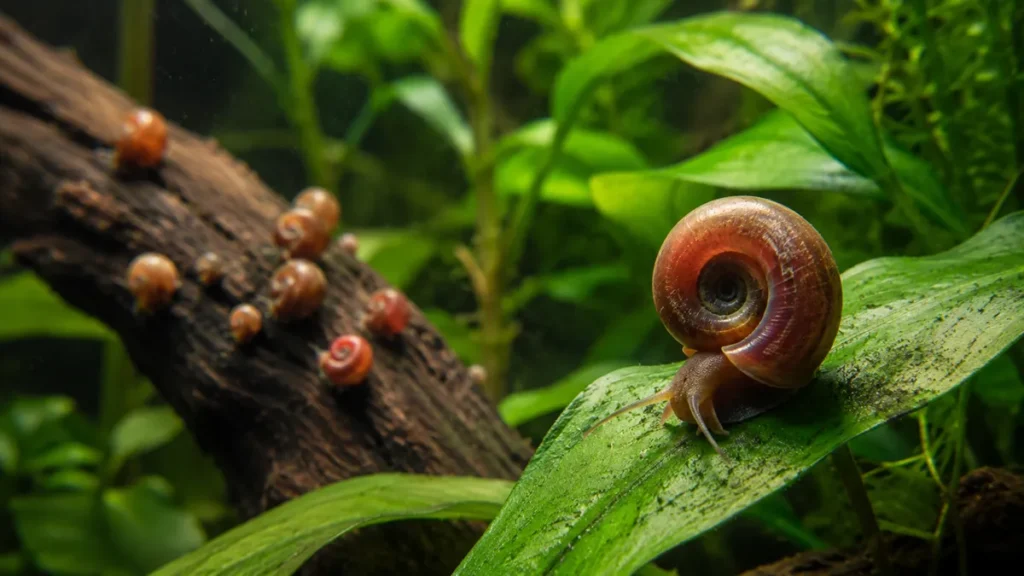
Are snails good for freshwater aquariums, given how much some species eat and breed? Yes, in the right numbers. They graze algae and leftovers, which trims your own maintenance without replacing it.
There’s a bonus most people miss: a snail that stops eating is often your first warning that something’s shifted in the water, before your test kit catches it.
The tradeoff is population control. Feed generously and species like ramshorn or bladder snails will breed to match the food supply — fast.
What Freshwater Aquarium Fish Eat Snails?
What freshwater aquarium fish eat snails matters if your population’s getting out of hand. Assassin snails hunt other snails, not fish food. Clown and yoyo loaches, plus some larger cichlids and puffers, will crack shells outright.
Adding one of these is usually a more sustainable fix than picking snails out by hand every week.
Freshwater Aquarium Snails Breeding
Freshwater aquarium snails breeding tracks diet closely. Well-fed, calcium-rich snails breed readily — often faster than beginners expect or want.
Mystery and apple snails lay clutches above the waterline. Ramshorn, nerite, and pond snails lay gelatinous egg masses underwater or on the glass instead.
If your snails suddenly stop laying, check their diet before anything else. Underfed or calcium-starved snails are usually the first to stop breeding.
Freshwater Aquarium Snails Eggs: What To Expect
Freshwater aquarium snails eggs vary a lot by species. Mystery snail clutches commonly hold 200–600 eggs, laid just above the waterline, per the U.S. Geological Survey’s Nonindigenous Aquatic Species database.
One unchecked clutch can shift your tank’s population fast.
Comparison: Diet and Feeding Needs by Snail Species
| Species | Primary Diet | Calcium Need | Breeds Readily? |
| Mystery Snail | Algae, veggies, pellets | High | Yes — above waterline |
| Nerite Snail | Algae, biofilm | Moderate | Rarely in freshwater |
| Ramshorn Snail | Algae, detritus, veggies | Moderate | Very easily |
| Rabbit Snail | Biofilm, veggies, sinking pellets | Moderate–High | Slowly, livebearing |
| Assassin Snail | Other snails (carnivorous) | Moderate | Slowly |
The Myth: “Snails Only Eat Algae”
This is the misconception that quietly kills the most snails. Algae alone is low in protein and calcium, so an algae-only snail grows slowly and breeds poorly. Shell erosion follows eventually, no matter how clean the tank looks.
Early on, I assumed my snails were perfectly fine grazing on the tank walls. It wasn’t until the tip of a rabbit snail’s shell literally crumbled that I realized algae lacked the calcium they needed. Now, I never let them rely solely on what grows naturally.
Shell material isn’t a minor detail here. A 2007 study in the American Malacological Bulletin measured freshwater snail shells by dry weight and found Pomacea bridgesii shells were 98.2% calcium carbonate. Almost the entire shell, by weight, is the exact mineral a poor diet fails to supply.
A separate University of New Orleans study found shell crushing resistance tracked diet and available plant matter, not just genetics. “The shell’s fine, it’s just algae” is rarely a safe assumption.
FAQ
What do freshwater aquarium snails eat?
Algae, biofilm, blanched vegetables, and a steady calcium source like cuttlebone. Skip the calcium and shell problems follow fast.
What should I feed my freshwater snails?
Rotate algae wafers or sinking pellets, blanched veggies like zucchini or spinach, and a calcium source such as cuttlebone or crushed coral.
What is the best food for freshwater snails?
There’s no single best food — variety beats any one item. Blanched zucchini plus a calcium source covers most of what a healthy snail needs.
How to keep a water snail alive?
Feed a varied diet with reliable calcium, keep pH above 7.0, and avoid copper-based medications — they’re toxic to snails.
Do aquarium snails need calcium supplements?
Most do, especially in soft water. Cuttlebone or crushed coral in the filter is the cheapest way to add it.
Can snails survive on algae alone?
Short-term, yes. Long-term, no — expect slower growth, poor breeding, and shell erosion.
Do snails eat fish poop?
Some detritus gets consumed incidentally while grazing the substrate, but it’s not a meaningful food source on its own.
How often should I feed aquarium snails?
A small feeding 2–3 times a week is usually enough on top of what they graze naturally.
Next Steps: Resources You Should Read
Related FishioHub reading
Scientific references
- White, M.M., Chejlava, M., Fried, B., & Sherma, J. (2007). The concentration of calcium carbonate in shells of freshwater snails. American Malacological Bulletin, 22(1), 139–142
- U.S. Geological Survey, Nonindigenous Aquatic Species Database — Pomacea diffusa species profile.
- Chaves-Campos, J., Coghill, L.M., García de León, F.J., & Johnson, S.G. (2012). The Effect of Aquatic Plant Abundance on Shell Crushing Resistance in a Freshwater Snail. PLOS ONE, 7(9), e44374.
USA aquarium resources
- USGS Nonindigenous Aquatic Species Database — identify invasive snail species before release
- University of Florida IFAS Center for Aquatic and Invasive Plants — regional guidance on aquatic species
- Aquarium Co-Op (Woodinville, WA) — calcium supplements, cuttlebone, snail-safe foods
Closing
Feed the shell, not just the snail. Get that right, and everything else about keeping snails gets easy fast.
Was this guide helpful?
First-Hand Experience
Based on animals I've personally kept and bred - not summarized from other articles.
Zoological Foundation
Claims are checked against my M.Sc. Zoology training and published aquatic biology research, not recycled aquarium myths.
No Paid Influence
No sponsorship shaped this guide. Affiliate links, if any, are disclosed separately and never hidden.
Kept Current
Errors are corrected as soon as they're found, with the update noted at the bottom of the article.
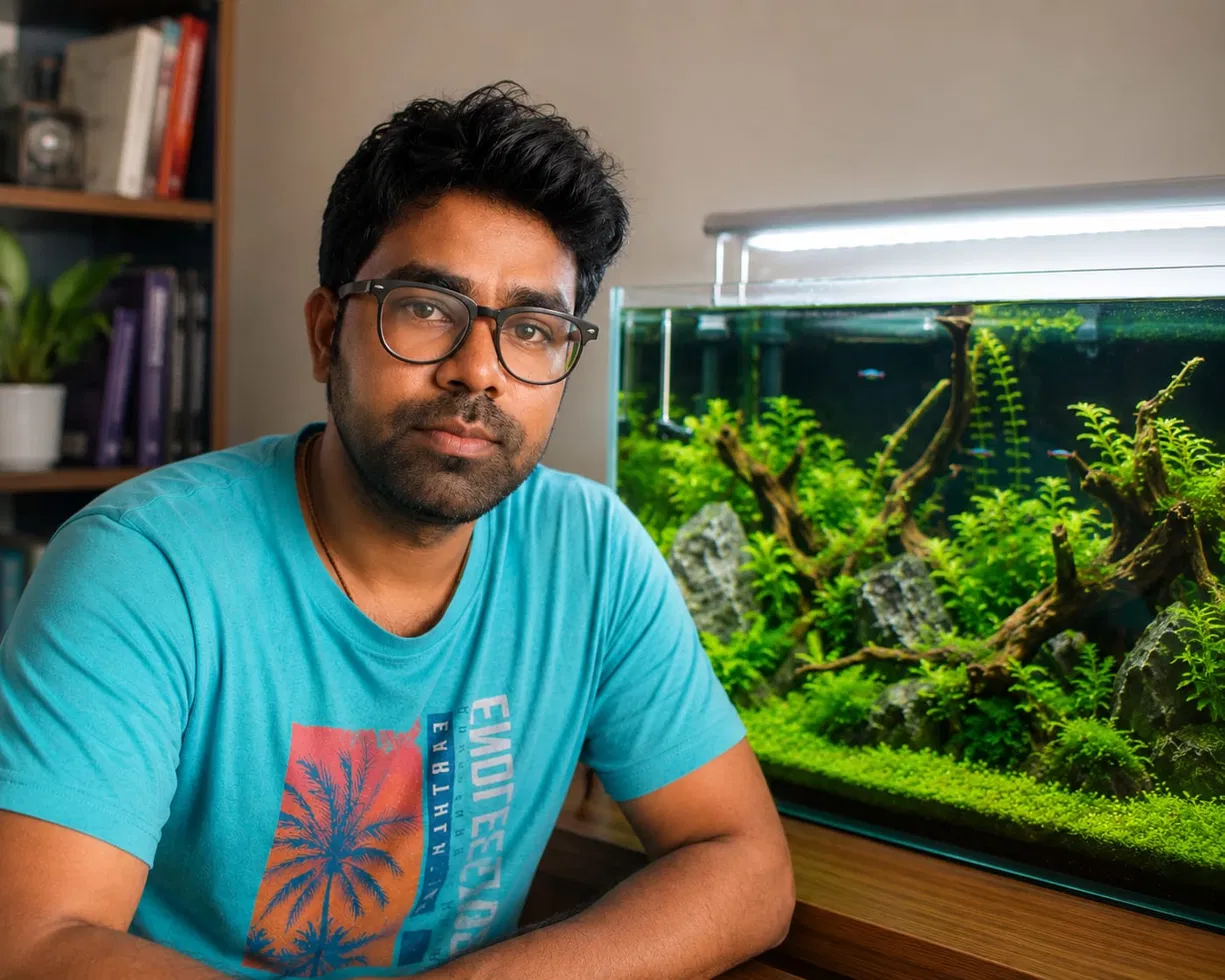
Anil Satak M.Sc. Zoology · Founder, FishioHub
Grew up in a fishing family in India and holds a Master's in Zoology. FishioHub is a one-person operation - every guide is personally researched, kept-tested, and written by Anil. No team, no outsourced writers, no AI-generated content. Read his full bio →