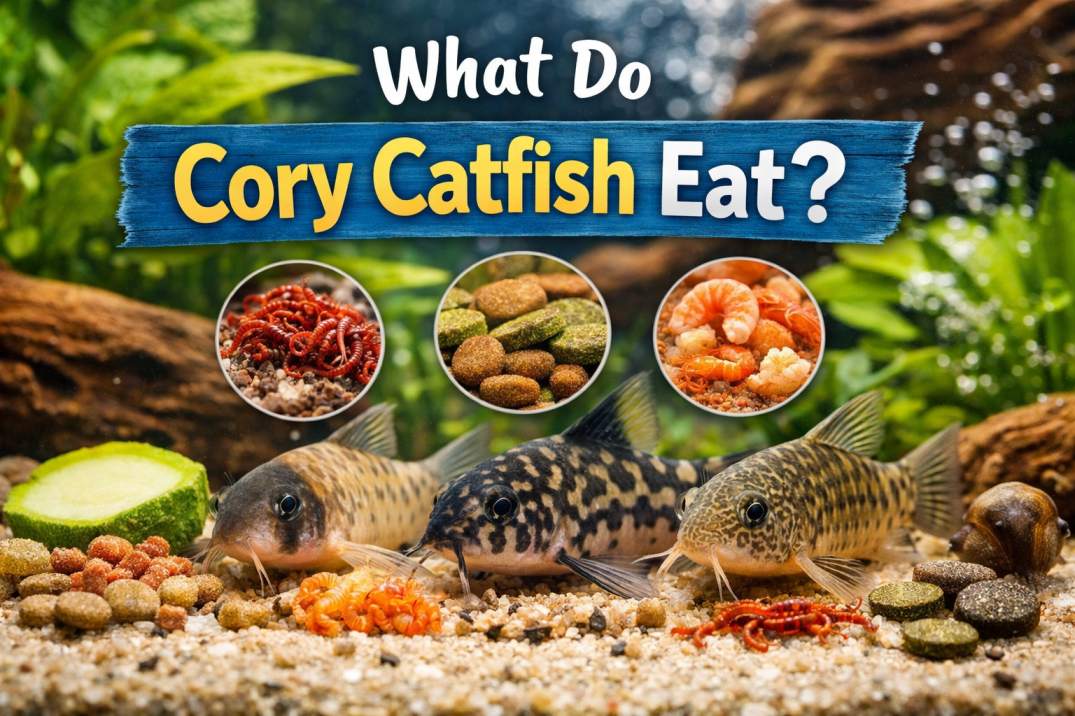
I’m sharing my experience with you. When I first started keeping Corydoras (Cory catfish), to be honest, I didn’t fully understand their feeding habits. This led to some negative experiences. Over time, with different tanks, different foods, and a lot of observation, I came to understand that Cory catfish thrive when you feed them the right mix of sinking foods, protein, and natural snacks.
So, this post is based on all my experiences and research. It’s my complete guide on what do Cory Catfish eat, Corydoras catfish food, whether in the wild, in rivers, ponds, or aquariums. I’m writing this from my personal experience so that other hobbyists can avoid the mistakes I made in my early days.
What You’ll Get in This Post 🐟
- 🏞️ What Cory Catfish eat in the wild vs in a tank
- 🍤 The complete Corydoras Catfish diet (foods I personally recommend)
- 🦐 Whether Corys eat shrimp, snails, algae, poop & betta food
- ⏱️ Feeding schedule, portion size & mistakes beginners make
- 🐠 How to Feed Cory Catfish With Other Fish?
- 📋 Cory Catfish feeding mistake to avoid
What Do Cory Catfish Eat? (Quick Answer)
Corydoras are bottom-feeders, so their food needs to sink and reach the substrate — they won’t compete for flakes floating mid-water. If it doesn’t sink, it won’t get eaten by corys.
Corydoras catfish food:
- Sinking pellets or wafers (protein-rich, made for bottom-feeders)
- Frozen or live bloodworms and brine shrimp (2–3x per week)
- Blanched vegetables — zucchini, cucumber, spinach (occasional)
Feeding rules:
- Drop food where it’ll actually reach the bottom, away from faster fish
- Feed once or twice a day
- Only what they clear in 2–3 minutes
The diet of Corydoras catfish in the wild is different from what they eat in an aquarium. In an aquarium, they prefer to eat:
The Skimmable Version
- Primary diet: sinking pellets or wafers, 32%+ protein, fed 1–2 times daily
- Boost foods: frozen bloodworms, brine shrimp, daphnia — 2–3 times a week
- Plant matter: blanched zucchini, spinach, or spirulina wafers — once or twice weekly
- Golden rule: food must hit the bottom. If your other fish eat it first, your corys are starving in plain sight
- Portion check: clear in 2–3 minutes, no leftovers rotting in the substrate
- Red flag: a cory hovering near the surface a lot more than usual can mean low oxygen, not hunger — more on this below
What Do Cory Catfish Eat in a Tank?
In my experience, corydoras do best with high-quality sinking food because they often stay at the bottom and rarely swim to the surface to eat. Therefore, it’s best to feed them sinking food.
Best foods for Cory Catfish in aquariums:
- Sinking Catfish Pellets (primary diet)
- Algae Wafers (occasionally)
- Shrimp Pellets
- Bug-based sinking sticks
- Frozen or Live Foods:
- Bloodworms
- Brine shrimp
- Daphnia
- Tubifex
My personal rule:
👉 Protein foods 2–3 times a week, and you will see a huge difference in Cory’s energy levels and color.
What Do Cory Catfish Eat in the Wild?
This is what bottom-feeding looks like in practice — sinking food is essential so Corydoras can actually reach it.
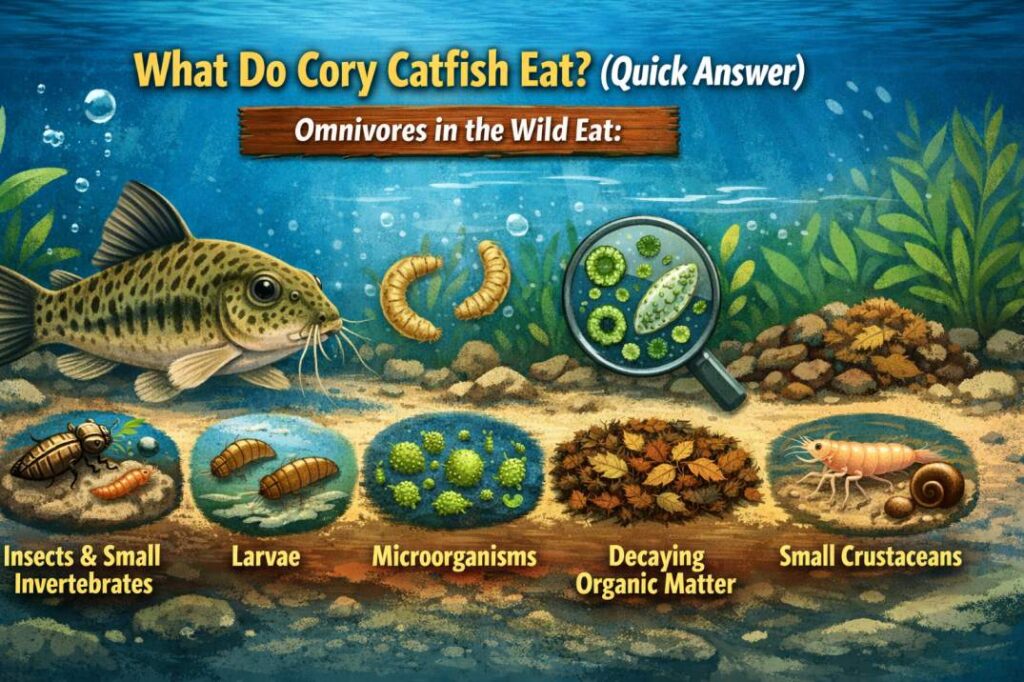
In the wild, Corydoras are omnivores. They eat insects and edible small invertebrates, larvae, microorganisms, decaying organic matter, and small crustaceans. In an aquarium, that translates to sinking pellets, algae wafers, protein-rich frozen foods, and blanched vegetables. They are not algae-eating fish, so don’t count on them as part of a cleaning crew the way some shrimp are.
Being omnivores, in the wild, Corydoras catfish feed on aquatic insects, decaying matter, small crustaceans, fallen plant fragments, dead insects or larvae, and biofilm growing on surfaces.
They spend their entire day scavenging and sifting through sand, which is why soft substrate is important for their feeding behavior.
Corydoras Catfish Diet (Full Breakdown)
Many people misunderstand what do Cory Catfish eat and assume they survive on scraps, but Corys actually need intentional feeding to stay healthy.
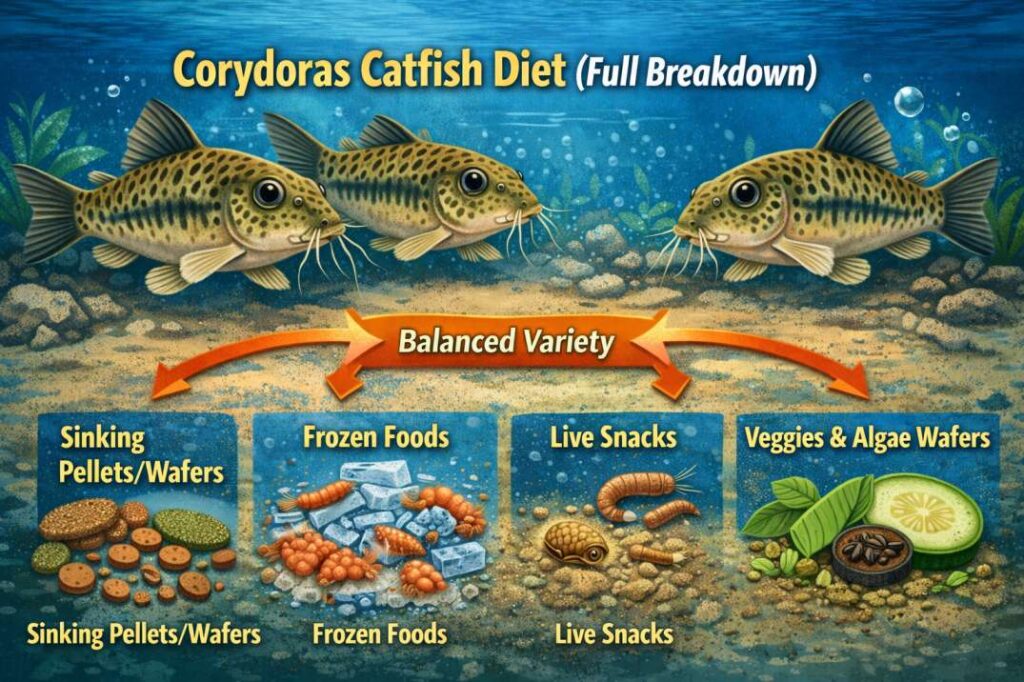
Corydoras Catfish Food: The Complete Breakdown
Many people misunderstand corydoras catfish food and assume they survive on scraps, but corys actually need intentional feeding to stay healthy.
1. Sinking Pellets and Tablets — Your Foundation (70–80% of diet)
Look for corydoras catfish food with:
- Crude protein 32%+ (corys need more protein than typical community fish flakes provide)
- Ingredients led by fish meal, insect meal, or shrimp meal — not wheat or soy fillers
- A tablet or wafer that sinks within seconds and softens enough for corys to graze, not a hard disc that sits untouched
Insect-meal-based foods deserve a specific mention here. Research on substituting fish meal with black soldier fly larvae meal in catfish feed found that higher larvae-meal inclusion produced measurable improvements in fillet fatty acid and protein profiles across a 168-day feeding trial. That’s not Corydoras-specific, but it’s a real, peer-reviewed data point behind why insect-based sinking foods aren’t just marketing — there’s genuine nutritional logic behind them for bottom-feeding catfish.
2. Frozen and Live Foods — The Upgrade (2–3x weekly)
- Bloodworms — high protein, corys go almost feral for them, but don’t overdo it; once or twice weekly is plenty
- Brine shrimp — easier to digest than bloodworms, good for conditioning before breeding
- Daphnia — gentle on digestion, a nice mid-week addition
- Blackworms — excellent if you can source them reliably; closest match to their natural invertebrate diet
This is the closest you’ll get to replicating what they’d actually find sifting through riverbed substrate in South America.
3. Vegetable Matter — The Overlooked 15% (once or twice weekly)
Blanched zucchini, spinach, or a spirulina wafer once or twice a week is a good addition. Corys aren’t heavy vegetarians, but a small plant-matter component supports gut health and mirrors the organic detritus they’d encounter naturally. Feed small portions and remove leftovers within 2–3 hours.
4. Treat Foods (Once Every 10 Days)
Optional, but good for dietary variety: krill flakes crushed and sunk, sinking community pellets, finely crushed spirulina.
Corydoras Catfish Food Comparison Table
| Food Type | Protein % | Sinks? | Frequency | Best For |
| Quality sinking pellets | 32–40% | Yes, fast | Daily | Primary diet |
| Algae/bottom-feeder wafers | 28–34% | Yes, slow-soften | Daily/alt. days | Grazing behavior |
| Frozen bloodworms | 55–60% | Sinks once thawed | 1x/week max | Conditioning, breeding prep |
| Frozen brine shrimp | 45–50% | Sinks once thawed | 2–3x/week | Easy digestion, variety |
| Frozen daphnia | 45%+ | Sinks once thawed | 1–2x/week | Gentle nutrition boost |
| Blanched vegetables | 1–3% | Anchor or weight | 1–2x/week | Gut health, fiber |
Do Cory Catfish Eat Shrimp, Snails, Algae, Poop & Betta Food?
Do Cory Catfish eat shrimp? Usually, no — Corys don’t hunt healthy adult shrimp. They’re peaceful, small bottom-dwellers without the ability to chase or attack shrimp. Safe with adult shrimp, they may sometimes eat dead shrimp, and may accidentally eat shrimplets.
Will they eat shrimp eggs? Not intentionally, but if shrimp eggs fall on the substrate, corys may eat them accidentally. If you have shrimp-breeding goals, keep dense moss or use a breeder box.
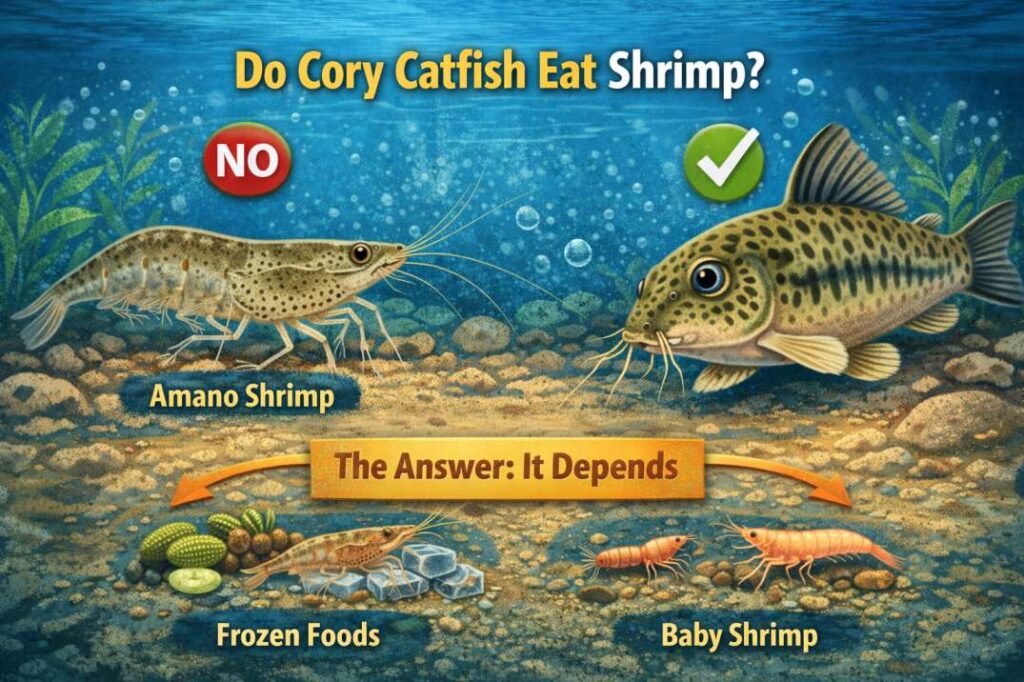
Do Cory Catfish eat snails? They do NOT eat adult snails or nerite snails, but may accidentally eat newly hatched baby snails that end up on the substrate — opportunistic feeding, not hunting.
Do Cory Catfish eat algae? No — this is a big misconception. They may nibble algae wafers, but that’s because those wafers contain fish meal, shrimp meal, and plant matter, not because of the algae itself. Think of corys as bottom feeders that need meaty foods, not algae-heavy diets.
Do Cory Catfish eat fish poop? Absolutely not. Corydoras may test feces in their mouths because they investigate everything they encounter for edibility, but they never actually eat it.
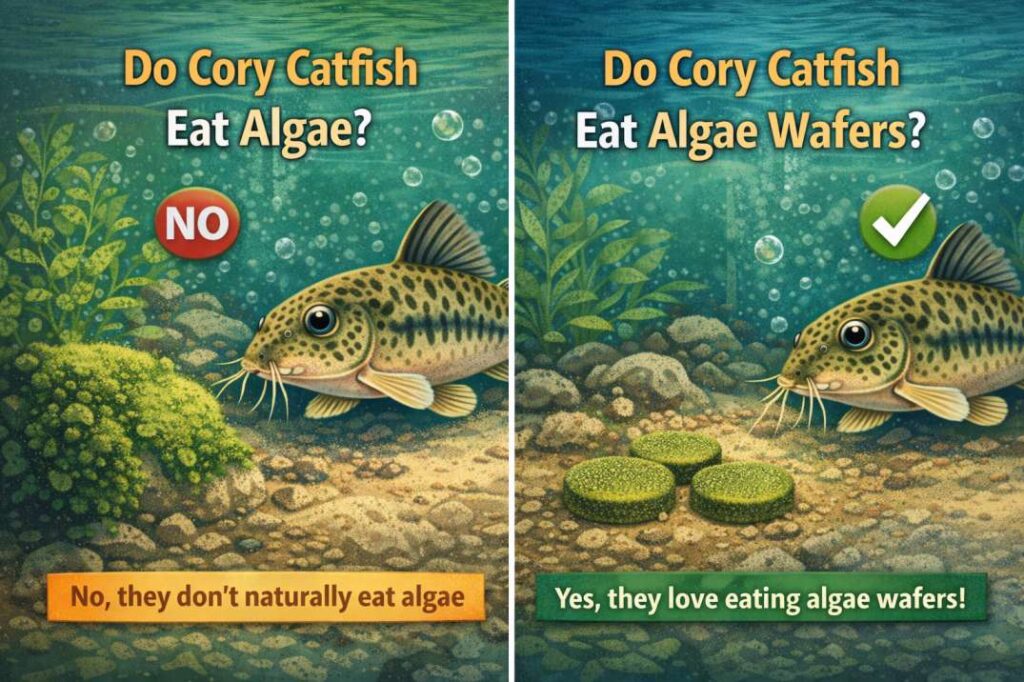
Can Cory Catfish eat betta food? Yes, but only if it sinks to the bottom, is protein-rich, and is fed in very small quantities — as a supplement, never a main diet.
Will Cory Catfish eat baby guppies? Very rarely, and only if the fry is already dead or extremely weak and lying on the bottom. They won’t chase or hunt healthy fry.
Do Cory Catfish Eat Algae Wafers?
Yes — they eat algae wafers but not for the algae.
They eat them simply because the algae wafers contain plenty of spirulina, fish meal, plant protein, and binder carbohydrates, and they sink to the bottom when fed. So yes, they can eat the wafers, but not real algae. If you’re still confused about what do Cory Catfish eat as beginners, think of them as bottom feeders that need meaty foods rather than algae-heavy diets.
Can Cory Catfish Eat Betta Food?
Yes, can Cory Catfish Eat Betta Food, but only if the following 3 conditions are met: it reaches and sinks to the bottom, it is rich in protien and it is fed in very small quantities.
Still, betta food should be used only as a supplement, not a main diet.
Will Cory Catfish Eat Baby Guppies?
It eats very rarely and only if the baby guppy is already dead or the baby is extremely weak and lying on the bottom. Cory catfish won’t chase or hunt healthy guppy fry.
Feeding Schedule for Cory Catfish (My Proven Routine)
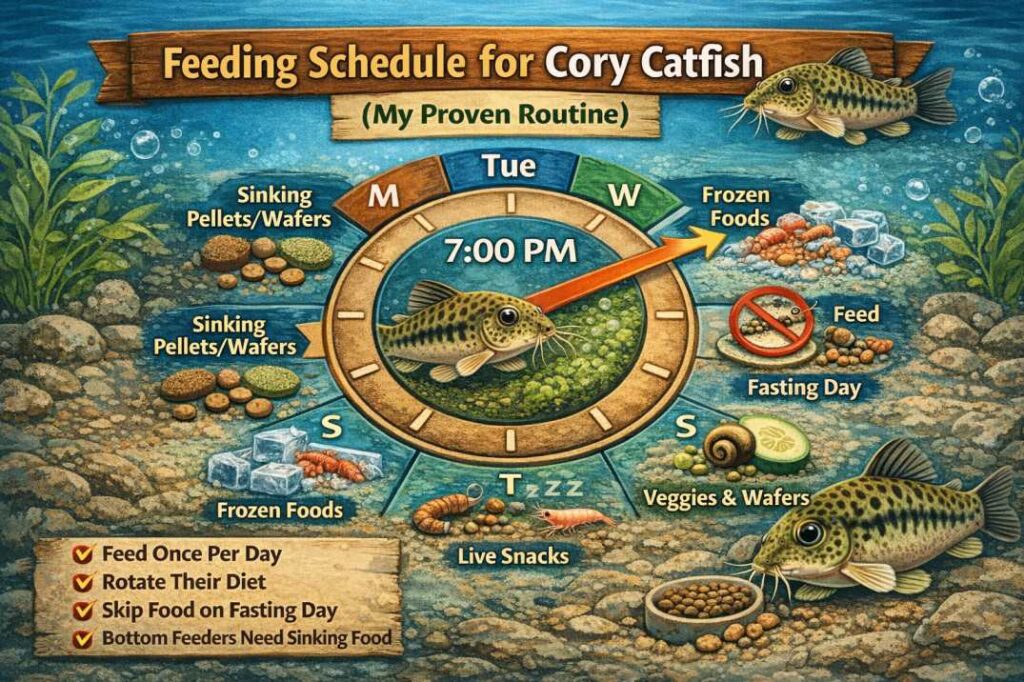
Feeding Schedule for Cory Catfish (My Proven Routine)
- Adults: once or twice daily, an amount they clear from the substrate in 2–3 minutes
- Juveniles (under 3 months): smaller portions, but three times daily to support faster growth without overloading a still-developing digestive system
- Protein days (2–3x weekly): frozen bloodworms or brine shrimp
- Weekly: small veggie treat, optional but good for variety
- Monthly: diet variation day (krill mix, etc.)
A simple gut check: if uneaten food is still sitting in the gravel more than 10 minutes after feeding, you’re overfeeding — full stop. Corys are efficient foragers; persistent leftovers usually mean portion size, not appetite.
How to Feed Cory Catfish With Other Fish
When feeding Cory Catfish in a community tank, you will need to take special feeding care. Understanding what do Cory Catfish eat is the first step toward keeping them healthy, active, and long-lived in any community tank. The key is to make sure food actually reaches the bottom. Most mid-level and top-level fish finish everything before Corys even get a chance.
I follow a simple rule: feed floating or mid-water foods first, let the other fish get busy, and then drop sinking pellets or wafers for the Corys. This prevents competition, avoids stress, and ensures your Corydoras get the balanced diet they need. Feeding after the lights dim slightly also works well because Corys naturally become more active at the bottom.
Three Mistakes I Made (So You Don’t Have To)
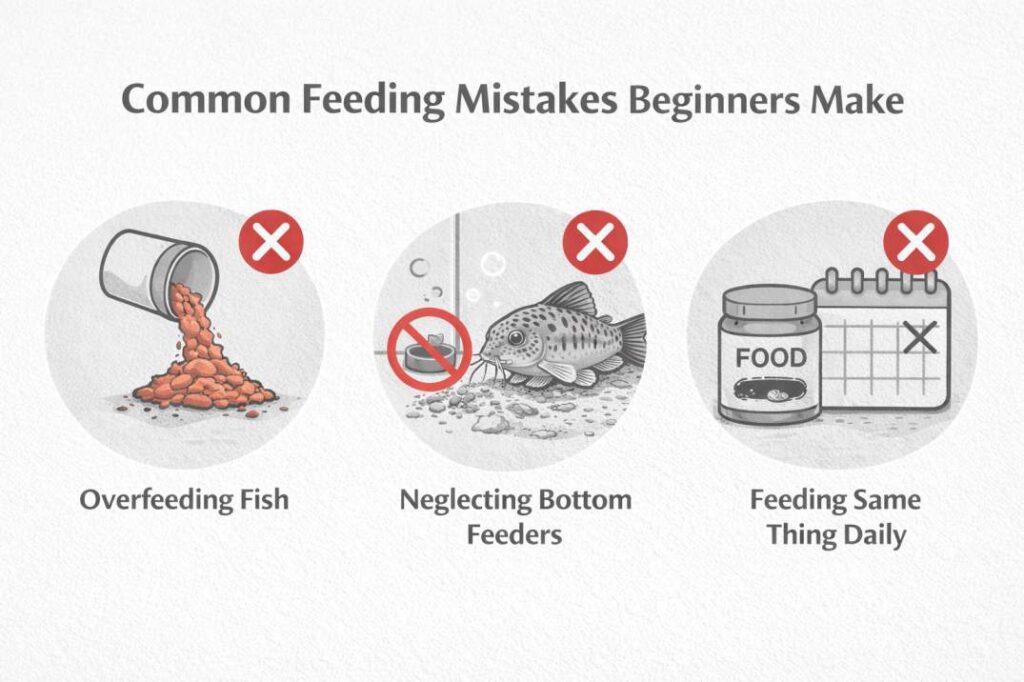
Mistake #1 — Assuming “bottom feeder” means “they’ll eat anything that falls.” This is the mistake that cost me three cory catfish early on. In a tank with fast mid-water eaters, almost nothing falls intact. You need food specifically designed to sink and reach them, fed separately from the community tank’s main feeding if necessary.
Mistake #2 — Feeding only pellets, forever, without mixing in variety. Pellets alone work, technically. But corys fed an exclusively dry diet for months noticeably lose vibrancy and become less active foragers compared to those getting regular frozen food rotation. Variety isn’t a luxury — it’s a requirement for them to display natural behavior.
Mistake #3 — Panicking when a cory hovers near the surface. I used to think mine were begging for food. Given what we now know about their air-breathing biology, a cory making more frequent trips to the surface is very often about oxygen, not hunger — especially in a tank with low surface agitation or during warmer months when dissolved oxygen drops. Check water movement and stocking density before assuming it’s a feeding issue.
Other common mistakes worth avoiding: using flake food as the main diet, keeping corys on gravel (hard on their barbels), overfeeding protein, and expecting them to “clean” the tank as their job.
Cory Catfish Lifespan (Diet Matters!)
Cory Catfish can live 5–7 years in a normal tank, and 8–10 years with an excellent diet and soft substrate. Poor diet shortens their life more than almost anything else. Feed them well, and they’ll thrive for years.
FAQ: Corydoras Catfish Food & Diet
What is the best corydoras catfish food?
A quality sinking pellet or wafer with 32%+ crude protein, led by fish meal, insect meal, or shrimp meal, fed 1–2 times daily and supplemented with frozen bloodworms, brine shrimp, and daphnia 2–3 times weekly.
Do Cory Catfish eat snails?
No, not adult snails. They may only eat tiny baby snails by accident.
Do Cory Catfish eat shrimp or shrimp eggs?
They don’t eat adult shrimp, but may eat shrimp eggs or shrimplets if these fall to the bottom.
Can Cory Catfish eat betta food?
Yes, if it sinks, but it should never be their main food.
Do Cory Catfish eat algae or algae wafers?
They don’t eat algae itself. They eat algae wafers only because those contain fish and shrimp meal.
What do Cory Catfish eat in a normal home aquarium?
Sinking pellets, shrimp wafers, algae wafers, frozen bloodworms, and soft plant-based foods that reach the bottom quickly.
What do Cory Catfish eat in the wild?
Insects, larvae, detritus, tiny crustaceans, and organic matter found on the riverbed.
What to feed cory catfish if other fish eat all the food first?
Feed corydoras after your other fish using sinking pellets dropped directly near the substrate, or feed lights-off so faster mid-water fish settle down first.
What’s the best feeding schedule for pygmy corydoras?
Same core principles as larger species, but smaller portions — sinking micro-pellets daily, with finely crushed frozen foods two to three times weekly, since their mouths are noticeably smaller.
Can Cory catfish eat just flake food?
They can survive on crushed flake food in a pinch, but flakes float and break apart before reliably reaching the bottom, making sinking pellets a far better primary food.
How long can Corydoras go without food?
Healthy adult corydoras can comfortably go several days without food thanks to their efficient foraging biology, though this isn’t something to rely on regularly.
Do corydoras eat their own eggs?
Yes — which is why many breeders move eggs to a separate hatching container shortly after spawning.
Next Steps: Resources You Should Read Next
Related Reading on FishioHub:
- What to Feed Neon Tetras: Best Foods, Schedule & Mistakes to Avoid
- Do Crabs Eat Dead Fish? What Eats Crabs
- Do Amano Shrimp Eat Algae? Complete Guide
Scientific References:
- Kramer, D.L. & Braun, E.A. (1983). Short-term effects of food availability on air-breathing frequency in the fish, Corydoras aeneus (Callichthyidae). Canadian Journal of Zoology, 61, 1964–1967.
- Springer, Environmental Biology of Fishes — trade-off between digestion and respiration in air-breathing callichthyid catfishes
USA Aquarium Resources:
- Corydoras, Wikipedia — feeding behavior and barbel-based substrate foraging
My Final Thoughts
Cory Catfish are one of the easiest and happiest fish to care for — when you feed them the right diet. My first Corydoras didn’t die from disease; they slowly starved because I assumed leftover food was enough. By the time I realized what was happening, it was too late.
Don’t make the same mistake. Feed your corys with sinking foods, add protein-rich treats, and make sure food actually reaches the substrate. They’re not just cleanup fish — they have their own dietary needs, and getting corydoras catfish food right is the single biggest thing you can do for their health and lifespan.
Was this guide helpful?
First-Hand Experience
Based on animals I've personally kept and bred - not summarized from other articles.
Zoological Foundation
Claims are checked against my M.Sc. Zoology training and published aquatic biology research, not recycled aquarium myths.
No Paid Influence
No sponsorship shaped this guide. Affiliate links, if any, are disclosed separately and never hidden.
Kept Current
Errors are corrected as soon as they're found, with the update noted at the bottom of the article.
Anil Satak M.Sc. Zoology · Founder, FishioHub
Grew up in a fishing family in India and holds a Master's in Zoology. FishioHub is a one-person operation - every guide is personally researched, kept-tested, and written by Anil. No team, no outsourced writers, no AI-generated content. Read his full bio →