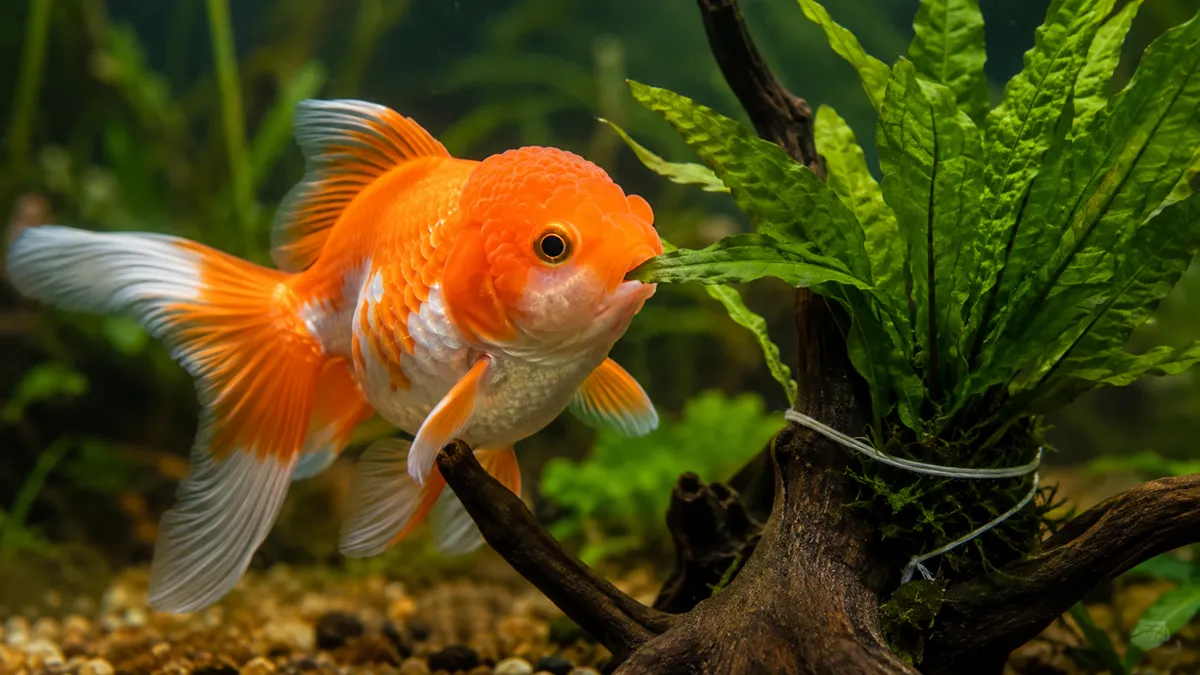
Is Java fern good for goldfish? Yes — because it attaches to hardscape rather than rooting in the substrate, and its thick, leathery leaves don’t taste good enough for a goldfish to bother finishing them.
That combination is rare among live plants, and it’s the whole reason java fern is the one I reach for first in a goldfish tank.
In my own tank, it’s been a lifesaver. Before trying it, my goldfish shredded every Amazon sword and Vallisneria I planted, turning the substrate into an uprooted mess. Out of desperation, I tied a few Java ferns to driftwood with sewing thread.
If You Only Remember 3 Things
- Is java fern good for goldfish? Yes — it attaches to hardscape, not substrate, so there’s nothing loose to uproot.
- Goldfish will mouth the leaves out of curiosity. They rarely eat them down.
- Bury the rhizome in gravel, and it rots. Always tie or glue it to rock or driftwood instead.
Do Goldfish Like Plants in the Tank?
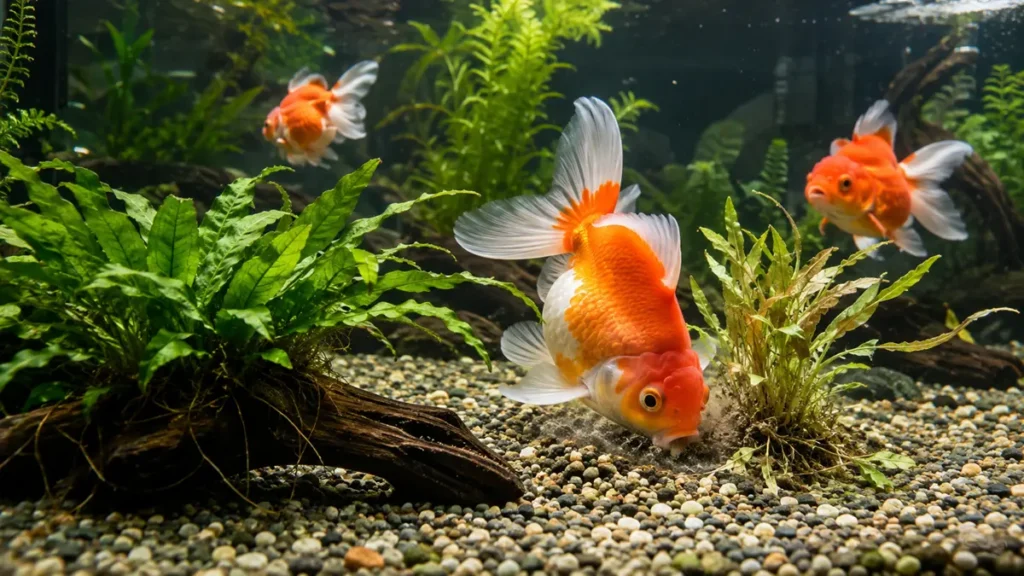
Do goldfish like plants in the tank? Mostly, yes — which is exactly why the question of is java fern good for goldfish comes up so often. Goldfish are natural grazers, and they’ll investigate, nibble, and dig around any greenery you give them.
That’s exactly what makes keeping live plants with them tricky. Give them more room — 20 gallons plus — and you’ll notice less of the restless digging that shreds a planted layout.
Do Goldfish Eat Plants?
Do goldfish eat plants? Routinely, yes. This isn’t a behavior problem you can train out of them — it’s biology.
Goldfish (Carassius auratus) are omnivores with a strong herbivorous streak, and aquatic vegetation makes up a real share of their wild diet. A 1995 study in the Journal of Fish Biology tracked feral goldfish introduced into ponds near Montreal and found every unprotected submersed plant showed heavy grazing damage — and every unprotected plant, submersed or emergent, was uprooted (Richardson, Whoriskey & Roy, 1995). At one site, a feral population of 15,000–17,000 goldfish per hectare was enough to visibly strip a pond of vegetation.
That’s pond-scale, not aquarium-scale. But it tells you the grazing instinct is real, not an occasional habit.
Is Java Fern Good for Goldfish?
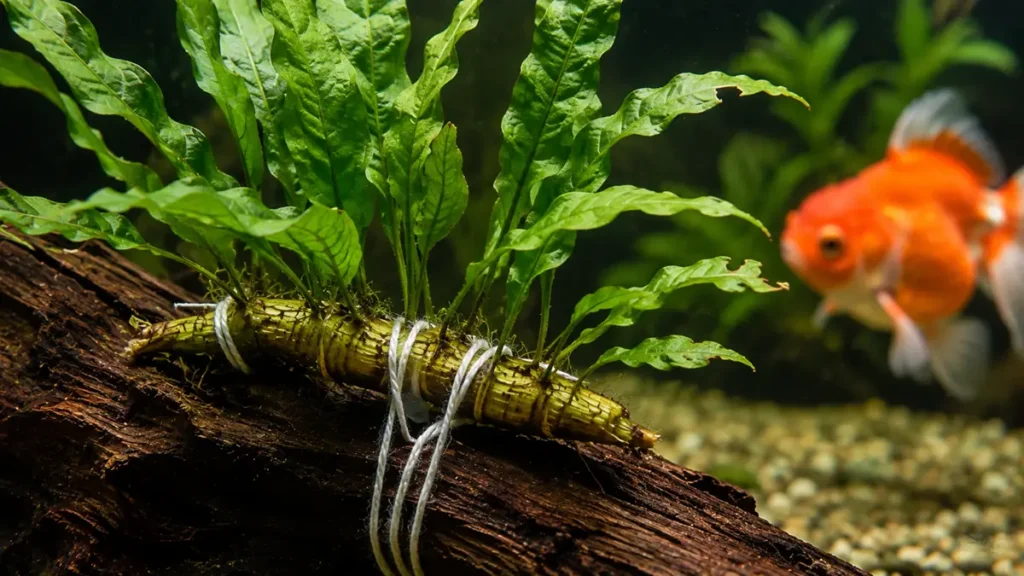
So is Java fern good for goldfish, given all that grazing pressure? It holds up better than almost anything else you can plant, and the reason comes down to biology, not luck.
Java fern (Microsorum pteropus) is an epiphyte from Southeast Asian riverbanks. In the wild, it grows attached to rocks and driftwood in flowing streams, never rooted in mud — so tying it to hardscape in your tank isn’t a workaround. It’s just how the plant wants to grow, and it happens to be exactly what keeps a goldfish from digging it up.
The leaves do the rest of the work. They’re thick, rubbery, and slightly bitter, so a goldfish will mouth them out of curiosity and usually move on. You’ll still see the odd nip mark on new growth — don’t expect it untouched, just expect it to survive.
Two things separate java fern that thrives from java fern that rots. Never bury the rhizome — that thick horizontal stem the leaves grow from — in gravel; it needs to breathe. Tie or glue it to rock or driftwood with cotton thread or aquarium-safe glue gel instead.
Goldfish also prefer cooler water than most tropical plants tolerate, typically 65–72°F. Java fern handles that range comfortably, which is more than you can say for most soft-leaved tropical plants.
Is Windelov Java Fern Good for Goldfish?
Is Windelov Java Fern good for goldfish the same way standard Java fern is? Yes. Windelov — also sold as lace java fern — is the same species with finely branched, fringed leaf tips, and it shares the same tough texture and hardscape-only rule.
The only real difference is a smaller, more delicate-looking leaf. If you want java fern’s durability with more visual texture, this is the variety to pick.
Best Plants for Goldfish — Which Plants Are Best for Goldfish?
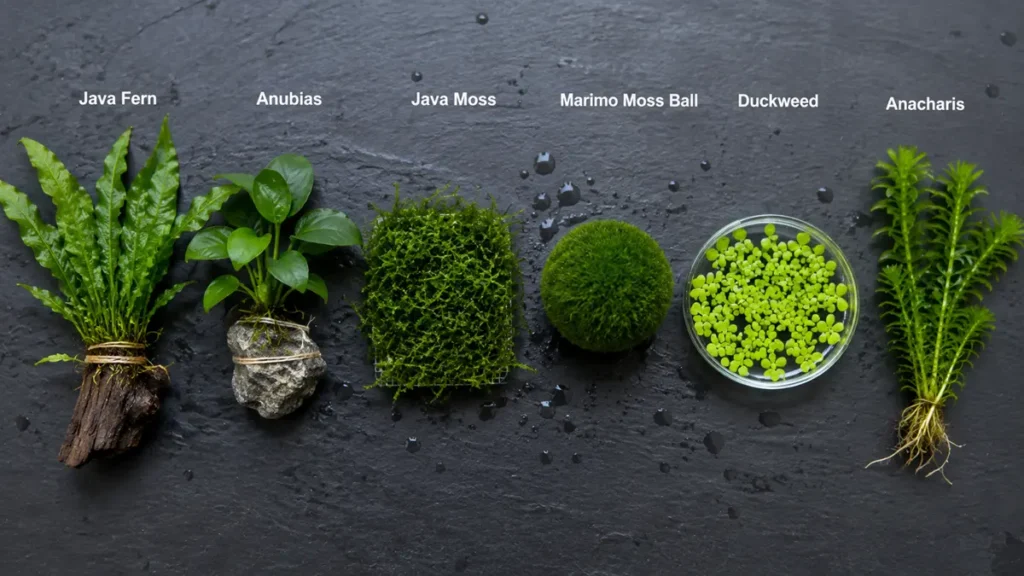
Which plants are best for goldfish, beyond java fern specifically? Ask two questions before you buy: does it root into hardscape instead of substrate, and are the leaves tough enough that a goldfish loses interest?
Is java fern good for goldfish compared to the rest of this list? It’s the benchmark everything else gets measured against — the best plants for goldfish are really just variations on the same idea.
| Plant | Attaches to hardscape? | Goldfish grazing risk | Tolerates 65–72°F | Light needs |
| Java fern | Yes (required) | Low | Yes | Low |
| Anubias | Yes (required) | Low–Moderate | Yes | Low |
| Java moss | Yes (required) | Moderate | Yes | Low |
| Marimo moss ball | No (loose, free-rolling) | Very low | Yes | Low |
| Duckweed / floating plants | No (surface) | Moderate–High | Yes | Moderate |
| Soft-leaved stem plants (e.g., anacharis) | No (substrate) | High | Yes | Moderate |
Live Plants for Goldfish Aquarium: What Actually Survives
Live plants for goldfish aquarium setups need to clear a higher bar than a community tetra tank. You’re planting against an animal that treats vegetation as both furniture and food.
Live plants good for goldfish fall into two camps: plants goldfish can’t uproot (Java fern, anubias, moss balls), and plants goldfish can’t eat fast enough to matter (fast growers like duckweed). Goldfish and live plants can coexist — plenty of keepers run genuinely planted goldfish tanks — it just means choosing from a shorter list.
If you’re setting up goldfish tank live plants for the first time, start with two or three hardscape-attached species. That limits how much a goldfish’s digging can undo while everything’s still settling in.
Is Java fern good for goldfish as that starter plant specifically? It’s usually where I’d point a first-timer, simply because it forgives more mistakes than almost anything else on this list.
Oxygenating Plants for Goldfish
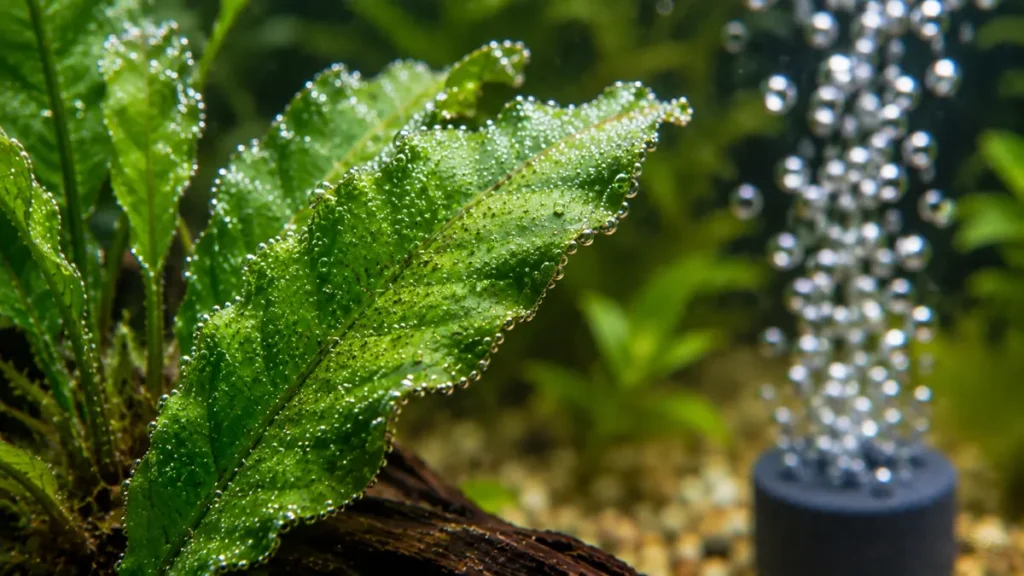
Oxygenating plants for goldfish matter more than most beginners assume, because goldfish are heavy waste producers for their size and do best with stable dissolved oxygen. University of Illinois Extension estimates that up to 70–90% of dissolved oxygen in a planted pond system comes from plant and algae photosynthesis rather than surface diffusion, and that production stops overnight when photosynthesis shuts down (University of Illinois Extension, 2025)
The University of Florida’s IFAS Extension recommends keeping dissolved oxygen at or above 5 mg/L for optimum fish health, and notes it follows a predictable diurnal cycle — rising through daylight, falling overnight (UF/IFAS Extension)
Oxygen plants for goldfish won’t replace a filter or air stone — don’t skip either. But a healthy stand of java fern or anubias genuinely supports the daytime oxygen curve, which is one more reason is java fern good for goldfish keeps coming back as the answer.
Floating Plants for Goldfish
Floating plants for goldfish are one of the few categories goldfish are welcome to graze on freely, since fast growth usually outpaces the damage. The best floating plants for goldfish tank setups — duckweed, water lettuce, salvinia — pull ammonia and nitrate straight out of the water, which pairs well with a broader read on the nitrogen cycle (linked below).
The tradeoff: goldfish do eat floating plants readily, so you’ll be restocking them regularly. Dense floating cover can also shade out light-hungry rooted plants underneath.
Is Java Moss Good for Goldfish?
Is java moss good for goldfish the way Java fern is? Not quite — it’s a step down in durability. Java moss (Taxiphyllum barbieri) still attaches to hardscape rather than substrate, which protects it from uprooting.
But its soft, fine texture is more appealing to a grazing goldfish than java fern’s tough leaves ever are. Is java fern good for goldfish more reliably than moss, then? Yes — texture is the deciding factor, not toxicity or taste.
Goldfish Safe Plants: A Short, Boring, Reliable List
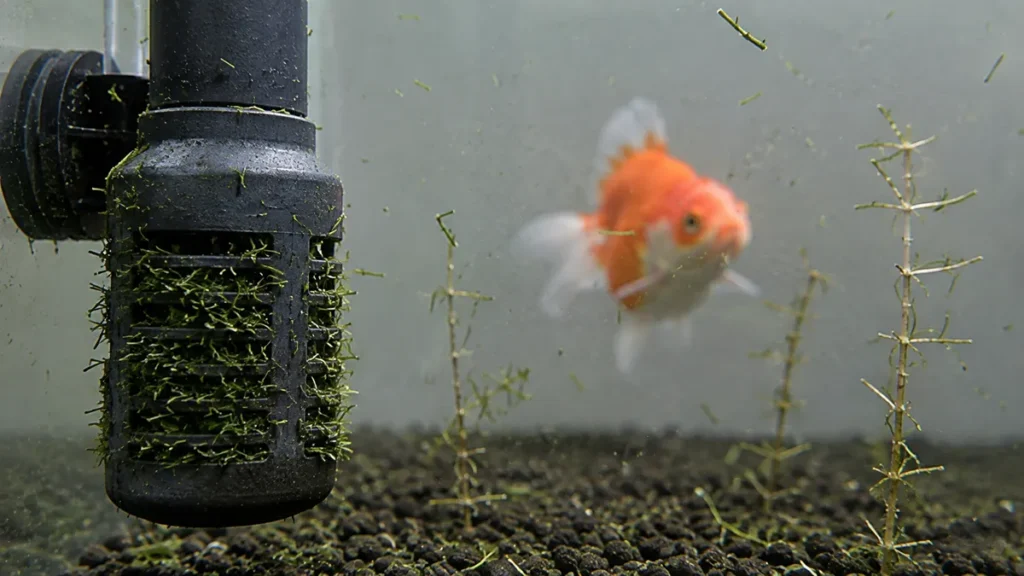
Goldfish safe plants come down to a shortlist, not an exciting aquascaping palette: java fern, anubias, marimo moss balls, and — with some upkeep — java moss and floating duckweed.
Is Java fern good enough for goldfish to recommend to a total beginner? Every time. It’s the one plant on this list I wouldn’t hesitate to hand someone on their first goldfish tank.
When I started, I fell for the myth that fast-growing plants like hornwort were safe because they would outgrow the fish. I woke up the next morning to a bare tank and a filter intake completely clogged with chewed-up needles. That taught me that “fast-growing” is no match for a hungry goldfish, and why I now only trust tough choices like Java fern.
Keeping Your Goldfish Tank Clear With Plants
Live plants play a supporting role in how to keep goldfish tank clear, since both floating and rooted plants compete with algae for the same light and nutrients that would otherwise feed a green-water bloom. Plants alone won’t fix a cloudy tank — filtration and stocking density do most of that work.
But a well-planted goldfish tank tends to stay visibly clearer between water changes than a bare one.
FAQ
Is java fern good for goldfish long-term, or does it eventually get destroyed?
Long-term survival is the norm as long as it’s attached to hardscape rather than planted in substrate — goldfish mouth the leaves but rarely eat them down.
Do goldfish eat java fern leaves?
Occasionally, out of curiosity rather than hunger. The thick, bitter leaves make it one of the least palatable plants within a goldfish’s reach.
Is windelov java fern good for goldfish in the same way as regular java fern?
Yes — Windelov shares the same tough leaf texture and hardscape-attached growth habit, just with finer, fringed leaf tips.
Is java moss good for goldfish tanks, or will it get shredded?
It survives better than substrate-rooted plants because it attaches to hardscape, but its soft texture means more nibbling damage than java fern sees.
What are the best floating plants for a goldfish tank?
Duckweed, water lettuce, and salvinia grow fast enough to outpace goldfish grazing while also pulling ammonia and nitrate out of the water.
Do goldfish eat plants even when well fed?
Yes — grazing is instinctive foraging behavior, not just hunger. A well-fed goldfish will still mouth and sample live plants.
Which plants are best for goldfish that also help with tank clarity?
Java fern, anubias, and floating duckweed all compete with algae for light and nutrients, which helps keep water visibly clearer.
Are oxygenating plants necessary for goldfish, or is a filter enough?
A good filter and air stone are essential and non-negotiable. Oxygenating plants add meaningful daytime dissolved oxygen on top of that, not instead of it.
Next Steps: Resources You Should Read
Related FishioHub reading:
- How to Plant Freshwater Aquarium Plants
- Aquarium Plants That Don’t Need CO2
- Duckweed for Nitrate Removal
Scientific references:
- Richardson, M.J., Whoriskey, F.G., & Roy, L.H. (1995). Turbidity generation and biological impacts of an exotic fish Carassius auratus, introduced into shallow seasonally anoxic ponds. Journal of Fish Biology, 47(4), 576–585.
- University of Illinois Extension — “Under the Ice: What Winter Means for Your Pond”
- University of Florida IFAS Extension — “Dissolved Oxygen for Fish Production”
USA aquarium resources:
- Goldfish Society of America
- Local university extension aquaculture programs — Illinois and Florida IFAS both publish free pond and tank water-quality guides worth bookmarking
Closing
A java fern that’s still standing a month after you added a goldfish isn’t luck. Is java fern good for goldfish over the long run? A month in, the leaves already have your answer.
Was this guide helpful?
First-Hand Experience
Based on animals I've personally kept and bred - not summarized from other articles.
Zoological Foundation
Claims are checked against my M.Sc. Zoology training and published aquatic biology research, not recycled aquarium myths.
No Paid Influence
No sponsorship shaped this guide. Affiliate links, if any, are disclosed separately and never hidden.
Kept Current
Errors are corrected as soon as they're found, with the update noted at the bottom of the article.
Anil Satak M.Sc. Zoology · Founder, FishioHub
Grew up in a fishing family in India and holds a Master's in Zoology. FishioHub is a one-person operation - every guide is personally researched, kept-tested, and written by Anil. No team, no outsourced writers, no AI-generated content. Read his full bio →