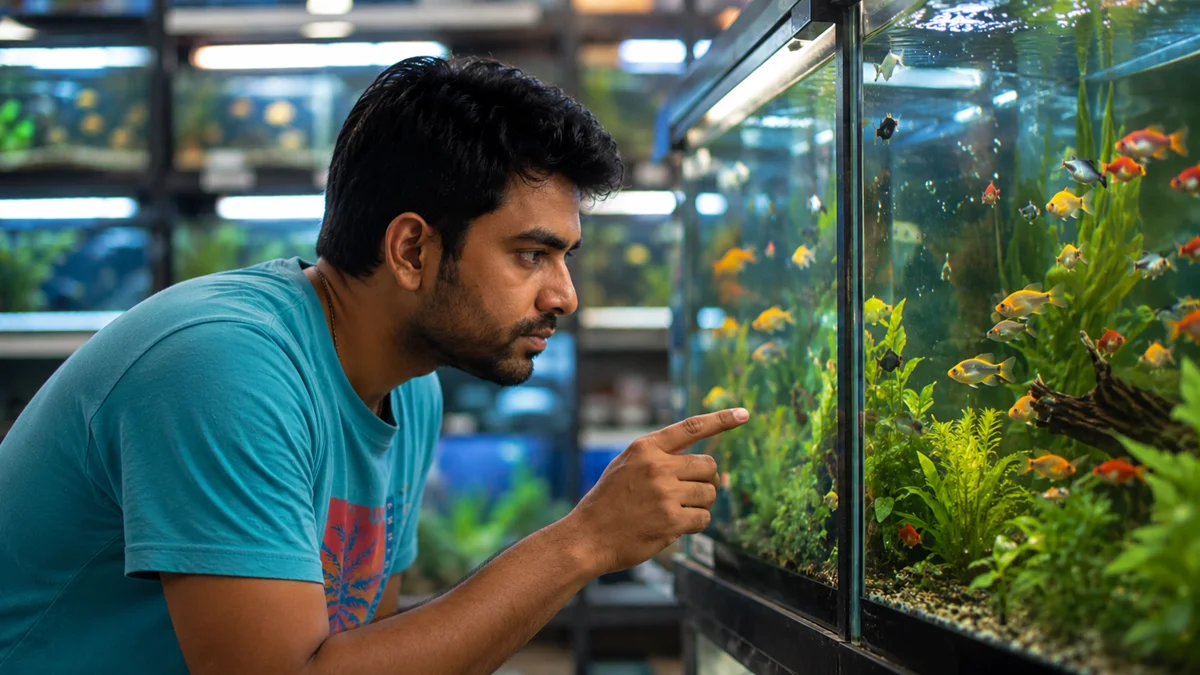
Here’s something a lot of buying guides skip: a fish can look perfectly fine and still be incubating a disease that won’t show for another 4–7 days. That gap between “looks healthy” and “is healthy” is exactly where most new aquarium owners get burned — and it’s the first thing my zoology background trained me to watch for, not the color or the fins.
Hi, are you excited to buy new fish for your aquarium? Just wait — one wrong fish can bring diseases, infections, parasites, and stress into the tank. That’s why knowing how to buy healthy fish from aquarium shop matters more than most beginners realize.
Quick answer: To buy healthy fish from an aquarium shop, check the store’s tank cleanliness first, then observe the fish for 2–3 minutes for active swimming, clear eyes, open fins, and normal breathing. Ask the shop to feed the fish before you buy — a fish that won’t eat is a fish you should walk away from.
Quick Summary Fact Card
| Check | What to Look For |
| Store cleanliness | Clear water, no dead fish, no algae overgrowth |
| Fish behavior | Active swimming, no gasping, no flashing |
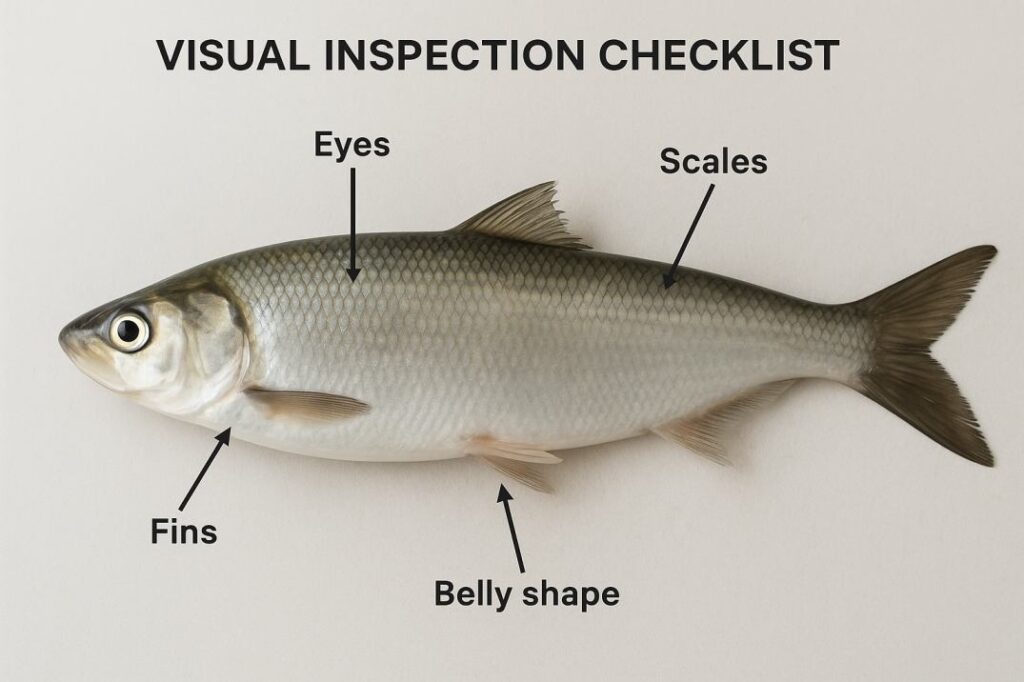
| Physical signs | Bright color, clear eyes, open fins, round belly |
| Feeding test | Eats quickly and eagerly when offered food |
| Arrival timing | 5–7 days in-store minimum before purchase |
| Quarantine | 14–30 days at home before adding to the main tank |
Why Buying the Right Fish Matters
If you accidentally buy a sick or stressed fish, it may carry:
- Ich (white spot disease) or infections
- Fin rot
- Internal parasites
- Velvet disease
- Bacterial infections
- Poor immunity that surfaces later
These spread fast and can wipe out a tank you’ve spent months building. Beginner fish buying tips almost always start here: the fish you don’t buy matters as much as the one you do.
How to Select the Right Aquarium Shop
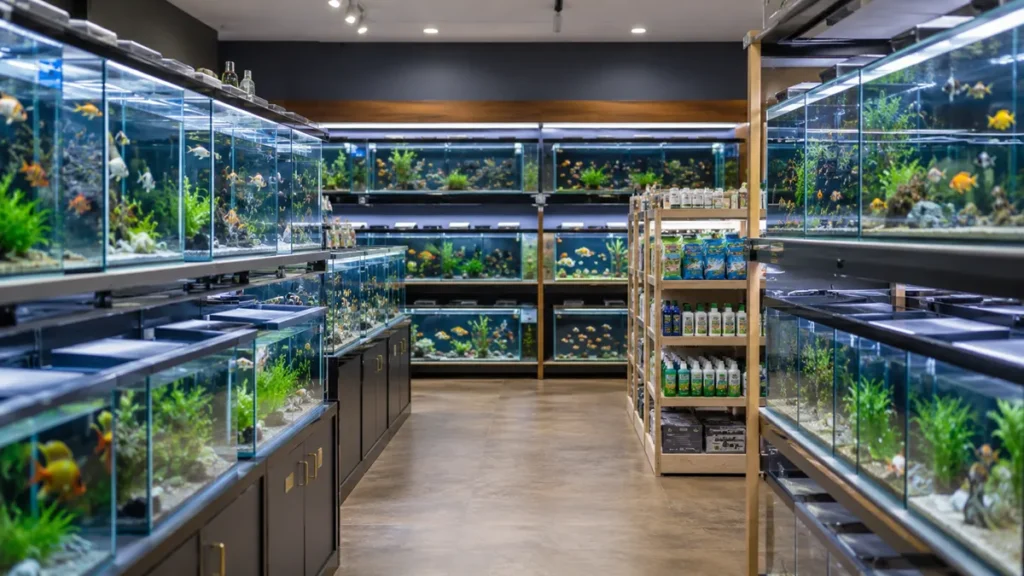
Your choice of store determines a huge share of fish health before you even look at an individual fish. This is genuinely one of the most overlooked steps in How to Buy Healthy Fish from Aquarium Shop? — People fixate on the fish and skip evaluating the store itself.
What a good aquarium store should have:
- Clean tanks, no cloudy water
- Zero dead fish inside any tank
- Healthy, active fish throughout
- Staff who understand fish care and answer questions directly
- Proper filtration is running in every tank
- Visible or available quarantine tanks
- No overcrowding
Red Flags (Avoid These Stores):
- Dead fish floating in multiple tanks
- Dirty water, algae overgrowth, or cloudiness
- Bad smell from the tanks
- Fish gasping at the surface
- Overstocked, lethargic fish
- Fish with visible disease or injury
If the store itself looks unhealthy, don’t buy from it — no matter how attractive an individual fish looks.
Observe the Tank Before Selecting Fish
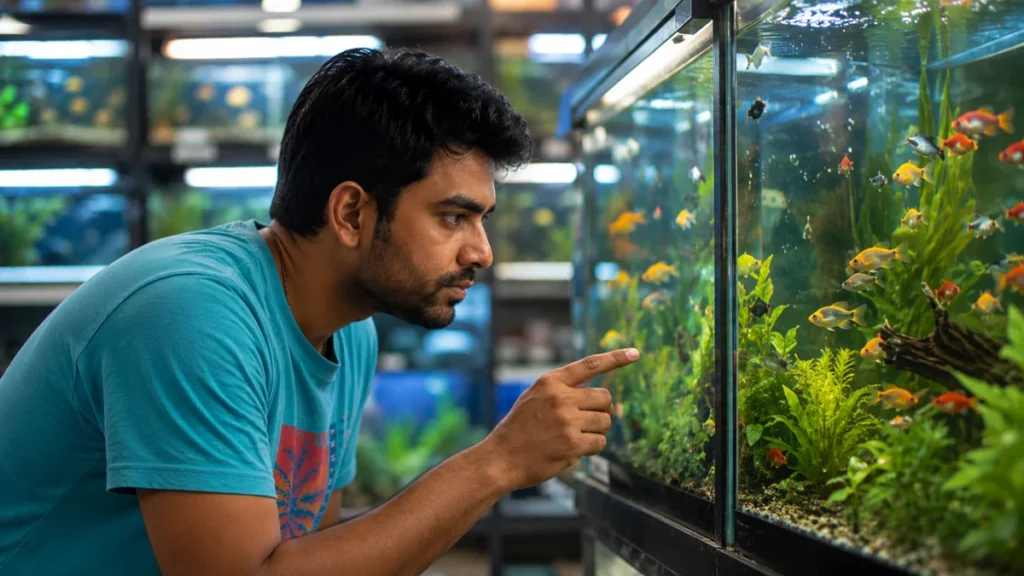
Don’t rush. Watch the entire tank for at least 2–3 minutes before choosing anything.
What to check before buying fish, tank-side:
- Fish swimming normally, not erratically
- No clamped fins
- No white spots or cotton-like fungal growth
- No flashing (scratching against surfaces)
- Healthy-looking tank mates
- Strong filtration and aeration are visibly running
- No aggressive fish harassing others
If the tank environment looks compromised, every fish in it is at risk — regardless of how healthy one individual looks. This is a very crucial step in How to Buy Healthy Fish from Aquarium Shop?
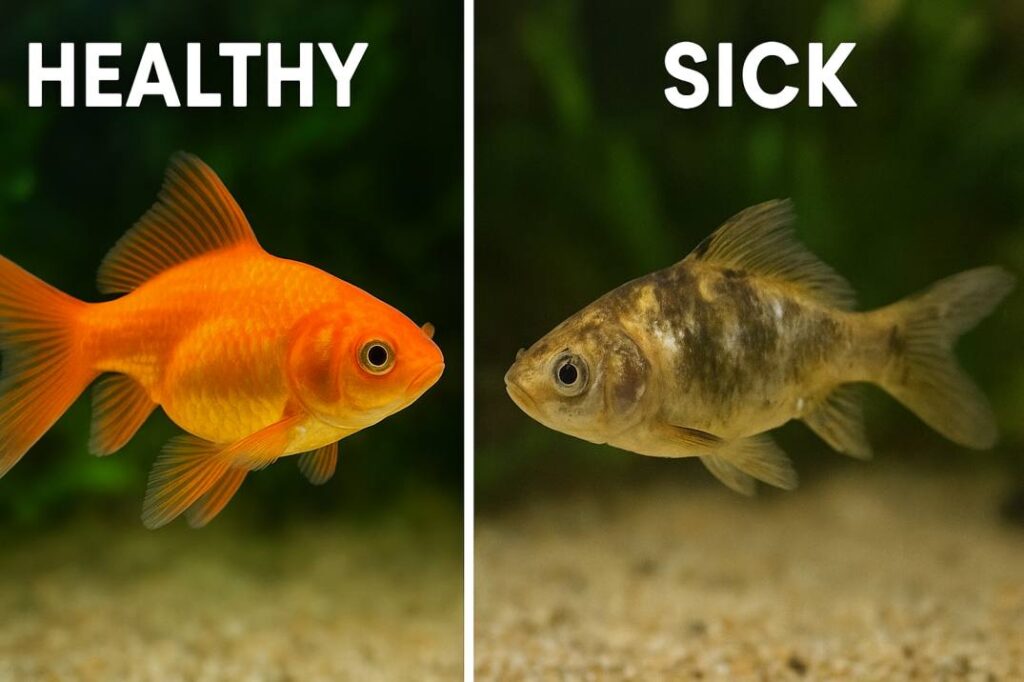
Signs of healthy aquarium fish:
- Active and responsive movement
- Bright coloration, not pale or washed out
- Clear eyes, no physical damage
- No wounds, spots, or fungus
- Clean, fully opened fins
- Round (not sunken) belly
- Smooth, undamaged scales
- Normal, balanced swimming
Signs of a sick or stressed fish (avoid buying):
- Torn or clamped fins
- White spots (ich)
- Red patches
- Cotton-like growths
- Sunken belly
- Rapid or labored breathing
- Sitting at the bottom, unresponsive
- Floating sideways
- Gasping at the surface
If even one fish in a tank shows disease signs, avoid buying from that entire tank — the rest are likely already exposed.
Pro Tips for Buying Healthy Aquarium Fish ( 8 Checks)
These are the best things to do while buying healthy aquarium fish. This will satisfy your query how to buy healthy fish from aquarium shop. This is the perfect answer for it.
- Buy fish early in the day — they’re less stressed.
- Choose the middle-sized fish (not the biggest or smallest).
- Avoid buying fish immediately after shipment day.
- Observe the fish you want from a distance first (natural behavior).
- Transport fish in insulated bags if the weather is hot/cold.
- Acclimate fish slowly when reaching home.
- Never buy fish from tanks containing medicated blue water (which indicates sick fish).
- Prefer stores that have separate tanks for species, not mixed.
Questions to Ask Before You Buy
Good stores answer these without hesitation. If a store gets defensive, that’s information too.
- When did this fish arrive? Best to buy fish that have been in-store 5–7 days.
- Were the fish quarantined? Ideally, 2–5 days before mixing with other stock.
- What food do you feed them? Matching this at home smooths the transition.
- Any recent deaths in this tank? If yes, avoid that tank entirely.
- What are the water parameters? Matching them to your home tank eases acclimation.
Asking these signals you’re a serious hobbyist — and stores tend to treat serious customers with more honesty.
Ask the Store to Feed the Fish in Front of You
This is the single best test available to you.
A healthy fish will:
- React quickly to food
- Eat without hesitation
- Show normal energy afterward
A sick or stressed fish will:
- Ignore the food
- Swim sluggishly
- Stay hidden or unresponsive
If the fish doesn’t eat, don’t buy it — regardless of how it looks otherwise.
What the Science Says vs What Hobbyists Believe
Myth: “If the fish looks calm and still, something’s wrong with it.”
Reality: Not always. Fish stress physiology research, notably work summarized by fish physiologist Bruce Barton on stress responses in fish, shows that some species rest motionless as normal behavior, particularly nocturnal or ambush species like certain catfish and loaches. The distinction that actually matters is responsiveness — a resting fish that reacts normally to movement or feeding is different from one that’s lethargic because it’s genuinely unwell.
What this means for your buying decision: don’t rule out a naturally still species just because it isn’t swimming laps. Test responsiveness directly — tap the glass gently, or watch its reaction at feeding time — rather than judging by activity level alone.
Myth: “A newly arrived, exotic-looking fish is the best pick — it just got here, so it’s fresh.”
Reality: It’s the opposite. Shipping is one of the most physiologically stressful events a fish experiences, and stress suppresses immune function measurably in the days immediately following transport. This is exactly why the 5–7 day in-store waiting window matters — it isn’t arbitrary, it’s giving the fish’s stress response time to settle before you add another transport and acclimation event on top of it.
What Happens If You Skip Quarantine
Here’s the scenario that plays out more often than people expect: a healthy-looking fish goes straight into the main tank, and 10–14 days later, half the tank is showing white spots or fin rot — and by then, it’s nearly impossible to trace back to the new arrival with confidence.
Why this happens: many fish parasites and pathogens have incubation periods measured in days to weeks, not hours. A fish can be genuinely asymptomatic at purchase and still be carrying something that only becomes visible once stress or a life-cycle stage triggers symptoms.
Quarantine breaks this specific failure mode. A separate tank for 14–30 days gives any hidden issue time to surface where it can be treated in isolation, rather than in a tank with fish you can’t afford to lose. Skipping this step doesn’t just risk the new fish — it risks every fish already established in your main tank.
Quarantine Tank Setup:
- 20–40 L tank
- Sponge filter
- Heater matched to species needs
- Hiding spots to reduce stress
- Daily observation, not just a glance
USA Buyer’s Note
A few things that differ if you’re buying in the US specifically:
- Chain stores (PetSmart, Petco) typically offer a 14-day health guarantee on fish — keep your receipt, and photograph the fish and tank conditions at purchase if anything looks off within that window
- Independent local fish stores (LFS) often have better-conditioned stock for species-specific or higher-end fish, but health guarantees vary store to store — ask directly before buying
- US tap water hardness varies significantly by region; ask the store for their tank’s parameters specifically rather than assuming national averages apply to your local water
- If a store’s tanks are running visibly blue medicated water, that’s a red flag regardless of chain vs. independent — it usually signals an active disease response, not routine maintenance
Common Mistakes People Make
Ensure that you are not making the mistakes that most people do. Check the following before you buy fish.
- Buying fish just because they look beautiful
- Choosing weak or slow fish out of sympathy
- Buying fish the same day new stock arrives
- Ignoring small disease signs
- Buying from crowded or poorly maintained shops
- Not checking the tank mates’ health
- Not knowing the fish’s adult size
Avoid these mistakes to protect your aquarium.
FAQs on How to Buy Healthy Fish from Aquarium Shop
How do I know if a fish is healthy before buying?
Observe the fish for active swimming, clear eyes, open fins, and normal breathing. Avoid any fish hiding excessively, gasping at the surface, or showing white spots or torn fins.
Should I buy fish from a tank that has dead fish in it?
No. One dead fish can be a normal isolated event, but more than one typically signals a disease outbreak affecting the whole tank. Avoid that tank completely, even if the fish you want looks fine.
Is it really necessary to quarantine a new fish?
Yes. Even healthy-looking fish can carry parasites or pathogens with incubation periods of days to weeks. Quarantine for 14–30 days before adding any new fish to your established tank.
What’s the biggest beginner mistake when buying fish?
Choosing a fish purely because it looks beautiful, without checking the store’s tank conditions or asking about arrival date. This skips the two checks that catch most hidden health issues before purchase.
What time of day is best to buy fish?
Late morning or early afternoon tends to be best, when fish are more active and stores are less busy, giving you time to properly observe before buying.
Should chain stores or independent fish stores be trusted more in the US?
Neither automatically wins — chain stores like PetSmart and Petco offer standardized 14-day health guarantees, while independent LFS quality varies by owner. Check the actual tank conditions in front of you rather than assuming based on store type.
Is a calm, still fish always a sign of sickness?
Not necessarily. Some species rest motionless as normal behavior, particularly certain catfish and loaches. Test responsiveness directly with movement or feeding rather than judging by stillness alone.
Can I buy fish the same day new stock arrives at the shop?
It’s best to wait. Newly shipped fish are under measurable physiological stress that suppresses immune function temporarily, so waiting 5–7 days lets that stress response settle before you add another transport event.
Should I buy the biggest fish available in the tank?
No. The biggest fish can be unusually aggressive, and the smallest may be outcompeted or weak. A medium-sized, actively responsive fish is usually the safer choice.
Conclusion
How to buy healthy fish from aquarium shop? Buying healthy fish isn’t luck — it’s a checklist, applied consistently. Check the store first, watch the tank before the fish, confirm it eats when offered food, and quarantine every single time, even when a fish looks perfect. That sequence, followed every time, is what separates a peaceful aquarium from a recurring disease problem.
Scientific References
- Barton, B.A. (2002). Stress in fishes: A diversity of responses with particular reference to changes in circulating corticosteroids. Integrative and Comparative Biology, 42(3), 517–525.
- General fish parasitology and aquaculture health literature on incubation periods and stress-related immune suppression following transport and handling.
Next Steps: Resources You Should Read
- Know the signs if something does slip through — How to Treat Ich in Fish Naturally covers exactly what to do if quarantine catches an infection.
- Set up your new fish’s home right — How to Choose the Right Aquarium Air Pump covers the oxygenation your new arrivals will need during quarantine and beyond.
- Watch for water quality issues before they show — How to Remove Ammonia From a Fish Tank Naturally explains the water chemistry that keeps a quarantine tank safe.
Was this guide helpful?
First-Hand Experience
Based on animals I've personally kept and bred - not summarized from other articles.
Zoological Foundation
Claims are checked against my M.Sc. Zoology training and published aquatic biology research, not recycled aquarium myths.
No Paid Influence
No sponsorship shaped this guide. Affiliate links, if any, are disclosed separately and never hidden.
Kept Current
Errors are corrected as soon as they're found, with the update noted at the bottom of the article.

Anil Satak M.Sc. Zoology · Founder, FishioHub
Grew up in a fishing family in India and holds a Master's in Zoology. FishioHub is a one-person operation - every guide is personally researched, kept-tested, and written by Anil. No team, no outsourced writers, no AI-generated content. Read his full bio →