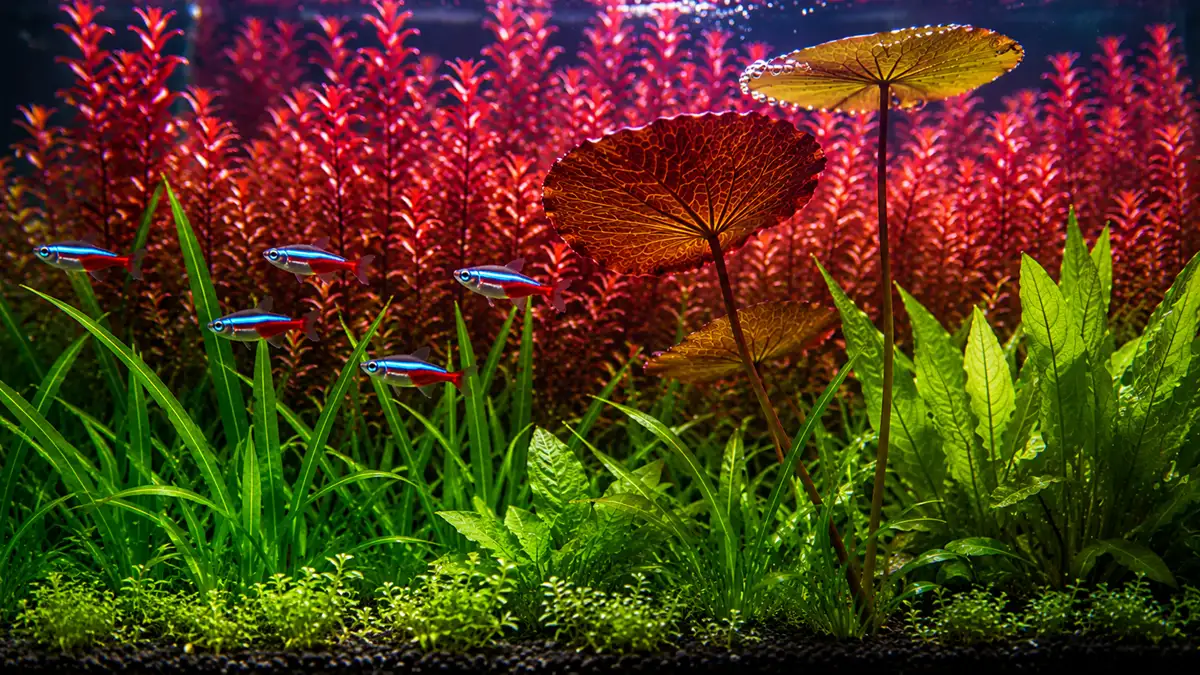
If you’ve been avoiding easy red aquarium plants because you assume they all require pressurized CO2 and a fertilizer spreadsheet, I want to set that straight right away.
Short answer: several red-leafed species — Red Tiger Lotus, Rotala rotundifolia, and Alternanthera reineckii among them — will color up under a decent light and root tabs alone, no CO2 injection required. What actually decides whether they turn red isn’t your gear budget. It’s your light.
I first tried Rotala rotundifolia in a basic tank, expecting a muddy green mess. Instead, the moment the stems crept close to my cheap LED light, the tops exploded into a vibrant, fiery pink that completely caught me off guard.
If You Only Remember 3 Things
- Red color is a stress response to light, not a gimmick some plants happen to have.
- A red plant that grows in green isn’t dying — it’s telling you the light is too weak.
- CO2 speeds things up. It isn’t the thing standing between you and red leaves.
What Actually Makes Something One of the Easy Red Aquarium Plants
Not every red-leafed species belongs on a beginner list. The easy red aquarium plants worth your money are the ones that tolerate a range of light, root fast from a cutting or bulb, and don’t sulk the moment your dosing schedule slips for a week.
Raja, my betta, lives in a tank running a modest 24-watt LED with no CO2 line anywhere near it. Every red plant I keep in there had to earn its place by surviving that setup first — which is honestly the filter I’d suggest you run your own shortlist through.
Why Do Aquarium Plants Turn Red?
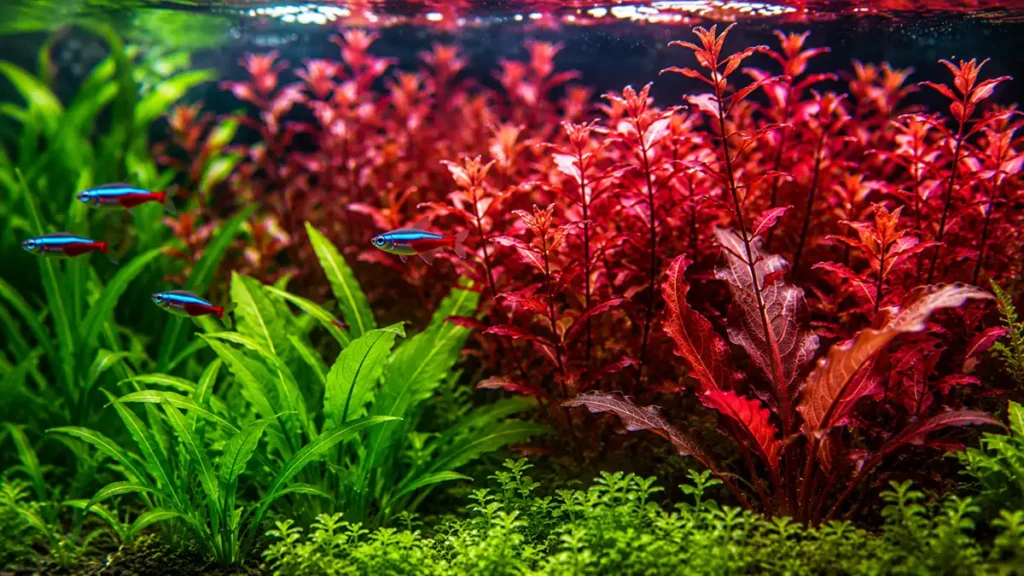
Before you buy anything, it helps to understand what’s actually happening in the leaf, because it changes how you’ll manage the plant. Red coloration in aquatic plants comes mainly from anthocyanins — water-soluble pigments the plant produces as an internal sunscreen against light it can’t safely use for photosynthesis.
A peer-reviewed overview in Current Biology notes that anthocyanins absorb most strongly in the visible range between roughly 465 and 550 nanometers— which happens to overlap the exact wavelength band where excess light stresses a plant’s photosynthetic machinery. That’s not decoration. That’s a defense mechanism.
Nutrient limitation plays a role too. A study in the Journal of Experimental Botany found that plants under nitrogen limitation specifically ramp up anthocyanin synthesis through a dedicated genetic pathway, which is part of why a light hand on fertilizer can deepen red tones instead of washing them out.
Light intensity alone matters just as much. A study on red leaf lettuce published via PeerJ found that plants grown under higher light intensity produced measurably more anthocyanin than plants grown under lower light, even with everything else held constant.
I’ve got an M.Sc. in zoology, not botany, but the underlying logic is one I recognize from animal physiology too: color as a byproduct of stress response shows up everywhere in biology, not just under your aquarium light. Once you see red plants that way, easy red aquarium plants stop feeling mysterious and start feeling like a lighting problem you can actually solve.
Best Red Aquarium Plants for Beginners
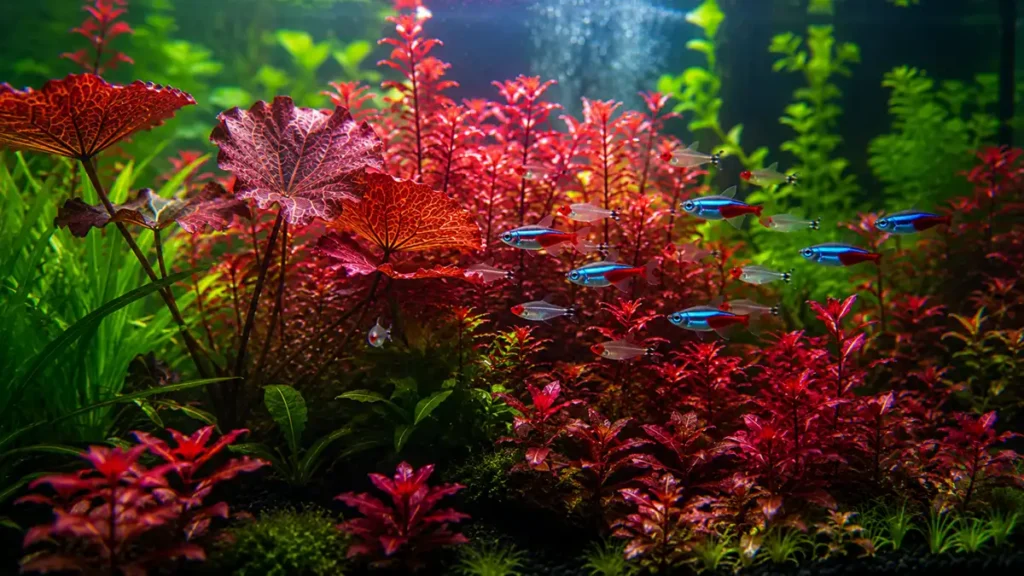
If you’re shopping for the best red aquarium plants for beginners, you want species that hold color under moderate light instead of demanding a high-tech tank from day one. These four are the ones I point first-timers toward.
Red Tiger Lotus Aquarium Plant
The Red Tiger Lotus aquarium plant is one of the most forgiving centerpiece plants you can buy. It grows from a bulb, tolerates a wide swing in hardness and pH, and pushes out red-veined lily pads under nothing more than moderate light. Trim the surface leaves now and then so they don’t shade out everything growing below them.
Rotala Blood Red Aquarium Plant
Rotala blood red aquarium plant is a deeper-colored cultivar of Rotala rotundifolia, and it’s a stem-plant staple for a reason — it roots fast and tolerates being trimmed and replanted repeatedly. Under medium-high light, it turns a rich brick red from the tips down. Under lower light it stays more orange-green, which is still a healthy plant — just a less dramatic one.
Rotala Blood Red Tissue Culture
If you’ve spotted rotala blood red tissue culture pots at your local fish store and wondered whether the extra cost is worth it, for a beginner it usually is. Tissue-cultured plants are grown in a sterile lab, so they arrive snail-free and algae-free. That matters more than people expect when you’re also fighting a new tank’s algae curve.
Small Red Aquarium Plants
For nano tanks and foreground planting, small red aquarium plants like Ludwigia sp. “Mini Super Red” or dwarf Alternanthera reineckii “Mini” give you color without swallowing a 5–10 gallon tank. They stay naturally compact, so you’ll trim far less often than with the taller stem plants.
Red Stem Plants Aquarium Basics
Most of the species above fall under the broader category of red stem plants aquarium hobbyists lean on for color contrast against green foreground and background planting. Stem plants root along their nodes and propagate by cutting the top few inches and replanting it directly.
One healthy stem can become a full red hedge in a few months — which is exactly why they’re some of the easy red aquarium plants worth starting with.
Easy Red Stem Plants Aquarium Picks for Low-Tech Tanks
If you want easy red stem plants aquarium options that don’t demand CO2, stick with Rotala rotundifolia, Ludwigia repens, and Alternanthera reineckii “Mini.” All three will grow — just more slowly, with slightly less saturated color — under a standard LED fixture on a 7–8 hour photoperiod.
Easy Red Aquarium Plants Without CO2
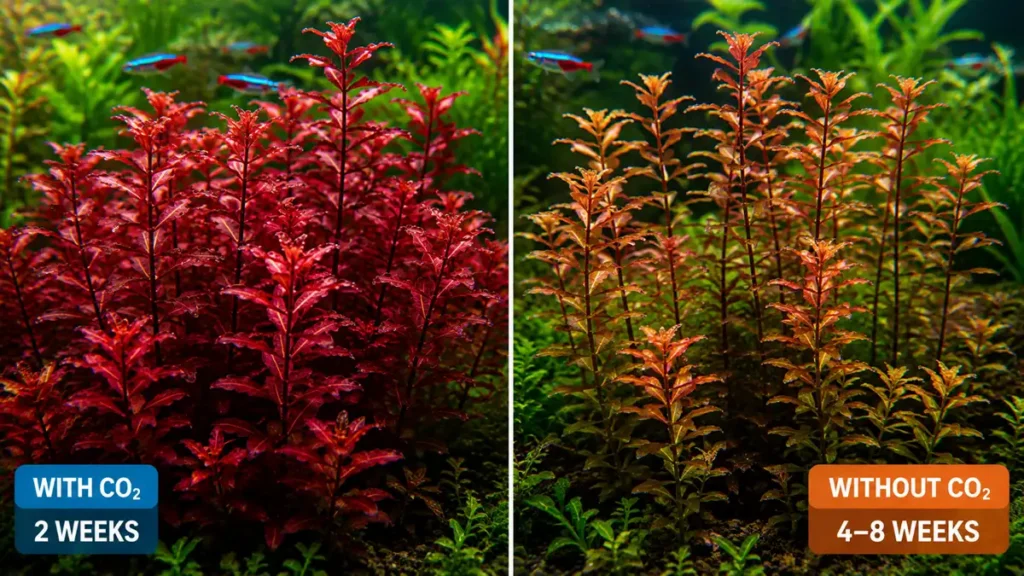
Yes, easy red aquarium plants without CO2 are genuinely achievable — this is the question I get asked most, and the honest answer is a trade-off, not a compromise. A Rotala stem under CO2 injection might turn deep crimson in two weeks; the same stem in a no-CO2 tank could take a month or two to reach a similar, slightly less intense red.
Red Aquarium Plants No CO2: What Actually Works
For red aquarium plants no CO2 setups, your two real levers are light intensity and iron-rich root or liquid fertilizer. Iron competes with chlorophyll production, so when it’s mildly limited, the plant leans harder on anthocyanin instead. Root tabs under a stem plant often deepen its color within a couple of weeks — no gas cylinder involved.
Easy Care Red Aquarium Plants: My Low-Maintenance Setup
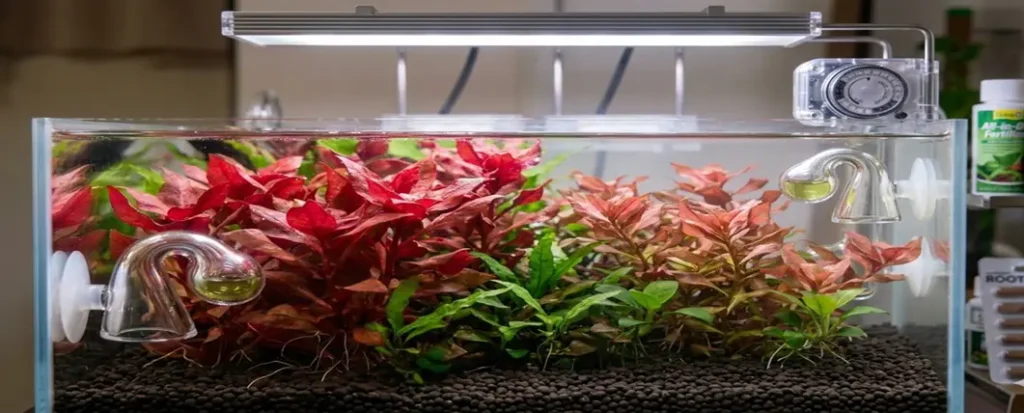
My go-to easy care red aquarium plants setup is a mid-strength LED on a timer, weekly root tabs under the stem plants, and a light liquid fertilizer dose twice a week. I don’t run CO2 on every tank in the house, and the red plants I keep this way still color up — just on their own schedule instead of an aquascaper’s schedule. This is genuinely the setup I’d point anyone toward for their first run at easy red aquarium plants.
Easiest Red Aquarium Plants, Ranked by Difficulty
Here’s roughly how I’d rank the easiest red aquarium plants for someone buying their first red-leafed species. This is close to my own personal shortlist of easy red aquarium plants, honestly.
- Red Tiger Lotus — bulb plant, extremely forgiving
- Rotala rotundifolia / Rotala blood red — fast-rooting stem plant
- Alternanthera reineckii “Mini” — compact, slower but steady
- Ludwigia repens — easy, but can revert to green under low light
Easy Red Plants for Aquarium — Honorable Mentions
A couple of easy red plants for aquarium setups that didn’t make the top four but are worth knowing: Nymphaea “Red Flare” (a smaller lotus cousin) and Ammania gracilis, which colors up nicely under stronger light but tends to melt a little during its first week after planting.
Red Plant Aquarium Comparison Chart
Here’s how the main red plant aquarium picks stack up side by side — useful if you’re narrowing down which easy red aquarium plants fit your current light setup.
| Plant | Light Needed | CO2 Required? | Difficulty | Best Placement |
| Red Tiger Lotus | Low–Medium | No | Beginner | Centerpiece / midground |
| Rotala Blood Red | Medium–High | Helpful, not required | Beginner–Intermediate | Background |
| Alternanthera reineckii “Mini” | Medium | Helpful, not required | Beginner–Intermediate | Foreground / midground |
| Ludwigia repens | Low–Medium | No | Beginner | Midground / background |
| Ammania gracilis | Medium–High | Helpful, not required | Intermediate | Background |
Red Leaf Aquarium Plants: Placement and Aquascaping Tips
Red leaf aquarium plants only read as “red” to the eye when they’re contrasted against green. Plant them in a solid block on their own, and the color reads muddy from across the room.
My placement trick with easy red aquarium plants is simple: put them in front of or beside a green background species like Vallisneria or Amazon sword so the red actually pops instead of blending in.
Red Plants for Aquarium: Common Mistakes I’ve Made
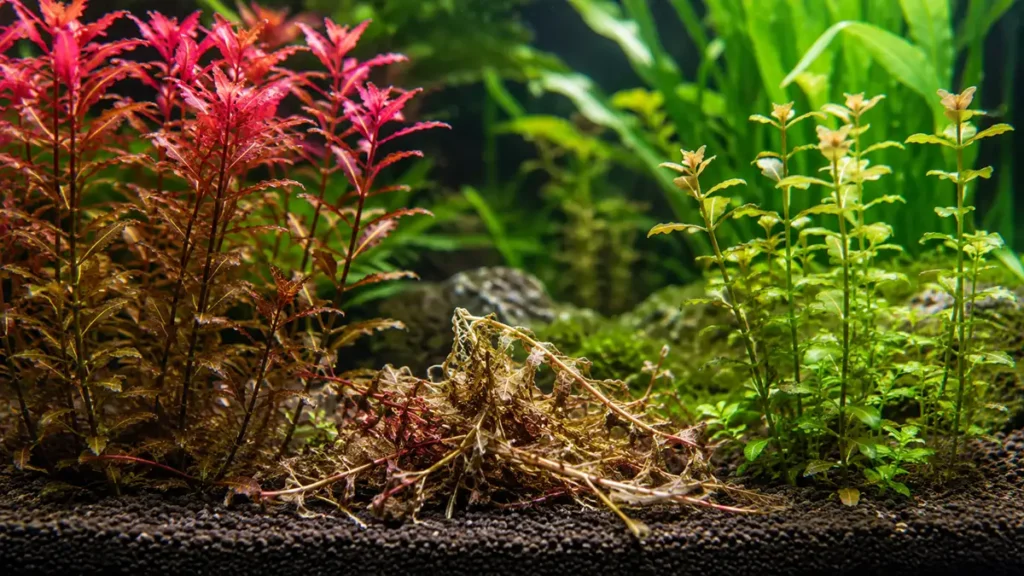
Every red plants for aquarium beginner — myself included, early on — makes at least one of these mistakes before it clicks.
I fell in love with Rotala macrandra and planted it in my basic tank. Within a week, the whole plant turned to mush and melted away. That painful lesson taught me to stick strictly to beginner-friendly red species.
The mistake I see most is someone buying a red stem plant, dropping it into a dim light meant for low-tech green plants, and getting frustrated when it grows in green instead of red. The plant isn’t broken. With easy red aquarium plants specifically, green growth is just the plant being honest about how much light it’s actually getting.
FAQ
What are the easiest red aquarium plants to grow for beginners?
Red Tiger Lotus and Rotala rotundifolia (including the “blood red” cultivar) are generally the easiest, since both tolerate a range of light levels and don’t strictly require CO2 injection.
Which easy red aquarium plants should I start with if I only want to buy one?
Red Tiger Lotus is the single best starting point — it’s a bulb plant, so there’s no rooting or trimming learning curve, and the color shows up in new growth within a couple of weeks.
Do red aquarium plants need CO2 to stay red?
No. CO2 speeds up growth and can deepen color faster, but species like Red Tiger Lotus, Rotala rotundifolia, and Ludwigia repens will still turn red under decent light without it.
Why is my red aquarium plant turning green?
It’s almost always insufficient light. Red coloration is a light-stress response, so if the plant isn’t getting enough intensity, it reverts to producing mostly chlorophyll instead of anthocyanin.
How much light do red aquarium plants need?
Most beginner-friendly red plants do well under medium-intensity LED lighting for 7–8 hours a day; more light deepens color further but raises algae risk if nutrients aren’t balanced alongside it.
Can I keep red aquarium plants in a low-tech tank?
Yes. Red Tiger Lotus and Ludwigia repens are two of the more low-tech-friendly options, though their color will typically run a shade less saturated than under high-tech conditions.
Do red aquarium plants need more fertilizer than green plants?
They benefit from consistent iron dosing specifically, since iron availability directly affects how much the plant leans on anthocyanin versus chlorophyll for its color.
Next Steps: Resources You Should Read
Related FishioHub reading
- Aquarium Plants That Don’t Need CO2
- How to Plant Freshwater Aquarium Plants
- How to Fertilize Aquarium Plants Naturally
Scientific references
- Zhang et al., “Adaptation of Arabidopsis to nitrogen limitation involves induction of anthocyanin synthesis which is controlled by the NLA gene,” Journal of Experimental Botany, Oxford Academic
- Zhang et al., “Transcriptome profiling of anthocyanin-related genes reveals effects of light intensity on anthocyanin biosynthesis in red leaf lettuce,” PeerJ
Where to buy carpet and stem plants
USA aquarium resources
- Aquatic Gardeners Association (nonprofit planted-tank hobbyist organization)
- University of Florida IFAS Center for Aquatic and Invasive Plants
- Aquarium Co-Op (US-based retailer and care resources)
Closing
Red plants don’t ask for much. They ask for honesty about your light, and once you give them that, easy red aquarium plants stop being a gear upgrade and start being a decision you make with the tank you already own.
Was this guide helpful?
First-Hand Experience
Based on animals I've personally kept and bred - not summarized from other articles.
Zoological Foundation
Claims are checked against my M.Sc. Zoology training and published aquatic biology research, not recycled aquarium myths.
No Paid Influence
No sponsorship shaped this guide. Affiliate links, if any, are disclosed separately and never hidden.
Kept Current
Errors are corrected as soon as they're found, with the update noted at the bottom of the article.
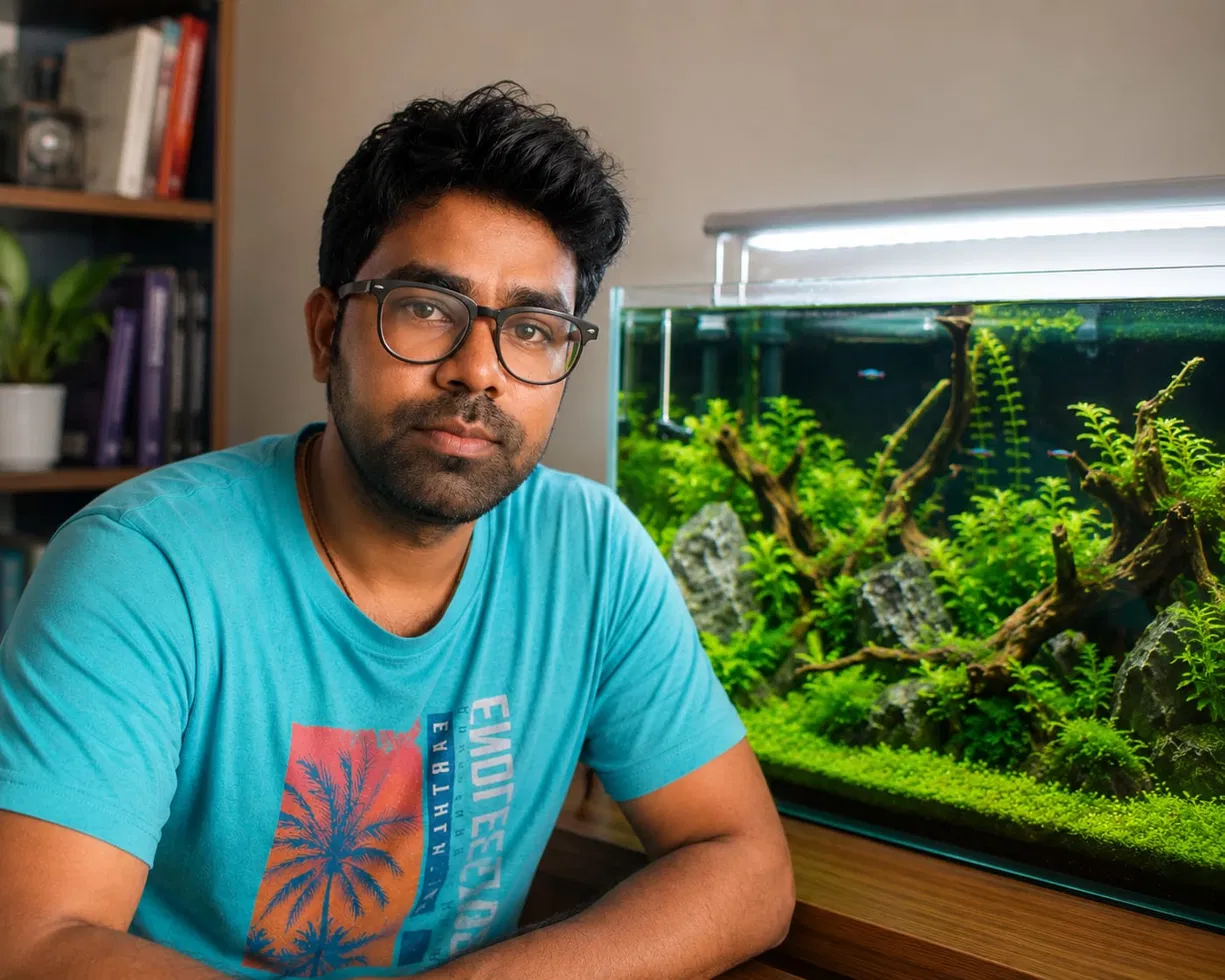
Anil Satak M.Sc. Zoology · Founder, FishioHub
Grew up in a fishing family in India and holds a Master's in Zoology. FishioHub is a one-person operation - every guide is personally researched, kept-tested, and written by Anil. No team, no outsourced writers, no AI-generated content. Read his full bio →