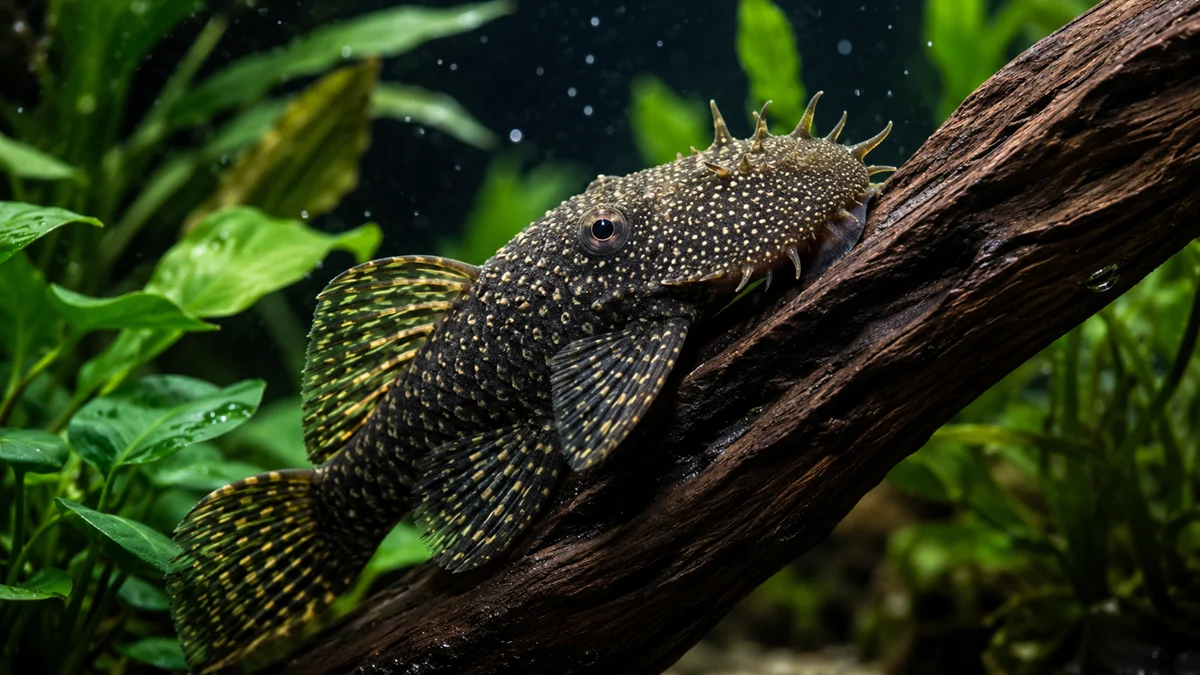
Plus: how to tell if he’s dying, why growth stalls, and the mistake I made with my own first pleco.
If you’re asking why is my pleco not eating, the short answer is this: it’s almost always water quality, the wrong diet, stress, a cramped tank, or an illness — and in most cases, you can turn it around within 24–48 hours. I’ve kept plecos for years, and I’ve watched this exact scare play out in my own tanks more than once.
Quick Summary: What’s Really Going On
- Most common cause: poor water quality — ammonia or nitrite above zero
- Second most common: wrong diet — plecos are NOT algae-only fish
- Fastest fix: a 30-40% water change with Seachem Prime, today
- Red flag, not normal: concave belly, sunken eyes, no movement for days
- Not a red flag: not eating in front of you — plecos are nocturnal
- When to worry about growth: tank under-sized for the species
How Do I Actually Know If My Pleco Is Eating?
Here’s the honest truth: most people panic over a pleco “not eating” when it’s actually eating fine — just not on their schedule. Plecos are nocturnal. Mine has gone three days without me seeing a single bite, then I’d find the algae wafer gone by morning.
Signs he’s eating normally:
- Reduced algae on the glass and decorations
- Fresh rasp marks on driftwood
- Vegetables disappearing overnight
- Normal pleco poop — solid, brown-to-green, log-shaped
Signs something is genuinely wrong (signs your pleco is dying):
- Concave, sunken belly (not just “thin” — visibly caved in)
- Sunken eyes
- No movement for 48+ hours, even at night
- White, stringy, or clear poop instead of solid logs
- Labored breathing at the surface or against the filter outflow
If you see the second list, don’t wait — move straight to the fixes below.
7 Reasons Why Is My Pleco Not Eating Properly
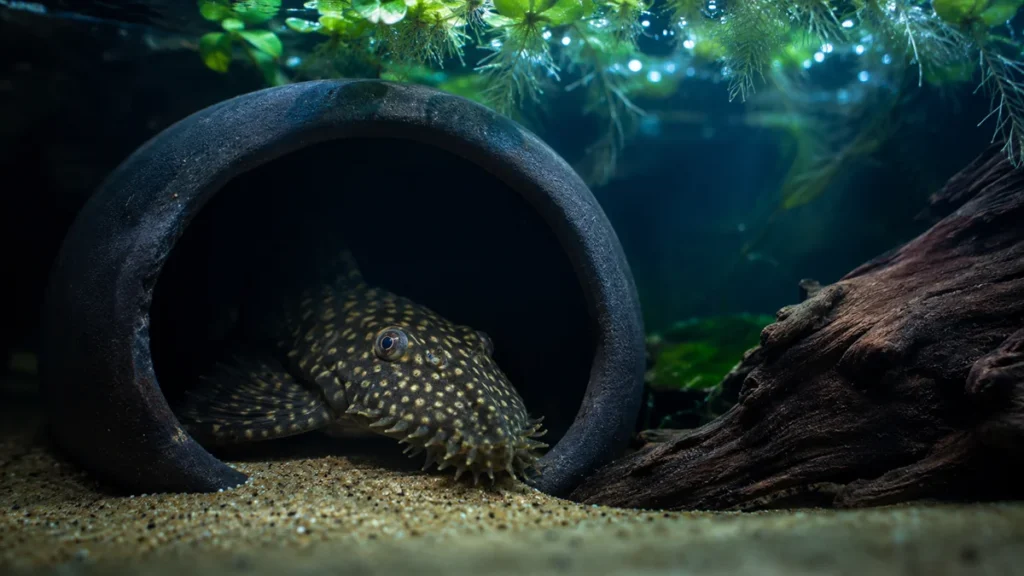
1. Bad Water Is Quietly Shutting Down His Appetite
Honestly, this is the reason nine times out of ten. I’ve never seen a pleco with high ammonia keep eating normally — the appetite just switches off before anything else goes visibly wrong.
What plecos need:
- Ammonia: 0 ppm
- Nitrite: 0 ppm
- Nitrate: under 20–25 ppm
- Temperature: 24–28°C (75–82°F)
- pH: 6.5–7.5
- Strong surface agitation for oxygen
My go-to fix:
- Seachem Prime — detoxifies ammonia and nitrite fast (~$10-12 at Petco/PetSmart or Amazon)
- Seachem Stability — jump-starts your beneficial bacteria colony
- API Master Test Kit — the only way to actually know what’s happening, not guess
Do a 30-40% water change today if your numbers are off. In my experience, most plecos start showing interest in food again within 24-48 hours once ammonia hits zero.
2. You’re Feeding Him Wrong (This One Surprised Me Too)
Here’s a mistake almost every beginner makes, myself included: plecos are not algae-only fish. That’s the biggest myth in the hobby. If why is my pleco not eating algae is your exact question, the honest answer is he probably needs more than algae was ever going to give him — especially past the juvenile stage, when algae alone can’t cover his caloric needs.
A proper pleco diet:
- Algae wafers (Hikari, Sera, or Northfin Veggie — all around $5-8 at Petco/PetSmart)
- Vegetables: zucchini, spinach, cucumber, blanched pumpkin
- Occasional protein: shrimp pellets, bloodworms
- Driftwood — not optional. Bristlenose and common plecos actually need to rasp on wood; it’s part of their digestion, not just decor.
If why is my pleco not eating algae wafers specifically is your problem, check three things first: is the wafer sinking fast enough, is another fish stealing it before he gets to it, and is it fresh (stale wafers lose their scent appeal fast).
3. He’s Stressed Out Of His Mind
A stressed pleco stops eating before he does almost anything else visible. I’ve seen this happen the moment I added a new, boisterous tankmate — the pleco just vanished into a cave and stopped touching food for days.
Common stressors:
- Bright, constant lighting
- Aggressive tankmates (Oscars, cichlids, tiger barbs)
- No caves, driftwood, or hiding spots
- Frequent tank disturbances or a recent big move
Fix it:
- Add caves, driftwood, or a PVC hide immediately
- Dim the lights or add floating plants for shade
- Consider API Stress Coat or Seachem StressGuard during the adjustment period
- Give a newly moved or newly purchased pleco at least a week before expecting normal behavior
4. His Tank Is Too Small — And It’s Stunting Growth Too
If why is my pleco not growing is really your question, tank size is usually the answer, and it’s connected to appetite: a cramped, stressed pleco simply eats less.
- Common pleco → grows 45-60 cm → needs 250+ liters (65+ gallons) as an adult
- Sailfin pleco → similar space needs to common
- Bristlenose pleco → stays 12-15 cm → fine in 100-120 liters (25-30 gallons)
A cramped tank causes stunted growth, organ stress, reduced appetite, and can cut lifespan in half. If you bought a “small” pleco without checking its adult size, this is worth verifying now — a 2-inch common pleco from the store tag can hit two feet.
5. Internal Parasites Are Stealing His Nutrition
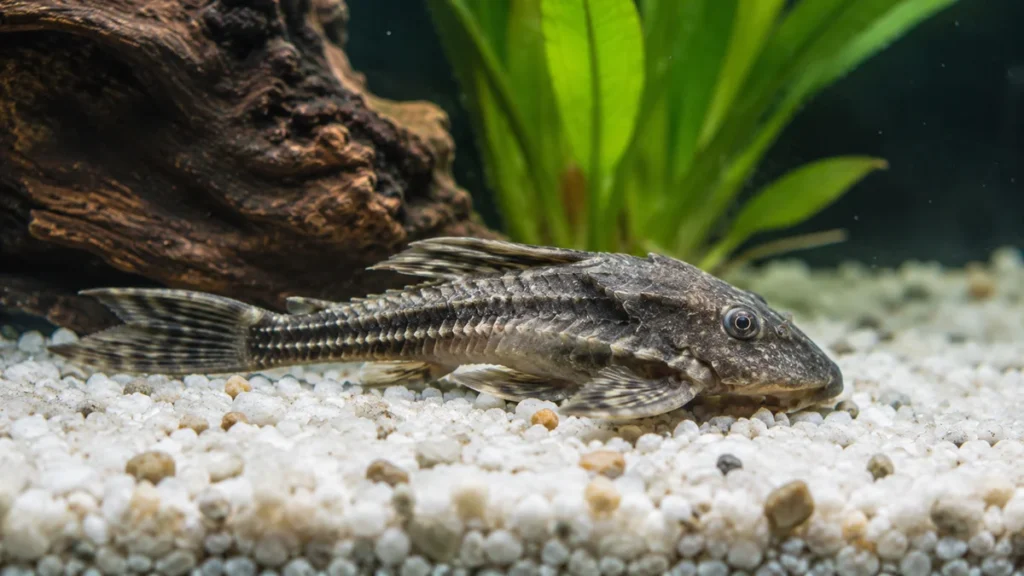
Early signs: white, string-like poop, gradual weight loss, and a bony, hollowed-out appearance despite normal-looking feeding attempts.
Treatment:
- Seachem MetroPlex or Fritz Paracleanse
- Mix medication into food using Seachem Focus so it actually gets eaten.
6. Bloating and Digestive Trouble
Usually caused by too much protein and not enough fiber — a mistake that’s easy to make if you’re overcompensating after reading “plecos need protein too.”
Early symptoms: swollen belly, weak or lopsided swimming, sudden loss of interest in food.
Treatment: feed blanched peas (skins removed), add ½ tsp of Epsom salt per 20 liters, and cut back on protein-heavy foods for a week.
7. Bacterial or Fungal Infection
Watch for white patches, red sores, torn or ragged fins, and rapid breathing.
Treatment: API Furan-2 for bacterial infections, Seachem Kanaplex for more serious cases, alongside clean water and strong aeration throughout treatment.
What I Got Wrong My First Time
My first common pleco stopped eating within a week of getting him, and I did exactly what you’re probably tempted to do: I panicked and dumped in more food. More algae wafers, more veggies, all left to rot in the tank overnight.
That was backwards. Excess food doesn’t tempt a stressed pleco to eat — it just spikes ammonia, which shuts his appetite down even further. It took me two ammonia readings and a dead-quiet, over-fed tank to realize I was making the exact problem worse, not better.
What actually worked was cutting feeding back to once a day, removing anything uneaten within a couple of hours, and doing a real water change instead of adding more food “just in case.” He started eating again within two days. I’ve never made that mistake since, and it’s the first thing I check when anyone tells me their pleco stopped eating.
What Happens If You Ignore It
Here’s the part nobody likes talking about, but it matters. Ammonia exposure doesn’t just make a pleco skip a meal — sustained exposure damages gill tissue, and that damage isn’t always reversible even after water quality improves. A pleco that goes untreated for a week or more on bad water can show permanent gill scarring, chronic labored breathing, and stunted growth that never catches up, even in a corrected tank.
If you’re seeing the “signs your pleco is dying” list above — sunken eyes, concave belly, no movement for days — treat it as urgent, not “wait and see.” Plecos are hardy, but that hardiness has limits, and by the time visible symptoms show up, the underlying damage is often already a few days old.
USA Buyer’s Note: What to Actually Buy and Where
If you’re in the US, here’s what I’d actually put in a cart, not just a wishlist:
- Seachem Prime (~$10 for 500ml) — Petco, PetSmart, Amazon, Chewy
- API Freshwater Master Test Kit (~$25-30) — worth every cent over paper strips
- Hikari Algae Wafers (~$6-8) — widely stocked at both big-box pet chains
- Seachem MetroPlex / Fritz Paracleanse (~$15-20) — usually needs Amazon or a specialty fish store; big-box chains rarely stock parasite treatments
- Driftwood pre-soaked and sold “tank-ready” — check the reptile section too, Mopani and spider wood sold for reptile tanks work fine for plecos and is often cheaper there
What the Science Actually Says
Ammonia toxicity isn’t just a “keep it at zero” rule of thumb — it’s a documented physiological process. Research on ammonia toxicity in fish (Randall & Tsui, published in Marine Pollution Bulletin) shows that even low, sub-lethal concentrations of un-ionized ammonia impair gill function and interfere with a fish’s ability to excrete waste through its own gills, creating a compounding toxic effect. In plain terms: ammonia doesn’t just poison the water; it disables the exact organ the fish needs to detoxify itself.
On the diet side, research into armored catfish digestive physiology (work out of UC Irvine on Loricariid nutritional ecology) has shown these fish rely heavily on hindgut microbial fermentation to break down plant cellulose — essentially a gut full of bacteria doing the digesting for them. That’s why a sudden diet change, or a long stretch without fibrous food like driftwood or vegetables, can disrupt that gut community and cause exactly the sluggish, disinterested feeding behavior described above.
Step-By-Step Recovery Protocol
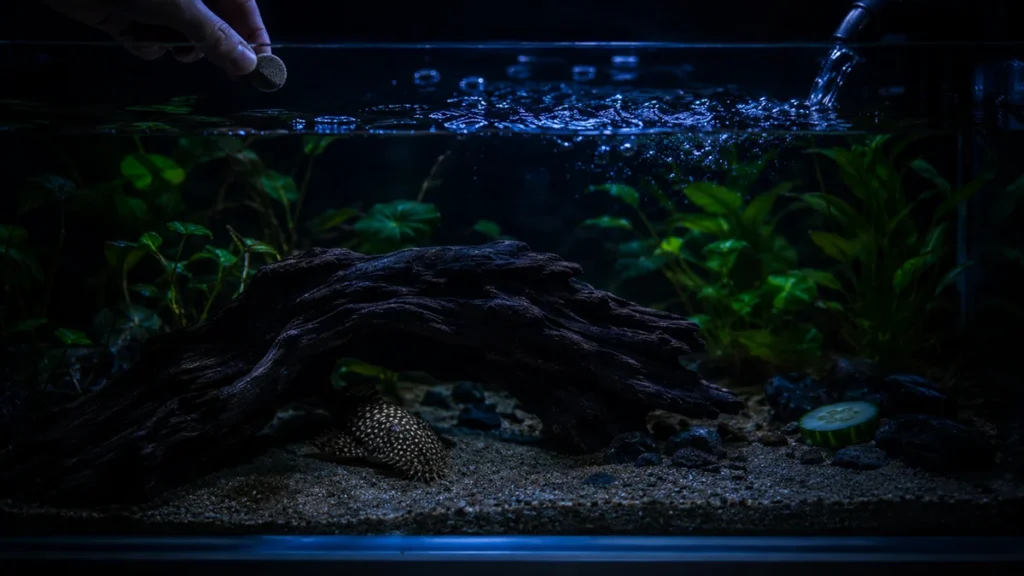
Step 1 — Fix the water:
- 30-40% water change, no more
- Add Prime + Stability
- Increase surface agitation for oxygen
Step 2 — Reduce stress:
- Add hiding spots
- Dim the lights
- Keep the tank quiet, skip adding new fish this week
Step 3 — Feed properly (night feeding method):
- Drop food after lights-out: algae wafers, veggies, sinking pellets
- Feed in multiple corners of the tank to cut down on competition
Step 4 — Monitor:
- Poop color and shape
- Belly shape (concave = still a problem)
- Nighttime activity
- Any new symptoms of infection
Quick Troubleshooting Table
| Symptom | Likely Cause | Fix |
| Pleco not eating | Bad water | Water change + Prime |
| Pleco not growing | Small tank or poor diet | Upgrade tank + varied food |
| Won’t eat in front of you | Nocturnal behavior | Feed at night |
| Pleco hiding constantly | Stress | Add caves, reduce light |
| Food disappears fast, pleco still thin | Competition from tankmates | Feed in multiple spots |
| Weight loss, stringy poop | Parasites | MetroPlex / Paracleanse |
| Swollen belly | Diet imbalance | Peas + Epsom salt |
FAQs
Why is my pleco not eating?
If you’re wondering why is my pleco not eating, it’s usually water quality, diet, or stress — and in many cases he’s simply eating at night while you’re asleep, which makes it look worse than it is.
Why is my pleco not eating algae wafers specifically?
This usually means the wafer isn’t reaching him fast enough, a tankmate is stealing it first, or he’s stressed. Try dropping wafers directly near his favorite hiding spot after lights-out.
Why is my pleco not growing?
An undersized tank or an algae-only diet are the two most common reasons. Common plecos need 250+ liters as adults — a cramped tank stunts growth permanently.
How long can a pleco go without eating?
A healthy adult pleco can safely go 1-2 weeks without food thanks to fat reserves, but a juvenile or already-stressed pleco should be checked within 48-72 hours of refusing food.
Is my pleco dying, or is he just hiding?
Hiding alone is completely normal — plecos are shy and nocturnal. A concave belly, sunken eyes, or no movement for multiple days are the real warning signs, not simply staying out of sight.
Why is my pleco not moving at all?
Daytime stillness is normal nocturnal behavior. Constant stillness at night too, combined with weight loss, points to poor water quality or illness rather than normal rest.
What does normal plecostomus poop look like?
Healthy plecostomus poop is solid, brown-to-green, and log-shaped. White, stringy, or clear poop is a sign of parasites or digestive trouble and should be addressed within a day or two.
Where can I buy pleco-safe medication in the US?
Big-box stores like Petco and PetSmart carry Prime, Stability, and algae wafers reliably, but parasite treatments like MetroPlex are usually easier to find on Amazon or Chewy.
Is it true plecos only eat algae?
No — this is the single biggest beginner myth. Plecos need vegetables, occasional protein, and driftwood to rasp on; algae alone can’t sustain an adult pleco’s caloric needs.
Can overfeeding actually make a pleco stop eating?
Yes. Excess uneaten food spikes ammonia, and ammonia shuts down appetite — so more food often makes the real problem worse, not better. I learned this one the hard way.
Final Word
If you’re still asking why is my pleco not eating, start with the water, then the diet, then the stress — in that order. Fix those three, and most plecos are back to normal within a couple of days. If you’re seeing the more serious warning signs above, don’t wait it out; treat it as urgent.
Next Steps: Resources You Should Read Next
- Why Is My Fish Breathing Fast? — a related symptom worth checking if your pleco is also gasping at the surface
- 20 Common Aquarium Problems (And How to Fix Them Fast) — for the water quality issues behind most feeding problems
- How to Remove Ammonia From a Fish Tank Naturally — the exact fix for the #1 cause on this list
Was this guide helpful?
First-Hand Experience
Based on animals I've personally kept and bred - not summarized from other articles.
Zoological Foundation
Claims are checked against my M.Sc. Zoology training and published aquatic biology research, not recycled aquarium myths.
No Paid Influence
No sponsorship shaped this guide. Affiliate links, if any, are disclosed separately and never hidden.
Kept Current
Errors are corrected as soon as they're found, with the update noted at the bottom of the article.
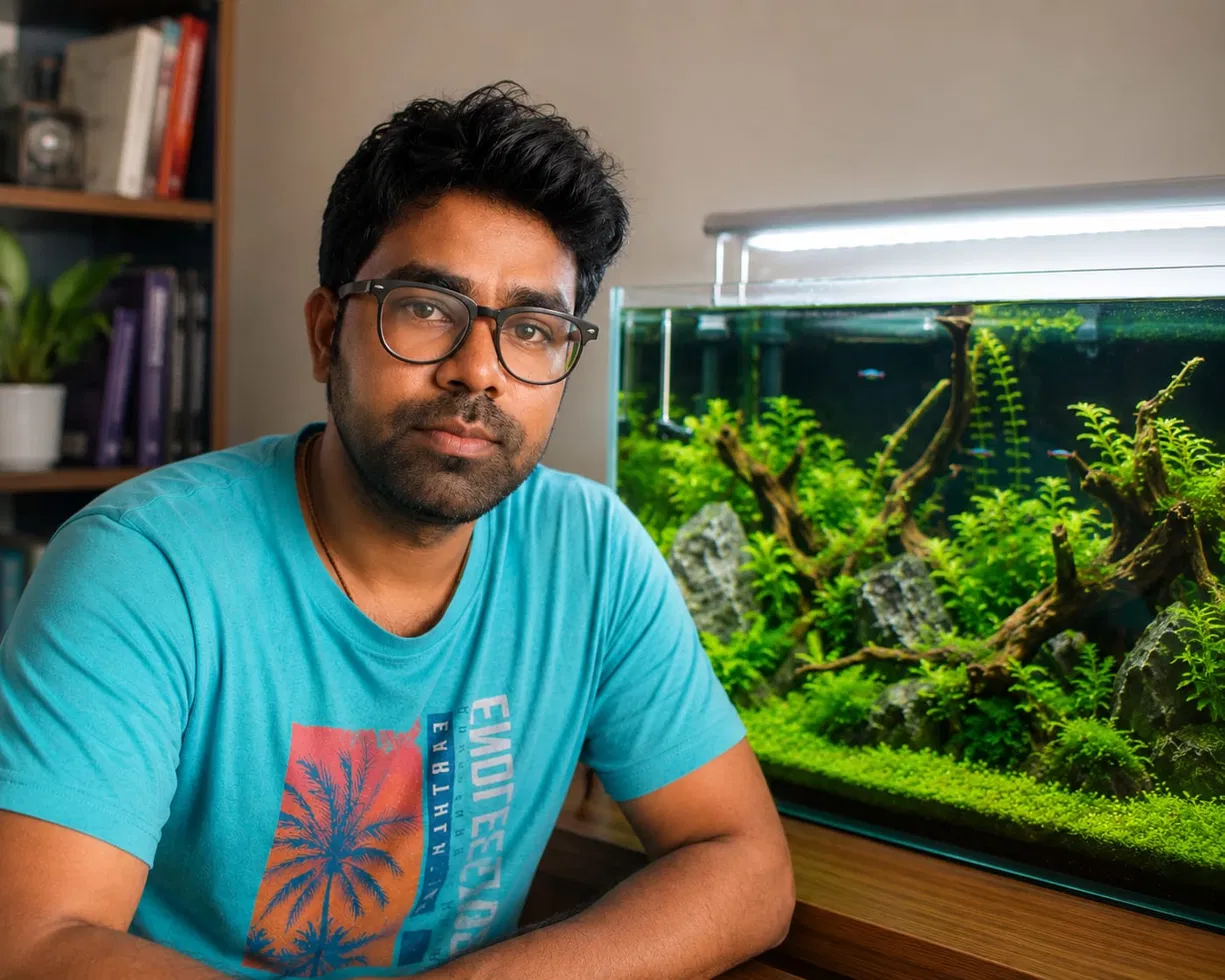
Anil Satak M.Sc. Zoology · Founder, FishioHub
Grew up in a fishing family in India and holds a Master's in Zoology. FishioHub is a one-person operation - every guide is personally researched, kept-tested, and written by Anil. No team, no outsourced writers, no AI-generated content. Read his full bio →