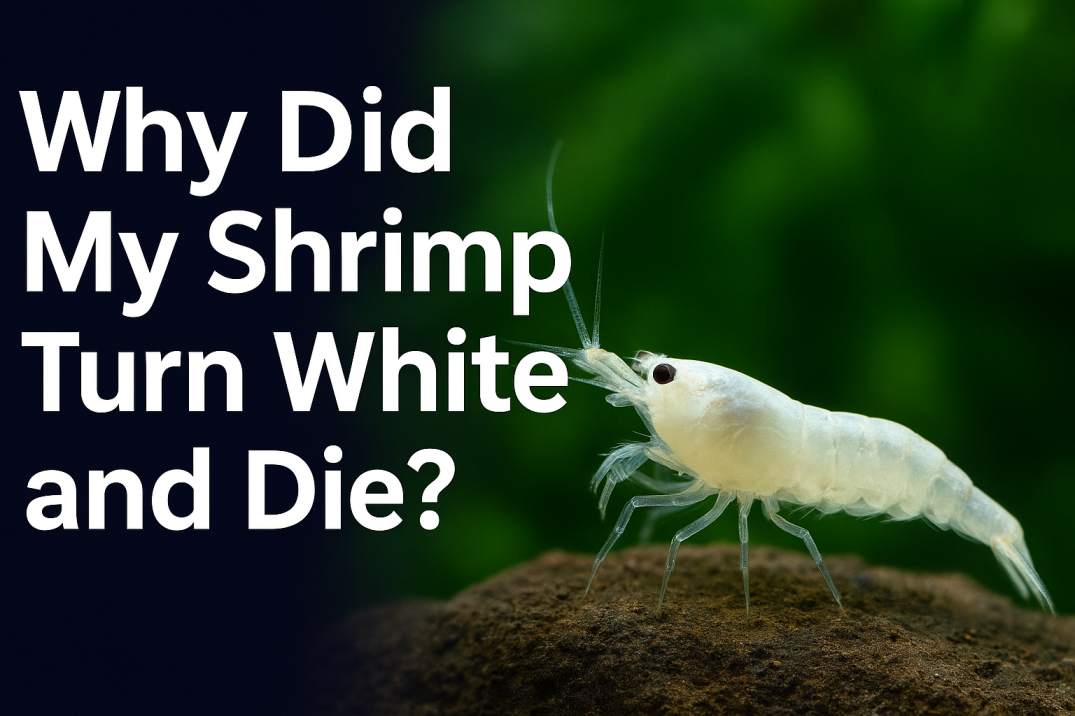
It was very disturbing and heartbreaking for me to see, one morning, two of my ghost shrimp lying on the substrate, completely white — like someone had bleached them overnight. My first thought was that I’d done something terribly wrong. My second thought was: Are the others next?
If you’re here because you have the same question, ” Why Did My Shrimp Turn White and Died?, that discouraged feeling exactly. The good news? There are only a handful of real causes, and once you know which one hit your tank, you can usually protect the rest of your colony before it’s too late.
Quick answer: Shrimp turn white and die mainly due to muscular necrosis, copper toxicity, bacterial infection, failed molting, or old age. Ghost shrimp turning white is the body’s final stress signal — tissues lose oxygen, muscles cloud over, and death often follows within 24–48 hours if the cause isn’t caught fast.
Shrimp turn white and die mainly due to muscular necrosis, copper toxicity, bacterial infection, failed molting, or old age. Ghost shrimp turning white is the body’s final stress signal — their tissues lose oxygen, the muscles cloud over, and death often follows within 24–48 hours if the cause isn’t caught fast.
What You’ll Find in This Post
In this guide, I’ll walk you through:
- Why ghost shrimp turn white — the 7 actual causes
- The #1 cause nobody talks about (hint: it’s in your tap water)
- Is it molting or dying? How to tell in 60 seconds
- Emergency steps: what to do in the first 24 hours
- USA tap water + Petco/PetSmart shrimp — why this matters
- How to prevent this from happening again
- FAQs: Every question real shrimp keepers ask
Jump to: Why Shrimp Turn White | Fail Molting | Emergency steps | Water | Preventions | FAQ
Why Is My Ghost Shrimp Turning White? The 7 Real Causes
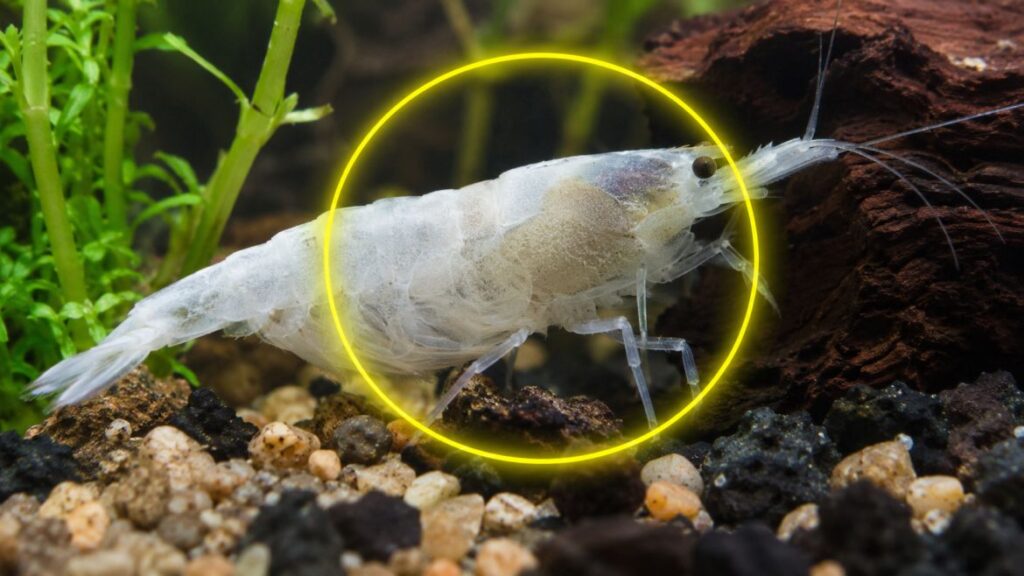
Ghost shrimp (Palaemonetes paludosus) are translucent by nature — you can literally see their organs through their bodies. That’s what makes it so alarming when they turn white. That milky opacity is almost always a sign that something has gone seriously wrong inside their tissues.
Here are the 7 reasons your shrimp turn white and die — ranked from most to least common.
1. Muscular Necrosis — The Most Common Killer
This is the answer to “Why is my ghost shrimp turning white?” in most tanks.
Muscular necrosis causes the shrimp’s muscle tissue — especially in the tail and abdomen — to turn a cloudy, opaque white. The muscles are literally dying. Without intervention, the whiteness spreads from the tail toward the head, and the shrimp dies within 24–72 hours.
What causes it:
- Sudden temperature swings (even 2–3°F can trigger it)
- Ammonia spikes above 0 ppm
- Chronically low dissolved oxygen
- Long-term stress in an overcrowded or disturbed tank
- Poor acclimation when you first brought the shrimp home
What it looks like: The tail turns white first. Not fuzzy, not spotty — a solid, opaque white patch that spreads inward. The shrimp still moves but acts lethargic, stays near the surface or in corners, and eventually stops.
Is it contagious? Yes — muscular necrosis is infectious between shrimp. If you see it in one, get that shrimp into a quarantine tank immediately. Do not wait.
Can it be treated? Honestly? Rarely. Daily 15–20% water changes can sometimes slow the progression if caught in the very early stages. There’s no over-the-counter cure. Some aquarists report improvement with prescription antibiotics like enrofloxacin (only through a vet), but most hobbyists just don’t get there in time.
👉 This is the real answer behind most cases of “why did my shrimp turn white and die suddenly.”
2. Copper Toxicity — The Cause Nobody Talks About
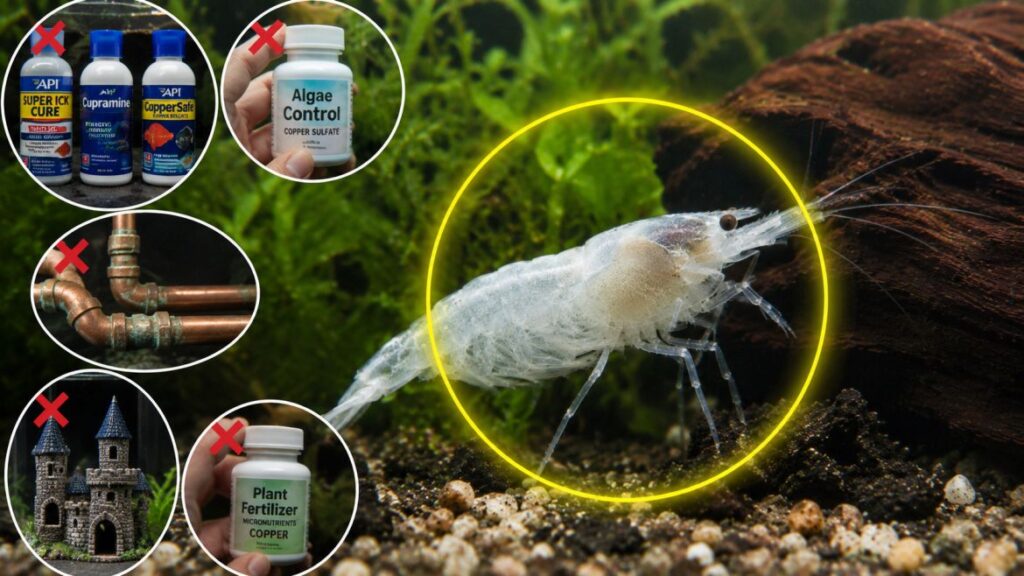
I need to spend real time here because almost nobody covers this properly — and it’s the second most common cause of ghost shrimp turning white and dying.
Here’s the biology: Ghost shrimp don’t have red blood. Their blood is blue — it uses hemocyanin, a copper-based protein, to carry oxygen. This is the same system lobsters and crabs use.
The problem? Because shrimp need copper to breathe, they absorb it continuously and involuntarily from the water. They have no “off switch.” When dissolved copper in your tank rises above safe levels (anything above roughly 0.01–0.02 mg/L for invertebrates), shrimp keep absorbing it anyway — until copper toxicity shuts down their oxygen transport. Their muscles turn white. They die. The crustacean biology research on shrimp also proves it.
Where does the copper come from in the USA tanks?
- Fish medications — many common fish treatments contain copper. API Super Ick Cure, Cupramine, Coppersafe — all lethal to shrimp.
- Algae treatments — several liquid algaecides contain copper sulfate.
- Your home plumbing — if your house was built before 1986, there’s a real chance your tap water carries elevated dissolved copper from copper pipes. This is a bigger issue than most American hobbyists realize.
- New tank decorations with metallic coatings.
- Some plant fertilizers.
The warning sign: Your shrimp are turning white soon after you added a new medication, a new decoration, or did a large water change. That timeline is the clue.
What to do: Stop using any medication with copper immediately. Do a 30–40% water change using Seachem Prime (which detoxifies heavy metals). Use a copper test kit — I use the API Copper Test Kit (~$10 at PetSmart). If readings are above 0.01 mg/L, keep doing daily partial changes until it drops.
3. Failed Molting (Ghost Shrimp Turning White Stress Line)
All shrimp molt — they shed their old exoskeleton and grow a new one. During this process, a healthy ghost shrimp will briefly appear lighter or slightly whitish. That’s normal.
What’s not normal is when the molt fails.
A failed molt happens when your shrimp can’t shed its old shell completely. It gets stuck. The shrimp becomes stiff, pale, and exhausted, trying to escape its own exoskeleton. If it doesn’t break free within 24 hours, it usually dies.
Why do molts fail?
- Low GH (General Hardness) — shrimp need minerals from the water to build new exoskeletons
- Low KH (Carbonate Hardness) — affects pH stability which affects molting chemistry
- Sudden large water changes that shock the system mid-molt
- Iodine deficiency (less common but real)
- Stress during the vulnerable molting period
Ideal ghost shrimp water hardness:
- GH: 5–10 dGH
- KH: 3–8 dKH
If either of these is near zero, your shrimp are at risk every single molt cycle. Use SaltyShrimp GH/KH+ to correct this. It’s available on Amazon and at most US aquarium stores for around $15–20.
4. Bacterial Infection (White Fuzzy Patches)
Bacterial infections — particularly from chitinolytic bacteria (bacteria that break down chitin, the main component of a shrimp’s shell) — cause a distinctive white-fuzzy or milky-patchy appearance.
Unlike muscular necrosis, which turns the muscles white from inside, bacterial infection often shows as:
- White fuzzy spots on the body or legs
- Patchy discoloration on the shell
- White clouding that looks almost like cotton or mold
- Lethargy, hiding constantly, loss of color
Bacterial infections are contagious. If one shrimp shows white fuzzy spots, quarantine immediately.
My Treatment for it: Indian almond leaves (Catappa leaves) release tannins and have documented antibacterial properties. Add 1 leaf per 10 gallons. For more serious infections, a shrimp-safe antibacterial product can help — but avoid anything with copper or formaldehyde.
5. Old Age — Natural Color Fade
Ghost shrimp only live 1–1.5 years. Most people don’t realize this.
By 8–10 months, a ghost shrimp has already lived past the halfway point of its natural lifespan. As they age, they lose the transparency that makes them so cool-looking. They turn a cloudy, dull white — not dramatic, not patchy, just gradually more opaque.
If your shrimp is turning white slowly, is eating normally, and is otherwise active — it may simply be old. There’s nothing wrong with your tank. If you are asking “Why Did My Shrimp Turn White and Died? ” The age might be a factor.
The sad truth: many shrimp sold at Petco and PetSmart as “feeders” are already 3–5 months old. So if you bring home a ghost shrimp and it dies 6 months later from apparent “old age,” it was likely already middle-aged when you bought it.
6. Oxygen Crash (Overnight Death)
This one explains the “Why did my shrimp turn white and die overnight?” questions.
Oxygen levels in aquariums can crash at night — especially in planted tanks. During the day, plants produce oxygen through photosynthesis. At night, they switch: they consume oxygen and produce CO2. In a heavily planted, densely stocked tank, oxygen levels can drop dangerously low between midnight and 6 AM.
Ghost shrimp turning white and dying overnight, with no other obvious cause, is often an oxygen crash.
Fix: Add surface agitation — a small airstone or increase your filter’s surface ripple. Do this especially in planted tanks where you inject CO2. A sudden CO2 spike can also crash pH, which is doubly deadly for shrimp.
7. Toxin Contamination
This is the sneaky one. Ghost shrimp are extraordinarily sensitive to airborne chemicals. Things people use in their homes every day can kill shrimp within hours:
- Air fresheners/aerosol sprays near the tank
- Cleaning sprays near the aquarium
- New carpet/paint off-gassing in the room
- Nicotine residue on hands before reaching into the tank
- Metal leaching from tank equipment
If your shrimp turn white and die suddenly — all at once, without any water parameter issues — look at what changed in your room, not just your water.
Is My Ghost Shrimp Molting or Dying? How to Tell in 60 Seconds
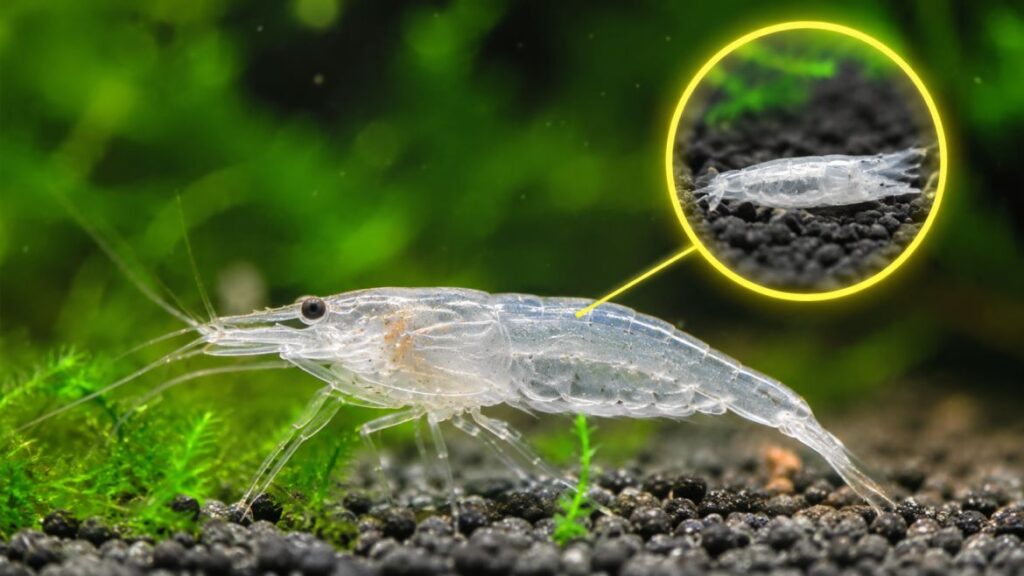
This is the question I get asked more than any other. Here’s the fastest way to tell:
| Sign | Molting (Safe) | Dying / Dead (Act Now) |
| Body color | Slightly white/translucent | Fully opaque, milky white |
| Movement | Active, may hide for up to 72 hours | Still, not responding |
| Position | Upright, often hiding | Lying on side or back |
| After death color | — | Turns pinkish (not white) |
| Other shrimp affected | No | Often yes |
| Exoskeleton nearby | Yes — look for a ghost shell | No shed shell |
The key fact: Dead shrimp turn pinkish. Molting shrimp turn white. If you see a shrimp that’s white and still moving, it’s almost certainly molting. Give it 12–24 hours of peace — no light, no disturbance, no tapping the glass.
If it’s white and motionless, check whether it’s sinking or floating. A dead shrimp sinks. A molting shrimp typically rises or floats briefly.
What Happens to Your Other Shrimp?
This is the question the other posts never answer. When one shrimp turns white and dies, you’re probably staring at your tank wondering: are the rest of them next?
Here’s the honest answer: If it’s muscular necrosis or bacterial infection, yes, your other shrimp are at risk. Both can spread through a colony. Quarantine the sick shrimp immediately and do a 20% water change.
If it’s copper toxicity: Every single shrimp in that tank is being poisoned right now. This is a water-column problem, not an individual shrimp problem. Stop all medications, do a large water change, test copper levels.
If it’s old age, molting, or oxygen crash, the others are probably fine. Check oxygen levels and water parameters, but don’t panic.
If it’s toxin contamination: Remove all shrimp to clean water immediately. Do not put them back until you’ve identified and removed the source.
Emergency: What to Do in the First 24 Hours
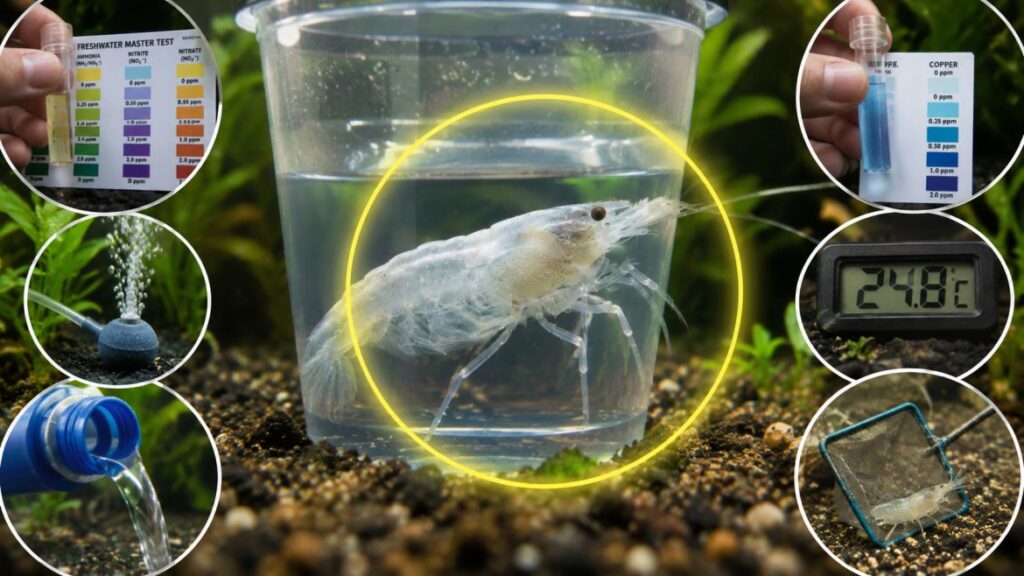
You just found a white shrimp. Here’s your action plan.
Hour 1 — Triage
- Remove the affected shrimp to a quarantine container with clean tank water
- Note: is it moving? Is the body fuzzy or smooth white?
- Look for a shed exoskeleton in the tank — if you find one, the main shrimp is molting, not dying
Hour 2 — Test Everything
Test your tank water for:
- Ammonia (must be 0 ppm)
- Nitrite (must be 0 ppm)
- Nitrate (keep under 20 ppm for shrimp)
- pH (6.5–7.5 for ghost shrimp)
- GH (5–10 dGH)
- KH (3–8 dKH)
- Copper (should be 0 detectable)
I use the API Freshwater Master Test Kit (~$25 at Petco) for the first five, and the API Copper Test Kit separately for copper.
Hour 3 — Immediate Fixes
- If ammonia or nitrite is above 0: dose Seachem Prime, do a 20% water change
- If pH is off: adjust slowly — never more than 0.2 per day
- If you suspect copper: do a 30% water change immediately, add Seachem Prime
- Add an air stone or increase surface agitation to boost oxygen overnight
Hour 6 — Monitor
Check the quarantined shrimp. If it’s still alive and the body isn’t spreading white further, the water change may have helped. If it’s deteriorating, there’s likely nothing more you can do for that individual — but your priority now is the rest of the colony.
USA Buyer’s Note: Petco, PetSmart, and Tap Water
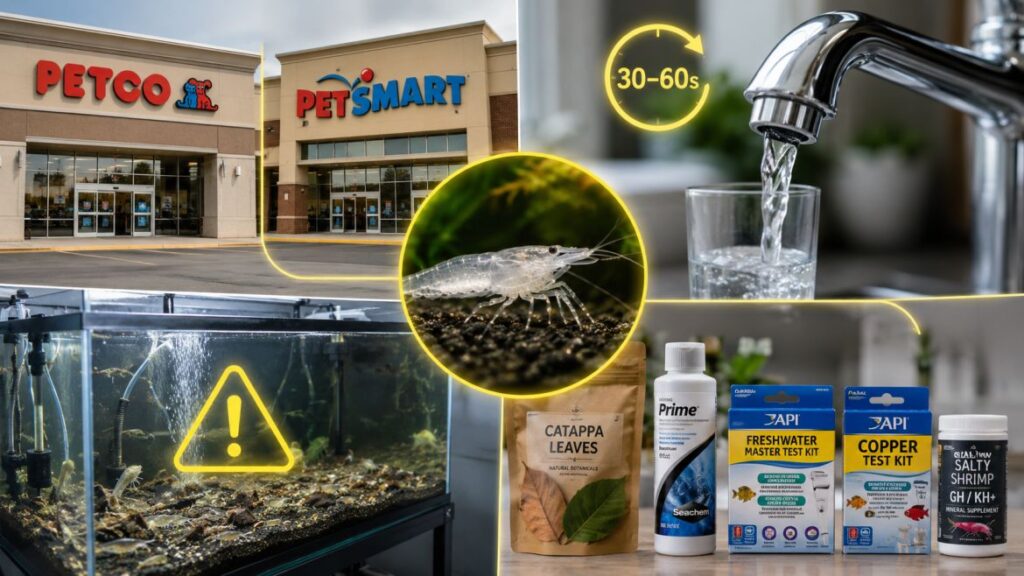
If you bought your ghost shrimp from Petco or PetSmart, here’s something most aquarium guides (especially the UK/Australian ones dominating Google) never tell you:
The feeder tank problem. Ghost shrimp sold as “feeder shrimp” (typically $0.30–0.50 each) are kept in massively overcrowded, poorly maintained feeder tanks at chain pet stores. They arrive stressed. They may already be carrying bacteria. Many are already weakened before they ever hit your home tank. When you add these stressed shrimp to your tank without a proper drip acclimation period (1–2 hours), they’re at much higher risk of muscular necrosis, molting failure, and death within the first week.
The tap water problem. American homes built before 1986 may have copper pipes. If your tap water has been sitting in those pipes overnight, morning tap water can have elevated dissolved copper. Always let your tap run for 30–60 seconds before collecting water for a water change. Better yet, test your tap water for copper once with a cheap test kit.
Recommended USA products for shrimp:
- Indian Almond Leaves / Catappa leaves — Amazon, aquarium specialty stores ~$8–12
- Seachem Prime (detoxifies ammonia and metals) — available at PetSmart ~$8
- API Freshwater Master Test Kit — Petco, Amazon ~$25
- API Copper Test Kit — Amazon ~$10
- SaltyShrimp GH/KH+ (mineral supplement) — Amazon ~$15–20
What I Got Wrong My First Time With Ghost Shrimp
Okay, real talk.
The first time I set up a shrimp tank, I made every classic mistake in sequence.
I bought six ghost shrimp from Petco on a Saturday. I floated the bag for 15 minutes (like the store said), dumped them in, and thought I was done. By Tuesday morning, two of them had turned white and died. By Friday, three more were gone.
I blamed the store. I blamed “bad shrimp.” I even blamed the water brand.
It took me weeks to figure out what actually happened: I added the shrimp to a tank that wasn’t fully cycled. The ammonia that spiked from their waste over those first few days triggered muscular necrosis. On top of that, I had just used a blue water conditioner that — you guessed it — contained copper sulfate.
Two mistakes at once. The shrimp didn’t stand a chance.
Here’s what I do now: I cycle the tank for at least 4 weeks before adding shrimp. I drip acclimate for 90 minutes minimum. I use Seachem Prime only, no other conditioner. And I test water on the day I bring any new shrimp home.
Zero losses since making those changes.
What the Science Says vs What Hobbyists Believe
Myth: “White shrimp are always sick.”
Fact: A briefly white shrimp that’s hiding is almost certainly just molting — a completely natural process (ecdysis) that happens every 3–6 weeks. Give it 12–24 hours before panicking.
Myth: “You can’t treat muscular necrosis.”
Fact: You can’t cure it with OTC products, but aggressive water changes (10–15% daily) can sometimes stabilize early-stage cases, especially if you improve oxygen and remove the stressor that caused it.
Myth: “Ghost shrimp are hardy and easy to keep.”
Fact: Ghost shrimp are sold as feeder shrimp precisely because they’re cheap — not because they’re easy. Their copper-based blood makes them highly sensitive to a range of chemicals that don’t affect fish at all. They’re not beginner-proof. They require proper water parameters like any other invertebrate.
Myth: “Dead shrimp turn white.”
Fact: Dead shrimp actually turn pinkish as their tissues begin to break down (hemocyanin loses its blue color and hemoglobin-like breakdown products turn the body pink). The white you’re seeing on a fresh shrimp is most likely muscular necrosis, copper toxicity, or molting — not death. A truly dead shrimp is usually pink or red-orange.
How to Prevent Ghost Shrimp From Turning White (Long-Term Care)
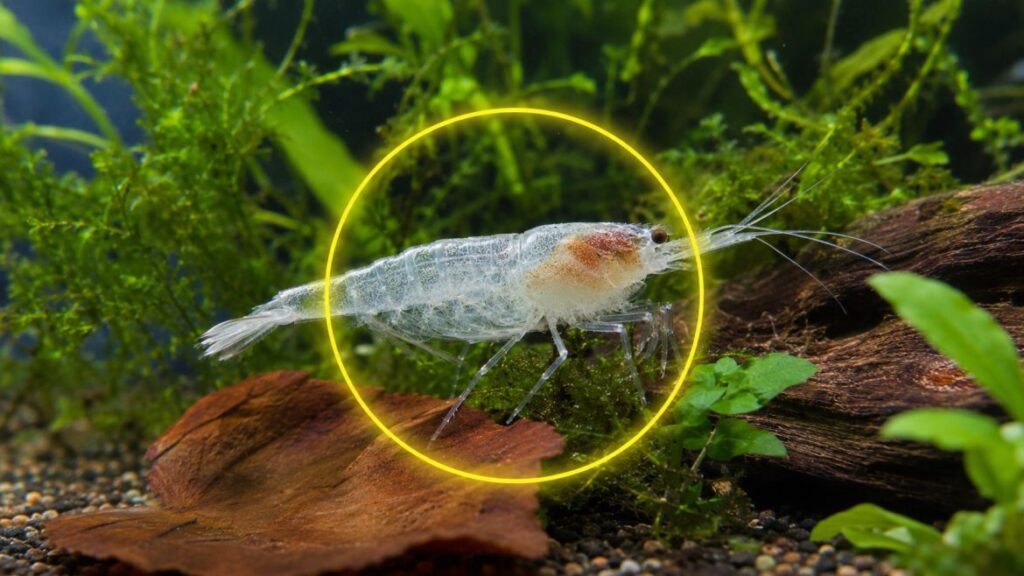
✔ Keep temperature stable between 65–77°F (18–25°C) — no sudden swings
✔ Maintain ammonia AND nitrite at exactly 0 ppm — zero tolerance
✔ Keep GH at 5–10 dGH and KH at 3–8 dKH
✔ Never use copper-based medications in a shrimp tank — ever
✔ Test tap water for copper if you have old plumbing
✔ Drip acclimate new shrimp over 60–90 minutes minimum
✔ Add Indian almond leaves to naturally support immune function
✔ Use Seachem Prime for every water change — it detoxifies metals and ammonia
✔ Perform small water changes (15–20%) weekly instead of large changes monthly
✔ Add live plants (Java moss, Anubias, Java fern) to reduce stress and improve oxygen
✔ Keep ghost shrimp away from fish that will eat them — bettas and cichlids are shrimp killers
✔ Wait until your tank is fully cycled (4+ weeks with an ammonia source) before adding shrimp
FAQs
- Why Did My Shrimp Turn White and Died?
Mostly due to muscular necrosis, bacterial infections, or poor water conditions shrimp turn white and died. - Why did my shrimp turn clear instead of white?
This is usually happens with old age or stress-related transparency. - Do ghost shrimp turn white when they die?
Yes, ghost shrimp naturally turn milky white after death. - Why did my freshwater shrimp turn white and die suddenly?
A sudden toxin, ammonia spike, or temperature swing is the most common cause. - How to treat white spots on shrimp before they die?
Improve water quality, increase oxygen, add Indian almond leaves, and quarantine infected shrimp. - What water conditioners are recommended?
Seachem Prime or API Tap Water Conditioner for safety and detoxification.
Next Steps: Resources You Must Read
If your ghost shrimp turned white and died, these posts will help you understand the full picture:
- Why Is My Fish Breathing Fast? — If your fish are gasping, you may have the same oxygen problem that killed your shrimp
- Can Guppies Live With Shrimp? — Before you restock your tank, find out which tankmates won’t eat your new shrimp colony
- Cardinal Tetra With Shrimp — Is It Safe? — A detailed breakdown of which fish are shrimp-safe and which ones will wipe out your colony overnight
Expert Tip from Anil
When I see early whitening in any shrimp, I do three things immediately, in this order:
- Drop an Indian almond leaf into the tank (antibacterial, stress-reducing)
- Add a mineral block or dose SaltyShrimp GH/KH+ to support molting
- Run a full water test before doing anything else
That combination covers the two most common killers — bacterial infection and mineral deficiency — while I wait for test results to tell me if there’s a water parameter issue. Most of the time, acting on those first two steps in the first hour makes the difference between saving the colony and losing it.
Was this guide helpful?
First-Hand Experience
Based on animals I've personally kept and bred - not summarized from other articles.
Zoological Foundation
Claims are checked against my M.Sc. Zoology training and published aquatic biology research, not recycled aquarium myths.
No Paid Influence
No sponsorship shaped this guide. Affiliate links, if any, are disclosed separately and never hidden.
Kept Current
Errors are corrected as soon as they're found, with the update noted at the bottom of the article.
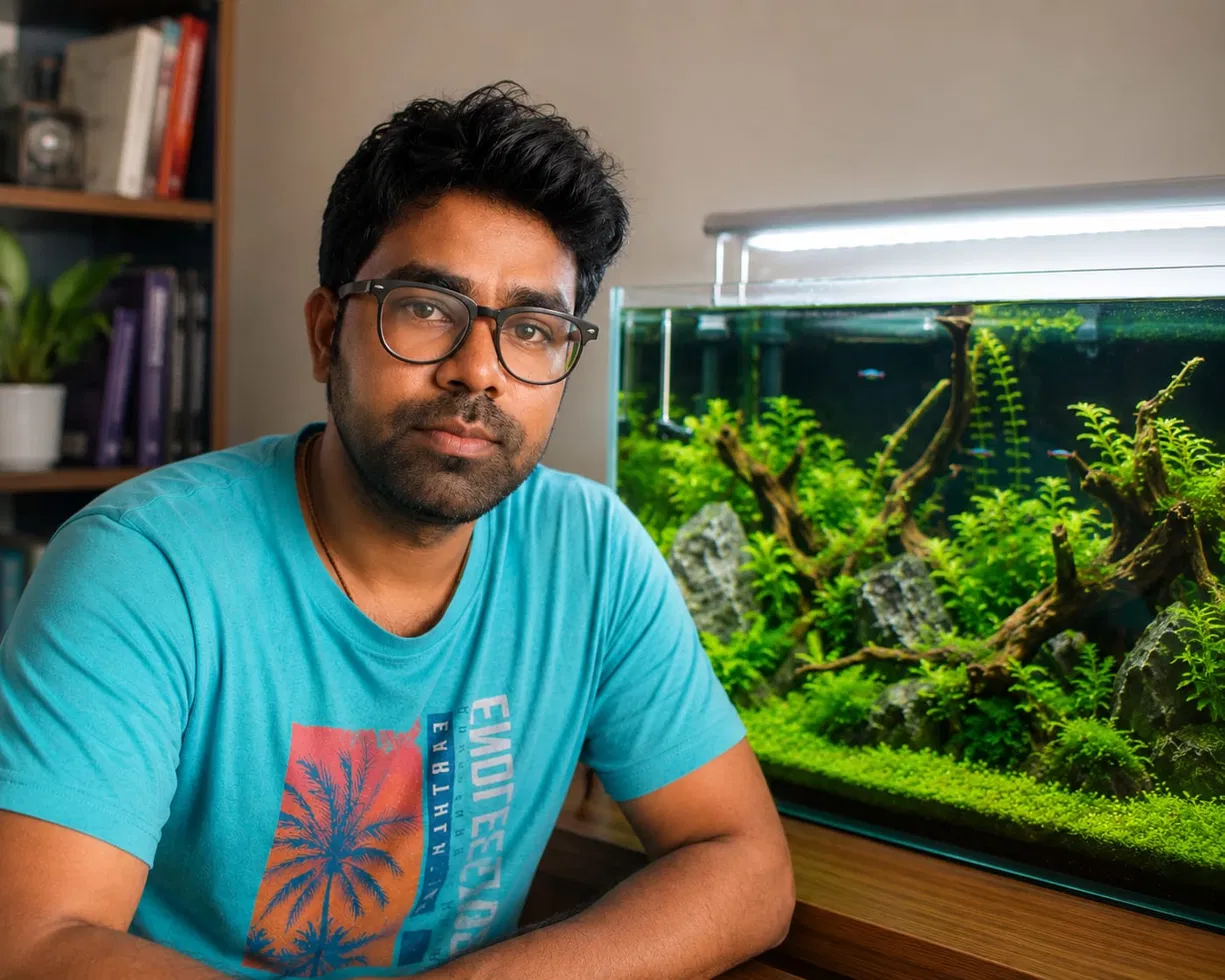
Anil Satak M.Sc. Zoology · Founder, FishioHub
Grew up in a fishing family in India and holds a Master's in Zoology. FishioHub is a one-person operation - every guide is personally researched, kept-tested, and written by Anil. No team, no outsourced writers, no AI-generated content. Read his full bio →