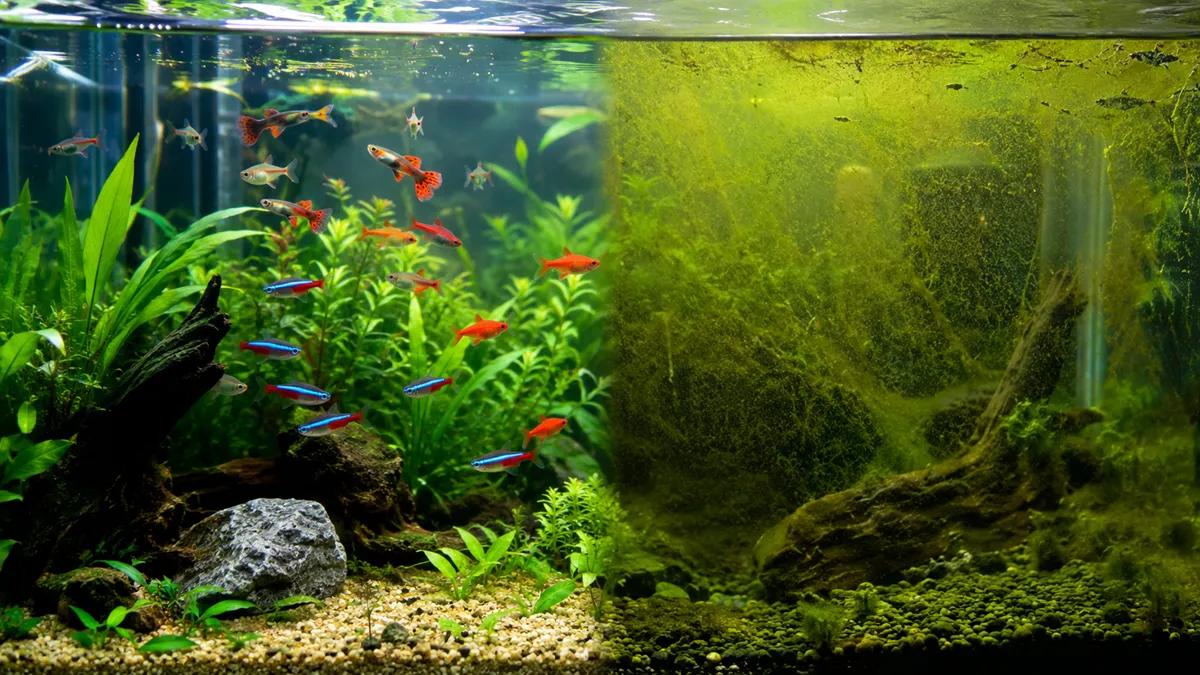
Quick Summary Fact Card
- 🐟 Most common cause overall: overfeeding — it triggers ammonia spikes, algae, cloudy water, and bad smell all at once
- 💧 First thing to test when anything looks wrong: ammonia and nitrite, not pH
- ⚠️ Fastest fix for most water problems: a 25% water change with a dechlorinator, done gradually
- 💀 The deadly mistake: overcrowding — it’s the one problem that doesn’t self-correct
- 🧪 Safe ammonia level: 0 ppm always; anything above 0.25 ppm stresses fish
- 🌊 New tank vs. established tank: most “common aquarium problems” in month one are cycling problems, not equipment problems
- 🇺🇸 US tap water note: most municipal water in the US uses chloramine, not just chlorine — a plain chlorine remover won’t fully neutralize it
I remember the exact week I almost gave up on fishkeeping. My tank had turned cloudy overnight, two fish were gasping at the surface, and I had no idea which problem to fix first. That’s the trap with common aquarium problems — they rarely show up one at a time, and panic makes people fix the wrong thing.
I grew up around water differently than most hobbyists reading this. My family fished for a living in India, and I later studied zoology formally. Between the two, I’ve spent more hours than I can count staring into tanks and ponds trying to figure out why something was wrong. What I’ve learned is this: almost every aquarium problem is your tank’s biology telling you something specific, if you know how to read it.
The most common aquarium problems include cloudy water, ammonia spikes, algae overgrowth, fish gasping at the surface, and overcrowding. Most start the same way — too much waste, too little bacteria to process it. Catching the early signs and testing your water weekly prevents almost every one of these from becoming serious.
On this page (all 20 problems, grouped by cause):
- Water Clarity Problems — #1-4
- Ammonia, Nitrite, Nitrate & Overfeeding — #5-9
- Algae & Green Water Problems — #10-11
- Fish Behavior Warning Signs — #12-14
- Filtration & Equipment Problems — #15-19
- Overcrowding — The Deadly Mistake — #20
- What I Got Wrong My First Time
- The First 24 Hours: Multiple Problems at Once
Water Clarity: What Cloudy, White, or Brown Water Is Telling You
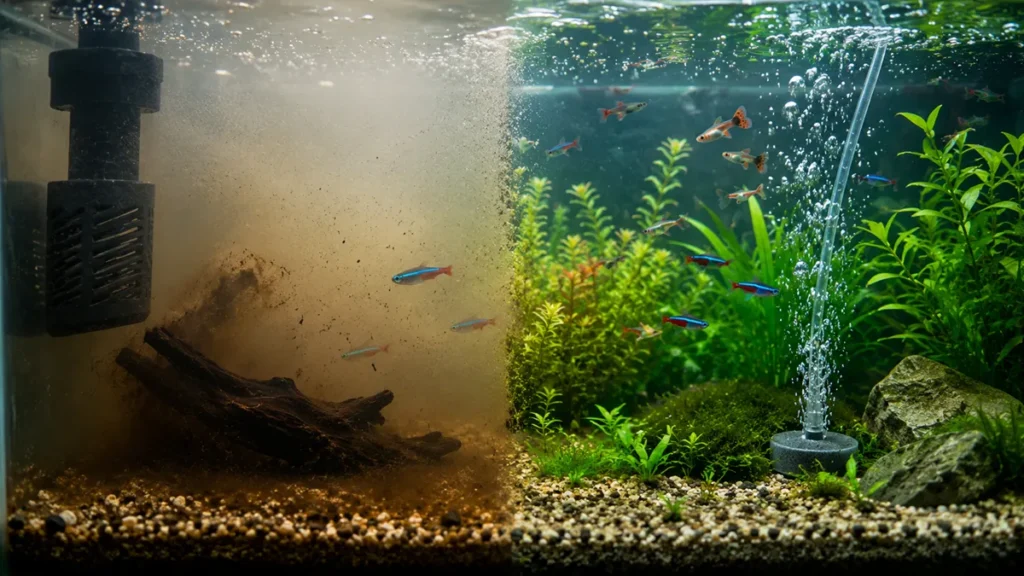
1. Cloudy Fish Tank — Is It Bacteria or Dust?
Cloudy water almost always means one of two things: a bacterial bloom or suspended particles. New tanks turn milky-white because nitrifying bacteria are multiplying fast to catch up with waste — that’s actually a sign your cycle is working, not failing. Established tanks usually cloud up from overfeeding or a filter that hasn’t been cleaned in weeks.
Fix it: Don’t panic-change the water on day one of a bacterial bloom— you’ll wash out the bacteria you need. Instead, stop feeding for 24 hours, run an airstone for extra oxygen, and let the bloom clear on its own over 3–5 days. If it’s still cloudy after a week, check your filter media and do a 25% water change.
👉 Full breakdown here: why is my fish tank cloudy overnight
2. Brown Water — Tannins Aren’t Dirty, But They’re Not Nothing Either
Driftwood and dying plant matter release tannins, turning water tea-colored. It’s harmless to fish and actually mimics blackwater habitats that species like tetras evolved in. But heavy tannin release can also mean your substrate is overdue for cleaning.
Fix it: Activated carbon in your filter clears tannins within days if you want crystal-clear water. If you like the natural look, leave it — just keep up with water changes so it doesn’t mask a real waste buildup underneath.
3. Fish Dying After a Water Change — The Silent Killer
This one scares people more than almost any other. It’s usually temperature shock or chlorine/chloramine exposure, not the water change itself. US tap water is treated with chlorine, chloramine, or both depending on your city — and chloramine doesn’t fully off-gas the way plain chlorine does, so “letting water sit overnight” isn’t a reliable fix anymore in most American cities.
Fix it: Match the new water’s temperature within 2°F of the tank, and use a conditioner rated for chloramine specifically (Seachem Prime is the most commonly recommended one in US fish stores, roughly $10–14 for a bottle that treats hundreds of gallons). Change no more than 25% at once for stressed tanks.
👉 Full guide: why do my fish die after a water change
4. Floating Particles Suspended in the Water
This is different from cloudiness — you’ll see actual specks drifting rather than an even haze. It’s usually uneaten food, dead plant matter, or debris your filter isn’t catching, and it gets worse fast if feeding habits don’t change.
Fix it: Improve mechanical filtration with a finer filter pad, vacuum the substrate during your next water change, and remove visible debris by hand rather than waiting for the filter to catch up on its own.
Ammonia, Nitrite & Nitrate: The Nitrogen Cycle Explained Simply
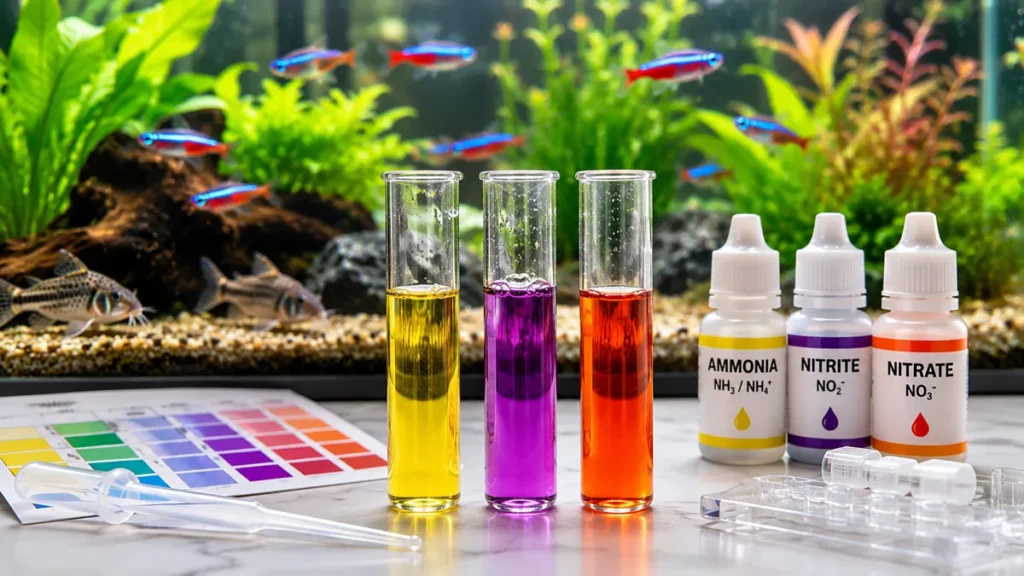
Think of your aquarium like a tiny city with no sewage system except bacteria. Fish waste and leftover food break down into ammonia, which is toxic even in small amounts. A colony of beneficial bacteria (Nitrosomonas, then Nitrobacter species) converts ammonia into nitrite, then into far less harmful nitrate. This is the nitrogen cycle, and almost every one of the common aquarium problems on this page traces back to it breaking down somewhere.
5. Ammonia Spike — The Aquarium Ammonia Problem Everyone Fears
Uncycled tanks are the most common source of an aquarium ammonia problem, because the bacteria colony hasn’t established yet. Established tanks spike after a big cleaning that wipes out too much bacteria at once, or after sudden overstocking.
According to research summarized by university aquaculture extension programs, sustained ammonia exposure above roughly 0.25 ppm can damage fish gill tissue and impair oxygen uptake — which is why fish gasping at the surface and an ammonia problem so often show up together.
Fix it: Test before you guess. A liquid test kit like the API Freshwater Master Test Kit (around $25–30 in the US) is more accurate than strips and pays for itself in avoided fish loss. Reduce feeding, add a bacterial starter culture, and do 25% water changes every other day until ammonia reads zero.
👉 Deep dive: how to remove ammonia from a fish tank naturally
6. High Nitrite and Nitrate — The Quiet Buildup
Nitrite spikes usually follow ammonia spikes in a new tank as the second half of the nitrogen cycle kicks in — it’s often a sign your cycle is progressing, not failing. Nitrate is different: it builds up slowly in established tanks simply from not changing water often enough, and it’s the main driver of algae problems down the line.
Fix it: Nitrite — same protocol as ammonia, water changes and patience. Nitrate — live plants absorb it directly, and a consistent weekly 10–15% water change keeps it from ever building into a problem in the first place.
7. High Nitrite Levels
Nitrite spikes usually follow ammonia spikes in a new tank as the second half of the nitrogen cycle kicks in — it’s often a sign your cycle is progressing, not failing. Overstocked tanks and incomplete cycling are the other common triggers.
Fix it: Same protocol as ammonia — partial water changes, a bacterial starter culture, and frequent retesting until nitrite reads zero.
8. High Nitrate Levels
Unlike nitrite, nitrate builds up slowly in established tanks simply from not changing water often enough, and it’s the main driver of algae problems down the line.
Fix it: Live plants absorb nitrate directly, and a consistent weekly 10–15% water change keeps it from ever building into a problem in the first place.
9. pH Imbalance
Sudden pH swings stress fish more than a stable “wrong” pH does. Tap water pH varies significantly by US region — Midwest tap water tends to run harder and more alkaline than water in the Pacific Northwest, for example.
Fix it: Test your source water once so you know your baseline, then only adjust pH gradually with a buffering product if your species genuinely needs a different range. Chasing pH with daily chemical dosing usually causes more harm than the imbalance itself.
Algae & Green Water: Reading the Aquarium Algae Problem
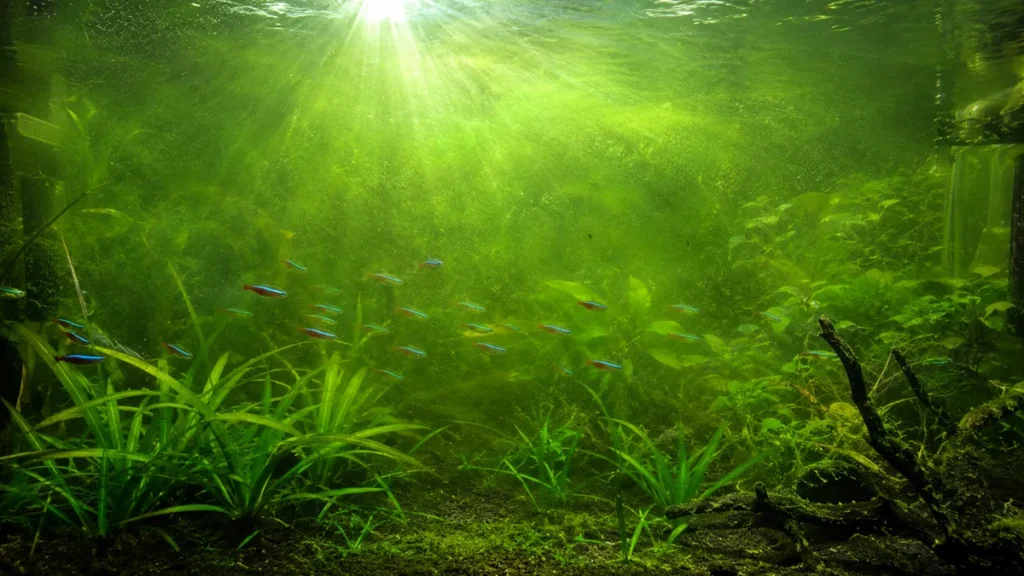
10. Green Water (Algae Bloom)
Free-floating algae turning your water pea-green is almost always a light + nutrient problem — too many hours of light, too much nitrate or phosphate feeding it. This is one of the most common aquarium algae problem complaints in newly set up planted tanks, especially because excited new plant-keepers often run lights 10+ hours a day.
Fix it: Cut lighting to 6–8 hours for a display tank, or up to 10 hours for a planted tank with adequate CO2. A UV sterilizer (roughly $40–80 for a nano unit from brands like Aqueon or Fluval) clears green water within days if reducing light alone doesn’t work fast enough.
👉 Full guide: how to prevent aquarium algae
11. Algae Overgrowth on Glass & Decor
This is different from green water — it’s surface algae, and it usually means your planted aquarium problems are nutrient-related, not just light-related. Excess nitrate and phosphate from overfeeding feed algae directly on surfaces.
Fix it: Amano shrimp and nerite snails are the two cleanup crew options I recommend most in US planted tanks — both are widely available at Petco and specialty aquarium shops. Wipe surfaces weekly rather than waiting for a full bloom.
Fish Behavior: What Your Fish Are Actually Telling You
12. Fish Breathing Fast or Gasping at the Surface
Rapid gill movement signals low oxygen, high ammonia, or both. It’s one of the clearest visual cues that something in the water chemistry has already gone wrong — by the time you see gasping, the problem usually started a day or two earlier.
Fix it: Add an air stone immediately for oxygen while you test water parameters. This buys time while you diagnose and fix the underlying chemistry issue.
👉 Full guide: why is my fish breathing fast
13. Fish Not Eating
Stress, illness, or water quality problems are the usual suspects, in that order of likelihood. New fish especially may refuse food for the first few days simply from the stress of a move.
Fix it: Check water parameters first before assuming illness. If parameters are clean and it’s a new fish, give it 3–5 days before worrying.
👉 Full guide: why is my pleco not eating
14. Fish Swimming Erratically
Darting, flashing against decor, or spiral swimming usually points to either a parasite (ich being the most common in US freshwater tanks) or a toxin in the water.
Fix it: Isolate the affected fish if possible and test water immediately. If white spots appear within 24–48 hours, you’re likely dealing with ich, which needs a dedicated treatment protocol.
👉 Full treatment guide: how to treat ich in fish naturally
Filtration & Equipment: The Mechanical Side of Common Aquarium Problems
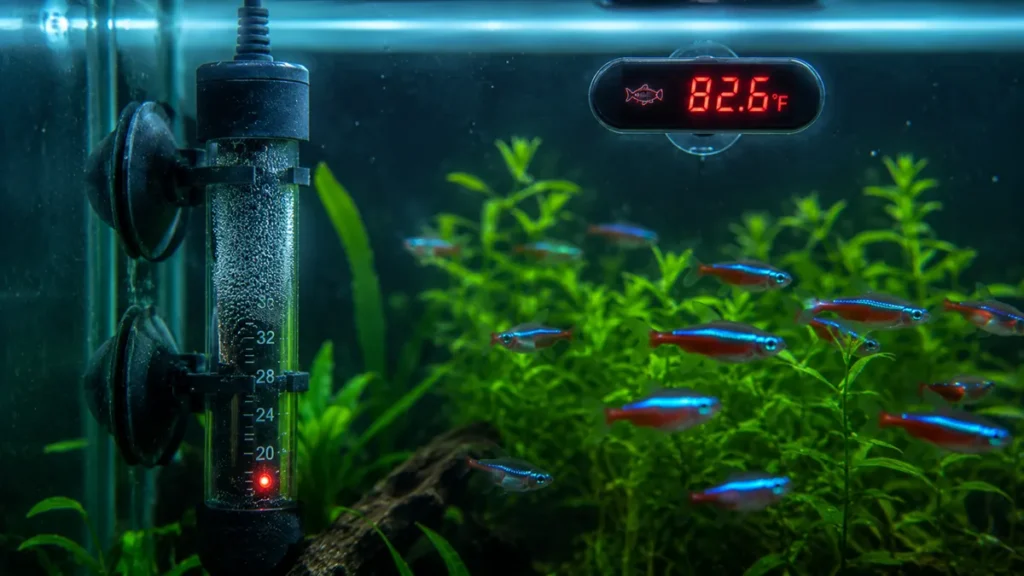
15. No Filter or Poor Filtration
A tank without adequate filtration can’t complete the nitrogen cycle at all, regardless of how careful you are with feeding.
Fix it: Size your filter to your actual tank volume, not the minimum sticker rating — I always recommend one rated for a tank size larger than what you own.
👉 Guide: can a fish tank run without a filter
16. Aquarium Glass Break Risk
Uneven stands and accidental impact are the two real causes — glass doesn’t just “fail” on its own in a properly set up tank.
Fix it: Always use a level, rated stand, and inspect seams periodically.
👉 Guide: can aquarium glass break
17. Heater Problems
A stuck or miscalibrated heater is one of the most dangerous common aquarium problems because the failure mode is silent — you won’t notice until fish are already stressed.
Fix it: Check your thermometer daily, not just the heater’s dial setting, since the two can disagree.
18. Dirty Substrate
Fish waste, uneaten food, and decaying plant matter settle into the substrate faster than most beginners expect, and it becomes a hidden nutrient source feeding both ammonia and algae.
Fix it: Use a gravel vacuum during every water change, cleaning no more than half the substrate at once so you don’t strip out the beneficial bacteria living in it.
19. Bad Smell
A tank that smells off — musty, sulfurous, or sour — almost always means decaying waste somewhere the filter isn’t reaching, usually dirty substrate or a clogged filter, sometimes both together.
Fix it: Vacuum the substrate, clean or replace filter media, and remove any uneaten food promptly. If the smell doesn’t improve within a few days of cleaning, check for a dead snail or fish hidden behind decor.
Overcrowded Tank — The Deadly Mistake
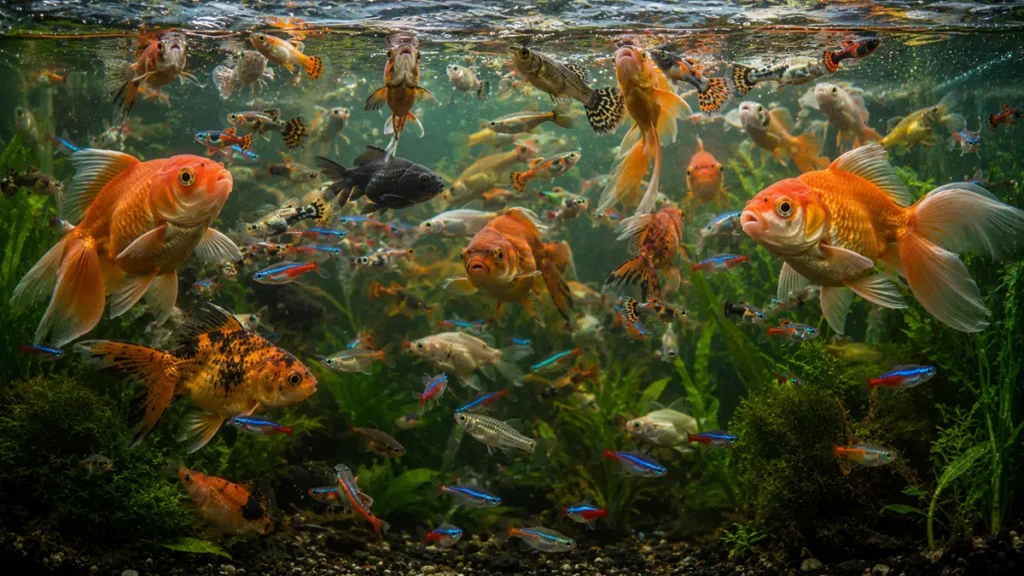
20. This Is Not a Common Aquarium Problem — It’s a Deadly Mistake
Every other issue on this page is recoverable within days if you catch it early. Overcrowding is different: it doesn’t self-correct because the stress and waste it produces keep compounding as fish grow. This is the one mistake that quietly kills tanks months after setup, not days.
Fix it: Follow a stocking guideline for your actual species (not a generic “1 inch per gallon” rule, which badly underestimates waste from many popular fish). If you’re already overstocked, upgrading tank size beats trying to solve it chemically.
What I Got Wrong My First Time
Even with a Master’s in Zoology, my very first indoor tank was a humbling disaster. I fell headfirst into the classic beginner trap: I overcrowded the tank because I wanted one of everything, and I constantly overfed them because I thought they looked hungry. Within a week, the water turned into a milky, cloudy mess. Panicking, I did a massive, 100% water change with tap water without matching the temperature. The sudden shock and ammonia spike almost wiped out the entire tank overnight.
The First 24 Hours: What to Do When Everything Goes Wrong at Once
This is the scenario nobody else covers, and it’s the one that scares beginners most: cloudy water, gasping fish, and a bad smell showing up together. Here’s the order that actually works, because fixing things in the wrong order wastes your fish’s limited time.
- Add aeration first. An air stone buys oxygen time while you diagnose everything else — this is the single fastest thing you can do.
- Test ammonia and nitrite before touching anything else. These numbers tell you whether you’re dealing with a cycling crash or a one-off mistake.
- Stop feeding for 24 hours. This removes the fuel source for both ammonia spikes and bacterial blooms simultaneously.
- Do a 25% water change with a chloramine-rated conditioner. Not more — a bigger change on an already-stressed tank can shock fish further.
- Re-test in 12 hours, not immediately. Chemistry takes time to stabilize; testing too soon leads to unnecessary panic changes.
What the Science Says vs. What Hobbyists Believe
Myth: “Cloudy water always means my tank is dying.”
Science: A bacterial bloom in a newly cycling tank is frequently a sign the nitrogen cycle is actively establishing itself — university aquaculture extension guidance treats early-cycle cloudiness as an expected phase, not a failure, provided ammonia and nitrite are trending toward zero over the following week.
Myth: “Letting tap water sit overnight removes all the chemicals.”
Science: This only reliably removes chlorine through off-gassing. Chloramine, used in a large share of US municipal water systems, is far more stable and typically requires a dedicated conditioner to neutralize — sitting water overnight is not a substitute.
USA Buyer’s Note
If you’re shopping for the tools mentioned above, here’s what’s realistic to expect in US stores: a liquid test kit (API Freshwater Master Test Kit) runs about $25–30 and lasts hundreds of tests. A quality dechlorinator/chloramine-remover like Seachem Prime is roughly $10–14 for a bottle that treats 500+ gallons. Nano UV sterilizers from Aqueon or Fluval for algae control run $40–80. All of these are stocked at Petco and PetSmart, or available with faster shipping through specialty online retailers.
FAQ
Q: What are the most common aquarium problems beginners face?
A: The most common aquarium problems are cloudy water, ammonia spikes, algae overgrowth, fish gasping for air, and overcrowding. Nearly all trace back to too much waste and not enough established bacteria to process it, especially in the first few weeks of a new tank.
Q: How often should I test my water to catch problems early?
A: Test weekly in an established tank, and every 1–2 days during the first month while your tank is cycling. Ammonia and nitrite are the two numbers that matter most for catching problems before fish show visible stress.
Q: Is it dangerous if my fish gasp at the surface occasionally?
A: Occasional gasping during feeding is usually normal. Gasping that continues for hours signals low oxygen or high ammonia and needs immediate aeration plus a water test — don’t wait until morning to check.
Q: What’s the single biggest mistake beginners make with a new aquarium?
A: Adding too many fish too soon, before the bacteria colony has established. This single mistake causes most ammonia spikes, cloudy water episodes, and early fish losses in new tanks.
Q: Does US tap water need special treatment for aquariums?
A: Yes, in most cities. Municipal water in the US is commonly treated with chloramine, not just chlorine, and chloramine needs a dedicated water conditioner — letting water sit out overnight won’t fully remove it the way it does with plain chlorine.
Q: Can a planted aquarium still have algae problems?
A: Yes — plants compete with algae for nutrients, but they don’t eliminate algae risk on their own. Excess light hours or nutrient dosing beyond what your plants can use still feeds algae, even in a heavily planted tank.
Q: Are saltwater aquarium problems different from freshwater ones?
A: The underlying nitrogen cycle is the same, but saltwater aquarium problems add salinity and mineral balance (like calcium and alkalinity) as extra variables freshwater keepers don’t have to manage, which is why marine tanks typically need more frequent testing.
Q: How long does it take for a cloudy tank to clear up on its own?
A: A bacterial-bloom cloudy tank in a newly cycling aquarium typically clears within 3–7 days once ammonia and nitrite start trending down. If it hasn’t improved after a week, the cause is more likely leftover food or a dirty filter than a bacterial bloom.
Final Thoughts
Most common aquarium problems don’t happen randomly — they build from small mistakes that compound over days or weeks. Once you understand the nitrogen cycle underneath almost all of them, you stop reacting to symptoms and start reading what your tank is actually telling you.
My advice: don’t try to fix everything at once. Test first, identify the actual cause, apply one fix, and give your tank 24–48 hours to respond before changing course.
Next Steps: Resources You Should Read Next
- 📘 Related FishioHub Reading: How to Remove Ammonia From a Fish Tank Naturally — the deep-dive if ammonia is your immediate problem
- 🔬 Scientific References: University aquaculture extension guidance on nitrogen cycling and ammonia toxicity thresholds in freshwater systems
- 🇺🇸 USA Aquarium Resources: API Freshwater Master Test Kit and Seachem Prime are available at most Petco and PetSmart locations nationwide
Was this guide helpful?
First-Hand Experience
Based on animals I've personally kept and bred - not summarized from other articles.
Zoological Foundation
Claims are checked against my M.Sc. Zoology training and published aquatic biology research, not recycled aquarium myths.
No Paid Influence
No sponsorship shaped this guide. Affiliate links, if any, are disclosed separately and never hidden.
Kept Current
Errors are corrected as soon as they're found, with the update noted at the bottom of the article.
Anil Satak M.Sc. Zoology · Founder, FishioHub
Grew up in a fishing family in India and holds a Master's in Zoology. FishioHub is a one-person operation - every guide is personally researched, kept-tested, and written by Anil. No team, no outsourced writers, no AI-generated content. Read his full bio →