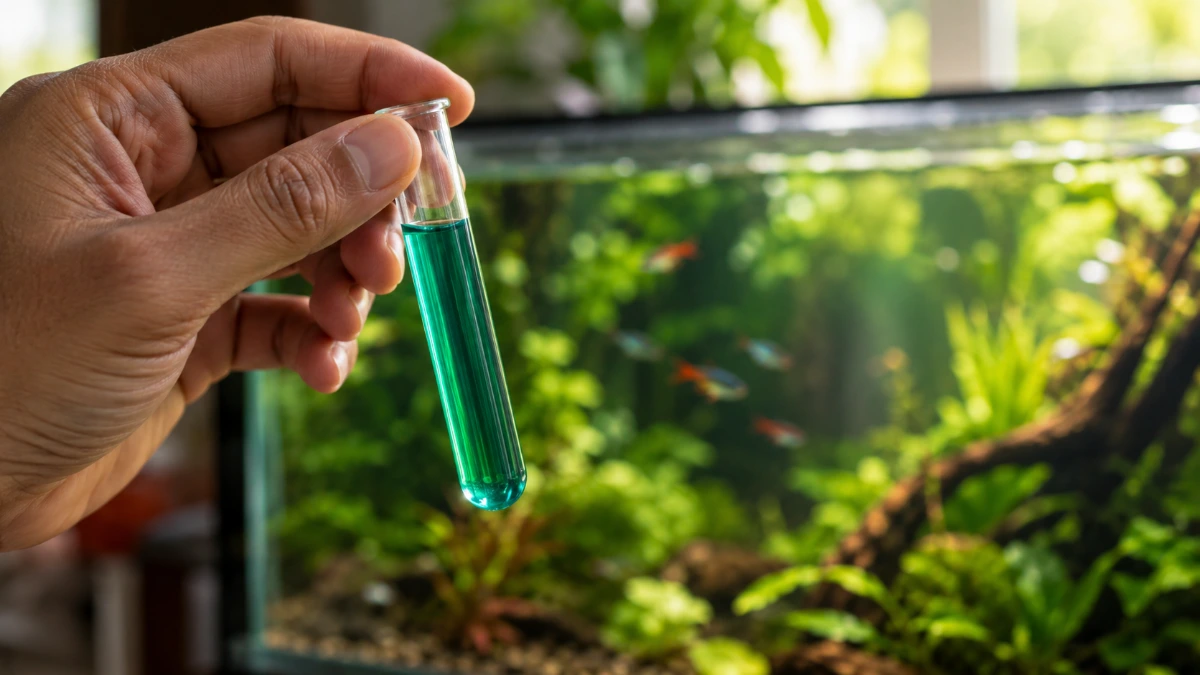
Wondering what causes pH problems in a fish tank? Nine times out of ten, it’s one of four things: your tap water, something in your substrate or decor, too much waste sitting around, or plants messing with the water during the day.
Short answer first, since I know you’re probably staring at a test kit right now: high pH usually comes from alkaline tap water, crushed coral, or too many plants pulling CO2 out during the day. Low pH usually comes from soft/acidic tap water, driftwood tannins, or waste piling up. Test your tap water on its own first — that’s where most people get stuck.
You should take a good look at your aquarium every now and then; I say this because the pH in my tank once dropped drastically, causing my shrimp to die. I spent weeks using expensive chemicals to fix the issue, only to discover later that the real culprit was a piece of Malaysian driftwood rotting in a ‘dead zone’ beneath the substrate. As soon as I removed it and improved the water flow, the water chemistry normalized immediately.
If you only remember 3 things
- pH problems don’t come from nowhere. Something in your water, decor, or bioload is pushing it
- A pH that keeps swinging up and down is worse for your fish than a pH that’s just slightly “off”
- Test your tap water by itself before blaming the tank. Sometimes it’s your city’s water, not you
So, What Causes pH Problems in a Fish Tank?
Here’s the simple version. Your tank’s pH is a tug-of-war between how much “buffer” your water has (that’s your KH, or carbonate hardness) and everything that’s pushing acid in or out.
Low-KH tanks swing around a lot because nothing’s holding the line. High-KH tanks barely move, but they can get stuck at a number you don’t want.
What Causes High pH in a Freshwater Aquarium?
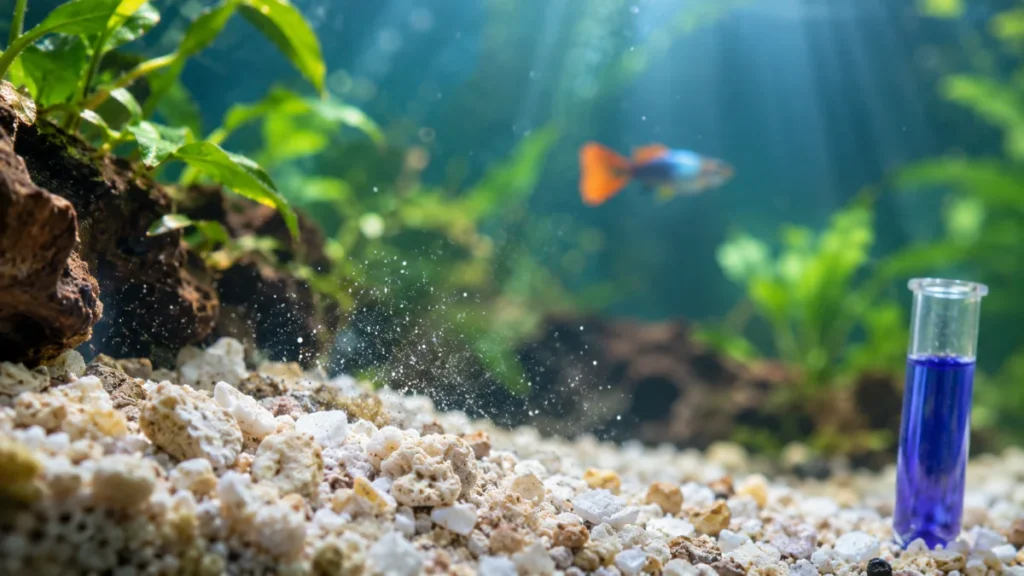
What causes high pH in freshwater aquarium water, more often than not, is your tap water itself. A lot of city water supplies come out of the tap sitting at 7.8–8.5 already.
If you’ve never tested your tap water on its own, you might be starting every single water change from a number that’s already too high.
What Can Cause High pH in Aquarium Tanks You Wouldn’t Expect
What can cause high pH in aquarium setups beyond the tap water: crushed coral, aragonite sand, seashells, and “cichlid” substrates. These are built to slowly dissolve and push pH up.
Great if you’re keeping African cichlids. Not so great if that substrate ended up under a tank of soft-water tetras by mistake.
What Causes High pH in Fish Tank Water During the Day
What causes high pH in fish tank water specifically at certain times of day comes down to your plants. During daylight, plants pull CO2 out of the water to photosynthesize, and less CO2 in the water means a higher pH.
What causes ph to rise in aquarium water is basically that same plant activity. It’s why a heavily planted tank often reads higher in the afternoon than it did that morning. Totally normal, not something to panic about.
Symptoms of High pH in Fish Tank
Symptoms of high pH in fish tank water include fish that seem sluggish, gills that look irritated, or fish gasping near the surface. The bigger issue is what high pH does to ammonia — it makes the toxic form of ammonia much more dangerous.
A fact sheet from Texas A&M AgriLife’s aquaculture extension program puts real numbers on this: less than 10% of ammonia is in its toxic form when pH is under 8.0, but that share climbs fast once pH goes higher. That’s why “high pH” and “ammonia trouble” so often show up together in a tank that’s overdue for a water change.
What Causes Low pH in a Fish Tank (and Why It Keeps Dropping)?
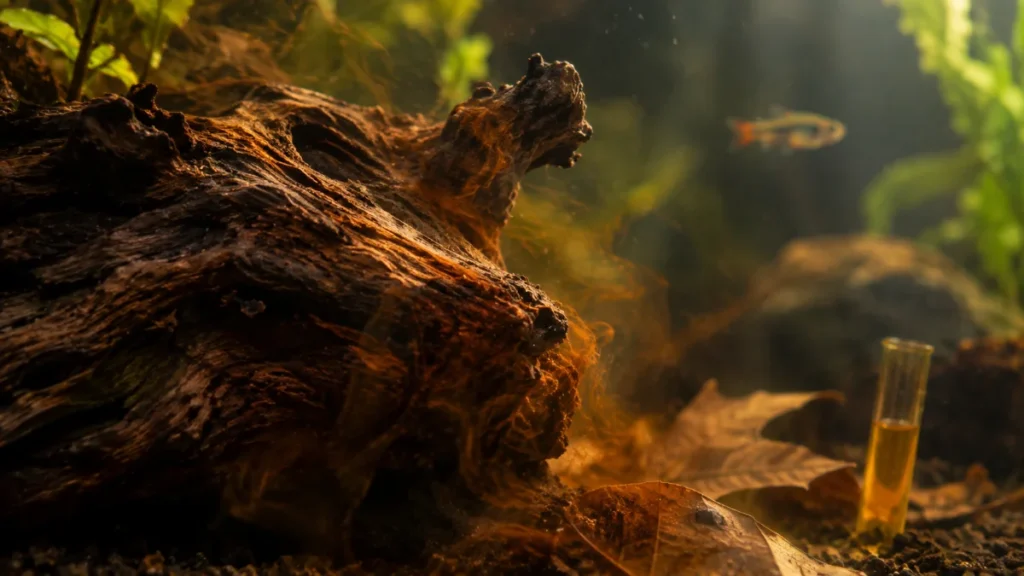
What causes low pH in aquarium water, most of the time, is just waste building up. Fish poop, leftover food, and decaying plant bits all release acids as they break down.
If your water is naturally soft (low KH), it has almost nothing to fight back with. pH can slide for weeks before a test kit even shows you a number that looks wrong.
Why Does My pH Keep Dropping?
Why does my pH keep dropping even right after a fresh water change? Two usual suspects: your tap water is naturally soft and a little acidic, or you’ve got driftwood, Indian almond leaves, or peat in the tank.
All three slowly leak tannins into the water. That’s the exact same chemistry that makes blackwater tanks naturally acidic on purpose — just a surprise if you weren’t expecting it.
What Causes pH to Drop in Aquarium Setups
What causes ph to drop in aquarium water can also be a filter that isn’t keeping up. A struggling biofilter lets ammonia and nitrite build up, and both of those pull pH downward over time.
Symptoms of Low pH in Fish Tank
Symptoms of low pH in fish tank conditions include clamped fins, fast or labored breathing, and fish that just aren’t interested in food. A fish’s slime coat and gills are both sensitive to pH, so low pH tends to make them more prone to fungal and bacterial issues too.
Can Low pH Cause Cloudy Water in Aquarium Tanks?
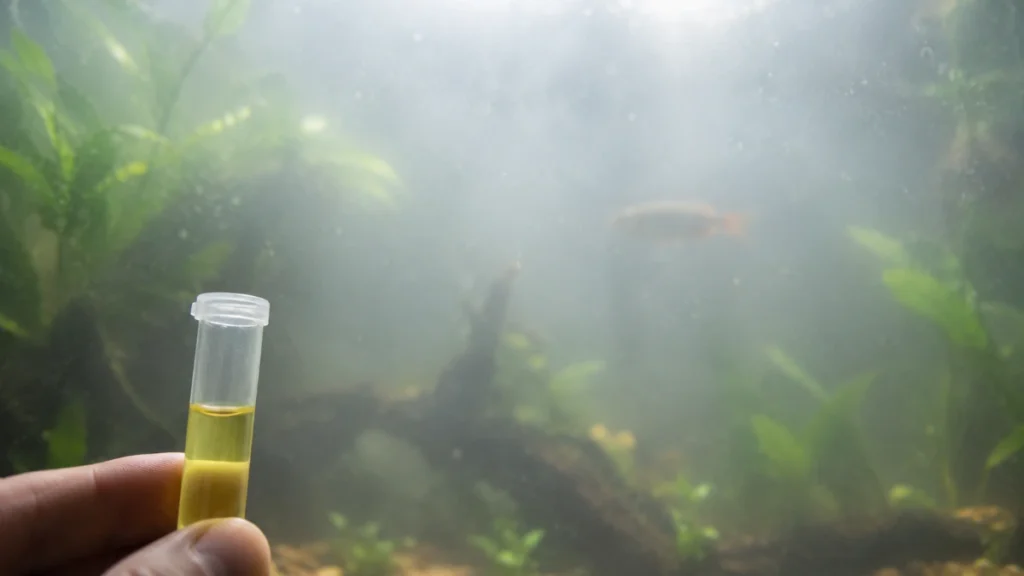
Can low pH cause cloudy water in aquarium water — yes, but indirectly. A sharp pH drop often lines up with a bacteria bloom or a die-off of the good bacteria that can’t handle the acidity, and either one clouds the water.
The cloudiness isn’t caused by the pH number itself. It’s a symptom of the same imbalance that’s also dropping your pH.
Does High pH Cause Algae in Aquarium Tanks?
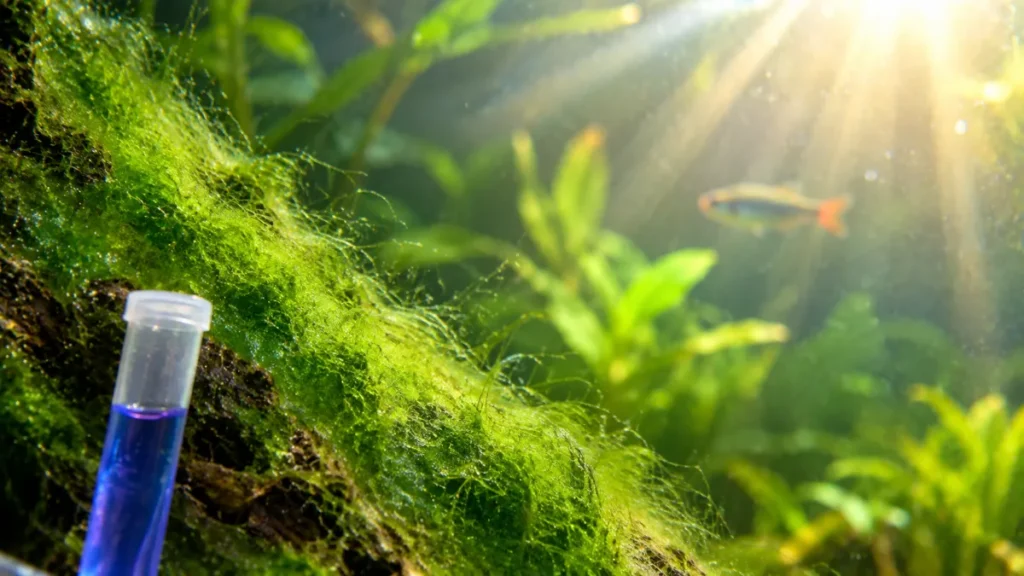
Does high pH cause algae in aquarium water — it’s more of a two-way street. Algae eats up CO2 during the day, which pushes pH up (same as your plants do).
At the same time, high pH plus too much light and nutrients is exactly the recipe algae loves. So high pH and algae usually show up together because they share the same root cause, not because one directly creates the other.
High pH vs. Low pH: Quick Comparison
| Factor | High pH | Low pH |
| Source water | Naturally alkaline tap water | Naturally soft/acidic tap water (RO or rain-fed) |
| Substrate/decor | Crushed coral, aragonite, limestone | Driftwood, peat, Indian almond leaves |
| Daily activity | Plants pulling CO2 during daylight | Waste buildup, CO2 from breathing |
| What you’ll notice | Ammonia gets more dangerous, gill irritation | Clamped fins, low energy, cloudy water |
| If you want to fix it | Driftwood, peat, or blending in RO water to lower pH in aquarium water | Baking soda, crushed coral, or a proper water change |
(That last row covers “lower pH” and “fish tank pH Down” at a glance — if you’re actively trying to bring pH down or want the full step-by-step, that’s its own guide, linked below, so I won’t repeat it all here.)
What I Got Wrong (Real Talk)
As, i already told you when my pH was low, I made this exact mistake early on by constantly dumping pH-Down chemicals into my tank because the test kit didn’t show a “perfect” 7.0. Instead of fixing anything, my water parameters started wildly swinging up and down, which severely stressed my fish and even killed a few. I finally realized my tap water was naturally high in minerals, and my chemical fixes were just fighting a losing battle against my own tank’s natural chemistry.
Here’s the honest mistake a lot of us make: reaching for a chemical adjuster the second the number looks “wrong,” without ever finding out why it moved. That treats the symptom, not the cause — and a fast chemical swing is usually harder on your fish than the “wrong” pH ever was.
FAQ
What actually causes pH problems in a fish tank?
Almost always one of four things: your source water, something dissolving from substrate or decor, waste buildup, or plants shifting CO2 levels during the day.
What’s the ideal pH for a freshwater aquarium?
Most community fish do fine between 6.5 and 7.5. Blackwater species like many tetras prefer it lower, African cichlids prefer it higher, closer to 7.8–8.5.
Why did my pH spike right after a water change?
Your tap water is probably more alkaline than the tank water had drifted down to. Test your tap water straight from the faucet and you’ll usually see why.
Can I use baking soda to fix low pH?
Yes, in small measured doses it raises pH and KH. It wears off between water changes though, so it’s a band-aid unless you also deal with what’s pulling pH down in the first place.
Is a pH of 8.0 dangerous for fish?
Not by itself for a lot of species. It gets risky when ammonia is also present, since higher pH makes ammonia far more toxic.
How often should I actually test pH?
Weekly is a solid habit for most tanks. Test more often right after you change substrate, add new decor, or if your fish start acting off.
Does driftwood always lower pH?
Not right away, but most driftwood leaks tannins over weeks to months. In soft, low-KH water especially, that’ll gradually pull pH down.
Why does my pH read different in the morning than at night?
Daylight lets plants pull out CO2, which raises pH. Overnight, both plants and fish release CO2 through breathing, which brings it back down. A small daily swing is completely normal in a planted tank.
Next Steps: Resources You Should Read
Related FishioHub reading
- Learn why KH is very important like PH for your aquarium?
- Freshwater aquarium pH levels for various fish
Scientific references
- Hargreaves, J.A. & Tucker, C.S., “Managing Ammonia in Fish Ponds,” Southern Regional Aquaculture Center Publication No. 4603
- Durborow, R.M., Crosby, D.M. & Brunson, M.W., “Ammonia in Fish Ponds,” Southern Regional Aquaculture Center Publication No. 463
- Wurts, W.A., “Daily pH Cycle and Ammonia Toxicity,” Kentucky State University Cooperative Extension Program / World Aquaculture 34(2)
Closing
Your fish can’t exactly tell you the water feels wrong. A pH reading that keeps wobbling is about as close to a warning label as you’re going to get. Chase the actual cause instead of just the number, and the rest of the tank tends to settle right along with it.
Was this guide helpful?
First-Hand Experience
Based on animals I've personally kept and bred - not summarized from other articles.
Zoological Foundation
Claims are checked against my M.Sc. Zoology training and published aquatic biology research, not recycled aquarium myths.
No Paid Influence
No sponsorship shaped this guide. Affiliate links, if any, are disclosed separately and never hidden.
Kept Current
Errors are corrected as soon as they're found, with the update noted at the bottom of the article.
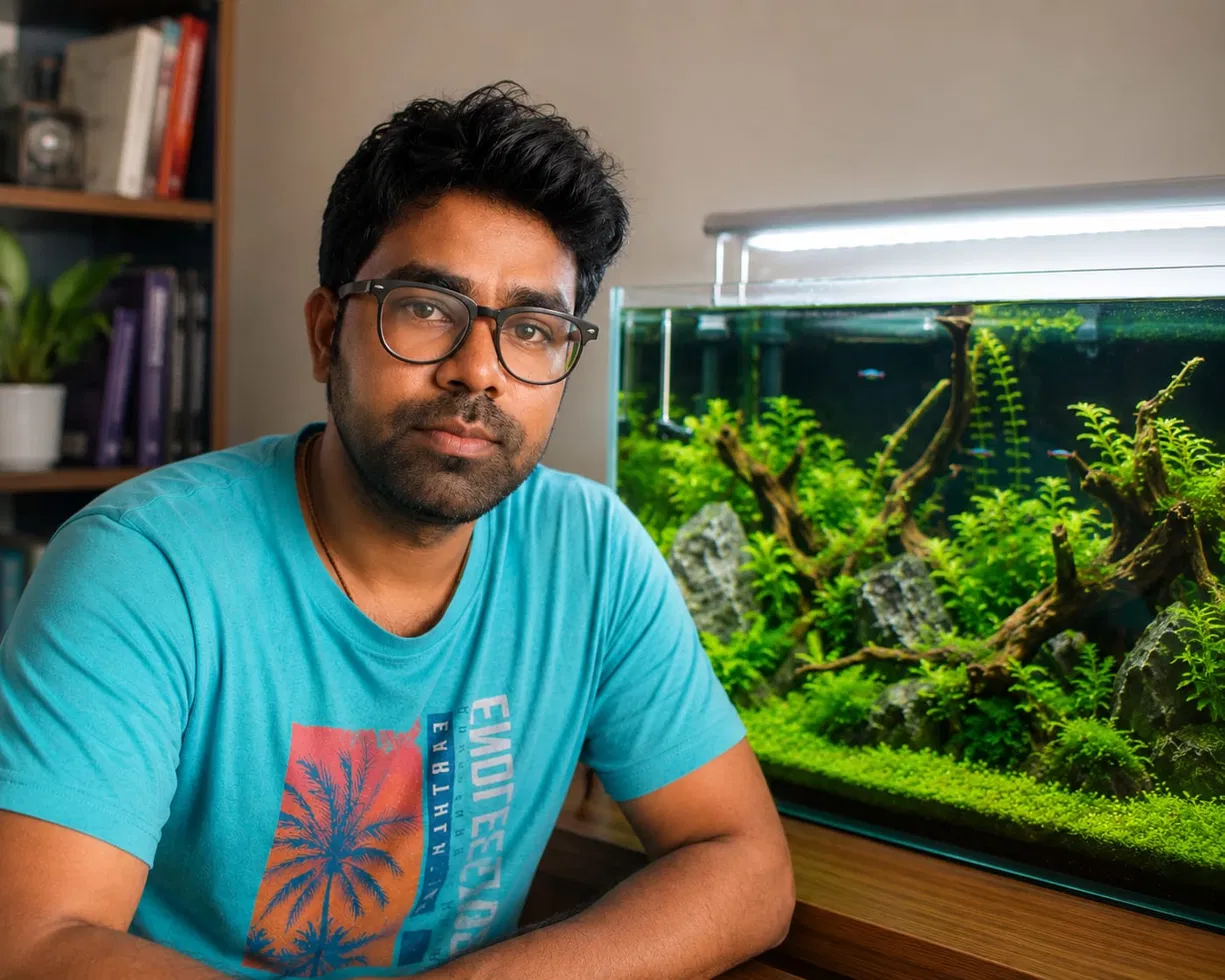
Anil Satak M.Sc. Zoology · Founder, FishioHub
Grew up in a fishing family in India and holds a Master's in Zoology. FishioHub is a one-person operation - every guide is personally researched, kept-tested, and written by Anil. No team, no outsourced writers, no AI-generated content. Read his full bio →