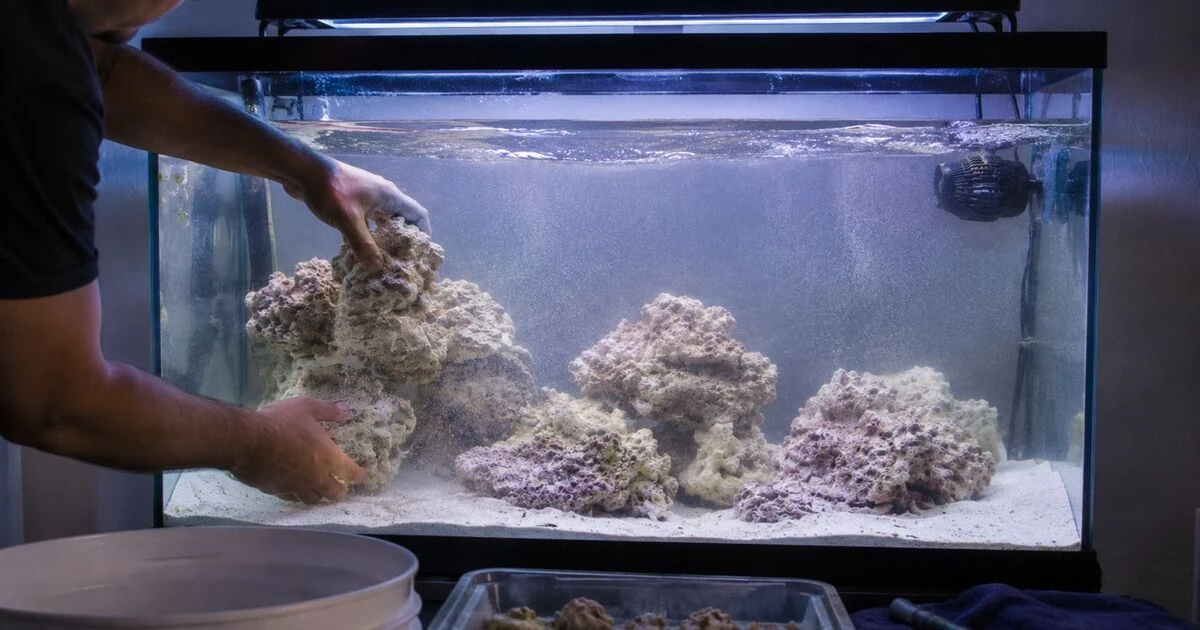
Setting up a marine fish tank for beginners may sound challenging, but with the right guidance, it can be an exciting and rewarding experience. The first time I helped set up a marine tank, ammonia hit 2 ppm on day four because someone added fish before the tank had even started cycling. Two clownfish didn’t make it. That’s the mistake that ends most beginner reef dreams before they start — not bad luck, just going too fast.
If you’re staring at a bare glass box wondering whether you’re actually ready for saltwater, you’re not behind. Everyone starts here. The difference between a tank that thrives and one that quietly kills everything in it usually comes down to five or six decisions made in the first week — and this guide walks through every one of them. Unlike freshwater aquariums, saltwater aquariums require careful planning, the right equipment, and regular maintenance.
Here’s what this guide covers:
- Choosing the right tank size (and why smaller is harder, not easier)
- The real equipment list — what’s essential vs. what can wait
- Step-by-step setup, in the order that actually prevents dead fish
- What a saltwater tank really costs — full breakdown, not a vague estimate
- Safety and backup planning — the section every competitor skips
- Maintenance that actually works long-term
- Best beginner fish and which ones to avoid first
- Answers to the questions beginners actually ask
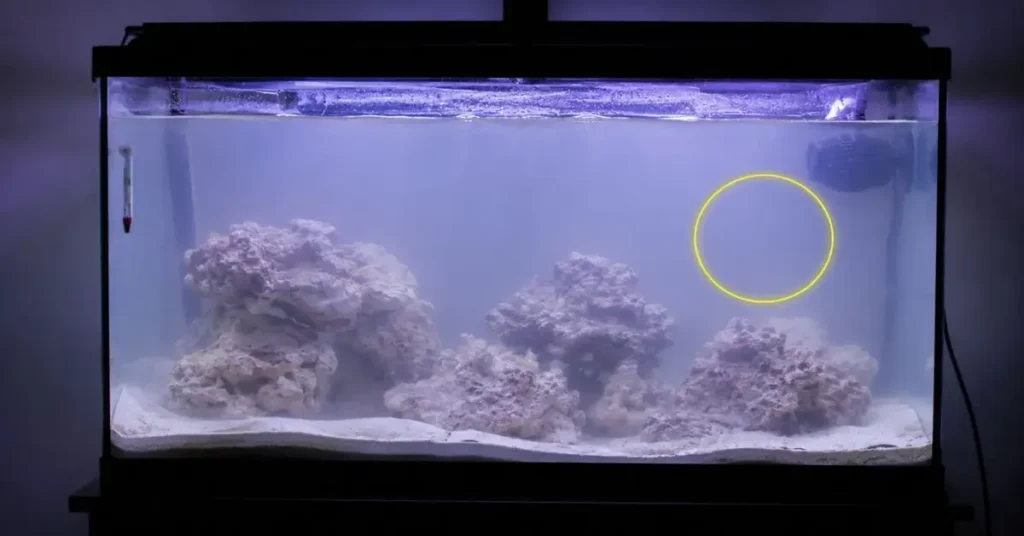
Setting up a marine fish tank for beginners means choosing a stable 30-55 gallon tank, running a full nitrogen cycle for 4-6 weeks with live rock, mixing saltwater to a specific gravity of 1.023-1.026 using RO/DI water, and stocking slowly — starting with one or two hardy fish like clownfish.
Free Resource for Beginners: Download our free Marine Fish Tank Beginner Checklist (PDF) and follow step-by-step instructions to set up your saltwater aquarium without missing a single step.
Choosing the Right Marine Tank Size

When you think about setting up an aquarium, you might first consider getting a small one. But wait! One of the biggest mistakes beginners make is using a tank that’s too small. In a small volume of water, temperature and salinity fluctuate rapidly—much like how a shallow pool warms up faster than a lake. A 200–300L tank is suitable for a coral reef setup.
A 10-15-gallon tank might seem easy to manage, but consider this: maintaining stable water temperature and salinity levels in such a small tank is very difficult, almost impossible.
These constant fluctuations in water parameters create an unsuitable environment for fish and other aquatic life. If you absolutely must use a small tank, keep these points in mind:
👉 The best tank size for beginners: 30–55 gallons
* It’s easier to maintain stable water chemistry.
* It provides ample space for fish, other organisms, and live rock.
* This size allows for easy, gradual upgrades (adding corals, more fish, etc.).
Equipment for Setting up a marine fish tank for beginners
Here’s your marine aquarium equipment checklist (also available as a downloadable PDF below):
- Aquarium tank (30–55 gallons recommended)
- Stand & cover/lid
- Salt mix & hydrometer/refract meter
- High-quality filter system (canister or sump)
- Protein skimmer – pulls dissolved waste out before it breaks down into ammonia
- Heater & thermometer (24–26°C / 75–79°F)- Useful to manage water temperature
- Lighting system (LED or T5 lights for fish and corals)
- Substrate (aragonite sand or crushed coral)
- Live rock (for biological filtration)
- Power heads/wave makers (to mimic ocean currents)
- Test kits (pH, ammonia, nitrite, nitrate, salinity)
📥 Download the Marine Aquarium Setup Checklist PDF
Accessories and Tools Needed for Setting up a Marine Fish Tank
These days Saltwater tank setup Kits are available but before you purchase them you will need to damn sure about its quality and safety for fish. Apart from the main equipment, several accessories and tools make setup and maintenance easier:

Accessories You’ll Need
- Water storage containers – It is useful for mixing/storing saltwater.
- Aquarium-safe gloves – protect hands when handling live rock or chemicals.
- Power strip with surge protection – for safe electrical management.
- Timer for lights – keeps fish on a regular day-night cycle.
- Aquarium-safe silicone fixes minor leaks or decorations.
Essential Tools for Beginners
- Fish net – move fish safely.
- Magnetic algae scraper – cleans glass.
- Gravel vacuum/siphon – removes waste from substrate.
- Water testing kits/strips – quick water checks.
- Dedicated buckets – never reuse household cleaning buckets.
- Aquarium vacuum – keeps the tank floor clean.
📌 Pro Tip: Keep all aquarium tools in one dedicated box for easy access.
In my opinion, you should understand osmoregulation: marine fish constantly lose water to their surrounding environment through osmosis. Since saltwater is more concentrated than their blood, water is drawn out of their bodies—much like how water is extracted from a raisin kept in salt. They compensate for this by constantly drinking water and excreting concentrated salts through their gills. This is why maintaining stable salinity is more critical in saltwater tanks than in freshwater tanks.
Step-by-Step Setup Guide for Beginners

Setting Up a Marine Fish Tank for Beginners: A must Needed Guidelines
- Choose a location – away from direct sunlight and electrical hazards.
- Set up the stand and place the tank.
- Rinse the substrate (never use soap) and add it to the tank.
- Add live rock to create a natural reef base.
- Fill the tank with pre-mixed saltwater using RO/DI water and marine salt.
- Install the filter, heater, skimmer, and powerheads.
- Start the tank cycling process. This process takes 4-6 weeks and is essential. Why is the nitrogen cycle important? Let me tell you, the fish waste and leftover food break down into ammonia, which is toxic to fish even at 0.25 ppm. Beneficial bacteria — mainly Nitrosomonas and Nitrobacter — colonize your live rock and substrate over 4-6 weeks and convert that ammonia into nitrite, then into far less harmful nitrate. Until that bacterial colony is established, every fish you add is swimming in its own poison. That’s why cycling before stocking isn’t optional — it’s the entire game.
- Regularly check water parameters such as pH level, ammonia, nitrite, nitrate, and salinity.
- After the cycling is complete, add some invertebrates like snails and crabs. For beginners, hardy species like turbo snails and hermit crabs are good choices. These creatures help keep your tank clean by eating algae and leftover food.
- Start with hardy fish (like clownfish) and then gradually increase the number of fish.
How Much Does It Cost to Set Up a Marine Fish Tank for Beginners?
Here’s a breakdown of average saltwater aquarium setup cost for a 30–55-gallon beginner saltwater tank in the USA:
| Tank & Stand | $200 – $600 | Larger = more stable. |
| Filtration System | $150 – $400 | Sump/canister filter. |
| Protein Skimmer | $100 – $300 | Removes waste. |
| Lighting (LED/T5) | $100 – $500 | Higher for corals. |
| Heater & Thermometer | $40 – $80 | Essential stability. |
| Power heads/Wave Makers | $50 – $150 | Mimics ocean currents. |
| Substrate | $50 – $150 | Aragonite sand or coral. |
| Live Rock | $100 – $400 | Natural filtration. |
| Test Kits & Hydrometer | $40 – $100 | Monitor chemistry. |
| Accessories & Tools | $50 – $150 | Nets, scrapers, gloves. |
| Salt Mix (initial) | $30 – $60 | Makes ~50 gallons. |
| Fish & Cleanup Crew | $100 – $300 | Starter stock. |
| Corals (optional) | $50 – $500 | For reef tanks. |
- Fish-Only Tank (FOWLR): $900 – $1,800
- Reef Tank (with corals): $1,200 – $3,000+
👉 Ongoing Monthly Costs:
- Salt mix refills: $20–40
- Food: $10–30
- Electricity: $15–50
- Filter replacements: $100–200/year
📌 Pro Tip: Beginners can save money by starting with a FOWLR setup and upgrading later.

Maintenance Guide – Keeping Your Tank Healthy
While Setting Up a Marine Fish Tank for beginners, the following maintenance guide should be followed.
- Daily: Check temperature, equipment, and fish behavior.
- Weekly: Test water parameters, remove algae, and top off evaporated water.
- Biweekly: 10–20% water change with premixed saltwater.
- Monthly: Deep clean filters, power heads, and glass.
Best Beginner Marine Fish to Start With
- Clownfish (Cellars/True Opercula) – hardy and peaceful in tank
- Damselfish – colorful, though sometimes territorial
- Gobies – bottom-dwellers, great sand cleaners
- Fire fish – shy, peaceful, easy to feed
- Blennies – algae eaters, fun personalities
What Actually Goes Wrong (And How to Not Let It)
Every guide tells you what to buy. Almost none tells you what actually kills a beginner’s tank. In my experience across freshwater systems and from working through the same water chemistry that governs marine tanks, it’s rarely one big disaster — it’s small compounding mistakes.
- The most common one: adding fish before the tank has cycled, because waiting 4-6 weeks with an empty-looking tank feels pointless. It isn’t.
- The second most common: skipping a quarantine tank. A single new fish carrying ich or a parasite can wipe out an entire established reef in days
- The third: treating electrical safety as an afterthought.
According to NOAA’s ocean chemistry data, natural seawater salinity averages around 35 parts per thousand — and the aquarium specific gravity range of 1.023-1.026 you’re mixing at home is deliberately slightly below full ocean strength, which gives fish (though not most corals) a small stress buffer while your tank matures.
FAQs – Setting Up a Marine Fish Tank
Q1: How long should I cycle my marine tank?
👉 At least 4–6 weeks before adding fish.
Q2: Can I use tap water for saltwater tanks?
👉 Use RO/DI water only—tap water has chemicals harmful to fish.
Q3: What’s the easiest marine fish for beginners?
👉 Clownfish is the Beginner saltwater fish—hardy, colorful, and easy to care for.
Q4: Do I need corals to start a marine tank?
👉 No, you should start with a fish-only-with-live-rock (FOWLR) setup. Later on, you can add corals.
Q5: How often should I feed marine fish?
👉 Feed marine fish once or twice daily, in small amounts; they can finish within 2–3 minutes.
Q6. How many fish can I add to a new marine tank at first?
👉 When setting up a marine fish tank for beginners, start slow. In the first few weeks, only add 1–2 hardy saltwater fish after your tank has fully cycled. Introducing too many fish at once can cause ammonia spikes and stress your system. Gradually add more fish over time, allowing the beneficial bacteria to balance the bioload.
Q7. How do I properly mix and store saltwater for my aquarium?
👉 Always use RO/DI water when mixing marine salt. Add a quality salt mix gradually while circulating the water until it reaches 1.024–1.026 specific gravity. Let it mix for at least 12–24 hours before use. Store extra saltwater in a sealed, food-safe container for up to a week. This ensures stability and prevents contamination.
Q8. What should I do if my tank has high ammonia or nitrite levels?
👉 High ammonia or nitrite means your tank’s biological filter is not stable. If levels rise, perform a 20–30% water change, stop adding livestock, and reduce feeding. Test water daily and consider adding beneficial bacteria supplements. Do not add new fish until both ammonia and nitrite consistently test at zero.
Q9. When can I safely add corals to a beginner marine tank?
👉 Corals should only be added once your tank has fully cycled and parameters are stable. Wait at least 4–8 weeks after adding your first fish. Begin with hardy beginner corals like mushrooms, zoanthids, or leather corals. Make sure salinity, temperature, and pH are steady before introducing them, and always acclimate slowly.
Q10. What equipment do I need to start a marine fish tank?
👉 Essential equipment includes a tank (30+ gallons recommended), protein skimmer, heater, powerheads, filter, marine salt, live rock, and test kits. Lighting is also important, especially if you plan to keep corals. Having the right tools from the start helps maintain stable conditions and reduces beginner mistakes.
Q11. How often should I change water in a saltwater aquarium?
👉 For beginners, a 10–20% water change every 1–2 weeks is ideal. Regular water changes help remove toxins, replenish trace elements, and keep fish healthy. Always prepare and test new saltwater before adding it to the tank.
Q12. How long should I cycle a marine aquarium before adding fish?
👉 A new marine tank usually takes 4–6 weeks to fully cycle, though it can be faster with live rock or bacterial starters. During this period, beneficial bacteria establish themselves to process waste. Test regularly, and only add fish once ammonia and nitrite levels drop to zero.
Next Steps: Resources You Should Read Next
- Saltwater fish vs Freshwater fish — Know the actual difference
- Beginner fish for tank— if you’re not sure which fish to add, read this guide.
- Problems and fixes in tank — Complete solution to aquarium problems
Conclusion – Start Your Marine Aquarium Journey Today
A marine aquarium is a beautiful world that you create and maintain. With the right equipment, tools, planning, and patience, even beginners can enjoy a microcosm of the ocean and its vibrant marine life in their own homes. Some problems may comes while Setting Up a marine fish tank for beginners and mistakes are common when learning, but that’s okay.
Remember, every mistake teaches you something new and helps you become a better marine aquarium keeper.
🌊 Are you ready to get started? Begin with a 30-55 gallon FOWLR (Fish Only With Live Rock) tank and gradually build towards your dream reef aquarium.
Was this guide helpful?
First-Hand Experience
Based on animals I've personally kept and bred - not summarized from other articles.
Zoological Foundation
Claims are checked against my M.Sc. Zoology training and published aquatic biology research, not recycled aquarium myths.
No Paid Influence
No sponsorship shaped this guide. Affiliate links, if any, are disclosed separately and never hidden.
Kept Current
Errors are corrected as soon as they're found, with the update noted at the bottom of the article.
Anil Satak M.Sc. Zoology · Founder, FishioHub
Grew up in a fishing family in India and holds a Master's in Zoology. FishioHub is a one-person operation - every guide is personally researched, kept-tested, and written by Anil. No team, no outsourced writers, no AI-generated content. Read his full bio →