
Plus: Growth Issues, Feeding Behavior, Health Problems & Proven Product-Based Fixes
After you have observed the behaviour of the pleco in the tank. If you’re asking, “Why is my pleco not eating?”, the answer is that pleco not eating is usually connected to water quality, stress, wrong food, tank size issues, or underlying health conditions.
Plecos are hardy fish, but they stop eating quickly when something in the tank environment goes wrong. This guide tries to cover all the major reasons, how to tell if your pleco is eating, why is my pleco not eating algae wafers?, why growth stops, and how to fix feeding issues using aquarium-tested methods and products.
How do I know if my pleco is eating?
You Should Look for:
- You will see reduced algae on the glass and decorations
- Bite marks on driftwood.
- Disappearing vegetables overnight
- Pleco poop (brown/green logs)
If these signs exist, this means that your pleco is eating very well. If this is confirmed, then you should look for the possible reason due to which pleco refused to eat.
7 Reasons Why Is My Pleco Not Eating Properly
1. Poor Water Quality (Most Common Reason Pleco Stop Eating)
Poor water quickly shuts down a pleco’s appetite. Water problems are also a cause why your pleco is not growing.
Plecos Need Water Parameters:
- Ammonia Level : 0
- Nitrite: 0
- Nitrate: under 20–25 ppm
- Water Temperature: 24–28°C
- pH Value: 6.5–7.5
- Strong aeration
Fix using aquarium products:
- Seachem Prime – detoxifies ammonia/nitrite.
- Seachem Stability – boosts beneficial bacteria.
- API Master Test Kit – essential for monitoring
If you correct water parameters, you will see most plecos resume eating within 24–48 hours.
2. Wrong or Incomplete Diet (Major Beginner Mistake)
Plecos are NOT algae-only fish. You need variety in your diet. A lack of dietary variety is a common cause of ‘why won’t my pleco eat’ situations.
What plecos need:
- Algae wafers (Hikari, Sera, Northfin Veggie)
- Vegetables: zucchini, spinach, pumpkin, cucumber
- Protein (occasional): shrimp pellets, bloodworms
- Driftwood (crucial for bristlenose & common plecos)
A pleco fed only algae wafers may cause your concern. Why Is My Pleco Not Eating? It is due to a nutritional deficiency.
3. Stress: Bright Lights, Wrong Tankmates, or Lack of Hiding Spots
A stressed pleco becomes inactive and refuses food. This means you need to have a better look at the tank environment.
Common stressors:
- Too much lighting
- Aggressive fish (Oscar, Cichlids, Tiger Barbs)
- No caves or driftwood to hide
- Frequent disturbances
- Strong water flow
Fix with products & adjustments:
- Add some caves, driftwood, or PVC hiding tubes.
- Keep lights dim or use floating plants.
- Add API Stress Coat or Seachem StressGuard
4. Tank Too Small → Stunted Growth & No Appetite
If you’re asking, “Why is my pleco not growing?”, tank size is often the reason.
- Common Pleco → grows 45–60 cm → needs 250–300+ liters
- Sailfin Pleco → similar
- Bristlenose Pleco → 12–15 cm → minimum 100–120 liters
If the tank is a cramped tank, the causes:
- Growth stunting
- Organ stress
- Reduced appetite
- Lifespan cut in half
Upgrade the space, and your pleco will regain feeding behavior.
🔥 Still Struggling With Aquarium Problems? Don’t Miss This!
If your fish tank issues aren’t fully solved yet, you’re not alone. From cloudy water, Ich in fish to fish not eating, these problems can quickly get worse if ignored.
👉 Check out my complete guide on “20 Common Aquarium Problems (And How to Fix Them Fast)” — where I’ve explained real solutions based on experience, not theory.
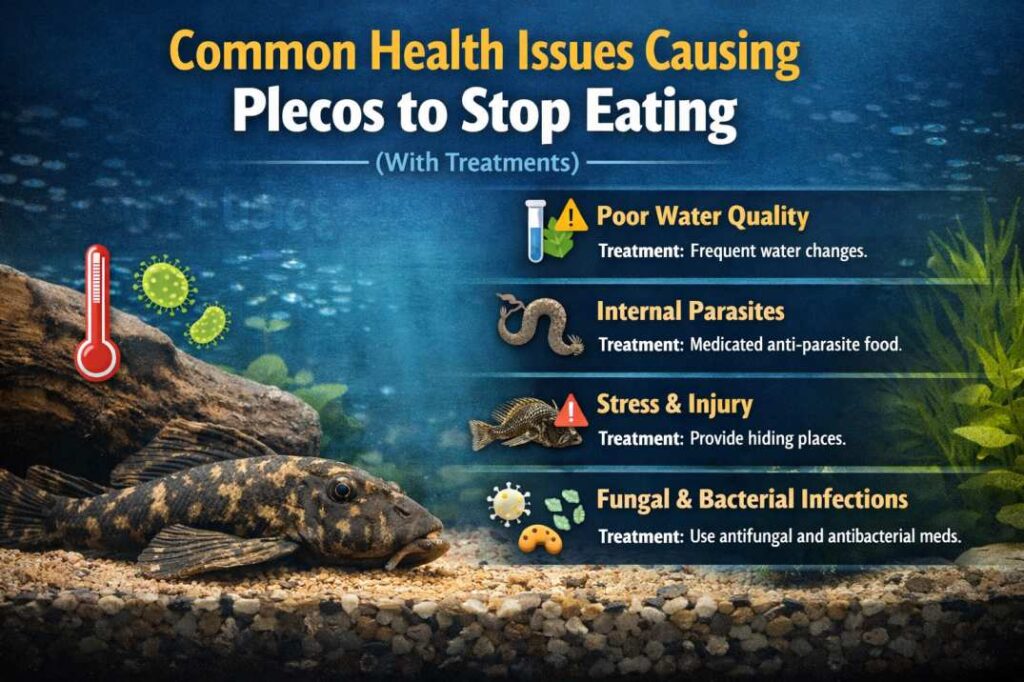
5. Internal Parasites
If Pleco has parasites, then you should check early symptoms:
- White, string-like poop
- Weight loss
- Bony appearance
Treatment:
- Seachem MetroPlex
- Fritz Paracleanse
- Mix medication with food using Seachem Focus.
6. Bloating / Digestive Issues
Often caused by too much protein or no fiber.
Early Symptoms:
- Swollen belly
- Weak movement
- No interest in food
Treatment:
- Feed blanched peas
- Add Epsom salt (½ tsp per 20L)
- Reduce protein foods temporarily.
7. Bacterial or Fungal Infection
Check the following symptoms to identify infections:
- Check the white patches
- Check Red sores
- Torn fins
- Notice Rapid breathing
Treatment:
- API Furan-2 (bacterial)
- Seachem Kanaplex
- Clean water and strong aeration
How to Adjust Aquarium Conditions to Encourage Pleco Feeding Behavior
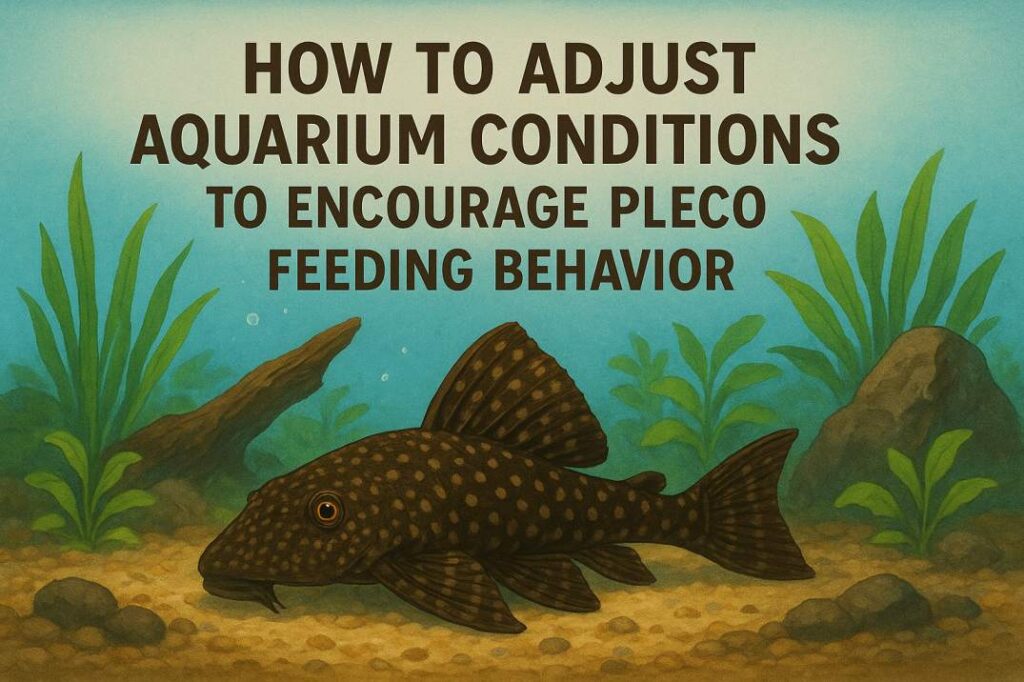
Follow this simple recovery protocol if your pleco is refusing to eat:
Step 1: Fix Water Quality
- Not more than 40% water change
- Add Prime + Stability.
- Increase surface agitation for oxygenation.
Step 2: Improve Habitat & Reduce Stress
- Add few hiding places
- Reduce direct high light
- Keep the tank quiet
- Avoid adding new fish.
Step 3: Feed Properly (Night Feeding Method)
Drop food after lights-out:
- Algae wafers
- Fresh vegetables
- Bottom-feeder pellets
Don’t feed at one place. Feed in multiple tank corners to avoid competition.
Step 4: Monitor Health
Look for:
- Poop color
- Belly shape
- Activity at night
- Signs of infection
If symptoms match the illness, medicate the symptoms accordingly.
Quick Troubleshooting Table
| Pleco not eating | Bad water | Water change + Prime |
| Pleco Not growing | Small tank or poor diet | Upgrade + varied food |
| Won’t eat in front of you | Nocturnal | Feed at night |
| Pleco Hiding constantly | Stress | Add caves & reduce light |
| Food disappears quickly | Competition | Multiple feeding points |
| Weight loss | Parasites | MetroPlex / Paracleanse |
| Bloating | Diet imbalance | Peas + Epsom salt |
FAQs
1. Why is my pleco not eating?
If you’re wondering why is my pleco not eating, it’s usually due to stress, poor water quality, or recent tank changes. In many cases, plecos also eat at night, so you may not see them feeding.
2. What do plecos eat in a fish tank?
Many beginners ask what do plecos eat in a fish tank, they typically feed on algae, algae wafers, sinking pellets, and veggies like zucchini or cucumber for a balanced diet.
3. What do plecos eat in the wild?
If you’re curious what do plecos eat in the wild, they mainly consume algae, biofilm, decaying plants, and organic matter found in rivers.
4. Why is my pleco not eating algae?
If you’re asking why is my pleco not eating algae, it could be due to low algae availability or because some plecos rely more on other food as they grow.
5. Why is my pleco not eating algae wafers?
A common issue is why is my pleco not eating algae wafers. This can happen if the pleco is stressed, the wafers are of poor quality, or they’re not placed in a calm feeding spot.
6. What do clown plecos eat?
When it comes to what do clown plecos eat, they prefer driftwood, biofilm, and small portions of vegetables, along with occasional sinking foods.
7. Why is my pleco not eating — just at night? If you’re asking why is my pleco not eating — just at night, plecos are nocturnal and usually eat after lights go off, so daytime feeding may go unnoticed.
Final Expert Summary
If you’re wondering “Why is my pleco not eating?”, the most common reasons is poor water quality, wrong diet, stress, tank size issues, competition for food, or illness. By correcting these water conditions, feeding at night, providing a proper habitat, and treating possible health issues, plecos return to normal feeding quickly.