Catfish get lumped together in this hobby like they’re all one fish wearing different costumes. They’re not. Out of the dozens of types of pet catfish sold in US stores, only a handful are actually built for life behind glass.
The safest types of pet catfish for a beginner tank are Corydoras, Otocinclus, bristlenose plecos, Synodontis, and pictus catfish — species that top out under a foot and get along with tankmates. Skip channel catfish, redtail catfish, and anything sold as a “tank buster special” unless you actually own a pond. Adult size should decide your pick, not the size of the fish in the bag.
Coming from a fishing family used to pulling massive channel cats from riverbanks, my first instinct was to put a juvenile wild catfish into my standard 55-gallon tank. Watching that fish rapidly outgrow its environment was a harsh wake-up call that river monsters belong in the wild, while only specific, downsized species belong behind glass.
📌If You Only Remember 3 Things
- Corydoras and Otocinclus are the safest small catfish aquarium picks under 20 gallons
- Adult size, not size in the bag, should decide which types of pet catfish you buy
- Channel and redtail catfish are farmed or pond species — not tank fish, no matter how they’re sold
Freshwater Aquarium Catfish Species List: What Actually Belongs in a Home Tank
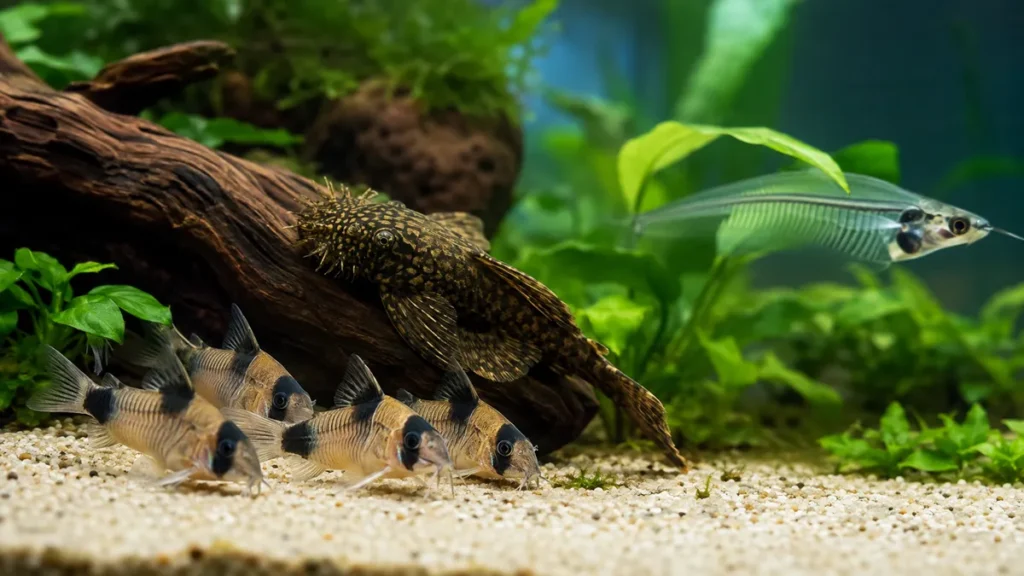
When people search for a freshwater aquarium catfish species list, they usually picture a straightforward shopping list. Call it an aquarium catfish species list or a shopping list — either way, it has to sort fish by tank size and temperament first, because that’s where most catfish mistakes happen.
Here’s how I’d break down the types of pet catfish — the freshwater aquarium catfish types — that most US hobbyists actually keep.
Corydoras (Cory Catfish) — The Default Small Catfish Aquarium Pick
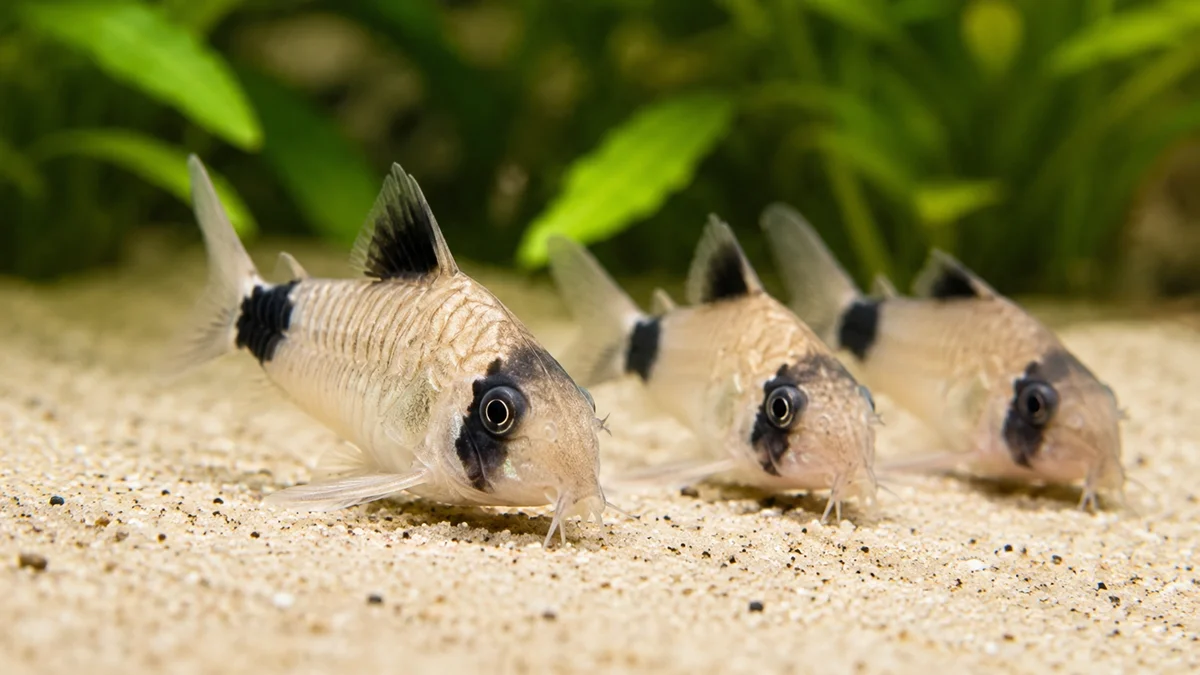
Corydoras are the go-to answer whenever someone asks about a small catfish aquarium fish, and for good reason. Most species stay under 3 inches and shoal happily in groups of six or more. Bronze, panda, and sterbai cories are the three most common in US pet stores.
Corydoras aeneus is also a facultative air-breather — it dashes to the surface, gulps air, and uses its posterior intestine as a backup respiratory organ.
Researchers documented the behavior in detail decades ago: the whole gulp-and-dive takes just 0.06–0.07 seconds at the surface (Kramer & McClure, Canadian Journal of Zoology, 1980). Blink and you’ll miss it.
Otocinclus — Among the Smallest Catfish Species You Can Keep
If you’re after the smallest catfish species sold in the trade, Otocinclus top the list at 1.5–2 inches fully grown. They’re algae grazers, not scavengers, so they need an established tank with real biofilm already growing. Drop them into a brand-new tank and you’ll starve them by accident — a mistake I still see beginners make.
Bristlenose Pleco — Best Catfish for Aquariums Under 30 Gallons
Common plecos get sold constantly and grow past a foot long, which is why bristlenose plecos are the better answer when people ask for the best catfish for aquariums that actually stay manageable. Bristlenose top out around 4–5 inches. They graze algae and tolerate a wide swing in water parameters, which makes them forgiving for a first-timer.
Synodontis and Pictus Catfish — For Bigger Community Tanks
Synodontis nigriventris, the upside-down catfish, genuinely swims belly-up and does best in 30-plus gallon tanks with rockwork to hide in.
Pictus catfish are active, spotted, whisker-heavy fish that need a tight-fitting lid — they’re notorious jumpers. Give both room to school loosely with their own kind rather than keeping just one.
Glass Catfish — An Unusual Type of Freshwater Aquarium Catfish
Glass catfish are one of the more unusual types of pet catfish for freshwater aquarium owners to try, mostly because you can see straight through them. Kryptopterus vitreolus lacks body pigment almost entirely, and its collagen-fiber skin lets light diffract through the muscle so you can make out the skeleton and organs (Nature Scientific Data, 2025). It’s one of the few fish where “see-through” isn’t a marketing exaggeration.
They’re peaceful midwater shoalers, not bottom-dwellers like most catfish on this list, and they need groups of six or more to feel secure. Keep them alone and they stop feeding and fade fast. A dim, well-planted tank shows them off best.
Other Notable Aquarium Catfish to Complete Your Aquarium
If the core six species do not fit your plans, these nine downsized freshwater aquarium catfish types are highly accessible in the US hobby:
- Pygmy Cory (Corydoras pygmaeus): Ditches bottom-dwelling to school in midwater. Ideal for nano tanks under 20 gallons.
- Julii Cory (Corydoras julii): Features an intricate, leopard-like spotting pattern. Stays under 2.5 inches.
- Clown Pleco (Panaqolus maccus): A brilliant, wood-chewing dwarf alternative to the massive common pleco. Perfect for 20-gallon setups.
- Bumblebee Catfish (Microglanis iheringi): A strictly nocturnal, peaceful species that stays safely under 3 inches.
- Upside-Down Catfish (Synodontis nigriventris): Famous for its inverted swimming style used to graze under leaves. Needs a 30-gallon tank.
- Whiptail Catfish (Rineloricaria): Relies on a flawless, twig-like body structure to camouflage against driftwood.
- Farlowella (Twig Catfish): A needle-thin, peaceful algae-eater that blends perfectly into heavily planted setups.
- Striped Raphael Catfish (Platydoras armatulus): Produces distinct croaking sounds using its swim bladder. Requires an armored, lidded 50-gallon tank.
- Featherfin Synodontis (Synodontis eupterus): Displays a majestic, high dorsal fin. Makes a fantastic, durable community addition for larger setups.
Types of Pet Catfish You Should Avoid: Channel and Redtail Catfish
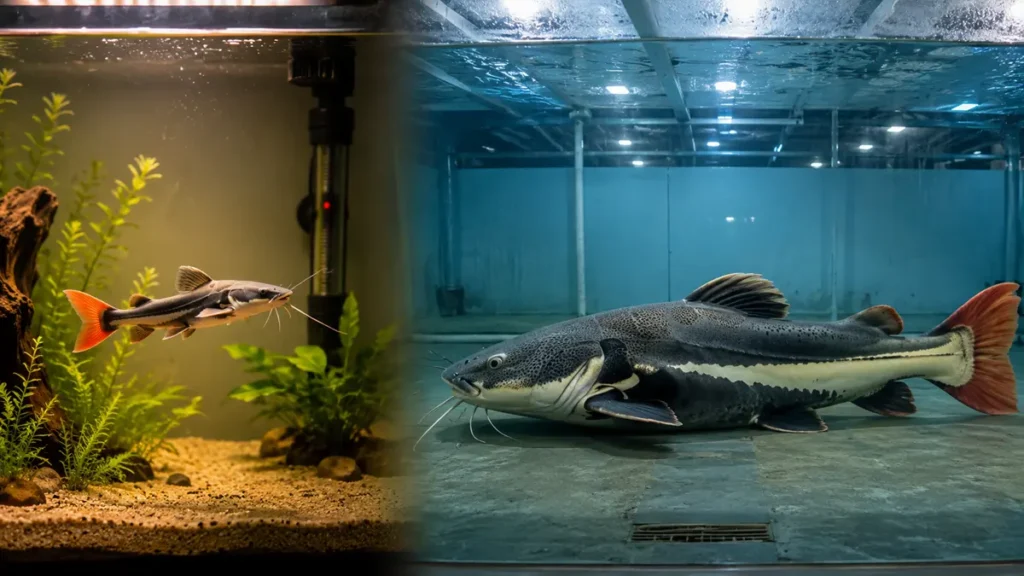
Channel catfish (Ictalurus punctatus) sometimes turn up in feeder tanks or bait shops sold as novelties, and they are not catfish for freshwater aquarium tanks — they’re a farmed food species that regularly tops 20 inches. Redtail catfish get sold even smaller and grow even bigger, often outgrowing anything short of a pond within a couple of years.
Channel catfish are covered in taste buds, and a closely related species, the yellow bullhead catfish (Ictalurus natalis), carries more than 175,000 of them across its entire body surface (Aquaculture Nutrition review, Taylor & Francis). That’s a genuinely wild adaptation. It’s just not a reason to put one in a 20-gallon tank.
I once helped an aquarium customer who bought a cute, three-inch redtail catfish puppy for his living room setup, only to return a year later desperately trying to rehome a two-foot river monster that was eating its tankmates.
It was a stark reminder that these fish don’t stop growing just because they run out of glass, turning a hobbyist’s dream into a logistical nightmare.
Different Types of Catfish for Fish Tanks: Community vs. Predatory
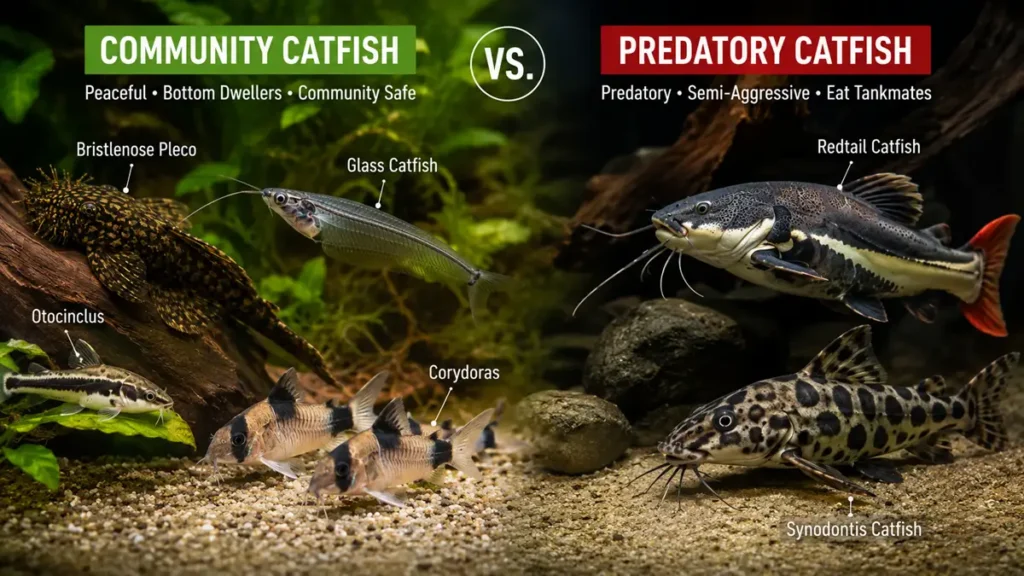
The different types of catfish for aquarium setups really split into two temperament camps. Community catfish — Corydoras, Otocinclus, bristlenose plecos, glass catfish — mostly ignore tankmates and stick to their own feeding niche. Predatory or semi-predatory types, like redtail catfish and larger Synodontis kept in tight quarters, will eat anything that fits in their mouth overnight.
That’s the real dividing line among the different types of catfish for fish tanks — not size alone, but what they’ll do to smaller tankmates once the lights go out. Two fish of similar length can behave completely differently depending on species. Always check temperament, not just size, before adding a catfish to a mixed tank.
Catfish Aquarium Price: What to Actually Expect
Catfish aquarium price varies a lot depending on which types of pet catfish you’re after and how the fish was raised. Corydoras and Otocinclus typically run $3–$10 each at US pet stores. Bristlenose plecos land around $8–$20, Synodontis $10–$30, and rarer wild-caught or line-bred cory morphs can climb past $25 each.
If you spot freshwater aquarium catfish for sale at a price that seems too low for a “rare” species, double-check the actual species name on the tank label rather than trusting the common name alone. Mislabeling is common with plecos especially — a “baby pleco” for $4 is almost always a common pleco, not the dwarf species it’s sometimes sold as.
| Species | Adult Size | Tank Size Minimum | Typical US Price |
| Corydoras (bronze/panda) | 2–3 in | 20 gal, long, groups of 6+ | $4–$10 |
| Otocinclus | 1.5–2 in | 10–15 gal | $3–$7 |
| Bristlenose pleco | 4–5 in | 20–30 gal | $8–$20 |
| Synodontis (petricola/eupterus) | 4–7 in | 30–55 gal | $10–$30 |
| Pictus catfish | 4–5 in | 40+ gal, lidded | $6–$15 |
| Glass catfish | 2.5–3 in | 20+ gal, groups of 6+ | $5–$12 |
Types of Pet Catfish for Freshwater Aquarium to Buy: Where to Look
When you’re shopping for types of pet catfish for freshwater aquarium to buy, prioritize a store that can tell you the exact species name (like TheShrimpFarm)— not just “cory” or “pleco.” Ask whether the aquarium fish catfish in the tank are already eating and active before you bag any of them. Bottom-dwellers usually show stress from poor water quality before the fish swimming higher in the tank do, so they’re a decent early warning sign either way.
Before You Buy: How to Avoid the Size Surprise
- Look up the species’ scientific name, not just the tank label
- Search “[species name] adult size” before you search “[species name] care”
- Ask staff how big the tank’s current adults are, not just the juveniles for sale
- Assume any fish priced under $5 and labeled generically (“catfish,” “pleco”) will outgrow a small tank
FAQ
What is the best catfish for a freshwater aquarium beginner?
Corydoras are generally the best catfish for aquariums kept by beginners — hardy, peaceful, and small enough for a standard 20-gallon tank.
What is the smallest pet catfish species?
Otocinclus and dwarf Corydoras species like Corydoras hastatus are among the smallest catfish species sold, usually staying under 2 inches.
Can different types of pet catfish live together?
Most community types of pet catfish — Corydoras, Otocinclus, bristlenose plecos, glass catfish — coexist fine since they occupy different feeding zones, but avoid mixing them with larger, semi-predatory species.
Do aquarium fish catfish need a bare-bottom tank?
No — most aquarium fish catfish, especially Corydoras, need soft sand rather than sharp gravel to protect their sensitive barbels while foraging.
How much does a catfish aquarium price typically run for a full beginner setup?
Beyond the fish themselves ($3–$30 depending on species), budget for the tank, filter, heater, and substrate — the catfish are usually the cheapest part of a catfish for freshwater aquarium setup.
Are freshwater aquarium catfish for sale online safe to buy?
Reputable retailers that ship with temperature-controlled packaging are generally safe, but check the return or dead-on-arrival policy before ordering freshwater aquarium catfish for sale.
Do all types of pet catfish eat algae?
No — only dedicated grazers like Otocinclus and bristlenose plecos control algae; Corydoras, Synodontis, and glass catfish are omnivores or micro-predators, not cleanup crew.
What’s the difference between freshwater aquarium catfish types and pond catfish?
Freshwater aquarium catfish types are bred and sized for glass tanks, usually under 6 inches, while pond catfish like channel and redtail catfish are farmed or public-aquarium species that outgrow any home tank.
Next Steps: Resources You Should Read
Related FishioHub reading
- What Do Cory Catfish Eat?
- Why Is My Pleco Not Eating?
- Algae-Eating Fish for a Freshwater Aquarium
- Best Bottom Feeder Fish for a Small Tank
Scientific references
- Kramer, D.L. & McClure, M. “Aerial respiration in the catfish, Corydoras aeneus (Callichthyidae).” Canadian Journal of Zoology, 1980.
- “The Physiology of Taste in Fish: Potential Implications for Feeding Stimulation and Gut Chemical Sensing.” Aquaculture Nutrition, Taylor & Francis.
- “A telomere-to-telomere chromosome-scale genome assembly of glass catfish (Kryptopterus vitreolus).” Scientific Data (Nature), 2025.
USA aquarium resources
- Southern Regional Aquaculture Center (SRAC) — USDA-funded extension publications on channel catfish biology
- LiveAquaria — US livestock retailer with species care sheets
- PlanetCatfish.com — hobbyist species database and forums
Closing
Raja’s tank doesn’t have a catfish in it right now, but I still stop and grin every time I pass a Corydoras tank at a shop. Two inches of armored, whiskered fish somehow has more personality than tanks four times the size. Pick the right species for your space, and one of these guys will probably outlast most of your other hobbies.
Was this guide helpful?
First-Hand Experience
Based on animals I've personally kept and bred - not summarized from other articles.
Zoological Foundation
Claims are checked against my M.Sc. Zoology training and published aquatic biology research, not recycled aquarium myths.
No Paid Influence
No sponsorship shaped this guide. Affiliate links, if any, are disclosed separately and never hidden.
Kept Current
Errors are corrected as soon as they're found, with the update noted at the bottom of the article.

Anil Satak M.Sc. Zoology · Founder, FishioHub
Grew up in a fishing family in India and holds a Master's in Zoology. FishioHub is a one-person operation - every guide is personally researched, kept-tested, and written by Anil. No team, no outsourced writers, no AI-generated content. Read his full bio →