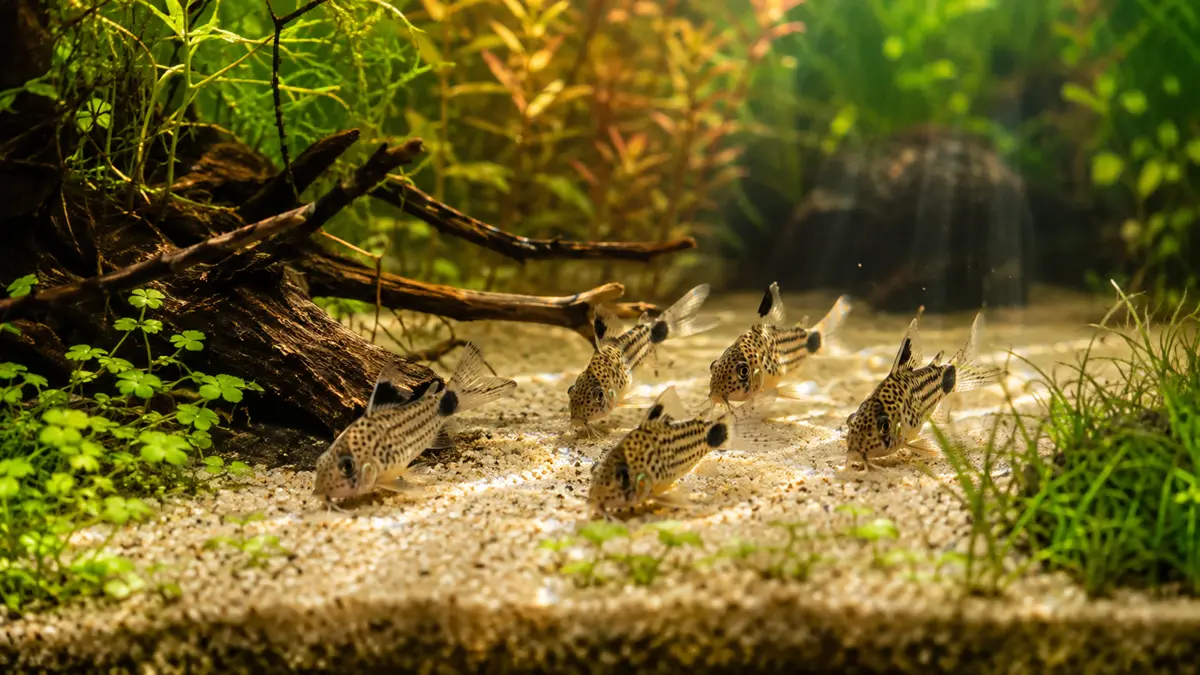
If you’re trying to find the best bottom feeder fish for small tank setups, here’s the short answer up front: most of what’s labeled a “bottom feeder” at the pet store will outgrow a 5- or 10-gallon tank within a year. Pygmy corydoras, dwarf Corydoras habrosus, otocinclus catfish, and — with real caveats — kuhli loach are the ones that genuinely stay small. None of them need more than 10–20 gallons to live full, active lives.
If You Only Remember 3 Things
- The smallest bottom feeder fish for a true nano tank is the pygmy corydoras (Corydoras pygmaeus), topping out under an inch.
- Remember “Bottom feeder” doesn’t mean low-maintenance. Most need groups of five or six, plus a tank that’s already established, not a brand-new one.
- Common plecos and even bristlenose plecos are a poor fit for a small tank. They don’t belong on a real best bottom feeder fish for small tank list — size and bioload catch up fast.
What Are Freshwater Aquarium Bottom Feeders?
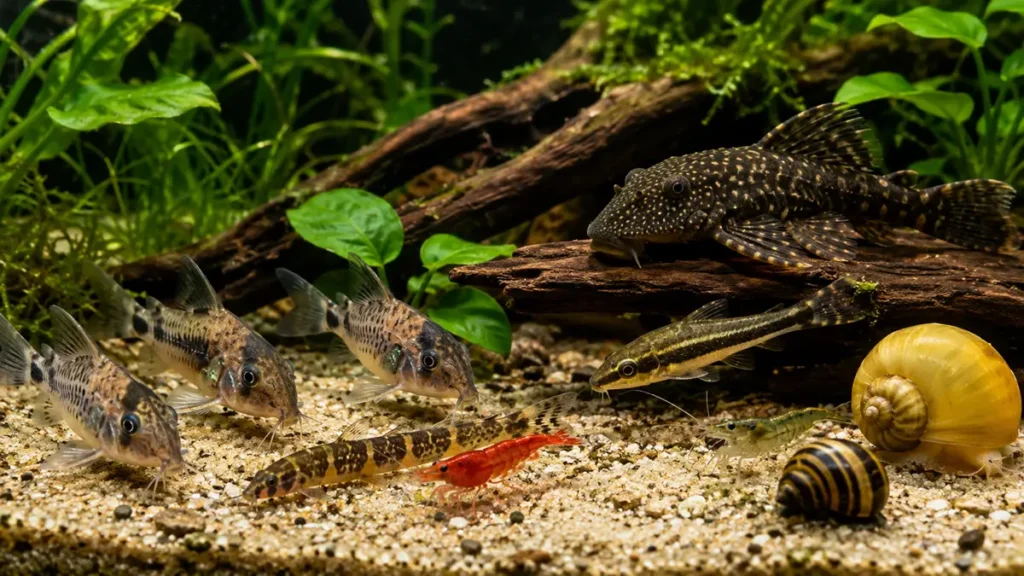
Freshwater aquarium bottom feeders are fish (and a few invertebrates) built to forage along the substrate instead of swimming the open water column. In my zoology training, we’d file most of these under the benthic feeding guild — animals adapted to a life spent close to the bottom.
In the hobby, though, the term gets used loosely. It covers everything from a 1-inch pygmy cory to a pleco that eventually outgrows a 55-gallon tank, which is exactly why “just get a bottom feeder” is bad advice without knowing your tank size first.
What Animals Are Bottom Feeders?
When people ask what animals are bottom feeders, they’re usually picturing fish, but the category is broader than that. Corydoras catfish, loaches, and otocinclus are the classic freshwater fish bottom feeders.
Cherry shrimp, Amano shrimp, nerite snails, and mystery snails are bottom-dwelling scavengers too, even though none of them are fish — worth knowing if what you actually want is a cleanup crew, not a specific species.
Types of Bottom Feeder Fish for Aquariums
There are really three broad types of bottom feeder fish for aquariums: armored catfish (corydoras and otocinclus), loaches (kuhli and botiid loaches), and suckermouth catfish (plecos, in all their many sizes).
Only the first two groups reliably fit a small tank. Nearly every pleco species, bristlenose included, eventually needs 20+ gallons, no matter how small it looks in the store tank.
The Best Bottom Feeder Fish for Small Tank Freshwater Setups
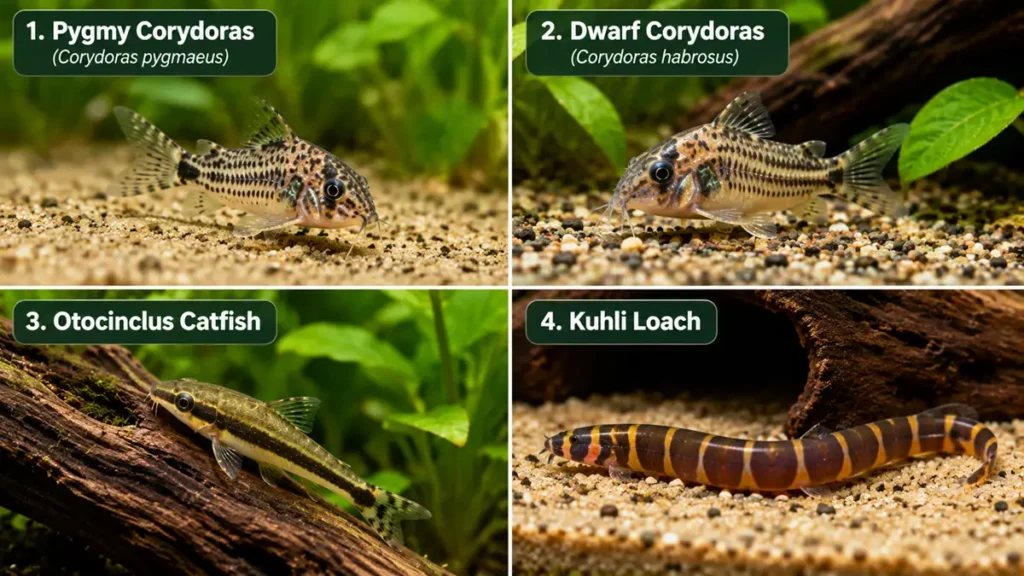
Here’s the actual list — the picks I’d stand behind for a best bottom feeder fish for small tank freshwater roundup, ranked by how comfortably each one handles a genuinely small footprint.
Pygmy Corydoras — The Smallest Bottom Feeder Fish
The smallest bottom feeder fish in the standard aquarium trade is the pygmy corydoras (Corydoras pygmaeus), maxing out around 1 inch. They shoal tightly and spend more time in mid-water than most cories do. A group of six or more does well in a 10-gallon tank.
Dwarf Corydoras (Corydoras habrosus)
A close second — slightly stockier, still under 1.5 inches, and just as suited to a 10-gallon nano setup. Like all corys, they’re facultative air breathers.
they gulp air at the surface and use the back portion of the intestine to absorb oxygen directly, a documented adaptation for the oxygen-poor water they encounter near the substrate. Watch for that dash-to-the-surface behavior in your own tank — it’s normal, not a sign of distress.
Otocinclus Catfish
Otos stay under 2 inches and are excellent soft-algae grazers. That alone earns them a spot on this best bottom feeder fish for small tank list, but they’re not a beginner-day-one fish. They need a tank that’s already grown a biofilm layer, not one that just finished cycling.
Kuhli Loach
Kuhli loaches are eel-like, nocturnal, and genuinely peaceful. If a best bottom feeder fish for small tank build is the strict goal, though, they sit right at the edge of what counts as “small” — most keepers find they need 15–20 gallons and a group of three or more to feel secure.
Treat them as the option for the larger end of small, not the safest first pick.
Good Bottom Feeder Fish vs. the Common Mistake
A good bottom feeder fish for a small tank is judged on adult size, minimum group size, and bioload, not on the “cleans your tank” marketing copy on the bag.
Here’s the mistake nearly every beginner makes at least once: buying a common pleco, or even a bristlenose, because it was sold as a great algae eater. Common plecos can pass a foot in length; bristlenose plecos still need 20+ gallons once grown. Neither belongs on a small bottom dweller fish shortlist.
I fell for this exact trap badly when I bought a tiny common pleco to clean a 5-gallon desktop aquarium. Within months, the fish produced so much waste that the filter couldn’t keep up, and it quickly outgrew the tank’s footprint entirely.
I had to scramble to rehome a foot-long giant that started as a “quick algae fix.”
Small Bottom Dweller Fish Comparison
Here’s the same best bottom feeder fish for small tank shortlist side by side, so you can compare at a glance instead of digging back through five sections.
| Species | Max Size | Min Tank Size | Min Group | Notes |
| Pygmy Corydoras | ~1 in | 10 gal | 6+ | Smallest true bottom feeder |
| Dwarf Cory (habrosus) | ~1.5 in | 10 gal | 6+ | Sturdy, easy to source |
| Otocinclus | ~2 in | 10–20 gal | 5–6+ | Needs an established tank |
| Kuhli Loach | ~4 in | 15–20 gal | 3+ | Borderline for “small” |
| Bristlenose Pleco | ~5 in | 20+ gal | 1 | Not a small-tank fish |
Freshwater Tank Bottom Feeders and the Ammonia Problem
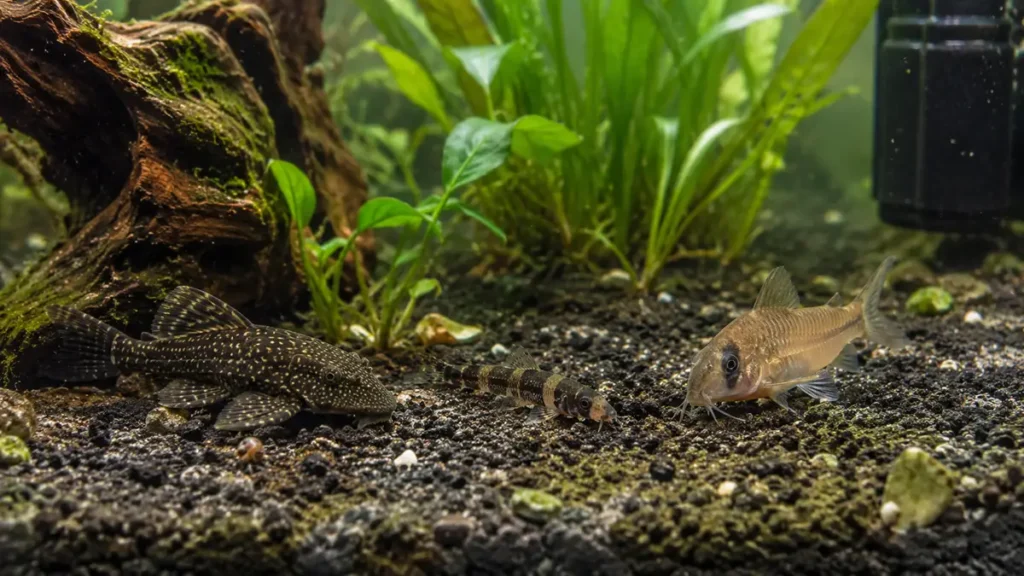
Here’s something most freshwater tank bottom feeders roundups skip: these fish forage directly in the layer of the tank where waste settles and decomposes, which is also where ammonia spikes hit hardest.
Unionized ammonia starts harming fish around 0.05 mg/L and turns lethal near 2.0 mg/L (University of Florida IFAS Extension, Francis-Floyd & Watson, “Ammonia in Aquatic Systems”).
A small tank has less water volume to dilute a spike. That’s exactly why picking the best bottom feeder fish for small tank setups also means picking a species with a genuinely light bioload, not just a small adult size.
Do I Need a Bottom Feeder in My Fish Tank?
Short answer: no, not strictly. If you’re asking do I need a bottom feeder in my fish tank, know upfront that they don’t replace gravel vacuuming or water changes.
A cory or oto eats leftover food and grazes algae, but it doesn’t process fish waste for you. Add one because you like the behavior and the look, not as a substitute for maintenance.
What Are Good Bottom Feeders for a Freshwater Tank — Setup Tips
If you’re wondering what are good bottom feeders for a freshwater tank setup-wise, the answer starts with substrate. Corydoras barbels are sensitive, so use sand or smooth, rounded gravel — sharp substrate can wear down or infect them over time.
Add caves, driftwood, and plants for cover, since every species on this list is a shy forager, not an open-water swimmer.
Best Bottom Feeder Fish for Small Tank Pets at Home — Sourcing Tips
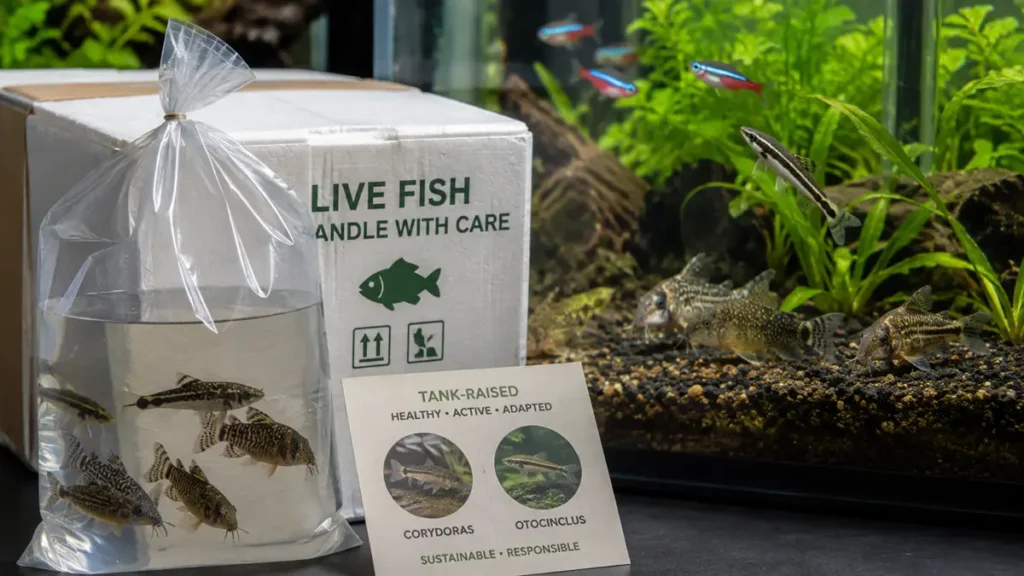
When you’re picking the best bottom feeder fish for small tank pets at home, ask where the fish were bred before you ask anything else. Wild-caught otocinclus, for instance, are rated a species of “Least Concern” by the IUCN Red List — they’re not endangered — but wild imports still arrive more stressed and gut-depleted than tank-raised stock.
That’s a big part of why new otos are harder to establish than tank-bred corydoras.
If you’d rather start with tank-raised stock than take a chance on a wild-caught batch, The Shrimp Farm’s freshwater fish selection is worth a look — it’s where I’d point a reader shopping online rather than at a big-box aisle.
Freshwater Fish Bottom Feeders — Feeding Basics
Freshwater fish bottom feeders need sinking foods, not flakes that never make it past the fish in the middle of the tank. Sinking wafers, blanched vegetables, and frozen bloodworms dropped near their hiding spots work far better than anything that floats.
Feed once daily and clear out uneaten food within a couple of hours to protect the water quality point above.
Fish Tank Bottom Feeders — Mistakes to Avoid
The single biggest fish tank bottom feeders mistake is adding them to a brand-new aquarium. Otos in particular rely on an existing biofilm and algae layer that a freshly cycled tank simply hasn’t grown yet, and plenty of them die of slow starvation in their first few weeks for exactly that reason.
Wait until your tank has been running for a few months before adding any grazing species.
FAQ
What animals are bottom feeders in an aquarium?
Corydoras, loaches, otocinclus, and plecos are the classic fish; shrimp and snails are common non-fish bottom dwellers too.
What is the smallest bottom feeder fish for a nano tank?
The pygmy corydoras (Corydoras pygmaeus), at under an inch fully grown.
Do I need a bottom feeder in my fish tank?
No — they help with leftover food and algae, but they don’t replace regular water changes or gravel vacuuming.
What are good bottom feeders for a freshwater tank under 10 gallons?
Pygmy corydoras or dwarf Corydoras habrosus are the safest picks; otos and kuhli loach need more room.
Are plecos good bottom feeder fish for small tanks?
Generally no — even bristlenose plecos need 20+ gallons once mature.
What’s the single best bottom feeder fish for small tank builds overall?
For a true nano tank, pygmy corydoras are the safest all-around pick — small, hardy, and easy to find tank-raised.
Best bottom feeder fish for small tank pets at home — where should I buy them?
Tank-raised stock from a local fish store or a reputable online seller settles in faster than wild-caught imports.
What do freshwater fish bottom feeders eat?
Sinking wafers, blanched vegetables, and frozen foods dropped near the substrate — not flakes.
Next Steps: Resources You Should Read
Related FishioHub reading
- Best Algae-Eating Fish for a Freshwater Aquarium
- What Do Cory Catfish Eat?
- Best Freshwater Fish for a Fish Tank
Scientific references
- Kramer, D.L. & McClure, M. (1980). “Aerial respiration in the catfish, Corydoras aeneus (Callichthyidae).” Canadian Journal of Zoology, 58(11), 1984–1991.
- Francis-Floyd, R. & Watson, C. University of Florida IFAS Extension. “Ammonia in Aquatic Systems” (FA16/FA031).
- IUCN Red List of Threatened Species. Otocinclus affinis assessment.
USA aquarium resources
- Shop tank-raised freshwater fish at The Shrimp Farm — a source for tank-raised stock if your local fish store doesn’t carry the smaller species.
Closing
A small tank doesn’t mean a boring bottom. Once you know which species actually count as the best bottom feeder fish for small tank setups, pick the right one for the size you actually have — and you’ll spend less time chasing water quality problems and more time watching them do what they do best, quietly working the glass.
Was this guide helpful?
First-Hand Experience
Based on animals I've personally kept and bred - not summarized from other articles.
Zoological Foundation
Claims are checked against my M.Sc. Zoology training and published aquatic biology research, not recycled aquarium myths.
No Paid Influence
No sponsorship shaped this guide. Affiliate links, if any, are disclosed separately and never hidden.
Kept Current
Errors are corrected as soon as they're found, with the update noted at the bottom of the article.
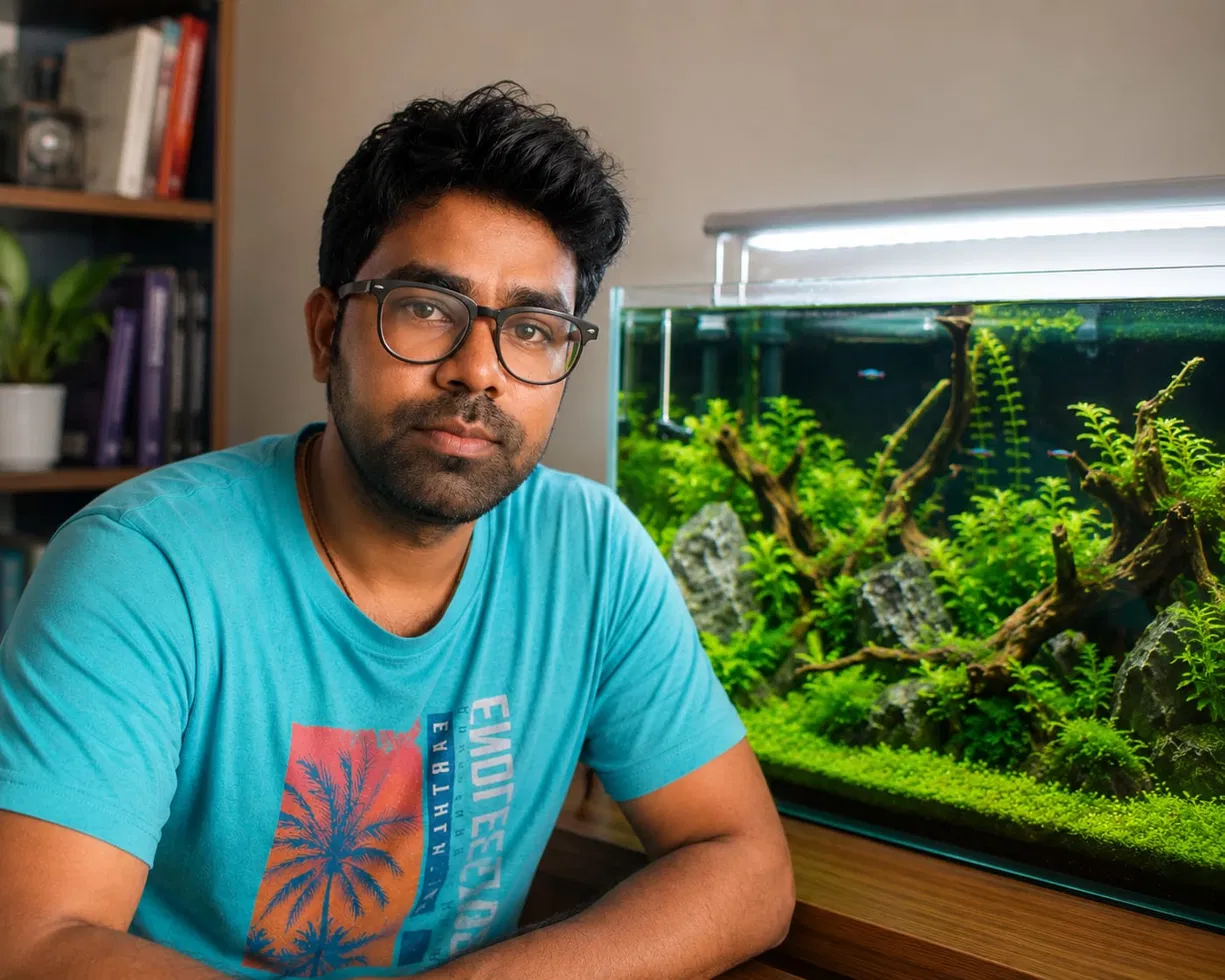
Anil Satak M.Sc. Zoology · Founder, FishioHub
Grew up in a fishing family in India and holds a Master's in Zoology. FishioHub is a one-person operation - every guide is personally researched, kept-tested, and written by Anil. No team, no outsourced writers, no AI-generated content. Read his full bio →