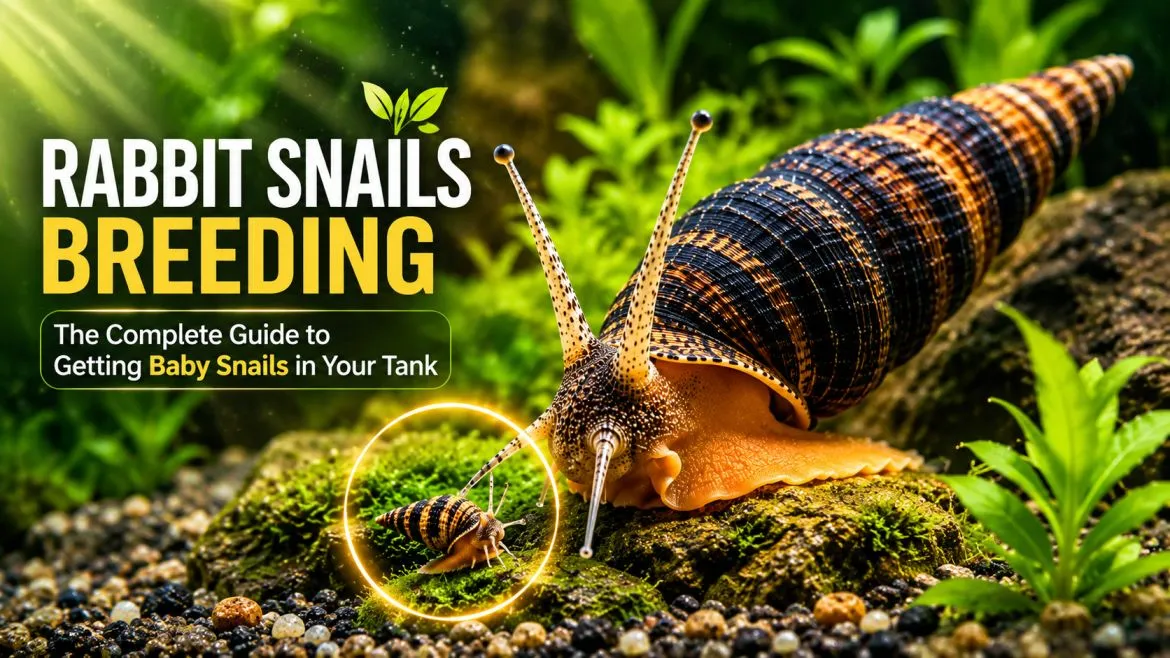
I’ll be honest — when I first got into rabbit snails, I thought breeding them would be a nightmare. I’d already gone through the whole “mystery snail drama” (don’t ask about the 200 eggs I found plastered to my hood), so I was worried about rabbit snails breeding, too. But then something happened that I did NOT expect.
I woke up one morning, checked my 30-gallon planted tank, and there was a tiny, perfectly formed baby rabbit snail just… gliding around. No drama. No clutch of eggs I had to babysit. No frantic Google searches at midnight. Just a little dude living his best life.
That’s when I fell completely in love with rabbit snails breeding. These things are practically magic.
Quick Answer: Rabbit snails (Tylomelania sp.) are livebearers — they don’t lay traditional egg clusters. Instead, they give birth to a single, fully-formed juvenile wrapped in a small white egg sac. Breeding rabbit snails requires a male and female (they are NOT hermaphrodites), stable warm water (76–84°F), and a well-fed, established tank. Given the right conditions, breeding rabbit snails can happen almost on its own — without any intervention from you.
What You’ll Get in This Post
- 🐌 Why rabbit snails reproduce differently than almost every other aquarium snail
- 🌡️ Exact water parameters that trigger successful rabbit snails breeding
- 🥗 Feeding tips that condition snails for reproduction
- 📋 Comparison of color morphs (yellow, golden, orange) and their breeding behavior
- ⚠️ Mistakes that stop rabbit snails from reproducing (I made most of these)
- ❓ FAQ section covering every “do rabbit snails…” question you’ve ever searched
Jump to: How They Reproduce | Tank Setup | Feeding | Morphs | Troubleshooting | FAQ
How Do Rabbit Snails Reproduce? (This Part Will Surprise You)
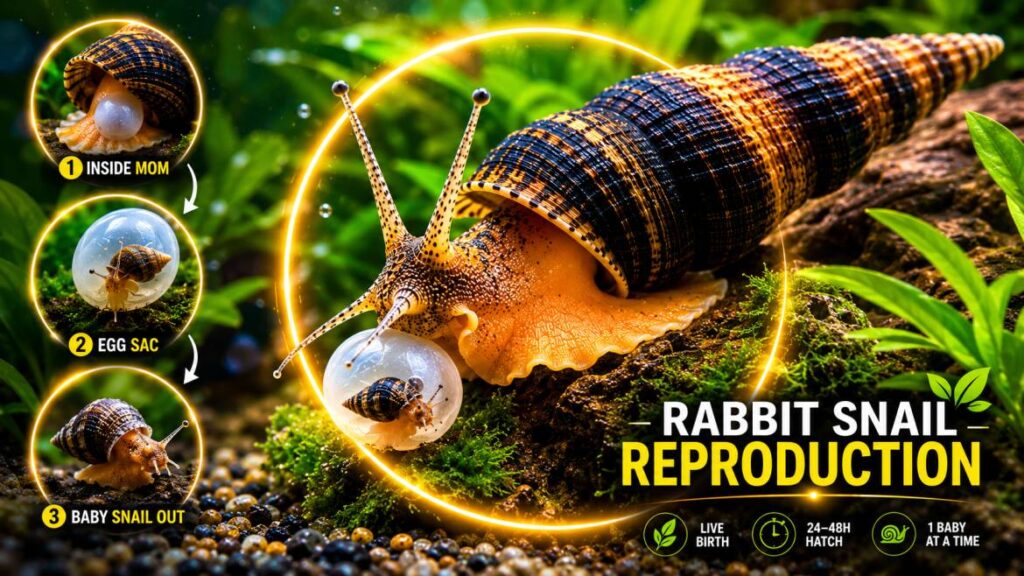
Most people Google “rabbit snail eggs” expecting to find clusters of eggs on the glass or on plants. If that’s you — here’s the plot twist: rabbit snails don’t lay eggs the way you’d expect.
They are ovoviviparous, meaning the egg develops inside the female’s body and she gives birth to a single live juvenile encased in a small, translucent white egg sac. Within 24–48 hours, the tiny snail chews through that sac and emerges. Fully formed. Ready to eat. Absolutely adorable.
This is a huge difference from pest snails like bladder snails or Malaysian trumpet snails that can flood your tank with dozens of offspring. With rabbit snails, reproduction is slow and deliberate — you’ll typically see one baby every 4–6 weeks per female.
Do rabbit snails lay eggs? Not in the traditional sense. Rabbit snails are livebearers that produce one fully-developed juvenile at a time, enclosed in a small white egg sac. The juvenile hatches within 24–48 hours. They do not produce egg clutches like mystery snails.
Do Rabbit Snails Reproduce Asexually?
I have seen this question trending so many times on Google about these snails, and the answer is no — rabbit snails do NOT reproduce asexually. They require both a male and a female. Unlike some snail species that are hermaphroditic (looking at you, garden snails), Tylomelania has separate sexes. You cannot tell males from females by looking at them, which means you need to keep a small group of 3–5 individuals to ensure you have both sexes present.
Do Rabbit Snails Reproduce in Freshwater?
Absolutely — in fact, freshwater is their only habitat. Native to the ancient Lake Poso and surrounding lakes in Sulawesi, Indonesia, rabbit snails have adapted to warm, mineral-rich freshwater. They reproduce freely in freshwater aquariums as long as conditions match their natural environment. No brackish water needed, no special triggers — just stable chemistry and warmth.
Rabbit Snails Breeding: Tank Setup That Actually Works
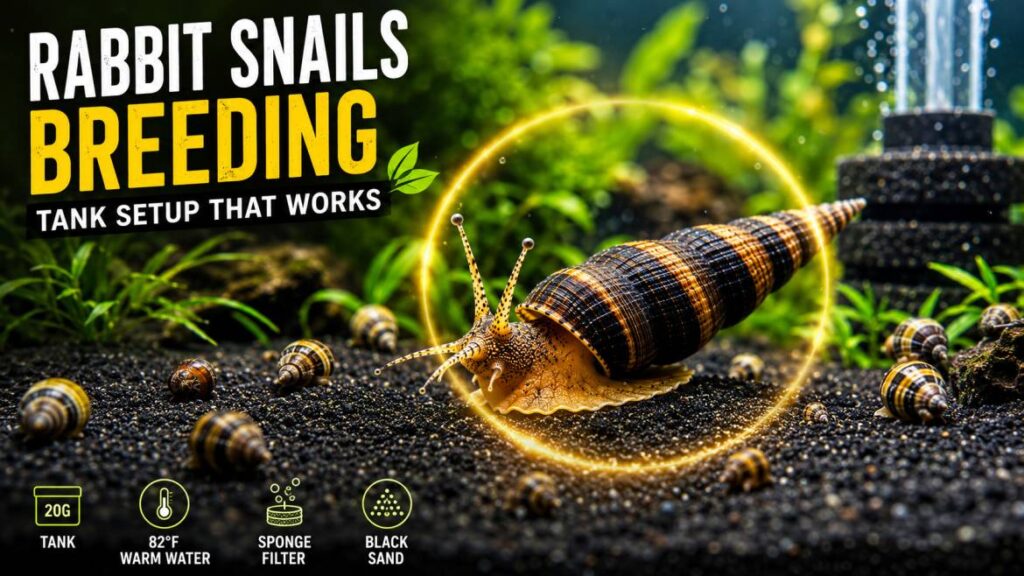
Tank Size
A 20-gallon long is the sweet spot for breeding rabbit snails. They need floor space to roam, and honestly, a larger footprint means more grazing surface — a well-fed snail is a breeding snail. In the US aquarium hobby, 20–29 gallon tanks are the most popular choice for dedicated snail setups, and for good reason.
Water Parameters for Breeding Rabbit Snails
This is where most people go wrong. Rabbit snails come from ancient rift lakes in Sulawesi — environments known for very stable, warm, hard water. Trying to breed them in soft, acidic water is like trying to grow cacti in a swamp. It just won’t happen.
| Parameter | Ideal Range for Rabbit Snails Breeding | Why It Matters |
| Temperature | 76–84°F (24–29°C) | Warmer temps accelerate metabolism and breeding |
| pH | 7.3–8.5 | Mimics alkaline Sulawesi lake conditions |
| Hardness (GH) | 6–15 dGH | Calcium critical for shell formation |
| KH (carbonate) | 5–12 dKH | Prevents pH crashes |
| Ammonia/Nitrite | 0 ppm | Non-negotiable — stress stops reproduction |
| Nitrate | < 20 ppm | Low nitrates = healthier, more active breeders |
🔬 Scientific Fact: A 2019 study published in the Journal of Molluscan Studies documented that Tylomelania species from Lake Poso exist in water temperatures between 27–31°C (80.6–87.8°F) — significantly warmer than typical tropical fish tanks. American hobbyists using a dedicated heater set to 82°F report noticeably more successful breeding rabbit snails outcomes. (Source: Von Rintelen & Glaubrecht, Journal of Molluscan Studies)
Substrate Choice
Use a substrate of fine sand or fine gravel that is at least 2 inches deep. Rabbit snails spend most of the day burrowing through this substrate in search of food. I have observed that snails become stressed in tanks without a substrate. That is why I use black sand in my personal setup—it makes the color of their shells look beautiful and keeps them active.
Filtration
Use a sponge filter. Not because it’s the “budget option,” but because it’s genuinely the best choice. Rabbit snail babies are tiny and can be sucked into HOB filters. Sponge filters also grow beneficial biofilm that newly hatched juveniles graze on. Win-win.
Feeding for Breeding: What to Feed (And What NOT To Skip)
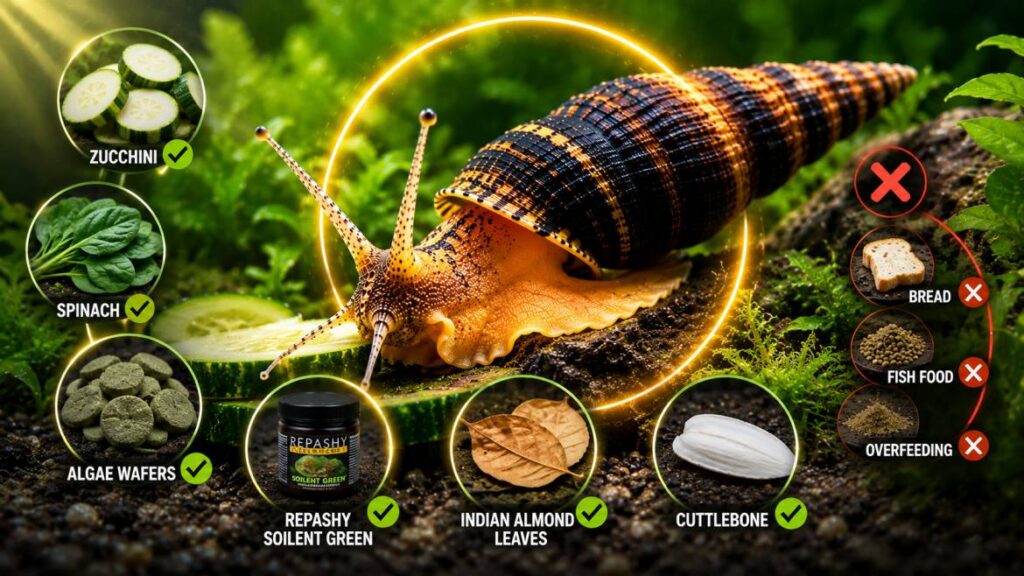
I learned this the hard way: a rabbit snail that’s underfed will not breed. Period. In the wild, these snails have access to biofilm, decaying leaves, soft algae, and mineral-rich sediment 24/7. Replicate that, and you’re golden.
Best foods for rabbit snails breeding:
- Blanched vegetables: zucchini, spinach, cucumber — offered 2–3x per week
- Algae wafers: their #1 staple; sink one every other day
- Repashy Soilent Green: this stuff is like crack for rabbit snails; a calcium-rich gel food that visibly improves shell quality and activity levels
- Dried Indian almond leaves or mulberry leaves: promotes natural foraging behavior and adds tannins that many Sulawesi snails appreciate
- Cuttlebone: Always keep a small piece in the tank. Calcium is non-negotiable for shell health and breeding readiness.
🔬 Scientific Fact: Research on gastropod reproduction consistently shows that calcium availability directly affects reproductive output. A study in Aquaculture found that freshwater snails fed calcium-supplemented diets showed up to 40% higher reproductive rates compared to control groups. (Source: Calcium and Freshwater Gastropod Reproduction, Aquaculture Research, 2018)
Yellow, Golden & Orange Rabbit Snails Breeding: Are There Differences?
Great news for color morph collectors: yellow rabbit snails breeding, golden rabbit snails breeding, and orange rabbit snails breeding all follow the same rules. These are all varieties of Tylomelania and reproduce identically. The color differences are cosmetic — driven by pigmentation genetics — not behavioral.
That said, there are a few things worth knowing:
- Yellow rabbit snails (Poso Yellow) are the most commonly available in US stores and the easiest to source in groups of 5+
- Golden rabbit snails tend to be slightly more expensive but are equally prolific breeders given proper conditions
- Orange rabbit snails are the rarest of the three in American pet stores; Petco and PetSmart rarely carry them, but they’re available through hobbyist groups like the Aquatic Arts community and specialty vendors on Aquabid
🔬 Scientific Fact: Tylomelania includes over 50 documented species endemic to Sulawesi, making it one of the most species-rich freshwater gastropod genera in the world. (Source: Von Rintelen et al., 2010, Zoological Journal of the Linnean Society)
Can Rabbit Snails Breed on Their Own? (The Honest Answer)
Yes — and no.
Can rabbit snails breed on their own without special intervention? Yes, if you have both sexes and the right conditions, they will breed without you doing anything special. No triggering, no seasonal adjustments, no moon phases.
But they cannot breed without a mate. If you only bought one rabbit snail — which happens more than you’d think, because they’re often sold singly in US fish stores — you’ll be waiting forever. Buy a group of at least 4–5. Statistically, you’ll almost certainly have at least one pair.
Why Aren’t Mine Breeding? Common Mistakes & Fixes
I’ve been in aquarium Facebook groups and Reddit threads (r/AquaticSnails has a great community, by the way) long enough to see the same mistakes over and over. Here’s what kills rabbit snail breeding:
- New tank syndrome — Rabbit snails need a fully cycled, established tank with mature biofilm. Don’t expect breeding in a tank under 3 months old.
- Water too cold — Below 76°F, metabolism slows. Below 72°F, breeding stops almost entirely. Check your heater with a reliable thermometer, not just the heater’s built-in dial.
- Soft or acidic water — This is the #1 silent killer. Many US municipal water supplies run soft. Test your GH/KH. If your GH is below 6, add Seachem Equilibrium or aragonite to a filter sock.
- Single snail — This one should be obvious, but you’d be surprised. Stores sell them individually. Buy 4–5.
- Overcrowded tank with aggressive fish — Cichlids, puffers, and loaches will harass or eat rabbit snails. Any nipping stress shuts down breeding fast.
- Not enough food — If snails are always grazing but never finding anything, they’re in survival mode, not breeding mode.
Caring for Baby Rabbit Snails
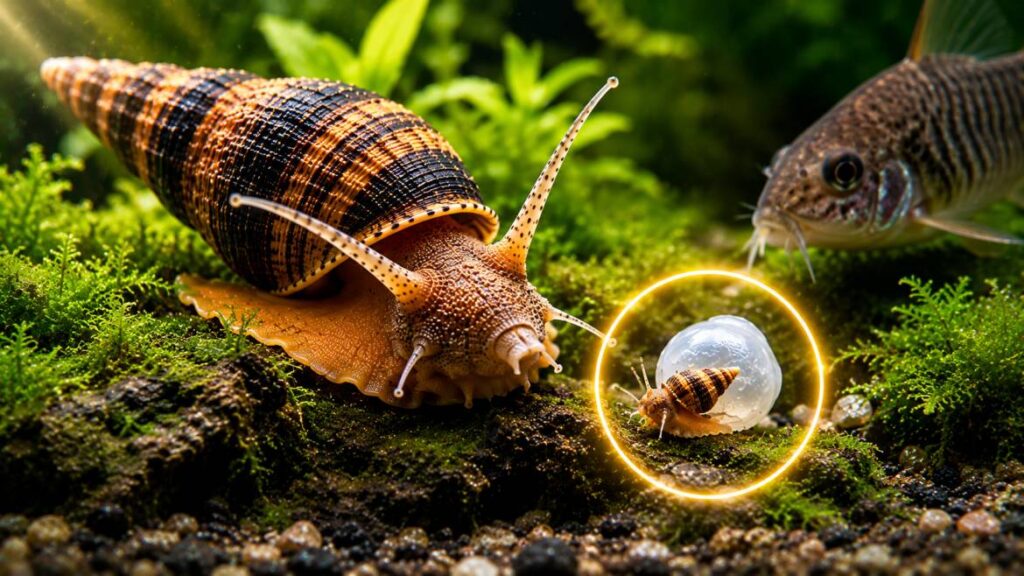
When you finally spot that tiny white egg sac on the substrate — try not to squeal. (I did. No shame.)
Here’s what to do:
- Don’t move the sac — babies are fine where they are
- Ensure no strong currents near the bottom where babies hatch
- Offer micro-sized food like powdered spirulina or Hikari First Bites near the substrate
- Keep nitrates low — babies are more sensitive to water quality than adults
- Watch for tank mates — even “peaceful” fish like corydoras have been known to mouth baby snails out of curiosity
Baby rabbit snails grow slowly. Don’t expect them to reach adult size for 6–12 months. But they’re incredibly hardy — survival rates for babies in a well-maintained tank are high.
Comparison: Rabbit Snail Breeding vs. Other Popular Aquarium Snails
| Snail Type | Breeding Method | Eggs per Event | Ease of Breeding | Risk of Overpopulation |
| Rabbit Snail | Livebearer (1 juvenile) | 1 | Moderate | Very Low |
| Mystery Snail | Egg clutch above waterline | 40–200 | Easy | Low-Medium |
| Nerite Snail | Eggs that won’t hatch in freshwater | N/A (won’t breed) | Very Hard | None |
| Bladder Snail | Self-fertilizing hermaphrodite | 10–40 | Automatic | Very High |
| MTS (Trumpet) | Livebearer | 2–10 | Automatic | High |
This table tells you everything. Rabbit snails hit the sweet spot: they do breed, but they’ll never overrun your tank. In a 30-gallon tank with 6 snails, you might get 8–12 babies per year. That’s a manageable, healthy population.
FAQ: Rabbit Snails Breeding Questions Answered
Do rabbit snails lay eggs?
No. Rabbit snails are livebearers. They give birth to a single juvenile inside a small white rubbery egg sac. The baby hatches from the sac within 24–48 hours, fully formed.
How do rabbit snails reproduce?
Rabbit snails reproduce sexually — a male fertilizes a female internally. The female carries a developing embryo and gives birth to one live juvenile at a time, roughly every 4–6 weeks.
Can rabbit snails breed on their own?
Not without a mate of the opposite sex. Rabbit snails are not hermaphrodites and cannot self-fertilize. You need at least one male and one female — buying a group of 4–5 ensures you have both.
Do rabbit snails reproduce in freshwater?
Yes, exclusively. They are strictly freshwater snails and breed freely in freshwater aquariums that match their preferred parameters (warm, hard, alkaline water).
Do rabbit snails reproduce asexually?
No. Unlike some snail species, rabbit snails require sexual reproduction with both a male and female present.
How long does it take for a rabbit snail to give birth?
After mating, the gestation period is approximately 4–6 weeks. Females produce one offspring at a time.
What is a rabbit snail egg sac?
It’s a small, white, rubbery pouch that encases the fully formed baby snail at birth. It looks a bit like a tiny white pill. The juvenile chews its way out within 24–48 hours.
How many babies do rabbit snails have at once?
One. Just one — per birth event, per female. This is what makes them such manageable breeders compared to other aquarium snails.
Next Steps: Resources You Must Read
Want to build a thriving invertebrate tank? These posts are your roadmap:
- 🦐 Why Did My Shrimp Turn White and Die? — Water quality issues that kill shrimp will kill rabbit snails too — learn the warning signs
- 🐌 Mystery Snail Care Guide — The ultimate guide to the most popular aquarium snail in the US, with care, feeding, and breeding tips
- 🦐 Can Guppies Live With Shrimp? — If you’re building a community tank with invertebrates, this is essential reading
Final Word: The Slow Magic of Rabbit Snails Breeding
Here’s what I love most about rabbit snails breeding — it’s not a spectacle. You don’t wake up to 200 eggs on your hood or an explosion of snail babies overwhelming your tank. It’s quiet. Unhurried. One tiny life appears, and suddenly your tank feels a little more alive.
If you’ve been struggling to get your rabbit snails to reproduce, go back to basics: warm water, hard water, good food, a group of 4–5. That’s genuinely it. No tricks. No moon phases. No aquarium voodoo.
And the first time you find that tiny baby gliding across your substrate — trust me, you’ll forget every bit of frustration that came before it. 🐌
Was this guide helpful?
First-Hand Experience
Based on animals I've personally kept and bred - not summarized from other articles.
Zoological Foundation
Claims are checked against my M.Sc. Zoology training and published aquatic biology research, not recycled aquarium myths.
No Paid Influence
No sponsorship shaped this guide. Affiliate links, if any, are disclosed separately and never hidden.
Kept Current
Errors are corrected as soon as they're found, with the update noted at the bottom of the article.
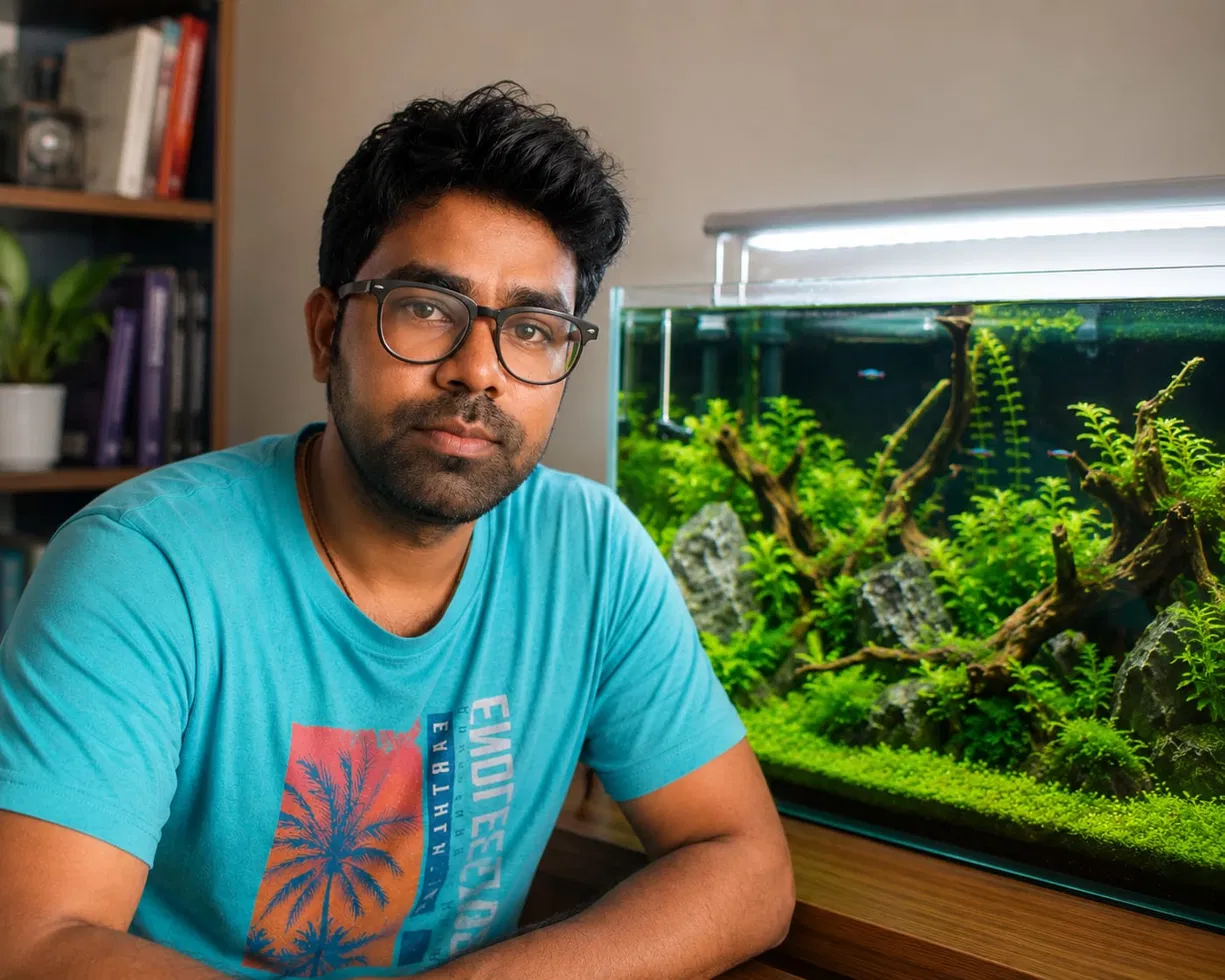
Anil Satak M.Sc. Zoology · Founder, FishioHub
Grew up in a fishing family in India and holds a Master's in Zoology. FishioHub is a one-person operation - every guide is personally researched, kept-tested, and written by Anil. No team, no outsourced writers, no AI-generated content. Read his full bio →