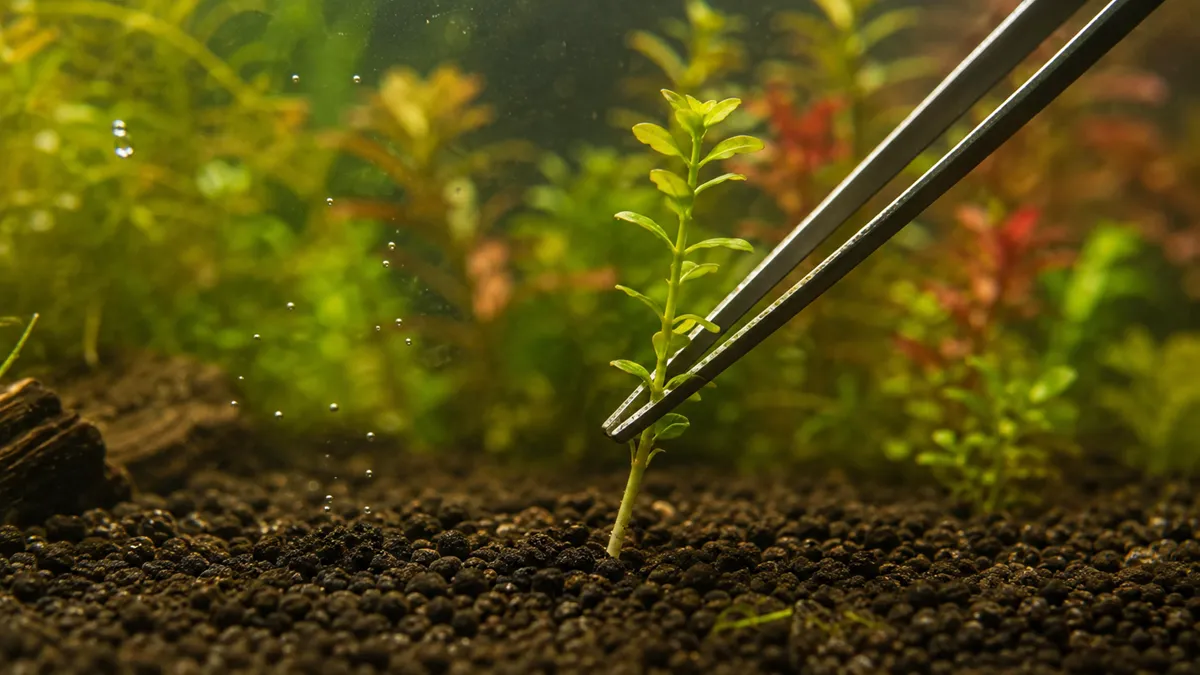
Here’s how to plant stem plants in aquarium substrate so they anchor instead of drifting to the surface: trim the bottom of the stem clean, strip the lower leaves, and push each stem 2–4cm into the substrate one at a time.
Plant them straight from the store pot, all bunched together, and you’re just delaying the moment you’re chasing loose stems around the tank with a net.
Sometimes I even laugh at the mistakes I made—like how my initial stem plants kept floating to the surface because I hadn’t anchored them properly. Planting them in dense clusters also blocked the light, causing the lower leaves to rot and disintegrate. It was a truly amateurish mistake.
Quick Facts: If You Only Remember 3 Things
- Stem plants root from leaf nodes, not from a single crown. Depth and node contact with the substrate matter more than the plant’s overall height.
- Never plant a bare, un-trimmed store bunch as-is. Cut the bottom inch off first. The fresh cut end is what actually roots.
- Stem plants feed mostly from the water column, not the substrate. Liquid fertilizer matters more here than root tabs.
How to Prepare Plants for Aquarium Tanks Before You Touch the Substrate
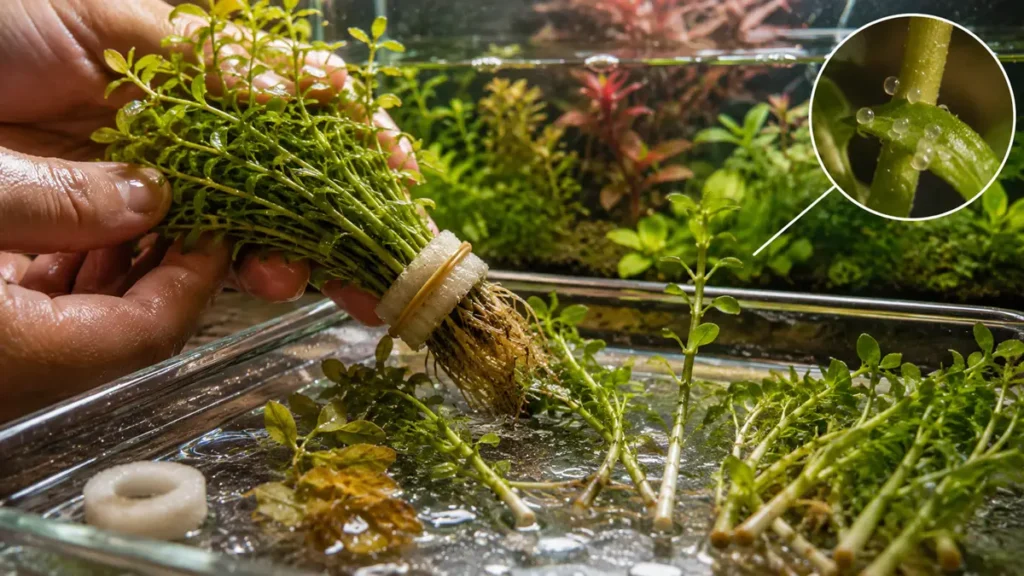
How to prepare plants for aquarium success starts before a single stem goes near your tank. Rinse every bunch under cool water first.
Check the leaf undersides and stem joints for snail eggs — small, jelly-like clusters that hitchhike in from the nursery. Remove the rubber band or foam collar at the base too, since stems left inside it will rot from lack of water flow.
Trim off any yellowed or mushy leaves before planting. Decaying tissue buried in the substrate is one of the fastest ways to spike ammonia in a newly planted tank.
Finally, snip a clean, fresh cut about 1cm from the bottom of each stem. The plant roots from that fresh wound, not from wherever it happened to be cut at the nursery weeks ago.
How to Plant Stem Plants in Aquarium Substrate: Step-by-Step
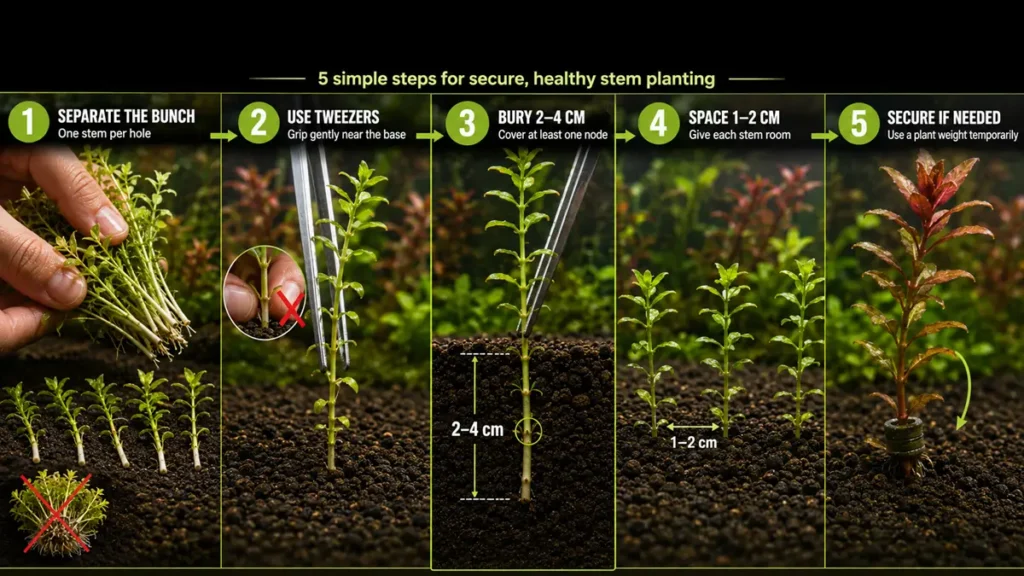
This is the part everyone actually came here for, so here’s exactly how to plant stem plants in aquarium substrate without watching half of them pop back out by morning.
1. Separate the bunch. Never plant stems in one dense clump. Pull them apart so each one goes into its own hole — a packed bunch traps debris at the base and rots.
2. Use tweezers, not fingers. Aquascaping tweezers let you push the stem down to the exact node you want buried without crushing the stalk in the process.
3. Bury 2–4cm deep. Push the trimmed end down until at least one leaf node sits under the substrate. Go shallower than 1cm and the first current from your filter will lift it right back out.
4. Space them 1–2cm apart. Tight spacing looks lush on day one but blocks light and flow at the base — exactly where melting starts a week later.
5. Weight floaters if needed. Hollow-stemmed species like Ludwigia sometimes refuse to stay down. Wrap a small lead plant weight around the base for the first week while it anchors itself.
That five-step sequence is really the whole answer to how to plant stem plants in aquarium substrate — everything else in this guide is what happens after.
How to Plant Live Plants in Fish Tank Setups the Right Way (Where Stem Plants Differ)
Knowing how to plant live plants in fish tank setups generally only gets you partway here, because stem plants don’t follow the same rules as everything else in your aquarium.
Rhizome plants like Java fern or Anubias should never be buried. Their rhizome rots if substrate covers it, so they’re tied to hardscape instead.
Rosette plants like Amazon sword get their roots buried but the crown left exposed. Stem plants are the opposite of both — they’re meant to go deep, node and all, because that buried section is exactly where the new root system grows from.
Treat a stem plant like a sword plant — just resting the base on top of the substrate — and you’ll watch it drift free within a day.
How to Grow Stem Plants in Aquarium Water Long-Term
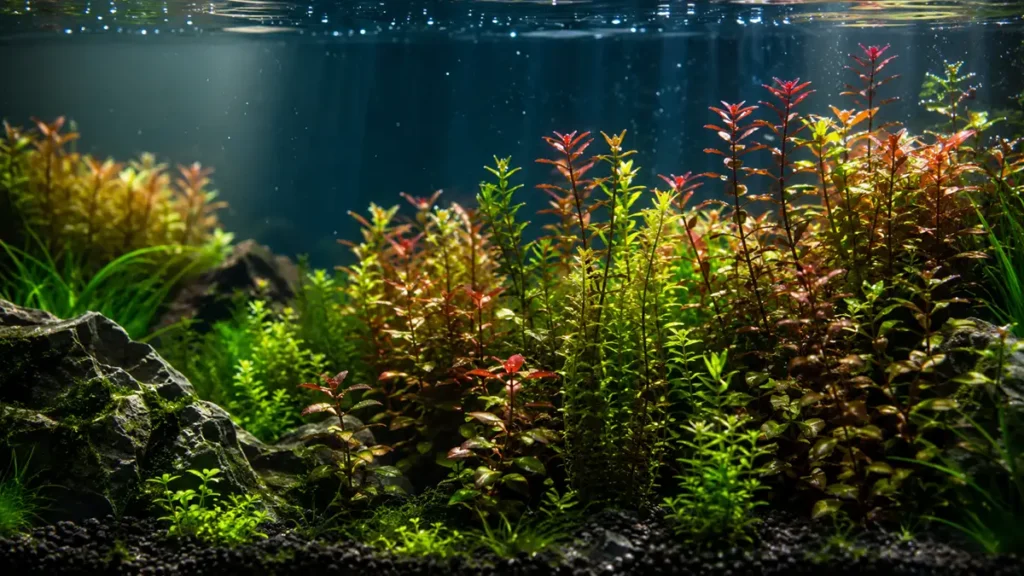
Getting them planted is step one. How to grow stem plants in aquarium conditions that keep them thriving for months is a different question entirely.
Stem plants absorb most of their nutrients directly through their leaves and stems rather than their roots. A liquid all-in-one fertilizer dosed two to three times a week matters more here than root tabs ever will.
Lighting matters just as much. Most stem plants need at least moderate light — roughly 30 to 50 PAR at the substrate — to avoid getting “leggy,” with long, stretched-out gaps between leaves as the plant reaches for the surface.
Regular trimming isn’t just cosmetic maintenance either. Cutting the top of a stem removes the growing tip and triggers the plant to push out new side shoots below the cut, which is the actual mechanism behind a fuller, bushier look.
Aquascaping Stem Plants for Depth, Color, and Movement
Aquascaping stem plants is where this hobby gets genuinely creative. Unlike carpeting or rhizome species, stems give you height, color, and texture you can arrange like a living hedge.
Group species by growth rate so faster growers like Rotala don’t shade out slower ones like Ludwigia planted next to them. Plant in diagonal or triangular clusters rather than one flat back row — it reads as far more natural from the front glass.
How to Aquascape Stem Plants Without a Flat, One-Dimensional Look
The easiest way to aquascape stem plants like a living hedge instead of a static backdrop is to vary the trim height across the row. Taller stems in the far back corner, tapering down toward the midground, creates real depth even in a standard rectangular tank.
How to Propagate Stem Plants Aquarium Hobbyists Actually Use
Once established, how to propagate stem plants aquarium keepers rely on is almost embarrassingly simple: cut a healthy top section, strip the bottom inch of leaves, and replant it exactly like a fresh stem.
This works because stem plants form what’s called adventitious roots — new roots that develop directly from stem tissue at the leaf nodes, rather than from an existing root system.
A peer-reviewed review of cutting propagation describes this as a cell-reprogramming process triggered by the plant hormone auxin at the wound site. It’s the same biological mechanism commercial nurseries rely on for cloning stock plants.
Here’s the part most planting guides skip entirely: don’t dump extra trimmings outside. According to the University of Florida’s IFAS Center for Aquatic and Invasive Plants, Hygrophila polysperma — a common aquarium stem species — roots so readily at its stem nodes that a single patch in Florida’s Lake Tohopekaliga spread from 0.1 acre in 1979 to 10 acres just one year later.
That same species was first brought into the U.S. as an aquarium plant around 1945, cultivated by an Ohio dealer under the name “oriental ludwigia”. It’s now on the U.S. Federal Noxious Weed List.
Bag your trimmings for the trash, or compost them. Never rinse them down a drain or release them near a local waterway.
Stem Plants vs. Rhizome vs. Carpeting Plants: Planting Method at a Glance
| Plant Type | Planting Depth | Feeds Primarily From | Example Species | Most Common Mistake |
| Stem plants | 2–4cm, buried at a node | Water column (leaves/stem) | Rotala, Ludwigia, Hygrophila | Planting in one dense clump |
| Rhizome plants | Not buried — tied to hardscape | Water column | Java fern, Anubias | Burying the rhizome itself |
| Carpeting plants | 1–1.5cm, tiny portions | Substrate roots | Monte Carlo, dwarf hairgrass | Planting too shallow |
This is really the fastest way to see how to plant stem plants in aquarium tanks differently from everything else you might already be growing.
FAQ: How to Plant Stem Plants in Aquarium Tanks
How to plant stem plants in aquarium substrate step-by-step?
Trim the bottom of each stem, strip the lower leaves, and bury it 2–4cm deep individually — never as a tight, un-separated bunch straight from the store.
How deep do you plant stem plants in an aquarium?
Bury the trimmed end 2–4cm into the substrate, deep enough that at least one leaf node sits below the surface. That node is where new roots will form.
Why do my stem plants keep floating after planting?
The most common cause is planting too shallow or leaving the stem un-trimmed, so there’s no fresh, deep-anchored cut end for the current to leave alone.
How to propagate stem plants aquarium keepers actually use?
Cut a healthy top section a few inches long, strip the bottom leaves, and replant it. The cut node develops its own roots within one to two weeks.
Do stem plants need CO2 to grow well in an aquarium?
No, but growth is noticeably slower and colors duller without it. Many stem species survive fine on liquid carbon and strong lighting alone — they just don’t thrive.
How often should you trim aquarium stem plants?
Roughly every two to four weeks once established. Trimming the growing tip is what triggers bushier side-shoot growth instead of one long, leggy stem.
Can stem plants grow floating instead of planted in substrate?
Yes — most will grow floating with roots trailing in the water column, though they typically end up leggier and less full than when properly rooted.
Is it a problem to throw aquarium stem plant trimmings outside?
Yes, in many U.S. states. Several common aquarium stem species are classified as noxious or invasive once established in local waterways, so trimmings belong in the trash or compost — never outdoors near water.
Next Steps: Resources You Should Read
Related FishioHub reading:
- How to Plant Freshwater Aquarium Plants — the general planting framework this post builds on
- How to Plant Guppy Grass in Aquarium — a stem plant species deep-dive
- How to Fertilize Aquarium Plants Naturally — water-column feeding, covered in more depth
Scientific references:
- University of Florida IFAS Center for Aquatic and Invasive Plants — Hygrophila polysperma profile, Lake Tohopekaliga spread data, and stem-node rooting behavior.
- University of Florida IFAS Extension Publication AG413 — East Indian hygrophila’s history and regulatory status.
- Peer-reviewed review on adventitious root formation in stem cuttings, published via NCBI PMC.
USA aquarium resources:
- Your state’s Department of Agriculture or Fish & Wildlife extension office — for local invasive-species disposal rules
Closing
Give a stem plant the right depth and a clean cut, and it stops being a fragile store-bought bundle. It starts being a tank fixture you’re trimming back every few weeks just to keep it in check.
That’s really the whole trick behind how to plant stem plants in aquarium tanks that actually last — plant it like you mean for it to stay.
Was this guide helpful?
First-Hand Experience
Based on animals I've personally kept and bred - not summarized from other articles.
Zoological Foundation
Claims are checked against my M.Sc. Zoology training and published aquatic biology research, not recycled aquarium myths.
No Paid Influence
No sponsorship shaped this guide. Affiliate links, if any, are disclosed separately and never hidden.
Kept Current
Errors are corrected as soon as they're found, with the update noted at the bottom of the article.
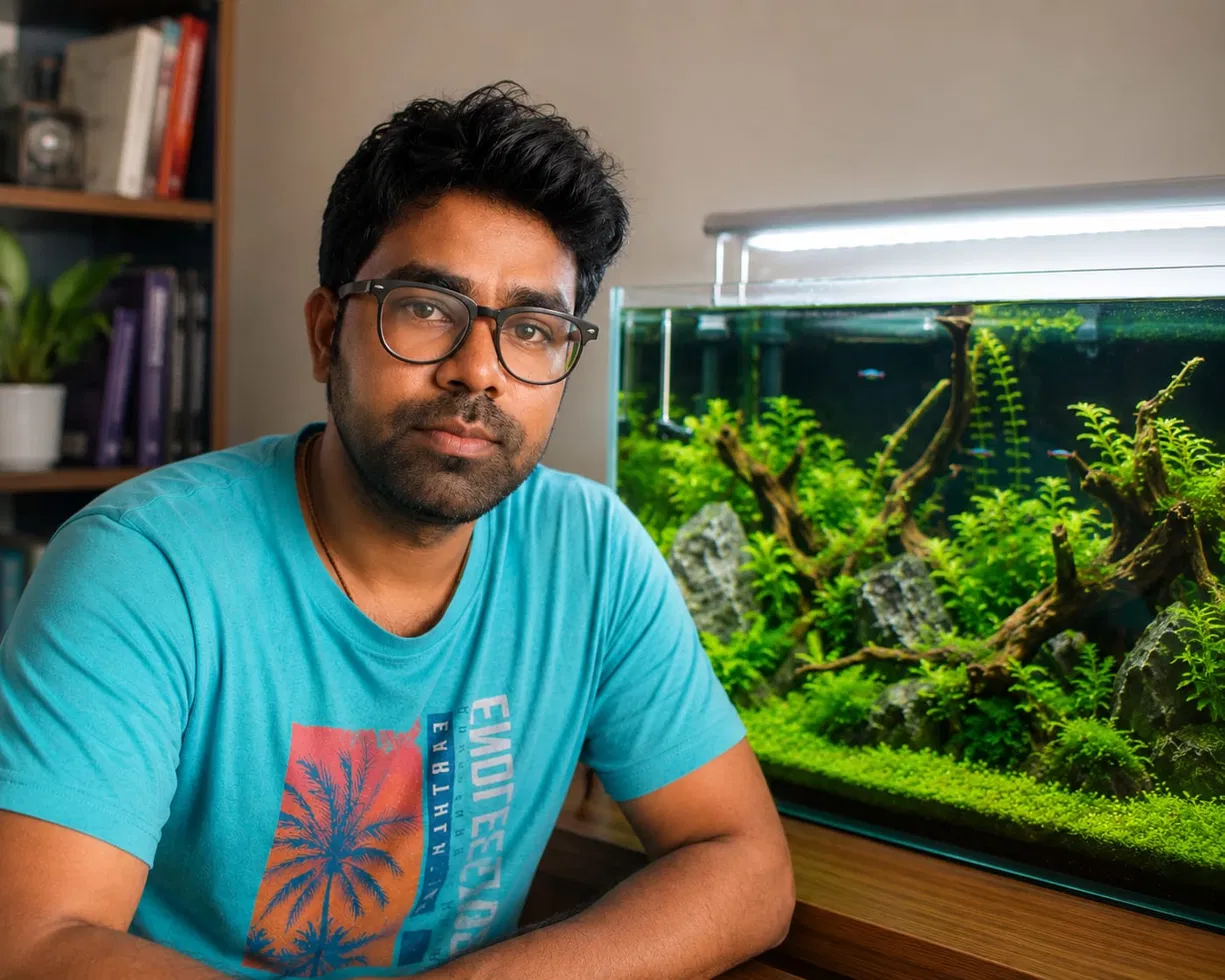
Anil Satak M.Sc. Zoology · Founder, FishioHub
Grew up in a fishing family in India and holds a Master's in Zoology. FishioHub is a one-person operation - every guide is personally researched, kept-tested, and written by Anil. No team, no outsourced writers, no AI-generated content. Read his full bio →