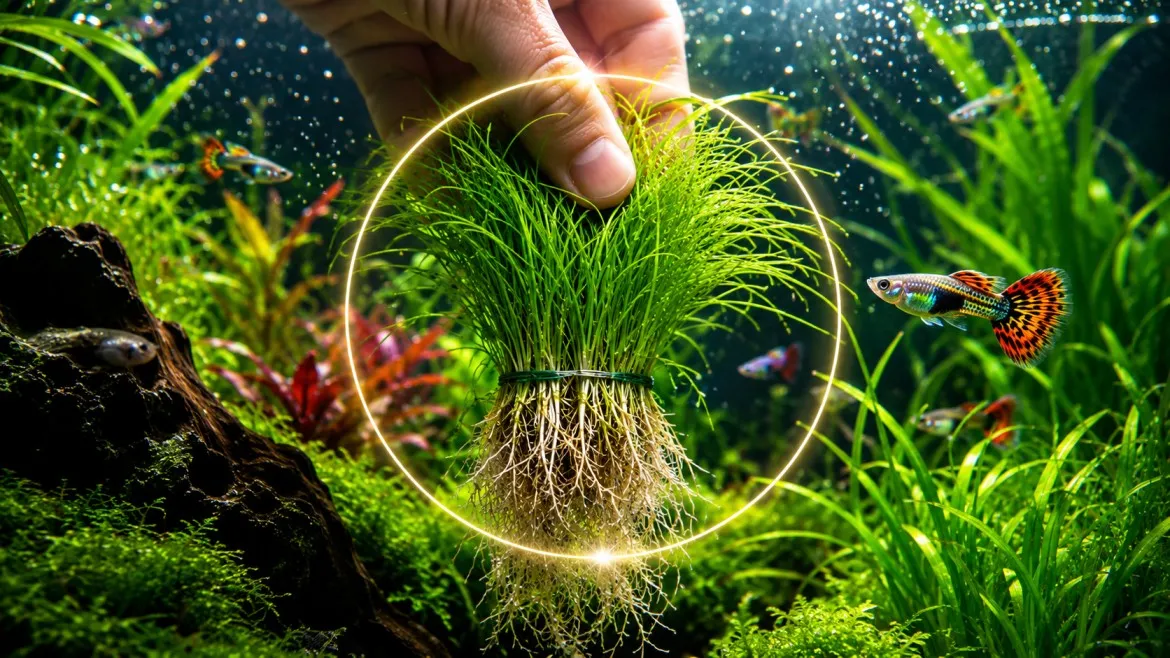
If there’s one aquarium plant I wish I had started using earlier in my fishkeeping journey, it’s guppy grass. When I first added it to a guppy fry tank, I honestly thought it looked like “just another messy floating plant.” But within weeks, I noticed healthier fry survival, clearer water, and less algae stress compared to my other beginner setups.
Learning how to plant guppy grass in aquarium tanks is ridiculously easy — but growing it correctly without turning your tank into a tangled jungle takes strategy.
Whether you keep guppies, shrimp, bettas, mollies, or nano fish, guppy grass can become one of the most useful plants in your aquarium if you know how to plant, trim, and control it properly.
Quick Answer: How to Plant Guppy Grass in Aquarium
Guppy grass can be floated freely or lightly planted into substrate using plant weights, mesh, or small anchors. Unlike rooted plants, guppy grass does not rely heavily on roots to absorb nutrients. It grows fastest in moderate light, stable temperatures between 72–82°F, and nutrient-rich water with gentle flow.
For most beginners, the best method is to float small portions first, then anchor sections later once growth becomes dense.
What You’ll Get In This Post
- What Is Guppy Grass? – Full botanical breakdown and why it has this unusual name
- Guppy Grass Roots: How They Develop – Day-by-day root development timeline
- How to Plant Guppy Grass in Aquarium: 2 Proven Methods – Tested in different tank sizes
- How to Plant Small Leaf Grass in Aquarium – Nano-specific techniques
- How to Grow Guppy Grass Fast – Advanced acceleration techniques
- How to Care for Guppy Grass – Complete daily & weekly maintenance
- Guppy Grass Benefits – Why it transforms your aquarium ecosystem
- Troubleshooting & FAQ – Solutions to common problems
What Is Guppy Grass?
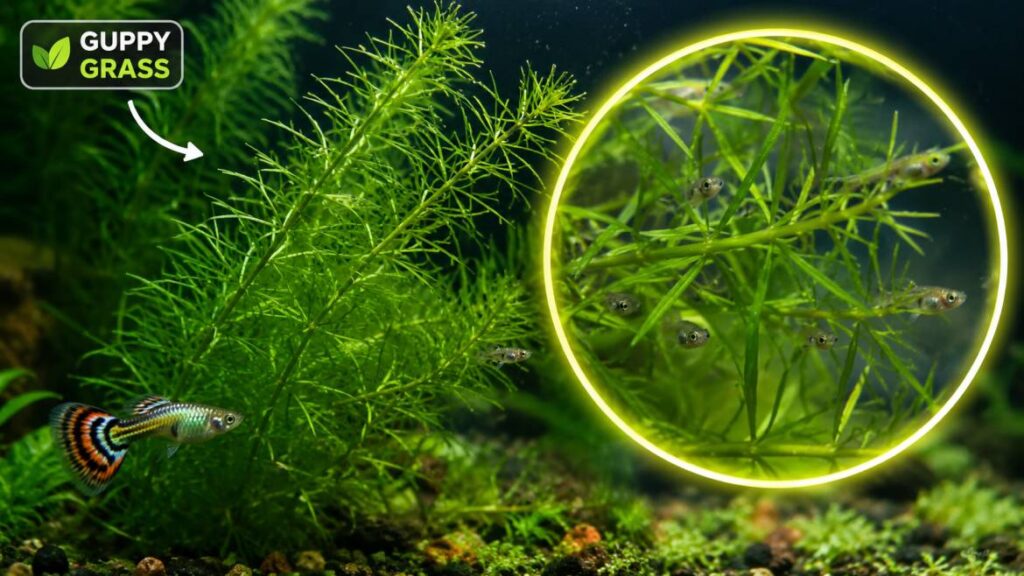
Guppy grass (Najas guadalupensis) is a fast-growing freshwater aquarium plant known for its soft green stems and thin needle-like leaves.
It’s called “guppy grass” because livebearer breeders — especially guppy keepers — use it heavily for fry protection. Baby fish hide inside the dense growth to avoid getting eaten. Unlike carpeting grasses, guppy grass is technically a stem plant, not a true lawn grass.
Why It Became Popular in the USA Aquarium Hobby
In the United States aquarium hobby, guppy grass exploded in popularity because:
- It grows in low-tech tanks
- No CO2 is required
- It helps absorb nitrates naturally
- It creates natural spawning cover
- It’s cheap and beginner-friendly
Many American shrimp breeders now prefer guppy grass over expensive mosses because it grows faster and traps biofilm that shrimp feed on.
How to Plant Guppy Grass in Aquarium (Step-by-Step)
This is where many beginners overcomplicate things. But the truth is – Guppy grass is one of the easiest aquarium plants to “plant.” Follow these 2 easy steps, and everything is very simple.
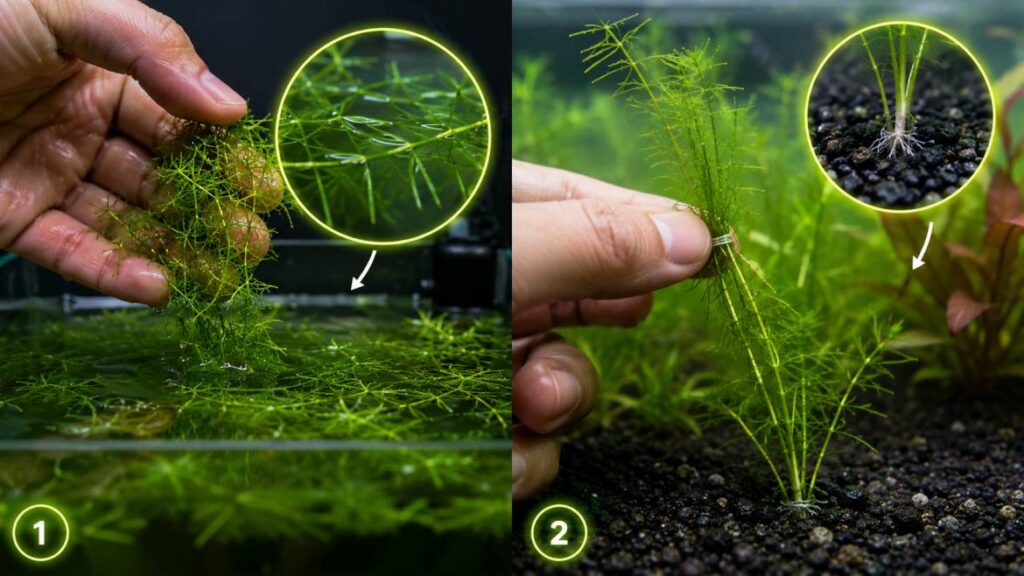
Method 1: Floating Guppy Grass (Best for Beginners)
This is the easiest and most natural method.
Steps
- Rinse the guppy grass gently in dechlorinated water
- Then find and remove damaged or melting stems
- Simply place small portions on the water surface
- Spread it out so light reaches all sections
That’s it. Floating guppy grass grows extremely fast because it receives direct light and CO2 exposure from the surface.
Floating Guppy Grass is Best For
- Guppy fry tanks
- Shrimp tanks
- Betta aquariums
- Breeding setups
- Low-tech aquariums
Method 2: Anchored or Planted Guppy Grass
This method is for those who prefer a cleaner aquascape appearance. In that case, you can anchor guppy grass into the substrate.
Steps
- Gather small bunches of guppy grass
- Wrap the base lightly with plant weights or thread
- Push only the bottom 1 inch into gravel or sand
- Avoid burying the full stem
Important: You will notice that guppy grass roots are weak compared to rooted stem plants. If buried too deeply, the stems often rot.
Floating vs Planted Guppy Grass
| Feature | Floating Guppy Grass | Planted Guppy Grass |
|---|---|---|
| Growth Speed | Extremely fast | Moderate |
| Maintenance | Easy | Slightly harder |
| Fry Protection | Excellent | Good |
| Appearance | Wild/natural | Cleaner look |
| Root Development | Minimal | Slightly better |
| Best For | Breeding tanks | Display tanks |
For most hobbyists, method 1, which is floating, is the superior option.
Guppy Grass Roots: What Beginners Need to Know
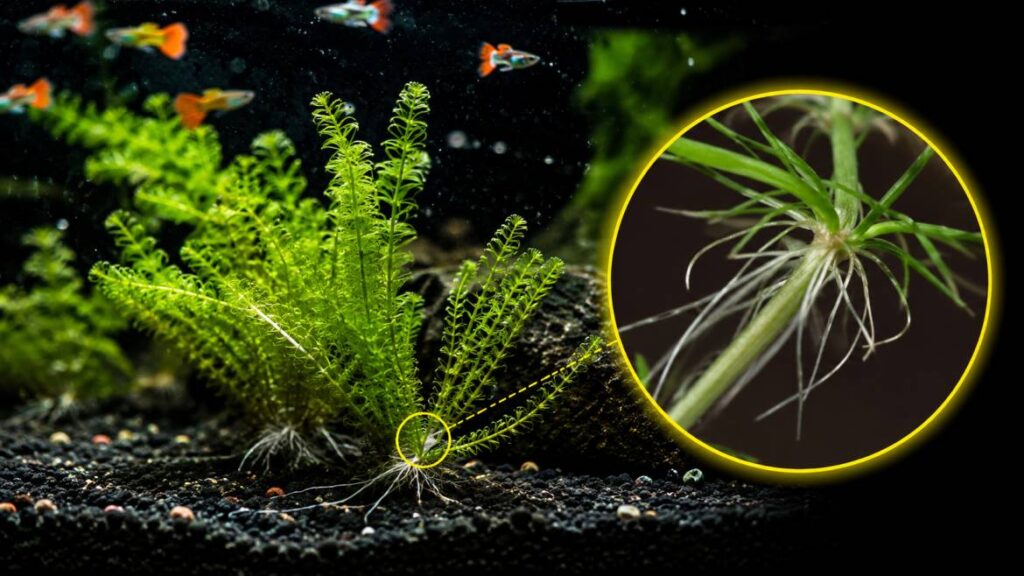
One major misconception is that guppy grass needs strong roots. It doesn’t because Guppy grass absorbs nutrients directly from the water column through stems and leaves.
The small white guppy grass roots you sometimes see mainly help with anchoring and nutrient absorption, not survival itself. That’s why guppy grass can survive floating for months.
How Guppy Grass Roots Actually Develop
Stage 1 (Days 1–3): Dormancy
Within the initial 3 days, you will see that the plant has actual roots, but they’re not active. The stem is stabilizing and absorbing nutrients through its leaves. There’s no visible root development yet. This is Normal.
Stage 2 (Days 4–7): Root Initiation
This is a very critical stage. White, hair-like rootlets appear at the leaf nodes. These aren’t “true roots”—they’re developing rootlets. Each leaf node can generate 3–5 rootlets. This is the critical period where light and water quality matter most. If you don’t see root development by day 7, something is wrong with light, water, or substrate.
Stage 3 (Days 8–14): Root Extension
Rootlets extend downward and outward from nodes. You’ll see a white “fuzz” developing along the lower stem. This is the root system establishing substrate contact. Roots are now visible to the naked eye when you gently move the plant.
Stage 4 (Days 15–21): Root System Established
The root network is now functional. The plant shifts all its energy from stabilization to vertical growth. Growth accelerates dramatically—you’ll see new leaf whorls (clusters) appearing almost daily. This is when you’ll notice a visible height increase.
Guppy Grass Root Structure Compared to Other Plants
Guppy grass roots are unique:
- Surface-oriented: Roots prefer to spread horizontally in loose substrate
- Fine and delicate: Each root is thinner than a human hair
- Distributed system: Instead of a central root mass, roots emerge from every node
- Nutrient-hungry: The distributed system means it absorbs from the entire substrate column
How Fast Does Guppy Grass Grow?
It grows very fast. Under ideal conditions, guppy grass can double in size within 1–2 weeks. In nutrient-rich aquariums with medium lighting, I’ve personally had it grow so aggressively that it covered half the tank surface in under 10 days.
How Fast Does Guppy Grass Grow? Growth Rate Multiplier Chart
These are real growth multipliers from my personal tanks:
| Lighting Condition | Temperature | CO₂ | Growth Rate | Multiple |
| 1.5 w/gal, no nutrients | 68°F | No | 0.5 in/week | 1x (baseline) |
| 2 w/gal, basic nutrients | 72°F | No | 1 in/week | 2x |
| 3 w/gal, full fertilizer | 72°F | No | 2–2.5 in/week | 4–5x |
| 4 w/gal, full fertilizer | 74°F | No | 2.5–3 in/week | 5–6x |
| 4+ w/gal, overdose fert | 74°F | Yes | 3.5–4 in/week | 7–8x |
How to Grow Guppy Grass Fast: Advanced Acceleration Techniques
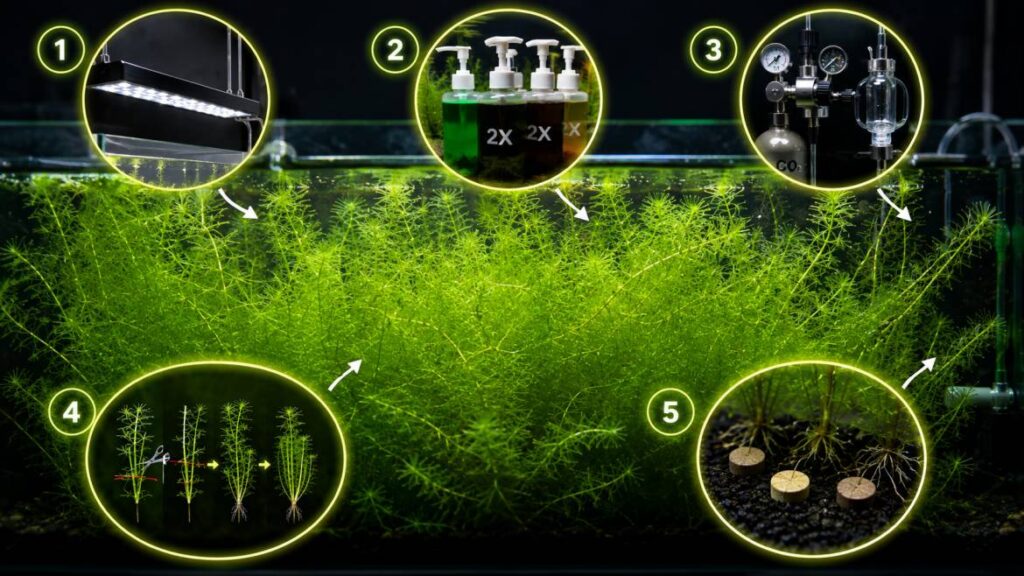
If you want explosive growth, follow these advanced tips.
Technique #1: High-Light Setup (4–5 Watts Per Gallon)
This is the biggest upgrade for faster aquarium plant growth.
- Use a 60W+ quality LED light for a 20-gallon tank
- Keep the light 6–8 inches above the water
- Run it for 10–12 hours daily using a timer
Result: You can get 2.5x–3x faster plant growth with healthier colors and thicker plants.
Technique #2: Nutrient Overdose Method (Safe Overdosing)
Most beginners underdose fertilizers. Slightly increasing nutrients can massively boost plant growth.
- Start with 2x the normal liquid fertilizer dose
- Dose 2–3 times weekly instead of once
- Watch for algae growth and reduce slightly if needed
Result: You can see 50–75% faster plant growth with healthier, fuller plants.
Technique #3: CO₂ Injection System
CO₂ is optional, but it can dramatically speed up guppy grass growth.
- Use a basic CO₂ kit ($80–150 setup)
- Maintain 20–30 ppm CO₂
- Run CO₂ for 8–10 hours daily
Result: You can get 50–100% faster growth and turn your tank into a dense plant jungle in just 5–7 weeks.
Technique #4: Aggressive Propagation & Trimming
Trimming guppy grass actually makes it grow faster and bushier. When you cut the stem at a node, it splits into multiple new stems. More stems = faster growth.
Fast Propagation Method
- Start with 10 stems
- Trim after 7 days → 20–30 stems
- Trim again after 14 days → 40–60 stems
- Trim again after 21 days → 80–120 stems
Result: By week 4, you can achieve 8–12x more plant mass from your original guppy grass.
Technique #5: Root Stimulators & Bacterial Additives
Root tabs can boost guppy grass growth by supplying nutrients directly to the roots.
- Place 1–2 root tabs under each stem cluster
- Replace them every 2–3 months
Result: You may see around 20–30% faster growth with stronger and healthier plants.
How to Care for Guppy Grass Properly
Guppy grass care is simple, but there are a few important things most websites skip.
- Trim It Weekly: If ignored, it becomes a tangled mess quickly. Trim excess growth every 1–2 weeks to keep it in its best shape.
- Remove Yellow or Melting Sections: Decaying sections pollute the water fast. Healthy guppy grass should remain bright green.
- Avoid High Heat: Temperatures above 84°F often weaken the plant.
- Watch Surface Coverage: Too much floating growth blocks oxygen exchange and light penetration. Keep at least 30–40% of the surface open.
Guppy Grass Aquarium Plant: Where to Buy & Cost Analysis
Once you’ve decided to grow guppy grass, where do you buy it?
USA Retailers for Guppy Grass Aquarium Plants
Online Retailers (Recommended):
- Amazon – $8–15 per 3–4 stem bundle (fast shipping, variable quality)
- Aquarium Coop – $6–10 per bundle (excellent quality, ships fresh Monday–Wednesday)
- Buceplant – $5–8 per bundle (high-quality, professional breeding source)
- Etsy Small Vendors – $4–8 per bundle (fresh, often cheaper)
- Local Aquarium Stores – $10–20 per small bundle (inspectable, often lower quality)
Facebook Aquarium Groups (USA-based):
Build community to know better about the product, buy from local hobbyists ($2–5 per bunch, local pickup). Often fresher than stores.
Common Guppy Grass Problems
Why Is My Guppy Grass Melting?
This is usually caused by: Sudden parameter changes, Low light, Poor water quality, shipping stress, or Small melting after introduction is normal.
Why Is It Turning Brown?
When guppy grass turns brown, it is typically a nutrient deficiency or insufficient lighting.
Why Does It Keep Floating Up?
The guppy grass floats up because guppy grass naturally prefers floating. Use plant weights or mesh anchors if needed.
How to Plant Small-Leaf Grass in Aquarium: Is Guppy Grass the Same?
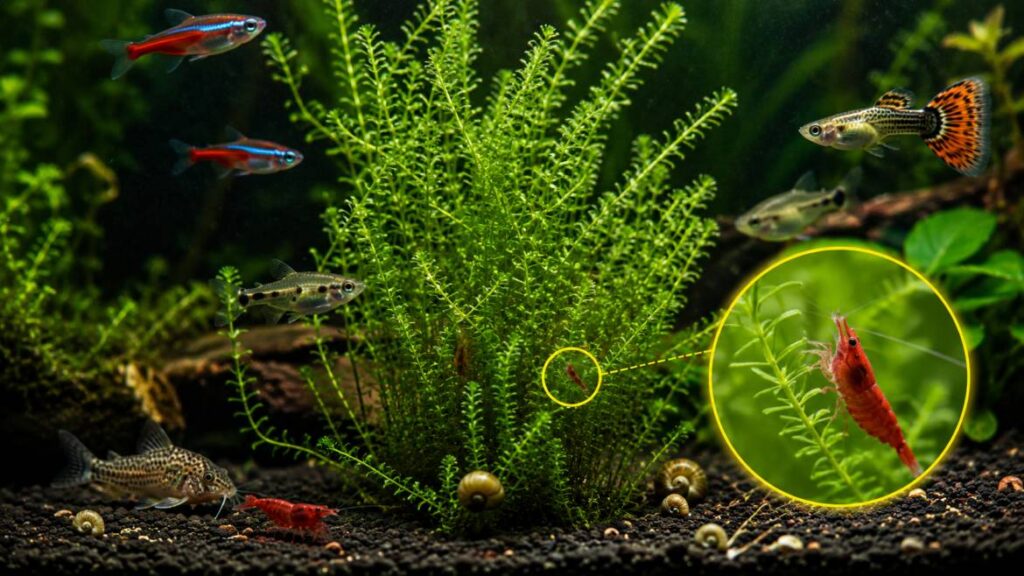
I have seen so many beginners searching for “how to plant small leaf grass in aquarium,” thinking guppy grass is a carpeting grass. It isn’t. Unlike dwarf hairgrass or Monte Carlo, guppy grass grows vertically and loosely. So don’t try to carpet it aggressively into the substrate. That’s one reason many beginners accidentally kill it.
Best Fish and Tank Mates for Guppy Grass as an Aquarium Plant?
The beauty of guppy grass as an aquarium plant is something that not only but nearly every creature benefits from it:
Fish that love guppy grass:
- Guppies (the namesake)
- Mollies and platies
- Tetras (neon, cardinal, etc.)
- Rasboras
- Corydoras catfish
- Dwarf puffers
- Bettas
Shrimp & Invertebrates:
- Cherry shrimp (highest survival in guppy grass tanks)
- Amano shrimp
- Bamboo shrimp
- Freshwater snails
Why they love it:
- Hiding spaces: Hiding spaces helps to reduce stress, increases survival rates 60%+
- Biofilm growth: Decaying leaves create shrimp food
- Breeding habitat: Livebearers lay eggs among fronds
- Fry nursery: Baby shrimp/fish hide safely during early development
FAQs About How to Plant Guppy Grass in Aquarium
Does guppy grass need substrate?
No. Guppy grass grows perfectly while floating and does not require substrate.
Can guppy grass grow without CO2?
Yes. It’s considered a low-tech aquarium plant and grows well without injected CO2.
How fast does guppy grass grow?
Under ideal conditions, it can double in size within 1–2 weeks.
Is guppy grass good for shrimp?
Yes. Shrimp love grazing on microorganisms trapped inside the plant.
Why is my guppy grass dying?
Usually due to low light, unstable water parameters, overheating, or nutrient deficiency.
Can you plant guppy grass in gravel?
Yes, but only lightly anchor it. Deep planting often causes stem rot.
Does guppy grass reduce nitrates?
Yes. Fast-growing aquarium plants naturally absorb nitrogen compounds from water.
Is guppy grass good for guppy fry?
Absolutely. It provides excellent hiding spaces that improve fry survival.
Next Steps: Resources You Must Read
Your guppy grass planting journey doesn’t end here:
- The Complete Guide to Aquatic Plant Fertilization: Macro & Micro Dosing – Master nutrient dosing
- Best Freshwater Fish Tank Fish for Beginners (Easy, Beautiful & Hard to Kill – Choose the right fish
- How to Set Up a Planted Aquarium: Substrate, Plants & Layout – Create perfect foundation
Final Thoughts
If you’ve been struggling with difficult aquarium plants, guppy grass is honestly one of the best confidence-builders in the hobby. It grows quickly, protects fry, improves water quality, and works in both beginner and advanced aquariums. Hence, read and learn how to plant guppy grass in aquarium tanks the right way.
And once you understand how to plant guppy grass in aquarium setups correctly, you’ll realize why so many experienced breeders refuse to run fry tanks without it.
Sometimes the simplest plants end up being the most useful.
Was this guide helpful?
First-Hand Experience
Based on animals I've personally kept and bred - not summarized from other articles.
Zoological Foundation
Claims are checked against my M.Sc. Zoology training and published aquatic biology research, not recycled aquarium myths.
No Paid Influence
No sponsorship shaped this guide. Affiliate links, if any, are disclosed separately and never hidden.
Kept Current
Errors are corrected as soon as they're found, with the update noted at the bottom of the article.

Anil Satak M.Sc. Zoology · Founder, FishioHub
Grew up in a fishing family in India and holds a Master's in Zoology. FishioHub is a one-person operation - every guide is personally researched, kept-tested, and written by Anil. No team, no outsourced writers, no AI-generated content. Read his full bio →