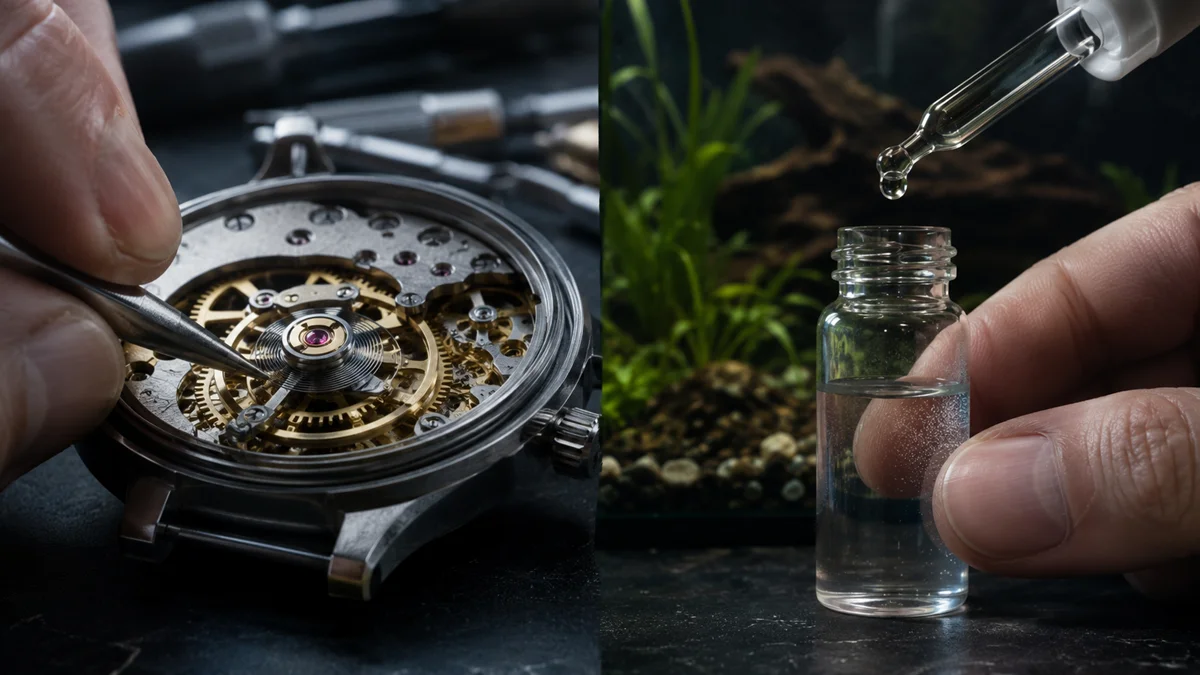
Direct answer: Breeding tank parameters usually fail on drift, not on the numbers themselves. A tank that averages the right pH, temperature, and hardness over a week can still swing through and past that range every single day, and it’s the swing, not the average, that suppresses spawning in fussy species like cardinal tetras, corydoras, and shrimp.
You matched every number on the care sheet. pH’s right. Temperature’s right. You’ve tested it three times to be sure. And nothing’s happening — or worse, eggs appear and vanish, or shrimp molt and die within days of each other for no obvious reason.
Here’s the thing almost no breeding guide tells you: a single test strip reading tells you almost nothing. It tells you where your parameters were at that exact moment. It says nothing about where they were at 6 am before your heater cycled, or right after your last top-off, or three hours after your CO2 injection kicked in for the day. Chronometer-grade watchmakers figured this out a long time ago, and the same logic applies directly to your breeding tank.
Chronometer Regulation: What “Precision” Actually Means
A mechanical watch isn’t rated as a chronometer for being accurate once. COSC certification tests a movement across multiple positions — face up, face down, crown up, crown left — and across a temperature range, over several days, and the movement has to stay within a tight deviation band the entire time. A watch that’s perfectly accurate lying flat on a desk but loses 30 seconds a day when worn on a wrist fails certification. Average accuracy means nothing if the deviation under changing conditions is large.
Your breeding tank is being tested the same way, whether you’re checking or not. Temperature under your heater’s normal cycling, pH after lights-out CO2 buildup, hardness after a top-off with slightly different source water — these are your tank’s “positions.” A parameter that’s correct in one condition and off in another isn’t stable. It’s just been caught looking stable once.
This reframes the entire troubleshooting question. It’s not “are my parameters right” — it’s “how much do my parameters move, and when.”
Cardinal Tetra Breeding Conditions: Why the Average Lies
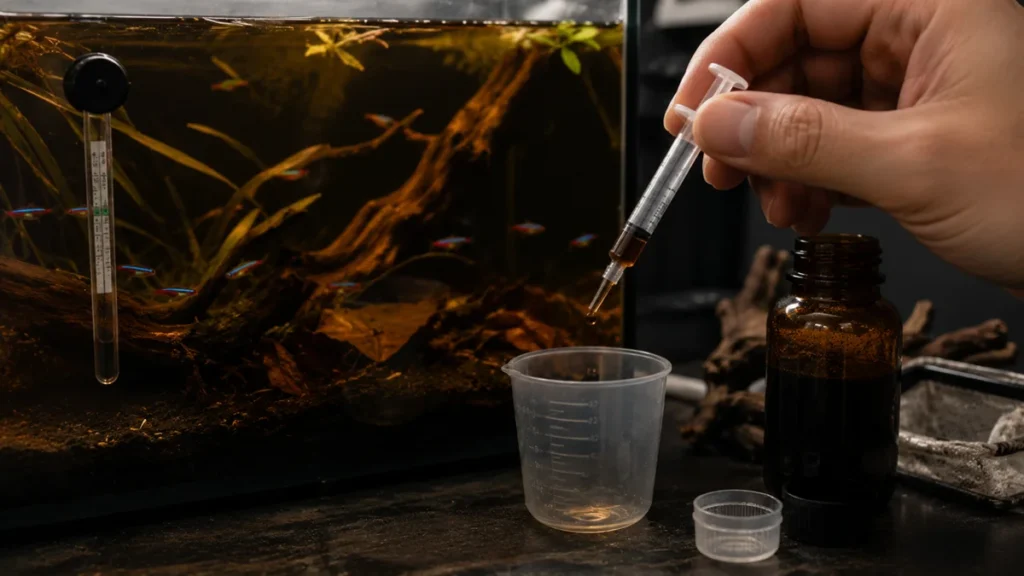
Cardinal tetras are one of the clearest examples of this trap. The stated conditions — soft, acidic water, pH 5.5–6.5 — are correct as far as they go. But hobbyists hit those averages constantly and still get zero spawning activity.
The variance usually comes from three unglamorous sources:
- RO/DI remineralization drift — if you’re not measuring and dosing remineralizer to a consistent target every time, your “soft water” changes hardness slightly with every top-off
- Blackwater extract inconsistency — dosing “by eye” instead of by a fixed ratio means your tannins, and the acidity they contribute, shift week to week
- Heater cycling swings — a heater with a wide thermostat differential can swing 2–3°F within a single cycle, which is invisible on a spot check but very visible to fish that spawn on temperature cues
If you’re already working through cardinal tetra breeding behavior and hitting a wall despite matching every stated number, variance in one of these three areas is the most likely place to look next — not the numbers themselves.
Corydoras Breeding Tank Stability: Where Controlled Variance Is the Trigger
Corydoras interestingly flips this logic. Their spawning trigger is a barometric-pressure drop, simulated with a cool water change — which is, by definition, an intentional variance event, not a static condition.
Most guides list this as a step (“do a cool water change”) without explaining the mechanism, which causes a common mistake: keeping temperature genuinely unstable the rest of the time, assuming inconsistency is generally what corydoras want. It’s the opposite. The trigger works because it’s a deliberate, sharp deviation from an otherwise rock-steady baseline — the same way a chronometer’s rating only means something when measured against a known-stable reference state. Random day-to-day temperature drift doesn’t mimic a barometric event; it just reads as noise, and corydoras don’t respond to noise.
Shrimp Breeding Tank Parameters Consistency: The Molt-Cycle Cost of Drift
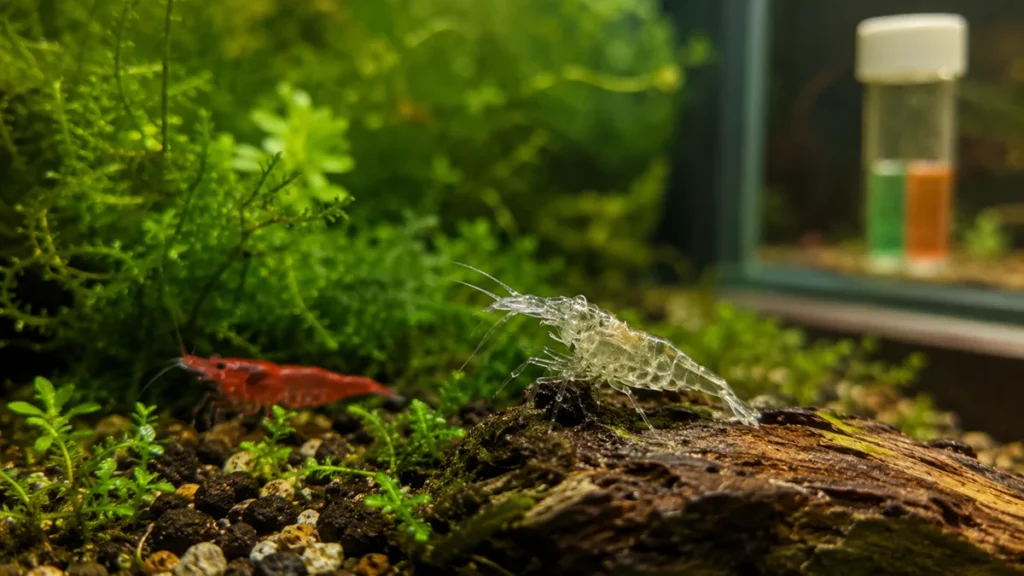
Shrimp — cherry, Amano, and others — are arguably the most variance-punishing species in the freshwater hobby, because molting ties directly to mineral stability. A GH swing that happens to land during a molt is a common and commonly misdiagnosed cause of sudden shrimp deaths that get blamed on “bad batch” or unrelated water changes.
The watchmaking concept that applies here is isochronism — a movement staying accurate regardless of how much energy is currently stored in the mainspring. The shrimp-tank equivalent is staying stable regardless of bioload state: right after feeding, right after a water change, right after a molt. Dosing and remineralizing on a fixed schedule, rather than “topping up when GH looks low,” removes the reactive habit that’s actually introducing the variance in the first place.
If shrimp are cohabiting with fish in your setup, what aquarium shrimp eat is worth checking alongside this, since feeding schedule consistency is one of the variance sources above.
Building a Variance-Control Routine
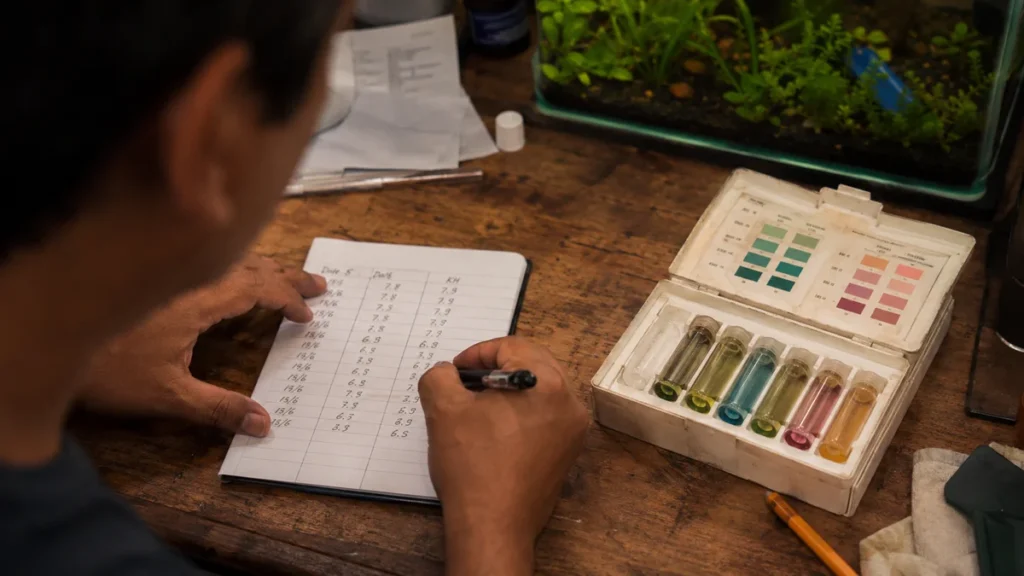
- Test at two points, not one — morning and evening, for at least a week, before trusting any parameter reading
- Log the range, not just the value — write down the swing (e.g., “pH 6.1–6.6”) instead of a single number
- Isolate the source — heater differential, dosing inconsistency, or lighting-driven CO2/pH swing from plants during the photoperiod are the three most common culprits
- Fix the cause, not the symptom — a better differential heater or a fixed dosing ritual beats reactively correcting parameters after the fact
A Note on the Counter-Argument
Some experienced breeders — notably the widely cited AquariumScience resource on discus — argue that stability itself isn’t the magic variable, pointing to successful discus breeders running completely different static setpoints (pH 5.5 in one tank, pH 7.6 in another, both producing viable spawns). That’s real data and worth taking seriously rather than dismissing.
But it actually supports this piece’s core point rather than undermining it: both of those breeders ran mature, consistent systems at their chosen setpoint — neither was swinging unpredictably between the two. The lesson isn’t “any specific number works, so don’t bother regulating” — it’s that the specific number matters less than most guides claim, and consistency around whichever number you pick matters more than any of them claim.
Why Fish Won’t Breed in My Tank — The Variance Checklist
If your parameters test correctly but nothing’s happening, run this before changing anything else:
- Test morning and evening for a week — is there a swing you haven’t noticed?
- Is your remineralizer or blackwater dosing measured or eyeballed?
- Does your heater have a wide differential, or a tight one?
- Is your CO2/lighting schedule introducing a daily pH swing?
FAQ
What is parameter variance in fish breeding?
It’s the swing a water parameter goes through between test readings — not the average value, but the range it moves through day to day. A tank can average a perfect pH and still swing outside the workable range every single day without a single test catching it.
Why won’t my cardinal tetras breed even with correct water parameters?
Usually a variance source that doesn’t show up on a spot check: inconsistent RO remineralization, uneven blackwater extract dosing, or heater cycling swings. Test at two different times of day before assuming the parameters themselves are the problem.
Why do Corydoras need a temperature drop to breed?
It simulates a barometric pressure drop that Corydoras use as a natural spawning cue in the wild — but it only works as a trigger against an otherwise stable baseline. Random, ongoing temperature swings don’t work as a substitute; they just read as noise.
Why won’t my fish breed even though water parameters look fine?
“Looks fine” usually means one test at one moment. Test morning and evening for a week and log the range, not just the value — that’s where most unexplained breeding failures actually show up.
How often should I test breeding tank parameters?
At minimum twice a day for the first week of setting up a new breeding tank — once in the morning, once in the evening — to catch swings a single daily test would miss entirely.
Was this guide helpful?
First-Hand Experience
Based on animals I've personally kept and bred - not summarized from other articles.
Zoological Foundation
Claims are checked against my M.Sc. Zoology training and published aquatic biology research, not recycled aquarium myths.
No Paid Influence
No sponsorship shaped this guide. Affiliate links, if any, are disclosed separately and never hidden.
Kept Current
Errors are corrected as soon as they're found, with the update noted at the bottom of the article.
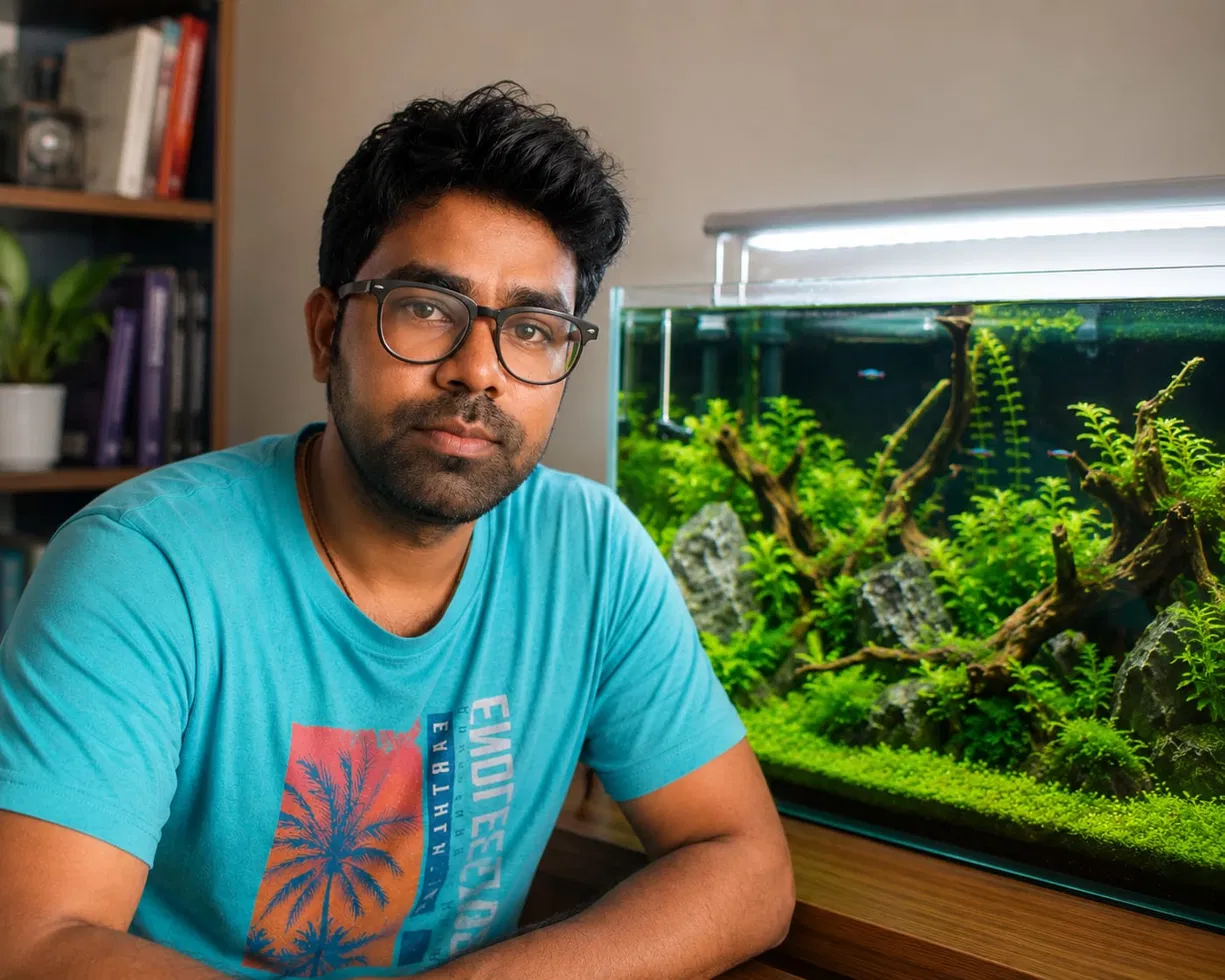
Anil Satak M.Sc. Zoology · Founder, FishioHub
Grew up in a fishing family in India and holds a Master's in Zoology. FishioHub is a one-person operation - every guide is personally researched, kept-tested, and written by Anil. No team, no outsourced writers, no AI-generated content. Read his full bio →