Can you imagine an aquarium without beautiful and healthy plants? No, absolutely not, because everybody knows healthy aquarium plants are the foundation of a beautiful, balanced planted tank. If you want lush growth without relying on synthetic chemicals, learning how to fertilize aquarium plants naturally is the safest and most sustainable approach for you.
In this in-depth guide, you’ll discover natural fertilizers for aquarium plants, organic nutrient sources, and proven methods to keep freshwater plants thriving—without harming fish, shrimp, or beneficial bacteria by the use of dangerous chemical products.
Why Aquarium Plants Need Fertilization
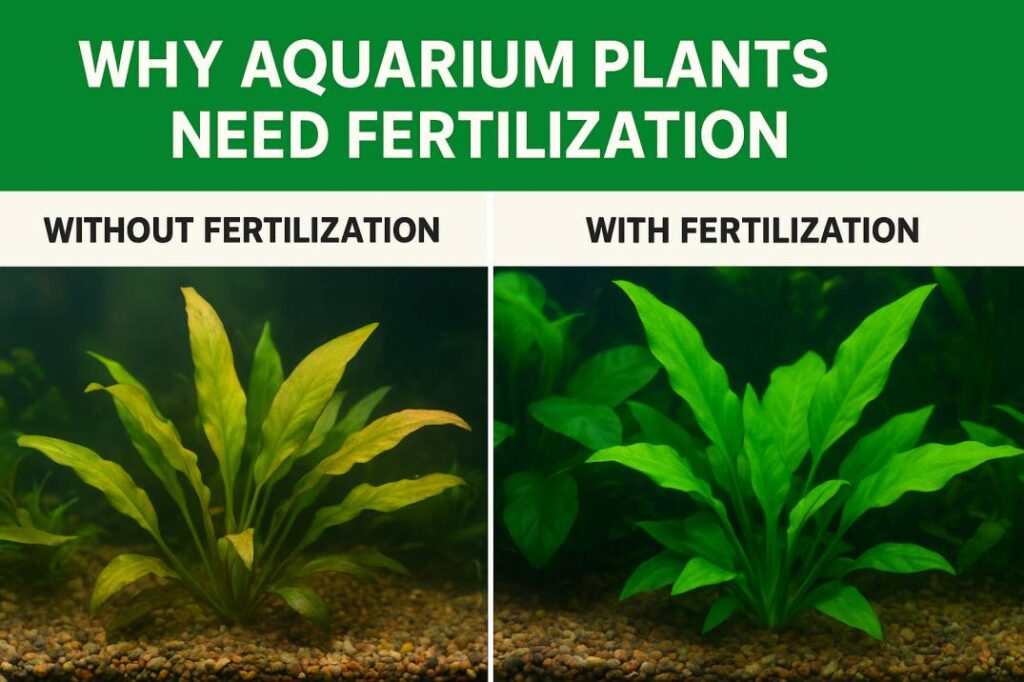
You know aquarium plants need fertilization because fish waste and decaying matter do not provide all the essential macronutrients and supplements they need for vibrant growth and health. Aquarium plants absorb nutrients from:
- The water column- a section of water in the Plant
- Substrate (roots)
- Fish waste and organic matter
In closed aquarium systems, nutrients get depleted quickly. Without fertilization, plants may show the following effects:
- Yellow or transparent leaves
- Holes or melting leaves
- Slow or stunted plant growth
- Excess algae due to an imbalance and unhealthy plants
Using natural ways to fertilize freshwater aquarium plants restores nutrients while keeping the ecosystem stable.
What Makes Natural Fertilization Different?
Natural fertilization is safest and focuses on balance, not force-feeding plants.

✔ Uses organic nutrient sources
✔ Safer for fish, shrimp, and snails
✔ Reduces algae outbreaks
✔ Ideal for beginner and low-tech tanks
Learning how to fertilize aquarium plants without chemicals helps maintain long-term tank health.
Best Natural Nutrients for Aquarium Plants
Aquarium plants require three main nutrient groups, which include:
1️⃣ Macronutrients
- Nitrogen (N)
- Phosphorus (P)
- Potassium (K)
2️⃣ Micronutrients
- Iron
- Magnesium
- Calcium
- Manganese
3️⃣ Carbon (Most Important)
- Provided naturally through fish respiration
- Boosted with natural CO₂ methods
A good natural setup supplies all three.
Natural Fertilizers for Aquarium Plants (Proven Methods)
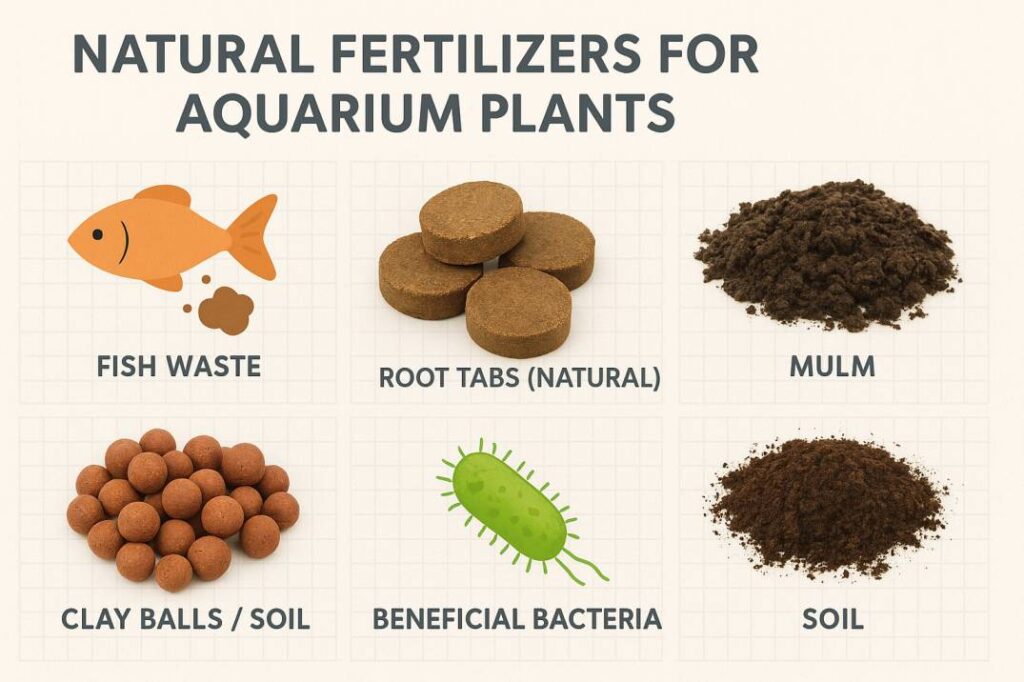
🌱 1. Fish Waste (Nature’s Fertilizer)
Provide fish waste in the tank. Fish waste is one of the most effective organic aquarium plant fertilizer methods.
✔ Provides nitrogen and phosphorus
✔ Constant and natural nutrient source
✔ Encourages beneficial bacteria
Tip: Slight under-cleaning is better than over-cleaning.
🌱 2. Nutrient-Rich Substrate
A good substrate acts as a long-term, chemical-free fertilizer for aquarium plants.
Best natural options for nutrient-rich substrate are:
- Organic soil capped with sand
- Clay-based planted substrates
- Mineralized topsoil (advanced users)
Roots absorb nutrients directly from the substrate.
🌱 3. Root Tabs ( Fertilizer tablets)
While not fully “DIY,” root tabs, the fertilizer tablets are safe and semi-natural.
✔ Ideal for heavy root feeders
✔ No water column dosing
✔ Long-lasting nutrition
Great for Amazon swords, crypts, and Vallisneria.
🌱 4. Leaf Litter & Driftwood
Decomposing leaves are a vital micronutrient source for plants. Adding dried leaves and natural wood slowly releases nutrients.
Safe options:
- Indian almond leaves
- Oak leaves (boiled)
- Mopani driftwood
They also improve microbial activity.
🌱 5. DIY Natural Fertilizer for Aquarium Plants
You can create DIY natural fertilizer for aquarium plants using:
- Mineralized soil balls
- Clay + trace mineral mixes
- Compost tea (very diluted & advanced)
⚠ Use carefully to avoid nutrient spikes.
How to Fertilize Aquarium Plants Naturally (Step-by-Step)
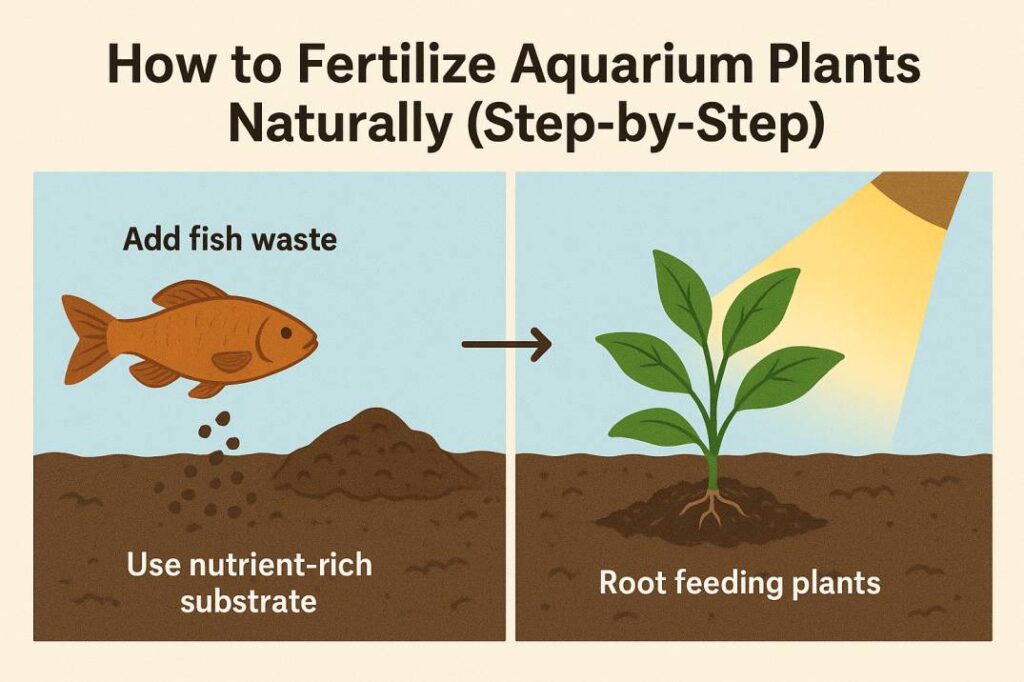
- Use a nutrient-rich substrate
- Stock fish moderately and at regular intervals (avoid overstocking)
- Feed fish responsibly
- Add root tabs near heavy root feeders
- Maintain proper lighting
- Perform regular water changes (20–30%)
- Avoid over-cleaning the substrate
This approach supports healthy plant growth without chemicals. This is the perfect method for how to Fertilize Aquarium Plants Naturally.
Natural CO₂ Boosting Methods (Without Injected CO₂)
For Low-tech tanks, the following are the natural carbon sources:
- Fish respiration
- Surface agitation control
- Healthy bacterial colonies
- Moderate plant density
A stable CO₂ level improves nutrient uptake in the tank naturally.
Common Mistakes to Avoid
❌ Over-fertilizing “naturally.”
❌ Adding compost directly to water
❌ Excessive lighting in the tank without nutrients
❌ Over-cleaning the substrate is not good
❌ Ignoring plant deficiency signs
Fertilizing naturally does not mean uncontrolled fertilization.
Pro Tips to Get the Best Results
✔ Choose easy plants like Anubias, Java fern, Crypts
✔ Maintain 6–8 hours of light daily in the tank
✔ Observe leaves’ weekly growth
✔ Be patient—natural growth is slower but stronger in plants
✔ Stick to one method and adjust gradually, but don’t change to chemical
FAQs – Natural Aquarium Plant Fertilization
Q1. Can aquarium plants grow without liquid fertilizers?
Yes. With proper substrate, fish waste, and lighting, plants grow well naturally without liquid fertilizers.
Q2. Is natural fertilization safe for shrimp and snails?
Absolutely. Natural methods are safer for shrimp and snails than chemical dosing.
Q3. How long does natural fertilization take to show results?
The natural fertilization does not show sudden effects. It typically takes 2–4 weeks for visible improvement.
Q4. Do low-tech tanks need fertilizers?
Yes, they require minimal and natural fertilization works best for low-tech tanks.
Q5. Can I combine natural and commercial fertilizers?
Yes, you can combine, but keep dosing minimal to avoid algae.
Read More from FishioHub:
🌿 Final Conclusion
For any aquarist, learning how to fertilize aquarium plants naturally is one of the best decisions for long-term success in planted aquariums. By natural methods means using fish waste, nutrient-rich substrates, and organic methods, you create a balanced ecosystem that supports healthy plant growth without chemicals.
Natural fertilization is safer, more sustainable, and ideal for beginners and experienced aquarists alike.