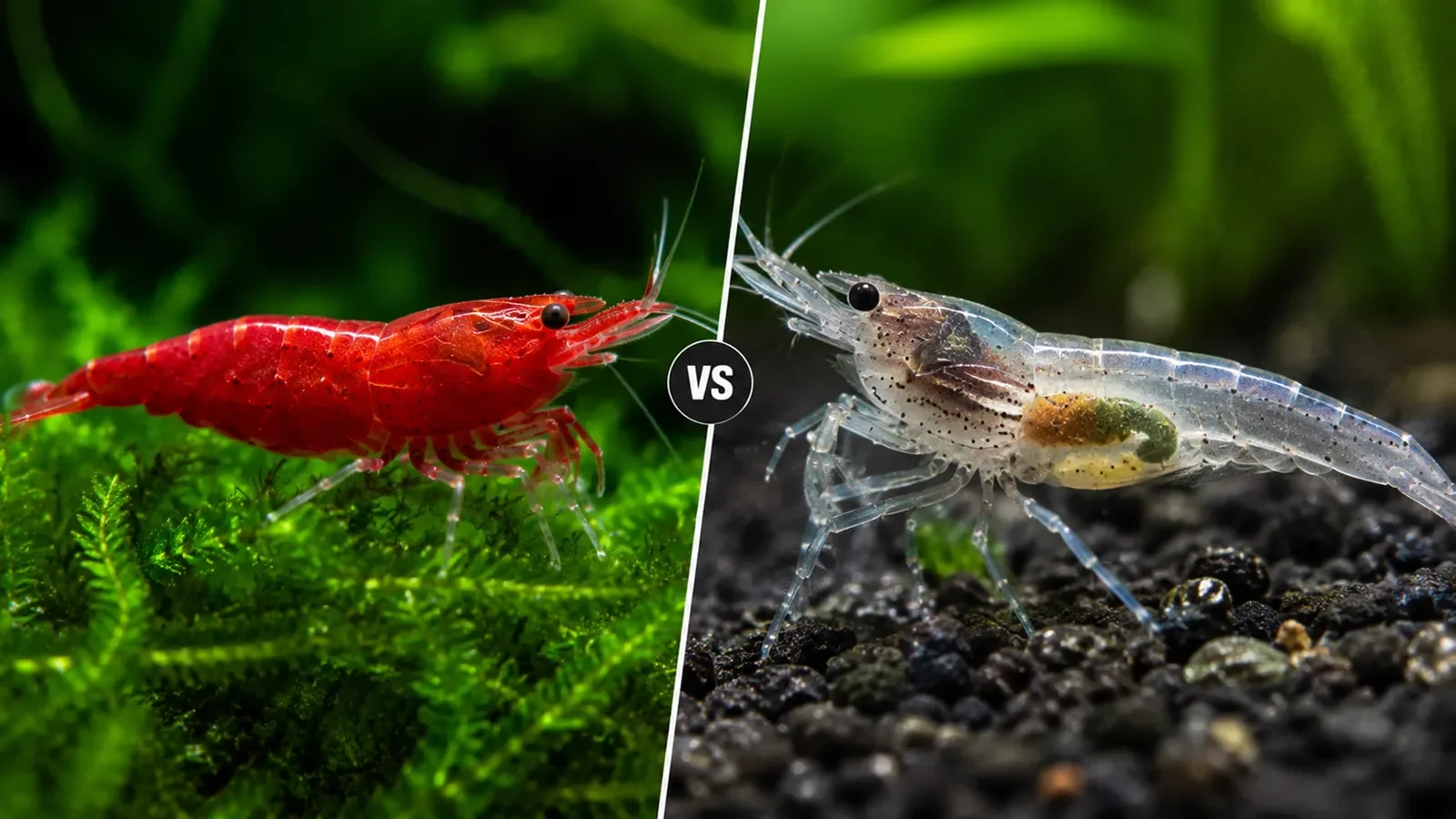
Ghost shrimp and cherry shrimp look like they do the same job in a tank. They don’t.
One is nearly invisible. The other is the reason people stop and stare at your aquascape. But the real difference between Ghost Shrimp vs Cherry Shrimp isn’t color — it’s what happens when food runs low or when your water hardness drops a point.
I’ve kept both species, and I’ve watched a well-fed ghost shrimp pick off a molting tankmate anyway. That’s not a hunger problem. That’s just what they do.
Introduction: Both Ghost Shrimp and Cherry Shrimp are very popular among aquarium enthusiasts due to their small size, peaceful nature, and ability to keep tanks clean. But if you’re having trouble deciding between the two, you’ll need to understand the differences between them.
In this detailed guide, you’ll learn everything you need to know about Ghost Shrimp vs. Cherry Shrimp – and this will help you make your choice. This guide describes both types of shrimp in detail, considering various factors, including:
- What do Ghost Shrimp eat?
- Are Ghost Shrimp aggressive?
- Can Ghost Shrimp live with Cherry Shrimp?
- How often do Ghost Shrimp breed?
The main differences in size, care, and breeding. By the end of this guide, you’ll know exactly which shrimp is right for your aquarium.
Ghost Shrimp vs Cherry Shrimp: Quick Comparison
| Parameters | Ghost Shrimp | Cherry Shrimp |
| Scientific Name | Palaemonetes paludosus | Neocaridina davidi |
| Color | Transparent, glass-like body | Bright red (varies by grade) |
| Size | 1.5–2 inches | 1–1.5 inches |
| Lifespan | 1–1.5 years | 1.5–2 years |
| Temperament | Semi-peaceful, can be aggressive | Peaceful and shy |
| Water Temperature | 70°F–82°F (21°C–28°C) | 72°F–78°F (22°C–26°C) |
| Breeding | Difficult – larvae need brackish water | Easy – breeds in freshwater |
| Diet | Omnivorous scavenger | Algae and biofilm grazer |
| Tank Size | 5+ gallons | 5+ gallons |
Both species are beginner-friendly, but your choice depends on your tank goals — cleaning efficiency vs color and colony breeding.
Appearance: Transparent vs Bright Red
When it comes to appearance, Ghost Shrimp and Cherry Shrimp look very different from each other.
* Ghost Shrimp are almost transparent, and interestingly, you can see their internal organs and food passing through their bodies. This is why they look ghostly, and they got their name because of their ghost-like appearance.

Cherry Shrimp stand out and look very beautiful because of their bright red color, which comes in several grades such as Sakura Red, Fire Red, and Bloody Mary.
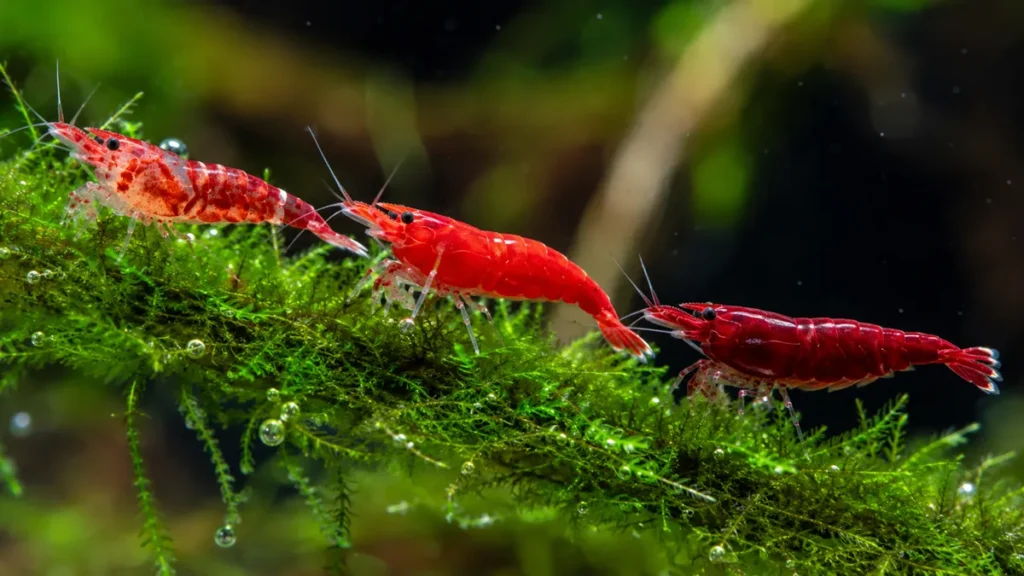
In good light, high-grade cherry shrimp (Fire Red, Bloody Mary grades) can look almost opaque red; breeders select for this over generations, so a $4 shrimp and a $1 shrimp of the ‘same species’ can look completely different.
Ghost Shrimp vs Cherry Shrimp Size
There is only a slight difference in the size of Ghost Shrimp and Cherry Shrimp. Ghost Shrimp are generally larger (up to 2 inches) compared to Cherry Shrimp (approximately 1.2 inches). This slight difference in size also affects their behavior and dominance over food.
Are Ghost Shrimp Actually Dangerous to Other Shrimp?
A common question among new aquarium owners is: “Are ghost shrimp aggressive?”
While ghost shrimp are generally peaceful, their temperament can change during feeding time, and they can become slightly aggressive if space is limited. If food is scarce, they may nip at smaller cherry shrimp or fish fry.
In contrast, cherry shrimp are completely peaceful. They calmly graze on algae and biofilm without bothering other tank mates.
What I did: To minimize aggression, I kept five or more ghost shrimp in a tank so they have a group to live with and don’t feel isolated. Providing plenty of hiding places, plants, and food. (Such as Java moss, driftwood, or rock caves.) It certainly helped the shrimp molt safely and reduced stress.
Here’s what surprised me: aggression isn’t always about hunger. I’ve kept ghost shrimp that were well-fed — pellets twice a day, plenty of biofilm — and one still picked off a freshly molted tankmate. A shrimp right after molting has a soft shell for a few hours. It’s defenseless. Ghost shrimp seem to notice that, fed or not.
If you find a dead, half-eaten shrimp with no obvious fight the night before, this is usually why. It’s not cruelty. It’s an opportunity.
USA buyer’s note: Feeder ghost shrimp sold cheaply at big-box pet stores are often handled roughly and shipped in crowded, poorly oxygenated tanks. That poor handling — not the species itself — is why so many die within a week of purchase. Buy from a dedicated aquarium/shrimp seller when you can, even if it costs a little more.
What Are You Actually Feeding — And How Much Is Too Much?
Both species of shrimp are scavengers, but they have different feeding habits and preferences.
What do ghost shrimp eat?
Ghost shrimp are omnivores and will eat almost anything they can find, including:
- Algae and biofilm
- Leftover fish food
- Decaying plants
- Small insects or larvae
- Occasionally, if hungry, smaller shrimp
You can also feed them algae wafers, shrimp pellets, and blanched vegetables (zucchini, spinach, or cucumber).
What Do Cherry Shrimp Eat?
Cherry shrimp primarily feed on soft algae, biofilm, and detritus. To improve their health and coloration:
- Offer spirulina flakes, specialized shrimp food, or Indian almond leaves.
- Feed them small amounts once a day to avoid overfeeding.
Pro Tip: Both species love natural biofilm – adding moss or driftwood helps them graze naturally. Overfeeding either species fouls water fast in a small tank — a 5-gallon tank has almost no buffer for excess ammonia. Feed what they’ll finish in 2–3 hours, not what looks like ‘enough.
Why One of These Shrimp Rarely Breeds in Your Tank
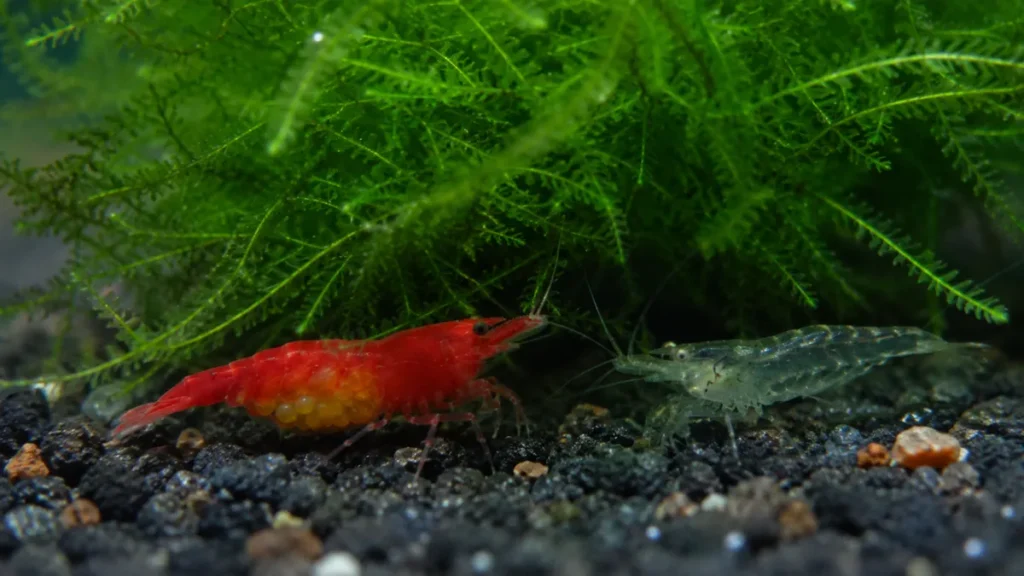
Cherry Shrimp Breeding
Cherry shrimp breed prolifically in freshwater. Females carry their eggs under their tails for about a month, and then release tiny shrimp (shrimplets). They often breed in still water and where there are plenty of hiding places.
Will Ghost Shrimp Breed?
Yes, ghost shrimp will breed, but raising their offspring is difficult. Their larvae require a brackish water environment (a mix of saltwater and freshwater) to survive. This makes keeping them alive in a tank very challenging.
In a freshwater tank, the eggs may hatch, but the larvae usually won’t survive for long.
How Often Do Ghost Shrimp Breed?
Under ideal conditions, female ghost shrimp can lay eggs every 3-4 weeks, but very few of the offspring will survive unless they are raised separately in brackish water.
Conclusion: For easy and consistent breeding, cherry shrimp are the clear winner.
Can Ghost Shrimp Live with Cherry Shrimp?
A big question for aquarists is: “Can Ghost Shrimp and Cherry Shrimp live together?” Yes, but with certain conditions.
Both species can share a tank if:
- The tank is at least 10 gallons
- You provide enough hiding spaces (moss, rocks, driftwood)
- You feed them adequately to avoid food competition
However, because Ghost Shrimp are faster and larger, they may outcompete Cherry Shrimp for food and occasionally harass smaller or baby shrimp.
The mystery of the vanishing cherry shrimp. If you’ve ever added cherry shrimp to a tank with ghost shrimp and woken up to find them simply gone — no bodies, no fight you saw- this is almost always ghost shrimp predation happening overnight while lights were off. It’s rarely dramatic. A weak or newly molted cherry shrimp gets picked off quietly, and by morning there’s no trace.
This isn’t a sign you did anything wrong. It’s a sign the tank didn’t have enough hiding cover for the smaller, more vulnerable species. Dense Java moss or a thick carpet plant solves this in most cases.
Will Ghost Shrimp Eat Cherry Shrimp?
This is a very interesting question when we compare ghost shrimp vs cherry shrimp. Will a ghost eat a cherry? Adult Cherry Shrimp are safe, but baby Cherry Shrimp (shrimplets) can be at risk if Ghost Shrimp are hungry. Protect them with dense plants like Java moss or floating vegetation.
The Water Number Most Beginners Never Check (GH/KH)
GH/KH: the number that actually matters (and gets ignored).
Temperature and pH get all the attention, but water hardness decides whether cherry shrimp thrive or slowly decline. Cherry shrimp do best at GH 6–8 and KH 3–5 — soft or very acidic water stresses them even if temperature and pH look “fine” on paper. Ghost shrimp are far more forgiving here; they tolerate a much wider hardness range without issue.
If you’re on a water softener or use RO water without remineralizing, that’s often the real reason cherry shrimp struggle in an otherwise “healthy-looking” tank — not disease, not the ghost shrimp, not bad luck. A cheap GH/KH test kit (TDS pens run $10–15 at most US pet stores) tells you this in under a minute.
Ghost Shrimp Care
- Temperature: 70–82°F
- pH: 7.0–8.0
- Hardness: Moderate to hard
- Tank Size: Minimum 5 gallons
Cherry Shrimp Care
- Temperature: 72–78°F
- pH: 6.5–7.8
- Hardness: Soft to medium
- Tank Size: Minimum 5 gallons
Use sponge filters and gentle water flow to prevent shrimp from getting sucked in.
How Long Will Yours Actually Live?
- Ghost Shrimp Lifespan: ~1 year
- Cherry Shrimp Lifespan: 1.5–2 years
Both species molt regularly — a natural process for growth. Ensure calcium-rich foods (like cuttlebone or mineral rocks) to aid molting and shell strength. (According to Greenaway, P. (1985). “Calcium Balance and Moulting in the Crustacea.” Biological Reviews: Crustaceans have a high content of calcium, which is mainly part of the skeleton as calcium carbonate. Calcium is the most abundant cation in the body.)
Ghost shrimp lifespan is heavily dependent on sourcing — a feeder-tank ghost shrimp handled poorly may not make it past a few weeks, while one from a dedicated shrimp breeder regularly hits 1.5 years.
What You’ll Actually Pay in the US (And Why Ghost Shrimp Are So Cheap)
In the US, ghost shrimp run $0.30–$1.50 each at most big-box pet stores — sold in bulk, often labeled as “feeders.” That low price reflects how they’re treated, not what they’re worth as pets. Ask your local store how often their shrimp shipment turns over; a fresher shipment means better survival odds.
Cherry shrimp cost more — usually $2–$5 each depending on color grade — because they’re bred for color and shipped individually with more care. Higher grades like Fire Red or Bloody Mary can run $5–$8+ per shrimp at specialty sellers or online US shrimp breeders.
If you’re starting and want a forgiving, budget cleanup crew, ghost shrimp make sense. If you want a colony that multiplies on its own and looks good doing it, the higher cherry shrimp price pays for itself within a few generations of breeding.
Most guides (including comparison posts like this one) frame this as “can they live together,” but the better question is, should you?
If your goal is a colorful breeding colony, adding ghost shrimp works against that goal — every generation of shrimplets is a small risk, even in a well-planted tank. If your goal is algae and detritus control with occasional color as a bonus, mixing them makes sense.
My honest take: keep them separate if breeding output matters to you. Mix them only if you’re fine with a smaller, steadier colony instead of a fast-growing one.
Choosing Between Ghost Shrimp vs Cherry Shrimp
| Budget-friendly cleaner | Ghost Shrimp |
| Colorful aquascape | Cherry Shrimp |
| Easy freshwater breeding | Cherry Shrimp |
| Hardy beginner shrimp | Ghost Shrimp |
| Peaceful community setup | Cherry Shrimp |
| Active scavenger | Ghost Shrimp |

Frequently Asked Questions (FAQ)
1. Can Ghost Shrimp and Cherry Shrimp live together?
Yes, Ghost Shrimp and Cherry Shrimp can live together in the same aquarium if you provide enough plants, caves, and hiding spots. A calm environment with plenty of food helps both species thrive without stress or aggression.
2. Will Ghost Shrimp eat Cherry Shrimp?
Adult Ghost Shrimp rarely attack adult Cherry Shrimp, but they might eat baby shrimp if food is scarce. To prevent this, feed them regularly and keep a well-planted tank where baby shrimp can hide safely.
3. Are Ghost Shrimp aggressive?
Generally, Ghost Shrimp are peaceful and active scavengers. However, during feeding or breeding, they can show mild aggression toward smaller shrimp or slow-moving tankmates. Maintaining good food supply reduces aggressive behavior.
4. What do Ghost Shrimp eat?
Ghost Shrimp are omnivorous scavengers that eat algae, leftover fish food, detritus, and biofilm. You can also offer specialized shrimp pellets, blanched vegetables, or algae wafers to keep them healthy and vibrant.
5. How often do Ghost Shrimp breed?
Ghost Shrimp breed roughly every 3–4 weeks under stable tank conditions. However, their larvae require brackish water to survive, so successful breeding in freshwater tanks is quite rare.
6. What is the Ghost Shrimp lifespan?
The average Ghost Shrimp lifespan is about 1 to 1.5 years. Proper care — including clean water, stable temperature, and low stress — can help them reach their full lifespan.
7. What is the Cherry Shrimp lifespan?
The typical Cherry Shrimp lifespan ranges from 1 to 2 years. With ideal water parameters, a balanced diet, and a stress-free environment, many Cherry Shrimp can live even longer in aquariums.
8. Which shrimp is better for beginners — Ghost or Cherry?
For beginners, Cherry Shrimp are easier to care for and breed in freshwater. Ghost Shrimp are more affordable and great for observing cleaning behavior, but have a shorter lifespan and are slightly harder to breed.
9. Why did my cherry shrimp disappear overnight with no dead body?
This usually means a ghost shrimp or another tankmate ate it while the lights were off — often during or right after a molt, when the shrimp has no shell to protect it. Add dense plant cover like Java moss to reduce this risk.
10. What GH and KH do cherry shrimp need?
Cherry shrimp do best around GH 6–8 and KH 3–5. Water that’s too soft or acidic stresses them even if temperature and pH seem fine. A basic GH/KH test kit, sold at most US pet stores for $10–15, clears this up fast
Final Verdict: Ghost Shrimp vs Cherry Shrimp
If you want an inexpensive and hardy shrimp that will keep your tank sparkling clean, choose ghost shrimp.
If you prefer a colorful, peaceful, and self-breeding shrimp colony, then cherry shrimp are a better option.
You can also keep both types of shrimp together – provided you pay close attention to certain factors, such as the number of shrimp, ensuring they have enough space, maintaining stable conditions, and consistently feeding them to prevent aggression. Once you gain more experience managing an aquarium, you’ll be able to keep both types of shrimp together easily.
Either way, both types of shrimp will enhance the beauty and balance of your aquarium.
Next Steps: Resources That You Must Read
- Ghost Shrimp vs Amano Shrimp: Which Cleans Better?
- Why Did My Shrimp Turn White and Die? (What It Actually Means)
- What Do Aquarium Shrimp Eat? Complete Feeding Guide
Was this guide helpful?
First-Hand Experience
Based on animals I've personally kept and bred - not summarized from other articles.
Zoological Foundation
Claims are checked against my M.Sc. Zoology training and published aquatic biology research, not recycled aquarium myths.
No Paid Influence
No sponsorship shaped this guide. Affiliate links, if any, are disclosed separately and never hidden.
Kept Current
Errors are corrected as soon as they're found, with the update noted at the bottom of the article.
Anil Satak M.Sc. Zoology · Founder, FishioHub
Grew up in a fishing family in India and holds a Master's in Zoology. FishioHub is a one-person operation - every guide is personally researched, kept-tested, and written by Anil. No team, no outsourced writers, no AI-generated content. Read his full bio →