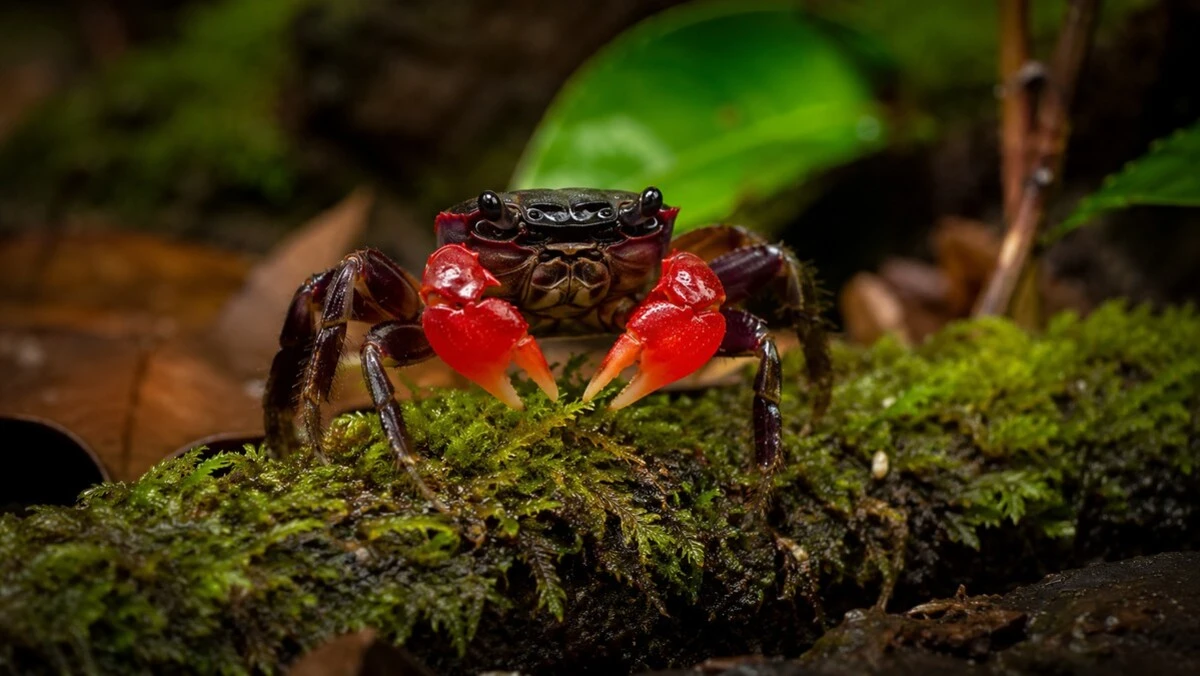
The first red claw crab I ever set up drowned in nine days. I’d kept it in a plain freshwater tank with no land, because that’s what the shop told me. It wasn’t until I checked my own zoology notes on gill structure that I realized what I’d done wrong.
If you’re reading this red claw crabs care guide because a pet store just sold you one and called it “easy, freshwater, low maintenance” — stop right there. That’s the exact mistake I made, and it’s the reason most red claw crabs in home tanks don’t make it past a year.
Here’s what this Red Claw Crabs Care Guide covers:
- Why brackish water isn’t optional
- Land setup that actually works (not just a rock poking out)
- What they eat, and how often
- Tank mates that survive vs. ones that won’t
- Moulting — what’s normal and what’s a warning sign
- Breeding, honestly, including why it rarely works at home
- Sexing males vs. females
- A first-week checklist if you already brought one home
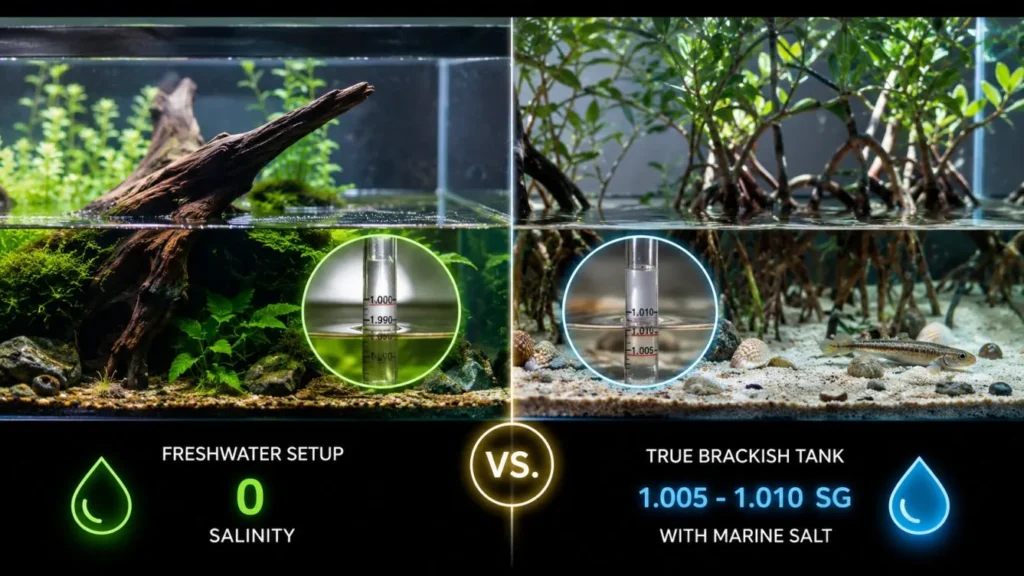
Red claw crabs need brackish water, not freshwater — a mix of dechlorinated water and marine salt at a specific gravity of 1.005 to 1.010. They also need dry land to climb onto, since they breathe air and can drown if kept fully submerged. A 10-gallon tank is the minimum size for a pair.
Why “Freshwater Crab” Is the Wrong Label
Red claw crabs (Perisesarma bidens) are sold in pet stores as easy freshwater additions. In my experience, that’s the single most damaging piece of misinformation in this hobby, given by most pet stores, right up there with betta fish in bowls.
These crabs come from mangrove swamps and tidal estuaries across coastal Southeast Asia — places where a river meets the sea. Now think to yourself that water is fresh, actually, or it is full of ocean salinity either?. It’s brackish, roughly a sixth as salty as seawater.
Here’s the biology, in plain terms. A crab’s gills work like a filter tuned to a specific salt balance. Put a brackish animal in pure freshwater long-term, and its gills work overtime trying to hold onto salts the water keeps pulling out. That’s the same osmoregulation problem I explained in my freshwater vs. saltwater fish breakdown — different species, identical mechanism. The crab doesn’t die instantly. It just slowly weakens, stops moulting properly, and dies months earlier than it should. So it is very important to know how to do red claw crab care.
What this means for your tank: mix in marine aquarium salt (not table salt, not freshwater “aquarium salt”) until you hit a specific gravity of 1.005–1.010 on a hydrometer. That’s your target, full stop.
Tank Setup: Land First, Water Second
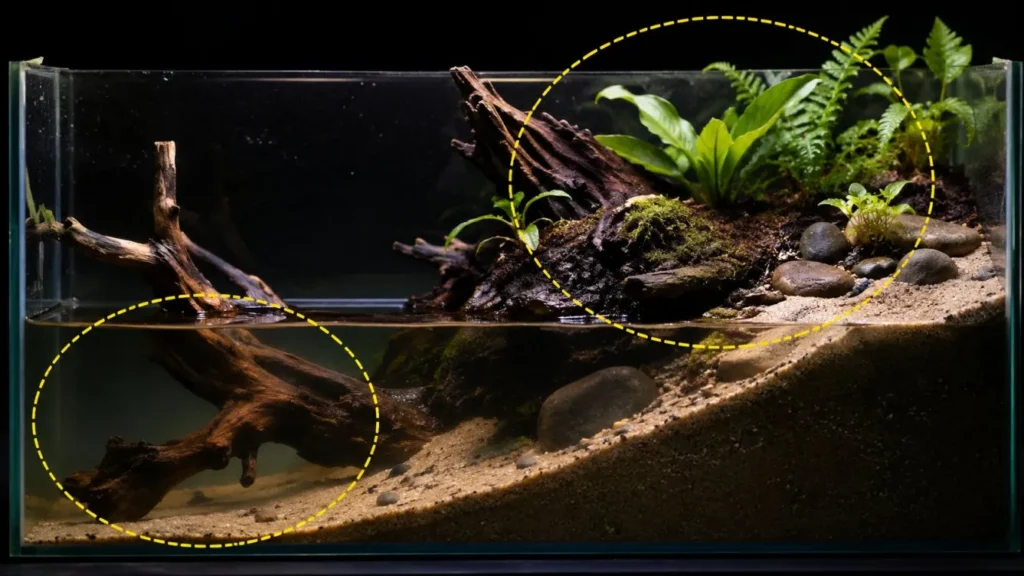
In the Red Claw Crabs Care Guide, this is the part every beginner gets backwards, myself included, that first time.
Aim for roughly 60–70% land, 30–40% water. Not a rock poking above the surface — an actual dry platform they can fully climb onto and dry off on. Red claw crabs are semi-terrestrial. They breathe air through modified gills that need to stay moist, not submerged, and a crab with no way out of the water can drown. Yes, an aquatic animal can drown. I know how strange that sounds until you’ve seen it happen.
I made a huge mistake that forced me to dismantle and rebuild my paludarium; I had tried to add a land section to a setup that was originally entirely aquatic, and rebuilding it was an extremely difficult and frustrating task. Take it from my mistake: make sure to prepare the land section before adding water.
Minimum tank size: 10 gallons for a pair, sized wider and longer rather than tall — floor space matters more than height here.
Water parameters:
| Parameter | Ideal Range |
|---|---|
| Temperature | 75–82°F (24–28°C) |
| pH | 7.5–8.5 |
| Specific gravity | 1.005–1.010 |
| General hardness (GH) | 8–20 dGH |
| Ammonia/Nitrite | 0 ppm |
| Nitrate | Under 20 ppm |
Substrate: fine sand — they burrow and forage in it constantly.
Decor: driftwood, rocks, and hiding caves in the water portion; coconut shells or terracotta pieces on land. Skip live plants unless you don’t mind them being shredded — these crabs treat leafy plants as salad.
The lid is not optional. Red claw crabs climb filter tubing, heater cords, and silicone seams looking for a way out. A gap the width of a pencil is enough. I lost one to a half-inch gap behind a filter intake, and it did not survive the night on my kitchen floor.
What Red Claw Crabs Eat
They’re omnivores and honestly not fussy. In a tank, rotate between a variety:
- Sinking pellets made for crustaceans or shrimp
- Blanched vegetables — zucchini, spinach, peas
- Protein: bloodworms, brine shrimp, small pieces of raw shrimp or fish
- A piece of cuttlebone left on the land area at all times — this is their calcium source for shell strength, and skipping it is a fast route to failed moults
In my experience, feed every 1–2 days in small amounts, ideally at the water’s edge or on land — they prefer to eat out of the water when they can. Pull anything uneaten within 24 hours to avoid it fouling the water.
For the full wild-vs-tank diet breakdown with feeding schedules, I go deeper in What Do Red Claw Crabs Eat? Tank vs. Wild Diet Explained.
Moulting: What’s Normal, What’s a Warning Sign
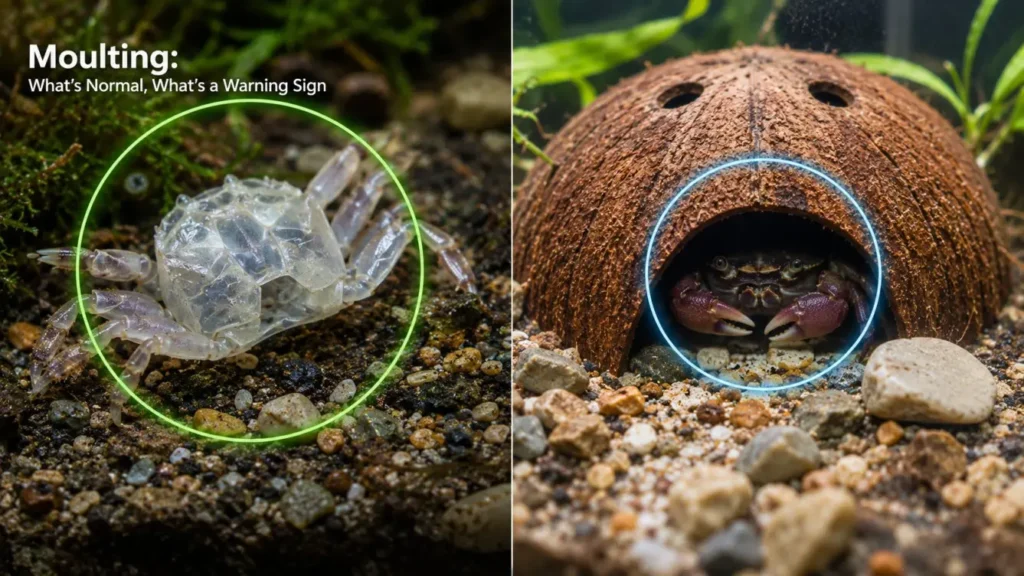
None of the guides I read before writing this article gave this matter the importance it deserved; yet, in reality, this is the cause of most deaths among captive crustaceans (crab-like creatures).
To grow, a red claw crab sheds its entire exoskeleton. In the day or two before a moult, expect reduced appetite and more time sitting in water. During the moult itself and for roughly 24–48 hours after, the crab is soft-bodied and defenseless — it needs to be left alone in a secure hiding spot.
Do not remove the old shell. Crabs eat their own discarded exoskeleton to reclaim calcium. Pulling it out of the tank actually works against you.
I have observed that most deaths during molting occur due to three reasons: calcium deficiency in the diet, low water GH (hardness), or stress caused by overcrowding. Always keep cuttlebone available and maintain the GH within the proper range; this will help you avoid most molting-related issues.
Tank Mates: What Survives, What Doesn’t
Red claw crabs are territorial, aggressive, and opportunistic scavengers. They will eat anything slow enough to catch. Species-only tanks are the safest and most common recommendation for a reason.
Can work, with monitoring: mollies (the most commonly recommended pairing — they tolerate brackish water and move fast), bumblebee gobies, larger fast-swimming brackish-tolerant species.
Avoid: dwarf shrimp of any kind, corydoras or other bottom-dwellers, slow-moving or long-finned fish, other crab species.
Keep males to one per tank — two males in the same space usually ends in a fight, sometimes a fatal one. One male with two females is the ratio I’d recommend if you want a small group.
Are They Dangerous?
Certainly not to people. They use their claws for defense and for territorial disputes with other crabs—not to prey on your fingers. Yes, they can pinch if you handle them carelessly, so my advice is not to pick them up unless it is necessary to move them somewhere else.
Breeding: The Honest Version
I’ll be straight with you — breeding red claw crabs successfully at home is genuinely rare, and due to this, most guides avoid it.
A female carries fertilized eggs under her abdomen for around three weeks. Once hatched, the larvae go through several zoea stages that require full marine salinity (specific gravity 1.020–1.025) — a completely different water chemistry from the adult brackish tank — for four to six weeks before becoming tiny crablets. Very few home aquarists have the dedicated marine rearing setup and live phytoplankton cultures needed to get larvae through all those stages alive.
Sexing Males vs. Females
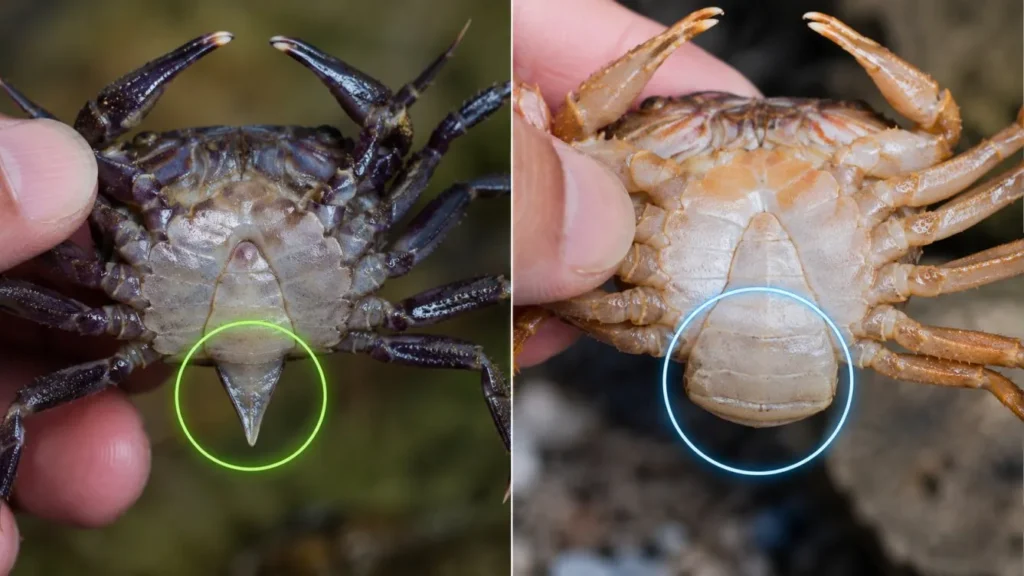
Flip the crab over and look at the abdominal flap. Males have a narrow, pointed flap; females have a broad, rounded one — that’s the same identification method used across most true crabs. Males also tend to carry larger, brighter claws.
New Red Claw Crabs Care: Your First 24 Hours
If you already bought one on impulse (no judgment — most of us did), here’s the order of operations you need to do:
- Get the tank cycled with land and water sections built before the crab goes in, if at all possible
- Mix your brackish water to 1.005 SG and test it
- Place the crab gently on the land side first, not into the water
- Leave the lights dim and don’t handle it for the first day
- Offer a small amount of food after 12–24 hours once it’s settled
Frequently Asked Questions
Are red claw crabs freshwater or saltwater?
Neither — they’re brackish. Keep the water at a specific gravity of 1.005 to 1.010 using marine aquarium salt. Pure freshwater or full-strength saltwater will both harm them over time.
How often should I feed a red claw crab?
Every one to two days, in small amounts. Rotate between sinking pellets, blanched vegetables, and occasional protein like bloodworms. Remove anything uneaten within 24 hours.
Can red claw crabs drown?
Yes. They’re semi-terrestrial and breathe air through moisture-dependent gills. Without a dry land area to climb onto, they can drown even though they live in water.
What’s the biggest beginner mistake with red claw crabs care?
Setting them up in a fully aquatic freshwater tank with no land access — this is exactly how most pet stores sell them, and it’s the leading cause of early death.
Where can I buy the right supplies in the USA?
Instant Ocean marine salt, an API hydrometer or refractometer, and an Aqueon or similar 10-gallon starter kit are available at Petco, PetSmart, or online — expect to spend $60–$100 total for a proper brackish setup.
Is it true that red claw crabs can live fine in freshwater long-term?
No — this is the most common myth in the hobby. They can survive short-term in freshwater, but their lifespan shortens significantly, and shell/moulting problems become more common the longer they’re kept without brackish conditions.
Next Steps: Resources You Must Read
- What Do Red Claw Crabs Eat? Tank vs. Wild Diet Explained — the full feeding breakdown, wild diet included → Read it here
- Freshwater Fish vs. Saltwater Fish — the full osmoregulation science behind why brackish matters → Read it here
The Bottom Line
Red claw crabs are incredibly rewarding, active, and fascinating creatures to keep—but only if you respect their biology (especially brackish water). They aren’t the “plug-and-play” freshwater community animals that pet shops pretend they are.
If you commit to mixing real brackish water, building an actual land setup, and accepting their feisty, territorial nature, you will have a thriving crab for years to come. Skip those steps, and you are working against nature. Build the tank right from day one, give them the space they need, and let their natural mangrove instincts do the rest.
Was this guide helpful?
First-Hand Experience
Based on animals I've personally kept and bred - not summarized from other articles.
Zoological Foundation
Claims are checked against my M.Sc. Zoology training and published aquatic biology research, not recycled aquarium myths.
No Paid Influence
No sponsorship shaped this guide. Affiliate links, if any, are disclosed separately and never hidden.
Kept Current
Errors are corrected as soon as they're found, with the update noted at the bottom of the article.

Anil Satak M.Sc. Zoology · Founder, FishioHub
Grew up in a fishing family in India and holds a Master's in Zoology. FishioHub is a one-person operation - every guide is personally researched, kept-tested, and written by Anil. No team, no outsourced writers, no AI-generated content. Read his full bio →