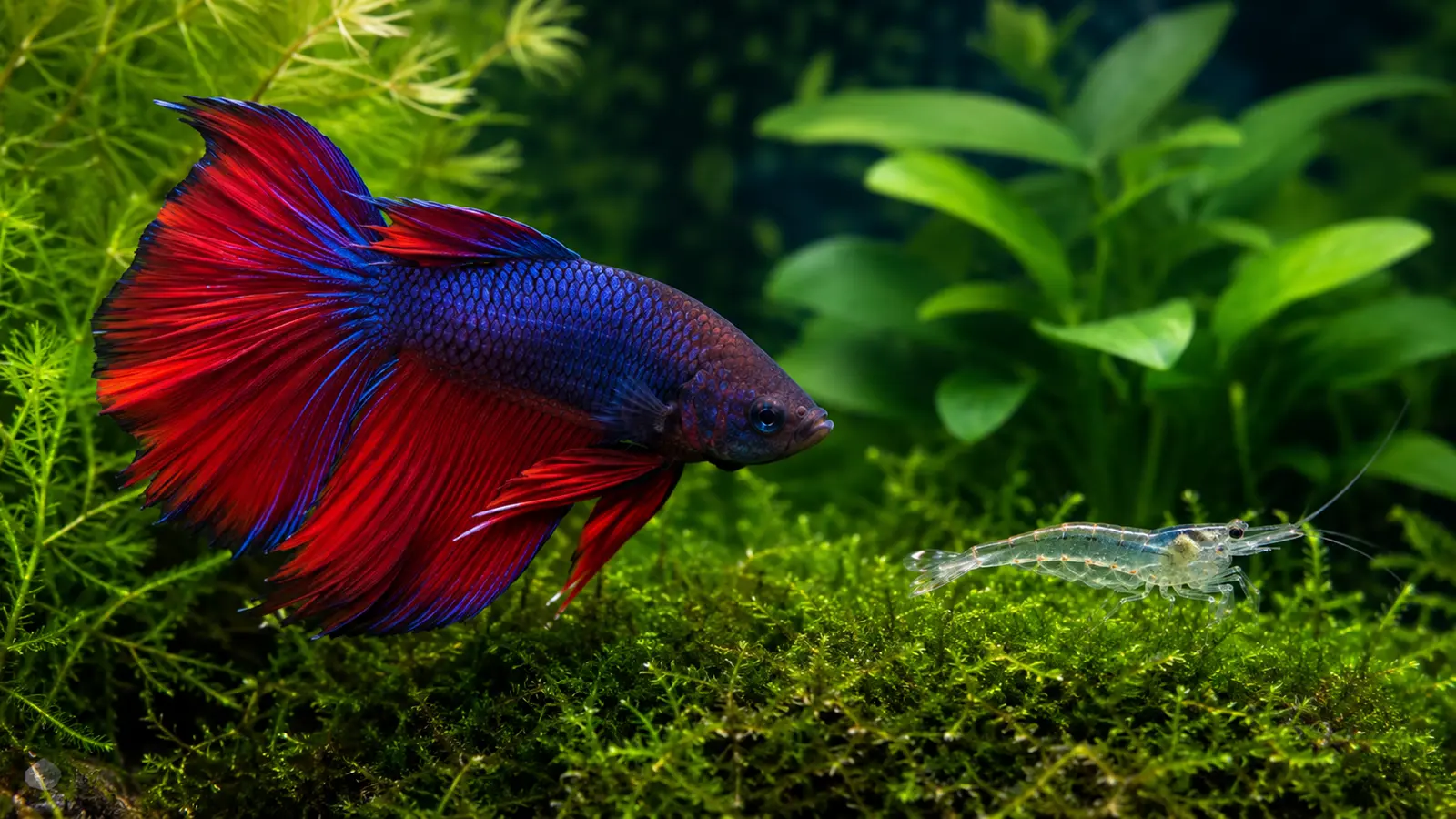
Can Ghost Shrimp Live With Betta Fish? Yes, ghost shrimp can live with betta fish, but only if your betta has a calm temperament, the tank holds at least 10 gallons, and the shrimp have dense plant cover to hide in after molting. Aggressive or nippy bettas will treat ghost shrimp as a snack, not a roommate, and there’s no way to know which one you have until you test it.
I’ve watched a betta I thought was completely “chill” turn my entire ghost shrimp colony into an expensive snack in under a week. That’s the myth nobody tells beginners: a calm betta on Monday can be a hungry hunter by Friday.
In my experience of keeping bettas and studying crustacean behavior as part of my zoology training, I’ve learned this pairing isn’t a coin flip. It’s a setup you can actually control once you know what most people get wrong.
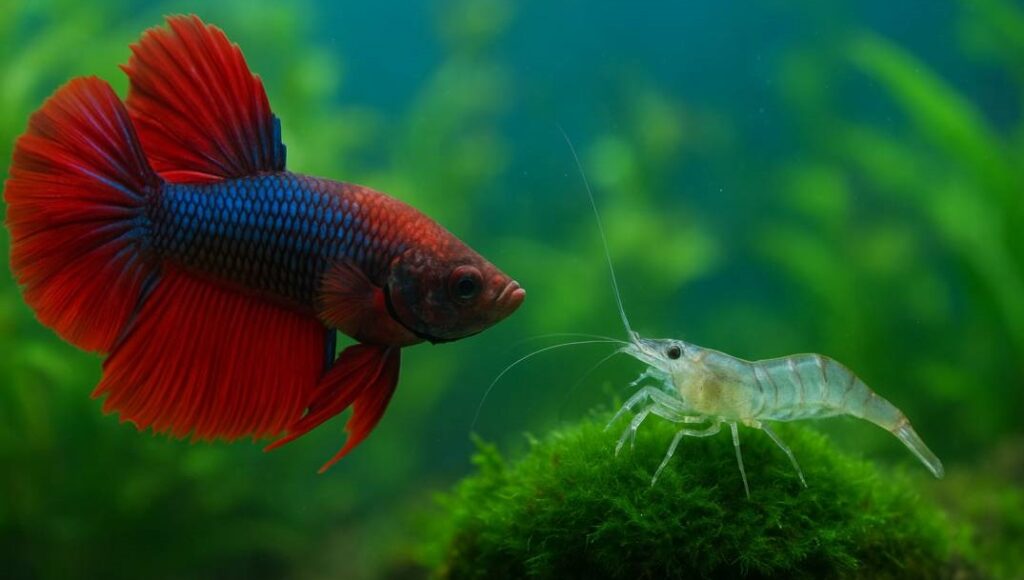
The Ghost Shrimp Mistake That Gets Them Eaten (It’s Not What You Think)
Here’s something I wish someone had told me before my first shrimp order: not everything sold as “ghost shrimp” at a US pet store is actually a ghost shrimp.
True ghost shrimp belong to the genus Palaemonetes — small, transparent, genuinely peaceful. But a lot of the “feeder shrimp” tanks at big-box stores are stocked with Macrobrachium species instead. They look almost identical as juveniles. The problem is what happens as they grow.
Macrobrachium shrimp get bigger, more territorial, and some species will happily go after a betta’s fins rather than the other way around. I’ve had a reader message me, convinced their “ghost shrimp” had turned aggressive — it hadn’t turned aggressive. It had just grown into what it actually was.
How to tell the difference at the store: true Palaemonetes stay small (under 2 inches), have a rounded, evenly transparent body, and move in short, twitchy bursts. If you see shrimp in the feeder tank that look chunkier, have a more visible claw structure, or are already over an inch and a half as juveniles, ask before you buy. Most LFS staff won’t know the difference either — this is genuinely under-discussed in the hobby.
Why Some Bettas Genuinely Don’t Care About Shrimp
Not every betta sees a shrimp and thinks “dinner.” In my experience, ghost shrimp actually have a decent shot at coexisting, for reasons that have nothing to do with luck:
- They’re nearly see-through. A transparent animal doesn’t trigger a betta’s territorial response the way a bright cherry shrimp does — there’s just less visual signal to react to.
- They’re fast and small. A healthy adult ghost shrimp can dart into cover quicker than most bettas can react.
- They’re not interested in your betta at all. Ghost shrimp are scavengers, not competitors. They’ll never chase, flare at, or bother a betta.
- They clean up after everyone. Leftover food, dead plant matter, even betta waste — a small colony noticeably cuts down on what collects at the bottom of the tank.
None of that guarantees peace. It just means the odds are better with ghost shrimp than with almost any other invertebrate you could add to a betta tank.
How Big Does the Tank Actually Need to Be?
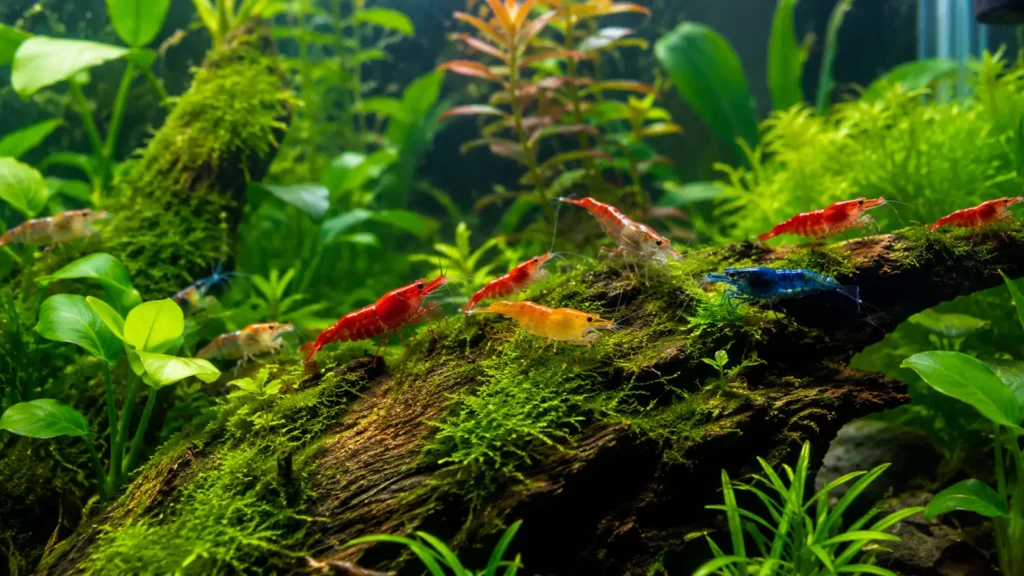
Ten gallons, minimum. I know some hobbyists try this in 5-gallon tanks and it can work for a while — I did it myself early on — but the margin for error is razor-thin. A bigger tank gives you:
- More hiding spaces
- More plant coverage
- More room for each species to maintain its territory
- More stable water parameters
Shrimp are more sensitive to sudden changes in ammonia, nitrites, and temperature. A slightly larger tank provides better stability and reduces stress.
| Water parameter | Safe range for both species |
|---|---|
| Temperature | 72–80°F |
| pH | 6.8–7.6 |
| Ammonia / Nitrite | 0 ppm |
| Nitrate | Under 20 ppm |
| Minimum tank size | 10 gallons |
Is Your Betta a Hunter or a Couch Potato?
This is the one variable you can’t control with equipment or plants. I’ve kept two bettas in near-identical tanks — same size, same plants, same feeding schedule — and one ignored the shrimp colony completely while the other picked it off in ten days flat. Same species, wildly different outcome.
General patterns I’ve noticed and that match what most experienced keepers report:
- Calm or curious bettas → high success rate
- Aggressive bettas → low success rate
- Male bettas with long fins → may chase shrimp out of boredom
- Female bettas → usually more tolerant
Before adding shrimp, observe your betta’s normal behavior for a few days. If the betta flares at everything, attacks snails, or becomes stressed easily, shrimp may not survive.
The First 24 Hours: What to Actually Do
This is the part every other guide skips, and it’s where most people lose shrimp.
- Never add shrimp to a brand-new tank. Let the betta settle into an established setup for at least two weeks first; a betta can be aggressive.
- Turn off the lights before you release shrimp. Bettas are visual hunters. Lower light gives shrimp a head start to find cover.
- Release near plant cover, not open water. Don’t just pour them into the middle of the tank, release them near a hiding spot, and don’t swim in the open spot.
- Feed the betta first, shrimp second. A betta that’s already eaten is far less interested in chasing something new.
- Don’t count shrimp obsessively for the first 48 hours. Some will hide completely, and you won’t see them — that’s normal, not a sign they’re gone.
- Watch, don’t hover. Check in a few times over the first day rather than staring at the tank constantly. Stress from you tapping the glass doesn’t help either animal settle.
Best Practices to Keep Ghost Shrimp Safe
Here are proven tips from experienced aquarists:
1. Add Shrimp After the Betta Has Settled
Never add a new betta to a tank full of shrimp. Always introduce shrimp after the betta has calmed down in the existing setup. This reduces territorial aggression.
2. Provide Dense Plant Cover
Plants make a huge difference. Add dense coverage using:
- Java moss
- Java fern
- Hornwort
- Anubias
- Floating plants (for shade)
- Shrimp caves or rock crevices
Shrimp molt frequently, and they become extremely vulnerable during this time. Plants and hiding structures prevent bettas from discovering freshly molted shrimp.
3. Maintain Stable Water Parameters
Ghost shrimp do well in:
- Temperature: 72–80°F
- pH: 6.8–7.6
- Ammonia/Nitrites: 0 ppm
- Nitrates: Under 20 ppm
Gentle sponge filters are ideal because shrimp are sensitive to strong water flow.
4. Feed the Betta on a Real Schedule
A hungry betta is a hunting betta. I feed mine two small meals a day — an amount they can finish in under two minutes each time. If you’re feeding once a day or skipping days, that’s often exactly when a betta starts treating shrimp as a food source instead of tank decoration. Overfeeding isn’t the fix either — it just fouls your water. Consistency is what matters, not quantity.
5. Add a Group of Shrimp
Keeping 5–8 ghost shrimp instead of one or two increases survival chances. A group feels more secure and is less likely to be chased individually.
What I Got Wrong My First Time
My first attempt at this combo failed, and it wasn’t the betta’s fault — it was mine.
I added eight ghost shrimp to a tank that had housed my betta for less than a week. I hadn’t watched his behavior long enough to know he was a curious, high-energy fish who investigated everything that moved. Within three days, I was down to two shrimp. I assumed I’d just gotten an aggressive betta.
A few months later, with a different betta, in a tank I’d let settle for a full month first, with heavier plant cover — I kept a colony of ghost shrimp alive and breeding for over a year. Same species of shrimp. Completely different result. The difference wasn’t the shrimp. It was patience and setup, in that order.
Warning Signs Your Shrimp Aren’t Safe
Even with careful setup, watch for:
- Repeated chasing, not just one curious investigation
- Shrimp vanishing overnight — often tied to a molt, when a shrimp’s shell is soft and it can’t retreat as fast
- Constant hiding, never foraging — a sign of chronic stress, not just normal shyness
- Betta flaring specifically at shrimp, not just at its own reflection
- Shrimp nibbling betta fins — rare, and usually only happens when shrimp are underfed, not the betta
If the betta becomes too aggressive, separate them.
Expert Tip: Add dense plants like Java moss, hornwort, or hiding caves.
Shrimp molt often, and providing safe hiding zones dramatically increases survival.
Read More: Ghost Shrimp Care Guide
USA Buyer’s Note: What’s Actually in the Feeder Tank
If you’re buying in the US, the ghost shrimp sold at big chains like Petco or PetSmart usually come from the same feeder-tank supply chain used for oscar and puffer food — which is exactly why species mislabeling happens so often. They’re priced to move, not sorted carefully.
A local fish store that specializes in shrimp is more likely to sell verified Palaemonetes, though you’ll pay more per shrimp — often $0.50–$1.50 each at an LFS versus $0.20–$0.30 in a chain-store feeder tank. If your budget only allows for the cheaper option, that’s fine — just inspect them individually rather than grabbing a bag at random, using the ID pointers from the section above.
What the Science Says About Molting and Vulnerability
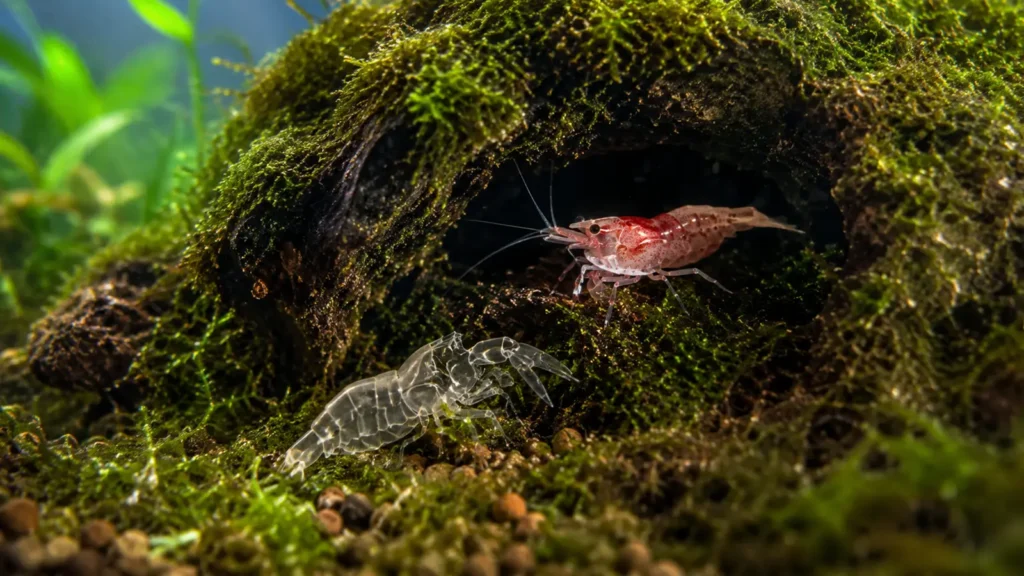
Every guide on this topic — mine included, until this update — says shrimp are “vulnerable after molting” without explaining why or for how long.
Here’s the biology in plain terms: a shrimp’s shell (exoskeleton) doesn’t grow with it. To get bigger, it has to shed the old shell entirely — a process called ecdysis — and the new shell underneath is soft until it hardens. This isn’t unique to ghost shrimp; it’s true of every crustacean, from lobsters to crayfish. Freshwater invertebrate research generally puts the vulnerable window at several hours up to about a day, depending on water temperature and the shrimp’s size — warmer water speeds the hardening process but also speeds up how often shrimp molt in the first place.
What that means for your tank: the danger isn’t a single dramatic moment; it’s a recurring several-hour window that happens repeatedly over a shrimp’s life. That’s why “add more hiding spots” isn’t just generic advice — it’s the single highest-leverage thing you can do, because you’re not protecting against one risk, you’re protecting against a cycle that repeats every few weeks.
FAQ
Can ghost shrimp live with betta fish in a small tank? Ghost shrimp can technically survive in a 5-gallon tank with a betta, but success rates drop sharply below 10 gallons. Smaller tanks mean less hiding space and faster water parameter swings, both of which put shrimp at higher risk.
How often should I check on new ghost shrimp? Check once or twice a day for the first week, without disturbing the tank. Constant tapping on the glass or moving decorations stresses both the shrimp and the betta and can actually trigger more chasing behavior.
Is it safe to add ghost shrimp to an aggressive betta’s tank? No. If your betta flares constantly, attacks snails, or shows aggression toward its own reflection, don’t add shrimp. An aggressive betta will almost always treat ghost shrimp as prey, regardless of tank size or plant cover.
What mistake do most beginners make with ghost shrimp and bettas? Most beginners add shrimp to a brand-new tank before the betta has settled in, and skip checking whether their “ghost shrimp” are actually Palaemonetes rather than a larger, more aggressive Macrobrachium species sold under the same name.
Are Petco or PetSmart ghost shrimp safe to use? They can work, but chain-store feeder tanks are more prone to species mislabeling than a dedicated local fish store. Inspect shrimp individually for small size and even transparency before buying, rather than grabbing a bag at random.
Do ghost shrimp and betta fish need different water temperatures? No — both species do well in the same 72–80°F range, which is one of the reasons this pairing is more practical than mixing a betta with a cold-water invertebrate.
Is it true that ghost shrimp will eat a betta’s fins? It happens, but it’s rare and usually only when shrimp are underfed and scavenging on an already-injured or slow-moving betta. It’s not typical behavior in a properly fed, healthy tank.
How many ghost shrimp should I start with? Five to eight is a good starting colony size. A larger group spreads out a betta’s attention and lowers the odds of any single shrimp being repeatedly targeted.
Next Steps: Resources You Should Read Next
- Ghost Shrimp vs. Amano Shrimp — if you’re not sure which algae-eating shrimp fits your tank better
- Why Did My Shrimp Turn White and Die? — what a failed molt actually looks like, and how to prevent it
- What Do Aquarium Shrimp Eat? — the full feeding guide so your colony doesn’t compete with your betta for food
Final Thoughts: Can Ghost Shrimp Live with Betta Fish?
Yes — ghost shrimp and betta fish can live together peacefully, but only if:
- The betta has a calm personality
- The tank is at least 10 gallons
- Plenty of plants and hiding spaces are available
- Water parameters remain stable
- The betta is not overly territorial
Many aquarists have kept this combination successfully for years by following these simple guidelines.
Was this guide helpful?
First-Hand Experience
Based on animals I've personally kept and bred - not summarized from other articles.
Zoological Foundation
Claims are checked against my M.Sc. Zoology training and published aquatic biology research, not recycled aquarium myths.
No Paid Influence
No sponsorship shaped this guide. Affiliate links, if any, are disclosed separately and never hidden.
Kept Current
Errors are corrected as soon as they're found, with the update noted at the bottom of the article.
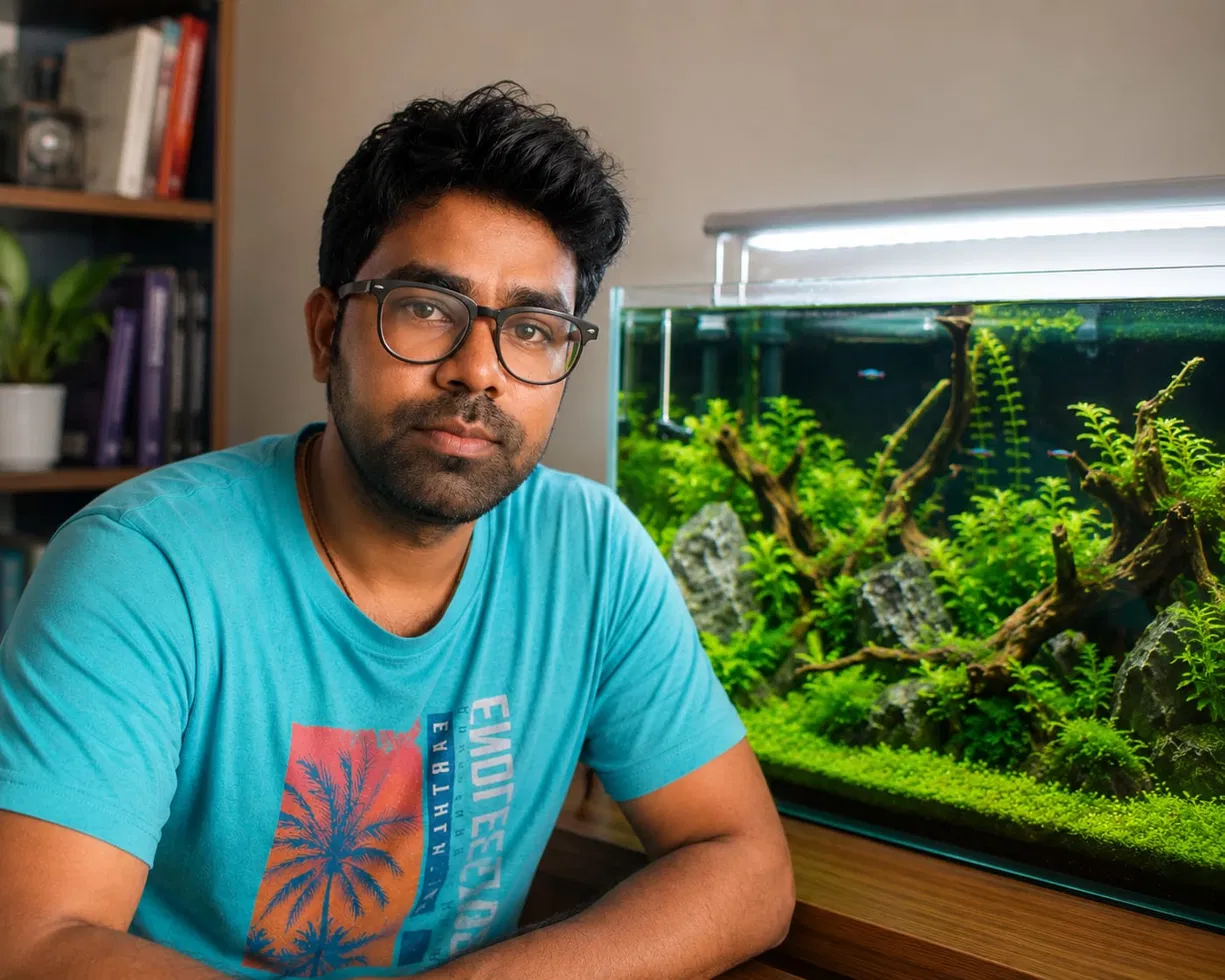
Anil Satak M.Sc. Zoology · Founder, FishioHub
Grew up in a fishing family in India and holds a Master's in Zoology. FishioHub is a one-person operation - every guide is personally researched, kept-tested, and written by Anil. No team, no outsourced writers, no AI-generated content. Read his full bio →