
Sudden fish deaths right after a water change are more common than most aquarists realize. Then they think Why Do My Fish Die After a Water Change? If your fish keep dying after a water change, it usually indicates water chemistry shock rather than disease.
Fish usually die after a water change due to sudden temperature changes, chlorine or chloramine exposure, ammonia spikes, or abrupt changes in pH and hardness.
Even if you use water conditioners, replacing too much water at once or failing to match the parameters can stress fish to the point of death.
🐟 What You’ll Get in This Post
- 💀 Clear explanation of why do my fish die after a water change and what really goes wrong
- 🔍 Real insights into why my fish die after water change even when everything looks fine
- 🚑 Practical steps on how to save dying fish after water change before it’s too late
- 🐟 What it means when fish laying at bottom of tank after water change and how to respond
- ⚠️ Hidden truth behind my water tests perfect but my fish keep dying
Why Do My Fish Die After a Water Change? 6 Reasons (Why This Happens)
If you are confused why do my fish die after a water change despite using water conditioners? Then you must know the following reasons. So that you can prevent this from happening next time.
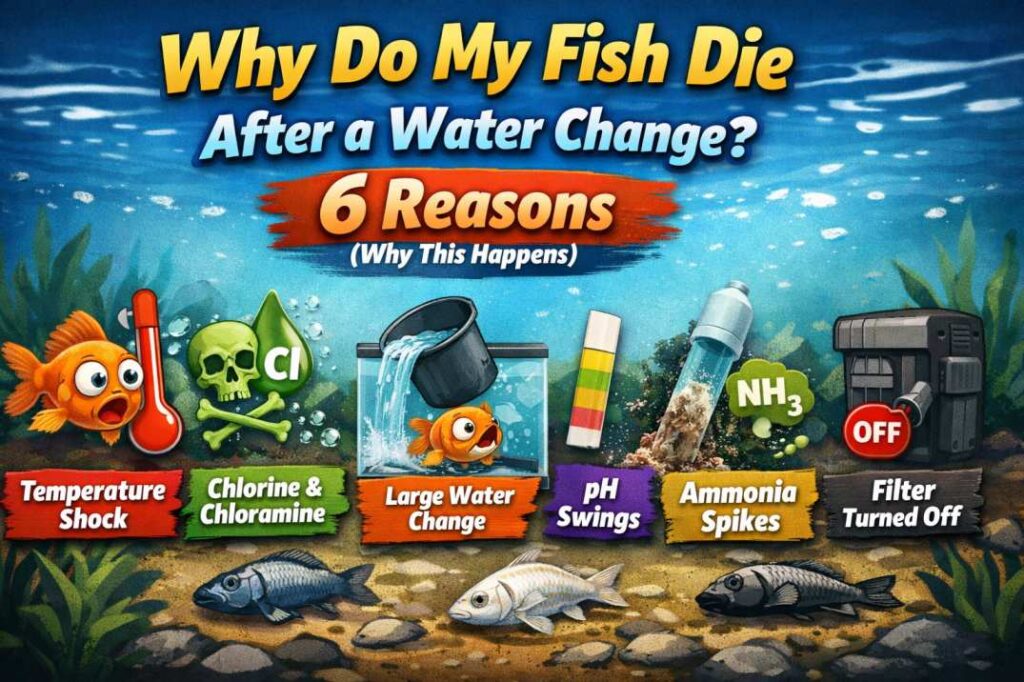
1. Sudden Temperature Shock
Fish are sensitive to even a small 2–3°C temperature change.
If the new water is colder or hotter, your fish may go into shock and die within minutes or hours.
This also explains:
- Why Do My Fish Die After a Water Change?
- Why do my fish die after a water change, despite using water conditioners?
2. Chlorine or Chloramine Not Fully Neutralized
Tap water contains chlorine and sometimes chloramine. These chemicals burn gills, causing instant stress or suffocation to the fish, which can lead them to die.
Even with a conditioner:
- Wrong dosage
- Adding conditioner after water enters the tank
- Using poor-quality conditioners
Above are several causes that can lead to fish death.
This directly relates to:
- Why do my fish die after a water change despite using water conditioners?
3. Replacing Too Much Water at Once
This is one of the very big mistakes that beginners can make. A large water change (50–100%) drastically changes crucial water parameters:
- pH value
- KH (buffering capacity)
- GH
- Temperature
- Ammonia equilibrium
It is very difficult for fish to adjust to this new condition. Fish cannot adjust quickly, causing massive die-offs.
This explains:
- Why are my fish dying after a water change?
- Why do my fish keep dying after a water change?
Expert Rule:
Only change 20–30% water unless there’s an emergency like ammonia poisoning.
4. pH and Hardness Swings
If your tap water has:
- Higher pH value
- Different hardness
- Higher mineral content
In such a situation, if your tank water changes too quickly, this is going to shock the fish. Even a 0.4–0.6 pH swing can be deadly for sensitive species like shrimp, neon tetras, or bettas.
5. Disturbing the Substrate Causes Ammonia Spikes
Deep gravel cleaning releases trapped waste.
When this enters the water column, ammonia levels may spike suddenly.
Ammonia + fish gills = instant burning and death.
6. The Filter Is Turned Off for Too Long
If your filter is off for a long time, like 30–60 minutes, beneficial bacteria begin to die.
When you restart the filter, dead bacteria release toxins and ammonia. This can also kill fish within hours.
🚨 Still Losing Fish? Don’t Miss This
If your fish die after a water change, there may be other hidden problems in your tank. Fixing just one issue isn’t enough. 👉 Check my full guide on 20 Common Aquarium Problems (And Solutions)
➡️ Fix your tank the right way before it’s too late
Why My Fish Die After Water Change ( Summary)
From my experience, when people ask why my fish die after water change, the situation becomes even more confusing when my water tests perfect but my fish keep dying. This usually means the problem isn’t just visible in test results—sudden changes in temperature, pH, or harmful chemicals like chlorine can stress fish instantly. Even if your water looks fine on paper, these hidden factors can shock fish and lead to unexpected deaths after a water change.
How to Prevent Fish Dying After Water Changes (6 Expert Steps)
1. Match the Temperature Exactly
By Use a thermometer to match the temperature accurately. Don’t try to guess.
New water should be within 1°C of tank water.
2. Always Treat Tap Water Before Adding It
Use a high-quality water conditioner that removes:
- Chlorine
- Chloramine
- Heavy metals
Add conditioner to a bucket first, then pour it into the tank.
3. Stick to 20–30% Weekly Water Changes
This method will prevent sudden changes in:
- pH
- KH
- GH
- Temperature
4. Don’t Overclean Gravel
Clean only 1/3 of the substrate per water change.
5. Never Turn Off the Filter During Water Changes
If you must, keep it off for less than 10 minutes.
6. Test Your Tap Water
Sometimes, tap water itself is not safe.
Test for:
- pH
- KH
- GH
- Ammonia (surprisingly common in some areas!)
If ammonia exists in tap water, you must use an ammonia-binding conditioner.
How to Save Dying Fish After Water Change?
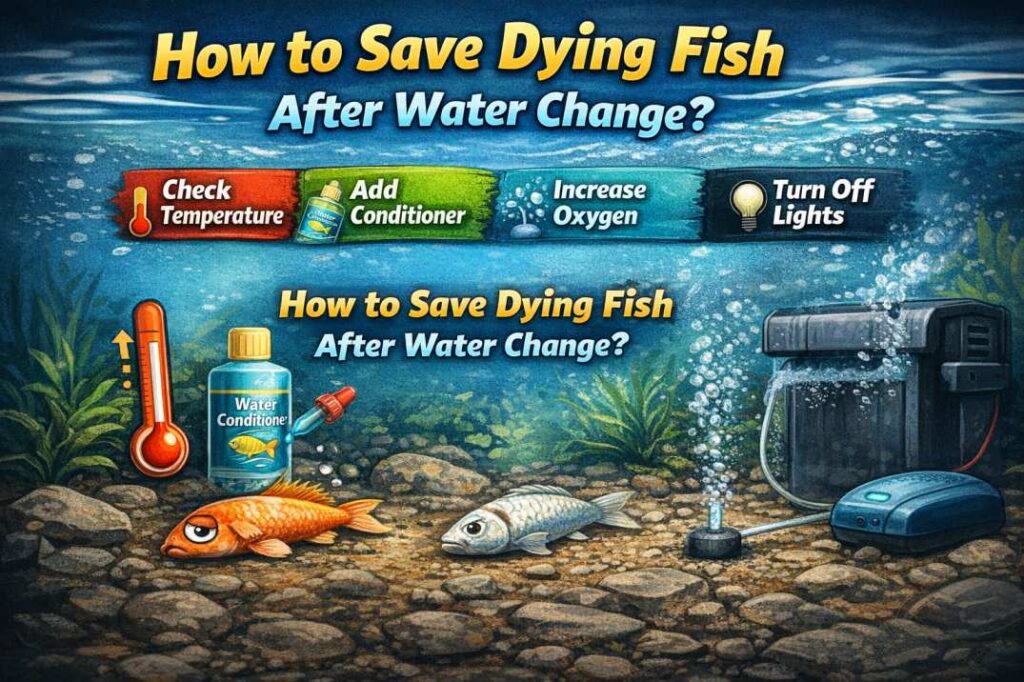
If you’re trying to figure out how to save dying fish after water change, the first step is to act quickly and reduce stress. From my experience, when you notice fish laying at bottom of tank after water change, it’s often a sign of shock due to temperature change, chlorine, or sudden parameter shifts.
To help your fish recover, immediately check water temperature, add a proper water conditioner, and increase oxygen levels by improving water flow or aeration. Keeping the lights off and avoiding further disturbance can also reduce stress and give your fish a better chance to recover.
FAQs
1. Why do my fish die after a water change even when I use a conditioner?
When asking why do my fish die after a water change, even with a conditioner, the issue is often incorrect dosage, sudden temperature differences, or rapid changes in pH. These factors can stress fish and lead to shock despite using treatment products.
2. Why do my fish die after a water change suddenly?
If you’re wondering why do my fish die after a water change suddenly, it is usually due to drastic changes in water parameters such as temperature, ammonia balance, or oxygen levels. Fish are sensitive, and even small changes can have immediate effects.
3. Why is my goldfish sitting at bottom of tank after water change?
If you notice goldfish sitting at bottom of tank after water change, it is often a sign of stress or shock. This can happen due to temperature fluctuations, poor water conditioning, or disturbed substrate releasing toxins. In most cases, stabilizing water conditions helps the fish recover.
Read More from FishioHub:
✔️ Expert Tip
Most fish deaths after water changes can be avoided by small, frequent water changes instead of large ones.
Stick to 20–30%, and always match the temperature and treat the water before adding it. Please share this post on “Why Do My Fish Die After a Water Change?” to the needful.