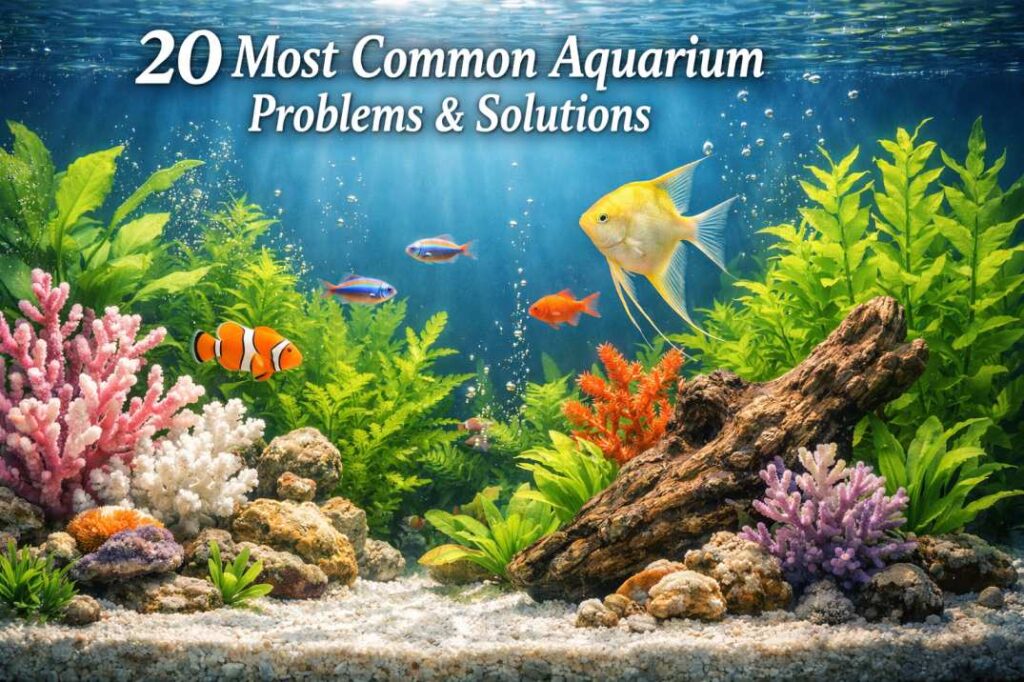
When I first started keeping fish, I thought maintaining an aquarium would be simple — feed the fish, change the water, and enjoy the view. But very quickly, I realized that aquarium problems can show up anytime, even if you think everything is perfect.
Over time, I’ve personally faced cloudy water, fish deaths after water changes, algae issues, and even equipment failures. The good thing? Almost every problem has a solution — if you understand the cause.
In this guide, I’m sharing the most common aquarium problems I’ve faced (and solved), along with simple fixes that actually work.
🎯 What You’ll Get in This Post
- 🐟 The 20 most common aquarium problems beginners face
- 💧 How to Prevent Aquarium Algae
- ⚠️ How many times a day fish should be feed
- 💀 Deadly Mistake
20 Most Common Aquarium Problems With Solutions
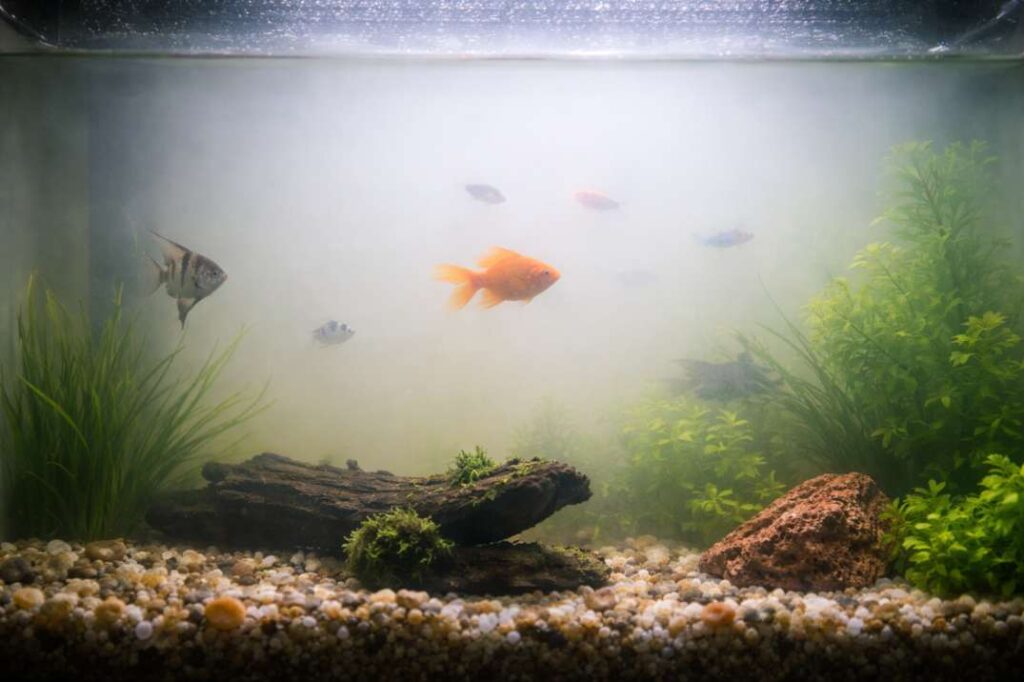
1. Cloudy Fish Tank
Possible Reasons:
Cloudy fish tank often appears due to bacterial blooms, especially in newly set-up tanks. Overfeeding can also cause leftover food to decompose, clouding the water in the tank. Additionally, a dirty or clogged filter fails to remove particles, making the water look murky.
Recommended Solutions:
Perform a regular, partial water change to remove suspended particles. Don’t overfeed; reduce feeding amounts to avoid leftover food. Clean the dirty filter or replace your filter media regularly to maintain proper water flow.
👉 Read full guide on fixing cloudy water here
2. Fish Dying After Water Change
Potential Causes:
After a water change, fish may die due to a sudden shift in temperature (temperature shock) or the presence of chlorine in tap water. Abrupt changes in water parameters can also cause stress to the fish, potentially leading to their demise. Beginners often overlook these minor yet crucial details. By understanding these common aquarium-related issues, you can protect your fish from stress, disease, or even death.
Suggested Solutions:
Use a ‘water conditioner’ to neutralize harmful chemicals. Match the temperature of the fresh water to that of the water already in the tank. To minimize stress, replace the water gradually.
👉 Full tips here on why do my fish die after a water change
3. Ammonia Spike
Possible Reasons:
Ammonia can accumulate from overfeeding, leftover food, and excessive fish waste. Uncycled tanks are especially vulnerable, as beneficial bacteria are not yet established to process ammonia.
Recommended Solutions:
Perform regular partial water changes to dilute ammonia levels. Add beneficial bacteria supplements to speed up cycling. Reduce feeding and monitor tank parameters closely.
👉 Learn to how to remove ammonia naturally here
4. Algae Overgrowth
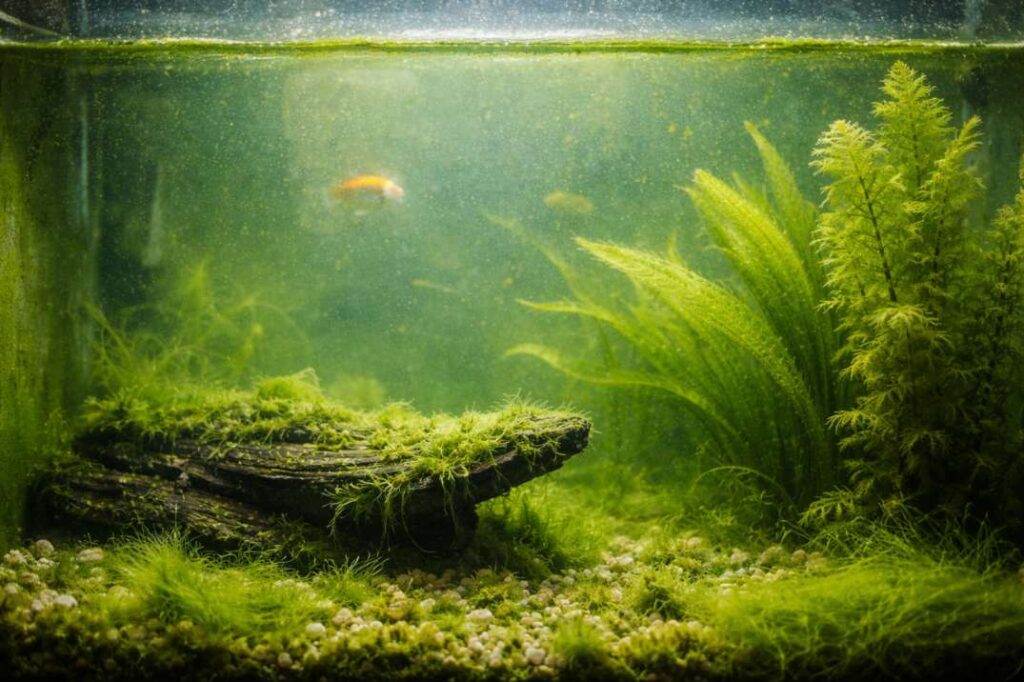
Possible Reasons:
Algae growth occurs when the tank receives too much light or has excess nutrients. Overfeeding also contributes, as leftover food decomposes and feeds algae. Whether you’re a beginner or experienced hobbyist, recognizing common aquarium problems early helps you maintain a clean and safe tank.
Recommended Solutions:
Reduce lighting duration and intensity. Introduce algae eaters like Amano shrimp or snails. Clean tank surfaces regularly to keep algae in check.
👉 Full algae prevention guide here.
5. Fish Breathing Fast or Gasping
Potential Causes:
Rapid gill movement in aquarium fish typically indicates a lack of oxygen or high ammonia levels in the water. Stress—caused by overcrowding or poor water quality—can further exacerbate the situation.
Suggested Solutions:
Increase aeration using an air pump or filter. Additionally, test the water parameters and correct any imbalances. To reduce stress, decrease the stocking density (number of fish) in the aquarium. This will help quickly resolve common aquarium problems, such as fish gasping for air.
6. No Filter or Poor Filtration
Possible Reasons:
A tank without a filter, or with a small or clogged filter, cannot maintain water clarity or remove toxins. Poor water circulation also harms fish health.
Recommended Solutions:
Install a filter suitable for your tank size. Clean filter media regularly and replace when necessary. Adjust flow rates to match the needs of your fish. Learn how to fix the common aquarium problems that disrupt water quality, fish health, and tank aesthetics.
👉 Tips for running a tank without a filter
7. Aquarium Glass Break Risk
Possible Reasons:
Glass can break if the tank is on an uneven stand or overloaded. Weak glass or accidental bumps also increase the risk.
Recommended Solutions:
Always use a sturdy stand and check the tank’s glass for cracks. Avoid overfilling and distribute weight evenly. Inspect regularly to prevent accidents.
👉 Learn about aquarium glass safety
8. Green Water (Algae Bloom)
Possible Reasons:
Green water occurs when free-floating algae bloom, often due to too much light and nutrient-rich water. Overfeeding also provides extra food for algae growth.
Recommended Solutions:
Reduce light exposure and duration. Perform regular water changes to lower nutrients. Use a UV sterilizer if algae persist. By applying this, you can quickly fix common aquarium problems, such as algae bloom.
9. Brown Water in Aquarium
Possible Causes:
I have observed that tannins released from driftwood or decaying plant matter often cause the water to turn brown. This issue can be exacerbated by using an excessive amount of substrate or by failing to perform regular water changes.
Suggested Solutions:
Use activated carbon to remove the tannins. Perform regular water changes. Thoroughly rinse any decorative items before placing them in the tank. Adopting these measures will help reduce common aquarium problems, such as the browning of the water.
10. Floating Particles
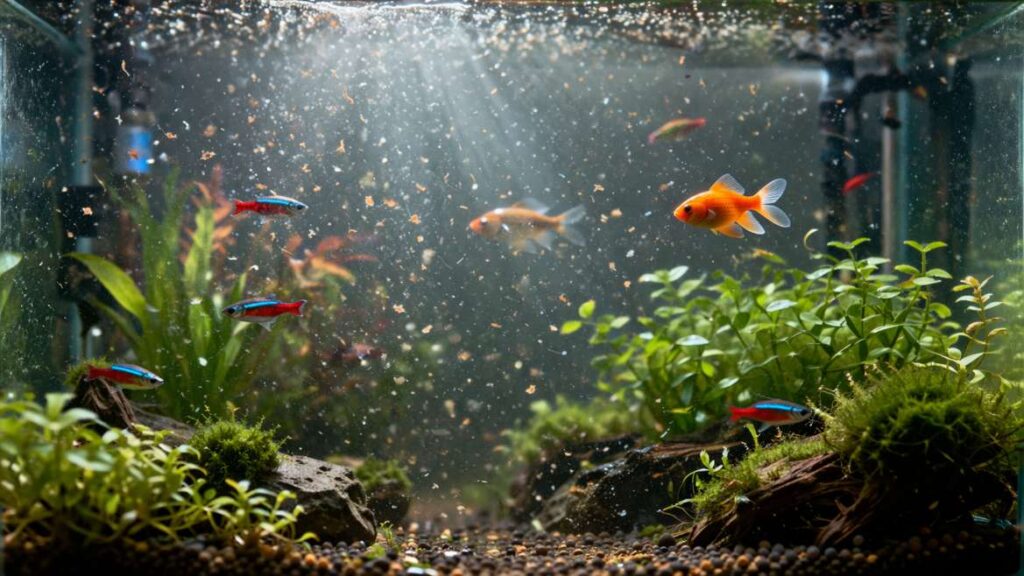
Possible Reasons:
Uneaten food, dead plant matter, or poor filtration can leave particles suspended in the water. Overfeeding worsens the situation.
Recommended Solutions:
Improve filtration and clean the substrate regularly. Remove debris by hand if necessary. Monitor feeding habits to reduce leftover food.
11. High Nitrite Levels
Possible Reasons:
Incomplete tank cycling or overfeeding can spike nitrites. Overstocked tanks also contribute to this problem.
Recommended Solutions:
Perform partial water changes. Add bacteria supplements to help process nitrites. Test water frequently to monitor levels.
12. High Nitrate Levels
Possible Reasons:
Overcrowding and lack of proper water changes cause nitrate accumulation. Excess food also breaks down into nitrates over time.
Recommended Solutions:
Perform regular partial water changes. Add live plants to absorb nitrates. Reduce feeding amounts to prevent further buildup. Now you can apply these to reduce common aquarium problems, such as an increase in nitrate levels.
13. pH Imbalance
Possible Reasons:
Tap water variations, decaying plants, or chemical additives can cause pH shifts. Sudden changes are stressful for fish.
Recommended Solutions:
Test water regularly. Adjust pH gradually with appropriate products. Avoid sudden changes to keep fish healthy.
14. Fish Not Eating
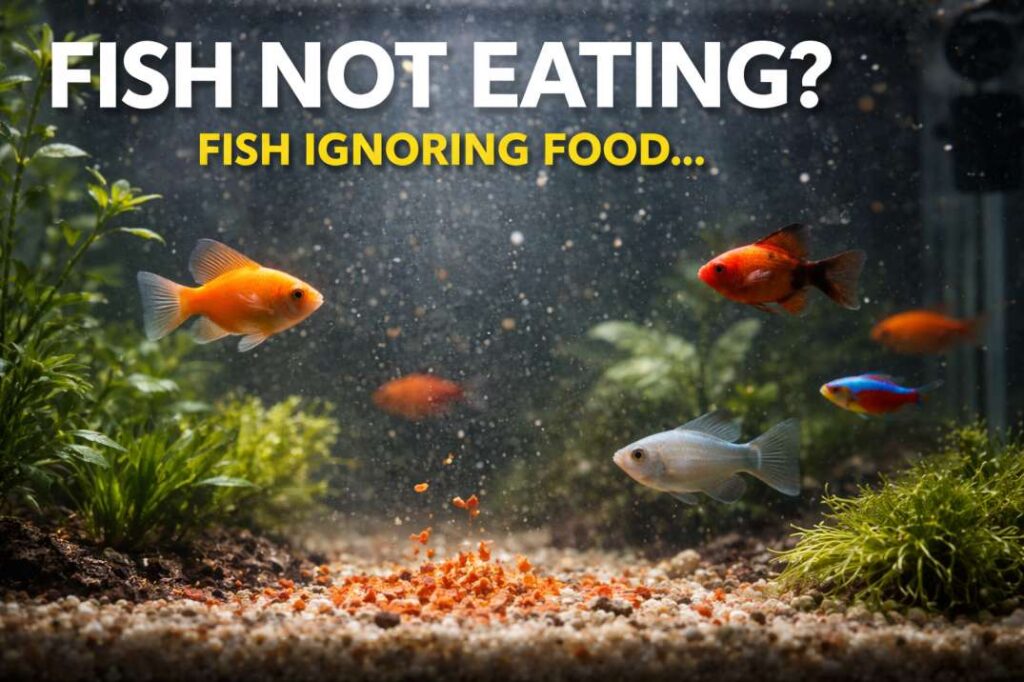
Possible Reasons:
Stress, illness, or improper diet may make fish refuse food. Water parameter issues can also suppress appetite.
Recommended Solutions:
Check water quality and correct any issues. Offer appropriate food types for your fish species. Observe for disease signs and treat promptly. Implementing the right solutions for common aquarium problems ensures your tank remains visually stunning and safe for all your aquatic life.
👉 Guide for feeding picky fish
15. Fish Swimming Erratically
Possible Reasons:
Toxins in the water, stress, or disease can cause erratic swimming. Poor water quality is often the root cause.
Recommended Solutions:
Test water parameters and correct imbalances. Reduce stressors such as overcrowding or sudden light changes. Isolate sick fish if necessary.
16. Bad Smell
Possible Reasons:
Decaying waste, dirty substrate, and poor filtration often cause a strong odor. Overfeeding worsens the problem.
Recommended Solutions:
Vacuum the substrate regularly. Improve filtration and clean or replace filter media. Remove uneaten food promptly.
👉 Tips to remove aquarium odor naturally
17. Dirty Substrate
Possible Reasons:
Accumulated fish waste, uneaten food, and dead plant matter make the substrate dirty. Neglecting cleaning schedules accelerates this issue.
Recommended Solutions:
Use a gravel vacuum to remove debris. Maintain a regular cleaning schedule. Remove dead leaves and decaying plants promptly. These expert-recommended solutions are designed to solve common aquarium problems efficiently.
18. Heater Problems
Possible Reasons:
Faulty or incorrectly set heaters can stress or even kill fish. Electrical issues or inconsistent temperatures are also common causes.
Recommended Solutions:
Use a reliable heater and monitor water temperature daily. Replace faulty equipment immediately. Adjust settings gradually to avoid sudden changes.
19. Overfeeding
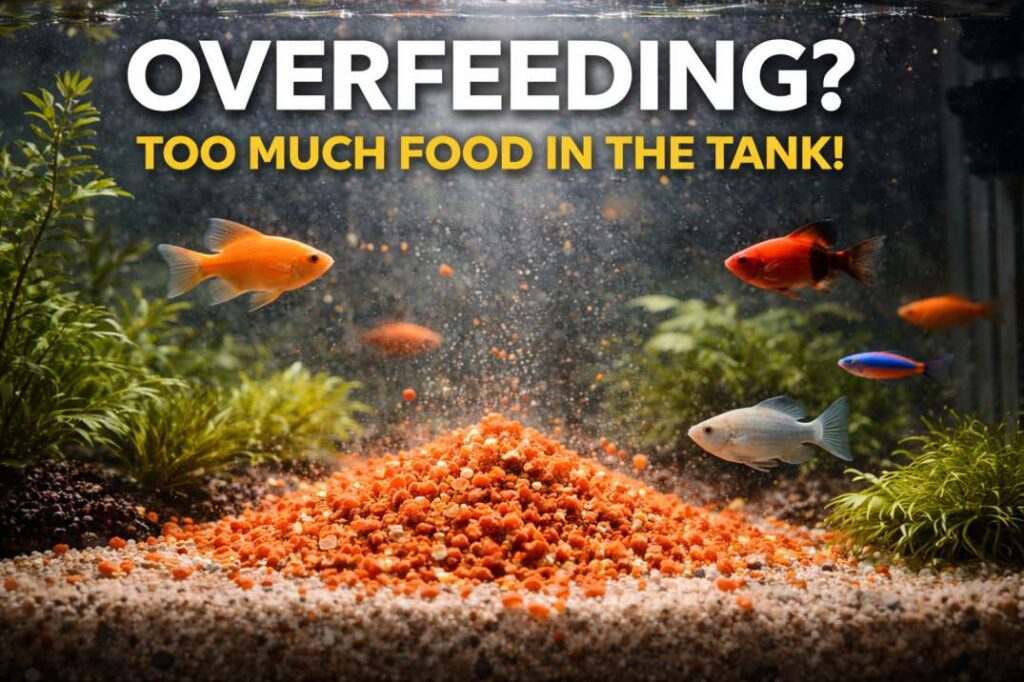
Possible Reasons:
Overfeeding is one of the common aquarium problems. Giving too much food or feeding too often leads to leftover food decomposing in the tank. This can spike ammonia and feed algae.
Recommended Solutions:
Feed small portions appropriate for your fish. Remove uneaten food promptly. Observe fish behavior to ensure they are eating efficiently.
👉 How often to feed your fish guide
20. Overcrowded Tank (☢️Deadly Mistake!)
Possible Reasons:
Adding too many fish for your tank size causes stress, aggression, and rapid buildup of waste. Ignoring the growth of fish over time worsens the problem. This is not a common aquarium problems it is a deadly mistake that everyone should avoid.
Recommended Solutions:
Follow proper stocking guidelines for your tank. Upgrade tank size if needed and monitor water quality carefully. Ensure filtration and aeration are sufficient.
⚠️ This is one of the most dangerous mistakes a beginner can make, and fixing it early is crucial.
FAQ
Q: What are the most common aquarium problems beginners face?
A: The most common aquarium problems include cloudy water, ammonia spikes, algae overgrowth, fish stress, and improper feeding. Identifying these early helps maintain a healthy tank.
Q: How can I quickly fix common aquarium problems?
A: Regular water testing, partial water changes, proper filtration, and controlled feeding are the fastest ways to resolve common aquarium problems and prevent long-term damage.
Final Thoughts
From my experience, most aquarium problems don’t happen randomly — they usually come from small mistakes that build up over time. The good news is, once you understand these common aquarium problems, you can fix them quickly and keep your tank stable and healthy.
👉 My advice: Don’t try to fix everything at once. Identify the problem, apply the right solution, and give your tank time to stabilize. If you’re dealing with any specific issue, I’ve linked detailed guides above so you can go deeper and fix it properly.