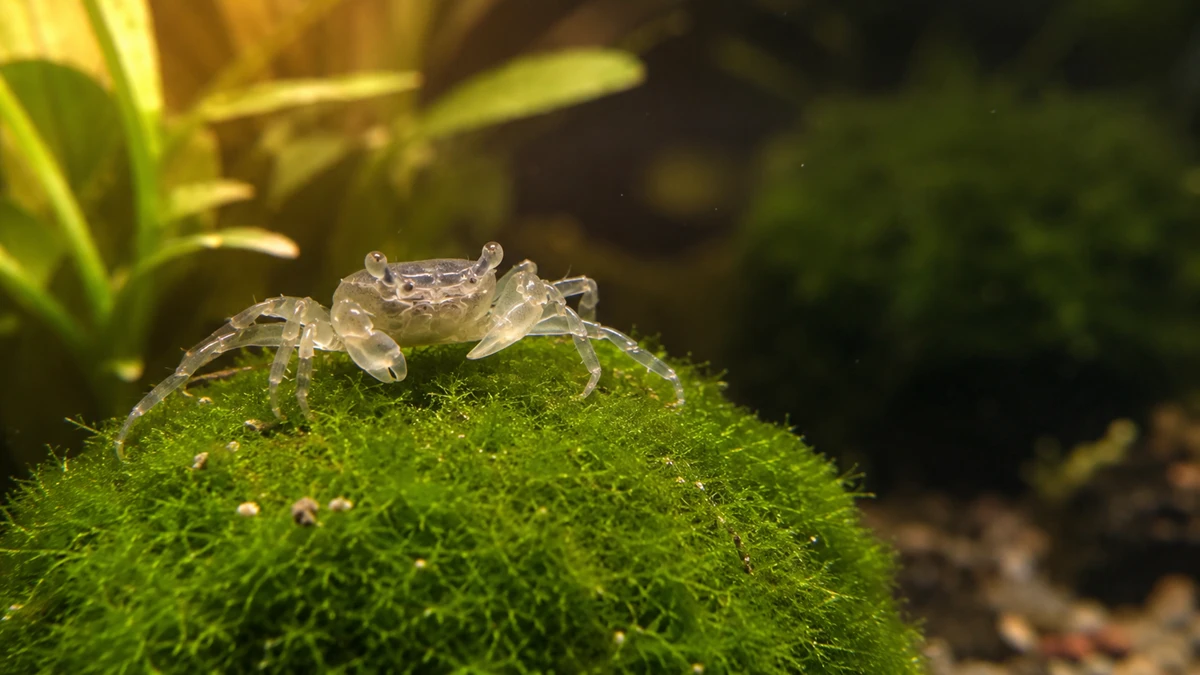
I almost set up a “freshwater crab” tank the wrong way myself, and the only reason I caught it was my own zoology notes on gill structure.
Short answer: if you want small freshwater crabs for aquarium life with no land section, your real options are Thai micro crabs and panther crabs — vampire crabs and red claw crabs both need dry land and will drown without it. Get that one distinction wrong, and you’ll lose the animal, not because you’re careless, but because the shop label just says “crab” and stops there.
Do you think crabs can drown? I still remember the time I brought home my first “mini red crab” and put it into a tank filled with water. Just two days later, I saw the poor creature frantically trying to climb up the filter pipe to get out of the water.
If You Only Remember 3 Things
- Not every “freshwater crab” is fully aquatic. Some are semi-terrestrial and will drown without a dry basking spot.
- Thai micro crabs (Limnopilos naiyanetri) are the true nano-tank pick — under 1 cm, filter feeders, genuinely shrimp-safe.
- Any crab, aquatic or not, will eat a slow or sick tankmate. “Peaceful” is relative here, not absolute.
Why “Freshwater Crab” Is a Misleading Label
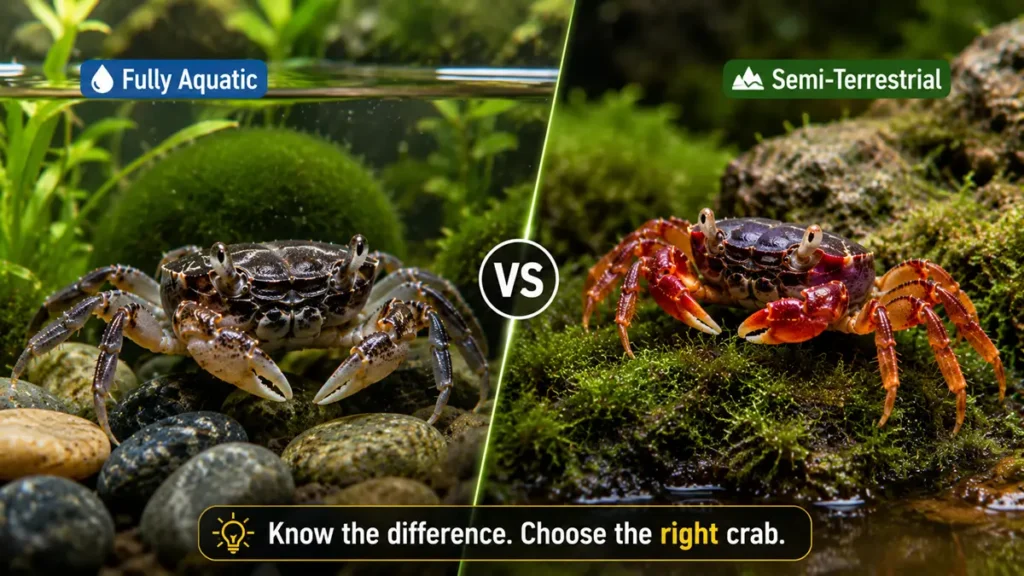
“Freshwater crab” isn’t one species. It’s not even one family. It’s a hobby catch-all covering several unrelated crab groups that just happen to tolerate low-salinity water.
That’s exactly why care needs swing so wildly under the same generic label. A crab from the family Hymenosomatidae and a crab from the family Sesarmidae can both get sold as a “freshwater crab” at the same shop — one lives its entire life underwater, the other would drown there.
This single mix-up is, in my experience, the biggest reason people trying to buy small freshwater crabs for aquarium setups lose the animal in the first month. They’re not being careless. They’re trusting a label that was never built to be accurate.
That’s exactly the gap this guide exists to close — matching the small freshwater crabs for aquarium life you actually want against the handful of species that can genuinely deliver it.
Best Small Freshwater Crabs for Aquarium Life: The Short List
People searching for freshwater crab species for aquarium keeping are usually picturing one thing: a small, colorful freshwater crab for fish tank life, wandering a planted setup. Only a few species actually match that picture without extra land setup. Here are the four you’ll realistically run into in the US hobby.
Thai Micro Crab — the true nano-tank pick
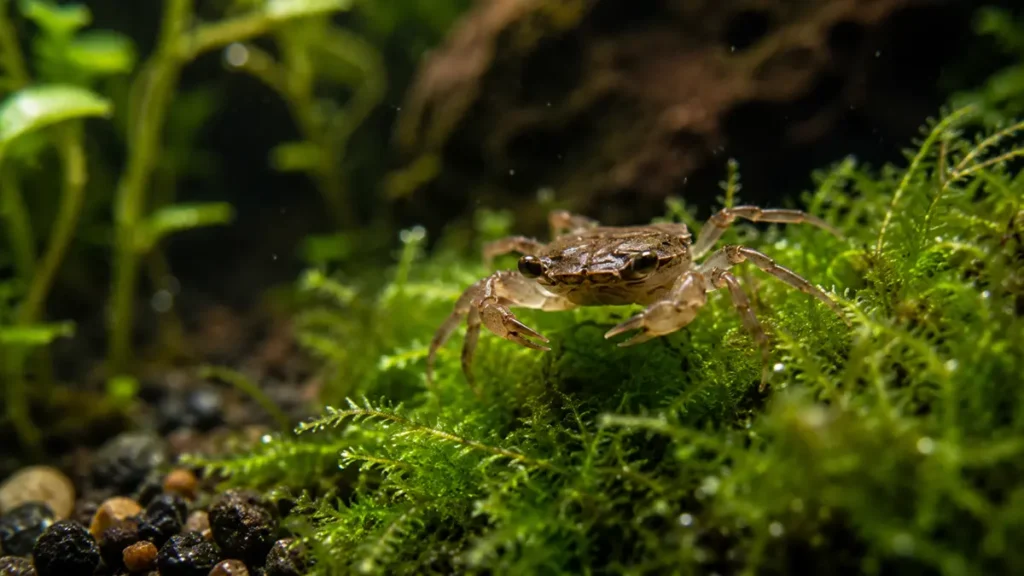
Limnopilos naiyanetri is a fully aquatic freshwater crab species, confirmed to genus level by taxonomists Naruse and Ng in a 2007 peer-reviewed revision, after its original 1991 description by Chuang and Ng. It’s genuinely tiny — adults max out around 1 cm across the carapace.
It’s a filter feeder, using fan-like appendages to strain biofilm and micro-particles from the water column. That means it needs a mature, established tank, not a freshly cycled one.
It entered the German aquarium trade in 2008 through the wholesaler Aquarium Glaser, and it’s stayed a niche but well-loved nano species since.
If you only take one species away from this guide, make it this one — it’s the honest answer to “which small freshwater crabs for aquarium life are actually safe to try.”
Panther Crab — fully aquatic, but not exactly small
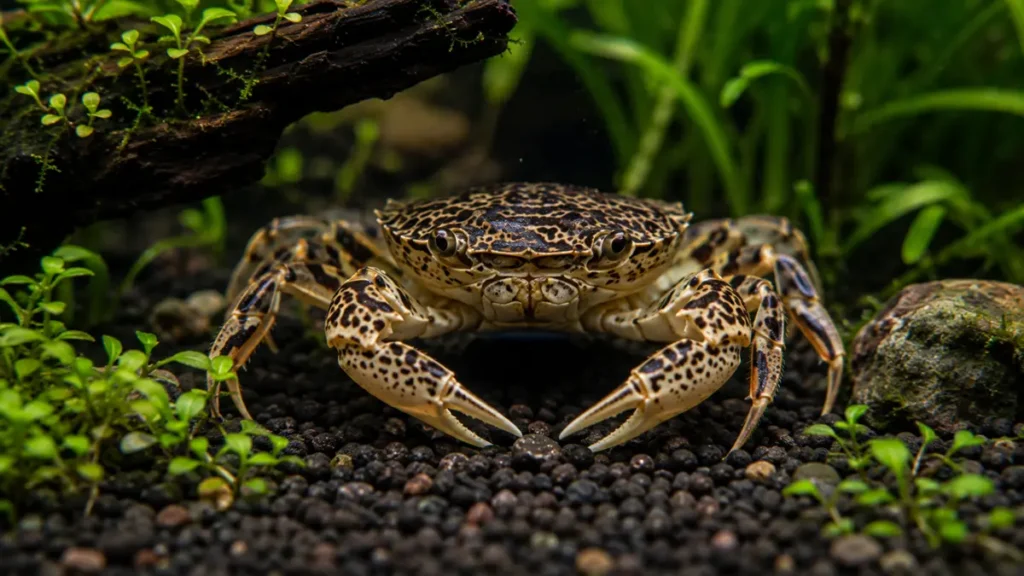
Parathelphusa pantherina was first described by the zoologist Schenkel back in 1902, and it comes from a single body of water: Lake Matano in Sulawesi, Indonesia. It’s one of the very few crab species that lives its entire life submerged.
Be honest with yourself about size here, though. A mature panther crab can reach roughly 7.5 cm across the carapace, closer to 13 cm with legs extended — It also needs Lake Matano’s specific water chemistry: pH around 7.4 and a warm 80–88°F, according to published habitat information.
One more thing worth knowing before you buy: the IUCN Red List classifies this species as Endangered, largely due to nickel-mining runoff degrading Lake Matano’s water quality. That’s not a reason to avoid keeping one responsibly-sourced — it’s a reason to ask your seller where their stock actually comes from.
Red Claw Crab — needs land, not fully aquatic
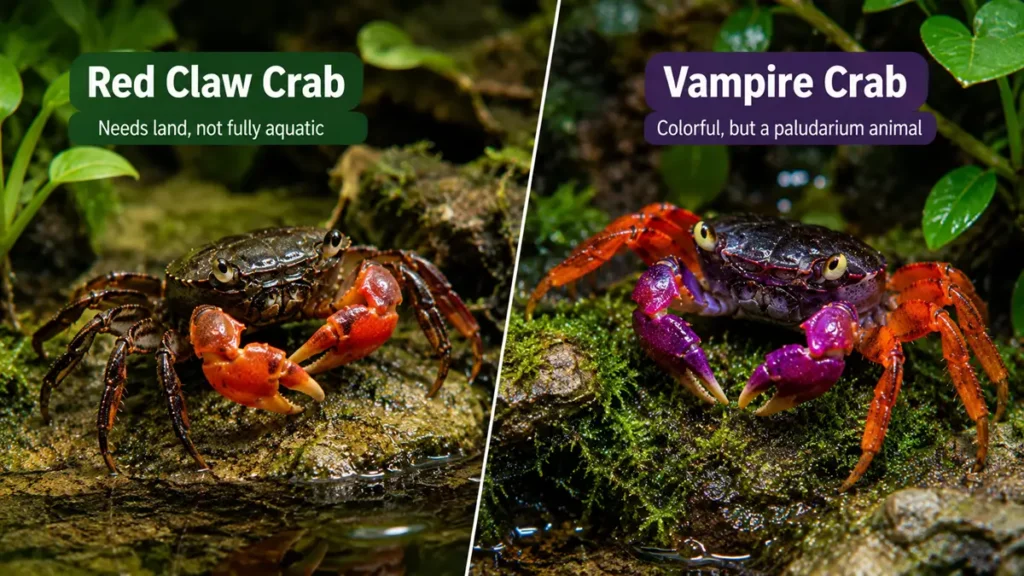
I’ve written a full Red Claw Crab care guide already, so I won’t repeat all of it here. The short version: red claw crabs need brackish water and a real land section, and they are not a fully submerged aquarium crab, no matter how they’re marketed on the shelf next to the fully aquatic species.
Vampire Crab — colorful, but a paludarium animal
Geosesarma dennerle wasn’t even formally described as a species until 2015, by Ng, Schubart, and Lukhaup — despite the hobby trading it for years before that, It’s a striking animal: deep purple body, bright yellow eyes.
But it’s semi-terrestrial, not aquarium-fish-tank material in the traditional sense. It needs a paludarium built with roughly 70–80% land. Drop it in a fully submerged tank and it will drown, the same way a red claw crab will.
Fully Aquatic Freshwater Crabs for Aquarium Setups
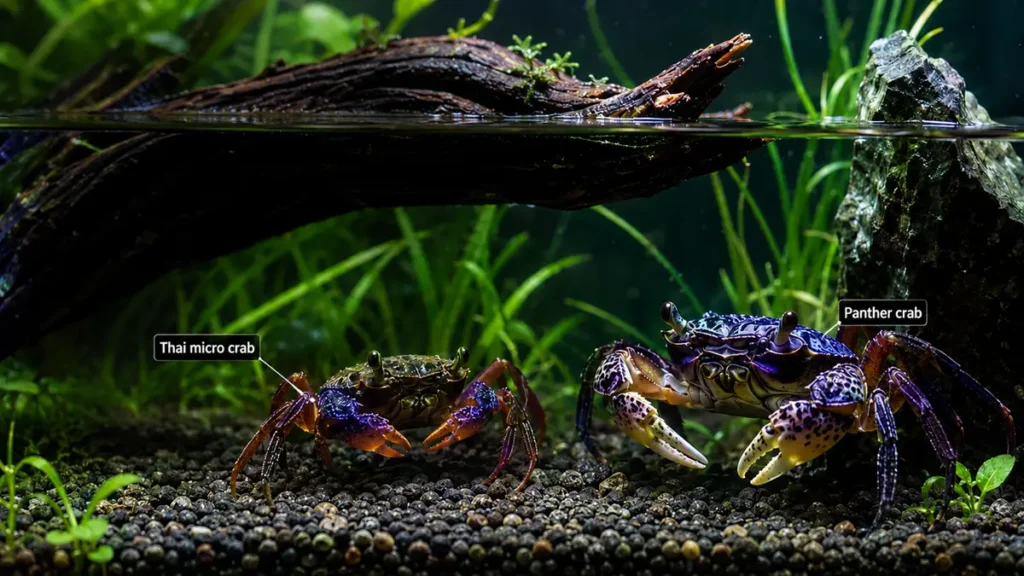
If your goal is genuinely fully aquatic freshwater crabs for aquarium life — no land platform, no paludarium conversion — your realistic options narrow to two: Thai micro crabs and panther crabs. Both spend their entire life cycle submerged, which is unusual. Most crabs sold in the freshwater trade are semi-terrestrial and will eventually need to climb out.
Even fully aquatic freshwater crabs benefit from some décor breaking the surface — driftwood tips, tall plants, an emergent rock — even when they don’t strictly need it. Panther crabs are known escape artists. A species that can’t technically leave the water will still try.
Crabs for Freshwater Aquarium Tanks: Compatibility Basics
Adding crabs for freshwater aquarium community setups is where most disappointment happens, and it’s rarely about water chemistry. It’s about behavior.
Crabs are opportunistic omnivores, full stop. A Thai micro crab poses almost no threat to fish because of its size. A panther crab, red claw crab, or vampire crab will happily eat a slow, sick, or sleeping tankmate the moment it gets the chance.
| Species | Fully Aquatic? | Adult Size | Beginner Friendly? | Best Tankmates |
| Thai Micro Crab | Yes | ~1 cm | Moderate — needs a mature tank | Dwarf shrimp, small nano fish |
| Panther Crab | Yes | Up to 7.5 cm | Moderate | Tetras, guppies, bettas — with caution |
| Red Claw Crab | No — needs land | ~5 cm | Moderate | Best kept alone or with other semi-aquatic crabs |
| Vampire Crab | No — needs land | ~3 cm | Easy, in a paludarium | Own species, large snails |
Here’s a myth worth retiring: the idea that “freshwater crab” automatically means “fully aquatic, drop it in your community tank.”
It’s one of the most common misconceptions in this hobby, and it’s an easy one to walk into, because pet store labeling almost never distinguishes fully aquatic species from semi-terrestrial ones.
The fix isn’t complicated once you know it. Always look up the scientific name before you buy, not just the common name on the tank card. That single check is the difference between finding genuinely appropriate small freshwater crabs for aquarium life.
Where to Buy Freshwater Aquarium Crabs for Sale
Freshwater aquarium crabs for sale show up through three channels in the US: specialty invertebrate breeders and shops, local fish stores with a real invertebrate section, and online marketplaces where breeders sell direct.
For a delicate nano species like the Thai micro crab, pay the slightly higher price at a specialty seller — correct ID and healthy stock matter more here than with a hardy community fish.
Freshwater Aquarium Crabs UK
Shopping from the UK, freshwater aquarium crabs are available through UK livestock retailers and specialist aquatics chains that stock invertebrates alongside fish. Panther crabs and vampire crabs both show up in the UK trade periodically, though stock is less consistent than in the US.
Small Freshwater Crabs for Aquarium Australia
Australian import rules on live aquatic invertebrates are considerably stricter than the US or UK. Small freshwater crabs for aquarium Australia buyers should check with local specialty retailers and confirm legal import status before ordering — biosecurity rules here move faster than most hobby forums track.
FAQ
What are the best small freshwater crabs for a beginner aquarium setup?
The Thai micro crab is the strongest true beginner pick for a fully aquatic setup, as long as the tank is already mature. If you’re open to a paludarium instead, vampire crabs are hardy and forgiving once the land-to-water ratio is right.
Where can I buy small freshwater aquarium crabs online?
Specialty invertebrate sellers are the most reliable US source, since they specialize in correct species ID and safe nano-invert shipping — something a big-box pet store rarely gets right with crabs.
What are the top-rated small freshwater crab species for planted tanks?
Thai micro crabs are the strongest fit. They’re too small to disturb aquascaping, and they spend most of their time grazing biofilm off leaves and hardscape instead of digging.
Are there affordable small freshwater crab sellers in the US?
Yes. Thai micro crabs and vampire crabs are both sold in small multi-packs at prices comparable to premium dwarf shrimp — genuinely affordable small freshwater crabs for aquarium hobbyists, next to comparably rare fish or shrimp.
What are the best small freshwater crab species for a community aquarium?
Thai micro crabs are the only species here that are genuinely safe in a peaceful community tank. Panther crabs can work with larger, fast fish, but I wouldn’t call them reliably “community safe.”
Do freshwater crabs need air?
It depends on the species. Fully aquatic species like Thai micro crabs and panther crabs breathe entirely through water via gills and never need to leave the tank — semi-terrestrial species like vampire crabs and red claw crabs need real air access and will drown without it.
Are there freshwater crabs that don’t need land?
Yes — Thai micro crabs and panther crabs are the two main freshwater crabs that don’t need land, and both can live their entire lives fully submerged in a standard aquarium.
How long do small freshwater aquarium crabs live?
It varies by species. Vampire crabs typically live around two years in captivity. Thai micro crabs don’t have well-documented lifespan data yet — they’re simply too new to the hobby and too poorly studied.
What’s the single biggest mistake people make buying small freshwater crabs for aquarium tanks?
Trusting the common name on the shop label instead of the scientific name. “Freshwater crab” gets used for both fully aquatic and semi-terrestrial species, and that one gap is what drowns most beginner purchases.
Next Steps: Resources You Should Read
Related FishioHub reading:
- Ultimate Red Claw Crabs Care Guide — the full brackish setup, land ratio, and feeding breakdown → Read it here
- What Do Red Claw Crabs Eat? — wild diet vs. tank diet, feeding schedule included → Read it here
- Do Crabs Eat Dead Fish? What Eats Crabs? — predator and scavenger behavior explained → Read it here
Scientific references:
- Chuang, C.T.N. & Ng, P.K.L. (1991). Original description of Limnopilos naiyanetri. Raffles Bulletin of Zoology, 39: 363–368.
- Naruse, T. & Ng, P.K.L. (2007). Genus Limnopilos confirmed and resurrected. Zootaxa, 1621: 17–31.
- Ng, P.K.L., Schubart, C.D. & Lukhaup, C. (2015). Formal description of Geosesarma dennerle. Raffles Bulletin of Zoology, 63: 3–13.
- IUCN Red List / Wikipedia species account — Parathelphusa pantherina conservation status and Lake Matano habitat data.
USA aquarium resources:
- Specialty nano-invertebrate breeders and sellers (search for Thai micro crab or panther crab stock specifically, not just “freshwater crab”)
- Local fish store invertebrate sections, for in-person stock inspection before you buy
- Your own state’s import/biosecurity rules, if ordering live invertebrates across state lines
The Bottom Line
A tank with the right small crab in it doesn’t feel like a fish tank with an extra pet dropped in. It feels like a tiny, functioning ecosystem you can actually sit and watch work.
Pick the species that matches the setup you already have — not the one that photographed best in the store tank. Do that, and the best small freshwater crabs for aquarium keeping are simply the ones matched honestly to the tank in front of you, not the one you wish you had.
Was this guide helpful?
First-Hand Experience
Based on animals I've personally kept and bred - not summarized from other articles.
Zoological Foundation
Claims are checked against my M.Sc. Zoology training and published aquatic biology research, not recycled aquarium myths.
No Paid Influence
No sponsorship shaped this guide. Affiliate links, if any, are disclosed separately and never hidden.
Kept Current
Errors are corrected as soon as they're found, with the update noted at the bottom of the article.

Anil Satak M.Sc. Zoology · Founder, FishioHub
Grew up in a fishing family in India and holds a Master's in Zoology. FishioHub is a one-person operation - every guide is personally researched, kept-tested, and written by Anil. No team, no outsourced writers, no AI-generated content. Read his full bio →