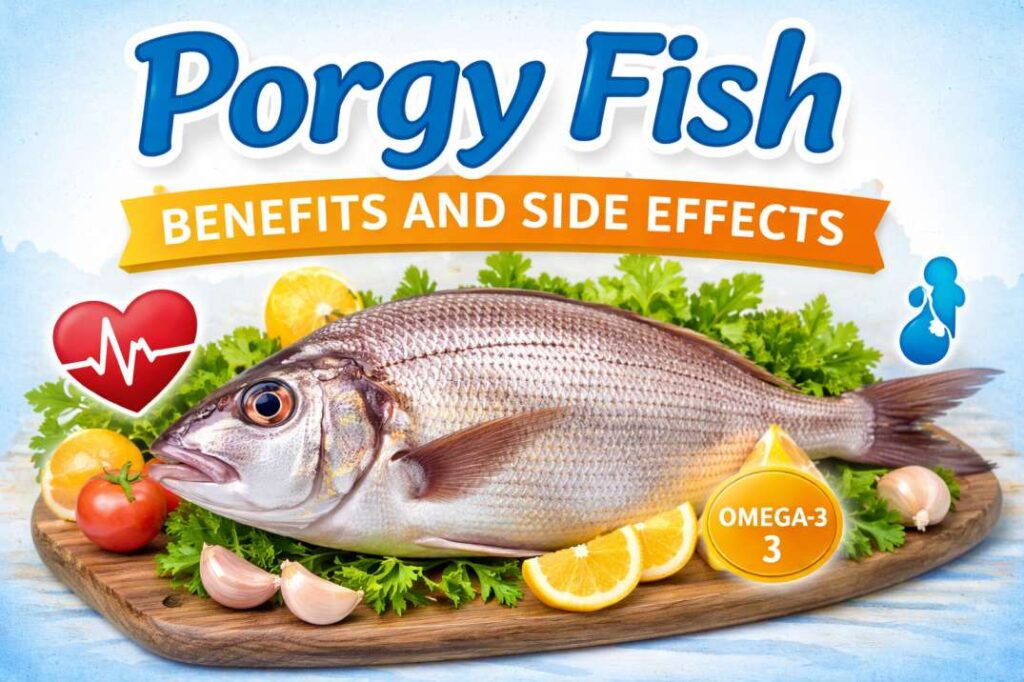
You’ve likely heard big names like snapper, catfish, and rockfish in the United States. But have you heard of porgy fish, also known as scup? This fish is one of the most underrated fish in the USA. It’s very popular among East Coast fishermen, but when it comes to porgy’s nutrition facts, benefits, side effects, and mercury safety, there’s hardly any detailed information online.
Because I work with fish nutrition every day and enjoy writing about and studying different species from around the world, I have a good idea of how porgy compares to other American fish like snapper, fluke, lingcod, and rockfish. This post explains porgy fish benefits and side effects clearly, so you can decide how often to include it in your diet. This post is my attempt to bring all the scattered information together into a complete, easy-to-read guide.
Everything here in this insight is based on verified data, common consumption patterns in the USA, and seafood safety tips.
What You’ll Get in This Post
- 🐟 Complete porgy fish benefits
- 🧬 Full porgy fish nutrition facts 100g
- 🍽️ “Is porgy fish good to eat?” (taste + cooking)
- ⚠️ “Is porgy fish high in mercury?” (real answer)
- 🤰 “Is porgy fish good for pregnancy?” (safety explained)
- 🚫 Porgy fish side effects
- 🆚 Porgy fish vs Snapper comparison
I always research deeply before recommending any fish, so here I’m breaking down the real porgy fish benefits and side effects backed by nutrition data and eating patterns in the USA. Let’s start.
What Is Porgy Fish (Scup)?
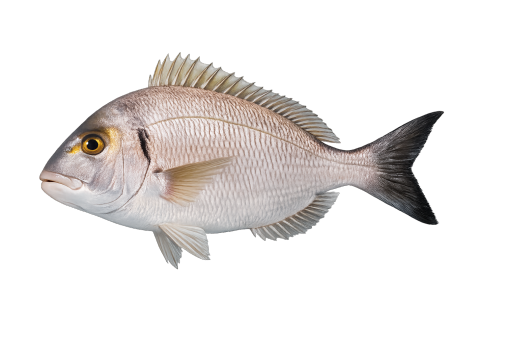
Porgy, or scup (scientific name Stenotomus chrysops), is a saltwater fish found mostly in the wild along the Atlantic coast of the United States. You’ll find porgy fish in:
- New York
- New Jersey
- Massachusetts
- Rhode Island
- Connecticut
This fish is found along the East Coast of the United States. Porgy is one of the most abundant, affordable, and sustainable fish. In terms of flavor, porgy has a mild, firm texture similar to snapper. The fish is light and flaky.
Porgy is mostly caught in the wild. It’s unlike commercial fish that are mass-produced in farms or factories. Being natural, it’s a safer and cleaner fish to eat.
Porgy Fish Nutrition Facts 100g
Here are the approximate porgy fish nutrition facts 100g, based on available datasets and wild-caught white fish comparisons:
| Nutrition | Amount (Per 100g) |
| Calories | 110–130 kcal |
| Protein | 19–21g |
| Total Fat | 3–4g |
| Omega-3 | Moderate |
| Saturated Fat | <1g |
| Carbohydrates | 0g |
| Vitamin B12 | High |
| Selenium Level | High |
| Phosphorus Level | Moderate |
| Mercury Level | Low |
Porgy is a classic lean American white fish, similar to fluke and snapper—great protein, moderate omega-3, and naturally low in contaminants.
📘 Before you choose any fish for health or fitness…
Make sure you check the complete Fish Nutrition Facts (100g) Page, where I’ve listed the top 12 nutrients for every fish I review on FishioHub.
Porgy Fish Benefits
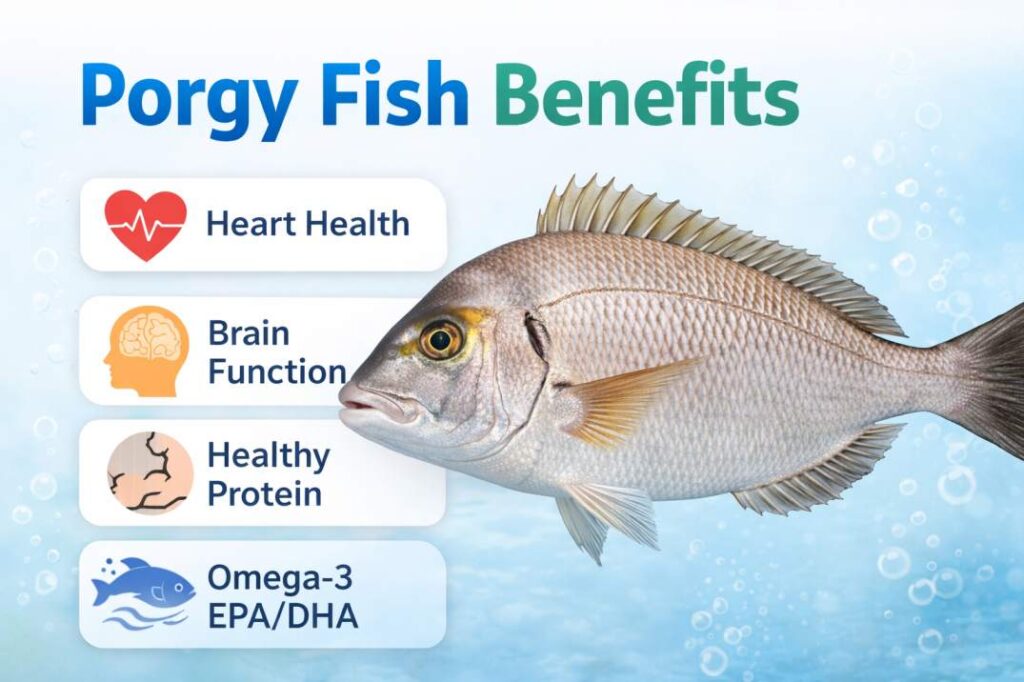
These are the 7 main porgy fish benefits, based on its nutrition facts and my comparative study of similar fish.
1. Rich in High-Quality Protein
Porgy fish contains 19–21g of protein per 100g, which is very good for any fish. The high natural protein content is said to be very beneficial for health. It is excellent for:
- Muscle repair and bodybuilding
- For weight training or workouts
- For increasing stamina
- Active adults
- People are trying to increase their protein intake
Porgy fish is a small wild fish, and you can definitely include it in your diet for its protein quality and quantity.
2. Good for Heart Health
Porgy fish doesn’t have much to say, but it does contain a decent amount of omega-3 fatty acids (EPA and DHA). They contribute to:
- better heart function
- reduced inflammation
- lower triglycerides
Compared to salmon, porgy has lower omega-3 levels, but it generally outperforms many other fish. If you’re looking to boost immunity, improve heart function, or reduce inflammation, salmon may be best for you.
3. Low in Fat and Calories
If you’re watching calories, porgy is ideal.
100g = 110–130 calories only.
This makes porgy perfect for:
- weight loss
- low-fat diets
- balanced meals
- diabetic-friendly cooking
4. Very Easy to Digest
Like most wild white fish, porgy is easily digested, making it a suitable choice for all family members. It’s helpful for:
- kids
- elders
- people with digestive issues
- those recovering from illness
This is one of the most underrated porgy fish benefits.
5. A Sustainable Wild Fish (Rare Advantage)
Americans care a lot about sustainability—and porgy is one of the most eco-friendly fish in the USA.
- It is naturally abundant
- Not overfished
- Often certified sustainable
- Caught by local fishermen, not large trawlers
This makes porgy a guilt-free, low-impact seafood choice.
6. Affordable but Nutritious
You’ll often find that most healthy wild fish (snapper, flounder, halibut) found in their natural habitat are expensive. Porgy offers similar nutrition at a much lower price. This makes it a great option for families looking for healthy seafood on a budget.
7. Great for Men and Women (Lean Muscle Support)
Because porgy is low-fat and high-protein, it’s ideal for:
- fitness routines
- lean muscle building
- post-workout meals
- weekly meal prep
Porgy keeps you full without heaviness.
Is Porgy Healthy?
Yes—porgy fish is healthy because it’s wild-caught, naturally occurring, and contains fewer artificial contaminants, is rich in protein, and is sustainable. The American Seafood Guide, which focuses on health, lists porgy as one of the best white fish for overall nutrition.
Is Porgy Fish Good to Eat?
Absolutely. Porgy fish has a mild flavor, firm texture, a slightly sweet taste, no strong fishy smell, and cooks easily in almost any style. It tastes great grilled, baked, pan-seared, fried whole, or even cooked as fillets.
If you like snapper or flounder, you will definitely enjoy porgy.
Is Porgy Fish High in Mercury?
No. Porgy is a low-mercury fish. The reason porgy stays low in mercury is that it’s small in size, lives in clean coastal waters, doesn’t eat high-mercury prey, and has a short lifespan.
This makes porgy safer than large predatory fish like swordfish, shark, king mackerel, and bigeye tuna.
Is Porgy Fish Farm Raised?
Mostly, no. Porgy is 99% wild-caught in the USA. Because it’s caught in the wild in such a large quantity, commercial production is rarely considered.
This is a major advantage of porgy fish because:
- Wild fish are less polluted
- No antibiotics
- No growth-promoting drugs
- Clean nutrition
This is one reason why porgy is considered safer than many imported fish. And this is why people prioritize it in their diets.
Is Porgy Fish Good for Pregnancy?
Yes, porgy fish is good for pregnancy if eaten in moderation. It’s considered safe and healthy to eat during pregnancy because it has low mercury levels, is wild-caught, is high in protein, contains a good amount of omega-3 fatty acids, is low in calories, an,d best of all, is very easy to digest.
Many people ask me online about porgy safety, so I’ve included all porgy fish benefits and side effects, including mercury risk and pregnancy guidelines. Recommended servings during pregnancy:
- Eat 1–2 servings per week
- Each serving is 4–6 ounces
Avoid frying; grill, bake, or steam instead.
Porgy Fish Side Effects
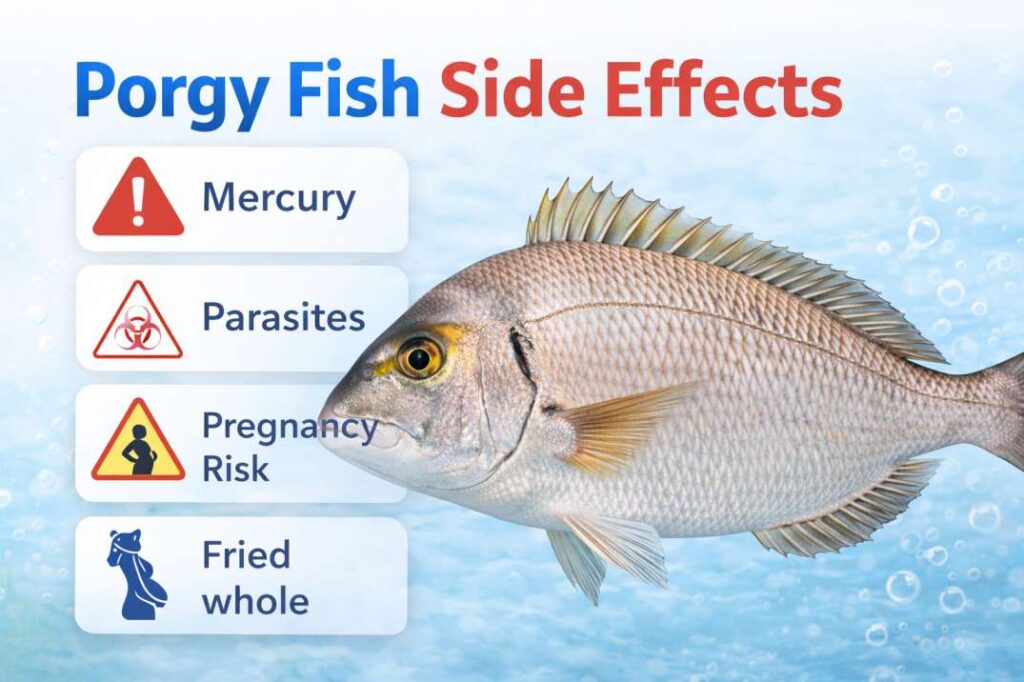
Every fish has limitations. Before eating it often, everyone should know the real porgy fish benefits and side effects based on nutrition and health impact. Porgy’s are minor but should be noted:
1. Allergies
Like any other fish, porgies can cause allergic reactions in sensitive individuals, and this is common.
2. Small Bones in Whole Fish
Whole porgy has many small bones. Fillets are safer and easier. So children need to be very careful while eating.
3. Overconsumption
Even low-mercury fish should not be eaten daily. Eat only 1–2 times per week.
4. Slightly Dry Texture When Overcooked
Porgy is lean—if you overcook it, it becomes dry.
Porgy Fish vs Snapper (USA Comparison)
| Feature | Porgy Fish | Snapper |
| Taste | Mild, slightly sweet | Mild, sweeter |
| Texture | Firm, flaky | Firmer |
| Protein | 19–21g | 20–23g |
| Omega-3 | Moderate | Higher |
| Mercury Level | Low | Low |
| Sustainability | Excellent | Good |
| Price | Cheaper | More expensive |
Porgy Fish vs Snapper Conclusion
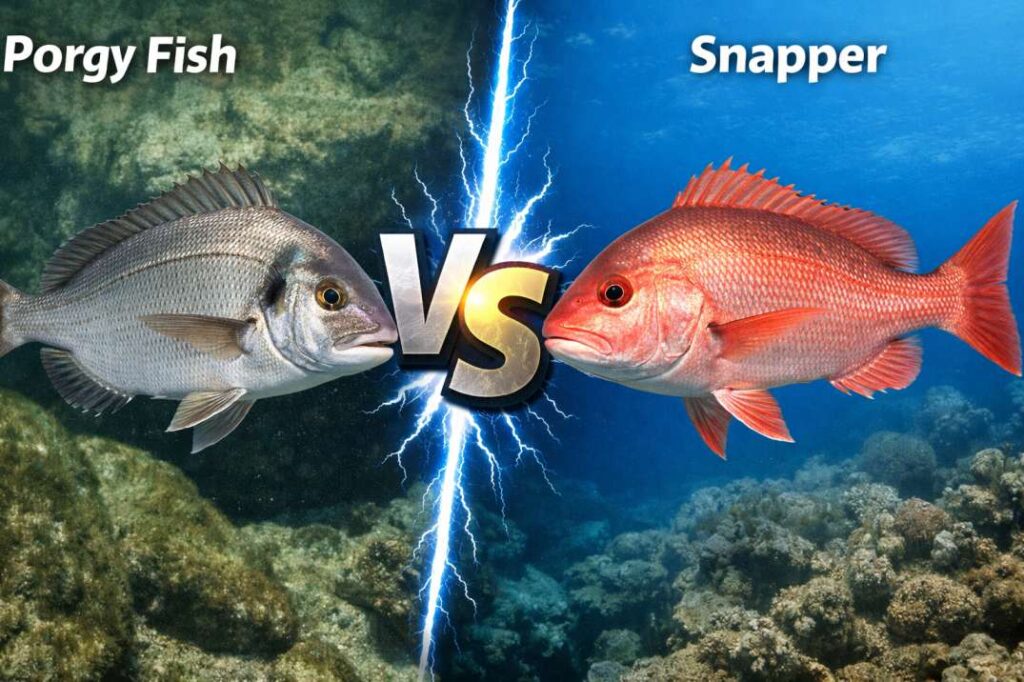
Snapper has better omega-3, but porgy is cheaper to buy, it is lean, equally mild, and more sustainable. Mean Porgy is a better choice for budget-friendly. This comparison is done on the basis of porgy fish benefits and side effects.
How Often Should You Eat Porgy?
Here is what I recommend based on its mercury level and nutrition facts:
- 1–2 times per week is ideal
- 100–150g per serving
- Good for weekly meal rotation
FAQs on Porgy fish benefits and side effects
1. Is porgy healthy?
Yes, porgy is healthy, nutrient-rich, and also good to eat.
2. Is porgy fish good to eat?
Yes, it’s mild, tasty, and cooks easily.
3. Is porgy fish high in mercury?
No, porgy is a low-mercury fish.
4. Is Porgy fish farm raised?
No, porgy is almost entirely wild-caught in the United States.
5. Is porgy fish good for pregnancy?
Yes, safe when eaten 1–2 times per week.
Conclusion
Porgy fish is one of the most underrated but highly nutritious fish available in the USA. It’s wild-caught, low in mercury, rich in protein, affordable, and very easy to cook.
Once you understand the real porgy fish benefits and side effects, it becomes clear why East Coast seafood lovers enjoy this fish so much.
With its sustainability, clean nutrition profile, and mild flavor, porgy deserves far more attention than it gets. This post also expands my “Fish Benefits and Side Effects” series into the American seafood category, and more USA fish guides will follow as I continue exploring different species.