I want to tell you about a dinner that changed the way I think about lobster forever. A few years into my studies in zoology, a professor invited our small research group to his home in coastal India for a Maine lobster dinner. He had ordered the lobsters specifically to demonstrate the anatomy of the crustaceans, an exercise that eventually evolved into a culinary feast. Some of us snapped off the tails, wrestled with the claws, and stopped right there.
My professor watched us silently; then, he extracted the parts we had discarded—the meat near the joints, the legs, and the morsels hidden deep within the body cavity, and prepared a separate plate containing, in his estimation, the finest parts of lobster you can eat. He was absolutely right. And we had thrown away the very best parts.
That is precisely why I wrote this post. Most people who eat lobster likely consume only about 60% of what is actually available to them—and the parts they leave behind are by no means worthless scraps. In fact, some of them are truly the most exquisite morsels of all.
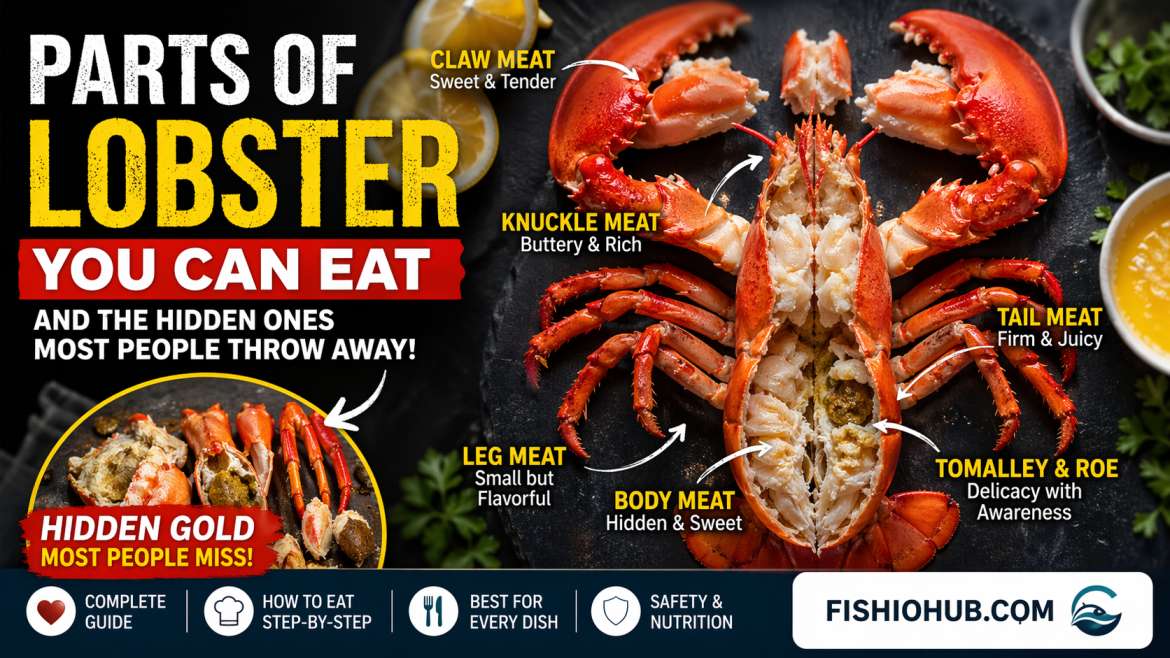
Quick Answer: The main parts of lobster you can eat are the tail, claws, knuckles, legs, and body meat, and also, with proper awareness, the tomalley (green substance) and roe (eggs). Lobster meat makes up approximately 20–30% of its total body weight according to NOAA, meaning a 1.5-pound lobster yields roughly 4–6 ounces of edible meat across multiple parts. The shell is inedible but exceptional for stock.
If You Are in a Hurry — Quick Guide ( Parts of Lobster You Can Eat )
- Eat these without hesitation: Tail meat, claw meat, knuckle meat, leg meat, body meat
- Eat these with awareness: Tomalley (green substance), lobster roe (eggs)
- Do not eat: Gills, stomach sac, intestinal vein (remove before eating)
- Save these for stock: All shells and legs you have already eaten
What You’ll Get in This Post
- Every edible lobster part — with flavor and extraction guide
- The parts of lobster you can eat, but you throw away by mistake
- Which lobster part tastes the best?
- Step-by-step guide to eating a whole lobster
- Which part is best for which dish?
- What happens if you eat bad lobster tail?
- Full comparison table
- FAQs
Every Edible Part of Lobster — With Flavor and Extraction Guide
When it comes to seafood, I am particularly fond of crab, prawns, shrimp, and lobster. Drawing upon the many times I have enjoyed lobster, I will now outline which parts of lobster you can eat, as well as how to go about extracting them.
Tail Meat — The Most Popular Part of Lobster You Can Eat
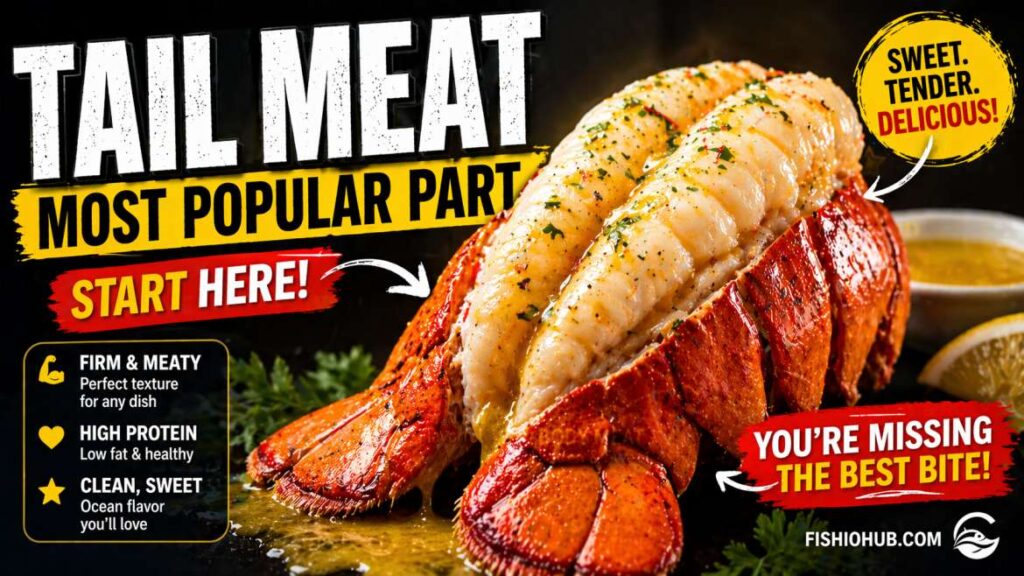
The lobster tail is the part where, for some people, the lobster-eating experience begins, while for others, it marks the end. It is the largest section of the lobster and contains the most meat; consequently, it is the part everyone loves to eat.
It is mildly sweet, with a firm texture, and bursting with a fresh, clean flavor. The reason the lobster tail is so firm is that it is the most actively utilized part of the lobster’s daily routine; this constant and vigorous muscular activity results in a dense, fibrous tissue that retains its texture exceptionally well, even during cooking.
According to research by the Maine Lobster Institute, the meat from the lobster tail is the most protein-rich part of the entire lobster. A 3.5-ounce serving contains approximately 19 grams of protein and about 89 calories, making it one of the lowest-fat and highest-quality sources of protein within the seafood category.
How to extract it: Twist the tail with a circular motion. Using kitchen shears, cut the underside of the shell lengthwise, then fold the two halves of the shell apart. The meat should slide out in a single, clean piece. Alternatively, you can use your thumb to push the meat out. And most importantly, before eating, remove the dark intestinal vein running through the center.
Claw Meat — The Finest Bite on the Lobster
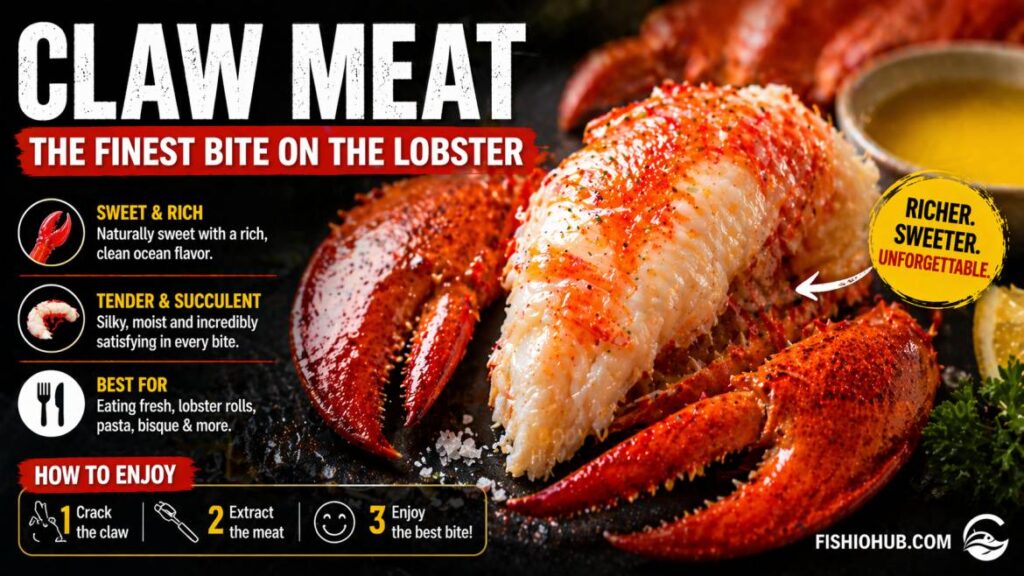
I mentioned this to my professor during a dinner years ago, and he smiled, remarking that the real delight lies in the meat of the claws. Although the tail meat is the most popular, the claw meat is actually preferred by those who possess a true connoisseur’s understanding of lobster.
Both of the lobster’s claws, the crusher claw and the cutter claw—contain incredibly delicious meat, yet the texture of the meat in each is distinctly different. The crusher claw, being larger in size, yields meat that is denser and firmer. Conversely, the cutter claw, which is smaller and more slender, offers meat that is more tender and silky, practically melting in the mouth. Compared to the tail meat, both of these are sweeter and softer.
How to extract it: This method applies to both claws; twist them away from the body to detach them. Pull off the small, movable “thumb” from the claw; it is a small piece of meat that is edible. Use a lobster cracker or the back of a heavy knife to properly crack the claw shell. Extract the meat using a lobster pick. Inside the claw, there is a flat, soft bone (cartilage)—avoid biting directly into it with your teeth. To loosen the cartilage before opening the shell, twist the claw apart at the knuckle; doing so often causes it to come loose on its own.
Not all lobsters have claws.
Only cold-water lobsters do — warm-water ones don’t.
See the difference before you order: Cold Water vs Warm Water Lobster
Knuckle Meat — The Hidden Gold That Most People Miss
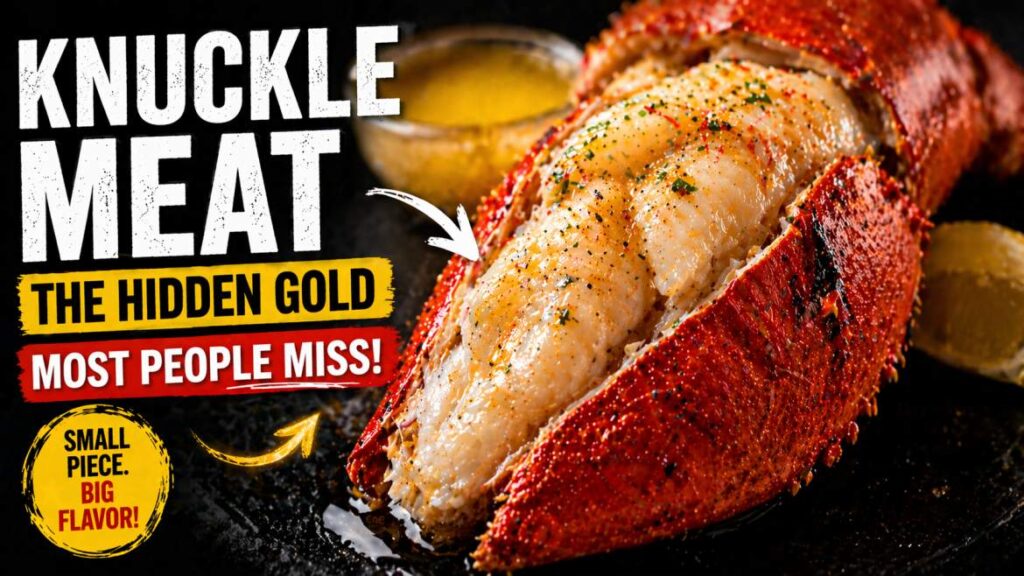
My professor extracted it from the plates we had left behind. Knuckles are the jointed sections connecting the claws to the body; every lobster has two of them, and each is roughly the size of a large grape.
In my opinion, the meat from the knuckles tastes sweet, even sweeter than the tail meat, possessing a deep, rich, and buttery flavor, along with a texture so tender that it yields effortlessly between the teeth. Many professional chefs consider knuckle meat to be superior even to the meat found in the claws. The fact that most diners overlook it is truly one of the biggest oversights in everyday seafood dining.
How to extract Knuckle Meat: I often separate the jointed sections from the claws and body by twisting them off. You can use kitchen shears to cut along the edge of the joint’s shell, or gently crack it with a lobster cracker. Extract the meat using a small fork or a lobster pick; it will slide out in the shape of a small cylinder. Never skip this step. Absolutely not.
Leg Meat — Small Volume, Intense Flavor
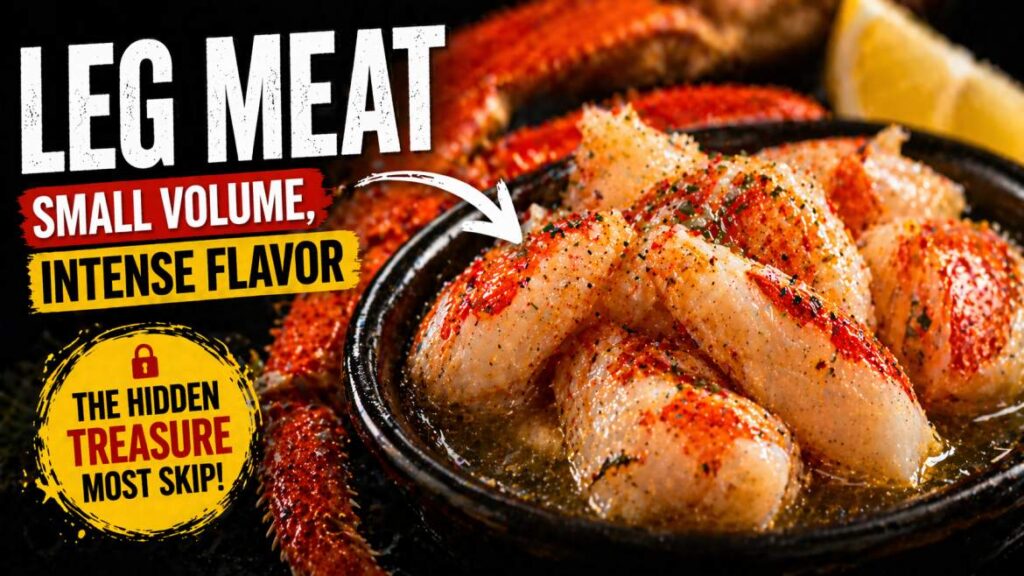
The meat in the legs is a different story altogether; the American lobster possesses a total of ten legs—two large legs equipped with claws, and eight smaller walking legs. And every single one of these eight walking legs contains edible meat. Legs are the parts of lobster you can eat.
Although the quantity of meat in each leg is modest, consisting of a slender strand roughly the thickness of a pencil, I personally find it absolutely delightful; the flavor is truly exceptional. This is because these walking legs are in constant use as the lobster forages for food. And to be honest, anyone with experience eating lobster never lets the meat from the legs go to waste, as it happens to be the most delicious part of all.
How to extract it: First, I twist the legs off the lobster by hand, though you can also use kitchen scissors. Then, extract the meat using a lobster pick or simply by sucking it out through the open ends. The Maine Lobster Now guide suggests rolling a small rolling pin over the legs to push the meat out from the other end; this method works very well.
Body Meat — The Most Overlooked Meat on the Lobster
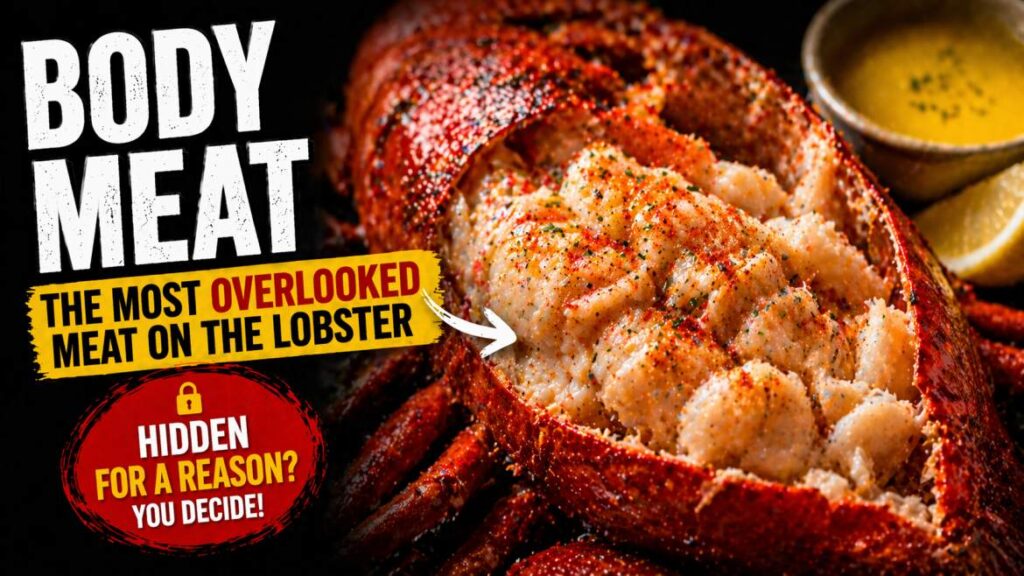
I have often observed that many people who crack open a lobster look at this section, spotting the gills and tomalley, and, without investigating any further, simply discard it. Yet, deep within the body cavity—right where the tail meets the head—small but substantial morsels of meat lie hidden between the internal ribs. These parts of lobster you can eat.
This is a mistake. Extracting the meat from between those slender internal ribs requires the use of a lobster pick or your fingers, but the reward is incredibly sweet; it is exceptionally tender and delicious meat. Think of it as the lobster’s “oyster.” These are the hidden treasures discovered by those who take the time to seek them out. Truly, this is one of the best parts of lobster you can eat.
How to extract it: The method for extracting meat can vary from person to person; I typically begin by removing the tail and claws, then press down on the lobster’s underside to crack it open down the middle. After discarding the gills and the stomach sac, I use a ‘lobster pick’ to extract small morsels of meat nestled within the lattice-like structure of the inner ribs. While the quantity of meat found here is not substantial, every single piece is incredibly precious.
The Parts of Lobster You Can Eat but Throw Away by Mistake
Based on what I’ve explained so far, some people—without giving it much thought—end up discarding certain parts of a lobster. However, these parts actually contain edible meat. Many people only eat the tail, but the best parts of lobster you can eat also include the knuckles and claw meat.
Knuckle Meat: The finest lobster meat, yet the most frequently wasted.
Leg Meat: People often assume the small legs contain no meat simply because of their size.
Body Meat: Once you know how to remove the gills and tomalley—and how to locate the meat within the ribs—you unlock a truly hidden flavor.
Shells and Head for Stock: Simmering roasted shells over low heat for 45 minutes yields an exceptional lobster stock.
Which part of the lobster is the most delicious?
I have faced this question. The parts of lobster you can eat vary in flavor. Here is my honest, personal ranking:
- Roe: Salty, oceanic, and caviar-like—a true delicacy.
- Knuckle meat: The most complex, sweet, and buttery-tasting part of the lobster.
- Claw meat: Especially the meat from the cutter claw; it is incredibly delicious.
- Leg meat: It yields less meat, but when paired with a curry, it is absolutely delightful to eat.
- Tail meat: The most substantial part, featuring an excellent texture and a fresh, oceanic sweetness. It is the most popular choice.
- Body meat: Delicate and sweet, though extracting it requires some effort, and it is found in smaller quantities.
- Tomalley: Extremely rich and savory-spicy; it is the most divisive flavor of the lobster. You will either love it or hate it.
Step-by-Step Guide to Eating a Whole Lobster
If you are eating lobster—and you aren’t sure which parts of lobster you can eat and which are not—rest assured, you are bound to make mistakes. I certainly did, many times over. Therefore, drawing upon my own experience, I have outlined a few steps—steps that I personally follow every time. You can adopt them as well to ensure you have the ultimate lobster-eating experience.
- Step 1: Twist off the claws at the knuckle joint
- Step 2: Separate the knuckle from the claw
- Step 3: Pull the small “thumb” off the claw
- Step 4: Crack the claws using a cracker
- Step 5: Open the knuckles using shears or a cracker to get the knuckle meat
- Step 6: Separate the tail from the body
- Step 7: Extract the tail meat, remove the vein
- Step 8: Break off the walking legs
- Step 9: Open the body cavity, throw the gills, and the sac
- Step 10: Address the tomalley and roe (if present)
- Step 11: Stock lobster shells
Which Lobster Part Is Best for Which Dish?
From my experience, there are good parts of lobster you can eat; getting the most out of lobster is all about using the right part for the right dish. When I eat a whole steamed lobster, I start with the claws and knuckles while they’re hot, then move to the tail, and finish with the legs and body. For lobster rolls, I always go with claw and knuckle meat because it’s softer and sweeter, while tail can feel a bit firm.
When cooking, I use shells and body for a rich bisque base, adding tail and claw meat at the end (sometimes a little tomalley for depth). For grilling, tail works best; for pasta, knuckle and claw are ideal; and for mac and cheese, I use tail or a mix. And I never throw away shells anymore; they make incredible stock, especially the head and claws.
What Happens If You Eat Bad Lobster Tail?
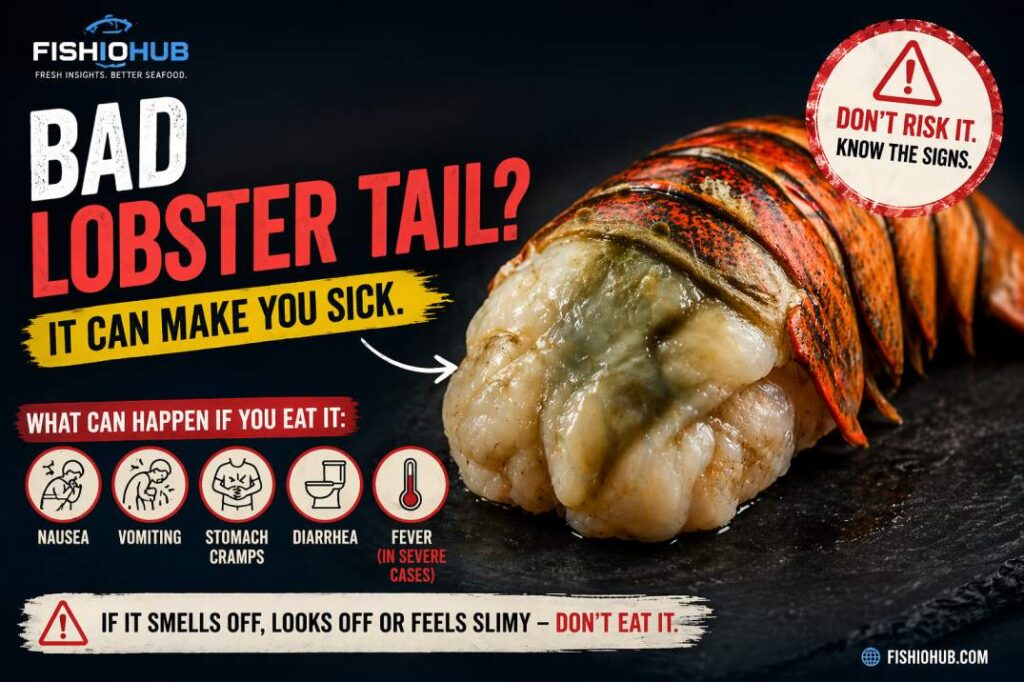
I’ll be honest, this is where most people take a risk without realizing it. Lobster goes bad faster than you think, and when it does, it’s not just “off taste”… it can make you seriously sick.
Follow my tips to check whether the lobster is in good condition or not:
- Smells like ammonia or sour? Don’t even think about it
- Slimy or sticky texture? That’s bacterial growth
- Grey or dull color (not white after cooking)? Big red flag
- Weird sharp taste? Spit it out immediately
What can happen if you eat it: You can suffer nausea, vomiting, stomach cramps, diarrhea, and in severe cases (like Vibrio), even fever
My rule (learned the hard way): Keep lobster cold always, try to eat it within 1-2 days or maximum 3-4 days if it is well-cooked at around the temperature of 145°F. Remember one thing: if it smells wrong, it is wrong. Don’t risk it.
Full Comparison Table — Every Parts of Lobster You Can Eat
| Part | Flavor | Texture | Volume | An effort to extract | Best use | Worth it? |
| Tail meat | Mild, clean, sweet | Firm, dense | Large | Easy | Grilling, broiling | Essential |
| Crusher claw | Rich, sweet | Firm | Medium | Moderate | Lobster rolls, eating fresh | Essential |
| Cutter claw | Silky, intense | Soft, delicate | Medium | Moderate | Eating fresh, bisque | Essential |
| Knuckle meat | Buttery, complex, sweetest | Tender | Small-medium | Easy with shears | Eating fresh pasta | Absolutely — never skip |
| Leg meat | Concentrated, intense | Fibrous | Very small | Patient effort | Eating fresh, stock | Yes — for full experience |
| Body meat | Delicate, sweet | Very soft | Small | Requires pick | Eating fresh | Yes — for dedicated eaters |
| Tomalley | Intensely rich, savory | Creamy | Small | No effort | Sauces, butter, bisque | With red tide awareness |
| Roe/coral | Briny, oceanic | Soft pearls | Very small | No effort | Garnish, pasta, sauces | Yes — a genuine delicacy |
| Shell | No direct food value | Inedible | — | — | Lobster stock | Yes — for stock |
❓FAQs – What People Also Ask
Can you eat everything in a lobster?
No, avoid gills, stomach sac, and shell.
What parts of lobster you can eat?
Tail, claws, knuckles, legs, and sometimes tomalley and roe.
What part of a whole lobster can you eat?
Most meat-bearing parts except the gills, stomach sac, and shell.
What do you eat from a lobster first?
Start with claws, then tail, then knuckles.
What happens if you eat bad lobster tail?
It can cause food poisoning, including nausea and vomiting.
Can you eat lobster legs?
Yes, but they contain very little meat.
Is lobster tomalley safe?
Yes, in small amounts, but avoid frequent consumption.
Which part tastes best?
Claw meat is generally the most flavorful.
🚫 Stop — Don’t Eat Another Bite Yet
You now know the parts of lobster you can eat…but this is where most people mess up.
👉 Some parts look edible… but should never be eaten
👉 Others can actually make you feel sick if you’re not careful
I’ve seen people ruin a perfect lobster meal just because they didn’t know this.
Read this first: What Parts of Lobster Not to Eat — And What Happens If You Do
Final Thoughts
From my experience, most people don’t eat lobster correctly; they just stop too early. If you slow down, the main parts of lobster you can eat are the tail, claws, knuckles, legs, and body meat, each offering a different texture and flavor. You’ll realize the best bites aren’t the obvious ones.
The tail is just the start… the real reward is hidden deeper—and now you know exactly where to look.
— Anil Satak
Founder, FishioHub
Was this guide helpful?
First-Hand Experience
Based on animals I've personally kept and bred - not summarized from other articles.
Zoological Foundation
Claims are checked against my M.Sc. Zoology training and published aquatic biology research, not recycled aquarium myths.
No Paid Influence
No sponsorship shaped this guide. Affiliate links, if any, are disclosed separately and never hidden.
Kept Current
Errors are corrected as soon as they're found, with the update noted at the bottom of the article.

Anil Satak M.Sc. Zoology · Founder, FishioHub
Grew up in a fishing family in India and holds a Master's in Zoology. FishioHub is a one-person operation - every guide is personally researched, kept-tested, and written by Anil. No team, no outsourced writers, no AI-generated content. Read his full bio →