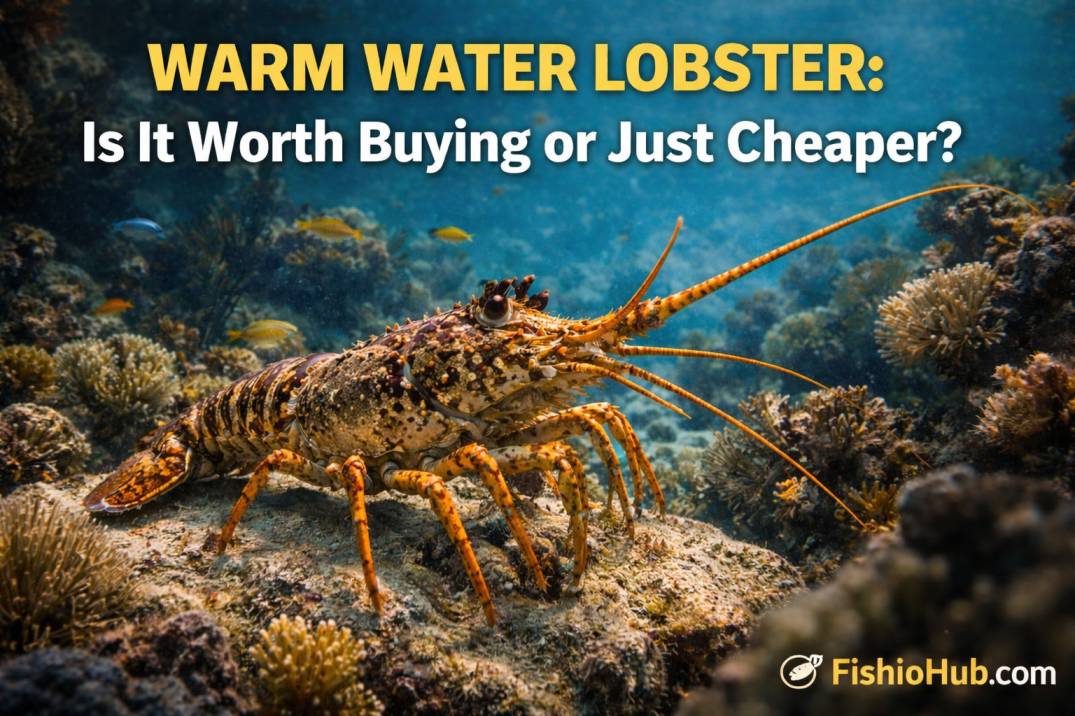
I still remember the first time I ordered ‘lobster tails’ at a restaurant. I expected to have the same experience I had previously enjoyed with ‘premium cold-water lobster.’ The presentation was identical, but the taste and texture told a completely different story.
That was when I realized something crucial: not all lobsters are equal, especially when it comes to their habitat.
What is Warm Water Lobster (Quick Answer)
Warm water lobster refers to spiny lobster species found in tropical and subtropical oceans where temperatures stay above 70°F year-round. Unlike cold water lobsters, they do not have large claws and are mostly valued for their tail meat, which is milder in flavor and softer in texture.
🦞What You’ll Get in This Post
- 🧭 What warm water lobster actually is?
- 🌊 Where it comes from and how it lives?
- 🍽️ Warm water lobster taste and texture
- 🦞 Do warm water lobsters have claws?
- 💰 Why it’s cheaper than cold water lobster?
- ⚖️ Cold water lobster vs warm water lobster (quick comparison)
- 🛒 Should you buy warm water lobster?
What Is Warm Water Lobster?
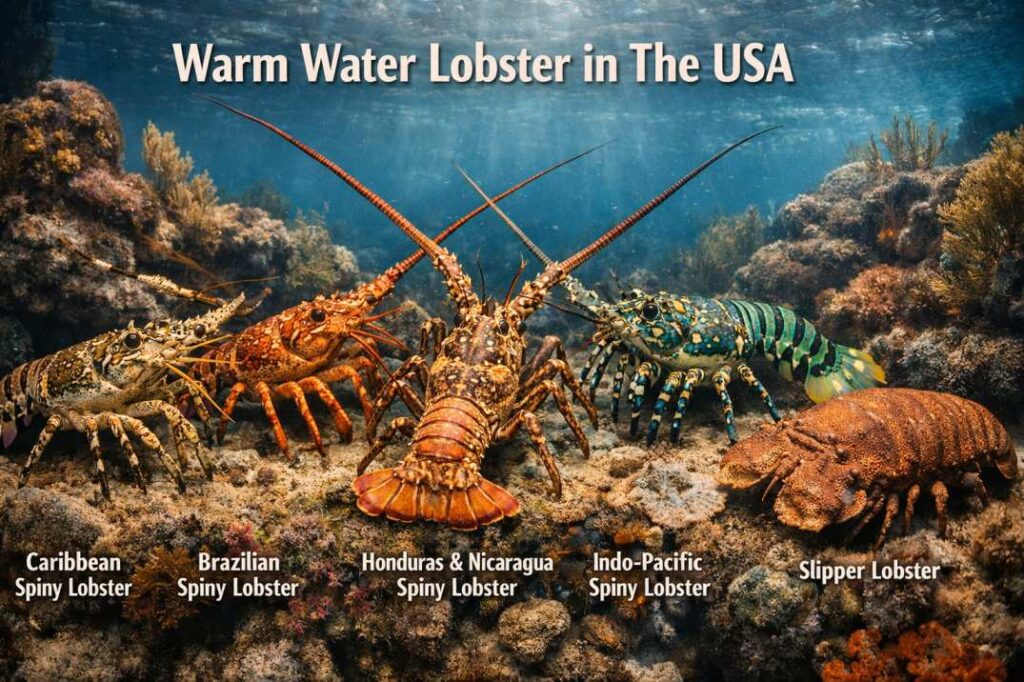
Warm water lobster is a type of lobster that lives in warmer ocean regions (where the temperature stays above 70°F year-round), such as the Caribbean, South Africa, Australia, and parts of the Pacific Ocean. Unlike the classic clawed lobster, these lobsters belong mostly to the spiny lobster family (Palinuridae).
Key characteristics of Warm water lobster:
- No large claws
- It has Long antennae
- Tail-focused meat
- Found in coral reefs and rocky tropical waters
This is why most “lobster tails” sold globally are actually from warm-water lobsters. In the US market, you will encounter these primary species of warm-water lobsters: Caribbean spiny lobster, Brazilian spiny lobster, Honduras and Nicaragua spiny lobster, Indo-Pacific spiny lobster, and Slipper lobster.
According to NOAA Fisheries, spiny lobsters represent a huge portion of the global lobster trade, with Caribbean spiny lobster alone supporting commercial fisheries across more than 30 countries in the Western Atlantic and Caribbean basin.
Where Does Warm-Water Lobster Come From?
Warm water lobsters are typically sourced from the Caribbean Sea, the Florida Keys, Australia, South Africa, and Brazil.
Scientific Insight:
According to fisheries research, spiny lobsters thrive in waters above 20°C, which allows faster growth compared to cold water species. This also means faster growth results in softer muscle fibre and a different texture.
Do Warm Water Lobsters Have Claws?
Short answer: No. This is one of the biggest differences between cold water lobsters and warm water lobsters. The warm-water lobsters do not have large claws, and their edible meat is mostly in the tails. Hence, in most restaurants, you will see warm water lobster in the form of lobster tails.
What Does Warm-Water Lobster Taste Like?
This is very important if you are buying a warm-water lobster. From my experience, warm-water lobster has a mild, slightly sweet flavor; sometimes it feels softer and has a little less firm texture, something like a fish.
Why does warm-water lobster have a different taste from cold-water lobster?
The main reason for the different taste of these two lobsters is their habitat: warm-water lobsters have a faster metabolism, which results in less dense muscle fibres and, eventually, a slightly milder taste. Cold Water vs Warm Water Lobster: 1 Clear Winner (Don’t Buy Wrong)”
Warm Water Lobster Meat: What You Should Expect
Warm-water lobster meat is:
- Found mainly in the tail
- Easier to cook
- Its meat is slightly softer than cold water lobster
Seafood researchers have proved that muscle density in crustaceans varies based on water temperature, directly influencing the firmness and taste of lobster. That’s why cold water lobster feels “meatier.”
Why is warm-water lobster cheaper?
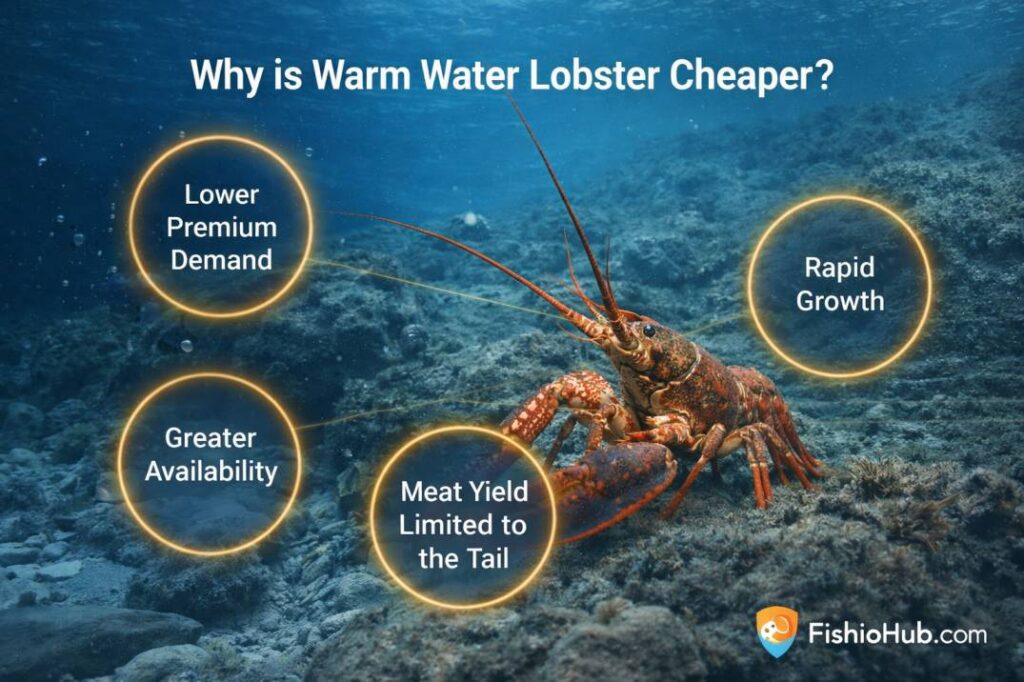
There are four main reasons behind this, which also reflect consumer purchasing preferences:
Key Reasons:
- Lower Premium Demand: Chefs often prefer cold-water lobsters.
- Rapid Growth: Warm-water lobsters grow faster than cold-water lobsters, resulting in a higher supply.
- Greater Availability: They are found in many different parts of the world.
- Meat Yield Limited to the Tail: Unlike other lobster varieties, they lack the delicious meat found in the claws; this has a direct impact on the price. No claws means a lower overall meat yield value.
Cold Water Lobster vs Warm Water Lobster (Quick Comparison)
| Feature | Warm-Water Lobster | Cold Water Lobster |
| Habitat | Tropical waters | Cold oceans |
| Claws | No | Yes |
| Taste | Mild | Sweet, rich |
| Texture | Softer | Firm |
| Meat Source | Tail only | Claws + tail |
| Price | Affordable | Expensive |
Is Warm Water Lobster Better?
I will answer, it depends on your goal.
Choose warm water lobster if:
- You want a more affordable option
- You prefer easy-to-cook lobster tails
- You’re making dishes like pasta or grilling, then choose warm-water lobster, otherwise not.
Avoid if:
- You want premium taste, go with cold water lobster.
- You love claw meat, then avoid it.
- You want a rich seafood experience, buy cold water lobster.
Warm Water Lobster Tails: What You Should Know
Most people buying lobster are actually buying tails. What is warm water lobster tail? It’s the tail portion of spiny lobsters, widely sold frozen or fresh.
Wild warm water lobster tail vs processed
- Wild-caught: Has better flavor, natural diet
- Processed: The lobsters may be less flavorful
Always check the labeling before buying.
🛒 Should You Buy Warm Water Lobster?
Let’s make this simple. Buy warm-water lobster only if you are on a low budget, you need lobster for feciepes and you are a beginner; otherwise, ignore it if you want top-level taste.
Is Warm-Water Lobster Worth Buying?
Yes, but for the right purpose. Remember one thing, it is not a bad lobster, it’s just a different category to try. You have two options: try cold water if you want a premium taste, or warm-water lobster for daily seafood.
💵 Typical Price Difference (What You’ll Notice)
- Warm water lobster → More affordable, budget-friendly
- Cold water lobster → Premium pricing, often significantly higher
But here’s the important part most people miss: A lower price doesn’t always mean better value
🛒 Better Buying Guide: How to Choose the Best Warm Water Lobster
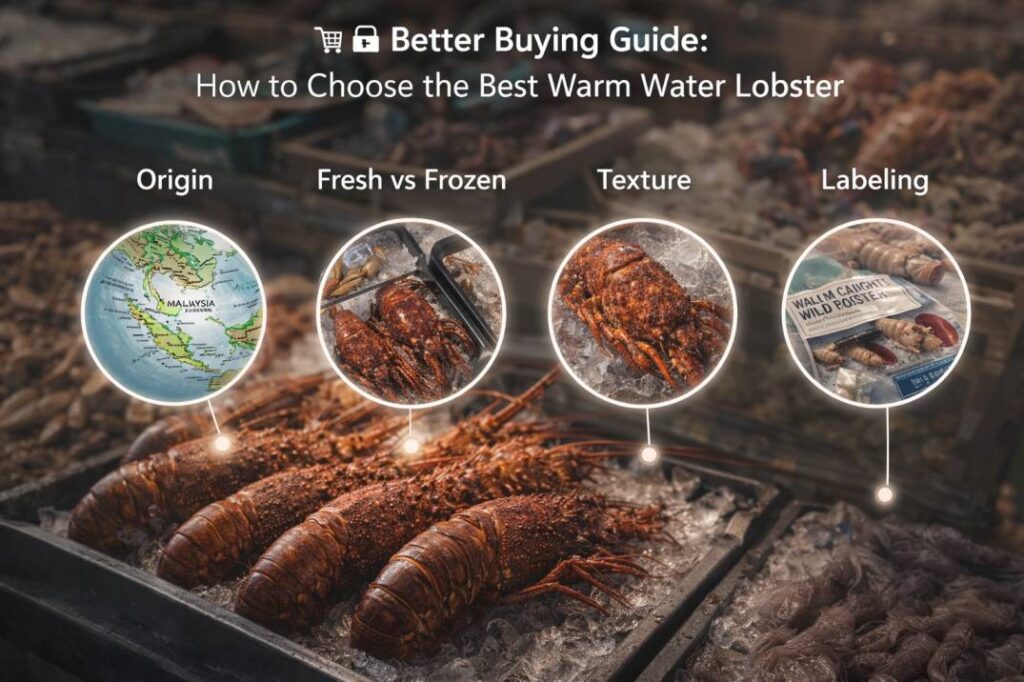
- Check origin: If it is from the Caribbean or Australia, then good quality
- Fresh vs frozen: Frozen is fine if properly handled
- Texture: Avoid overly soft or mushy meat
- Labeling: Always confirm “wild-caught” if possible for the best
🍽️ Buying or Cooking Warm Water Lobster? Read This First
Before you cook or eat it, there’s one thing most people overlook…Some lobster parts are not recommended to eat, even though they’re commonly served.
👉 Avoid the confusion (and mistakes): What Parts of Lobster Not to Eat
FAQs
- What is warm-water lobster?
A spiny lobster found in tropical waters, mainly valued for its tail meat. - Do warm-water lobsters have claws?
No, they lack large claws. - What does warm-water lobster taste like?
Mild, slightly sweet, and softer in texture. - Why is warm-water lobster cheaper?
Due to faster growth, higher availability, and lower demand. - Are warm-water lobster tails good?
Yes, especially for casual cooking and recipes. - Is warm-water lobster better than cold water lobster?
Not in taste — but better in affordability. - Can you buy warm-water lobster tails easily?
Yes, they are widely available globally. - Is frozen warm-water lobster okay?
Yes, if properly frozen.
🦞 Still Confused About Lobster Quality? And What’s With the “Cockroaches of the Sea” Label?
I’ve seen this confusion a lot—people buy lobster expecting that rich, sweet, tender experience… but sometimes it feels completely different. The truth is, not all lobsters are the same, and where they come from plays a huge role in both taste and texture.
And then there’s this strange term—“cockroaches of the sea.” The first time I heard it, it didn’t sit right with me either. But once you understand where that idea comes from, it actually makes a lot more sense (and might even change how you look at lobsters).
If you want a clear, real-world breakdown before you buy—or just want to understand the truth behind these common misconceptions—these will help:
👉 Cold Water Lobster: Why It’s So Expensive & How to Buy the Best?
👉 Why Are Lobsters Called Cockroaches of the Sea? The Truth Explained
Final Thoughts
Warm water lobster isn’t trying to compete with cold water lobster; it serves a different purpose.If you understand that difference, you’ll make a much better buying decision.
Was this guide helpful?
First-Hand Experience
Based on animals I've personally kept and bred - not summarized from other articles.
Zoological Foundation
Claims are checked against my M.Sc. Zoology training and published aquatic biology research, not recycled aquarium myths.
No Paid Influence
No sponsorship shaped this guide. Affiliate links, if any, are disclosed separately and never hidden.
Kept Current
Errors are corrected as soon as they're found, with the update noted at the bottom of the article.

Anil Satak M.Sc. Zoology · Founder, FishioHub
Grew up in a fishing family in India and holds a Master's in Zoology. FishioHub is a one-person operation - every guide is personally researched, kept-tested, and written by Anil. No team, no outsourced writers, no AI-generated content. Read his full bio →