If you’ve ever eaten croaker—whether it’s Atlantic croaker, yellow croaker, or the smaller silver variety- then you know exactly why people love it. I’ve cooked croaker many times, and what always stands out is its mild flavor, soft flakes, and clean finish. But before adding it to your weeknight meals, everyone should know this:
Is croaker fish good for health?
Is croaker fish high in mercury?
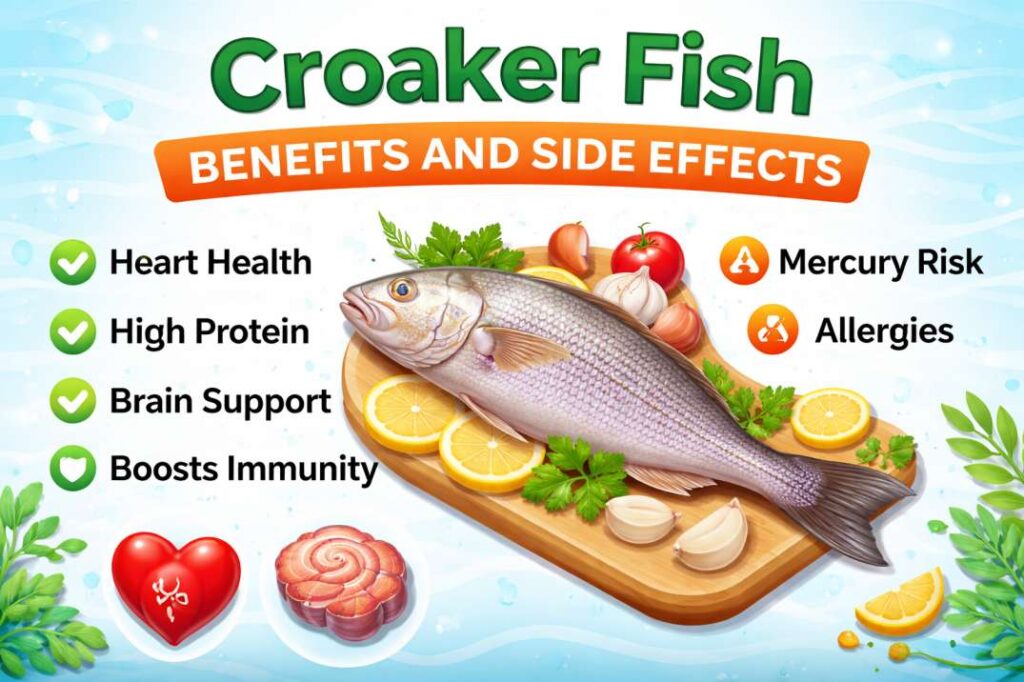
What are the exact Croaker Fish Benefits and Side Effects?
So, in this full guide, I’m sharing everything from nutrition facts to my real cooking-based experience.
What You’ll Get in This Post
• 🌟 Complete croaker fish health benefits
• 🍤 Croaker fish nutrition facts (per 100g)
• ❓ Is croaker good to eat? Mercury levels explained
• ⚠ Croaker fish side effects and who should avoid eating
• 🤰 Is croaker fish safe for pregnancy?
• 🥘 My personal taste and cooking experience
What Is Croaker Fish?
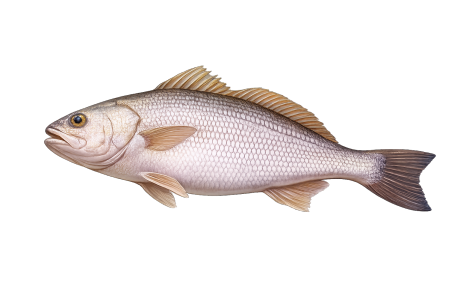
Croaker fish is a mild-flavored saltwater fish from the Sciaenidae family, known for its croaking sound made by vibrating its swim bladder. Found along the Atlantic and Gulf coasts of the USA, croaker is a small to medium bottom-dwelling fish that’s popular for frying, grilling, and everyday cooking.
It’s affordable, easy to prepare, and valued for its lean protein and omega-3 nutrition. In this guide on Croaker Fish Benefits and Side Effects, I’ve explained its nutrition, health advantages, mercury risks, and who should avoid it.
Croaker Fish Benefits
From my own experience and the available nutrition data, here are the 5 biggest croaker fish benefits:
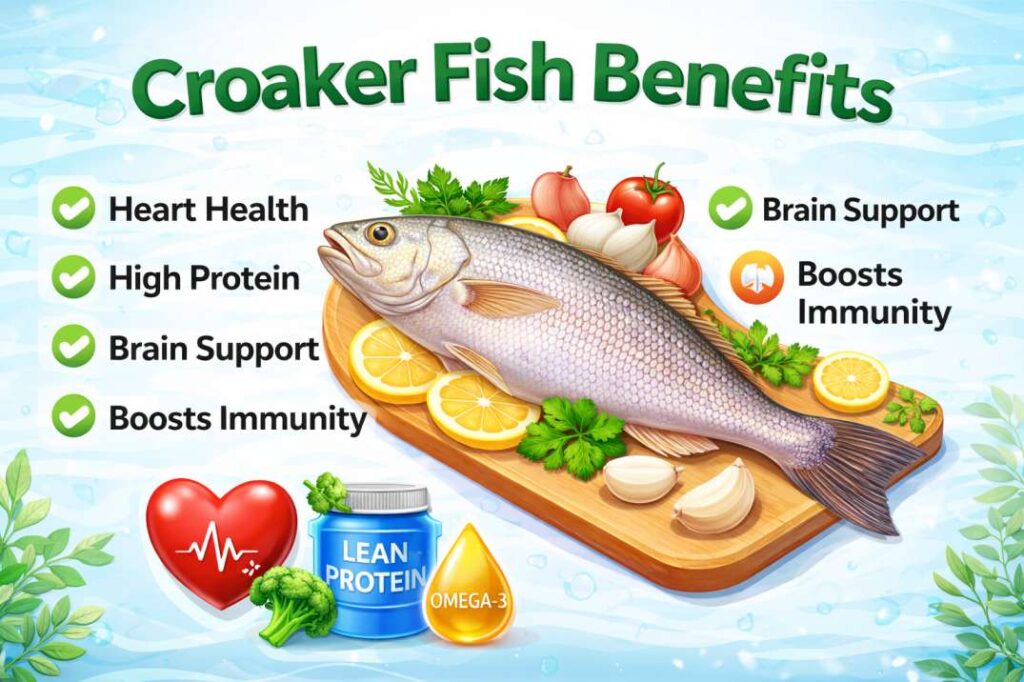
1. Croaker Fish Is High in Lean Protein (Low Fat)
When I first measured it for my nutrition page, I was surprised by how lean croaker is. It contains approximately 18–20g of protein per 100g, a protein content that’s not much higher than other fish, and it’s very low in saturated fat.
This makes croaker perfect for:
✔ Those looking to lose weight
✔ Those looking to build muscle
✔ Those on a diabetes diet
✔ A heart-healthy food
2. Rich in Omega-3 (but Not Excessively Fatty)
You know, salmon is a more oily fish than croaker. But croaker contains a decent amount of DHA and EPA.
It helps with:
✔ Improving heart health and function
✔ Reducing inflammation in the body
✔ Brain and nerve function
✔ Brightening skin
3. Easy to Digest & Light on Stomach
One thing I personally love most about croaker is how light and comfortable it feels after eating. Unlike some heavier fish, croaker doesn’t make you feel bloated or uncomfortable. It’s easy to digest.
This is why it’s best for:
✔ Children
✔ The elderly
✔ People recovering from illness
✔ Those with poor digestion
4. Low Mercury Fish (Safe for Regular Eating)
The best part is that croaker fish contains very little mercury, making it a regular part of your diet.
Most croaker species are:
✔ Small fish
✔ Short-lived
✔ Living at the bottom of the food chain
So they don’t accumulate heavy metals like larger predatory fish. That’s why croaker is considered safe to eat weekly.
5. Budget-Friendly, Easily Available & Versatile
Croaker is one of the cheapest fish in the USA and Asia. It’s easily available. And it cooks well in the following ways:
✔ Fry
✔ Grill
✔ Curry
✔ Steam
✔ Tawa Style
✔ Oven Baked
I’ve cooked croaker in many ways, and its mild flavor goes well with everything—from lemon butter to spicy Indian masalas.
Croaker Fish Nutrition Facts (Per 100g)
Here is the croaker fish nutrition facts 100g, this data is based on average values:
| Nutrient | Amount in 100g fish |
| Calories | 104 kcal |
| Protein | 18–20g |
| Fat | 2–4g |
| Omega-3 | 200–400 mg |
| Vitamin B12 | High |
| Selenium | High |
| Phosphorus | Moderate |
| Sodium | Low |
Looking for Detailed Fish Nutrition Charts?
Get protein, calories, fat, omega-3, mercury safety levels, and more — all in one place.
My Nutrition Page is updated daily and covers 100+ fish species.
➡️ Open Fish Nutrition Center
Is Croaker Fish Good to Eat? (My Honest View)
Yes, croaker is definitely good to eat. This is my experience from the few times I’ve eaten croaker. Croaker has a mild flavor, slightly sweet, and soft flakes, unlike other fish. The fish cooks quickly, so you need to be careful not to overcook it.
If you like fish that doesn’t have a strong odor, croaker is perfect. Before adding it to your weekly meals, it’s important to check Croaker Fish Benefits and Side Effects so you can eat it confidently and safely.
Is Croaker Fish High in Mercury?
No. Croaker fish contain very low levels of mercury.
This is primarily due to:
✔ Because croaker fish are small in size
✔ They live in clean water near shore
✔ They eat plankton and small crustaceans
✔ Therefore, they don’t accumulate toxins
This low mercury content makes them one of the safest saltwater fish to eat during the week.
Is Croaker Fish Good for Pregnancy?
Yes, croaker fish is safe during pregnancy because it has low mercury levels. The safety of any fish is determined by its mercury level, so croaker fish is considered safe because of its low mercury levels. However, it is important to consume it in moderation.
Recommended:
👉 1–2 servings per week
👉 Avoid eating raw or undercooked fish
Croaker fish provides pregnant women with:
✔ Omega-3s for the baby’s brain
✔ High-quality protein
✔ Vitamin B12
✔ Iron support
Croaker Fish Side Effects
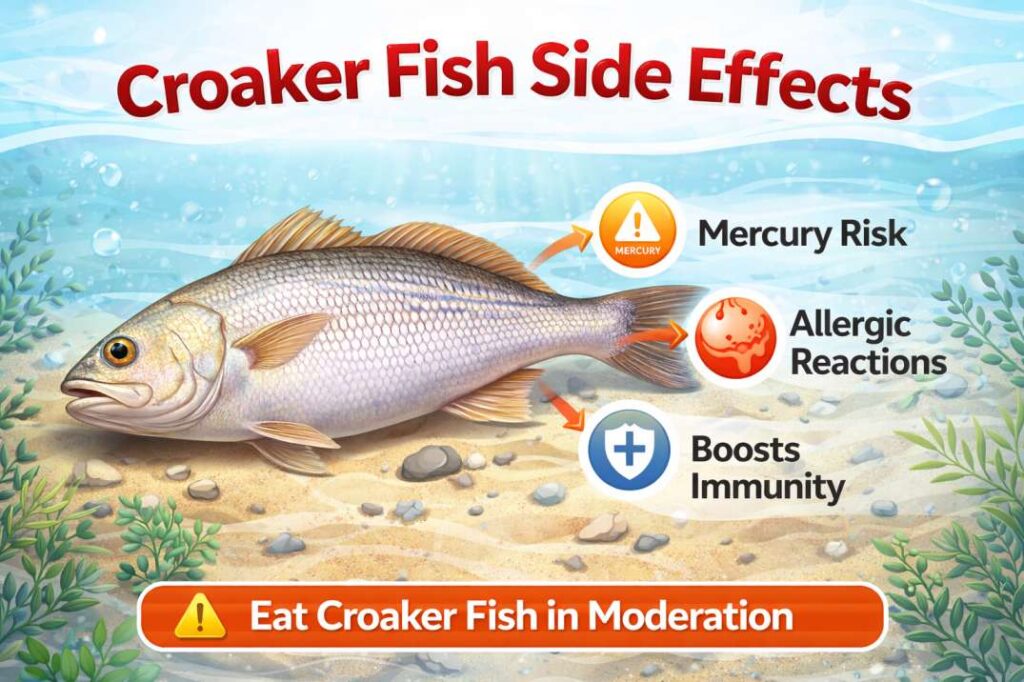
Every fish has its drawbacks. Croaker also has its side effects. If you’re confused about seafood safety, learning Croaker Fish Benefits and Side Effects gives a clear picture of its pros and possible drawbacks. It’s important to keep a few things in mind when eating croaker:
1. Risk of Allergic Reaction (If You’re Seafood-Sensitive)
If you have a fish allergy, croaker can cause allergic reactions, including itching, hives, mild swelling of the lips, and difficulty breathing. In such cases, croaker fish should not be consumed.
2. It spoils quickly (Must be fresh)
Croaker is a delicate fish. If it’s not fresh, its texture changes and flavor diminishes rapidly. Therefore, only buy fresh croaker.
Always keep these things in mind:
✔ Eyes should be clear
✔ Flesh should be firm
✔ No ammonia smell
3. Bones in a small croaker
Small croaker bones are fine. So if you’re cooking for children or the elderly, choose medium-sized fish. Or, consider using a less bone-rich fish like salmon instead of croaker.
4. Fried croaker’s health value is reduced
Like most fish, deep-frying increases the amount of fat in croaker, converting it into oil, fat, and calories, reducing its health value. Therefore, baked or grilled croaker is healthier.
📌 FAQ: Croaker Fish Benefits and Side Effects
1. What are the main Croaker Fish Benefits and Side Effects I should know before eating it?
Answer: The best benefits of Croaker include lean protein, omega-3 fats, and essential minerals. Side effects mainly relate to mercury, mild allergies, and risks from polluted waters.
2. Is croaker safe to eat daily, and how do Croaker Fish Benefits and Side Effects change with portion size?
Answer: Croaker is safe in moderate portions, but eating large amounts daily may increase mercury exposure. Balanced intake offers more benefits than risks.
3. Do Croaker Fish Benefits and Side Effects differ between Atlantic croaker and other croaker species?
Answer: Nutritional benefits are similar across species, but side effects depend on where the fish is caught. Some regions may have higher contamination levels.
4. How do cooking methods affect Croaker Fish Benefits and Side Effects?
Answer: Grilling and baking preserve most benefits, while deep frying increases calories and may add unhealthy fats. Cooking doesn’t affect mercury levels.
Final Verdict – Should You Eat Croaker?
Yes—croaker is one of the cleanest, most mercury-lowest, and easiest fish you can choose for beginners. And when cooked fresh and eaten in moderation, its benefits clearly outweigh the side effects.
I personally give Croaker very high ratings for the following:
⭐ Soft Taste
⭐ Ease of cooking
⭐ Low mercury
⭐ Affordable price
⭐ Can be used in a variety of ways
If you’re trying to stick to a weekly seafood routine, croaker is a great option.