
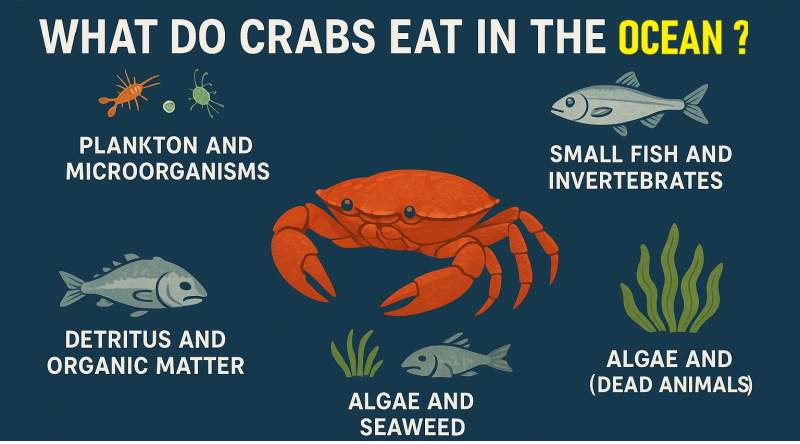
I always find crabs fascinating because they are not picky eaters — they are basically the “clean-up crew” of the ocean.
But exactly what do crabs eat in the ocean, and how do they survive in such competitive underwater environments?
In this post, I’ll break down everything about crab diet, feeding behavior, and even what animals hunt them in the wild.
What you’ll get in this post:
- 🦀 What do crabs eat in the ocean (complete diet list)
- 🌊 How crabs find and eat food underwater
- 🐟 Do crabs eat fish, algae, or dead animals?
- 🦈 What eat crabs?
- ⚖️ How diet change by crab species
- ❓ FAQs about crab feeding behavior
🌿 What Do Crabs Eat in the Ocean?
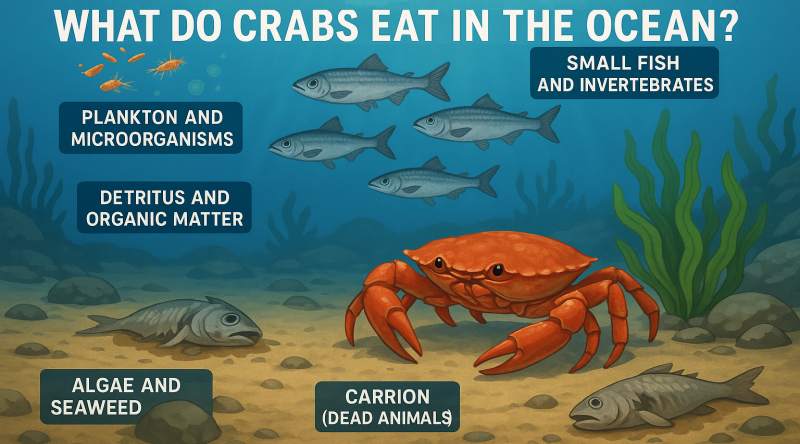
They consume a wide variety of food, from algae to small fish. Crabs are omnivores, scavengers, and in many cases, opportunistic predators. Their highly adaptable feeding habits help them survive in a range of environments—from tidepools and reefs to the deep sea floor.
1. Algae and Seaweed: The Vegetarian Side of Crabs
Do crabs eat seaweed? Many crab species rely heavily on ocean plants, especially when animal-based food sources are scarce. The major plant-based foods in a crab diet include:
- Macroalgae (sea lettuce, kelp, red algae)
- Microalgae (phytoplankton and benthic algae)
- Seagrass
- Floating plant debris
Plant material provides important nutrients such as carbohydrates and trace minerals necessary for the crab’s exoskeleton development. Particularly for herbivorous species such as mangrove crabs and fiddler crabs, plant material is an important part of their diet.
2. Dead Organic Matter (Detritus): The Ocean’s Clean-Up Crew
Crabs are recyclers. They consume debris or decaying organic matter, which can include:
- Decomposing plant fragments
- Decomposing fish and marine animals
- Bacterial biofilms and microbial mats
By consuming debris, crabs help keep the sea floor clean and recycle nutrients back into the food web. This makes them important players in benthic (bottom-living) environments. To understand marine ecosystems better, we first need to understand What do crabs eat in the ocean.
3. Small Marine Animals: Active Predators on the Prowl
Carnivorous and omnivorous crab species are predators. They use their claws and sensory organs to hunt. Common live foods for crabs include:
- Molluscs: mussels, snails, clams
- Small fish: fry, gobies
- Marine worms: polychaetes and tube worms
- Crustaceans: small shrimps and crabs
The crab’s powerful pincers (chelae) are especially useful in hunting and eating hard-shelled animals. The green crab is known as an invasive species in many parts of the world.
4. Carrion: The Crabs’ Backup Buffet
Whenever a crab gets an opportunity, it won’t hesitate to feast even on a dead fish, a decaying squid, or even other dead crabs. This scavenger behavior of the crab is very vital and helps to prevent disease; it also cleans the buildup of waste in ocean environments. If you got question, are crabs scavengers? Then yes, most of the crabs are scavengers.
5. Plankton and Microorganisms: Baby Crabs’ First Meals
Juvenile crabs, also called zoeae and megalopa in their larval stages, feed on:
- Zooplankton
- Phytoplankton
- Protozoa
- Bacteria-rich biofilms
These microscopic organisms are essential for crab larvae, helping them survive until they are big enough to hunt or scavenge.
How Do Crabs Find Food Underwater?
Crabs don’t rely on vision alone — they are highly adapted scavengers.
They find food using:
- Strong Sense of Smell: Crabs can detect chemical signals in water from far distances.
- Night Feeding Behavior: Many crabs are nocturnal, meaning they hunt or scavenge at night to avoid predators.
- Bottom-Dwelling Movement: Most crabs walk along the seafloor, constantly searching for food particles.
- Claw Adaptation: Their claws are designed for grabbing, crushing, and tearing food.
Do Crabs Eat Dead Animals?
Yes — and this is one of their most important roles in the ocean ecosystem. Crabs are natural scavengers, meaning they actively feed on:
- Dead fish
- Dead marine animals
- Decaying organic matter
This helps keep the ocean clean and prevents waste buildup on the seabed.
What Eats Crabs in the Ocean?
Who Eats Crabs?
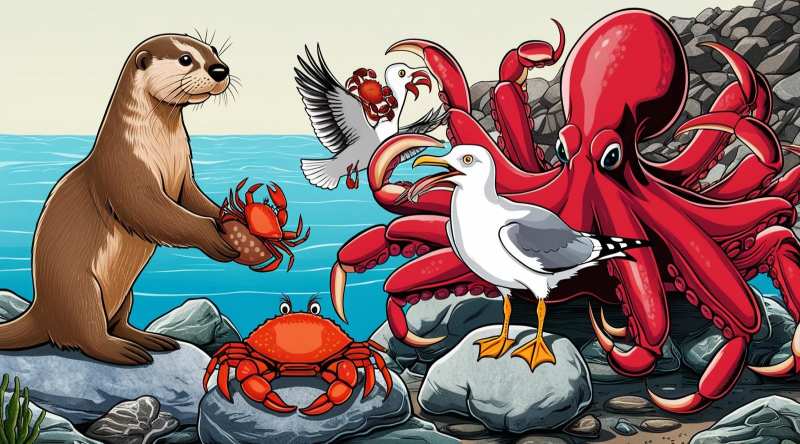
You’ve seen what crabs eat, but here’s the other side of the food chain: What animals eat crabs in the ocean? From fish and octopus to birds and sharks, crabs are hunted by many powerful predators.
👉 Read the full guide:
https://fishiohub.com/what-eats-crabs/
Although crabs have a strong shell, they are not invincible. Many sea creatures consider crabs a tasty and protein-rich meal. So find out which creatures feast on sea crabs, What Eats Crabs and find out the range of predators:
1. Large Fish
Fish that eat crabs include some carnivorous fish. They prey on crabs, especially those that live in shallow reefs or estuarine waters. Here are the fish that prey on crabs:
- Drum fish
- Groupers, Halibut
- Sheepshead
- Pufferfish
- Redfish
- Wrasses
These fish like lingcod and halibut have very strong jaws and teeth adapted to crush crab shells.
2. Octopuses and Cuttlefish
If we talk about some creatures that hunt crabs easily, then we should take names like octopus and cuttlefish. They use their flexible arms to catch crabs, later paralyze the crabs with poison, and then eat them using their sharp beak. The intelligence and problem-solving skills of these creatures help them to remove the shell and eat the crab meat.
3. Marine Birds
In intertidal and inshore environments, birds play a major role in preying on crabs. Major species include:
- Seagulls
- Egrets
- Herons
- Oystercatchers
They wait for low tide when crabs are exposed, then pluck them from sand, rocks, or tide pools.
4. Sea Otters and Seals
Sea otters are known for their amusing habit of opening crab shells using rocks, a unique tool. These creatures are very clever and can dive to great depths, locating crabs hidden in kelp beds or under rocks. Seals and sea lions, especially in cold waters, may also consume crabs as part of their varied diet.
5. Humans: The Ultimate Crab Predator
- Humans love to eat crabs. Crabs are a popular seafood and delicacy around the world. Humans also catch crabs on an industrial scale, especially the following species:
- Snow crab
- King crab
- Dungeness crab
- Blue crab
Crab hunting has increased due to advances in fishing and aquaculture worldwide. These changes have made humans the apex predators of many crab populations, raising conservation concerns in some regions.
Crabs as Predators in the Ocean
In quest of what does crabs eat in the ocean? We need to understand the role of crab as a predator. While many associate crabs with scavenging, some are fierce hunters. Crabs such as the Dungeness crab, blue crab, and spider crab are known to actively pursue and overpower live prey actively.
Some species, like the box crab, have even evolved specialized body structures to trap prey beneath their bodies. Predatory crabs contribute to the population control of smaller marine organisms, helping to keep the marine ecosystem in balance.
When we think about What do crabs eat in the ocean? then seaweed, algae, dead fish, aquatic plants, detritus, small marine animals and carrion are some examples. Now let us know What Eats Crabs? Top 5 Predators You Need to Know.
How Do Crabs Defend Themselves from Predators?
We know that crabs are hunted by many animals, yet they have adopted some techniques to avoid these predators:
1. Exoskeleton Protection
A crab’s hard outer shell provides a first line of defense. After molting, crabs are extremely vulnerable and often hide until their new shell hardens.
2. Camouflage and Hiding
Crabs have been shown to blend in completely with their surroundings – be it sand, coral, rocks, or mud. This natural camouflage helps them avoid predators.
3. Quick Movements and Swimming
Some crabs are great swimmers, such as blue crabs, equipped with paddle-shaped feet that help them swim quickly to safety. Other crabs crawl quickly along the sea floor or dig into the sand.
4. Aggression and Claws
Crabs are often seen raising their pincers as a warning and attacking with their feet anyone who comes to prey on them, even humans, without being afraid to attack with the pincers.
Diet Differences by Crab Species
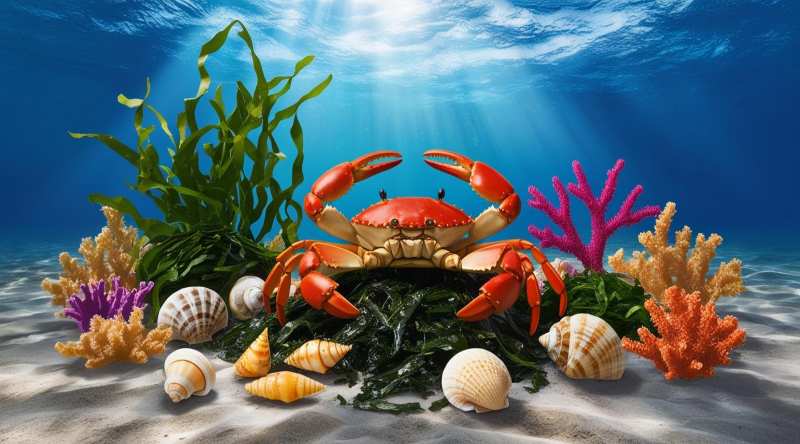
Not all crabs eat the same food. Their diet changes depending on species and habitat.
🏖️ Shore Crabs
- Algae
- Organic waste
- Small invertebrates
🦐 Blue Crabs
- Fish
- Mollusks
- Worms
- Dead animals
❄️ King Crabs
- Deep-sea organisms
- Dead fish
- Bottom-dwelling animals
🏝️ Hermit Crabs
- Algae
- Leftover food
- Decaying matter
👉 This diversity is why crabs survive in almost every ocean environment.
Why Crabs Are Important to the Ocean Ecosystem
Crabs are not just scavengers — they are ecosystem cleaners.
They help by:
- Breaking down dead matter
- Controlling waste buildup
- Supporting nutrient recycling
- Becoming food for larger predators
Without crabs, ocean ecosystems would become unbalanced very quickly.
❓ FAQs About What Crabs Eat
What is a crab’s favorite food?
Most crabs prefer mollusks, small fish, and organic matter, depending on species.
Do crabs eat fish?
Yes, especially larger species that can catch or scavenge fish.
Are crabs carnivores or omnivores?
Crabs are omnivores — they eat both plant and animal matter.
Do crabs eat dead animals?
Yes, crabs are natural scavengers and eat decaying marine life.
How often do crabs eat?
Crabs usually feed daily or whenever food is available.
🧠 Did You Know? (Crab Fun Facts)
- Crabs can regenerate lost limbs, especially if they are broken or lost during fighting or predator attacks.
- Some crabs cleverly use decorations such as algae or sponges stuck to their shells to help them hide.
- The world’s largest crab, the Japanese spider crab, has a leg span of up to 12 feet and can hunt and defend itself, feeding on both animal and decaying matter.
Article you may like to read:
Final Thoughts
When studying ocean food chains, a good place to start is asking, “What do crabs eat in the ocean?” Crabs are tough-looking, flexible living creatures that can eat many types of food. Also, many marine creatures hunt them. They serve as an important food source for many marine and coastal predators.
Crabs are one of the ocean’s most adaptable survivors. From algae to dead fish, they eat whatever keeps them alive — making them essential scavengers in marine ecosystems.
They may look simple, but their role in ocean balance is extremely important.
Pingback: Top 10 Fishing Tools and Their Uses (With Pictures) - FishioHub
Pingback: Ultimate Red Claw Crabs Care Guide: 8 Topics Food, Habitat, Tank Setup & Lifespan Explained - FishioHub