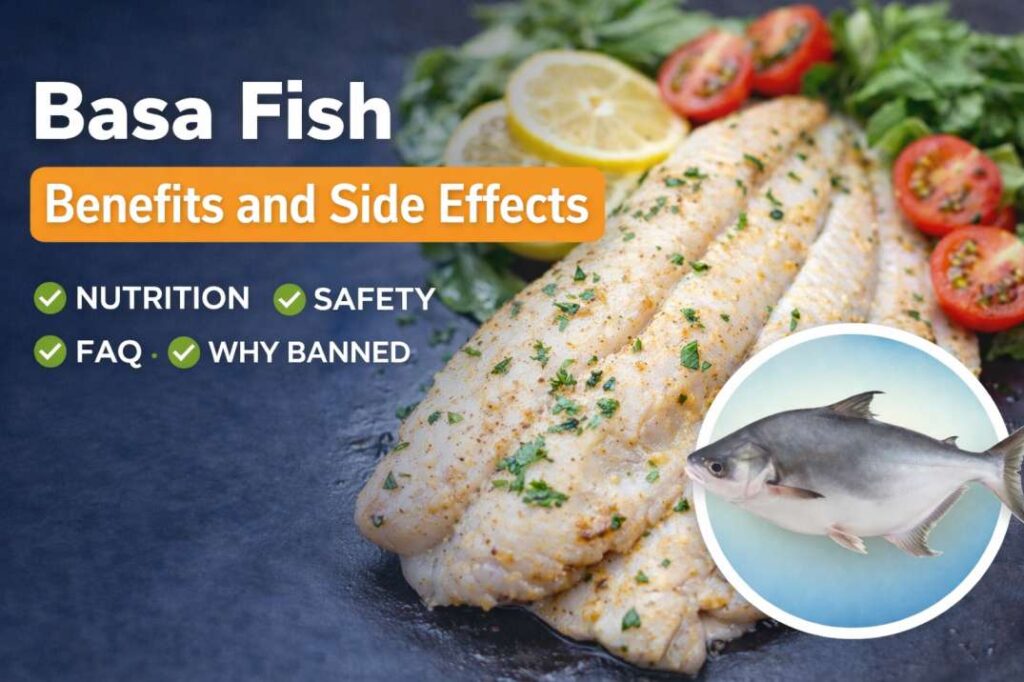
Fish is a staple food in Asia and India, and people here relish basa fish. Basa is one of the most commonly consumed fish in India today. The unique feature of this fish is its soft, boneless, and quick cooking. It’s readily available in local markets and online stores.
Whenever I write about fish, I always keep in mind that people not only look at the taste of the fish, but also consider its benefits and side effects. In this article, I’ve written about the basa fish benefits and side effects based on my experience and studies.
Since I’m always studying fish nutrition and have cooked basa many times, I decided to write a clear and practical guide covering the basa fish health benefits, its nutritional value, safety concerns, and even the hidden truth behind why is basa fish banned in some countries. Everything you read here is based on verified data and common eating habits in Indian households.
What You’ll Get in This Post
- 🌿 Basa fish benefits & basa fish health benefits
- 🧬 Basa fish nutrition facts 100g (Complete table)
- ⚠️ All basa fish side effects explained
- 🛑 Why is basa fish banned? (Country-wise explanation: India, NZ, Europe, Canada, Australia)
- 🆚 Basa fish vs salmon (nutrition comparison)
- 👨 Basa fish benefits for men
- 🍽️ My advice on how much to eat safely
What Is Basa Fish? (Quick Overview)
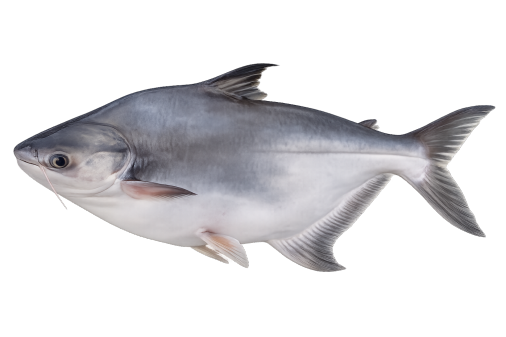
Basa fish is popular in India, but it’s actually a freshwater fish native to the Mekong Delta in Vietnam. Basa fish (Pangasius bocourti) has become very popular because:
- It’s inexpensive to purchase
- It produces tender, boneless fillets
- It has a mild flavor
- Basa fish cooks quickly, in 7–10 minutes
- It’s easily available
You can find Basa in restaurants, cafes, meal-prep services, and online fish stores. But you should consider quality when purchasing. Quality depends heavily on sourcing, which is a cause of confusion and bans in some countries.
Basa Fish Nutrition Value
When we try to understand the basa fish benefits, it’s extremely important to know the basa fish nutrition value, because this nutrition data tells whether basa is actually good for health.
100g of well-cooked basa fish provides:
- Calories: 90–120
- Protein: 15–20g
- Fat: 3–5g
- Omega-3: Low to moderate
- Vitamins: B12, Niacin, B6
- Minerals: Selenium, Potassium, Phosphorus
- Carbs: 0
Now let’s look at the detailed basa fish nutrition facts 100g table.
Basa Fish Nutrition Facts 100g (Table)
| Nutrition | Amount (Per 100g) |
| Calories | 90–120 kcal |
| Protein | 15–20g |
| Total Fat | 3–5g |
| Saturated Fat | <1g |
| Omega-3 | Low |
| Vitamin B12 | Good amount |
| Phosphorus | Moderate |
| Selenium | Good |
| Mercury | Low |
Basa is clearly a lean, low-calorie fish. This is great for those who want to lose weight and improve fitness, but it is not as rich in omega-3 as fatty fish like salmon or mackerel.
If you want a detailed breakdown of fish nutrition—including 100g protein, calories, omega-3, and mineral content—you can explore my dedicated Fish Nutrition Facts (100g) page. I update it frequently with new data.
Basa Fish Benefits
You’ve probably eaten basa fish, but did you know about these six benefits? So, let’s explore the benefits of basa fish, including the health benefits of basa fish and the benefits of Indian basa fish.
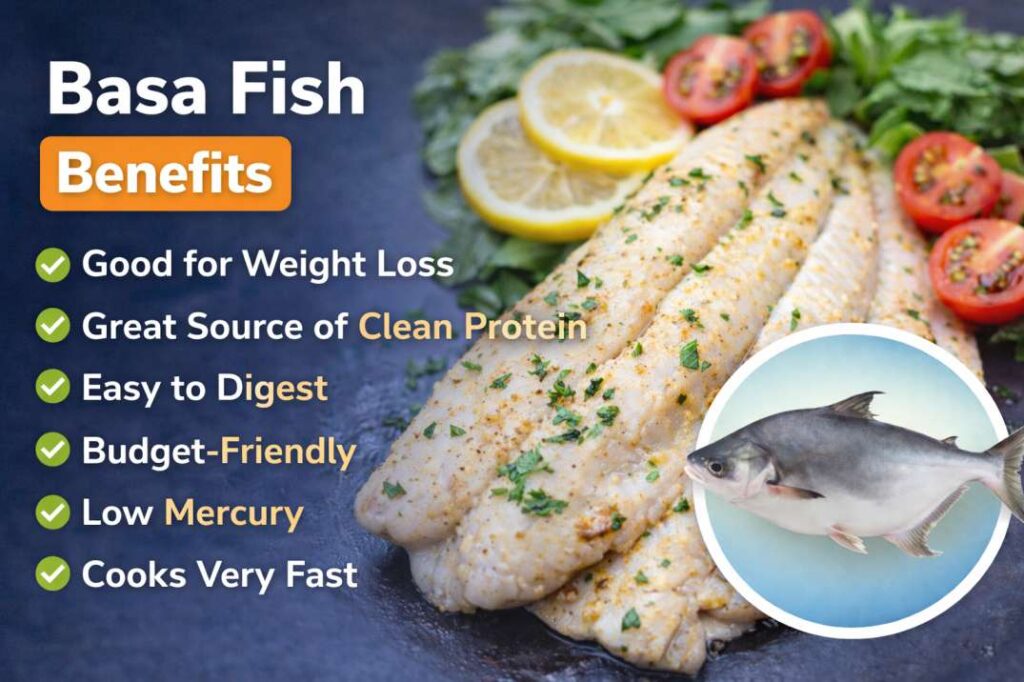
1. Excellent for Weight Loss
Basa is low in calories and fat.
100g = only 90–120 calories.
This makes it perfect for:
- A calorie-deficient diet
- A low-fat diet to prevent obesity
- A diabetic diet
- A good diet for a high-protein diet
For those who are always careful about their weight, basa fish is a great diet option. This is one of the biggest basa fish benefits for weight-conscious people.
2. Good Source of Clean Protein
Basa’s nutrient facts indicate that it provides 15–20g of protein per 100g and is very low in fat. This translates to increased physical strength while reducing obesity.
This makes it ideal for:
- Gym-goers
- Muscle growth
- Building stamina
- Meal preparation
This is a significant part of the basa fish health benefits.
3. Easy to Digest
Basa is easy to digest due to its soft texture, and can be eaten by all members of the household:
- Children
- Adults
- People with sensitive stomachs
- Patients recovering from illness
In Indian households, this is one of the strongest of indian basa fish benefits.
4. Cooks Very Fast
Basa fish cooks very quickly. I think basa cooks faster than raw fish, taking just 7–10 minutes, making it ideal for:
- Working professionals
- Quick dinners
- Lunch boxes
- Meal prep
5. Low Mercury (Safer for Weekly Consumption)
Many people don’t consider basa a large fish, but this isn’t entirely true. Basa normally weighs 1.5–2 kg. Basa is a small to medium fish, so it contains less mercury than larger fish like king mackerel or tuna.
If sourced properly, it’s safer. But keep in mind that basa can grow up to 40 kg.
6. Budget-Friendly and Consistent Quality
In India, basa is one of the most budget-friendly and affordable fish compared to salmon, pomfret, and sea bass. This cheapness is one of the big indian basa fish benefits.
Is Basa Fish Good for Health? (Direct Answer)
Yes, Basa fish is good for health. However, before eating Basa fish, you should keep these things in mind. These things apply to all fish:
- It should be sourced from a clean, reputable supplier
- It should not be from a low-quality farm
- It should be cooked properly
- And most importantly, it should be consumed in moderation
Nutritionally, Basa fish is perfectly healthy. The only concern is the quality of farming, which is what causes Basa to become banned. I’ll explain this in the “Why is basa fish banned” section below.
Basa Fish Benefits for Men
Men can especially benefit from Basa because it contains these nutrients:
- It provides high-quality protein for muscle growth
- It supports stamina and energy levels
- Being a low-fat fish, it poses no risk of fat gain. Ideal for a lean physique
- It is rich in B vitamins, which support metabolism
- It is easy to digest, making it a good post-workout meal
Basa is an excellent “light protein” fish for men who work out daily.
Basa Fish Side Effects
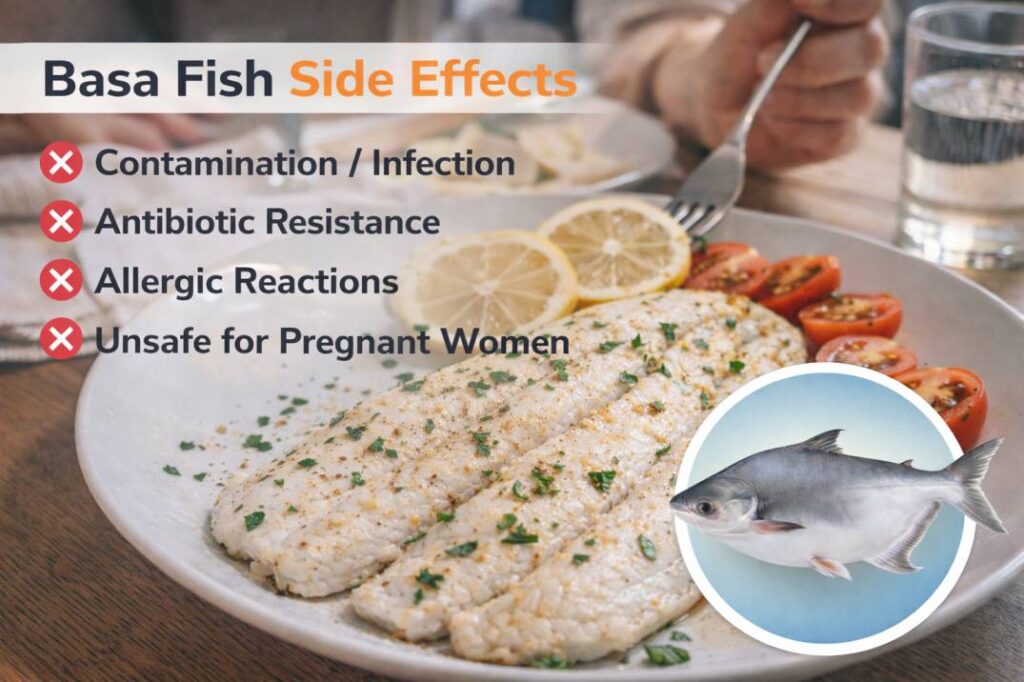
When we understand the fish nutrition chart, we also realize that every fish has its drawbacks and side effects. The real side effects of basa fish are:
1. Low Omega-3
Compared to other fish like salmon, mackerel, or sardines, basa is low in omega-3, which are effective in reducing inflammation and maintaining heart health.
2. Risk of Contamination (if purchased cheaply or illegally)
This is the biggest problem. Poorly farmed basa may contain:
- Contaminants from sewage water
- Antibiotics
- Chemical residues
Good quality basa is safe, but cheap basa is unsafe.
3. Not suitable for high uric acid levels
Like all fish, basa contains purines. People with gout should eat it in moderation.
4. The quality of frozen basa varies.
Some frozen basa becomes soggy or watery when cooked. The nutrients in basa change after cooking.
5. Not good for daily consumption.
Due to potential contamination and mercury, basa should be consumed 1-2 times a week, not daily.
Why Is Basa Fish Banned? (Full Explanation)
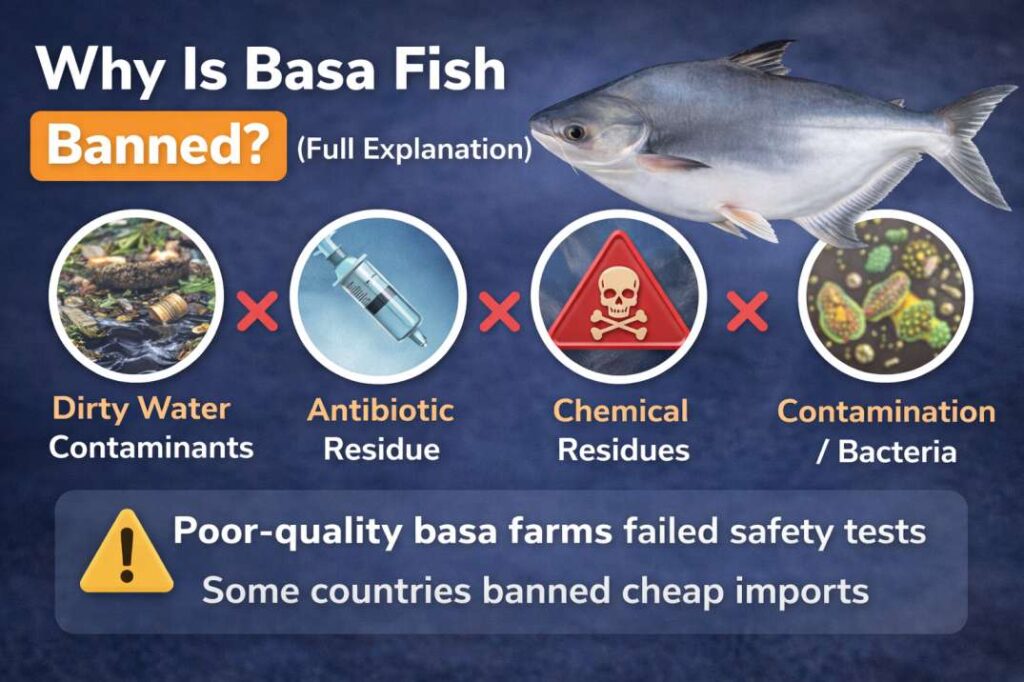
This is the biggest confusion people have about Basa, so let me clear it properly. Basa fish is banned in some countries. The reason isn’t the fish itself, but rather because some farms that farm basa have failed safety tests. This is why basa is banned in many countries. The quality tests for basa are as follows:
- Antibiotics
- Dirty water
- Adulteration
- Chemical residues
Now we know which countries are available for basa fish.
1. Why Is Basa Fish Banned in India?
Basa fish is not banned in India.
But:
- For some reason, the import of low-quality Vietnamese Basa was temporarily banned.
- Some states have issued warnings about cheap Basa that lacks quality.
- FSSAI tightened Basa import regulations.
The reason behind stricter laws or regulations for Basa in India was simple:
If Basa is cheap, it means it’s prone to poor farming and adulteration. Good quality Basa is safe and widely consumed in India.
2. Why Is Basa Fish Banned in NZ (New Zealand)?
New Zealand is very strict about the quality of any imported fish. Recently, some imported basa batches were found to have failed the following:
- Contamination tests
- Antibiotic tests
- Hygiene standards
Therefore, New Zealand has banned or limited the import of poor-quality basa.
3. Why Is Basa Fish Banned in Europe?
Europe has banned basa exporters whose basa tests test positive for:
- Antibiotics tests
- Pollutants and infection tests
- Toxin residues
However, basa itself is not banned universally in Europe; only unsafe shipments of basa are banned.
4. Why is basa fish banned in Canada?
Canada rejected some imports because:
- The fish did not meet food safety standards
- The contamination level was high
- The standard certification was not valid
5. Why Is Basa Fish Banned in Australia?
Australia has:
- strict food quality and safety standards
- local fish industry protection
- limited acceptance of low-cost imported fish
Some basa batches failed their quality tests.
Basa Fish vs Salmon
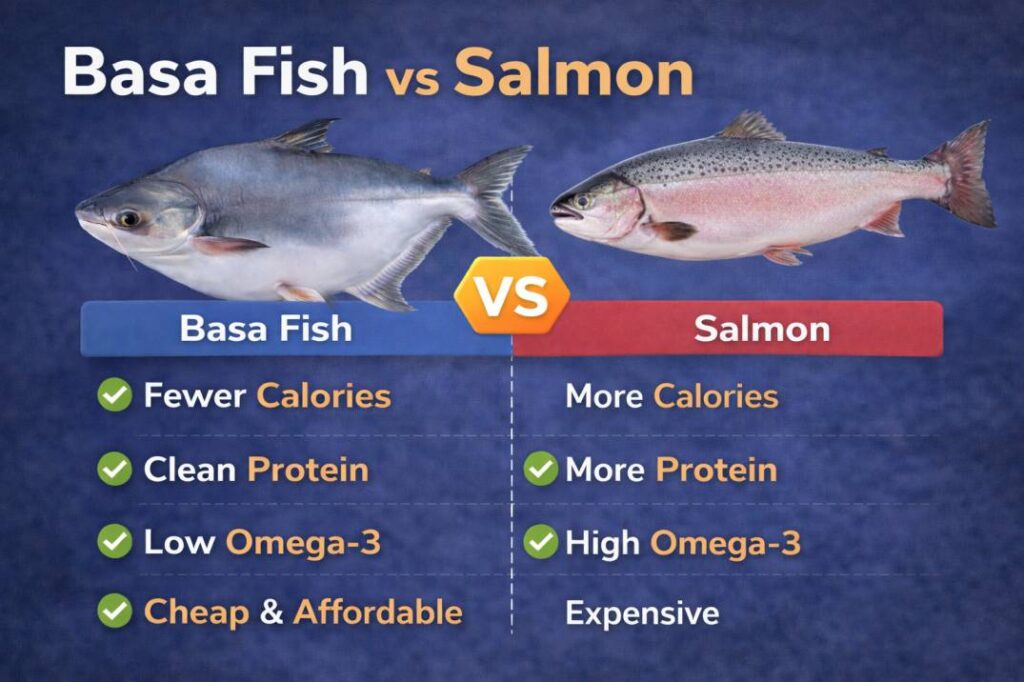
Many people consider basa and salmon to be the same type of fish, so a comparison between the two becomes necessary. They are completely different.
Nutrition Comparison of Basa fish vs Salmon (Per 100g)
| Factor | Basa Nutrition Facts 100g | Salmon Nutrition Facts 100g |
| Calories | 90–120 | 208 |
| Protein | 15–20g | 20g |
| Fat | 3–5g | 13g |
| Omega-3 | Low | Very high |
| Mercury | Low | Low |
| Price | Cheap | Expensive |
Conclusion for Salmon vs Basa
- Salmon is far healthier, richer in omega-3
- Basa is budget-friendly, lean, and easy to cook
Both have different purposes but strong health needs, so choose salmon with no doubts.
How Much Basa Fish Is Safe Weekly?
Based on nutritional safety and contamination risk:
- 1–2 times per week is more than ideal
- 100–150g per serving
- Avoid daily consumption of basa
Who Should Avoid Basa Fish?
Avoid eating basa or limit basa to very little if you have:
- Do you have a fish allergy? Then avoid basa fish
- high uric acid
- gout issue
- doctor-recommended low-protein diet, then avoid basa
- pregnancy (eat only high-quality basa once per week) or good to avoid
FAQs: Basa Fish Benefits and Side Effects
1. Is basa fish good for health?
Yes, if it is high-quality and sourced from a clean supplier.
2. Why is basa fish banned?
Basa fish is banned in some countries or limited because low-quality farming led to contamination in some batches.
3. Is Indian basa safe?
Yes, Indian basa from reliable sellers is usually safe.
4. Is basa high in calcium?
No, it is primarily a protein source.
5. Basa fish vs salmon—Which is better?
Salmon is much healthier; basa is cheaper and leaner.
Conclusion
Basa is a clean, budget-friendly, and protein-rich fish if purchased from a reputable source. The basa fish benefits include easy digestion, quick cooking, weight loss support, and low mercury levels. But if you understand the basa fish side effects, especially contamination risk, you will choose to avoid eating.
Once you know the truth behind why basa fish is banned (mostly due to quality issues, not the fish itself), you can confidently include basa in your diet in safe moderation.
This post also strengthens my ongoing “Fish Benefits and Side Effects” series. More posts like this are coming soon as I continue exploring fish in a simple, clear, and practical way.