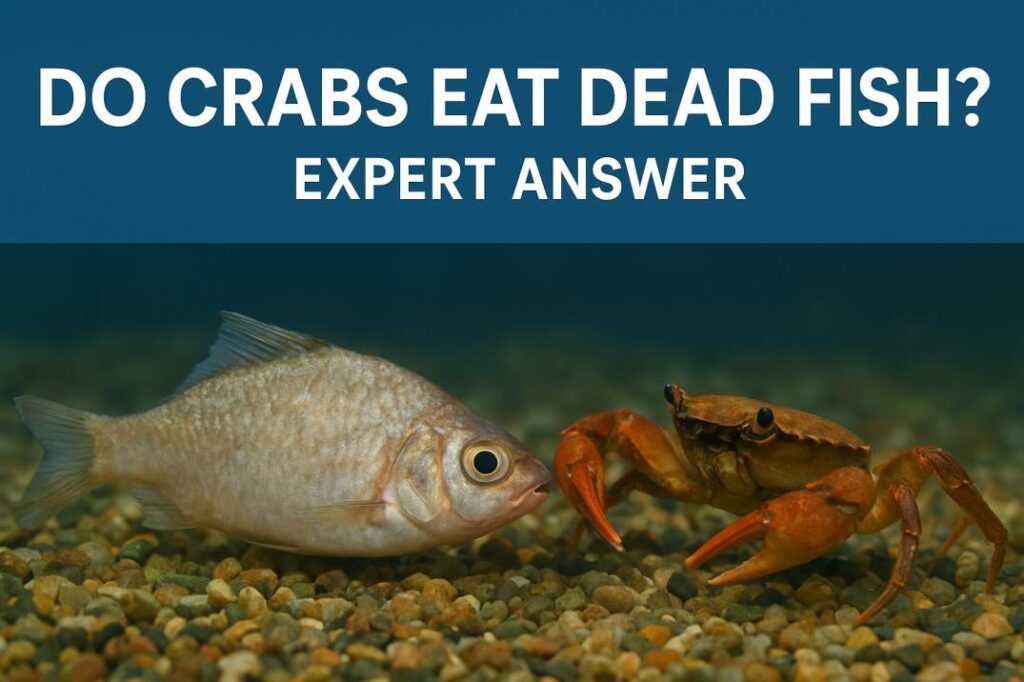
Many aquarists panic when they see a crab eating a fish carcass and wonder: Do Crabs Eat Dead Fish?
Here’s the expert explanation and how this ties into understanding what eats crabs in natural ecosystems.
Do Crabs Eat Dead Fish? — Yes, They Do
✅ Yes, most aquarium crabs will readily eat dead fish, leftover food, decaying plant matter, and any organic waste they find.
This natural behavior of crabs also helps maintain tank cleanliness and is not a sign of abnormal aggression.
If we compare this, regarding to the wild, scavenging also helps crabs stay hidden from predators. When you look at what eats crabs, many predators prefer live prey, so scavenging is a safer feeding method for crabs.
Why Crabs Eat Dead Fish (Scientific Explanation)
1. They Are Natural Scavengers
Crabs are natural scavengers and evolved to be opportunistic feeders. Crabs diet includes:
- Dead fish
- Rotting organic matter
- Leftover pellets
- Decayed plants
This behavior mirrors their role in natural food chain, where if we know what eats crabs explains why they often avoid open hunting, predators like big fish, octopuses, birds, and even other crabs often target any crab caught out in the open.
2. Eating Dead Fish Helps Maintain Water Quality
In aquariums, a dead fish decomposes quickly and can cause rapid increase of ammonia.
When crabs scavenge, they help reduce:
- Ammonia buildup
- Organic waste
- Foul smells
- Overall tank pollution
This process is similar to how wild crabs help clean shorelines and reefs, while also avoiding predators from the category of what eats crabs.
3. But… Some Crabs May Attack Weak or Slow Fish
While most crabs prefer scavenging, certain species may opportunistically attack a weak or slow-moving fish.
Species with higher chances of aggression include:
- Red Claw Crabs
- Fiddler Crabs
- Vampire Crabs
- Larger hermit crabs
Understanding these types of crabs and their natural instincts helps explain why they avoid unnecessary confrontation — especially considering what eats crabs in nature, which makes them cautious creatures.
How to Prevent Crabs From Eating Live Fish
1. Choose Tankmates Carefully
The best thing is to avoid pairing crabs with fragile or slow fish:
- Guppies
- Bettas
- Fancy goldfish
- Pygmy corydoras
More suitable tank mates include faster midwater species such as mollies, platies, rasboras, and larger tetras.
These choices also reduce predatory stress that naturally comes from being an animal on the menu of what eats crabs.
2. Provide Plenty of Hiding Spots
Providing vast space to hide is always good. Crabs feel safer and less aggressive when they can hide. Add:
- Caves
- Driftwood
- Coconut shells
- Rock piles
- Dense plants
Good hiding places help mimic an environment where they can avoid predators, similar to how they protect themselves from what eats crabs in the wild.
3. Keep Crabs Well Fed
If any creature is well fed then there is very less chance that it will be aggressive. A balanced diet prevents opportunistic aggression. Provide:
- Algae wafers
- Veggies (spinach, zucchini)
- Shrimp pellets
- Frozen foods (brine shrimp, bloodworms)
Well-fed crabs are less likely to chase tankmates and behave more like natural scavengers.
What Eats Crabs?
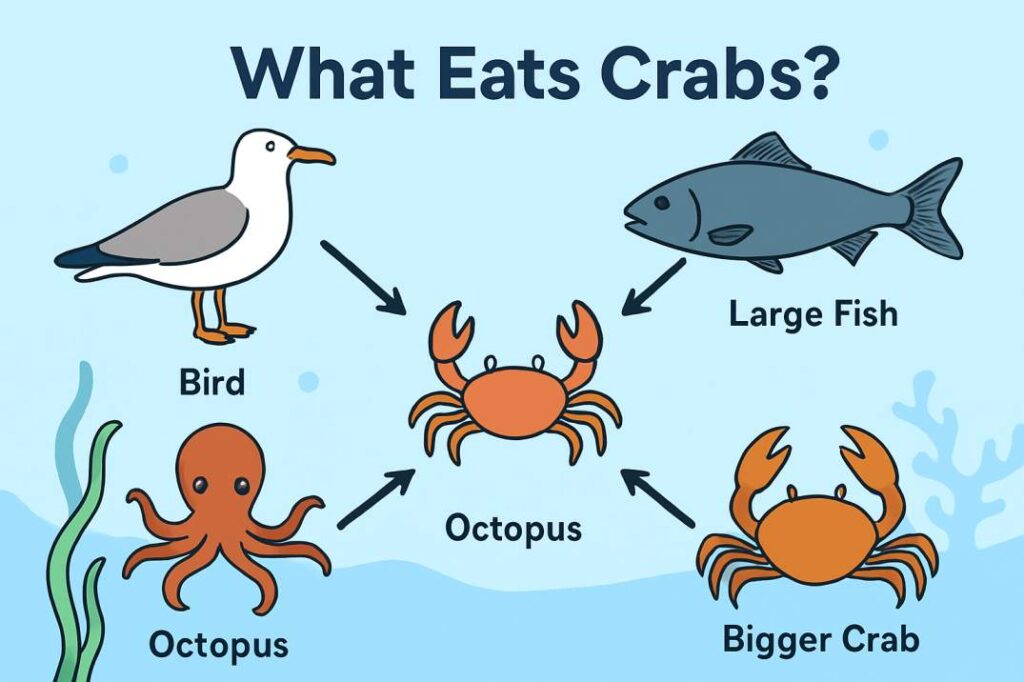
We all know that crabs may be tough, armored, and excellent at hiding but they are still part of a larger ocean food chain. In the wild, many predators rely on crabs as an easy, energy-rich meal. Large fish, octopuses, seabirds, and even bigger crab species regularly hunt them.
Most predators target crabs during molting, when their shell is soft and they cannot defend themselves. Understanding what eats crabs helps aquarium keepers create safer environments, avoid risky tankmates, and appreciate the natural role crabs play in marine and freshwater ecosystems. The above image will give you idea.
Crabs have several natural predators in the wild. Here are the most common ones:
- Large Fish: Many predatory fish wait for crabs to molt when their shells are soft.
- Octopus: Skilled hunters that pry crabs out of hiding spots.
- Seabirds: Shorebirds quickly snatch exposed crabs during low tide.
- Bigger Crabs: Larger or more aggressive crab species often prey on smaller ones.
- Humans: In many regions, crabs are an important food source.
These predators shape crab behavior, making them excellent hiders and fast scavengers in their ecosystem.
Read More from FishioHub:
Expert Tip
Avoid keeping small, delicate fish with semi-aggressive or claw-strong crab species.
These crabs are more likely to take advantage of sick or slow fish, the same way predators in the wild exploit weaknesses when deciding what eats crabs.
Final Expert Answer
Yes, crabs do eat dead fish and this behavior is natural, beneficial, and part of their scavenging role.
It isn’t usually aggression, but rather instinct. Understanding this behavior, along with knowing what eats crabs in the wild, gives a complete picture of how crabs survive, feed, and protect themselves both in nature and in aquariums. Share this article if you like it.