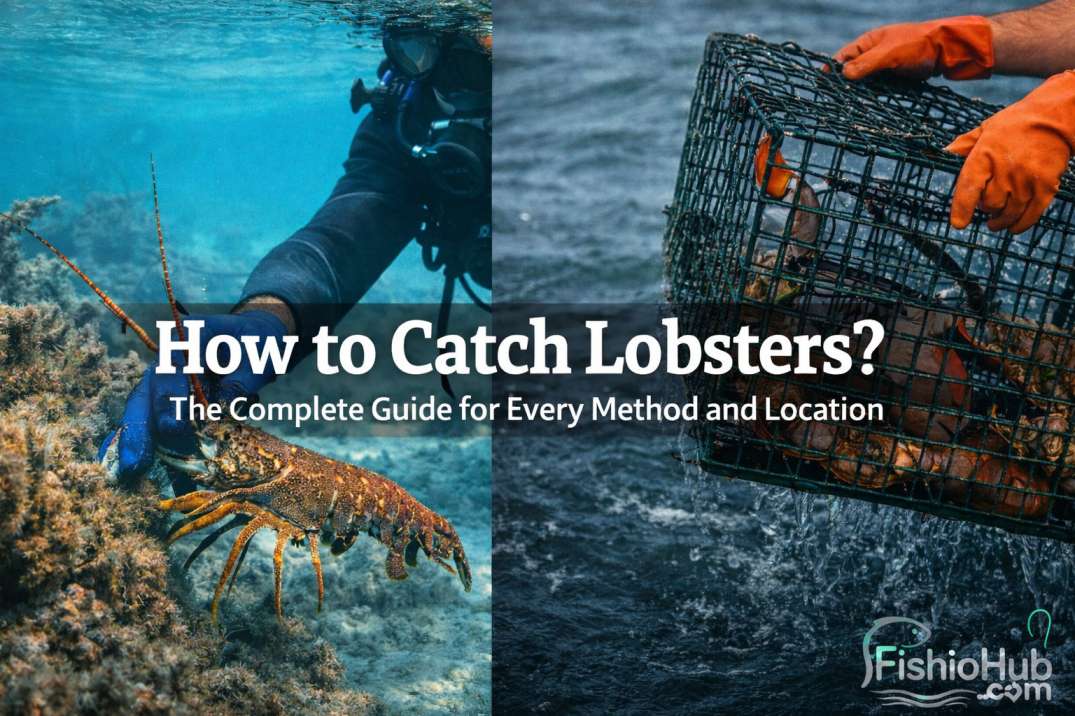
Honestly, my early experiences with catching lobster weren’t great. The first time I tried, it felt as simple as a game of hide-and-seek. I spotted a lobster tucked under a rock and, full of confidence, reached in to grab it. But in a split second, it shot backward and disappeared.
That moment taught me something every beginner learns the hard way: catching lobsters isn’t about speed, it’s about patience, precise timing, and using the right technique.
I have tried to cover everything in this guide, from setting traps in Maine to catching them by hand in the Florida Keys, and is grounded in science, regulations, and the practical knowledge that comes only from truly understanding lobsters.
Quick Answer: How to Catch Lobster?
You can catch lobsters by hand while diving, using wire traps, with snares, or by spearfishing, depending on location and local regulations. The method you use depends entirely on your state, the lobster species in your area, and whether you are fishing for adventure or commercially. Always check your local fishing regulations before heading out.
What You’ll Get in This Post
- How lobsters are caught — the main methods
- How to catch lobster by hand
- How to catch lobster with traps
- Catching lobster by location — Florida, Maine, California, and more
- Can you catch lobster with a fishing rod?
- Lobster spearfishing — is it legal?
- Is lobster fishing dangerous?
- Lobster catching methods comparison table
- FAQs about catching lobster
How Lobsters Are Caught — The Main Methods
Before I delve into the specifics, I want to explain a crucial point that most fishing guides completely overlook a point upon which success in catching lobsters depends entirely.
You must clearly understand that during the day, lobsters remain hidden within rocky crevices, reef fissures, and underwater structures; they are far more active at night, venturing out in search of food only after dark. This means that the absolute best time to catch lobsters is at night, whether you are using traps, catching them by hand, or diving.
According to NOAA Fisheries, the American lobster (Homarus americanus) is one of the most commercially important marine species in the United States; the American lobster industry harvests more than 100 million pounds of lobster annually, valued at over $500 million. If you wish to catch lobsters, understanding the behavior of this creature is essential.
The four main methods used to catch lobster are:
- Wire or wooden traps — this is the most common commercial and recreational method
- Catching by hand while freediving or snorkeling, which is popular in Florida and California
- Snares — a specialized tool used in certain states
- Spearfishing — I personally feel this is a cruel way to catch any species. It is legal in some areas with specific restrictions
Each method suits different locations, different species, and different regulations. Let me walk through each one properly.
How to Catch Lobster by Hand
For those who love adventure, catching lobsters by hand is the ultimate and addictive method; however, doing so requires a level of skill far greater than you might imagine.
This technique is most popular in Florida, the Florida Keys, and California, where spiny lobsters (Panulirus argus and Panulirus interruptus) are the predominant species. Unlike the American lobsters found in Maine, spiny lobsters lack large claws; consequently, catching them with bare hands is safer—though their sharp spines still necessitate caution and the use of thick gloves.
What you need to catch lobster by hand
- Most Important: A Florida or California recreational fishing license with a lobster permit
- Dive using a snorkel or scuba
- Thick neoprene gloves: The lobster’s spines are sharp and can cause serious cuts
- A tickle stick: A thin rod used to bring the lobster out of its shelter
- A lobster net or snare to secure it once it moves
- An underwater measuring gauge: It is necessary for undersized lobsters, which must be released immediately
- A dive light for night diving, because catching in the night significantly improves success rates
🪜How to Catch Lobster by Hand (Step-by-step method)
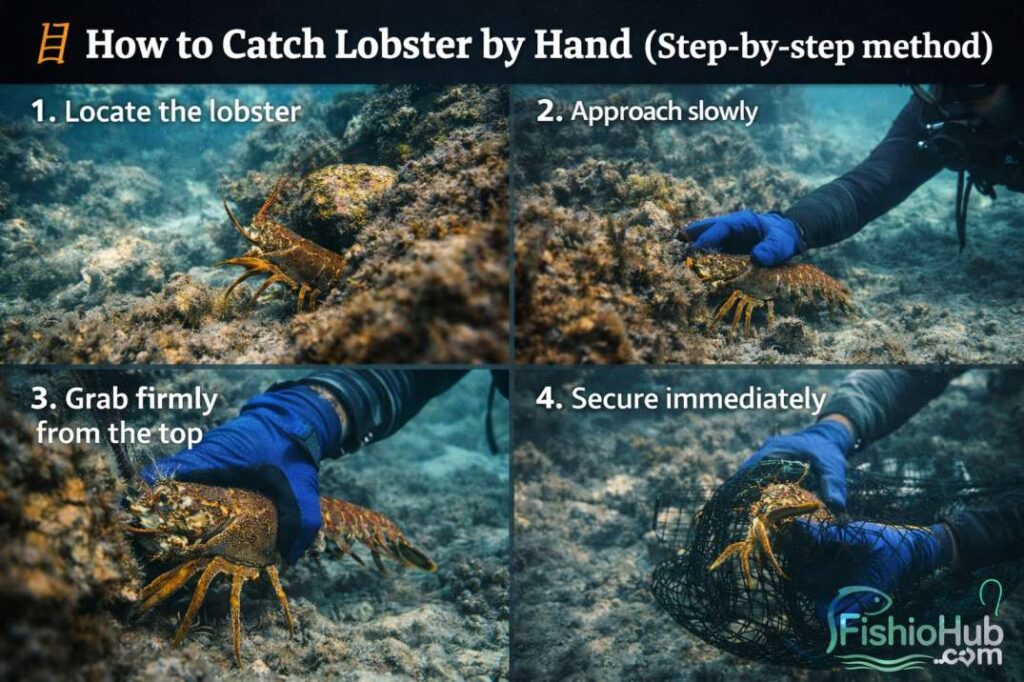
Lobsters don’t run forward; they shoot backward. Always block their escape route. The catching lobster requires patience and an understanding of how lobsters react to danger. When you approach a spiny lobster, it usually retreats deeper into its crevice.
- Locate the Lobster
- Approach slowly towards the lobster; the sensation in the water will alert the lobsters
- Control the escape path: If the lobster gets into a crevice, use a ‘tickle stick’ to gently tap it from behind and pull it out.
- Grab firmly from the top: As soon as it comes out, catch it with your net or trap. Never try to catch a lobster directly from the front with your hands; They are very sensitive to vibrations in the water and will immediately dart away.
- Move slowly and thoughtfully, step carefully, and let the Tickle Stick do its work.
Remember: In Florida, you can not use any sharp implements when catching spiny lobsters by hand. It is illegal. The tip of the tickle stick must always be blunt (dull). Violating these rules can result in serious penalties, such as heavy fines and the loss of your fishing license.
How to Catch Lobster With Traps
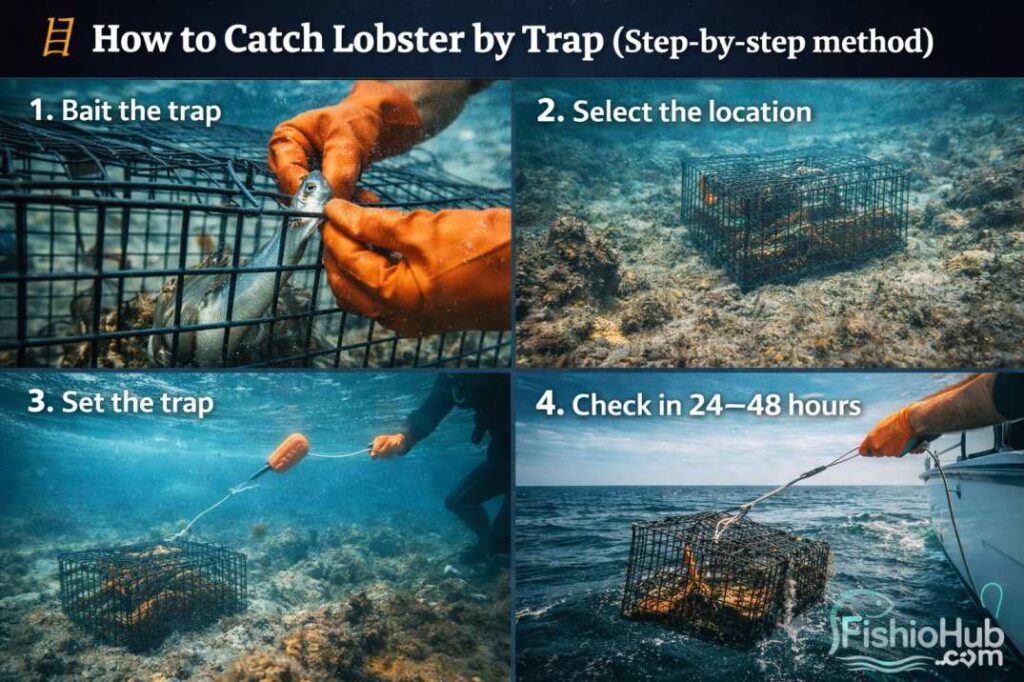
When the goal is to catch lobsters with minimal effort, using traps is the preferred method. Trapping is the most commonly used method for catching lobster, whether commercially or recreationally, especially in New England states such as Maine, Massachusetts, and Rhode Island, where American lobster is abundant.
Setting up a lobster trap
- A standard recreational lobster trap, also known as a lobster pot, is a wire-mesh cage featuring a funnel-shaped entrance. This design allows lobsters to enter easily, yet makes it difficult for them to escape. Here is how to deploy it effectively:
- Selecting the bait is crucial. Lobsters primarily locate food through chemosensation. The most attractive substances are oily, strong-smelling fish, such as herring, mackerel, or menhaden. Fresh bait is far superior to frozen bait.
- Location is paramount. Set your traps in depths ranging from 15 to 150 feet, targeting rocky bottom structures, reef edges, or areas featuring a mix of rock and sand.
- Most amateur trappers find that 24 to 48 hours is the best time to soak in water. Leaving traps in warm water for more than 72 hours increases the stress of trapping other organisms and may cause lobsters to escape due to bait spoilage.
Trap regulations by state
Each state has a set trap limit for recreational lobster catchers. For instance, in Maine, each license holder is allowed to set a maximum of five traps. In Massachusetts, the regulations differ. Before attempting to catch lobsters by any method, always verify your state’s current regulations with your state’s marine fisheries authority. Regulations are subject to change. If you violate these rules, you may face heavy fines.
Catching Lobster by Location
I think a lot of lobster fishing guides don’t understand this. They offer generic advice, without recognizing that catching lobsters in Maine is a completely different experience from catching them in the Florida Keys or California. Here—the lobster species, methods, seasons, and regulations—everything is distinct.
Catching lobster in Maine
In the United States, the largest population of lobsters is found along the East Coast, particularly in the Gulf of Maine. Consequently, this region has become the primary hub for American lobster fishing. Among the local population, catching the classic, clawed lobster is an extremely popular activity.
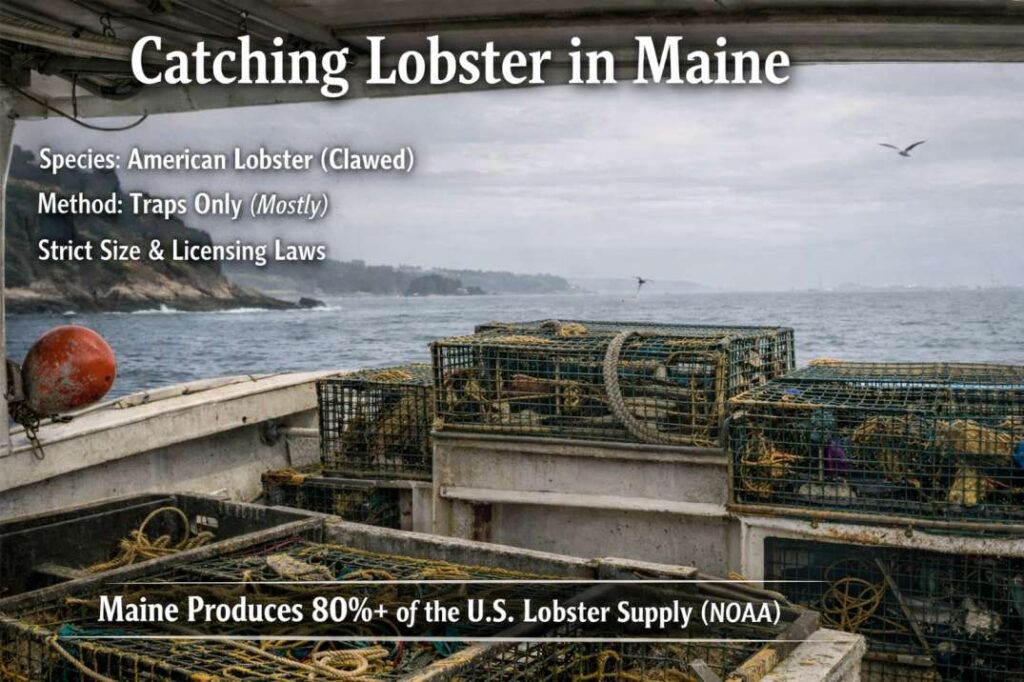
Although the lobster fishing season in Maine runs year-round, it typically yields the most impressive results from late June through October, as this is when lobsters are most active in shallower waters.
The primary method for catching lobsters involves setting traps. In Maine, individuals holding a recreational lobster fishing license are permitted to set up to five traps; each trap must clearly display the license holder’s license number and a buoy. The minimum legal size for a lobster is 3¼ inches; this measurement is taken from the eye socket to the rear edge of the carapace.
- Species: American lobster (clawed)
- Method: Traps only (mostly)
- Strict size and licensing laws
📊 Maine produces 80%+ of the U.S. lobster supply (NOAA).
Catching lobster in Florida and the Florida Keys
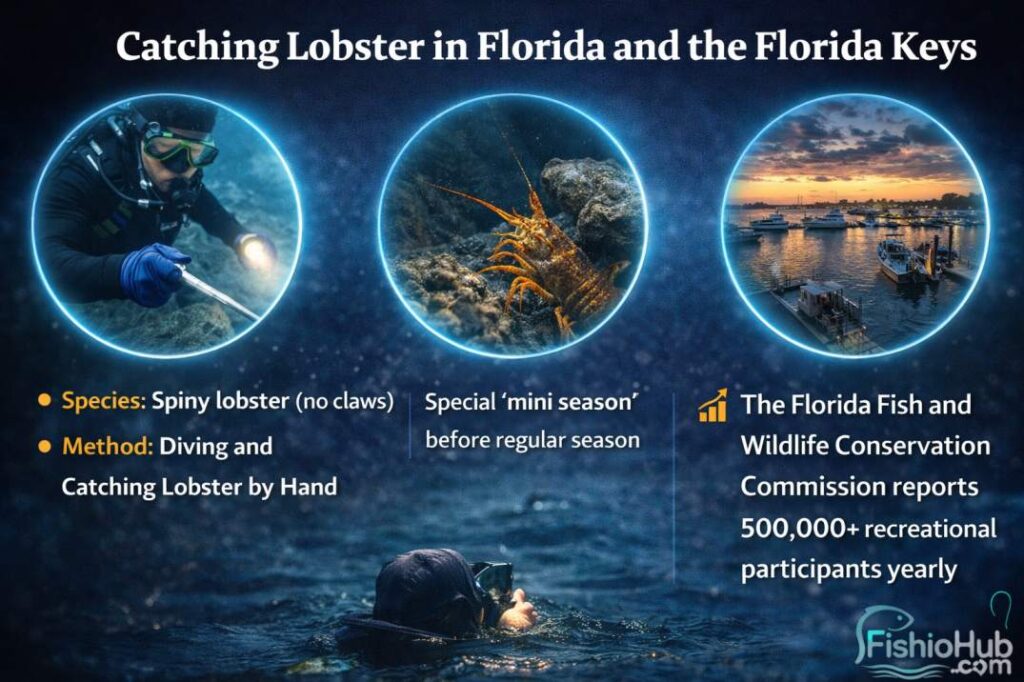
Florida and the Florida Keys are renowned for their spiny lobsters, which are harvested here from August through March. Additionally, a two-day “mini-season” takes place at the end of July. The Florida Keys and the western region serve as the epicenter for a dense population of spiny lobsters.
Here, people catch lobsters by hand using tickle sticks and nets while snorkeling or freediving. The minimum legal carapace size for a lobster is 3 inches, and egg-bearing females are always released.
- Species: Spiny lobster (no claws)
- Method: Diving and Catching Lobster by Hand
- Special “mini season” before regular season
📊 The Florida Fish and Wildlife Conservation Commission reports 500,000+ recreational participants yearly.
Catching lobster in California and San Diego
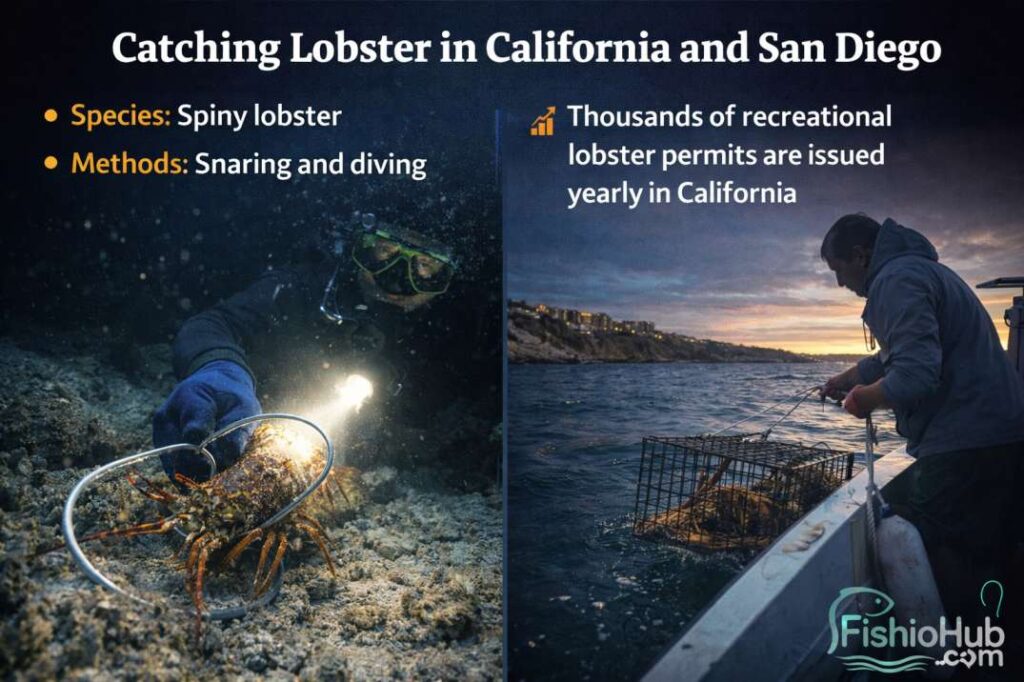
California, renowned for its spiny lobsters, features a lobster fishing season that runs from early October through mid-March. Of particular importance are Southern California, especially San Diego, Los Angeles, and the Channel Islands.
In California, you may catch lobsters either by hand or using a net; however, any harvested lobsters must measure at least 3¼ inches in length. While fishing in California, you are required to adhere to all regulations and must possess both a valid fishing license and a lobster report card.
- Species: Spiny lobster
- Methods: Snaring and diving
📊 Thousands of recreational lobster permits are issued yearly in California.
Catching lobster in Massachusetts
Massachusetts has excellent American lobster catching facilities, just like Maine. Recreational lobster catchers can use up to 10 traps with a recreational permit. This season runs year-round, and there are no restrictions on recreational lobster fishing.
Can You Catch Lobster With a Fishing Rod?
I have seen so many people searching for the questions about lobster fishing, and the honest answer is: not effectively, and in most places, not legally for intentional lobster targeting.
Here are a few reasons why you cannot catch lobsters using a fishing rod:
- Lobsters typically hide within rocks, crevices, and pools. In this natural habitat, using a standard fishing rod is largely ineffective.
- Furthermore, there is no specific bait you can use with a rod that would effectively lure a lobster out of its hiding place.
- Lobster, don’t chase bait like fish
- In some states, catching lobsters with a fishing hook is actually prohibited, and doing so carries severe penalties.
- If you are determined to catch lobsters, using traps, snares, or catching them by hand are the only methods that are truly worth your time, and are legal in most regions.
- So if you’re searching: How to catch lobster with fishing rod? It’s not a practical method.
Why Not to Do Lobster Spearfishing
I personally do not care for sea-caught lobster at all; while different people may hold varying opinions on the matter, it is, in reality, a sensitive subject. Spearfishing is a cruel method of catching lobsters, and local regulations play a significant role in this context.
In both Florida and California, the spearfishing of spiny lobsters is strictly prohibited. Florida law protects spiny lobsters from capture using any piercing device, and this regulation applies to everyone.
Is Lobster Fishing Dangerous?
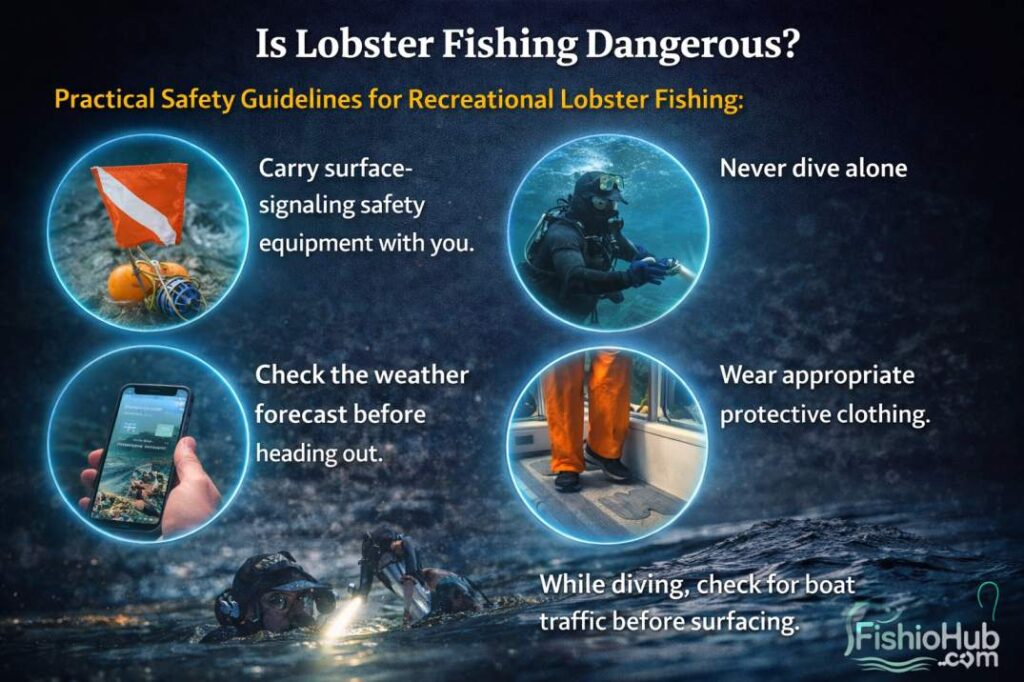
I have studied marine environments academically and grew up within fishing communities; drawing upon my lifelong experience, I can state that, yes, lobster fishing does indeed entail risks.
Commercial lobster fishing ranks among the most dangerous professions in the United States. It is an extremely physically demanding and exhausting occupation—one that claims the lives of several individuals every year. However, when pursued as a recreational activity, the associated risks are significantly lower.
Practical Safety Guidelines for Recreational Lobster Fishing:
- Carry surface-signaling safety equipment with you.
- Never dive alone.
- Check the weather forecast before heading out.
- Wear appropriate protective clothing.
- While diving, check for boat traffic before surfacing.
Lobster Catching Methods Comparison Table
| Method | Best location | Species targeted | Legal in most US states? | Skill level |
| Wire traps | Maine, Massachusetts | American lobster | Yes | Beginner |
| Hand-catching / freediving | Florida, California | Spiny lobster | Yes | Intermediate |
| Snares | Florida Keys | Spiny lobster | Yes — with restrictions | Intermediate |
| Spearfishing | International / Caribbean | Various | No — illegal in most US states | Advanced |
| Fishing rod | Anywhere | Not effective | Varies | Not recommended |
❓ FAQs About Catching Lobster
How do you catch lobsters most effectively?
The best method depends on location: traps work best in Maine and Massachusetts, while hand-catching or diving is most effective in Florida and California.
How to catch lobster by hand safely?
Wear gloves, use a tickle stick, and grab from behind. Always use a net and measure before keeping.
How to catch lobster in Florida without diving?
You can use traps offshore with proper permits. Always follow Florida state regulations.
Is lobster fishing dangerous for recreational fishermen?
Yes, especially while diving. Risks include currents, low visibility, and boat traffic.
What is the best bait for lobster traps?
Fresh oily fish like herring, mackerel, or menhaden work best.
What is the legal size for catching lobster?
Size limits vary by state, but most require around 3–3¼ inches of carapace length.
Can you catch lobster at night?
Yes, and it’s more effective since lobsters are nocturnal.
When is lobster season?
Season varies by region: Florida (Aug–Mar), California (Oct–Mar), Maine (year-round).
Now You Know How to Catch Lobster — But What Do They Eat?
Understanding how to catch lobster is only half the thing. The other half, what lobsters actually eat, what eats lobsters, and what drives their movement patterns, will make you a significantly better lobster fisherman because you will understand the animal, not just the technique.
👉 Read next: What Do Lobsters Eat? The Complete Diet Guide — FishioHub
👉 Read next: What Eats Lobsters: 7 Powerful Predators — FishioHub
Don’t Break These Legal Rules
Before you catch a lobster, understand this:
- 🧾 License required in most U.S. states
- 📏 Minimum size limits apply
- 🦞 Egg-bearing females must be released
- 🗓️ Seasonal restrictions vary
📊 NOAA confirms that strict regulations help maintain sustainable lobster populations and prevent overfishing.
Final Thoughts
Lobster fishing is one of those pursuits that rewards people who take the time to understand the animal they are chasing. I see that the most successful lobster fishermen, recreational or commercial, are the ones who think like a lobster. They understand their behavior, rocky habitat preferences, seasonal movement patterns, and the chemical signals that drive feeding.
Apply that understanding to whichever method and location applies to you, and you will consistently outperform people who simply drop a trap and hope for the best.
Tight lines and full traps.
— Anil Satak
Master’s in Zoology | Founder, FishioHub
Was this guide helpful?
First-Hand Experience
Based on animals I've personally kept and bred - not summarized from other articles.
Zoological Foundation
Claims are checked against my M.Sc. Zoology training and published aquatic biology research, not recycled aquarium myths.
No Paid Influence
No sponsorship shaped this guide. Affiliate links, if any, are disclosed separately and never hidden.
Kept Current
Errors are corrected as soon as they're found, with the update noted at the bottom of the article.

Anil Satak M.Sc. Zoology · Founder, FishioHub
Grew up in a fishing family in India and holds a Master's in Zoology. FishioHub is a one-person operation - every guide is personally researched, kept-tested, and written by Anil. No team, no outsourced writers, no AI-generated content. Read his full bio →