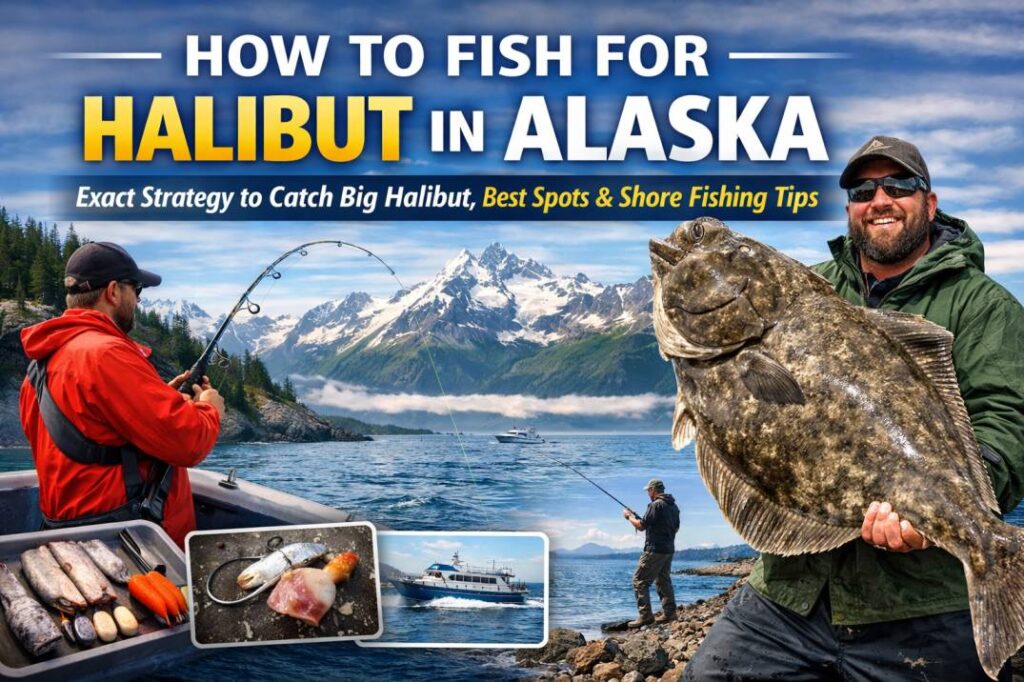
The connection between halibut and Alaska is one filled with excitement. Learning how to fish for halibut in Alaska? is one of the most thrilling saltwater fishing experiences you can have. Alaskan halibut are huge, put up a fierce fight, and taste delicious—but consistently catching them requires the right strategy, timing, and setup.
In this comprehensive guide, you will learn:
- 🎣 How to fish for halibut in Alaska step by step
- 🧭 How to catch big halibut in Alaska
- 🏖️ How to catch halibut from shore
- 📚 How do you fish for halibut in Alaska (beginner to advanced)
- 📍 Where is the best halibut fishing in Alaska
- 🕓 Best time for halibut fishing in Alaska
- 📅 What is the best month for halibut fishing in Alaska
- 🧰 Gear, bait, tides, mistakes, safety, and more
Let’s get you ready for your best halibut catching ever.
What makes Alaska halibut fishing so special?
Before we understand why halibut is so popular in Alaska, let’s learn a little about the characteristics of halibut. Pacific halibut are large, deep-water flatfish that can weigh over 300 pounds. They prefer to ambush their prey, waiting on sandy bottoms, rocky reefs, and slopes. And the best part is that Alaska provides all these ideal conditions for halibut. That’s why halibut fishing is so popular here. Many beginners learn how to fish for halibut in Alaska by using heavy sinkers, circle hooks, and strong natural bait like herring or salmon belly.
Anglers love Alaska halibut fishing for these reasons:
- The potential for catching large trophy fish
- Consistent action during the fishing season
- Delicious white fillets
- Easily accessible via charter boats or private trips
All these factors contribute to the unique appeal of Alaska halibut fishing. However, if you want to catch halibut in Alaska, keep these five things in mind. Success depends on the right combination of these elements:
Location • Depth • Tides • Bait • Patience
Master these – and you’ll catch halibut.
How to Fish for Halibut in Alaska? (Easy Step-by-Step)
If you follow these 4 steps carefully, you will definitely catch halibut. This is the exact strategy to catch big halibut. Follow this blueprint. These are real tactics used by every halibut fisherman.Tactics: Location with depth, Anchor, fresh, strong-smelling bait, and constant pressure
1️⃣ Find the Right Location and Depth
Choose the right location based on what halibut prefer. Halibut are deep-water fish that like sandy or rocky areas. So, keep these things in mind when choosing your fishing spot:
- Sandy or gravelly areas
- Shelves and underwater reefs
- Edges of channels
- 50–300 feet (sometimes deeper in mid-summer)
2️⃣ Anchor or Drift Correctly
Most anglers either anchor over structure to stay in one place or drift when the fish are scattered. Always keep your bait near or right on the bottom.
3️⃣ Use Strong-Smelling Bait
Bait is very important in halibut fishing. Always choose fresh bait. This attracts the fish more. So, the best halibut baits are:
- Herring
- Salmon belly fat/bones
- Squid
- Octopus
- Large, scented jigs
Fresh bait always works better than old or soft bait.
4️⃣ Be Patient — Then Set the Hook with Constant Pressure
Catching a large, powerful fish like a halibut requires patience. It is often observed that a halibut will:
- Take the bait into its mouth
- Pull slowly
- Then run quickly
So, let the rod load up — then set the hook with a strong, constant pull.
How do you fish for halibut in Alaska? Always use the above 4 steps to catch big halibut in Alaska.
How to Catch Big Halibut in Alaska
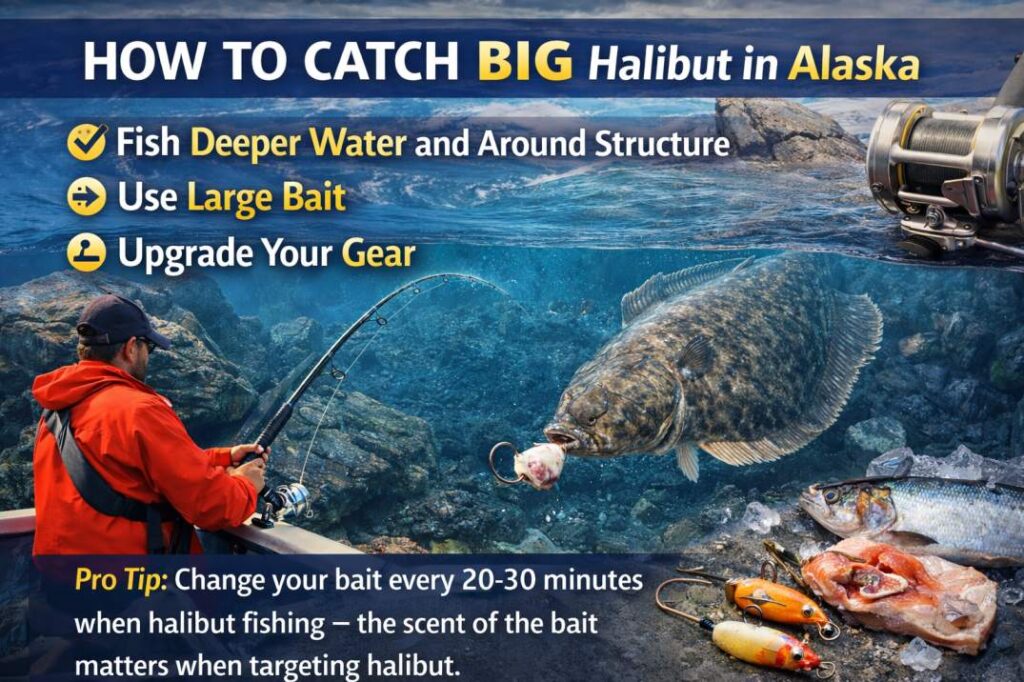
Once you understand halibut behavior, if you truly want to catch big halibut, employ strategies that target larger fish.
🎯 Fish in Deeper Water and Around Structure
Big halibut prefer:
- 150–400 feet
- Reefs, ledges, and drop-offs
- Current edges where bait congregates
🎣 Use Large Bait
Big halibut like big meals, so use large bait:
Such as whole herring, salmon heads, large jigs (10–24 oz), and chunks of octopus
💪 Upgrade Your Gear
To handle such a heavy and large halibut, your fishing gear needs to be up to the task:
- 50–80 lb braided line
- 80–150 lb leader
- 12/0–16/0 circle hooks
- A high-quality reel with a strong drag
Tip: Maintain constant pressure. Big halibut fight straight down—forcing them to fight harder will tire them out faster.
How to Catch Halibut from Shore?
The first question should be, can you catch halibut from shore? Yes, you can catch halibut without a boat. It sounds incredible, but it’s possible. However, you’ll need to adapt your fishing tactics to the halibut’s behavior. So, let’s learn how to catch halibut from shore.
🌊 Best Spots on Shore
Look for these locations:
- Surf beaches connected to deep channels
- Docks/piers with good currents
- Rocky jetties near bays
- Tidal flats with nearby drop-offs
🎣 Shore Fishing Setup
- Heavy surf rod
- 6–10 oz sinker
- Fish-finder/bottom rig
- Bait that reaches the bottom
Great baits for shore fishing:
- Squid
- Herring pieces
- Salmon pieces
Halibut caught from shore are usually smaller – but they’re exciting, accessible, and fun to catch.
Where are the best places to fish for Halibut in Alaska?

Here are some of the best places in Alaska to catch large halibut:
- Homer — Known as the “Halibut Capital of the World”
- Seward — Offers excellent charters and access to deep water
- Kodiak Island — Known for abundant fish, including large trophy halibut
- Sitka — Great for big halibut and salmon combo trips
- Prince William Sound — Offers sheltered waters and excellent halibut fishing
- Juneau/Southeast Alaska — Successful trips targeting halibut and a variety of other fish
If you’re a beginner, choosing a reputable charter will greatly increase your chances of success.
The Best Time to Fish for Halibut in Alaska
The best time to fish for halibut in Alaska is generally May through September, for several reasons. Let’s explore them.
📆 Early Season (May-June)
- Fish are found in shallower waters
- Less crowded
- Great chance to catch large halibut
☀️ Mid-Season (July-August)
- Peak halibut and other fish activity
- Stable weather
- Excellent combination of size and quantity
🍂 Late Season (September)
- Less crowded
- Fish are feeding heavily before winter
- Weather can be unpredictable, but still a great fishing opportunity
What are the best months for halibut fishing in Alaska?
Most anglers agree: June and July are the best months for halibut fishing in Alaska.
Why? Because during these months, the tides and weather are generally stable, and the halibut are more active. This increases the chances of catching larger halibut in June and July.
Additionally, May and August can also be excellent months – especially for catching big fish.
Charter vs. Self-Guided Halibut Fishing
🎟️ Charter Boat (Best for Beginners)
Charter boats offer many advantages:
- The captain knows the best fishing spots.
- The boat includes proven, high-quality gear.
- It’s safer in rough sea conditions.
- You get help with rigging and handling the fish.
🛥️ Self-Guided Trip (For Experienced Anglers)
For this, you will need:
- Local knowledge
- GPS, charts, tide information, and a suitable plan
- Good boat handling skills
If you’re unsure, choose a charter first.
Licenses and Regulations (Required)
Before fishing in Alaska, always check the current regulations. These are some common rules that are always in effect. Always keep these in mind:
- A valid Alaska fishing license
- Halibut retention limits
- Halibut size limits
- Regulations for charter versus private boats
- Circle hook requirement in some areas
Regulations can change depending on the time of year and season—always verify them before your trip.
Best Baits for Halibut (Ranked)
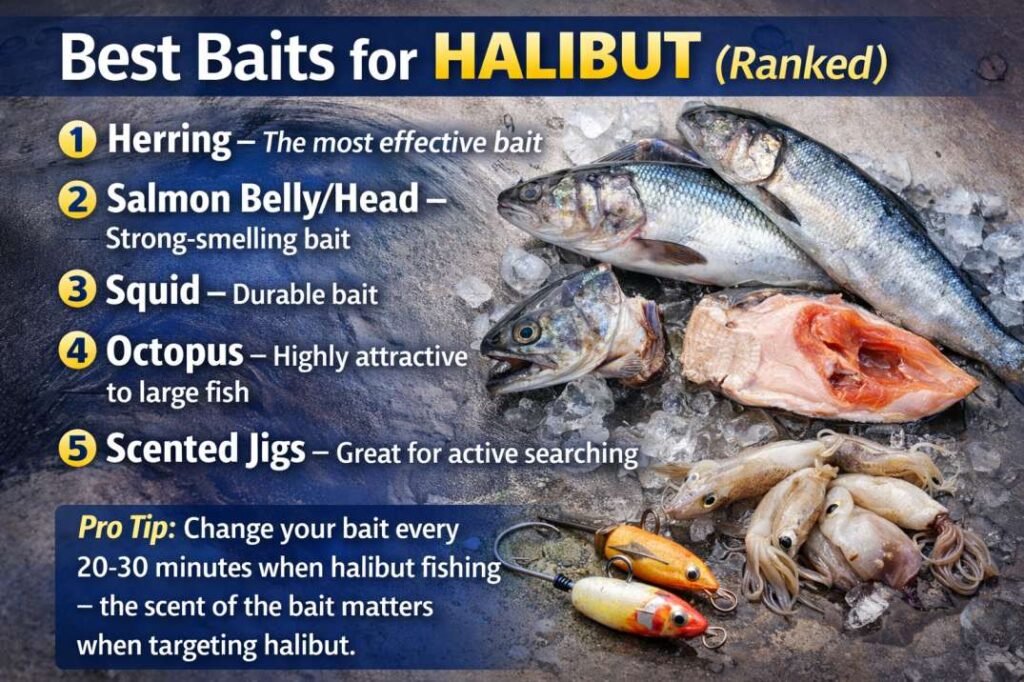
1️⃣ Herring — The most effective bait
2️⃣ Salmon Belly/Head — Strong-smelling bait
3️⃣ Squid — Durable bait
4️⃣ Octopus — Highly attractive to large fish
5️⃣ Scented Jigs — Great for active searching
Pro Tip: Change your bait every 20-30 minutes when halibut fishing — the scent of the bait matters when targeting halibut.
Best Halibut Gear and Rigs
Catching a large and powerful fish like halibut requires the right gear and rigs. This fish, after all, prefers to live among rocks.
🎣 Suggested Gear
- 6–7 foot heavy-action rod
- Strong saltwater reel
- 50–80 lb braided line
- 80–150 lb leader
- 12–32 oz weight
- Circle hook
🪝 Two Proven Rigs
Fish-Finder Rig — Excellent with bait
Heavy Jig Rig — Jig slowly while drifting
Understanding the Tides (The Real Secret)
When the tide is moving, halibut are very active and feed most aggressively. Knowing how to fish for halibut in Alaska also means paying close attention to tides, since halibut feed more actively during moving water.
Fishing:
- 1–2 hours before high/low tide
- During the tide change
- Avoid fishing during long periods of slack water if possible
Medium current = more bites.
How to Catch, Clean, and Store Halibut
- Secure large halibut before bringing them aboard the boat
- Kill the halibut humanely
- Bleed the fish immediately and place it on ice
- Carefully fillet the fish (use a sharp knife)
- Always keep the fish chilled during transport
Proper handling preserves the flavor and quality of any fish.
Common mistakes to avoid when halibut fishing
❌ Fishing during slack tide
❌ Using too light a weight
❌ Setting the hook too soon
❌ Not staying on the bottom
❌ Ignoring weather and safety
❌ Using dull hooks
❌ Leaving old bait on for too long
Correct these — and you’ll catch more halibut.
Extra tips on how to fish for halibut in Alaska?
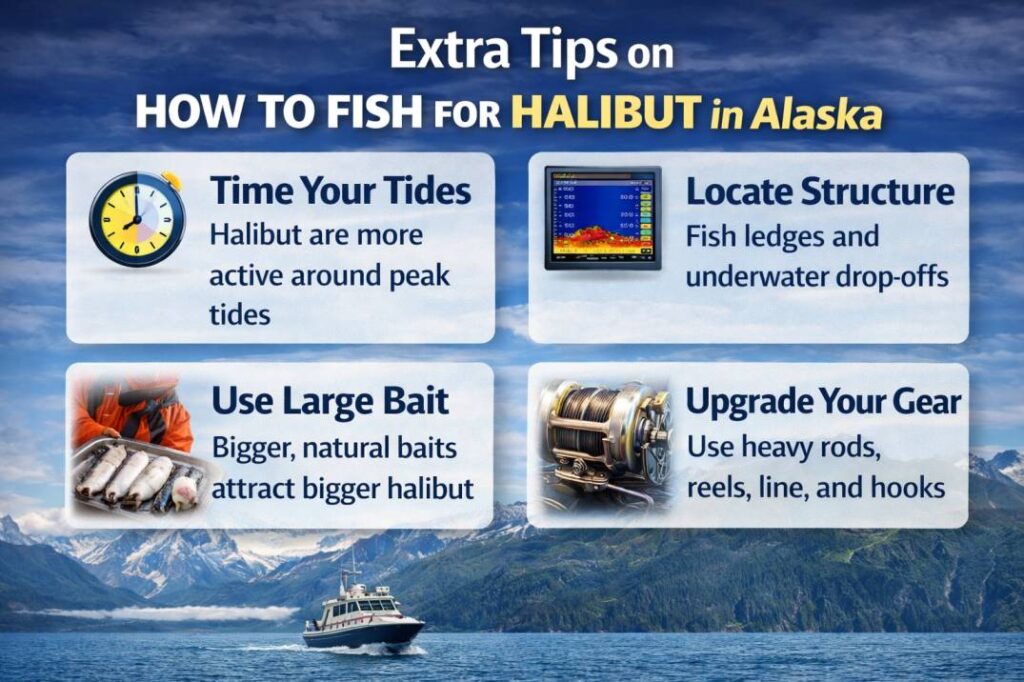
✔ Add scent to your jigs
✔ Use braided line for sensitivity
✔ Mark good GPS spots
✔ Fish along edges where sand meets rock
✔ Change locations or depths if fishing is slow
✔ Be patient — big halibut take time
FAQs: How to fish for halibut in Alaska
❓ Do halibut bite at night?
Yes, but halibut fishing is generally more productive during the day when the tides are moving.
❓ How deep are halibut in Alaska?
Halibut can be found anywhere from 50 to 400+ feet in the right location in Alaska, depending on the season and bait movement.
❓ Are halibut dangerous to handle?
Large halibut are powerful fish and can thrash violently—secure them well before bringing them aboard the boat.
❓ Is halibut fishing good for beginners?
Yes, but beginners should fish for halibut, especially with a charter guide.
❓ Can you keep all the halibut you catch?
No, you cannot keep all halibut as size and bag limits apply. Always check current regulations.
Final Thoughts: Mastering Halibut Fishing in Alaska
After properly understanding the tips and guidelines provided in this “How to fish for halibut in Alaska” post, you can catch more halibut in Alaska. Whether you’re learning to catch halibut from shore, hiring a charter, or chasing after giant barn-door halibut, a few key things to keep in mind for successful halibut fishing are simple:
- Fish in the right location
- Stay near the bottom
- Use fresh bait
- Watch the tides
- Follow the regulations
- Stay safe
Do this—and you’ll experience one of Alaska’s greatest fishing adventures.