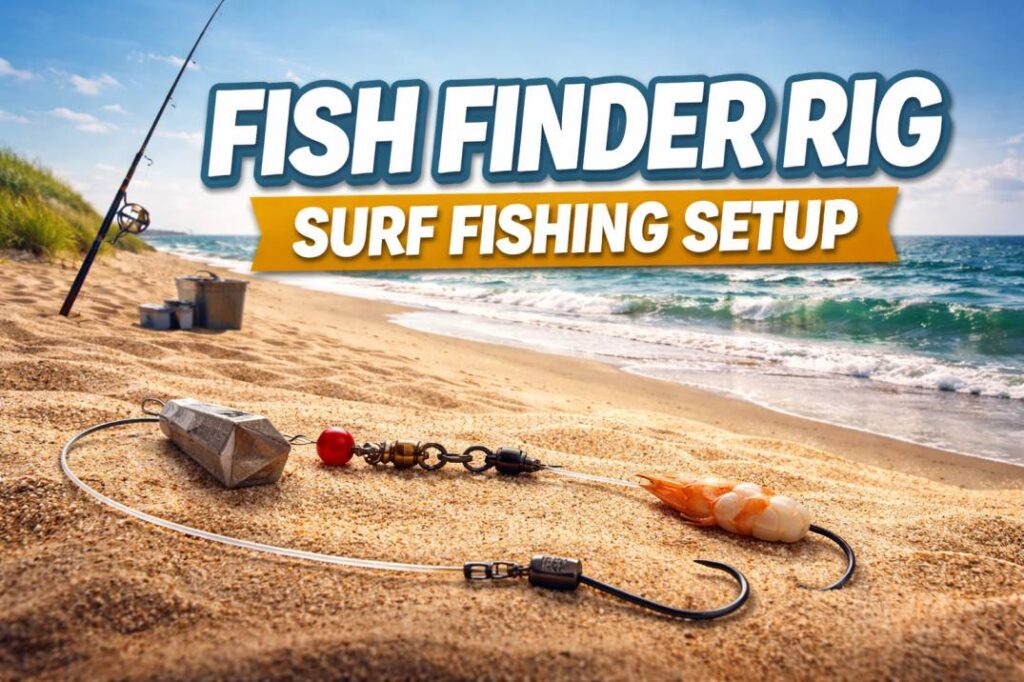
Surf fishing requires rigs that will stay put on the bottom even in moving water and allow the fish to take the bait naturally. If this doesn’t happen in the turbulent surf, the fish won’t take the bait, and the rig will be ineffective.
After researching various surf fishing rigs and observing how anglers use them from the shore, I’ve found that the Fish Finder rig is one of the most reliable and practical setups. When rigged correctly, the Fish Finder rig offers improved bite detection, fewer missed bites, and more solid hooksets in surf fishing.
In this Fish Finder Rig Surf Fishing Post, I’ve compiled everything I’ve learned about understanding and effectively using this rig—from setup and rigging to real-world application and common mistakes made by anglers.
What You’ll Get From This Post
By reading this guide, you’ll clearly understand:
- 🎣 How fish finder rig surf fishing works in real turbulent surf conditions
- 🪢 A complete surf fishing fish finder rig setup, explained step by step
- 🧵 How to tie and customize a fish finder rig based on waves and current
- 🎯 Practical rod and reel recommendations that make sense for shore fishing
- 🌊 Simple, proven tips to catch more fish from the beach
This guide is written for beginners as well as anglers who already surf fish but want detailed and more practical answers.
Surf Fishing Fish Finder Rig: What It Is & Why It Works
A surf fishing fish finder rig is a bottom-fishing rig that allows the sinker to slide freely on the main line. Instead of feeling the full weight of the sinker, a fish can pick up the bait and move naturally.
Based on what I’ve observed while studying surf setups and the realities of surf fishing, this is why this rig works so well in beach conditions. You’ll find that fish in the surf are often wary, and any unnatural resistance can cause them to drop the bait.
Common target species include:
If you use a fish finder rig for surf fishing, this rig is used to target striped bass, redfish, bluefish, flounder, and black drum, because these fish species reliably feed on bottom baits and respond well to this rig setup from the shore.
How Does a Fish Finder Rig Work in Surf Fishing?
If you want to use this rig effectively, it’s essential to understand how a fish finder rig works.
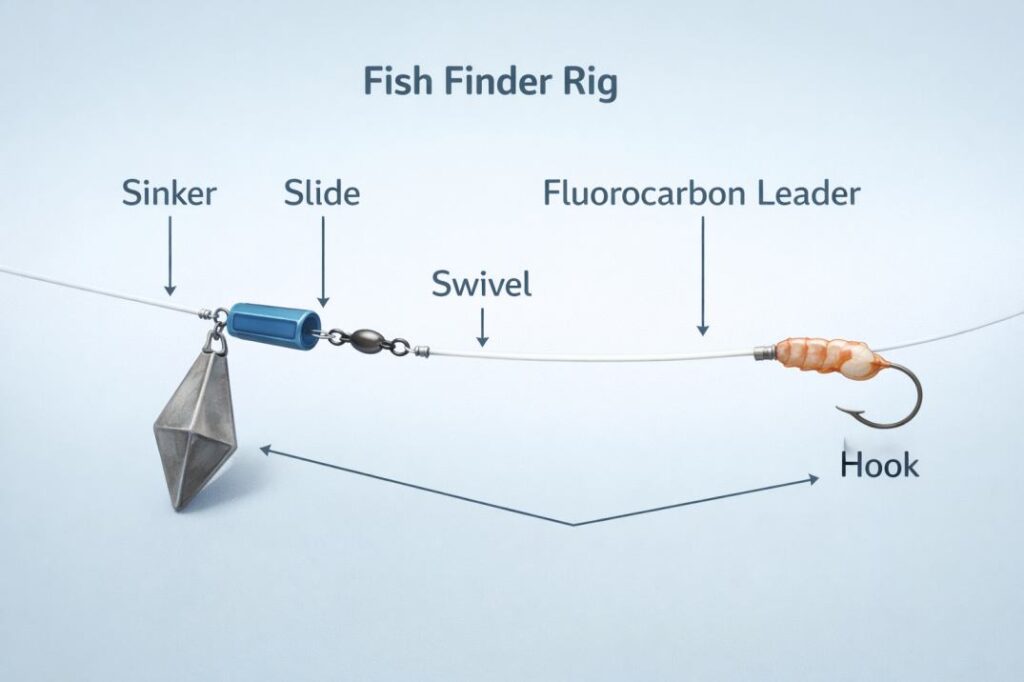
- The sinker settles on the bottom and stays in one place.
- The fish finder slide allows the line to move freely.
- A swivel prevents the sinker from sliding further.
- The leader and hook move independently of the weight.
In this setup, because the bait moves naturally and is not affected by the weight, fish are more likely to bite and hold onto it rather than let go quickly.
Surf Fishing Fish Finder Rig Setup (Step-by-Step)
The best and proper surf fishing fish finder rig setup balances strength, sensitivity, and casting distance. Note down the following components that you will need if you personally want to tiea Fish finder rig surf fishing.
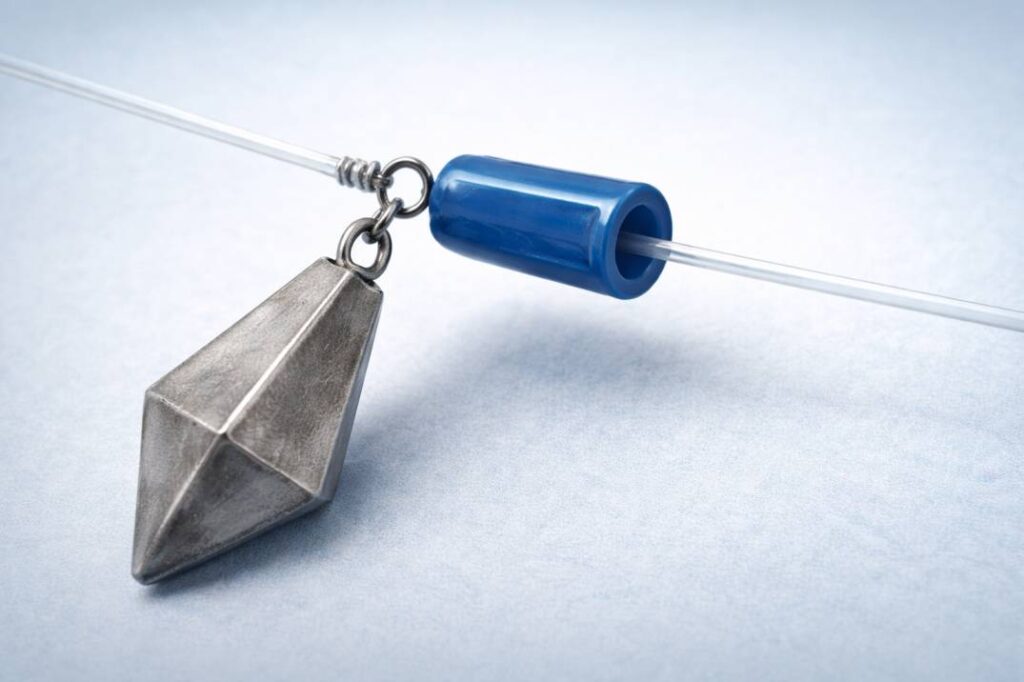
Components You’ll Need
- Main line (braid or monofilament will be good )
- Fish finder slide
- Pyramid or Sputnik sinker (Ref. Diagram)
- Barrel swivel
- Leader line (mono or fluorocarbon will do the work)
- Circle hook or J-hook
Rig Set Up for Surf Fishing steps
- Slide the fish finder slide onto your main line
- Attach the sinker to the slide
- Tie the main line to a barrel swivel
- Attach a leader line ( at about 18–36 inches)
- Tie the hook securely to the leader
In this setup, the bait moves around while the sinker remains fixed in one place at the bottom.
How to Tie a Fish Finder Rig for Surf Fishing
Learning how to tie a fish finder rig for surf fishing properly is very important because surf fish often make strong, sudden runs. So the rig should always be perfect to catch such strong fish.
Step-by-Step for Fish Finder Rig Surf Fishing Setup
- Slide the fish finder slide onto the main line
- After that tie the main line to a swivel using a Palomar or Improved Clinch knot
- Then Cut leader line to the desired length
- Tie the hook using a snell knot or a clinch knot tightly
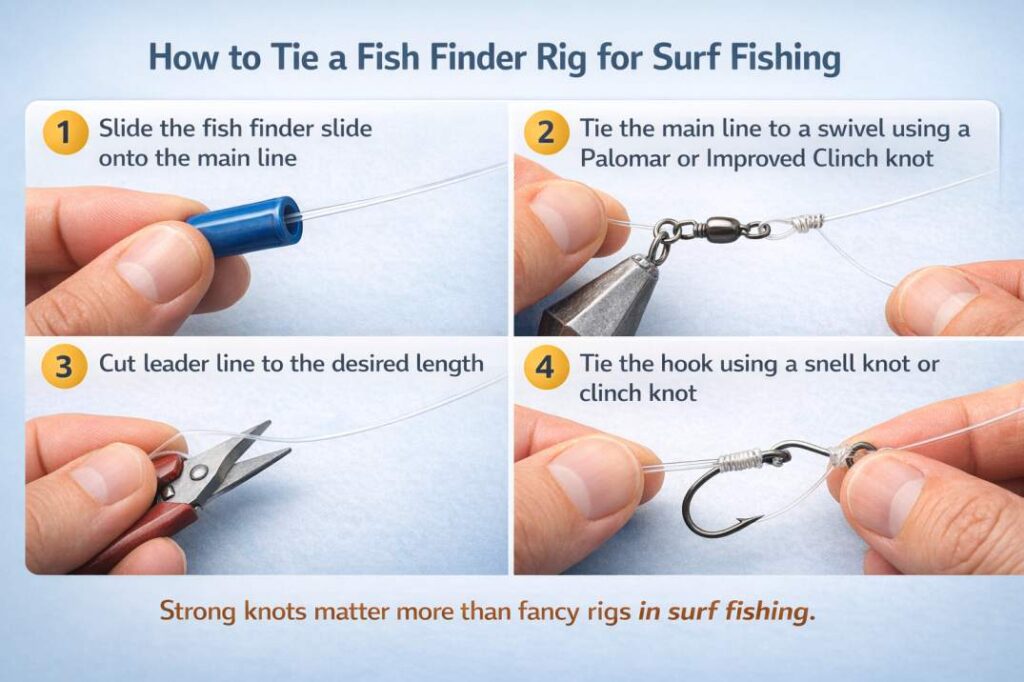
Remember, while making this rig setup, knots should be very strong. Strong knots matter more than fancy rigs in surf fishing. Afterall it is going to target strong fish in the surf.
How to Set Up a Fish Finder Rig for Different Surf Conditions
From what I’ve observed while studying surf conditions, it can be a normal surf or a heavy, turbulent surf. In such situations a small adjustments make a big difference.
Rig Setup for Calm Surf Conditions
- Leader length: Keep it around 18–24 inches
- Use a Lighter pyramid sinker
- Attach Smaller hooks for subtle bites
Rig Setup for Turbulent or Heavy Surf
- Leader length: Should be between 30 and 36 inches
- Use a heavy Sputnik or heavier pyramid sinker
- Thicker leader line for abrasion resistance should be use
This flexibility is why many anglers prefer learning how to make a fish finder rig for surf fishing instead of relying only on pre-tied rigs, which are available in the market. The rig should be adjustable, hence it is necessary to learn the exact way.
Rod & Reel Combo Surf Fishing Fish Finder Rig
It is necessary to choose the right rod and reel for the rig. Using the perfect rod & reel combo for surf fishing fish finder rig helps with long casts and accurate bite detection.
Setup That Works Perfect
- Rod: A strong 10–12 ft surf rod (medium-heavy to heavy)
- Reel: 5000–8000 size spinning reel
- Line: A strong 20–40 lb braid or 15–30 lb monofilament works for strong resistance
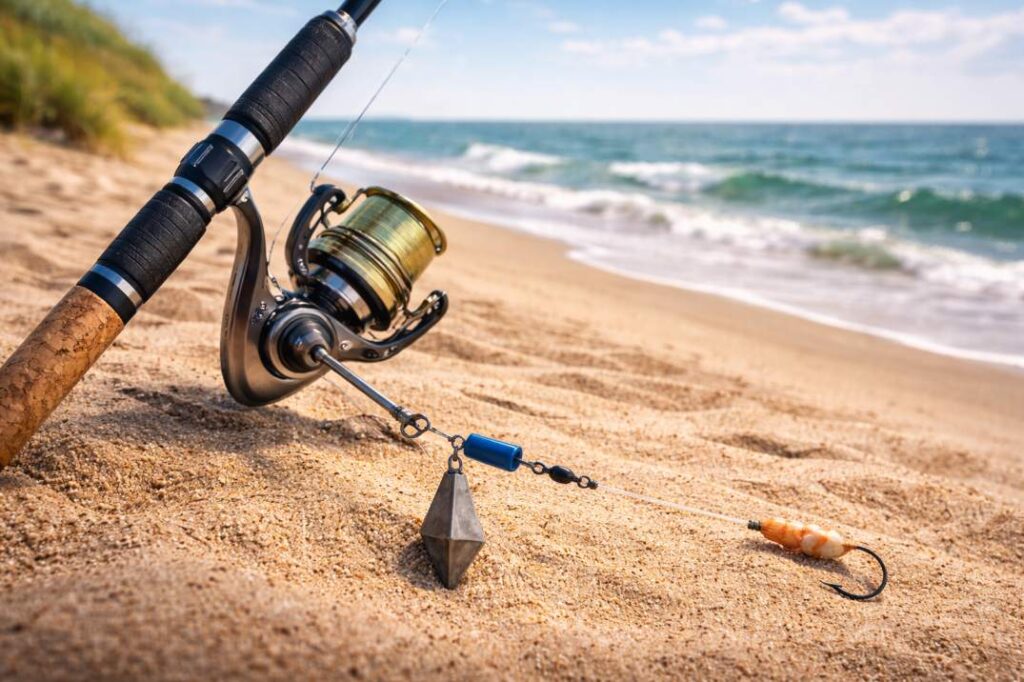
This setup handles turbulent current, waves, and larger surf species well.
Fish Finder Rig With Float – When to use
Anglers attach floats to lift the bait by some distance. A fish finder rig with float can be useful in certain conditions:
- When you are fishing over rocky or snag-prone bottoms
- Targeting flounder or bottom-hugging fish
- Fishing in murky water
The float lifts the bait slightly, reducing snags and improving visibility.
Can You Use a Fish Finder Rig From Shore?
Yes, you can use a fish finder rig from shore, and that’s exactly what it was designed for. The fish finder rig offers long casting distance, strong bottom holding, and natural bait presentation. Due to this, it is one of the best rigs for beach anglers, and people love to use this from shore.
How to Use Fish Finder Rig to Catch More Fish
When learning how to use fish finder to catch fish, these points matter the most:
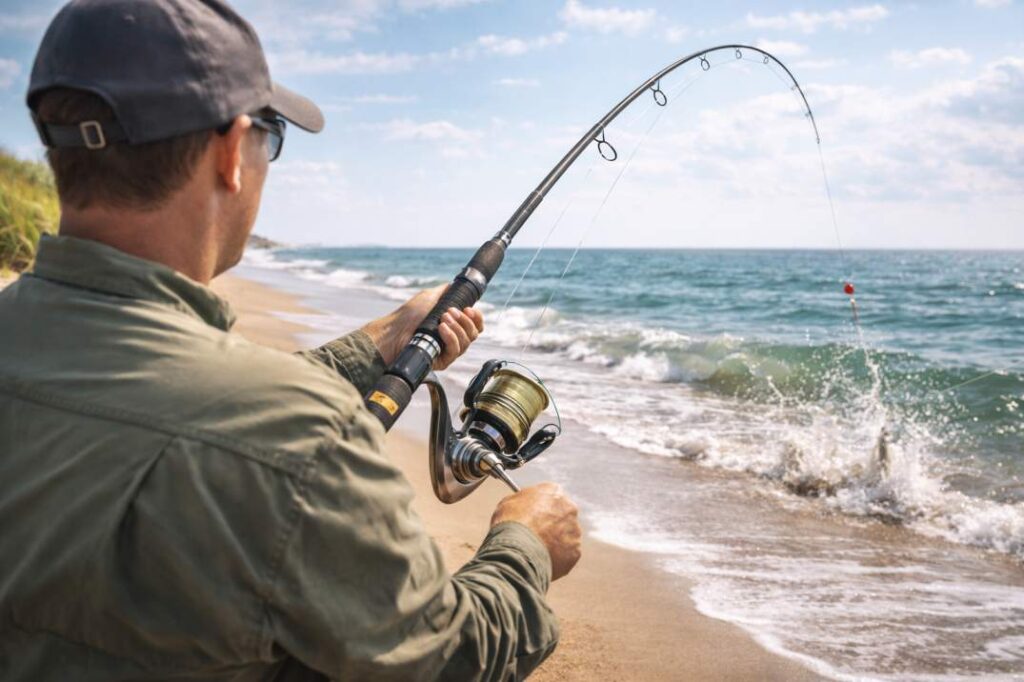
- Cast beyond the breaking waves
- Always maintain slight tension on the line.
- Keep a close eye on the slow, steady movement of the rod tip.
- Let the fish run for a short while before setting the hook.
- Always use fresh bait if possible.
Mistakes to Avoid
Avoid these common mistakes while you are preparing a fish finder rig surf fishing setup.
- Using sinkers that are too light instead of a heavy one.
- Keeping the leader length too short in rough surf, it will not work.
- Setting the hook too early
- Ignoring tide direction and wave action
- Using weak or poorly tied knots, we discussed earlier that knots are very important
Avoiding these mistakes improves results more than constantly changing rigs.
FAQs – Fish Finder Rig Surf Fishing
Is a fish finder rig good for surf fishing?
Yes. It’s one of the most effective surf fishing rigs because it allows natural bait movement during heavry surf.
What bait works best?
Cut bait, shrimp, squid, sand fleas, and live bait all work well.
How long should the leader be?
Most anglers use 18–36 inches. Depending on surf conditions, this length should be change.
Braid or monofilament?
Braid offers sensitivity and distance, while mono provides stretch. Many anglers combine both.
Is this rig beginner-friendly?
Yes. It’s simple to tie and very easy for beginners.
Final Conclusion
After studying different surf rigs and how anglers actually use them, it’s clear why the fish finder rig surf fishing remains so popular. The rig’s ability to hold bottom while letting bait move naturally makes it reliable in a wide range of beach conditions.
By understanding the setup, learning how to tie a fish finder rig for surf fishing, and making small adjustments based on surf conditions, anglers can consistently improve their success from shore.