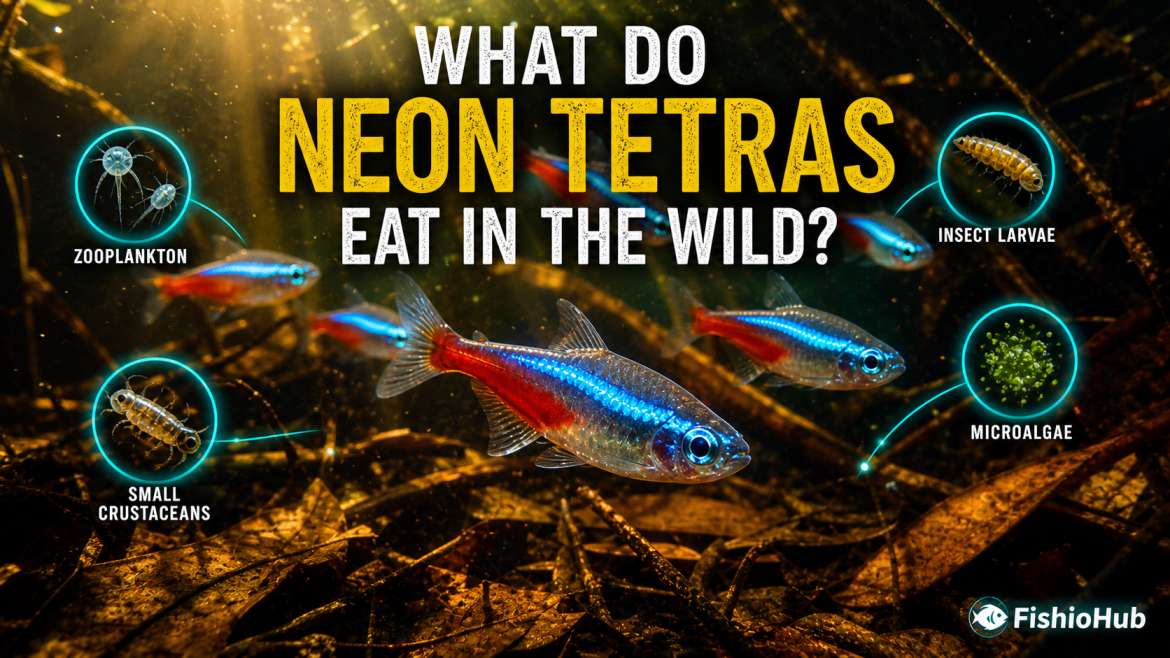
I still remember the first time I watched a school of neon tetras feeding in a heavily planted blackwater aquarium. They didn’t rush for food like goldfish. Instead, they moved carefully between leaves, picking tiny particles from the water column almost like miniature hunters. That moment made me curious about one thing many aquarium guides barely explain properly: What do neon tetras eat in the wild? And I must tell you that what I got in my research is absolutely interesting.
In the wild, neon tetras mainly eat tiny insects, insect larvae, zooplankton, micro-crustaceans, algae, and plant matter found in slow-moving Amazon tributaries. Their natural diet is highly varied and protein-rich, which explains why healthy wild-type neon tetras show brighter colors and stronger schooling behavior.
Quick Answer: In the wild, neon tetras eat tiny insects, insect larvae, zooplankton, micro-crustaceans, algae biofilm, and plant matter found in the slow-moving blackwater tributaries of the Amazon basin. Their natural diet is highly varied and protein-rich, which directly explains why wild-type neon tetras show brighter colors and stronger schooling behavior than fish fed on flakes alone.
If You Are in a Hurry — Wild Neon Tetra Diet at a Glance
- What they eat most: Zooplankton, insect larvae, tiny crustaceans, worms
- Secondary food sources: Algae, plant material, organic detritus, surface-fallen insects
- How they eat: Constant small-amount foraging throughout the day in schools
- What this means for your tank: Variety, small particle size, protein-rich foods, and regular small feedings
What You’ll Get in This Post
- What do neon tetras eat in the wild — the complete diet
- Do neon tetras eat algae and plants?
- Do neon tetras eat insects and mosquito larvae?
- Do neon tetras eat zooplankton?
- How neon tetras find food in the wild
- Best aquarium foods that mimic their natural diet
- How much and how often to feed
- Common feeding mistakes most beginners make
- Wild diet vs captive diet comparison table
- FAQs
What Do Neon Tetras Eat in the Wild?
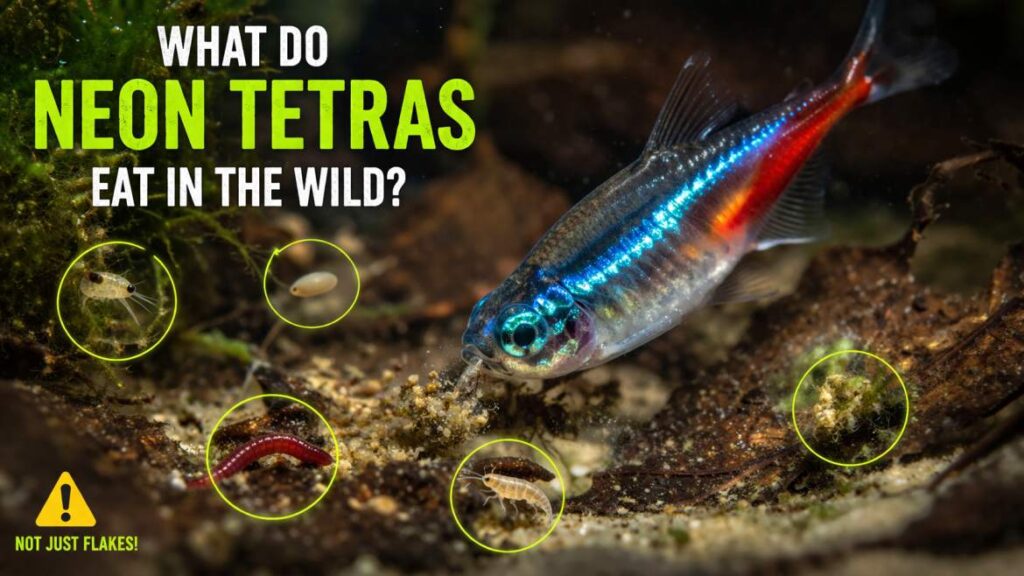
Wild neon tetras are opportunistic micro-predators. In the Amazon Basin of South America, especially in blackwater streams of Brazil, Peru, and Colombia, they feed on whatever tiny edible organisms drift through the water.
Their natural diet usually includes many things because they are not selective eaters. Unlike aggressive predator fish, neon tetras constantly graze throughout the day in small amounts. Their natural diet includes:
- Zooplankton — daphnia, copepods, rotifers, and related microorganisms
- Aquatic insect larvae — particularly mosquito and midge larvae (bloodworms)
- Tiny crustaceans — amphipods and small freshwater shrimp
- Micro worms and nematodes are found in leaf litter
- Microalgae and biofilm coating plant surfaces and wood
- Organic detritus and plant debris
- Tiny Terrestrial insects that fall onto the water surface
Scientific Fact
Research from Amazon freshwater ecosystem studies (in 2019) shows that many small characin species consume large amounts ( 6 to 9) of zooplankton and aquatic insect larvae as their primary protein source. NOAA freshwater ecosystem data also highlight how micro-invertebrates form the foundation of tropical freshwater food chains.
One thing most aquarium blogs miss is this: Wild neon tetras rarely eat one single food source consistently. Their survival depends on dietary diversity. That’s exactly why neon tetras fed only cheap flakes in aquariums often lose color over time. It means that what do neon Tetras eat in the wild is diversified.
Do Neon Tetras Eat Algae?
Yes — Neon tetras eat algae, but not the way most guides explain it, and the distinction matters enormously for your tank setup.
Many newcomers ask: Do Neon Tetras eat algae?
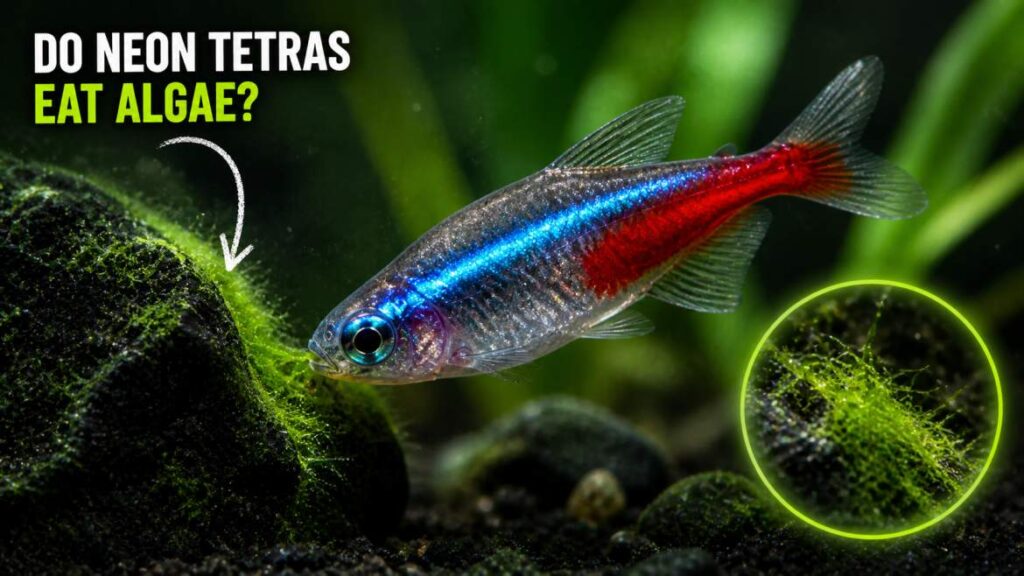
The answer is, partially, “yes.” There is a reason I said “partially”: while Neon Tetras do consume algae, they do not do so in the same manner as fish like Plecos or Siamese Algae Eaters. Neon Tetras consume soft algae, biofilm, or microscopic plant particles—and only in very small quantities.
I have frequently observed in my own tank that Neon Tetras will occasionally peck at the green biofilm accumulating on driftwood, particularly in the morning before feeding time. From a practical standpoint, Neon Tetras will graze on the thin, natural biofilm that forms in your aquarium; however, they will not be able to resolve a significant algae problem. To effectively control algae, species such as Amano shrimp or Otocinclus catfish are far more suitable choices.
An important distinction: If we consider their natural habitat in the wild, these Tetras consume algae only incidentally, specifically, while they are hunting for the microscopic organisms that live within the algal layers. This is a crucial distinction that many websites often fail to explain.
Do Neon Tetras Eat Insects and Mosquito Larvae?
Absolutely — and this is one of the most important protein sources in their entire wild diet.
What insects do Neon Tetras eat?
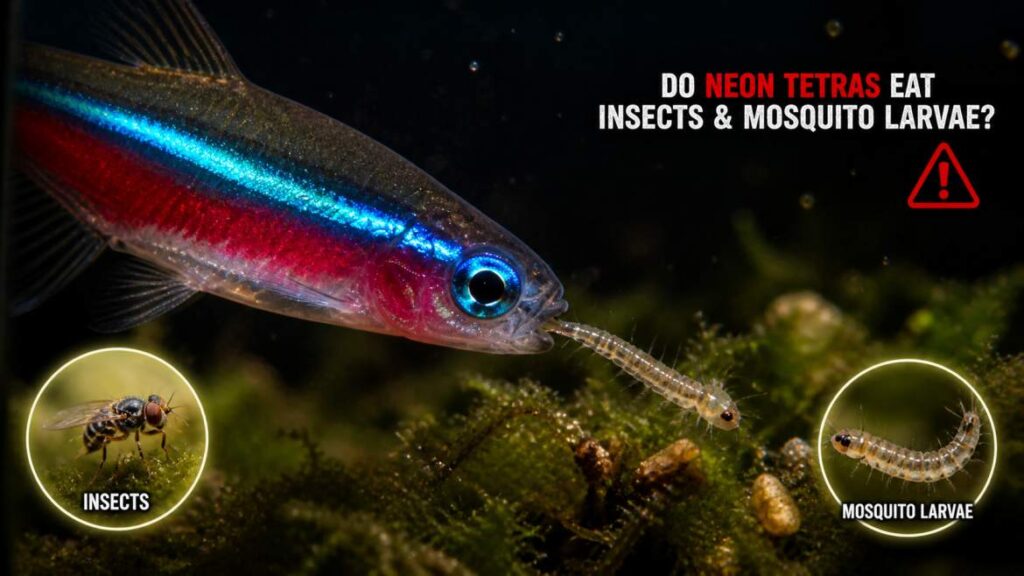
In the wild, Neon Tetras typically consume items such as mosquito larvae, the larvae of small aquatic insects, water fleas, microscopic worms, and small flying insects that fall into the water.
Do Neon Tetras eat mosquito larvae?
Yes, and they actually love them. Their easy availability is also a key factor; in the blackwater streams of the Amazon, mosquito larvae floating near vegetation become a readily accessible food source for these schooling Tetras.
This protein-rich diet is beneficial for Neon Tetras, enhancing their vibrant coloration, promoting rapid growth, and improving their breeding potential.
According to studies on tropical fish nutrition, protein is crucial for maintaining both coloration and immune function in small, schooling fish species. Commercial manufacturers replicate this natural diet to formulate aquarium foods.
Do Neon Tetras Eat Zooplankton?
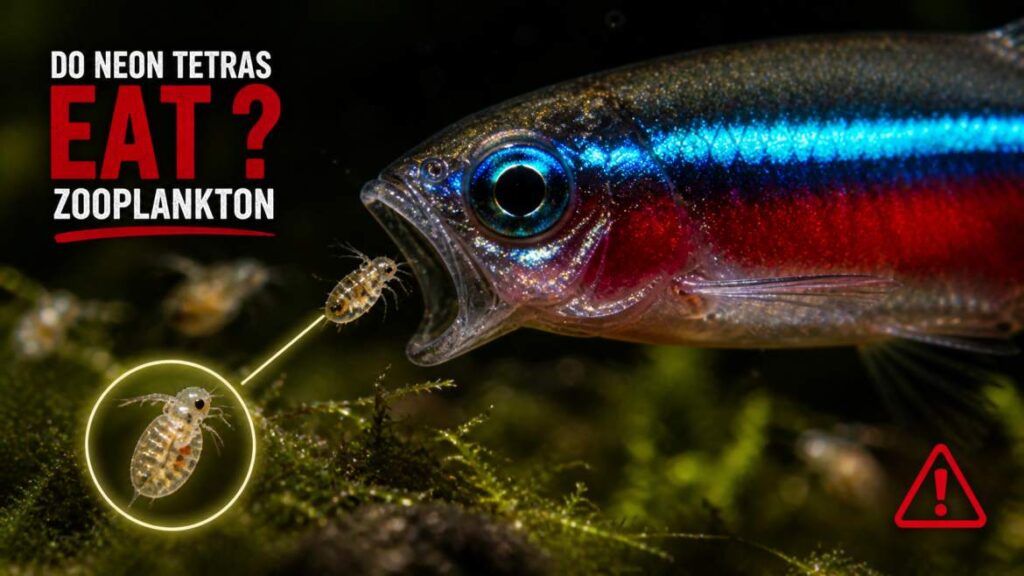
Yes, and zooplankton is arguably the single most important food category in the neon tetra’s natural wild diet.
Neon tetras often feed on:
- Rotifers
- Copepods
- Daphnia
- Tiny drifting organisms
These microscopic foods are rich in nutrients and naturally available in slow-moving tropical waters. So neon tetra don’t need to do tough work to get them.
Scientific Fact
Few recent studies on Amazon blackwater ecosystems show zooplankton populations have a ‘heavy impact on small tetra species’ feeding behavior and survival rates. This is one reason live foods work so well in aquariums.
How Neon Tetras Find Food in the Wild
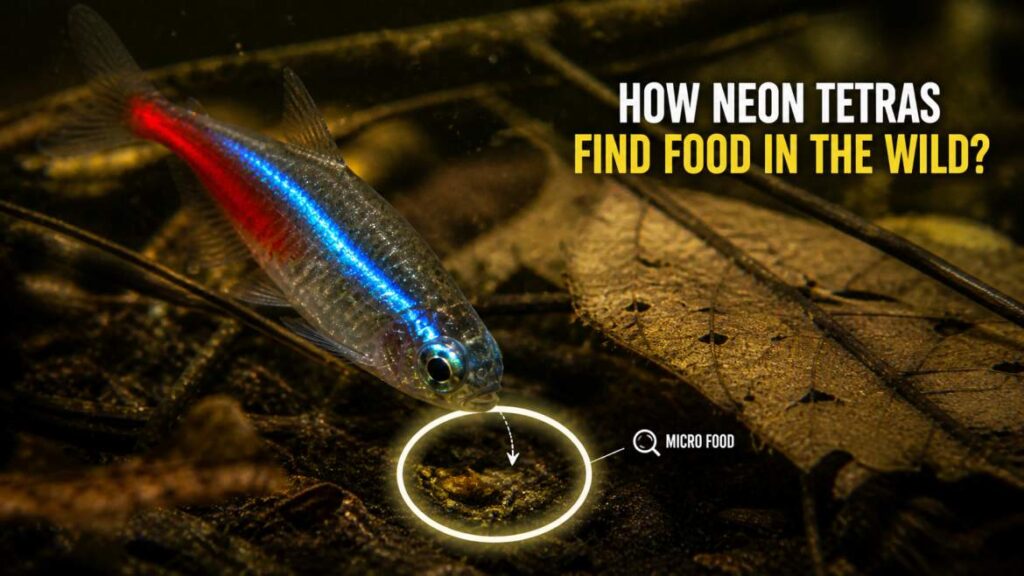
This part fascinates me because I already told you that neon tetras are opportunistic feeders, but now I must say they are surprisingly intelligent feeders for such tiny fish.
Interestingly, Wild neon tetras find food using:
- Movement detection
- Light reflections
- Group feeding behavior
- Smell and vibration sensing
You can also notice that the food-finding methods the neon tetra uses are highly intelligent. Their bright blue stripe may actually help schooling coordination in dark blackwater habitats.
Interesting Wild Behavior
It is very important that during Amazon flood seasons, neon tetras move into flooded forest areas where insects and organic matter become abundant. That means wild tetras are constantly adapting their diet depending on season and water conditions. Most aquarium guides completely skip this very important seasonal feeding behavior. It also means to properly understand What Do Neon Tetras Eat in the Wild, you need to look at the Amazon’s microscopic food chain.
Best Foods That Mimic Their Natural Wild Diet
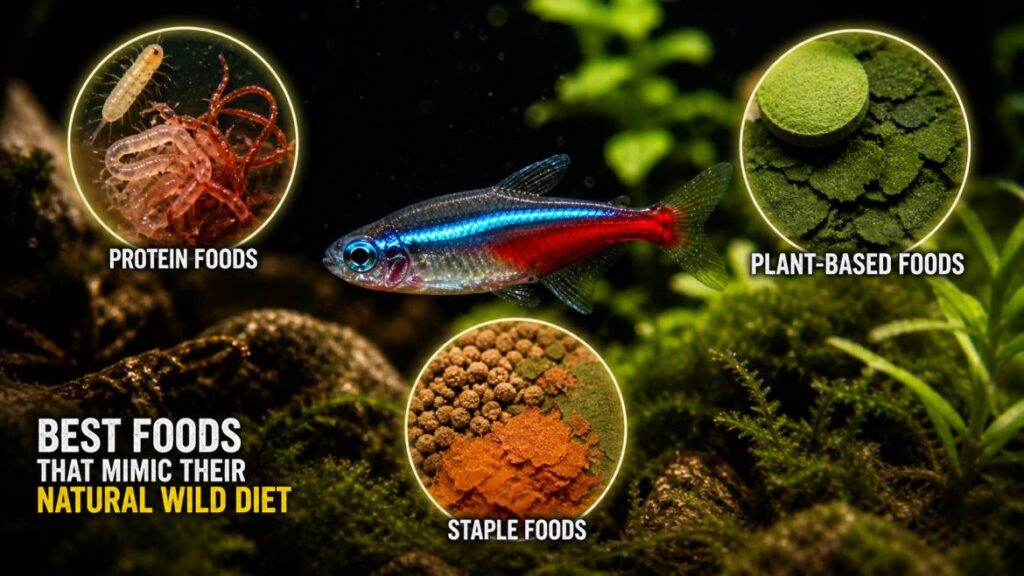
If you want healthy Neon Tetras in your aquarium, try to replicate their natural wild diet as closely as possible. In fact, many commercial manufacturers emulate this approach when formulating food for Neon Tetras. The Exact understanding of What Do Neon Tetras Eat in the Wild helps aquarists create a healthier and more natural feeding routine.
Best Foods for Neon Tetras
Protein Foods
- Baby brine shrimp
- Daphnia
- Frozen bloodworms
- Mosquito larvae
- Micro worms
Plant-Based Foods
- Spirulina flakes
- Soft algae wafers
- Crushed vegetable flakes
Staple Foods
- High-quality nano pellets
- Tropical micro flakes
In my experience, USA hobbyists often overfeed plant-based foods like flakes while ignoring live or frozen foods. Once I added frozen daphnia twice weekly, my neon tetras became noticeably more active within days.
At this point, I need to mention that although Tetras eat plant-based food because it is readily available in their natural habitat, they also eat protein-based food to meet their actual nutritional needs.
Neon Tetra Wild Diet vs Aquarium Diet
| Wild Food Source | Aquarium Equivalent | Feeding Frequency | Nutritional Role |
|---|---|---|---|
| Zooplankton (copepods, daphnia) | Frozen daphnia, frozen cyclops | 2–3 times weekly | Natural protein source |
| Mosquito larvae & insect larvae | Frozen bloodworms, mosquito larvae | 1–2 times weekly | Protein and essential fats |
| Tiny aquatic crustaceans | Baby brine shrimp | 2–3 times weekly | Protein, minerals, energy |
| Microorganisms & biofilm | Spirulina flakes, quality flakes | Regular supplemental feeding | Plant nutrients and digestion support |
| Algae & plant matter | Spirulina flakes, algae-based foods | 2–3 times weekly | Fiber and micronutrients |
| Organic debris & micro particles | Micro pellets, crushed flakes | Daily staple feeding | Balanced everyday nutrition |
| Tiny insects falling into water | Freeze-dried insects | Occasional treat | Dietary variety and enrichment |
If you want your fish to show vibrant neon coloration like wild tetras, variety matters more than quantity.
Common Feeding Mistakes Most Beginners Make
- Feeding Too Much: Neon tetras have tiny stomachs. Overfeeding causes water quality problems quickly.
- Feeding Only Flakes: A monotonous diet reduces coloration and vitality.
- Ignoring Protein-based food: Wild neon tetras naturally consume protein-rich prey constantly.
- Wrong Feeding Frequency
Many people ask:
- How often do neon tetras eat?
- How much do neon tetras eat?
The best approach: Feed them only what they finish within 2 minutes. Feed 2 small meals daily
Can Neon Tetras Eat Guppy Fry?
Yes — occasionally. Adult neon tetras are peaceful, but they may eat very small guppy fry if the opportunity appears. This usually happens in community tanks where dense plants or hiding spots are lacking.
I’ve personally seen neon tetras investigate newborn fry within minutes after birth.
Why Understanding What Do Neon Tetras Eat in the Wild Actually Matters?
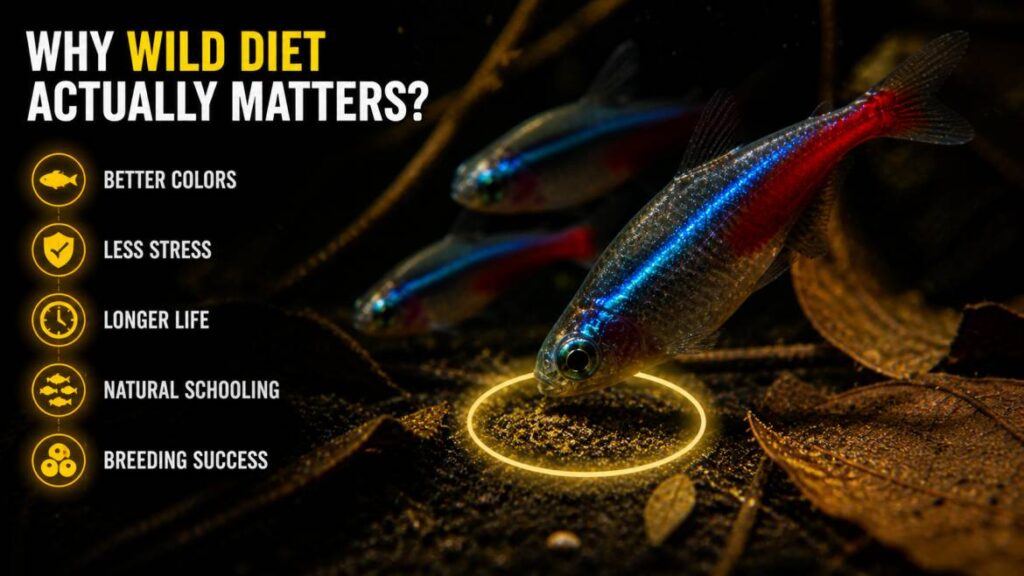
Understanding what do neon tetras eat in the wild helps you:
- Improve the coloration of the neon tetra
- Reduce stress
- Increase the lifespan of neon tetras
- Encourage natural schooling behavior
- Support breeding success
If your feeding is wild-inspired, this will create healthier fish overall. That’s something I learned after years of studying tetra species in planted community aquariums. Learning What Do Neon Tetras Eat in the Wild can completely change how you feed them in a home aquarium.
FAQs About What Do Neon Tetras Eat in the Wild?
What Do Neon Tetras Eat in the Wild Most Often?
Neon tetras mainly eat zooplankton, tiny insect larvae, microorganisms, algae, and small aquatic crustaceans in the wild Amazon ecosystem.
Do neon tetras eat algae?
Yes, but only soft algae and biofilm occasionally. They are not dedicated algae eaters.
Do neon tetras eat mosquito larvae?
Yes. Mosquito larvae are a natural protein-rich food source for wild neon tetras.
What type of food do neon tetras eat in aquariums?
They eat flakes, nano pellets, frozen foods, baby brine shrimp, daphnia, and micro worms.
How often do neon tetras eat?
Ideally, twice daily in small portions.
How much do neon tetras eat?
Only enough food they can finish within about 2 minutes.
Do neon tetra fish eat plants?
They may nibble soft plant matter or biofilm, but usually do not damage healthy aquarium plants.
What do wild tetras feed on during flood season?
Wild tetras consume more insects, larvae, and drifting organic matter during Amazon flooding periods.
If you’re building a healthier tetra aquarium, you should also read my detailed guide on Cardinal Tetra vs Neon Tetra because feeding behavior, coloration, and care needs differ more than most hobbyists realize. You can explore more aquarium feeding and tetra care guides on FishioHub.
Final Thoughts
After studying Amazon freshwater ecology at the postgraduate level and keeping neon tetras in planted community aquariums for years, my honest conclusion is this — the single biggest improvement most US neon tetra keepers can make has nothing to do with tank size, filtration, or water parameters. It is their diet.
The Amazon built these fish to thrive on variety. Give them variety, and they will show you exactly what they are capable of.
— Anil Satak
Master’s in Zoology | Founder, FishioHub
Was this guide helpful?
First-Hand Experience
Based on animals I've personally kept and bred - not summarized from other articles.
Zoological Foundation
Claims are checked against my M.Sc. Zoology training and published aquatic biology research, not recycled aquarium myths.
No Paid Influence
No sponsorship shaped this guide. Affiliate links, if any, are disclosed separately and never hidden.
Kept Current
Errors are corrected as soon as they're found, with the update noted at the bottom of the article.

Anil Satak M.Sc. Zoology · Founder, FishioHub
Grew up in a fishing family in India and holds a Master's in Zoology. FishioHub is a one-person operation - every guide is personally researched, kept-tested, and written by Anil. No team, no outsourced writers, no AI-generated content. Read his full bio →