I still remember the first time I cooked a whole lobster at home. As someone who spends hours around water, fishing, observing marine life, and writing for FishioHub, I thought I knew everything about seafood. But when I opened that bright red shell… I paused.
“Wait… can I eat ALL of this?” This uncertainty is about what parts of lobster not to eat, and if eaten accidentally. If you’ve ever felt the same, you’re not alone. This post fixes both problems permanently.
Quick Answer: What Parts of Lobster Not to Eat
If you’re short on time, here’s the simple truth:
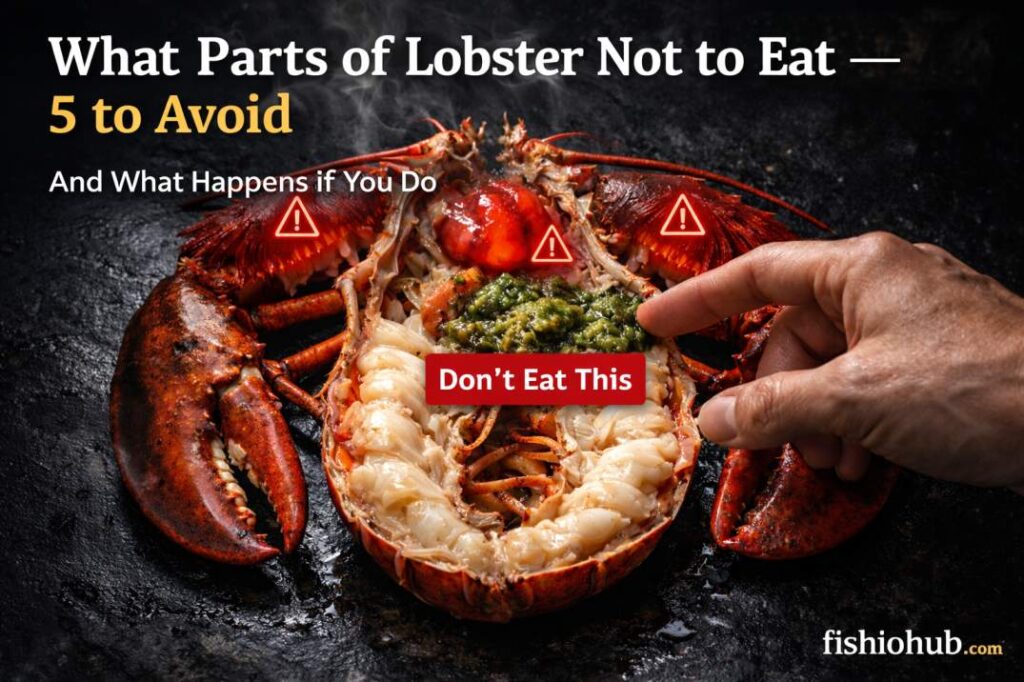
👉 The parts of lobster not to eat include the gills (dead man’s fingers), intestinal vein running through the tail, stomach sac, shell, and sometimes the green tomalley (in excess).
👉 These parts are either unpleasant in texture and taste. Indigestible, unclean, or potentially harmful due to toxins or contaminants.
Everything else—like the tail, claws, and knuckle meat- is safe and delicious.
📌 What You’ll Get in This Post
- 🦞 Complete list of parts of lobster not to eat
- ⚠️ Why some parts are unsafe (science explained)
- 🍽️ What parts are actually safe and tasty
- 🦞 What Parts of Lobster Not to Eat — Eat?
- 🤔 Answers to common questions (head, eggs, legs, green stuff)
- 🧠 Expert tips most websites don’t tell you
Quick Reference — Eat This, Skip That
Let’s break this down clearly so you never feel confused again while eating lobster. Before I get into the details, which genuinely matter for the safety questions here, let me give you the fast reference answer first.
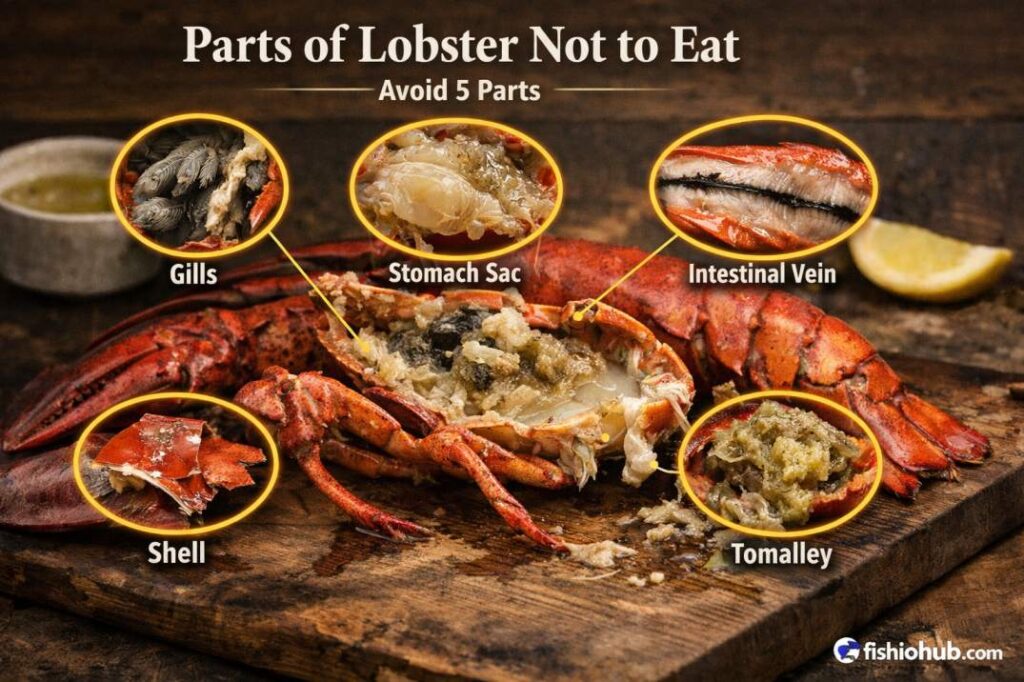
Do not eat these 5 parts:
- Gills — feathery, spongy structures inside the body cavity
- Stomach sac — located just behind the eyes, inside the head
- Intestinal vein — the dark line running through the tail meat
- Shell — the hard exterior, definitely not to eat (save it for stock instead)
- Tomalley (Green Substance)- Found in the body cavity, can be eaten in moderation
Can Eat with awareness:
- Tomalley (the green substance) — edible but carries specific safety considerations
- Lobster eggs/roe — edible, but understand what you are eating first
Eat freely and enjoy:
- Tail meat — the most substantial and widely loved part
- Claw meat — sweeter and more delicate than tail
- Knuckle meat — underrated, often the sweetest meat on the lobster
- Leg meat — small but worth the effort
- Body meat — hidden pockets of flavor throughout the interior
Now, let me explain why you should avoid these 5 lobster parts, because understanding the biology makes you a genuinely more confident lobster eater. If you’ve ever been unsure what parts of lobster not to eat, this simple breakdown will guide you step by step.
1. Lobster Gills (Also Called “Dead Man’s Fingers”)
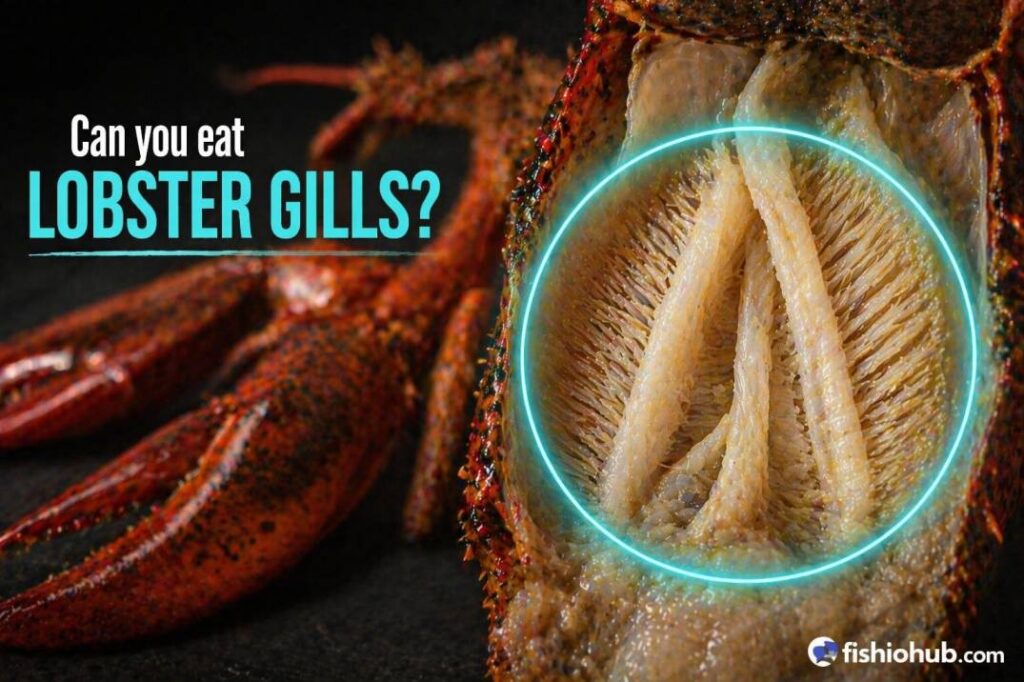
If you open a lobster, you’ll notice soft, feather-like structures on both sides of the body — these are the gills. They might look harmless, but you should NOT eat them.
Why Avoid Lobster Gills?
- They act like natural filters (just like fish gills)
- Can collect dirt, bacteria, and impurities from water
- Texture is spongy and unpleasant
Even after cooking, they stay foam-like and chewy. If anybody asks, can you eat lobster gills? Say No.
How to Identify Them
- Found inside the body cavity
- Light brown or cream color
- Soft, feathery appearance
How to Remove Them
- Twist off the tail
- Open the body section
- Pull them out easily by hand
💡 Quick Tip: If it looks soft, feathery, and sponge-like → don’t eat it
2. Lobster Stomach Sac (Avoid This Part)
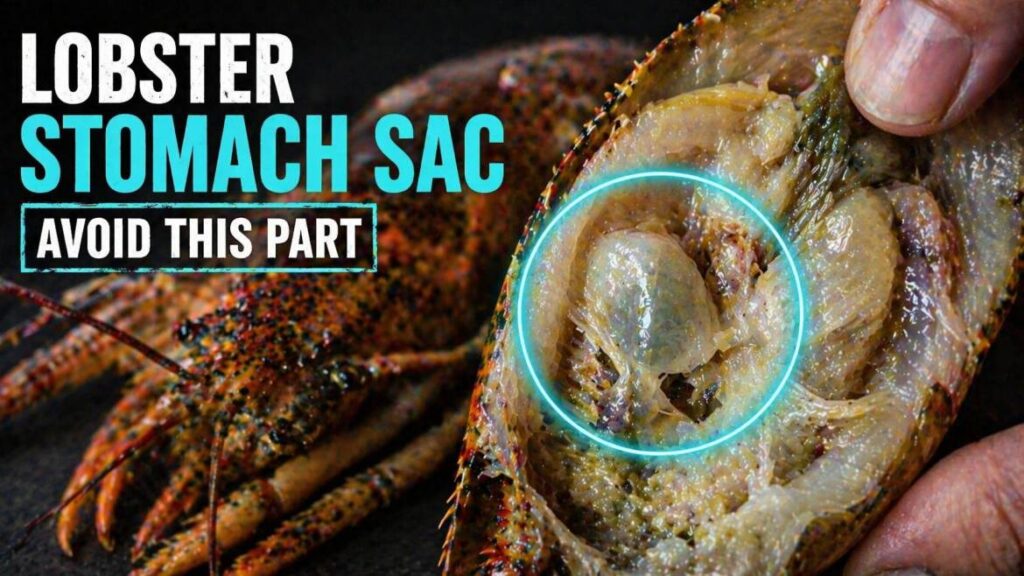
Another part you should never eat is the lobster’s stomach sac. It’s a small, pouch-like organ located in the head, just behind the eyes. Hence, knowing what parts of lobster not to eat is important for both safety and flavor.
Why You Should Avoid It
- It’s the lobster’s actual stomach
- Often contains undigested food particles
(like shell fragments, debris, and waste) - Taste is bitter and unpleasant
- Texture feels gritty and dirty
In simple terms, this is not food; it’s waste content, throw it without any hesitation.
How to Identify It
- Found inside the head section
- Located near the eyes
- Looks like a small, soft, balloon-like pouch
- Usually clear or slightly cloudy
How to Remove It
- Separate the tail from the body
- Open the head section
- Find the small pouch near the eyes
- Pull it out gently and discard
💡 Quick Tip: If you see a small sac filled with mushy content, remove it immediately
3. Lobster Intestinal Vein (Should You Remove It?)
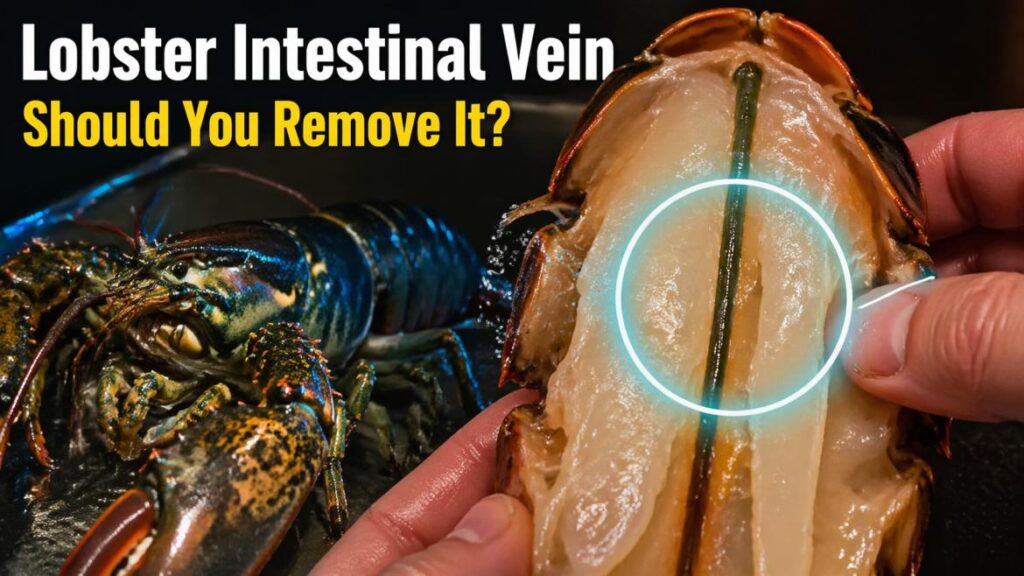
You’ll often notice a thin, dark line running through the center of the lobster tail on the upper part; this is the intestinal vein (digestive tract of the lobster ). One thing is to confirm it is not harmful to eat, but if you still eat it. Its taste will ruin your party. So better to remove it.
Why You Should Remove It
- It’s the lobster’s digestive tract
- May contain waste or undigested material
- Texture can feel gritty
- Taste may turn bitter and unpleasant
It won’t make you sick, but it can ruin the clean, sweet flavor of lobster meat
How to Identify It
- Found inside the tail meat on the upper part
- Looks like a thin, dark thread or line
- Runs along the center of the tail
How to Remove It
- Cut or butterfly the lobster tail
- Make a shallow slit along the center with a knife
- Locate the dark vein
- Pull it out gently using fingers or a knife tip
- Rinse under cold water
💡 Quick Tip: If you see a dark line in the tail, just remove it for better taste
4. Lobster Shell (Is it safe to eat?)
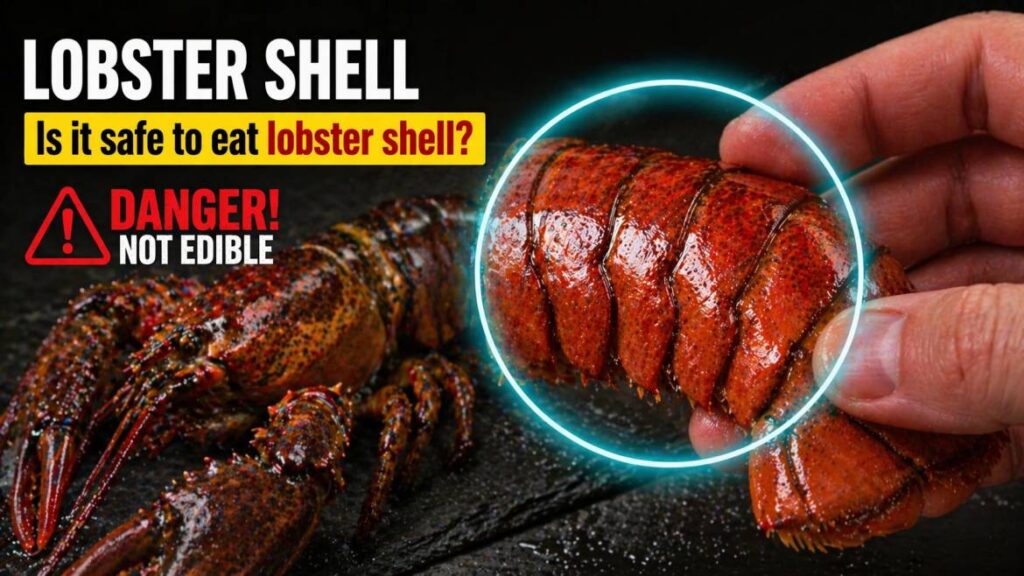
It might seem obvious, but many beginners still ask, “Can you eat lobster shell?” I will always answer it, No, you shouldn’t eat it. It’s simply not meant to be eaten.
Why Lobster Shell is Not Edible
- Shell is extremely hard
- It is Indigestible for humans
- Can damage teeth if you try to chew it
How to Identify Lobster Shell
- The hard outer covering of the lobster
- Found on claws, tail, and over the body
- Usually, it becomes red/orange after cooking
Is it safe to eat lobster shells? If it’s hard and crunchy, it’s the shell; not safe, so avoid eating it.
How to Remove Lobster Shell
- Twist off the claws and tail by hand
- Use a cracker or knife to break the shell
- Gently pull out the meat inside, and then discard the broken shell pieces
What You Can Do With It
- Perfect for making rich lobster stock
- Adds deep flavor to soups and sauces
💡 Quick Tip: Don’t throw the shell away — use it for stock instead. It will not get wasted.
5. Tomalley (The green substance – Should You Eat It?)
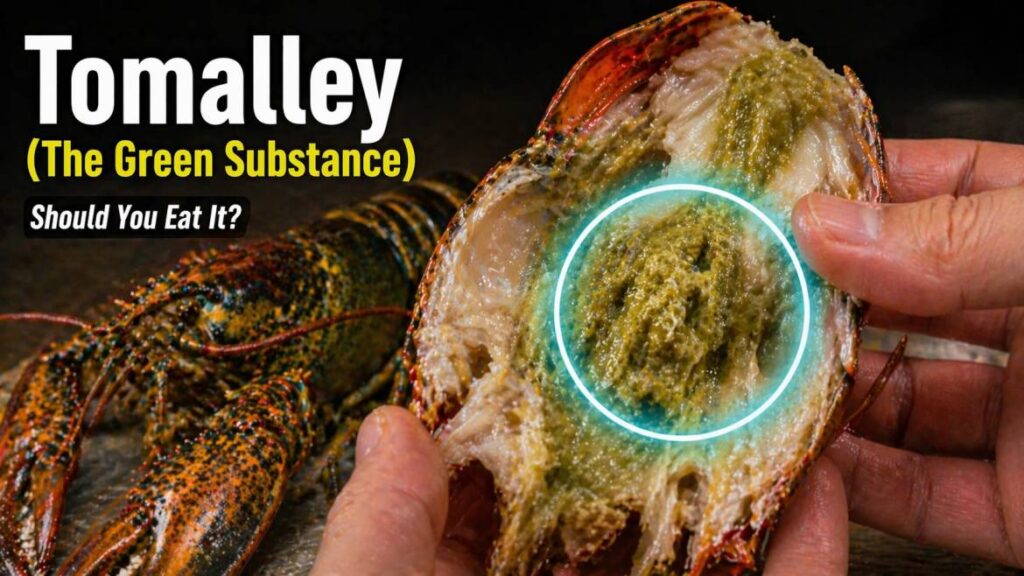
Can you eat lobster green part? When you open a lobster’s body cavity, you’ll often find a soft green paste-like substance. It is tomalley, the lobster’s liver and pancreas combined. In seafood kitchens, when I think and research, what parts of lobster not to eat? Tomalley, make me confused. It’s sometimes treated as a delicacy, but it’s also one of the most debated parts of a lobster.
From my experience: this is the part beginners either love or completely avoid after learning what it actually is.
Should You Eat Lobster Tomalley?
Yes, it is edible—but should be consumed with awareness. Tomalley can carry concentrated toxins depending on the lobster’s environment. So while a small amount is generally fine, it is not a part you should treat like regular lobster meat.
Why Many People Avoid It
- It is the lobster’s internal filtering organ (liver + pancreas), not clean meat
- Can accumulate environmental toxins and heavy metals
- Strong, intense flavor that not everyone likes
- Overeating is not recommended in seafood practice
In most professional kitchens, it is either used sparingly or completely removed.
How to Identify the Lobster Tomalley?
- Found inside the body cavity, not the tail
- Appears as a soft green or greenish-brown paste
- Usually sits near the upper internal section of the shell
- Often spreads slightly when the shell is opened
How to Remove Tomalley from Lobster?
- Carefully open the lobster’s body shell
- Locate the green tomalley inside the cavity
- If removing: gently scoop it out using a spoon or knife tip
- Clean the cavity lightly if preparing for serving
💡 Quick Insight (Important): In real seafood kitchens, tomalley is treated as an optional ingredient. If your goal is clean flavor and safe consumption, most chefs prefer skipping it altogether.
⚠️ Important Safety Note for Tomalley:
According to the NOAA (National Oceanic and Atmospheric Administration): The Lobster tomalley can contain environmental toxins like PCBs and heavy metals. That means:
- Occasional consumption of lobster’s green substance is generally safe
- Frequent or large amounts are not recommended and also will not be good for health.
Why Some Parts of Lobster Are Unsafe?
After we recognise what parts of lobster not to eat, let us now understand why some parts of lobster are not edible.
Lobsters Are Bottom Feeders: Lobsters’ habitat is the ocean floor, and they eat dead fish, small organisms, algae etc. Because of this, they can accumulate toxins in certain body parts.
📊 Scientific Facts You Should Know
- 🧪 NOAA reports that lobster tomalley can contain higher concentrations of pollutants than muscle meat
- 🦞 A study from marine food safety research shows that hepatopancreas (tomalley) stores toxins more than edible meat
- 🌍 The FDA and environmental agencies advise limiting the consumption of organ tissues in seafood
👉 This is why muscle meat (tail, claws) is always safer.
What Parts of Lobster Not to Eat — Eat?
| Part | What Parts of Lobster Not to Eat or Eat? | Flavor/texture | Safety notes |
| Tail meat | Yes — absolutely edible | Firm, sweet, clean ocean flavor | Safe — best part for most people |
| Claw meat | Yes — absolutely edible | Sweeter, more delicate than tail | Safe — highly prized |
| Knuckle meat | Yes — absolutely edible | Sweet, tender, underrated | Safe — often sweetest bite |
| Leg meat | Yes — worth the effort | Concentrated, intensely sweet | Safe — use scissors to extract |
| Body meat | Yes — with a pick | Delicate, sweet pockets | Safe — patient extraction required |
| Tomalley (green) | With awareness | Intensely rich, savory | Avoid during red tide/algal bloom events |
| Roe/eggs (coral) | Yes — if present | Briny, oceanic, caviar-like | Avoid during red tide events |
| Lobster Gills | No — discard | Spongy, no flavor value | May accumulate contaminants |
| Stomach sac | No — discard | Gritty, bitter | Contains digestive debris |
| Intestinal vein | Remove — discard | Bitter, gritty if present | Not dangerous but unpleasant |
| Lobster Shell | Not edible — use for stock | No direct food value | Excellent flavor for stock |
Don’t Stop Here…
You now know what to avoid — but are you actually eating the best parts?
👉 See all edible parts here: Parts of Lobster You Can Eat
Can You Eat Lobster Legs?
Yes, you can eat lobster legs, but the meat quantity is small, and it requires effort to extract the meat. You can use a rolling pin to push out the meat from lobster legs.
Can You Eat Lobster Eggs?
Absolutely. You can eat lobster eggs/ roe. Usually, black and red lobster eggs. Eggs are completely safe and even considered extremely high-quality food.
Can You Eat a Lobster Head?
Technically, yes—but you should eat with caution. Because the head of lobster contains tomally and other organs, due to such parts, it is not commonly eaten in the USA. I have seen most people avoiding lobster head due to its texture and safety concerns; they prefer to avoid.
Expert Tips Most People Miss
These are 4 tips, where I’ll give you real-world advice from experience.
1. Fresh Lobster Matters More Than You Think
- Fresh lobster means a lower risk of contamination
- Avoid pre-cooked lobster sitting too long
2. Clean Properly Before Cooking
Always remove:
- Gills, Stomach sac, and Intestinal vein from the lobster.
- This improves both taste and safety.
3. Cooking Reduces Risk
Proper cooking helps to kill bacteria and makes meat safer. Cook in such a way that the Internal temperature reaches 145°F (63°C).
4. Avoid Tomalley During Red Tide Events
Some regions warn against eating tomalley during Algal blooms and Pollution spikes. This is not always mentioned, but very important. So it is better to avoid tomalley during such events. If you’ve ever been unsure what parts of lobster not to eat, check the list at the beginning.
What Not to Eat on a Lobster (Beginner Mistakes)
If you’re new, avoid these common errors:
- Not cleaning the lobster properly before cooking
- Eating everything inside the body without knowing exactly what parts of lobster not to eat.
- Ignoring the digestive tract
- Consuming large amounts of green tomalley is risky.
❓ FAQs About Lobster Parts
Is lobster tomalley safe?
Safe in moderation, but avoid frequent consumption due to possible toxins.
What parts of lobster not to eat?
Avoid the gills, stomach sac, intestinal vein, shell, and limit tomalley consumption.
Can you eat the green part of a lobster?
Yes, but only in small amounts due to potential toxin buildup.
Can you eat lobster gills?
No. They are not edible and should always be removed.
Can you eat lobster legs?
Yes, but they contain very little meat.
Can you eat lobster eggs?
Yes. They are safe and often considered a extreme delicacy.
Can you eat a lobster head?
Technically, yes, but it contains organs and is usually avoided.
What is the black stuff in lobster tail?
It’s the intestinal vein (digestive tract) and should be removed.
👉 Want to Go Deeper?
If you’re planning to buy lobster, but don’t know exactly which one is better, warm water lobster or cold water lobster. In that case, don’t miss this:
➡️ Read next: Cold Water Lobster vs Warm Water Lobster: Which Is Better?
(Perfect decision to buy the right lobster )
Final Thoughts (From My Experience)
After years of handling seafood and writing for FishioHub, here’s my honest take: Lobster is one of the safest and most delicious seafoods—if you know what to avoid. Stick to the clean, white meat. Be cautious with organ parts. And you’ll never go wrong. Understanding what parts of lobster not to eat can help you avoid unpleasant taste and enjoy only the clean, sweet meat.