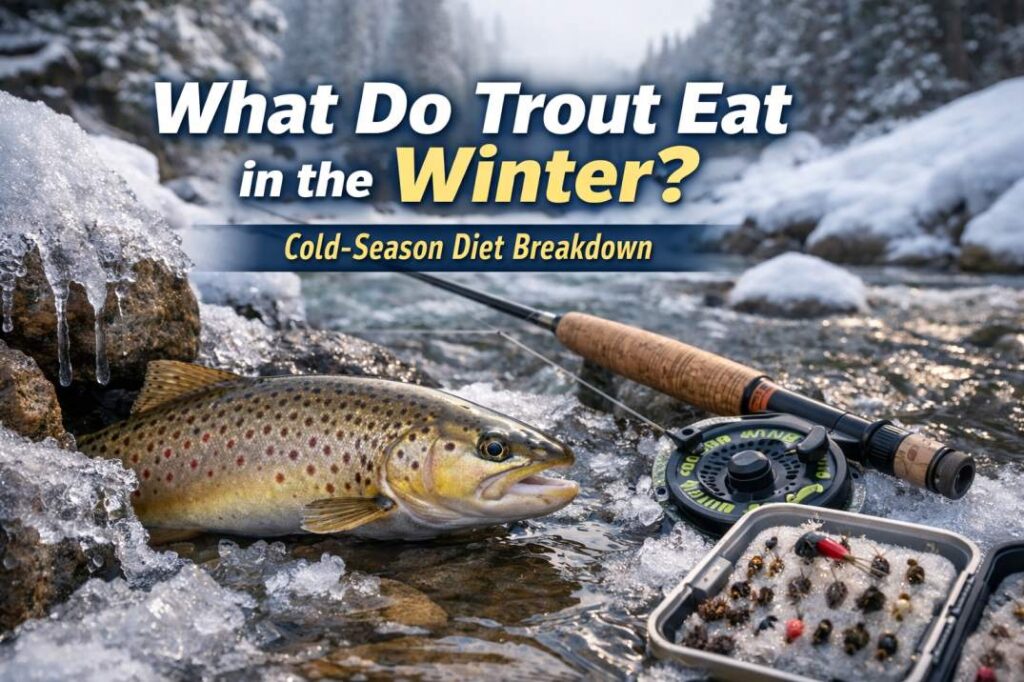
Winter often affects the diet of fish, and trout are no exception. When the water gets very cold in winter, trout completely change their feeding habits. I’ve observed over the past few years that they don’t become completely inactive, but rather they choose prey that are slow-moving, so they can conserve their energy. This means that in winter, trout follow a selective diet.
Once you understand how trout behave in winter, you’ll have a clear understanding of What Do Trout Eat in the Winter, their feeding patterns, and why certain foods become more prevalent in their diet while others almost disappear.
In this post, I’m sharing everything I’ve learned from observing trout in winter conditions – what they actually eat, how their metabolism changes, and the feeding times that matter most.
What You’ll Get in This Post ❄️🐟
- 🥶 What Do Trout Eat in the Winter?
- 🌡️ How cold temperatures change their feeding behavior
- 🌊 Where trout move when the water gets colder
- 🎣 How rainbow, brown, and brook trout differ in winter
- 📘 A helpful FAQ section for common winter diet questions
How Trout’s Feeding Habits Change in Winter
Winter and cold water change everything for trout. Their digestion, feeding frequency, and even their food choices slow down.
When the temperature in most rivers and lakes drops below 6–8°C, trout enter “energy-saving mode.” They slow down their activities.
You will observe these changes in trout during winter:
- Trout avoid fast currents in winter.
- They stay in deeper water and closer to the bottom.
- They feed for short periods when the temperature rises.
- Trout target prey that requires minimal effort to catch.
- They rely more on insects and slow-moving invertebrates.
Their winter diet isn’t about variety; it’s often more about energy conservation and efficiency. The answer to what do trout eat in the winter isn’t complicated — trout simply shift to whatever food source is easiest to catch with minimal energy.
What Do Trout Eat in the Winter?
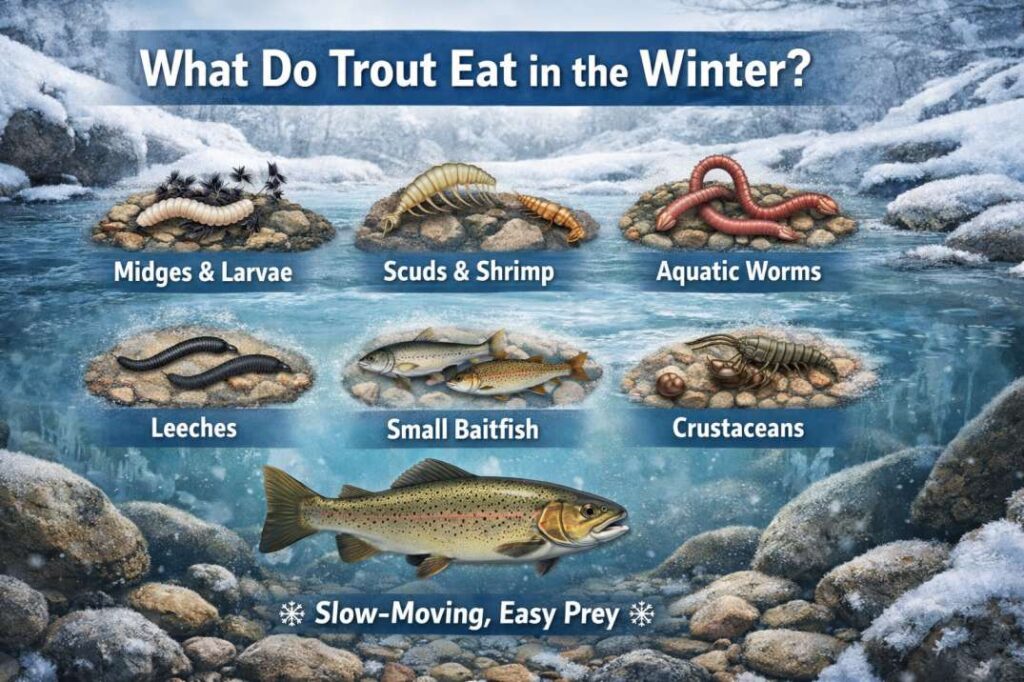
In winter, trout eat things that require minimal effort and energy to hunt. These are 7 typical creatures or items that are easily available to trout even in the extremely cold winter weather. So let’s find out what do Trout eat in the Winter.
1. Midges – The Most Reliable Winter Food
After observing dozens of streams during the winter months, I see a pattern emerge every year: midges are the best food source for trout in the winter. Their habits are the reason for this. I’ve often observed that midge activity never ceases in the winter, even in freezing temperatures; they remain active.
This makes midges a staple of the winter diet because:
- They drift throughout the day.
- They hatch even in mild weather.
- They require almost no effort to catch.
- Trout can feed on them without expending much energy.
Midge larvae and pupae are often the most readily available prey in almost every body of water during the winter. Therefore, trout can feed on them with minimal energy expenditure.
2. Winter Stoneflies – A Key Cold-Season Food
In winter, trout typically feed on organisms or things that are readily available to them, even in the extremely cold winter weather, such as stoneflies.
The unusual thing about stoneflies is that they are active in winter when almost nothing else is. Some species of stoneflies crawl on rocks or drift in the water during January-March, making them easy prey for trout.
Trout eat:
Nymphs that have been dislodged by the current
Very slow-moving larvae
Occasionally, larger insects on warmer days
These small creatures are high in protein and require little effort to catch. Therefore, they are very useful for trout when they are trying to conserve energy.
3. Black Fly Larvae – Constant Winter Drifters
Black fly larvae are common in cold streams and cling to rocks until they are dislodged. Whenever water levels change due to rain or snowmelt, these larvae are swept downstream – and trout take full advantage of this readily available food source.
They are:
- Abundant
- Easy for trout to catch
- Present in most trout streams
This makes them a reliable food source, even in the middle of winter.
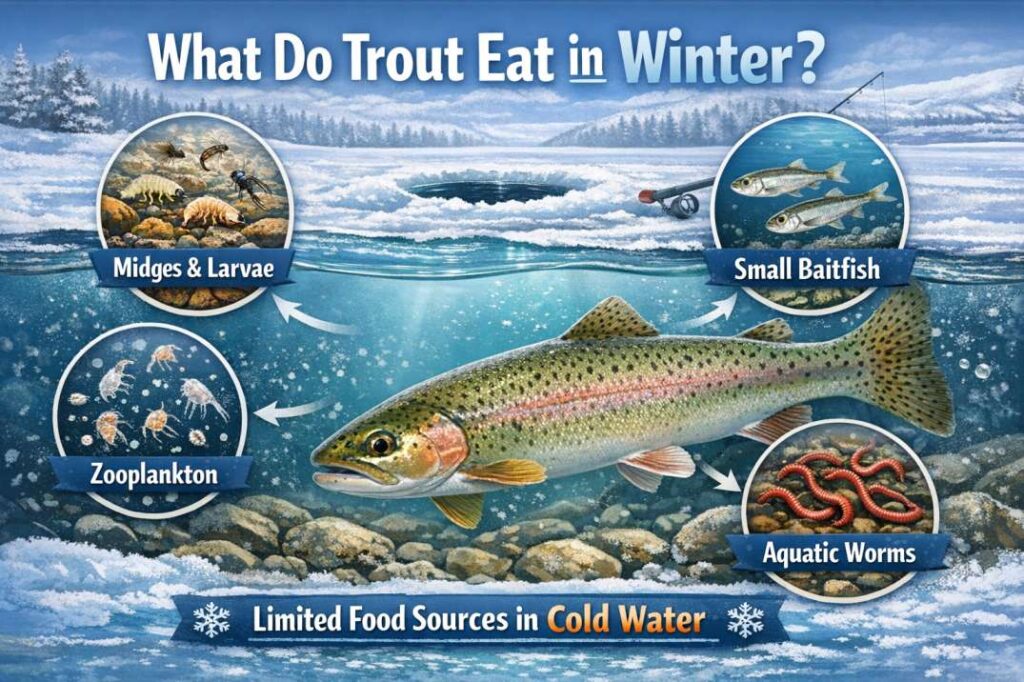
4. Scuds (Freshwater Shrimp) – High Energy in Cold Water
In lakes, tailwaters, and streams, scuds remain active even under the ice. These freshwater crustaceans are surprisingly active even when almost no other insects are present in the water. Because of their abundance and ease of capture, trout feed heavily on scuds.
Trout target scuds because:
- They are high in protein
- Their movements slow down in cold water
- They congregate in shallow, slow-moving areas
- They provide a high energy return for minimal effort
If a body of water contains scuds, they become an essential food source during the winter months.
5. Aquatic Worms and Bottom Invertebrates
Typically, during winter thaws or light rain, insects and other small organisms are washed into the water. In these conditions, trout naturally take advantage of these small, energy-rich snacks.
These include:
- Aquatic insects
- Sediment worms
- Small bottom-dwelling invertebrates
- Organic matter washed in from the banks
These are easy for the trout to consume, especially when the current increases.
6. Leeches – Slow and Easy Winter Targets
You’ve probably noticed that leeches become very sluggish in cold water, making them easy prey. Trout often feed on them in deep ponds or lakes, where the leeches live near the bottom.
Why they are important in winter:
- Leeches move slowly
- They are very nutritious
- Trout can catch them with little effort
Leeches become even more important in lakes compared to fast-flowing rivers. They are easier to hunt there.
7. Small Fish – Opportunistic Winter Meals
In winter, trout conserve their energy and therefore don’t chase fast-moving smaller fish. However, if given the opportunity, trout will readily eat the following:
- Slow-moving small fish
- Injured or sluggish fish
- Sculpin resting in cold currents
Some trout species, such as brown trout, take advantage of these conditions more effectively than rainbow or brook trout.
Where Trout Position Themselves in Winter
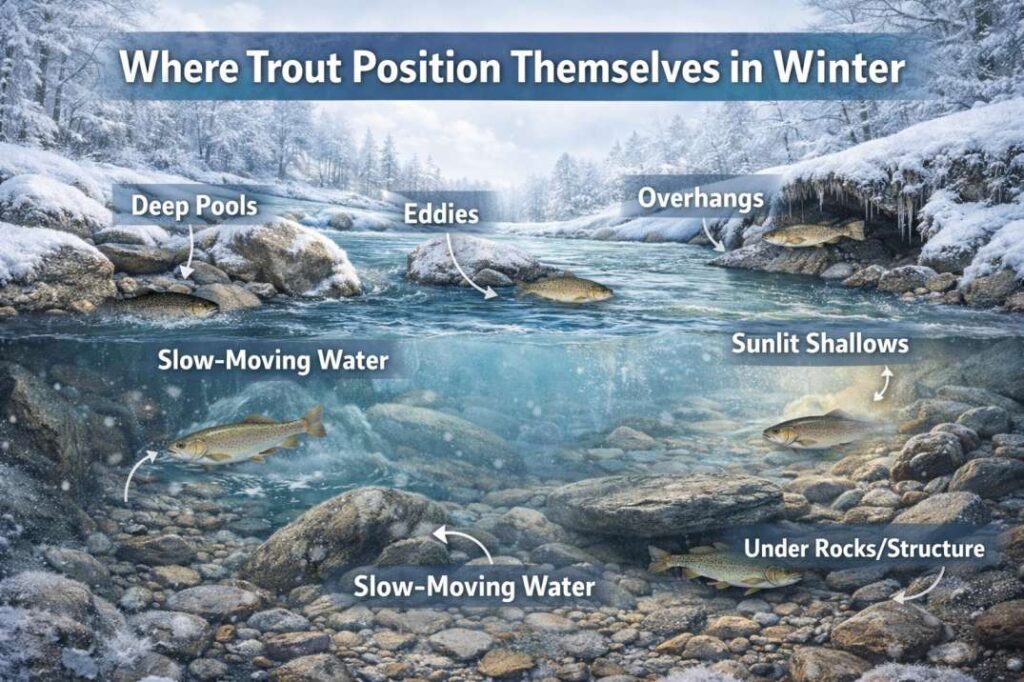
During the winter, trout move to areas where they can conserve energy and have a consistent and easily accessible food supply. When we think about what do trout like to eat in winter? The most common winter habitats for trout include:
- Deep, calm pools
- Slow-moving streams with soft bottoms
- Tailwaters
- Areas with slightly warmer water below waterfalls
- Underneath rocks, logs, and structures
- Areas protected from wind chill and with stable temperatures
These locations allow trout to feed without expending excessive energy. Therefore, trout migrate to these areas during the winter. Every location has slight variations, but the fundamentals of what do trout eat in the winter stay the same across rivers, lakes, and streams.
When do trout feed most actively in winter?
In most cold-water environments, trout feed most actively:
Whenever there’s a slight change in the weather and when the weather warms up a bit during the winter, typically between 12 PM and 4 PM. Trout prefer to feed during this time.
Even a slight increase in temperature can lead to:
- Increased insect activity and drift
- Increased mosquito activity
- Improved digestion for trout due to the sunlight
- A tendency for them to feed more frequently
This is the best time to fish for trout in winter, as they are most actively feeding during this period.
Winter Feeding Differences Between Trout Species
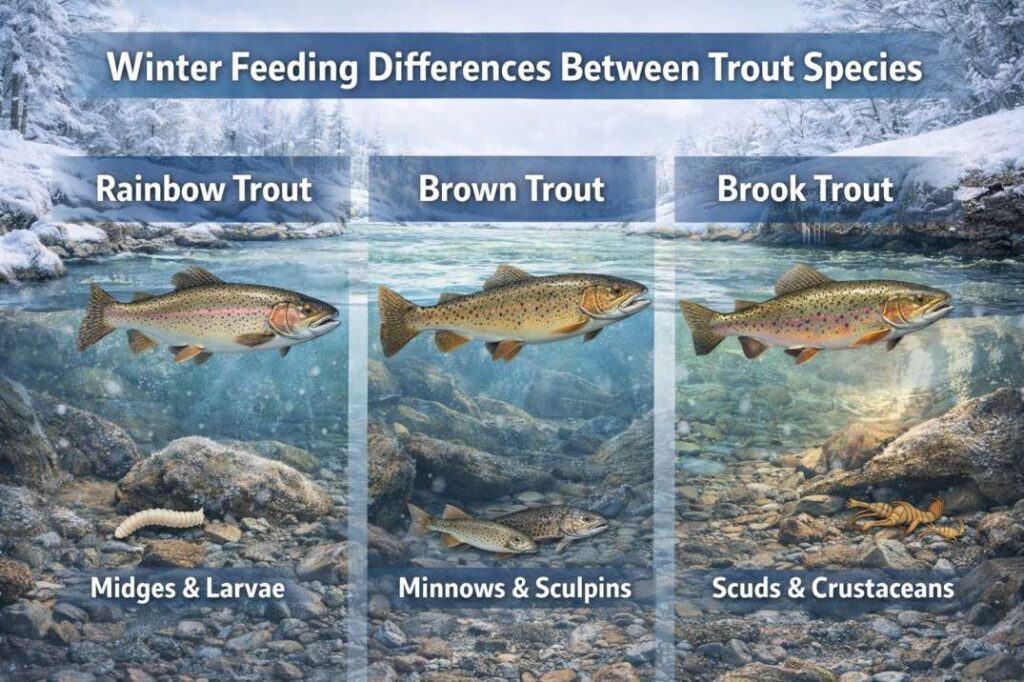
In winter, different species of trout prefer different foods. Rainbow trout, brown trout, and brook trout, for example, hunt different prey. However, there are some common elements in their diet. Anyone trying to figure out what do trout eat in the winter should start by observing how trout slow down and choose softer, easy-to-catch prey.
Rainbow Trout
- Rely heavily on drifting insects
- Stay moderately active through winter
- Feed more on midges than anything else
Brown Trout
- More likely to eat small fish
- Prefer deeper, stable zones
- Feed during consistent daytime temperatures
Brook Trout
- Thrive in colder, spring-fed systems
- Feed on insects near the bottom
- Sensitive to sudden temperature drops
Each species adapts differently depending on habitat and available food.
Most beginners think trout stop feeding, but a closer look at what do trout eat in the winter proves that they continue feeding, just more selectively.
FAQ – What Do Trout Eat in the Winter?
Do trout eat less in the winter?
Yes. They eat less frequently, but they still feed daily whenever conditions allow.
What is the #1 winter food for trout?
Midges. They are active even at very low temperatures and drift all day long.
What Do Trout Eat in the Winter before a warm front?
Before a warming trend, what do trout eat in the winter increases slightly because rising temperatures trigger more insect drift and feeding movement.
What Do Trout Eat in the Winter in most rivers and lakes?
What do trout eat in the winter mainly includes midges, scuds, aquatic worms, leeches, and slow-moving baitfish that drift naturally in cold water.
Will trout eat worms in winter?
Yes, especially after snowmelt or mild rain events that increase drift.
Do trout still eat small fish during winter?
Yes, but only when a slow or injured fish becomes an easy opportunity.
Do different trout species eat different foods in winter?
Yes. When comparing what do trout eat in the winter, rainbow trout lean more on midges, brook trout love small crustaceans, and brown trout may pursue small baitfish more aggressively.
Final Thoughts
Every winter, trout shift into a slow but predictable feeding pattern. Their diet becomes simple, their movements become limited, and their energy-saving habits take over. If you truly want to understand what do trout eat in the winter, you need to look at the small, slow-moving prey that survive cold conditions.
Once you understand the foods available in cold water—midges, stoneflies, black fly larvae, scuds, worms, leeches, and the occasional small fish—you start seeing winter trout behavior in a completely different way. Their feeding windows may be short, but trout never stop eating. They simply follow the food sources that match the cold, quiet rhythm of winter.