I’m sharing my experience with you. When I first started keeping Corydoras (Cory catfish), to be honest, I didn’t fully understand their feeding habits. This led to some negative experiences. Over time, with different tanks, different foods, and a lot of observation, I came to understand that Cory catfish thrive when you feed them the right mix of sinking foods, protein, and natural snacks.
So, this post is based on all my experiences and research. It’s my complete guide on what do Cory Catfish eat, whether in the wild, in rivers, ponds, or aquariums. I’m writing this from my personal experience so that other hobbyists can avoid the mistakes I made in my early days.
What You’ll Get in This Post 🐟
- 🏞️ What Cory Catfish eat in the wild vs in a tank
- 🍤 The complete Corydoras Catfish diet (foods I personally recommend)
- 🦐 Whether Corys eat shrimp, snails, algae, poop & betta food
- ⏱️ Feeding schedule, portion size & mistakes beginners make
- 🐠 How to Feed Cory Catfish With Other Fish?
- 📋 Cory Catfish feeding mistake to avoid
What Do Cory Catfish Eat? (Quick Answer)
When we talk about the diet of Corydoras catfish, they are omnivores. In the wild, they eat a variety of things, such as:
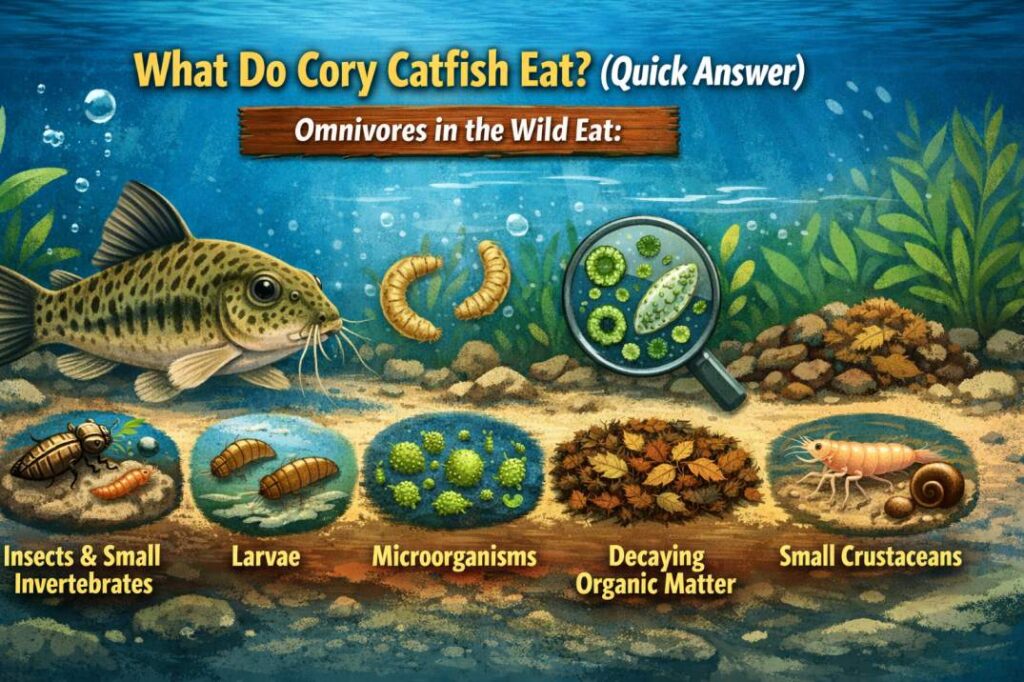
- Insects or edible small invertebrates
- Larvae
- Microorganisms
- Decaying organic matter
- Small crustaceans
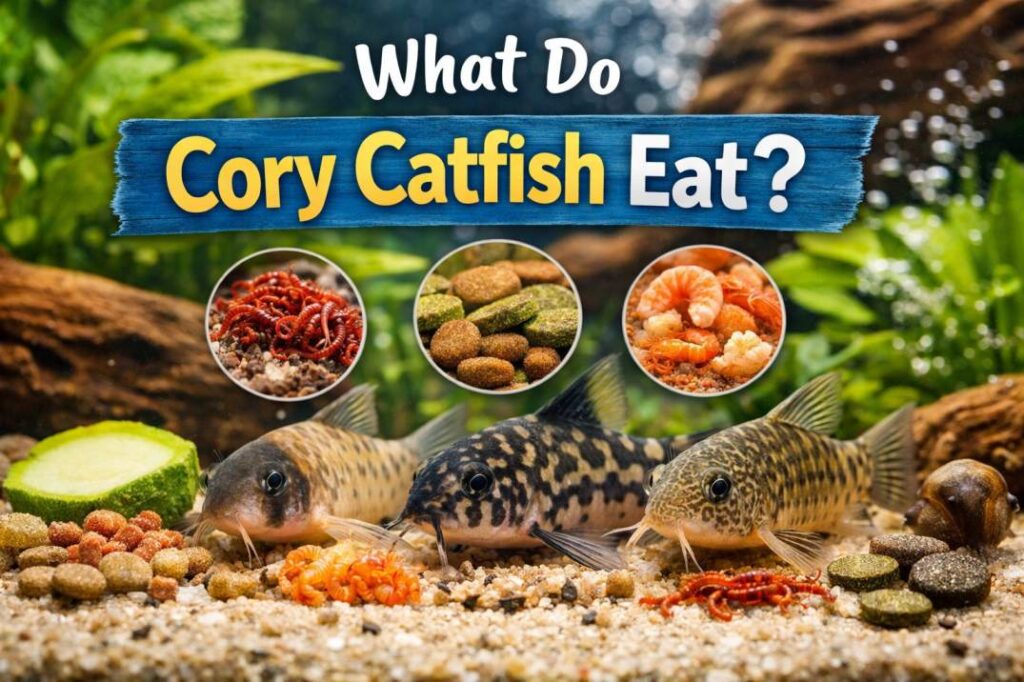
The diet of Corydoras catfish in the wild is different from what they eat in an aquarium. In an aquarium, they prefer to eat:
- Sinking pellets
- Algae wafers
- Protein-rich foods (bloodworms, brine shrimp, tubifex worms)
- Blanched vegetables
- Leftover fish food (but this shouldn’t be their main food source)
They are not algae-eating fish, so you should never consider them part of a cleaning crew like some shrimp are.
What Do Cory Catfish Eat in a Tank?
In my experience, corydoras do best with high-quality sinking food because they often stay at the bottom and rarely swim to the surface to eat. Therefore, it’s best to feed them sinking food.
Best foods for Cory Catfish in aquariums:
- Sinking Catfish Pellets (primary diet)
- Algae Wafers (occasionally)
- Shrimp Pellets
- Bug-based sinking sticks
- Frozen or Live Foods:
- Bloodworms
- Brine shrimp
- Daphnia
- Tubifex
My personal rule:
👉 Protein foods 2–3 times a week and you will see a huge difference in Cory’s energy levels and color.
What Do Cory Catfish Eat in the Wild?
Understanding their natural diet helps explain why they behave the way they do in tanks.
Being omnivores, in the wild, Corydoras catfish feed on aquatic insects, decaying matter, small crustaceans, fallen plant fragments, dead insects or larvae, and biofilm growing on surfaces.
They spend their entire day scavenging and sifting through sand, which is why soft substrate is important for their feeding behavior.
Corydoras Catfish Diet (Full Breakdown)
Many people misunderstand what do Cory Catfish eat and assume they survive on scraps, but Corys actually need intentional feeding to stay healthy.
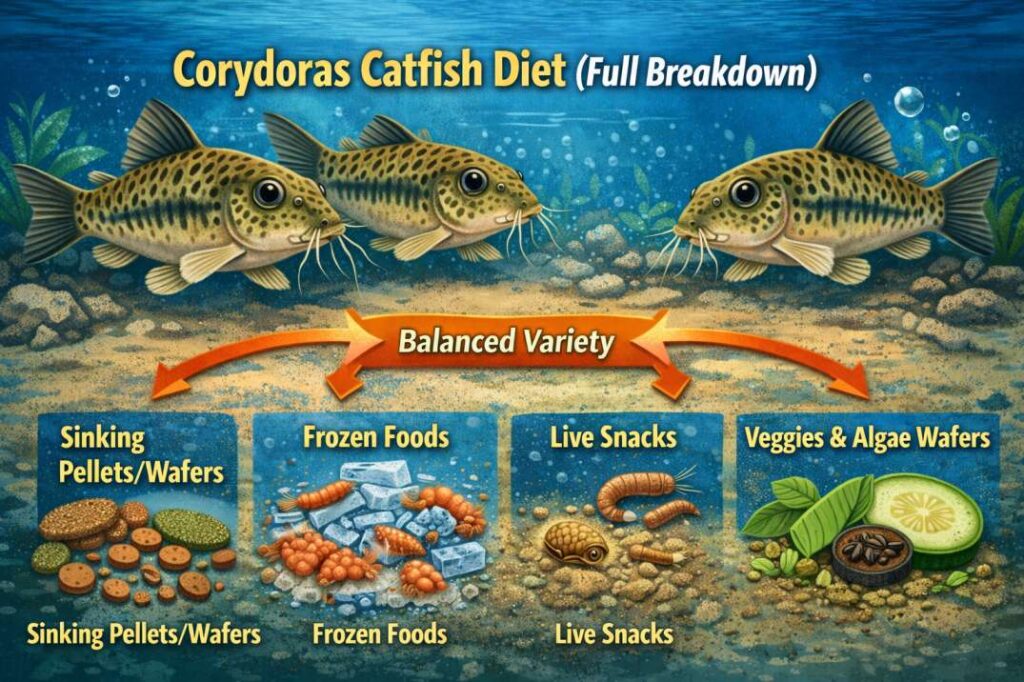
1. Daily Staple Foods
These should make up 60–70% of Corydoras diet:
- Sinking Cory Catfish pellets are best
- High-protein bottom wafers
- Insect-based sinking granules
These 3 staple foods listed above are extremely important for the growth of cory catfish. Choose brands that list fish meal, insect meal, or shrimp meal as the first ingredient.
2. Protein-Rich Foods (2–3 Times a Week)
This is the part most beginners miss. You must know Cory loves protein. Hence it should be feeded to them.
- Frozen bloodworms
- Frozen brine shrimp
- Live blackworms (if available)
- Freeze-dried tubifex or daphnia
Whenever I give Cory’s protein foods, the entire group becomes more active instantly. Whenever you feed them, you will also experience the same.
3. Occasional Veggies (Once a Week)
Corys don’t eat many vegetables, but you can try veg once in a week, they do pick at:
- Blanched spinach
- Blanched cucumber
- Blanched zucchini
Feed small portions, remove leftovers in 2–3 hours.
4. Treat Foods (Once Every 10 Days)
This is optional food. It is not required, but good for a diverse diet:
- Krill flakes crushed and sank
- Sinking community pellets
- Finely crushed spirulina
So, this is the Corydoras Catfish Diet. This will be very helpful for you. Follow this diet structure, and you will get good results.
Do Cory Catfish Eat Shrimp?
Usually, no, Cory Catfish don’t hunt healthy adult shrimp.
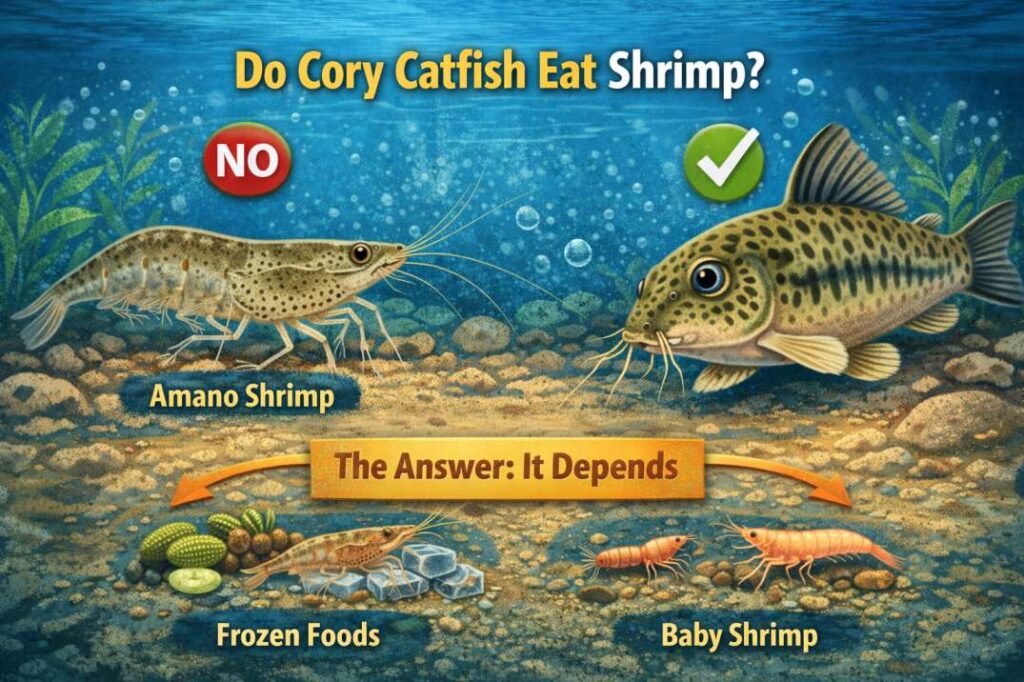
Corys are peaceful bottom-dwellers, and they are small in size and don’t have the ability to chase or attack shrimp.
✔️ Safe with adult shrimp
✔️ Sometimes eat dead shrimp
❌ May eat shrimplets accidentally
Will Cory Catfish Eat Shrimp Eggs?
Intentionally cory catfish do not eat shrimp eggs, but if shrimp eggs fall on the substrate, Corys may eat them accidentally. They never intentionally hunt shrimp for eggs, but they will eat anything tiny that resembles food. If your tank has shrimp breeding goals → keep dense moss or use a breeder box.
Do Cory Catfish Eat Snails?
Here’s my view on this, according to the eating habits of cory catfish and their size:
❌ They do NOT eat adult snails
❌ They do NOT eat nerite snails
✔️ They MAY eat newly hatched baby snails (accidentally)
Corys are not snail hunters like Loaches. Even if they think to eat snail, they are not able to do it.
Do Cory Catfish Eat Baby Snails?
Yes —Cory Catfish can eat baby Snails if tiny baby snails are on the substrate, Corys may eat them accidentally, not intentionally, just opportunistic feeding.
Do Cory Catfish Eat Algae?
👉 No, Cory Catfish do not eat algae as their diet. The idea that Cory catfish eat algae is a big misconception. A lot of hobbyists misunderstand what do Cory Catfish eat, especially when they assume Corys survive on leftover flakes or algae alone, which is not true.
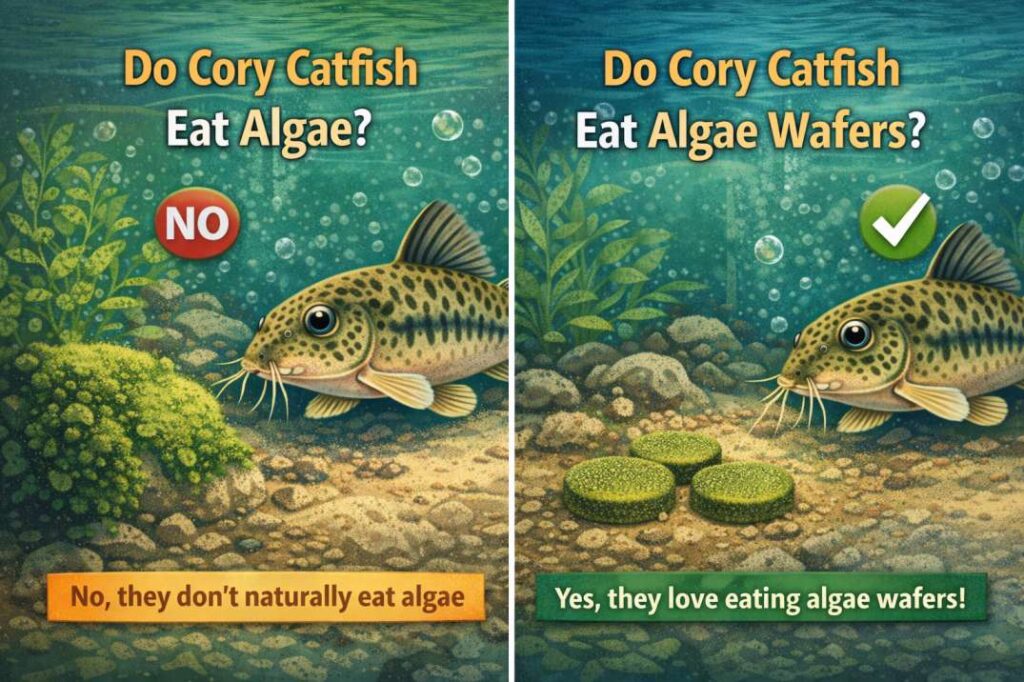
Corydoras catfish might occasionally nibble on algae wafers, but just because these wafers contain fish meal, shrimp meal, and plant matter, and soften easily, it doesn’t mean that Corydoras catfish are algae-eating fish.
Do Cory Catfish Eat Algae Wafers?
Yes — they eat algae wafers but not for the algae.
They eat them simply because the algae wafers contain plenty of spirulina, fish meal, plant protein, and binder carbohydrates, and they sink to the bottom when fed. So yes, they can eat the wafers, but not real algae. If you’re still confused about what do Cory Catfish eat as beginners, think of them as bottom feeders that need meaty foods rather than algae-heavy diets.
Do Cory Catfish Eat Fish Poop?
Absolutely NOT. Cory catfish do not eat fish poop.
Initially, many people think that Corydoras catfish eat fish poop, but this is one of the biggest misconceptions.
Corydoras may put feces in their mouths because they test everything they encounter for edibility, as they are omnivores, but they never actually eat it. They are not poop eaters. They need real food to stay healthy.
Can Cory Catfish Eat Betta Food?
Yes, can Cory Catfish Eat Betta Food, but only if the following 3 conditions are met: it reaches and sinks to the bottom, it is rich in protien and it is fed in very small quantities.
Still, betta food should be used only as a supplement, not a main diet.
Will Cory Catfish Eat Baby Guppies?
It eats very rarely and only if the baby guppy is already dead or the baby is extremely weak and lying on the bottom. Cory catfish won’t chase or hunt healthy guppy fry.
Feeding Schedule for Cory Catfish (My Proven Routine)
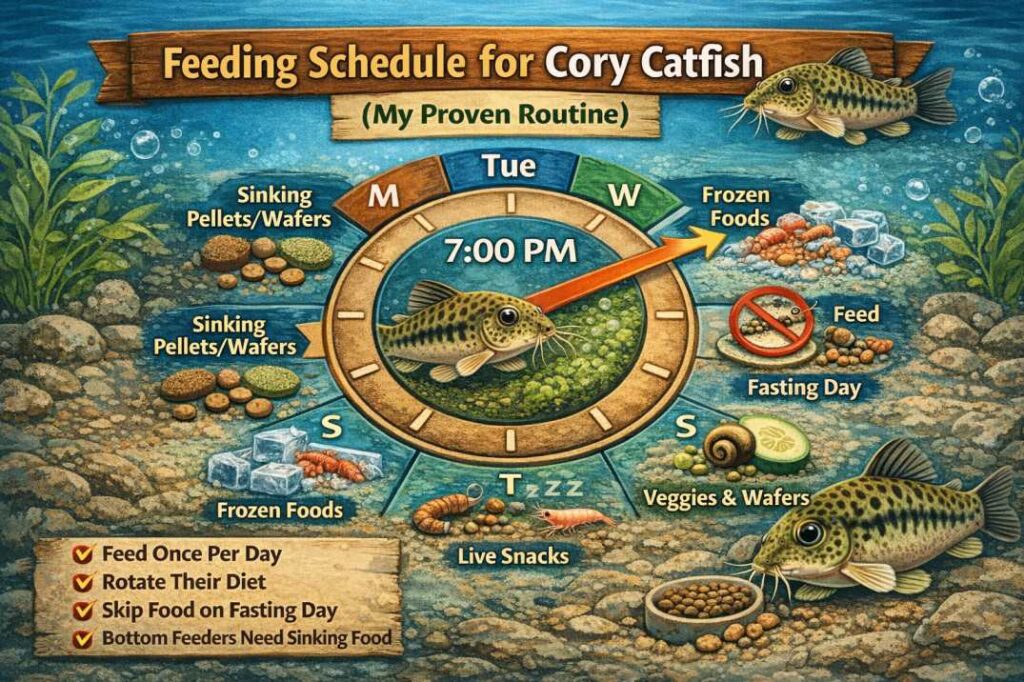
Daily Feeding
- 1–2 small pinches of sinking pellets is enough for them to finish within 2 minutes
Alternate Days
- Shrimp pellets and algae wafers
Protein Days (2–3 times weekly)
- Frozen bloodworms
- Frozen brine shrimp
Weekly
- Small veggie treat it is optional but good for variation in diet.
Monthly
- Diet variation day (krill mix, etc.)
How to Feed Cory Catfish With Other Fish
When feeding Cory Catfish in a community tank, you will need to take special feeding care. Understanding what do Cory Catfish eat is the first step toward keeping them healthy, active, and long-lived in any community tank. The key is to make sure food actually reaches the bottom. Most mid-level and top-level fish finish everything before Corys even get a chance.
I follow a simple rule: feed floating or mid-water foods first, let the other fish get busy, and then drop sinking pellets or wafers for the Corys. This prevents competition, avoids stress, and ensures your Corydoras get the balanced diet they need. Feeding after the lights dim slightly also works well because Corys naturally become more active at the bottom.
Cory Catfish Lifespan (Diet Matters!)
Cory Catfish can live:
- 5–7 years in a normal tank
- 8–10 years with an excellent diet and a soft substrate. They can survive upto 10 years if they get excellent feeding.
Poor diet shortens their life more than anything else. Feed them well, and they’ll thrive for years.
Common Feeding Mistakes Beginners Make
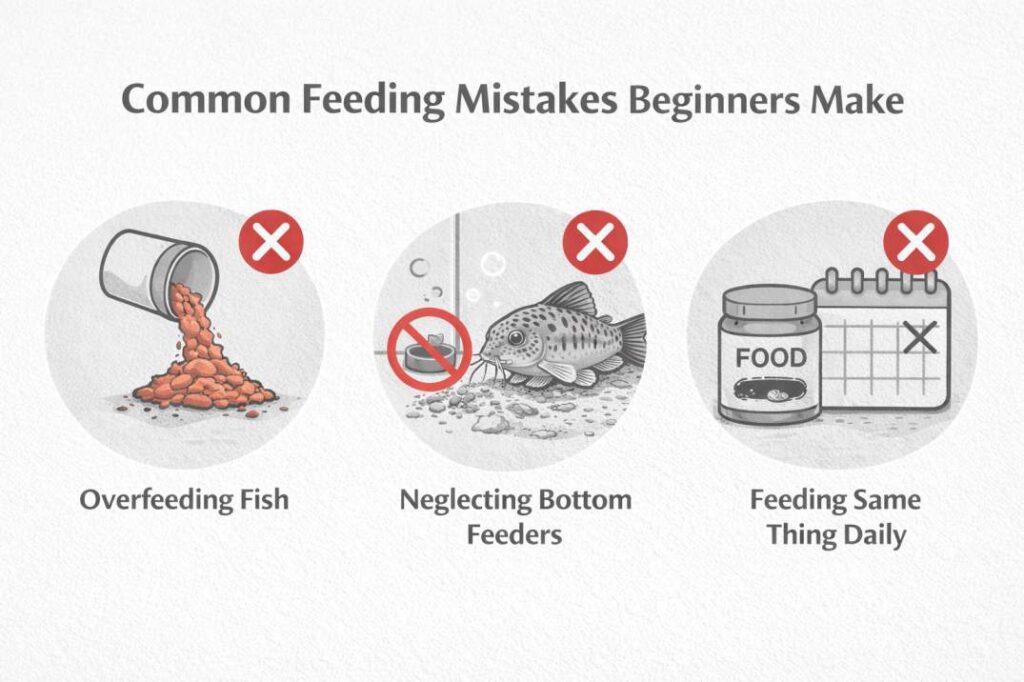
From my own early mistakes, I can say which are the common mistakes that most people make:
🔻 Using flake food as the main diet
⚠️ Not giving them sinking foods, as cory catfish are bottom feeder
🥩 Overfeeding protein
🧹 Expecting them to “clean” the tank
🪨 Keeping them on gravel (hard on their barbels)
💧 Not soaking floating foods
Corys eat best when food reaches the bottom fast. Understanding what do Cory Catfish eat helps you avoid the biggest mistake: relying only on tank leftovers instead of giving them proper nutrition.
FAQ: Cory Catfish Diet
1. Do Cory Catfish Eat Snails?
No, Cory Catfish don’t eat adult snails. They may only eat tiny baby snails by accident.
2. Do Cory Catfish Eat Shrimp or Shrimp Eggs?
They don’t eat adult shrimp. But they may eat shrimp eggs or shrimplets if they fall on the bottom.
3. Can Cory Catfish Eat Betta Food?
Yes, they can eat it if it sinks, but it should not be their main food.
4. Do Cory Catfish Eat Algae or Algae Wafers?
They don’t eat algae. They eat algae wafers only because they contain fish and shrimp meal.
5. What do Cory Catfish eat in a normal home aquarium?
Cory Catfish eat sinking pellets, shrimp wafers, algae wafers, frozen bloodworms, and soft plant-based foods that reach the bottom quickly.
6. What do Cory Catfish eat in the wild?
In the wild, Cory Catfish eat insects, larvae, detritus, tiny crustaceans, and organic matter found on the riverbed.
My Final Thoughts
Cory Catfish are one of the easiest and happiest fish to care for — when you feed them the right diet. I’ve noticed they stay healthier, more active, and more social when given sinking foods + occasional protein boosts.
If you’re keeping Corys for the first time, stick to this guide, and you’ll see the difference within a week.