When trout are feeding both on the surface and just below it, what do you do? How do you catch them? Do you choose a dry fly or a nymph? This is where the dry dropper rig becomes one of the most effective fly fishing setups you can use.
The beauty of the dry dropper rig is that it allows you to fish at two different depths simultaneously without constantly changing your rig.
The dry dropper rig is widely used by trout anglers because it’s simple, versatile, and highly effective in rivers and streams. Once you understand how it works and how to set it up correctly, it quickly becomes a favorite fly fishing rig. If you’re confused about fly fishing, this guide clears it up step by step.
📌 What You’ll Get in This Post
- 🎣 What a dry dropper rig is and how it works
- 🪢 A complete dry dropper rig setup (leader, tippet, spacing)
- 🧵 Step-by-step instructions on how to tie a dry dropper rig
- 🐟 When a dry dropper rig works best for trout
- ⚠️ Common mistakes anglers make—and how to avoid them
What Is a Dry Dropper Rig?
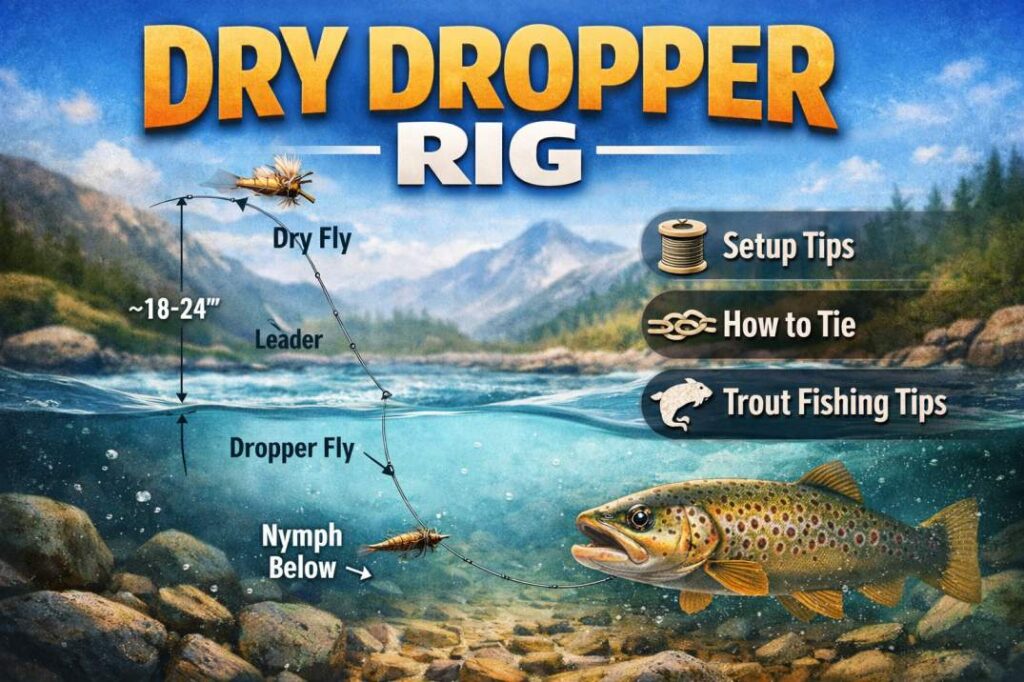
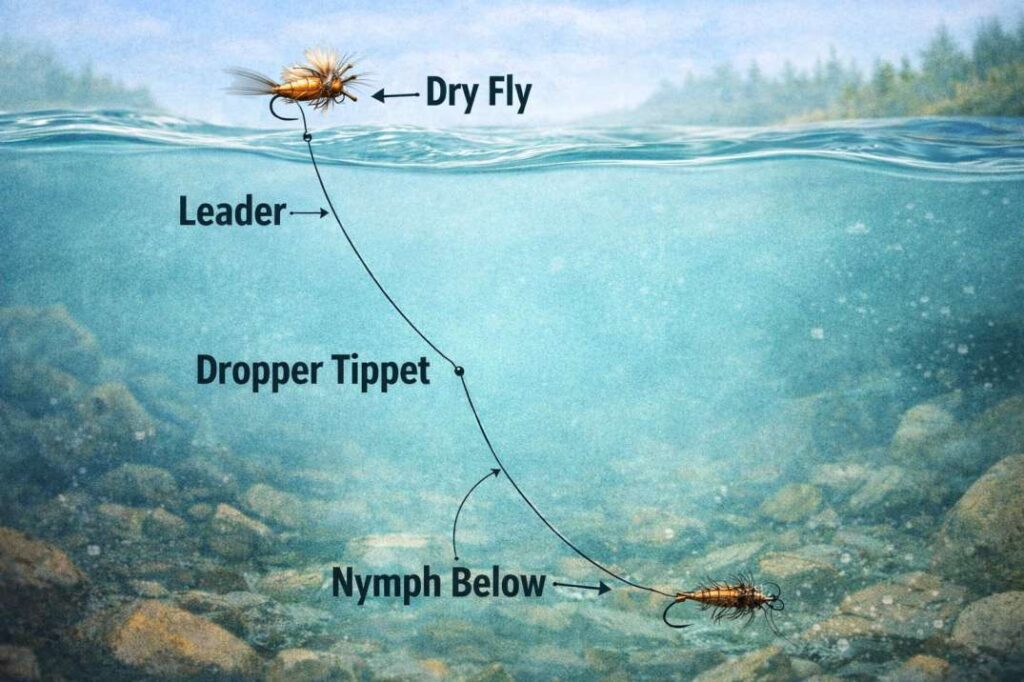
Let’s talk about the dry dropper rig. This rig is a fly fishing setup that uses two flies on a single leader. The first fly is a dry fly that floats on the surface, while the second fly—called the dropper—is a nymph or emerger tied below the dry fly.
The dry fly serves two purposes. It imitates a surface insect, and it also acts as a visual strike indicator for the dropper fly below. When a trout eats the subsurface fly, the dry fly will twitch, pause, or suddenly disappear.
Because of this design of two fly, the setup is also commonly called a dry fly dropper rig.
How a Fly Fishing Dry Dropper Rig Works
To understand how this rig works, we first need to understand trout behavior. Trout don’t always feed at the same depth. Some trout feed on insects at the surface, while others feed on nymphs drifting in deeper water. This is where the fly fishing rig comes in, targeting fish at both depths simultaneously.
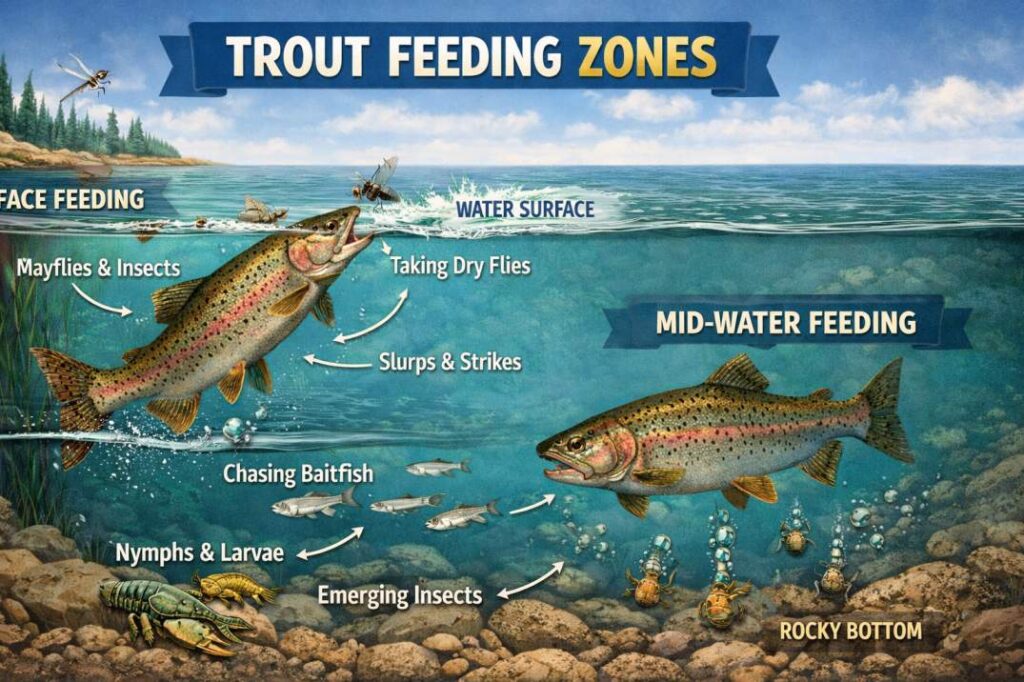
As the rig drifts naturally:
- The dry fly floats on the water’s surface.
- The dropper fly drifts below in the current.
- Any movement on the dropper fly is detected by the movement of the dry fly.
This dry-dropper rig, drifting naturally underwater, is particularly effective in riffles, seams, and broken water, where trout take advantage of the current to feed.
Dry Dropper Rig Setup (Leader, Tippet, and Spacing)
As you know, a properly set-up dry dropper rig improves your casting, drift quality, and strike detection. Here are some important considerations:
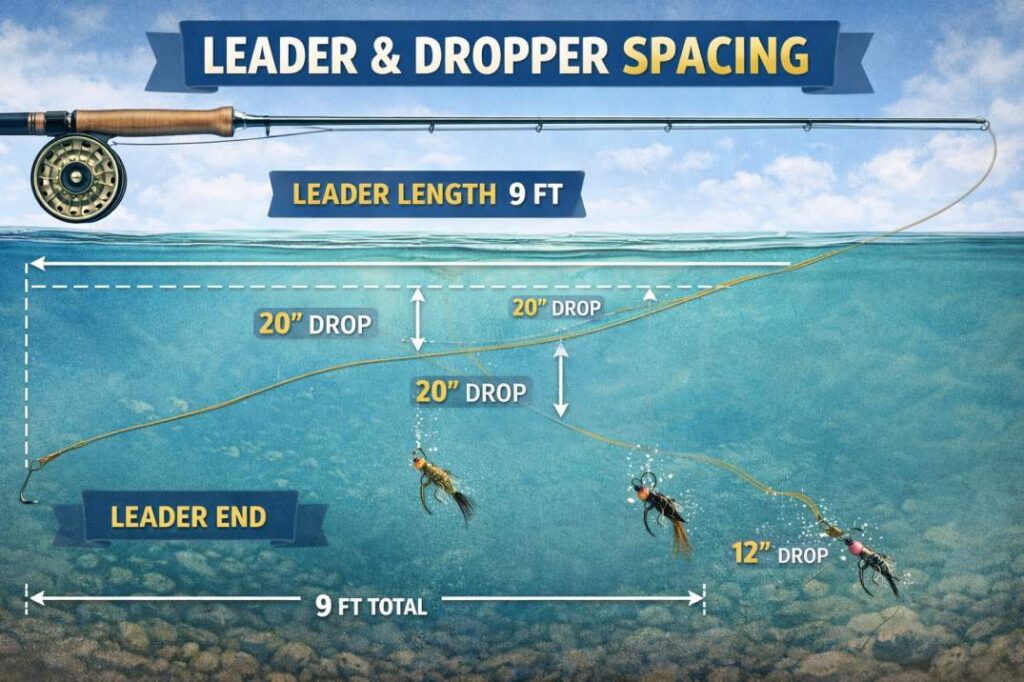
Leader Length
You’ll find that most anglers use a 9-foot leader. However, in still and clear water, a 10 or 12-foot leader can be advantageous.
Tippet Size
When tying on your flies, keep in mind that dry flies are typically tied with 4X or 5X tippet, and the dropper fly is usually tied with a lighter tippet, such as 5X or 6X, to allow it to move naturally.
Dropper Length
The length of the dropper depends on the water depth:
- In shallow water: 8–12 inches
- In medium-depth water: 16–20 inches
- In deeper and faster water: 24 inches or more
The correct dropper length helps prevent tangles and ensures the fly is in the feeding zone.
How to Tie a Dry Dropper Rig (Step-by-Step)
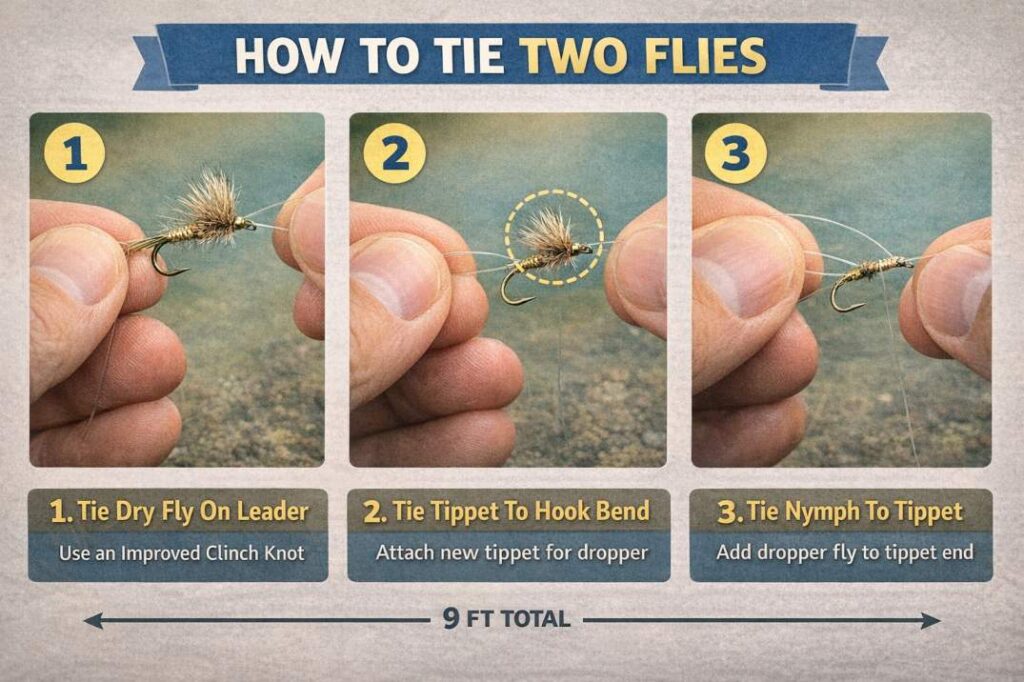
Think of tying a dry dropper rig as simply tying two flies correctly. Learning this involves mastering three easy steps that even many beginners can accomplish.
First, tie your dry fly to the end of your leader using a strong, reliable knot such as the Improved Clinch Knot or the Davy Knot. Many anglers leave a small tag end when tying on the dry fly.
Second, attach a section of tippet for the dropper fly. This can be tied either to the bend of the dry fly hook or to the tag end of the dry fly knot. Tying it to the hook bend is the most common and easiest method.
Finally, tie the nymph or emerger to the free end of the dropper tippet. This simple method of tying a dry dropper rig setup is widely used because it is reliable and easy to adjust on the water.
Adjustable Dry Dropper Rig (Advanced Option)
If we make the second fly of the dry dropper rig, the dropper fly adjustable, it will save us from having to re-tie the rig. We can do this using loop knots, sliding tippets, or micro swivels.
This modified rig is called the adjustable dry dropper rig. This setup has both advantages and disadvantages. For example, it’s good for taking advantage of varying water depths. However, conversely, if it’s not set up correctly, it can affect the drift. Therefore, in my opinion, if you are new to using this rig, avoid it and stick to the basic rig.
Dry Dropper Rig for Trout – When It Works Best
The dry dropper rig for trout becomes especially effective when trout are feeding erratically at different water levels.
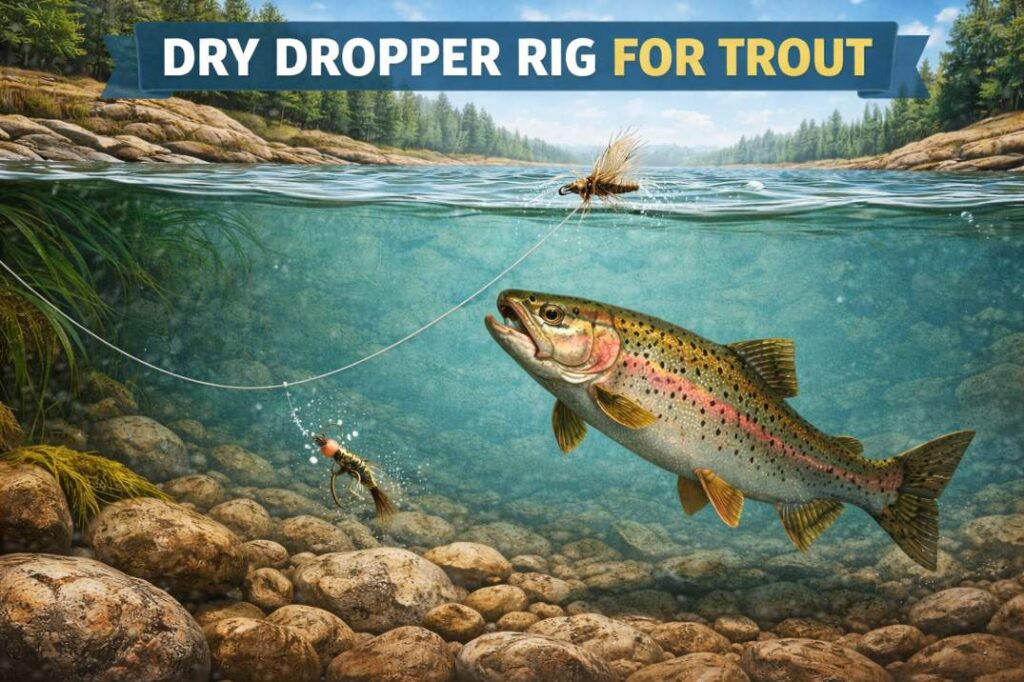
This rig is especially effective:
- During spring and summer
- In streams and small rivers
- When insects are hatching or emerging
If you see occasional surface rises but not consistent dry fly action, the dry dropper rig is often the perfect solution.
Common Dry Dropper Rig Mistakes to Avoid
The first and most common mistake is using a dry fly that’s too small to support the weight of the dropper fly. If the dry fly sinks, the entire rig becomes ineffective.
Another problem is using a dropper that’s too long, which often leads to tangles during casting. Choosing the wrong tippet strength can also result in unnatural movement or frequent line breakages.
Keeping the setup balanced is key to success.
Dry Dropper vs Indicator Rig
The dry dropper rig and indicator rig both target subsurface fish, but they behave differently in the water.
A dry dropper rig offers a more natural presentation and causes less disturbance in clear or shallow water. An indicator rig is easier to see at long distances and works better in deep or fast water.
In many trout streams, the dry dropper rig provides a more subtle and effective presentation.
💡 FAQs:
1. What is a dry dropper rig?
A dry dropper rig combines a floating dry fly with a nymph below, letting anglers fish both surface and subsurface zones at the same time.
2. How do I tie a dry dropper rig?
Tie a dry fly to the leader, attach a tippet for the dropper fly, then tie your nymph or emerger to the end. Adjust the dropper length for water depth.
3. Which dry fly works best as a dry dropper fly?
A dry dropper fly should be buoyant enough to support the dropper. Larger attractor or foam-bodied flies work best.
4. Can beginners use a dry dropper rig?
Yes, it’s beginner-friendly. You can cover multiple depths at once and watch for strikes through the dry fly.
Final Verdict: Is the Dry Dropper Rig Worth Using?
Yes. The dry dropper rig is one of the most versatile and effective fly fishing rigs for trout. It allows anglers to cover different depths, multiple feeding zones, detect subtle strikes, and adapt quickly to changing conditions.
For fly anglers who want a simple yet powerful setup, mastering the dry dropper fly rig is an essential skill.