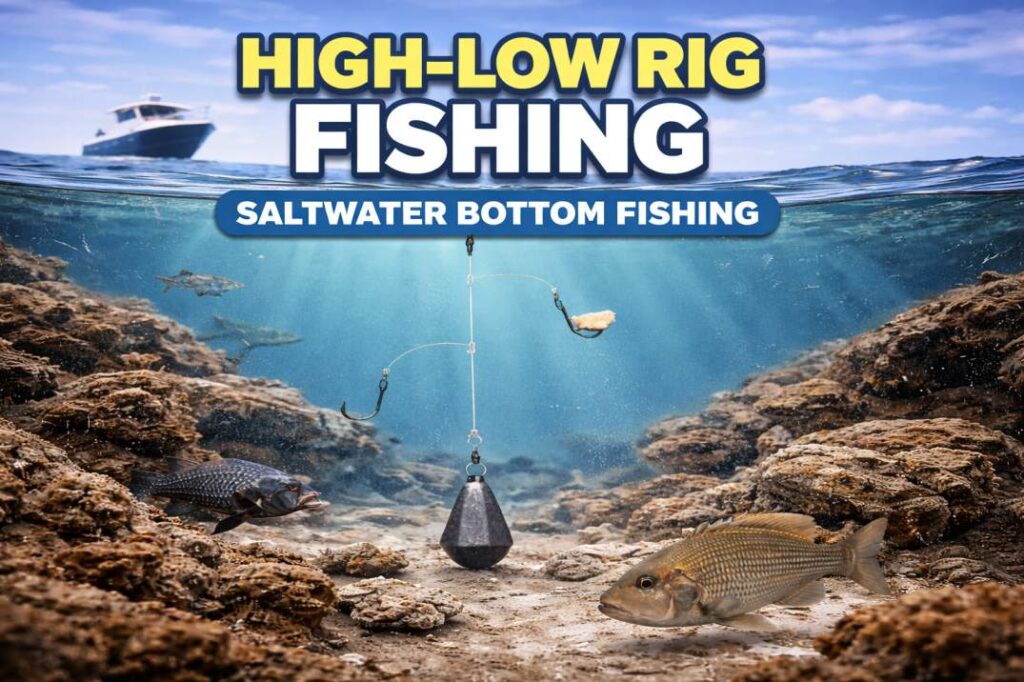
The high-low rig setup is one of the most reliable and proven setups for targeting fish like black sea bass, porgy, tautog, snapper, and flounder—especially when you want to get more bites in less time.
Whether you’re fishing reefs, wrecks, rocky bottoms, or offshore structures, learning how a hi-lo rig setup can significantly increase your catch rate.
In this easy-to-follow guide for beginners, you’ll learn what a high-low rig is, how to tie it step by step, when to use it, and why it works so well for saltwater bottom fishing.
🎣 What You’ll Learn in This Post
In this complete guide to Hi-Lo rig setup for saltwater bottom fishing, you’ll learn:
- 🪝 What a Hi-Lo rig is and how it works for bottom fishing
- 🧵 Step-by-step instructions to tie a Hi-Lo rig correctly
- 🐟 What Is High Low Rig Fishing?
- 🦑 Best baits for Hi-Lo rig fishing in saltwater
- ❌ Common mistakes beginners should avoid
- 💡 Pro tips to catch more fish using a Hi-Lo rig
By the end of this post, you’ll know exactly how to set up and fish a Hi-Lo rig with confidence in real saltwater conditions.
What is a High-Low Rig?
A high-low rig (also known as a high-low rig or double dropper rig) is a fishing rig that features a sinker with two hooks attached above it, one higher and one lower. This is why it’s called a high-low rig.
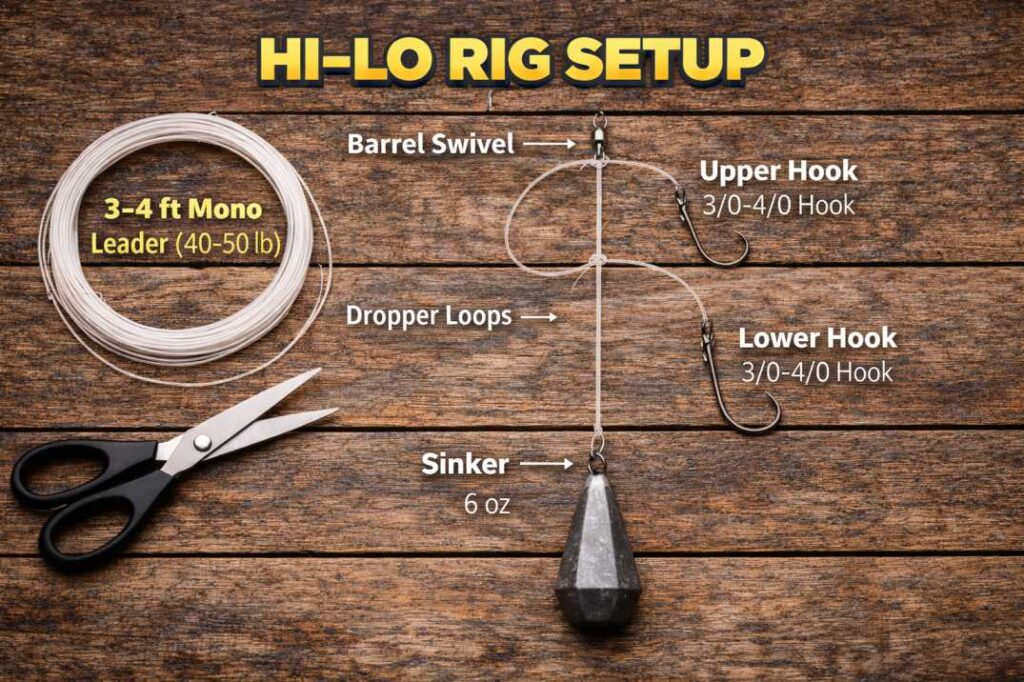
The high-low rig is a classic saltwater bottom fishing rig. This design allows anglers to present bait slightly above the seabed while still maintaining strong contact with the bottom.
Advantages of this high-low rig setup:
- The opportunity to fish with two baits at different depths.
- The ability to target multiple fish species simultaneously.
- Specifically, it allows you to cover the feeding zone just above the seabed where many species feed.
What Is High Low Rig Fishing?
High-low rig fishing is a saltwater bottom fishing method that uses two hooks positioned above a sinker to present bait at different heights near the seafloor. This setup allows anglers to target vast bottom-feeding species such as black sea bass, porgy, and tautog while maintaining solid contact with reefs, wrecks, and rocky structure. Because the bait stays slightly off the bottom and moves naturally in the current, high-low rig fishing is highly effective in both shallow and deep saltwater conditions.
Why the Hi-Lo Rig Works So Well for Bottom Fishing
The Hi-Lo rig Setup is extremely effective because it targets exactly the bottom fish that naturally feed.
Key advantages:
- Keeps bait just above snags
- This allows fish to see and smell bait easily
- Reduces missed bites
- Works in both shallow and deep water
Bottom-feeding fish like sea bass and porgies often move slightly above the seabed, making the Hi-Lo rig a perfect presentation.
When Should You Use a Hi-Lo Rig?
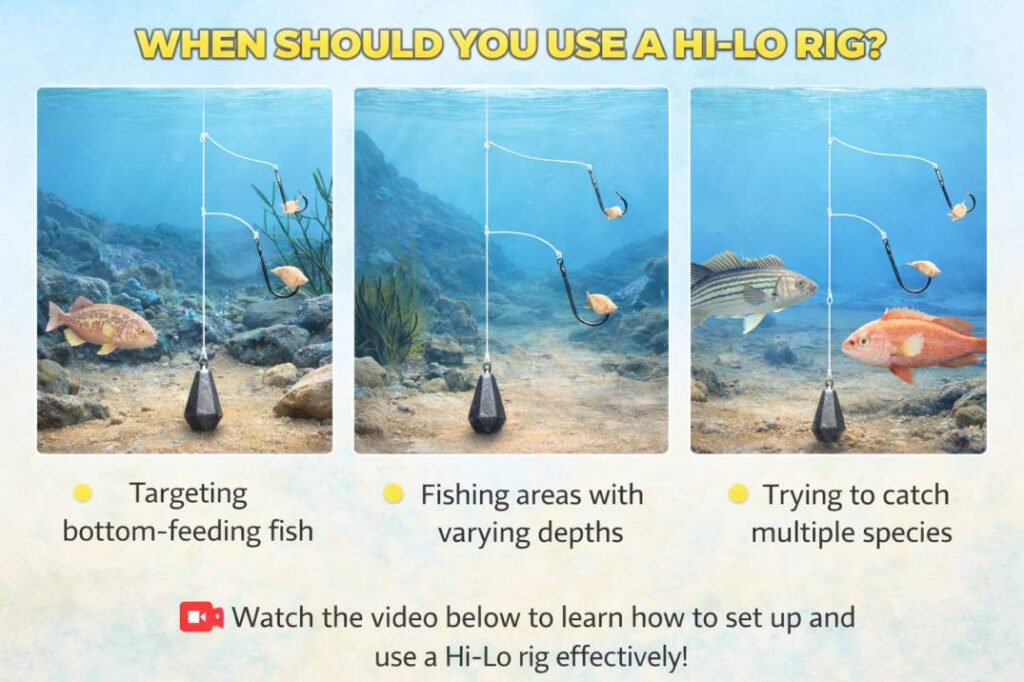
The Hi-Lo rig setup shines in these situations:
- Fishing over reefs and wrecks
- Fishing at the seabed, the bottom of the water
- Rocky or hard bottom areas
- Vertical fishing from boats or piers
- Drifting structure in moderate current because the sinker at the bottom is very effective in such conditions
It is especially effective when fish are schooling near the bottom.
High-Low Rig Setup: What You’ll Need
Gather these items to complete this rig setup:
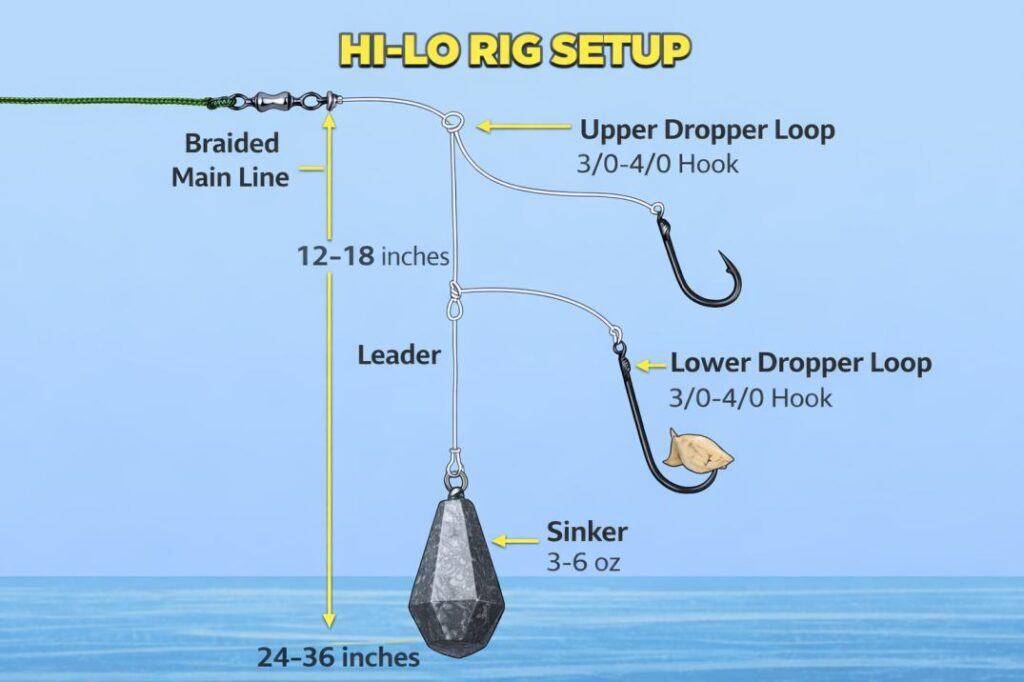
- Hooks: 3/0–5/0 circle hooks or bait holder hooks
- Leader Line: 30–50 lb monofilament
- Sinker: 4–10 oz bank or pyramid sinker (depending on current)
- Main Line: Braided line is best for sensitivity
- Swivels and Beads: Optional, but helpful in strong currents
Using a heavier leader helps prevent line breakage around structure.
How to Tie a Hi-Lo Rig (Step-by-Step)
Follow these 5 steps carefully, and trust us, you will successfully tie a high-low rig. You will achieve great results with it.
Step 1: Cut the Leader
Cut a 3–4 foot section of monofilament leader line.
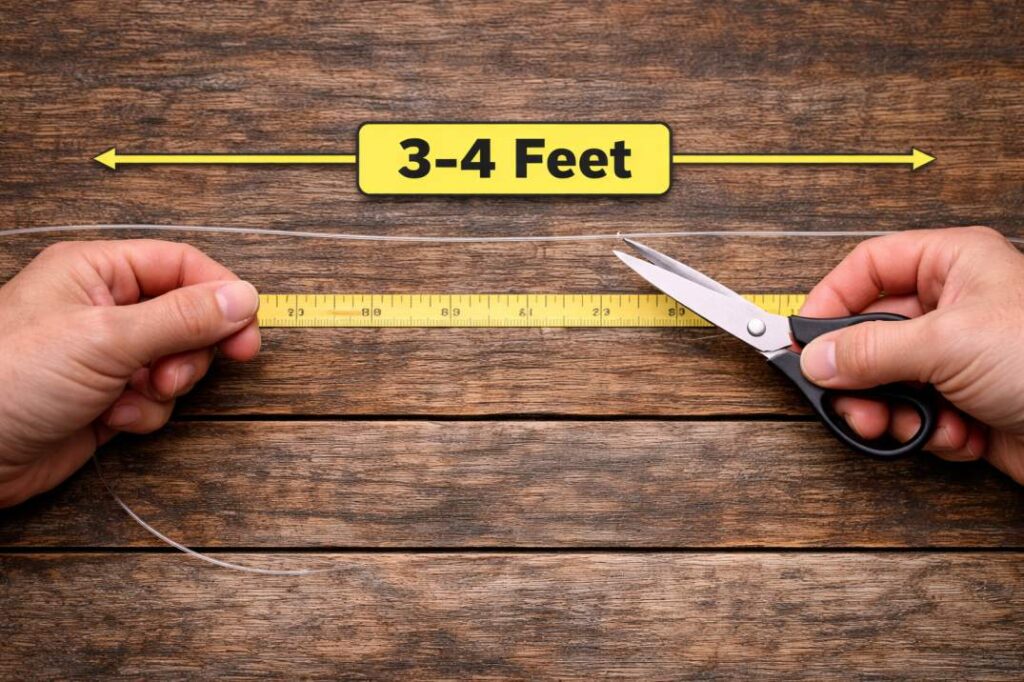
Cut a strong monofilament or fluorocarbon leader line (approximately 3–4 feet long) so that there is sufficient length to tie two evenly spaced dropper loops while still keeping the rig uncluttered, leaving room for the swivel at the top and the sinker at the bottom.
Step 2: Tie the Bottom Sinker Loop
At one end of the leader, tie a loop knot or attach a snap swivel for your sinker.
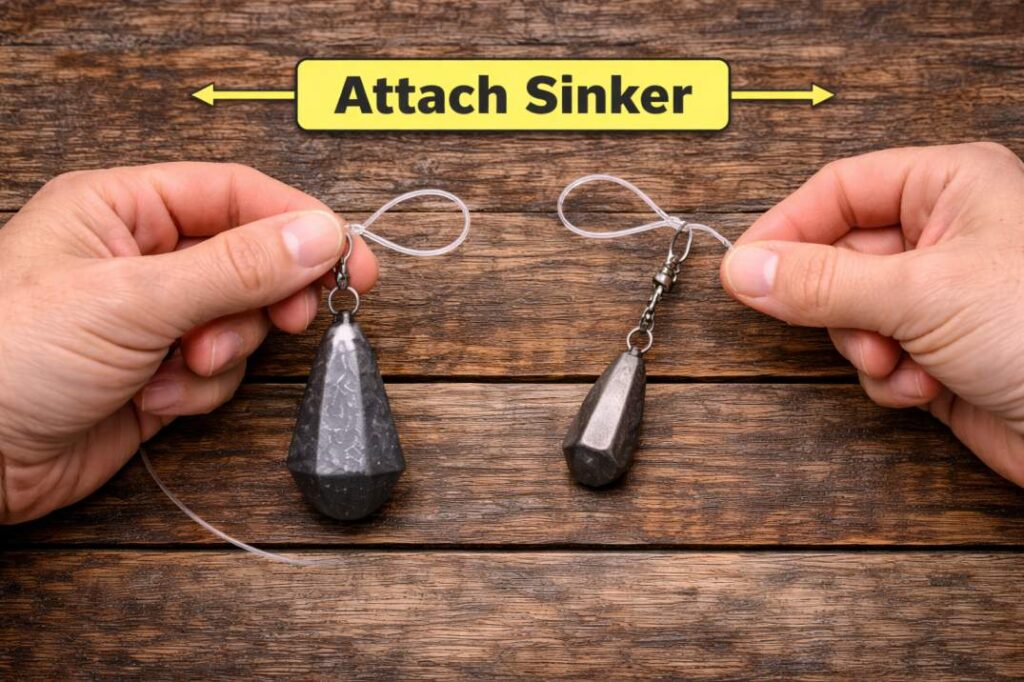
Tie a strong loop at the end of the leader using a dropper loop or surgeon’s loop, large enough to securely attach the sinker and allow it to swivel freely. This keeps the rig vertical and stable on the bottom.
Step 3: Create the Lower Dropper Loop
About 12 inches above the sinker, tie a dropper loop and attach your first hook.
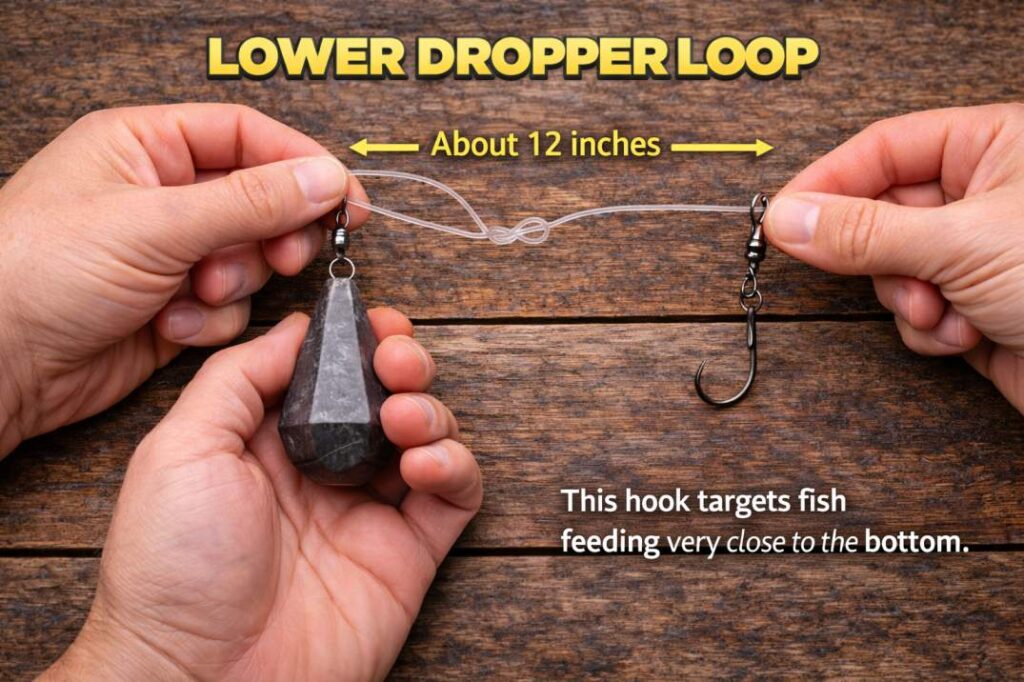
About 12 inches above the sinker, tie a dropper loop in the leader and then attach your first hook, making sure the loop stands out from the line so the bait sits just off the bottom. This is your first hook near the seabed. This hook targets fish feeding very close to the bottom.
Step 4: Create the Upper Dropper Loop
Move another 12–18 inches up and tie the second dropper loop with your upper hook.
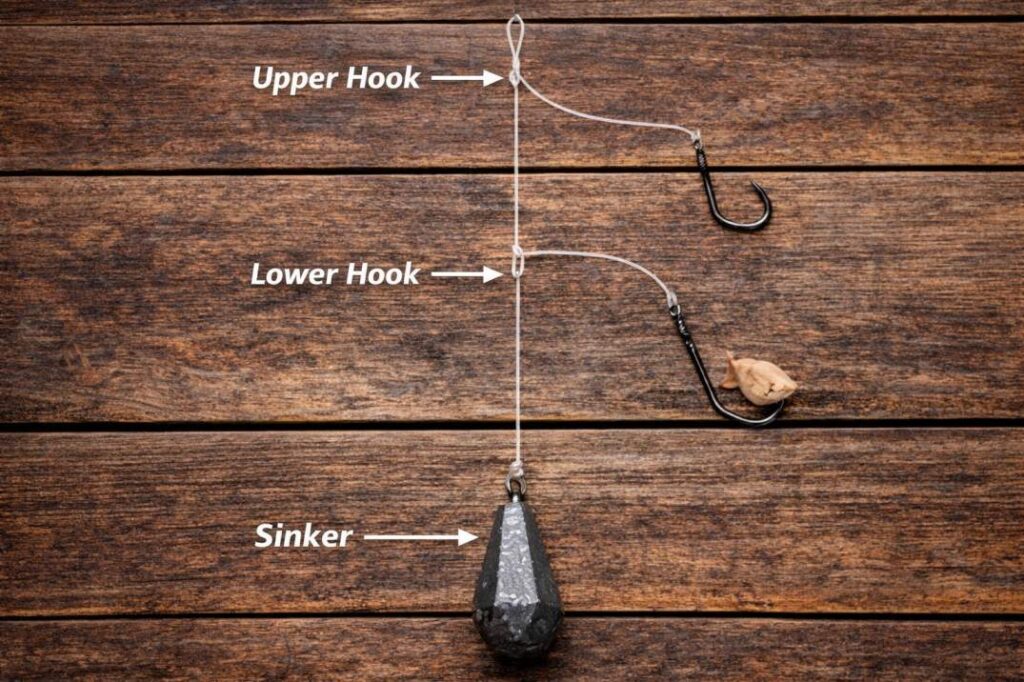
Move 12–18 inches above the lower loop and tie a second dropper loop, then attach the upper hook so it sits higher in the water to target fish feeding off the bottom. This hook often catches fish swimming slightly higher off the bottom.
Step 5: Attach to Main Line
Tie the top of the leader to a barrel swivel, then connect it to your braided main line.
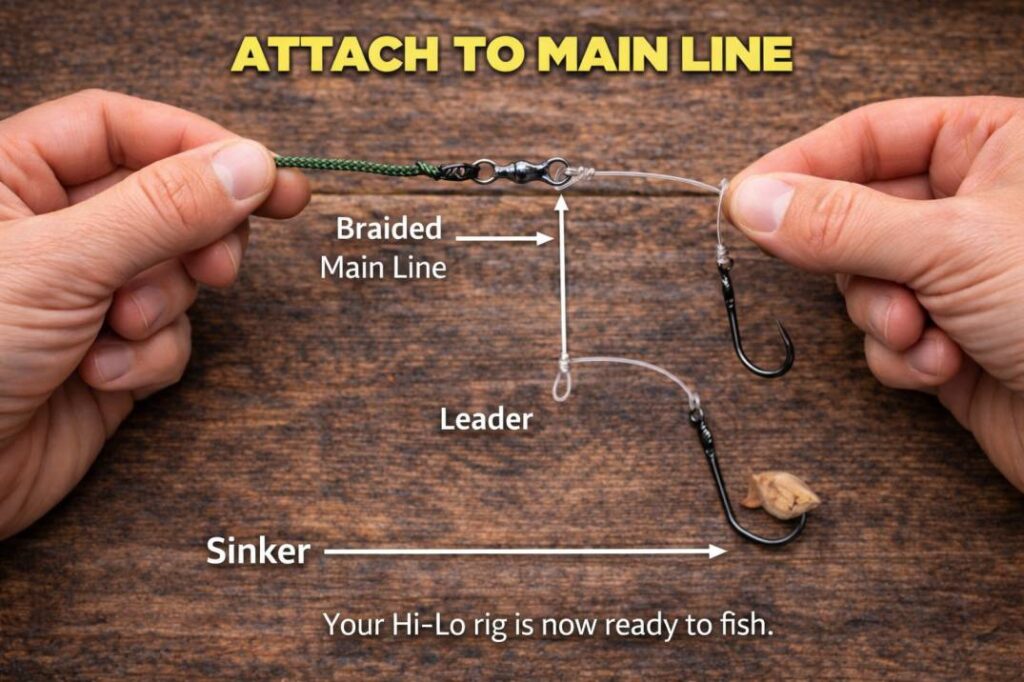
Your Hi-Lo rig is now ready to fish.
🎥 Want to see this rig tied step by step?
Watch the short video below to understand the Hi-Lo rig setup clearly, especially the dropper loop spacing and hook placement.
Best Baits for a Hi-Lo Rig
Natural and fresh bait works best with this rig. Popular options include:
- Squid strips
- Cut clams
- Shrimp
- Sandworms
- Small baitfish chunks
Fresh bait significantly increases bites when bottom fishing.
What Fish Can You Catch With a Hi-Lo Rig Setup?
The high-low rig setup is very versatile and works exceptionally well for bottom-dwelling and structure-oriented fish such as black sea bass, porgy (scup), tautog, snapper, flounder, and triggerfish. Many anglers rely on this rig, especially for black sea bass fishing, as it consistently produces good results in deep water near the bottom.
Hi-Lo Rig vs Fish Finder Rig
Both rigs are excellent, but they serve different purposes.
Hi-Lo Rig Setup:
- Two hooks
- Best for structure fishing
- Great for smaller to medium-sized bottom fish
Fish Finder Rig Setup:
- Single hook
- Sliding sinker
- Better for larger, cautious fish
If you want to maximize action and catch numbers, the Hi-Lo rig is hard to beat. This is one of the best rig setup that angler uses.
Hi-Lo Rig Setup Mistakes to Avoid
Beginners often make these mistakes:
- Using a leader that is too light
- Hooks are placed too close together
- Sinkers too light for the current, it will hover more
- Fishing directly inside heavy snags
Adjust sinker weight and increase leader strength based on conditions.
Tips for Using a Hi-Lo Rig Setup Successfully
- Keep the line tight but not dragging
- Lift and drop the rig gently to attract fish
- Use circle hooks to reduce gut-hooking
- Rebait frequently to keep scent fresh, which will increase the success rate
Small adjustments can make a big difference in high-low rig fishing.
Frequently Asked Questions (FAQ)
Is a Hi-Lo rig good for beginners?
Yes. It’s simple to tie, easy to fish, and very good for new anglers.
Can you use a Hi-Lo rig from shore?
Yes, especially from piers, jetties, and rocky shorelines with vertical access, you can use a hi-lo rig setup.
How deep can you fish a Hi-Lo rig?
Anywhere from shallow water to 100+ feet, as long as sinker weight matches current.
Does a Hi-Lo rig tangle easily?
When tied properly and fished vertically, tangles are minimal.
Final Verdict: Is the Hi-Lo Rig Worth Using?
Absolutely. The Hi-Lo rig is one of the most effective saltwater bottom fishing rigs ever created. Its simplicity, versatility, and proven results make it a must-learn setup for beginners and experienced anglers alike.
If you fish reefs, wrecks, or rocky bottoms and want consistent action, mastering the Hi-Lo rig setup will instantly improve your success on the water.