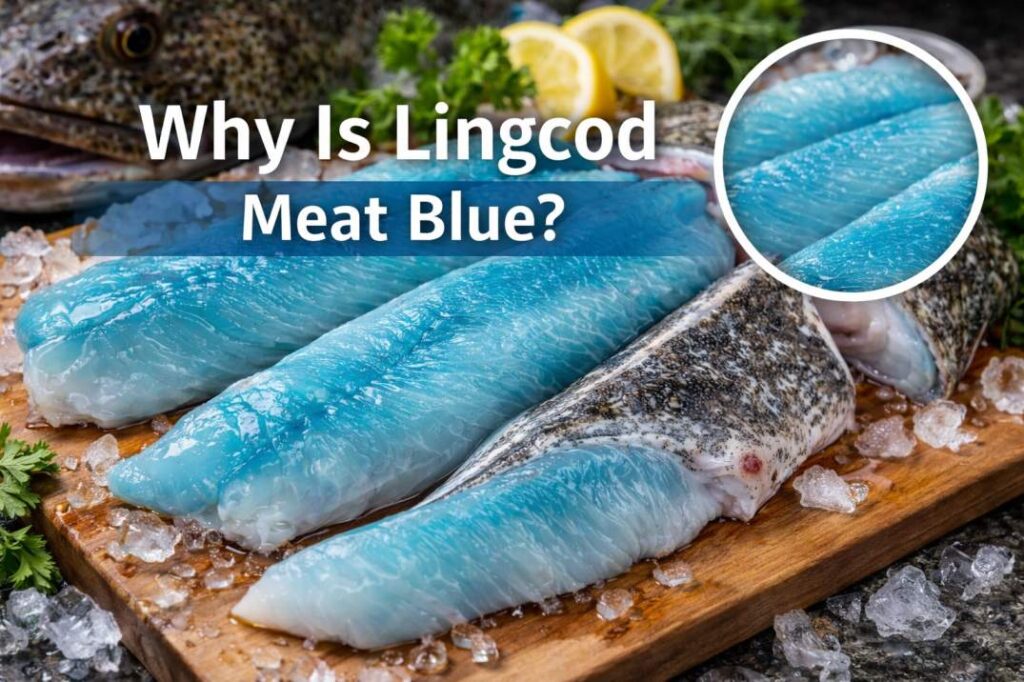
If you’ve ever caught or seen a lingcod and noticed that its meat is bright blue or turquoise, you probably had the same reaction most anglers do: “Is this normal?” “Why is Lingcod Meat Blue?” or “Is blue lingcod meat safe to eat?”
The unusual color of lingcod meat can be surprising, especially if you’re used to white-fleshed fish. But the real truth is, blue lingcod meat is completely natural and in most cases, it’s a sign of a healthy lingcod fish.
Let’s break down why lingcod meat is blue, what causes it, and whether you should be concerned. In this post, we will discuss:
- 🐟 What Is Lingcod?
- 🔵 Why Is Lingcod Meat Blue? (Main Answer)
- 🧬 What Makes Lingcod Meat Blue?
- ✅ Is Blue Lingcod Safe to Eat?
- 👅 Does Blue Meat Affect Taste?
- 🍳 What Happens to Lingcod Meat When Cooked?
- 🌊 Why Some Lingcod Are Blue and Others Are Not
- ❌ Common Myths About Blue Lingcod Meat
- 🥗 Nutritional Value of Lingcod
- ❓ FAQs
- 🏁 Final Verdict
🐟 What Is Lingcod?
Lingcod (Ophiodon elongatus) is a popular Pacific Coast fish found from Alaska to California. Despite the name, lingcod isn’t actually a true cod. We have two major types of cod fish, Atlantic cod and Pacific cod. For more information, refer to this Wikipedia page.
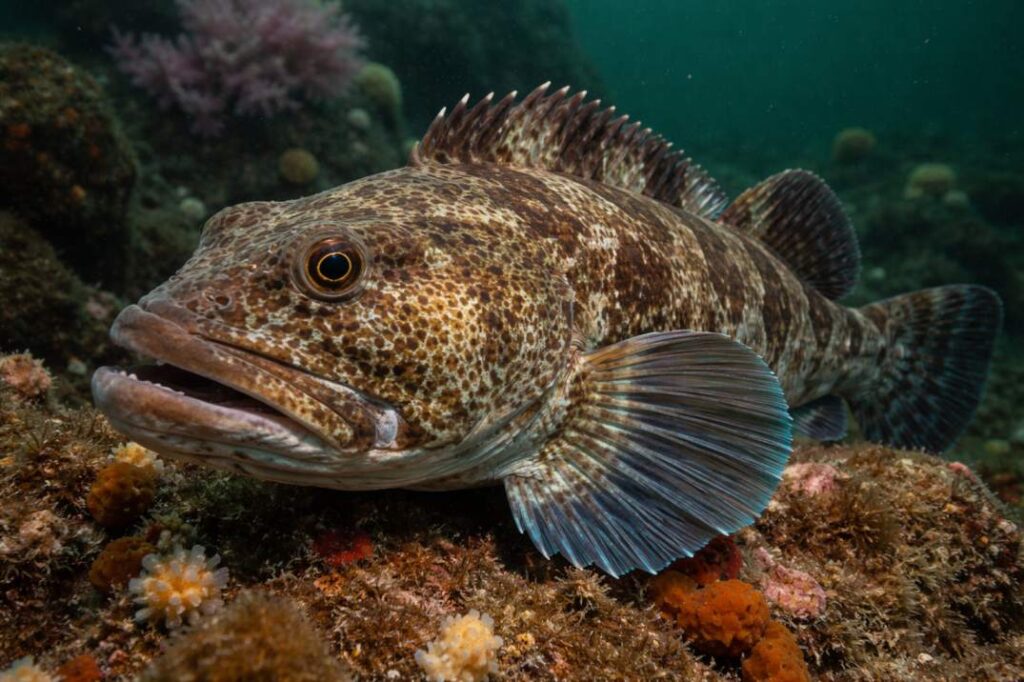
Lingcod are absolutely well prized for:
- It’s Firm, flaky meat,
- With Mild flavor and for
- Excellent performance in frying, grilling, and baking
However, one thing that sets lingcod apart from most fish is its unusual meat color.
🔵 Why Is Lingcod Meat Blue?
The main reason that lingcod meat appears blue is due to a natural pigment called biliverdin.
👉 Biliverdin Explained
The lingcod gets blue meat due to a natural pigment called biliverdin. This pigment is responsible for the blue color of lingcod meat. Biliverdin is a bile pigment produced when red blood cells break down. In most animals, it’s processed and removed. But in lingcod, biliverdin accumulates in muscle tissue, giving the meat a blue or greenish color. Now lets know more about biliverding.
This pigment:
- Is not harmful
- It occurs naturally
- Does not indicate spoilage or disease in fish
So if you’re wondering why is lingcod meat blue, the short answer is:
It’s caused by biliverdin, a harmless natural pigment.
🧬 The Science Behind Blue Lingcod Meat
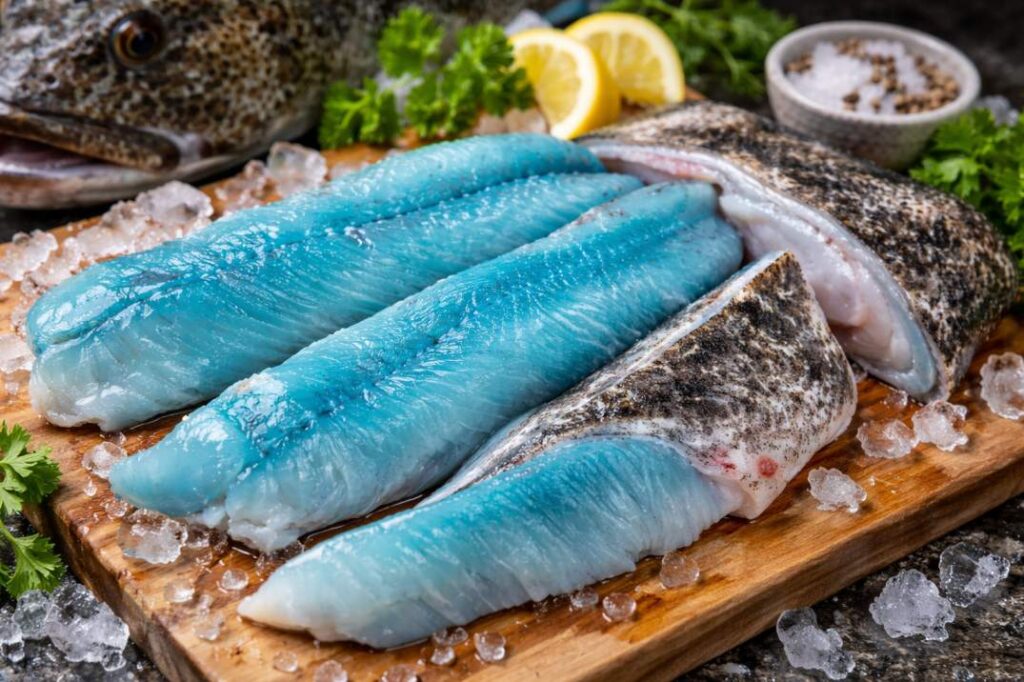
What makes lingcod meat blue? Not all lingcod have blue flesh. Scientists believe the the blue meat causes due to several reasons, like:
- Diet
- Genetics
- Metabolism
- Age and environment
The Lingcod, which is used to feed very predominantly on certain prey (like rockfish or crustaceans) may develop higher levels of biliverdin in them.
That’s why you might see some lingcod with bright blue meat and another lingcod with normal white meat. This difference is due to the above reasons, but both are perfectly natural and normal in lingcod.
✅ Is Blue Lingcod Safe to Eat?
Yes — blue lingcod is 100% safe to eat.
The Blue meat lingcod is safe to eat because the blue pigment is non-toxic, it also breaks down while cooking the meat, and mainly it does not affect food safety or taste. So it is safe to eat. In fact, blue-fleshed lingcod is commonly sold and served in:
- Alaska
- Washington
- Oregon
- British Columbia
As long as the fish is:
✔ Fresh
✔ Properly handled
✔ Cooked thoroughly
There’s no health risk.
👅 Does Blue Lingcod Meat Taste Different?
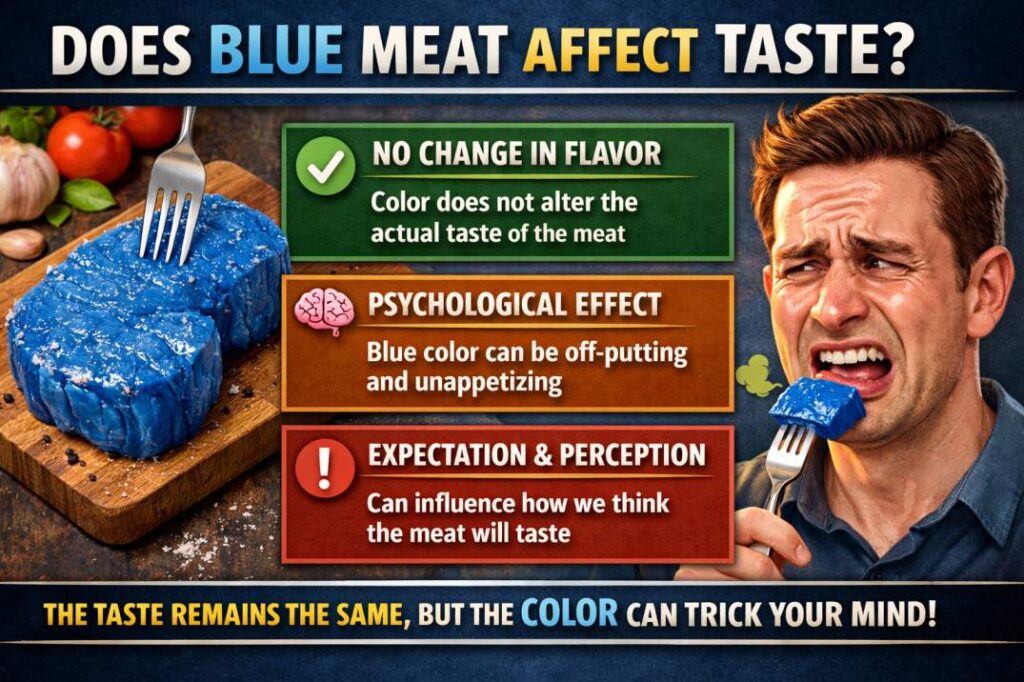
No, blue lingcod meat tastes the same as white lingcod meat.
How Lingcod flavor taste:
- Mild
- Slightly sweet
- Clean and flaky
The blue color does not mean:
- Strong taste
- Fishy flavor
- Poor quality
Most people can’t tell the difference once it’s cooked. Which type of lingcod have they eaten?
🍳 What Happens to Lingcod Meat When Cooked?
This is very interesting:
👉 Blue lingcod meat turns white when cooked.
When exposed to heat:
- Biliverdin pigment breaks down
- Proteins denature
- The blue color fades completely
After cooking, lingcod looks just like Halibut, Cod, or Rockfish.
So if you’re worried about serving blue fish meat, don’t be. It won’t look blue on the plate.
🎣 Why Some Lingcod Are Blue and Others Are Not
Many anglers ask:
“Why was my lingcod blue but my friend’s wasn’t?”
This color difference in multiple lingcod has common reasons, including their different feeding grounds, Seasonal change in their diet, Individual genetics or Stress levels in the fish
There is no reliable way to predict whether a lingcod will have blue flesh before filleting it.
Read more: Why is whiting fish so cheap?
❌ Common Myths About Blue Lingcod Meat
❌ Myth 1: Blue Meat Means the Fish Is Spoiled
False. Spoiled fish smells bad and feels slimy — color alone is not a sign of spoilage of meat.
❌ Myth 2: Blue Lingcod Has More Mercury
False. Mercury levels in lingcod are similar regardless of meat color.
❌ Myth 3: Blue Fish Meat Is Dangerous
False. Many fish species naturally have unusual pigments.
🥗 Nutritional Value of Lingcod
Lingcod is not only safe but also very nutritious. It is full of proteins, vitamins, with low-fat contents.
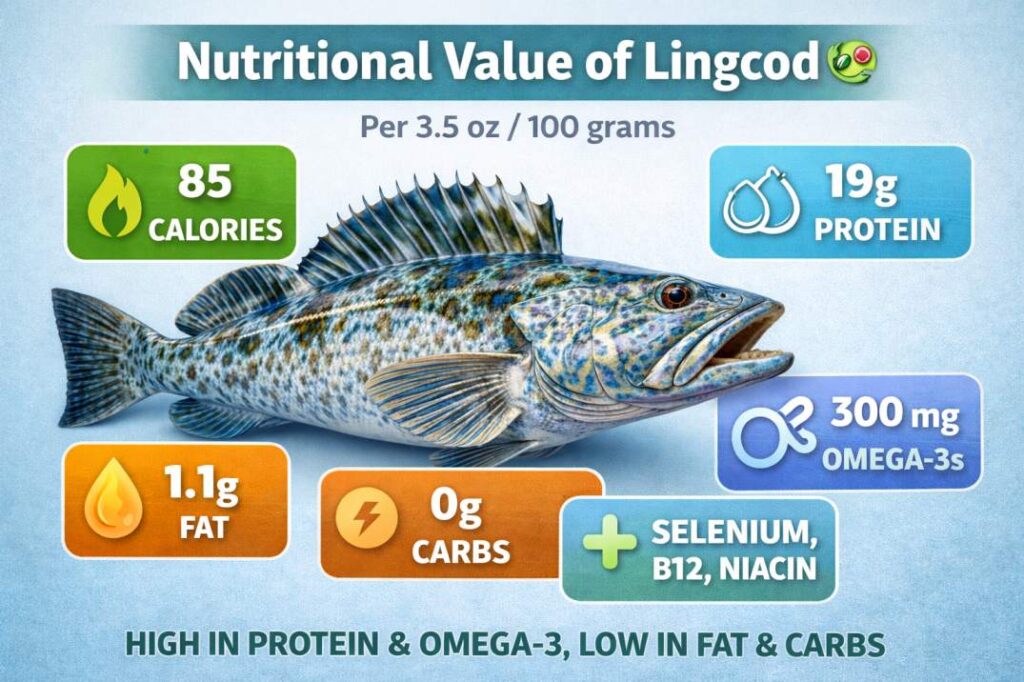
It’s rich in:
- High-quality protein
- Omega-3 fatty acids
- Vitamin B12
- Selenium
- Low fat content
Blue lingcod meat offers the same nutritional value as white lingcod.
❓ FAQs About Blue Lingcod Meat
Q1: Why is lingcod meat blue but halibut is white?
Because lingcod accumulate biliverdin pigment, while halibut do not.
Q2: Does freezing affect the blue color?
Freezing may dull the color slightly, but cooking removes it completely.
Q3: Is blue lingcod safe for kids and pregnant women?
Yes, when eaten in moderation and cooked properly, following general fish guidelines.
Q4: Do other fish have blue meat?
Yes — some species of wrasse and eel can show similar pigmentation.
Final Verdict: Why Is Lingcod Meat Blue?
Lingcod meat is blue because of biliverdin pigment, a natural pigment found in the fish’s muscle tissue. It’s normal, safe, and does not affect taste or quality.
Once cooked, the blue color disappears, leaving behind delicious, flaky white fish.
So the next time you fillet a lingcod and see blue meat — don’t panic. You’ve caught a perfectly good fish.