Florida is one of the best fishing destinations, and it is well known as the “Fishing Capital of the World”. Lakes full of bass, offshore reefs packed with snapper, shallow flats with redfish and snook. However, with great fishing opportunities come a long list of regulations designed to maintain healthy fish populations and a thriving fishing environment.
If you’re planning to fish here — whether you are a resident, or a tourist, a beginner, or a seasoned angler — it’s important to understand the rules and regulations for fishing in Florida so you enjoy your day on the water without worrying about fines.
This guide explains everything about the rules and regulations for fishing in Florida, along with the licenses, freshwater fishing rules, saltwater fishing rules, local restrictions, fines for violations of fishing in Florida, federal waters, and practical tips. So be with us, this guide will be very helpful to you.
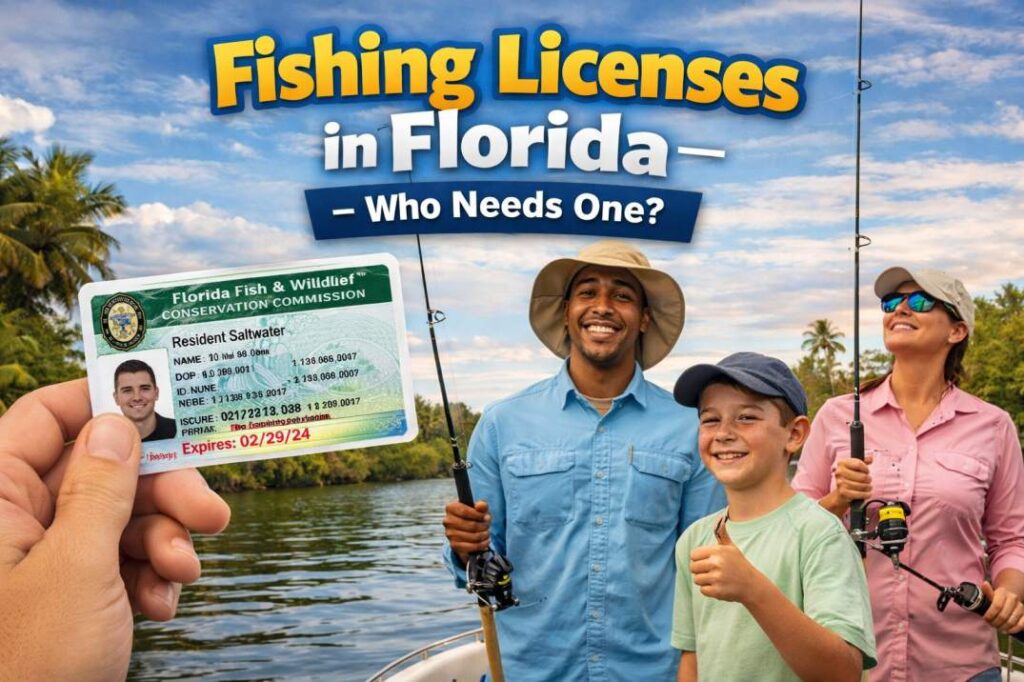
1. Fishing Licenses in Florida — Who Needs One?
In most cases, if you’re fishing in Florida, you should carry a license — even if you’re just casting from a pier or the shoreline.
When you usually need a fishing license in Florida
When you are fishing in freshwater (lakes, ponds, rivers, canals)
For fishing in saltwater (oceans, bays, inlets)
Keeping more fish, even if you only plan to keep “a few.”
Collecting crabs, shrimp, lobster, or other marine life
Common license exceptions
In Florida, according to Florida fishing regulations, there are some exemptions. Some people don’t need a license in certain situations, such as:
Children below a certain age 17
Florida residents above a certain age
Specific license-free fishing weekends are offered by the state
Fishing on certain charter boats (the captain covers the permit)
(Still, you should always double-check. Rules change, and it’s better to verify than guess.)
Types of licenses
Florida offers several options so anglers don’t overpay:
Freshwater fishing license (for lakes and rivers)
Saltwater fishing license (for ocean and coastal areas)
Short-term, annual, and multi-year licenses
Special add-ons for species like snook, tarpon, and lobster
Tip: If you fish both saltwater and freshwater often, you will need a combo license, this is usually cheaper.
Rules and Regulations for Fishing in Florida Updated:
2. Freshwater Fishing Regulations in Florida
Freshwater fishing in Florida covers everything inland — lakes, springs, rivers, ponds and canals.
For applying fishing regulations in Florida, The goal is simple: protect bass, panfish, catfish, and native species so future anglers can enjoy them too.
Key freshwater rules and Regulations
Size limits Many species have minimum length requirements so young fish have time to grow.
Daily bag limits This is how many fish you’re allowed to keep each day. It is use to manage population of fish.
Protected and restricted species Some fish must be released immediately in certain areas.
Gear restrictions Nets, explosives, and certain traps are illegal for gamefish. Rod-and-reel is the standard method.
Fish Management Areas Some lakes and ponds have special rules, like seasonal closures or stricter limits.
If you’ve heard people say, “Florida bass fishing is capital,” these rules are a big reason why.
3. Saltwater Fishing Regulations in Florida
As we know that Florida has a very huge coastline. To manage saltwater fishing in Florida, the rules and regulations for fishing in saltwater are bit more detailed. One must know the ocean holds many highly targeted species.
Saltwater includes:
The massive atlantic coast
The Gulf of Mexico
Bays, estuaries, mangroves, and tidal creeks
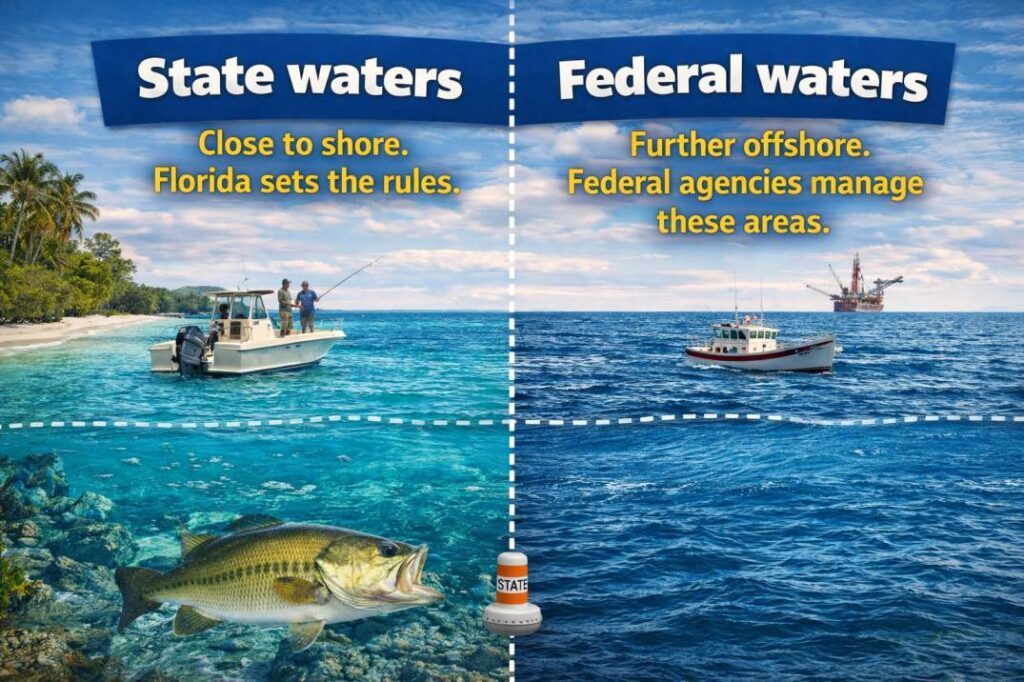
State waters vs. federal waters (this confuses a lot of people)
State waters Close to shore. Florida sets the rules.
Federal waters Further offshore. Federal agencies manage these areas.
Regulations can be different in each zone according to local laws, meaning a fish that’s legal in one area might be illegal just a few miles away.
What saltwater rules usually cover
Minimum and maximum size limits
How many fish you can keep (daily limits)
Closed seasons when certain species can’t be harvested
Specific hooks or gear types required in some fisheries
Species that are catch-and-release only
You’ll hear a lot about species like redfish, snook, grouper, snapper, permit, and tarpon — nearly all of them have very specific rules.
Tip: Keep a measuring tool on your boat or tackle bag. Guessing lengths is the fastest way to get in trouble.
4. Local Fishing Rules You Shouldn’t Ignore
On top of state rules, some counties, cities, parks, and marine preserves add their own regulations.
Examples include:
No fishing zones near swimming areas
Rules at piers and bridges
Restricted fishing times in certain parks
“Catch-and-release only” sections in sensitive habitats
Many anglers learn the hard way that “I didn’t know” doesn’t work as an excuse — so it’s always smart to check signs at ramps, piers, and entry points.
5. Federal Regulations for fishing (When You Go Offshore)
Whenever you want to fish near the offshore past state boundaries, federal rules take over. Here Rules and Regulations for Fishing in Florida may be a little different.
Here’s where things often change:
Federal regulations issue different bag limits
It also issues different minimum sizes for fish
Declares seasonal closures
Vessel reporting requirements in some fisheries
Federal rules focus heavily on reef fish and migratory species like king mackerel, tuna, and certain groupers.
If you fish offshore often, it’s worth staying updated — regulations shift depending on stock levels and conservation needs.
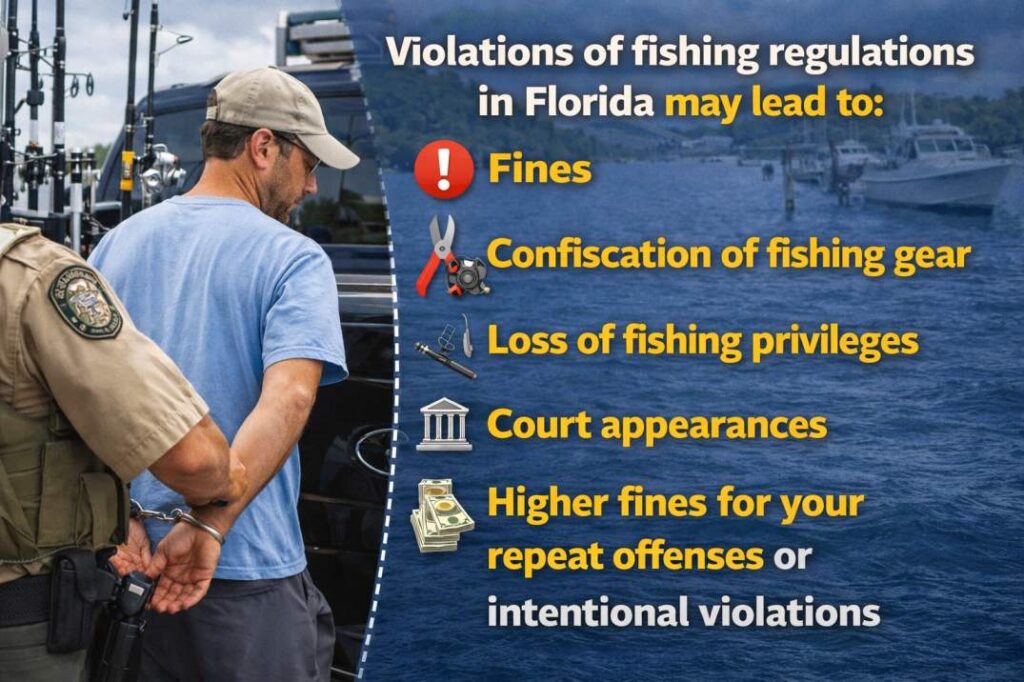
6. Penalties for Ignoring Fishing Rules in Florida
Fishing laws must be taken seriously; otherwise, penalties can be expensive. If you break any Rules and Regulations for Fishing in Florida, you may face legal issues.
Violations of fishing regulations in Florida may lead to:
Fines
Confiscation of fishing gear
Loss of fishing privileges
Court appearances
Higher fines for your repeat offenses or intentional violations
Most mistakes come from not knowing the rules — which is why learning them ahead of time matters.
Florida offers incredible fishing opportunities — from offshore reefs to quiet inland lakes — but the rules exist for a reason. When anglers follow size limits, seasons, and licensing requirements, fish populations thrive, and future generations benefit.
Before every trip, take five minutes to review the latest updates on Rules and Regulations for Fishing in Florida, grab your license, and pack a measuring tool. After that, it’s all about enjoying the water.
Fish Smart & Stay Legal in Florida
Fishing is deeply woven into Florida’s culture, economy, and outdoor lifestyle. But enjoyment comes with responsibility — knowing the rules and regulations for fishing in Florida helps preserve fish populations and avoid fines or enforcement action. Always check the latest rules on the FWC website and NOAA Fisheries before heading out, because regulations can change from year to year.
Would you like a printable checklist or downloadable table of Florida fishing size limits and seasons for 2026? Just ask!